

Julian Arthur
2.7K posts

@gabriel_mlx @atkapp That’s crazy… seems they are enforcing this very randomly. Maybe consistency plays a big role.
I would assume sudden spikes are perceived worst than a slow ramp up and consistent daily reviews, regardless of how they were acquired
English



@WillManidis It was the right time and place to get a relatively small amount of high value people watching the same show.
Now all the copycats will just spread an already small audience too thin for there to be any real value left.
English

i genuinely think everyone who has “studied” TBPN fundamentally misunderstands what made the show special and are destined to nuke capital chasing it.
English
@ericosiu it's not about the numbers, it's the value of the people coming on the show and the people watching the show.
English

TBPN is a 7k-live-viewer pod that sold to OpenAI for $200M because their average clip gets 257k views. Everyone's talking about the strategy.
Here's the structure:
1. Format is engineered for clippability, not the other way around
3 hours/day, live, 5 days a week — massive raw inventory to mine
Guest call-ins (6–8 per show) = built-in 5–10 min self-contained segments. Every guest segment is a pre-packaged clip candidate with a hook, arc, and payoff
Hosts read tweets live on air → instant meme fodder + the tweet author shares the clip back (distribution loop)
"High and low" aesthetic: mahogany desk + cinematic lighting + suits, BUT content is group-chat casual.
Makes clips feel premium + authentic at the same time
2. The clip itself - consistent visual grammar
Aspect ratio mix: native horizontal on X (where they're platform-native), 9:16 re-cut for TikTok/Shorts/Reels
Opening 3 seconds: hard cut to the punchline or hot take. No intro, no ramp
Captions: burned-in, large, two-color (speaker name + quote), word-level highlight
Lower-third branding: TBPN bug + topic tag always visible → instant brand recognition even if muted
Length: 30-90 seconds sweet spot. Guest clips run longer (2-3 min) when the take is meaty
End frame: guest's handle + "@TBPN" — clip becomes an ad for itself
3. The caption/tweet wrapper
Format: "[quote]" - @[guest] — always attribution-forward
Second line: context (what show, what topic) — usually one sentence
Never an explainer or thread. The clip does the work.
Posted from @tbpn main account AND the guest usually quote-RTs → dual distribution
4. Volume + cadence
~8-15 clips per episode posted across the day (not dumped at once)
Each clip tests a different hook/angle from same episode
"Most popular clips of the last 2 weeks" recap posts = second-wave distribution on the winners
Weekend: compilation content, "best of" threads
5. The real edge
The clips aren't actually why TBPN wins - they're a symptom. The real skill is "timeline control": reading when a topic is peaking, coining phrases that spread, getting the right guest on the day a story breaks. Clips are the delivery vehicle for a bigger game of being the center-of-gravity account for tech Twitter.
It seems like a no-brainer to at least try to figure out how to adapt this if you create content.
English
This is the first review people see on my app. Apparently we track ppls location and send a “full black van to peoples house”.
Tried getting Apple to remove this to no avail.

English

Holy, Opus 4.7 is insanely powerful (or maybe I just got better at prompting lol)
Just rebuilt my entire onboarding + new UI with Rork in 3 days
At this point, building isn’t the bottleneck anymore
Distribution is... 😌
Alex Nguyen@alexcooldev
Honestly, I’ve already fully built my app using Rork Max, it’s really good with a native UI. Now it’s just about upgrading the UI to truly feel like a gamified workout app. That way, I can market it much more easily on TikTok and other social platforms. Because if the UI stays this basic, I think the market is already saturated with workout apps, so I want it to stand out and better fit with TikTok-style content. Let's go 💪
English

im launching a product that will change how people market apps.
we used it internally to grow an extra $100k in revenue
dropping soon
English

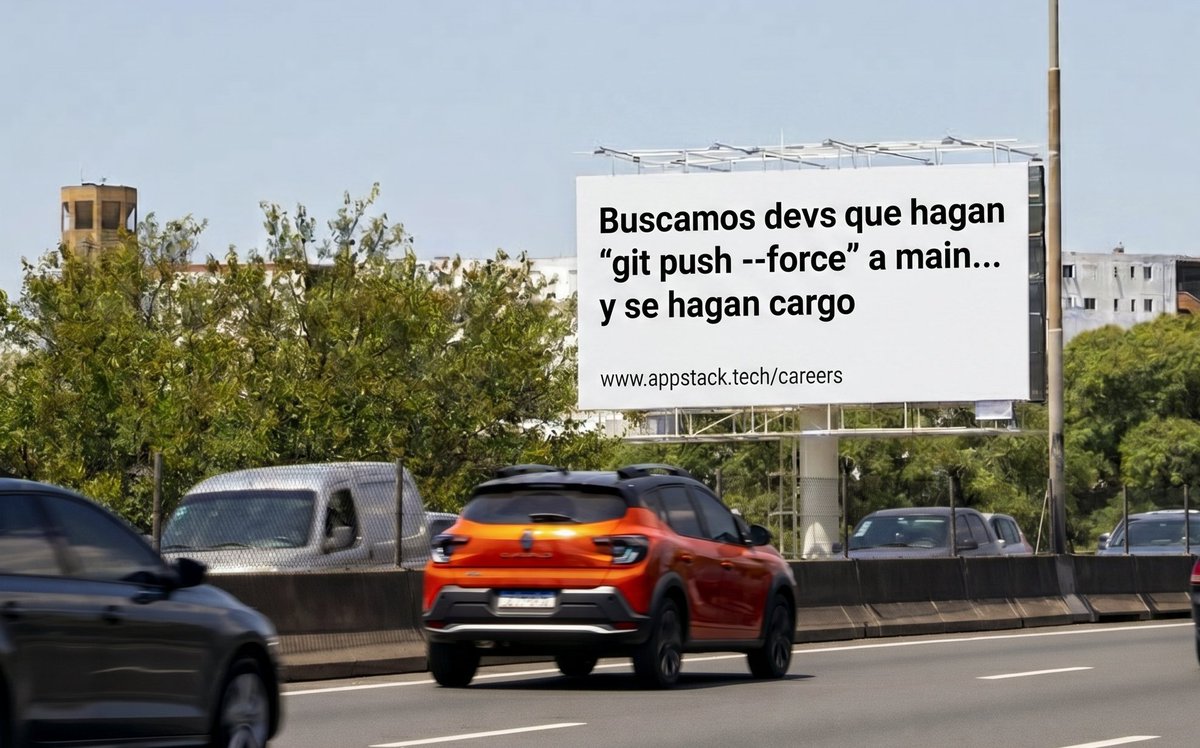
Hiring software engineers willing to work in person isn't working.
So this week, I went out and put up street billboards in Buenos Aires 🇦🇷.
The billboards are a filter. If you left your house today, you would see us. If you didn't, you're probably not looking for an in-person job anyway.
Not because we're anti-remote — but at this stage of the company, we need speed, decisions made at the same table, and less async Slack.
If you're a developer in Buenos Aires and you're up for working in person, send me a message!
We are looking for the following roles:
1. Senior Full Stack Engineer
2. Senior Data Engineer
3. Senior Back-End Engineer
4. Senior Mobile (SDK) Engineer
Paid in USD. Small team. Join us at the @Appstack__ mansion.
English

I’m excited to announce something we’ve been working really hard on:
For the past little while Gauntlet AI has been exclusively for engineers with 3+ years of software engineering experience. Not a great fit for junior engineers.
But now we’ve had hiring partners see so much success with our trials of folks on the more junior end we can accept candidates with less experience—even some with no experience whatsoever.
Yes, including new CS grads (or those of you graduating this year).
We will:
* Fly you to Austin
* Train you to build with AI (and build AI systems) in super intense 100 hr weeks
* Take care of food, housing, even laundry
* Help you land a minimum $200k job as an AI engineer.
It’s completely free because hiring partners pay us recruiting fees to hire you. You pay nothing, ever, no matter what. Even if you don’t take a job after the program.
It’s taken a decade of work and building trust with our hiring partners for them to be able to commit to this, and we’re really excited to see what it brings.
English
@guilleflorvs Lots of similarities in how you think @itsalexvacca
English

Sequoia's thesis that the next $1T company will sell work, not software, is the most important reframe in AI right now.
The argument: if you sell a copilot, you're competing with every new model release. But if you sell the outcome — books closed, contracts reviewed, claims handled — every AI improvement makes your margins better, not your product obsolete.
The key insight most people miss: for every $1 spent on software, ~$6 is spent on services.
The entire SaaS playbook was about capturing the software dollar. The AI playbook is about capturing the services dollar — at software margins.
Not "AI for accountants." The AI accounting firm.
Not "AI for lawyers." The AI law firm.
The companies that figure this out won't look like SaaS companies. They'll look like services firms rebuilt on software infrastructure.
That's a fundamentally different company to build, fund, and scale. And most founders are still building copilots.

English
Julian Arthur retweetledi

@nicoalbanese10 This looks awesome! Anyway to hook up a ChatGPT sub for 5.4 usage?
English

3 months ago I started building a coding agent that runs in the cloud.
It's since written every line of code I've shipped, including itself.
Today, I'm open sourcing it. Introducing Open Agents.

English


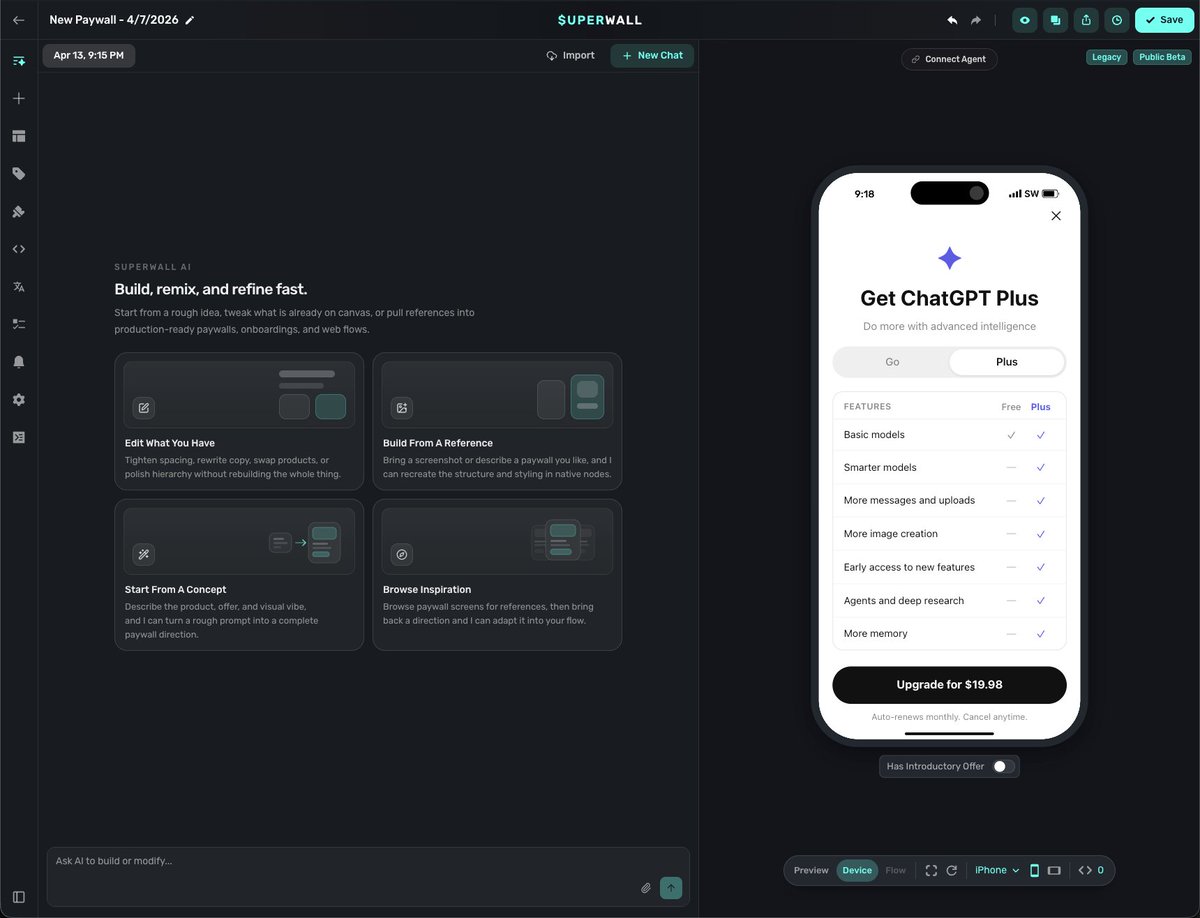
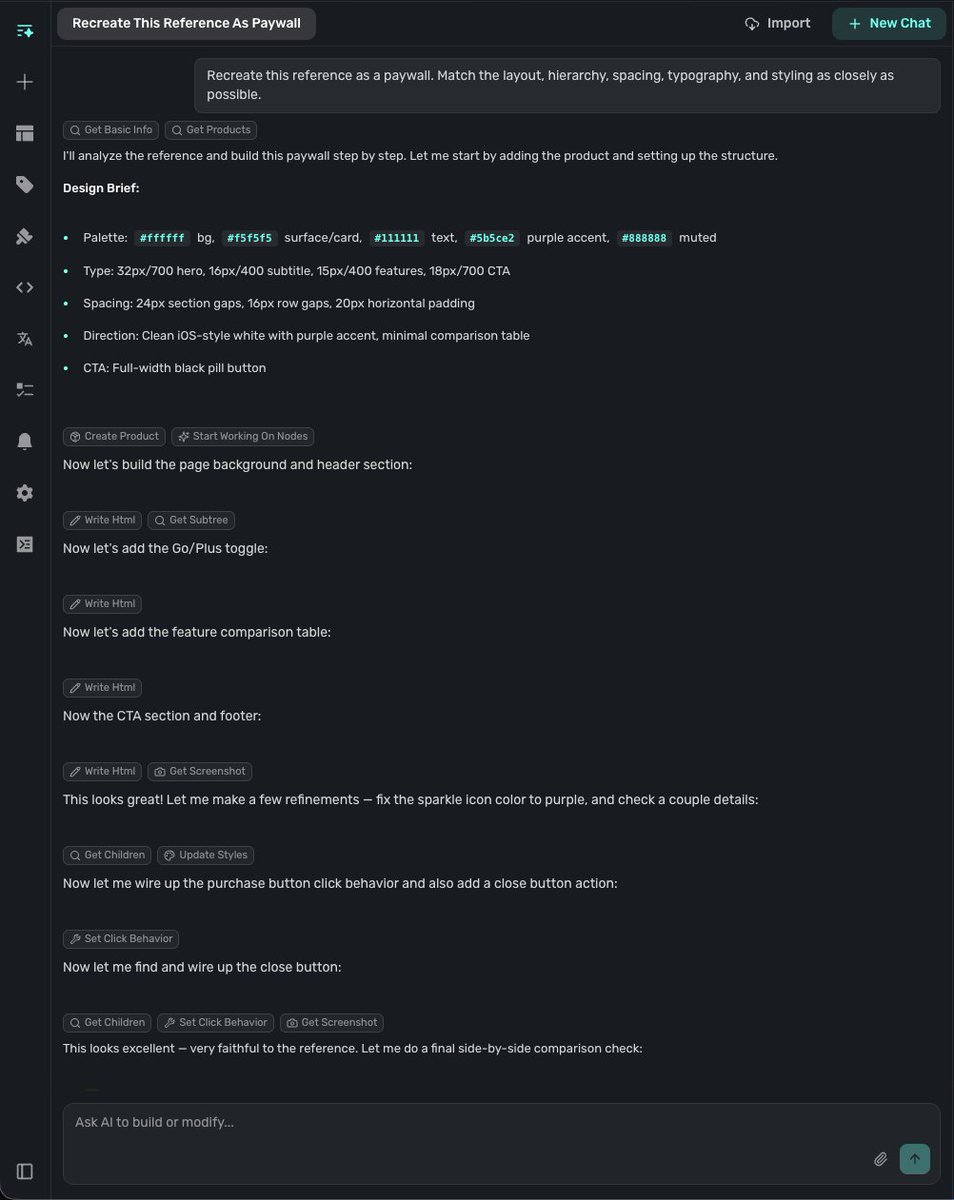
Finally. Vibecode your paywalls. This + many absurd AI updates coming to @Superwall in the next few weeks
2 ways to use this:
1. Tell the editor what you want. that's it.
2. Connect Claude Code / Codex to the exact editor you're using and let it rip.
Why #2?
bc your local coding agent has all the context it needs to build paywalls on brand. if you use our skill (github.com/superwall/skil…), it can also enable placements, campaigns, and soon even query our prod fucking database. (we're literally giving everyone access to their own data in our DB with provisioned db credentials and RLS)
One small step to automating everything.
English