ķahņ retweetledi
ķahņ
2.2K posts

ķahņ
@kahn_tract
Crypto. Security. Privacy.
Oxford, Mississippi Katılım Haziran 2023
3.5K Takip Edilen1.4K Takipçiler
ķahņ retweetledi

Cryobrick es un proyecto de cold storage Bitcoin airgapped que corre en feature phones basicos, esos celulares de teclado fisico que cuestan pocos dolares, el concepto es simple, el celular queda completamente desconectado de internet y funciona como hardware wallet de bajo costo, el app se llama Compass y permite crear y restaurar carteras Bitcoin sin ninguna conexion de red, costo de hardware cero, plausible deniability porque parece cualquier otra app, your keys your control, proyecto nuevo creado en diciembre de 2025, vale la pena seguirlo en cryobrick.com 🧡⚡️
Español
ķahņ retweetledi

💥 NEW: Securing your Phone Number with a Seedphrase?👀
> Numbers secured w/ #BIP39
> No employee can swap a SIM without it
> Zero-Knowledge payments
> Call metadata purged daily
> Network ID rotated daily to prevent tracking
& more:
👉 @WriterHeatherL and Ruddy @CapeCellular
English
ķahņ retweetledi

BLACKBOX is an off-grid node that runs AI locally, enables encrypted messaging over radio (e.g., Meshtastic), and supports ecash transfers without internet access.
No servers, no API keys, no centralized dependencies. Designed for resilience: operate during outages, censorship, or infrastructure failure using a laptop and low-cost radio hardware. Open-source, modular, and deployable today.
Built with Cashu.
youtube.com/watch?v=R8iXfA…

YouTube
English
ķahņ retweetledi

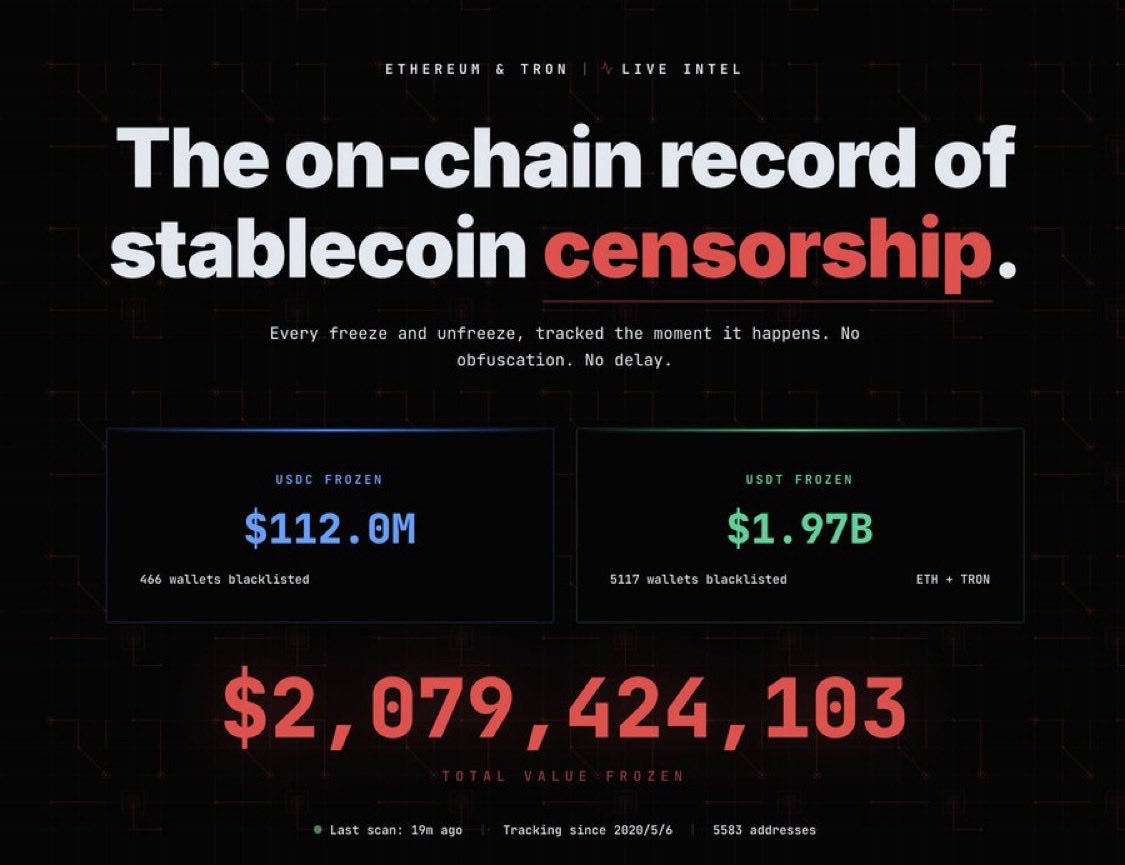
NEW WEBSITE TRACKS FROZEN STABLECOINS
New website stables.rip is an on-chain record of stablecoin censorship.
Tracks every USDC and USDT freeze across Ethereum and TRON in real time, including wallet lookups, freeze stats, and cumulative supply data.
Stablecoins come with a kill switch.
Unlike BTC, USDC and USDT are issued by private companies with privileged access to their smart contracts. That means any wallet can be frozen at any time.
So what is a freeze?
Issuers like Circle and Tether control master keys. With a single function call, they can blacklist an address and permanently lock all funds held there.
Who gets targeted?
Sanctioned entities, law enforcement requests, flagged activity, and sometimes errors. The process is opaque, with no clear appeal path.
Over $2.1B has already been frozen across Ethereum and TRON, each instance executed by a centralized authority in a single transaction.
Your stablecoins aren’t truly yours.
Your Bitcoin in cold storage is.

English
What would you guys add to this for better taste?
Carnivore Aurelius ©🥩 ☀️🦙@AlpacaAurelius
they dont want you to know you can just eat ground beef & rice every meal and cure all your issues
English

Well, I'd like to see ol Donny Trump wriggle his way out of THIS jam!
*Trump wriggles his way out of the jam easily*
Ah! Well. Nevertheless…
The Kobeissi Letter@KobeissiLetter
BREAKING: Oil prices collapse below $84/barrel, now down over -30% since last night’s highs.
English

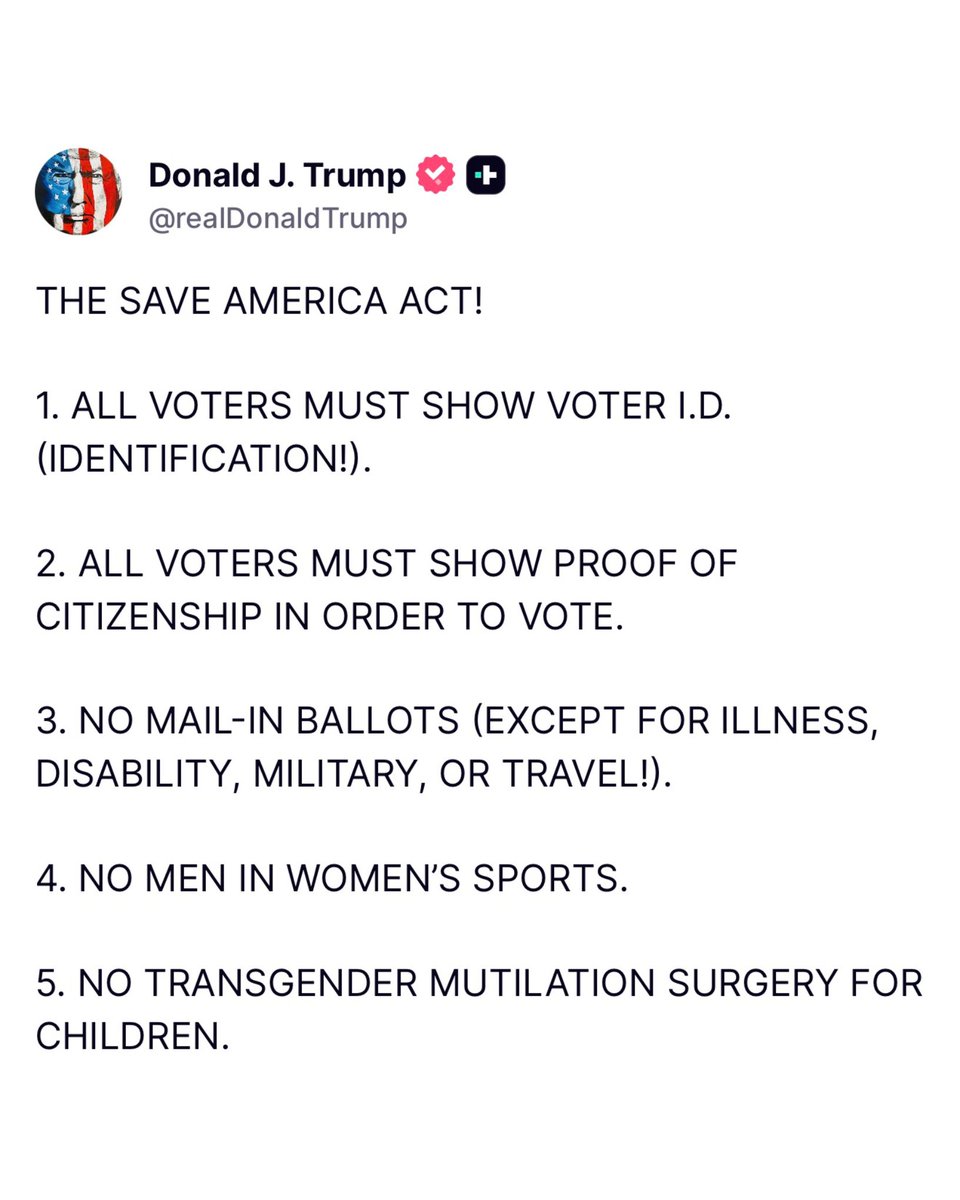
JUST IN: President Trump has changed his Truth Social post where he suggested that children should be allowed to transition genders with approval from their parents.
Before: NO TRANSGENDER MUTILATION SURGERY FOR CHILDREN WITHOUT THE EXPRESS WRITTEN APPROVAL OF THE PARENTS.
Now: NO TRANSGENDER MUTILATION SURGERY FOR CHILDREN.


English
ķahņ retweetledi

so right now transacting privately (=nobody can link your onchain movements to your identity) on Ethereum requires way too much operational overhead. You need to understand behavioural profiling, manage VPNs (always use kill switches), mix user agents and language settings of your browser (so many services log this), avoid hosted UIs and run apps locally if possible. I mean guys, let's be real, that's not real privacy. Ethereum (including its applications) must let users be _imperfect_, not flawless opsec experts, and still remain private. If avoiding surveillance depends on perfect discipline, the protocol and its applications have fundamentally failed to provide it. We're nowhere near solving this.
English
ķahņ retweetledi

⚠️ Why a Monero deposit got frozen (citing a high AML score)
We heard about a user who swapped XMR via one of our listed services on OrangeFren.com — their swap was frozen citing tainted funds
Not our user, but since we've never seen an XMR freeze before, we investigated
The swapper explained:
👉 User ran multiple swaps simultaneously
👉 One was XMR → another from a transparent chain sent stolen coins → They froze THAT swap ❄️ → But then froze ALL the user's subsequent swaps too ‼️
To avoid this:
🔸 Use a separate browser session (e.g. incognito) for each swap from OrangeFren.com
🔸 Don't start new swaps on the same service if any prior one is still frozen
Stay safe out there! 🛡️

English
ķahņ retweetledi

Buying and spending #Monero is awesome but mining it is the real next level. With this mini PC pushing around 9,000 H/s, you’re stacking roughly 0.155 $XMR every month.

English
ķahņ retweetledi

Imagine stopping by your favorite coffee shop, tapping your card to pay, giving your name for the order, and leaving with your latte. What feels like a simple purchase actually logs your card details, records your name, notes the location and time, and may even capture your face on a security camera. Each time you buy something in person, you leave a data trail that can take away your anonymity.
It all begins with how you pay. When you use a card, your identity is tied to that transaction. Your name, bank, and address become part of a permanent electronic record that banks keep. Paying with cash is more private, but it is not practical for online shopping and can raise questions for large amounts. There are privacy-friendly payment options, such as prepaid debit cards bought with cash, gift cards, or payment apps that do not require your name or personal details. For example, there are services that let you create virtual cards without sharing your real card information, and cryptocurrency wallets like Monero and Cake Wallet allow you to make pseudonymous purchases with some merchants. These methods may take extra effort and have some limits, but they help you control your personal data when you shop.
Shipping is another area to watch. As soon as you enter a delivery address, you share your location with the seller, the carrier, and the logistics company. Tracking numbers leave a digital trail, and if you have to sign for a package, it proves you received it at that address. To keep your address private, try using pickup lockers or package forwarding services that let you use a different address. These options give you more control and help keep your home address out of retailers' records.
Shopping in a store can be even more revealing. Security cameras and facial recognition record you as you shop, along with the time and place. If you sign up for a loyalty card or give your email for a digital receipt, you link your identity, phone number, and email to your purchases. To get the benefits without giving up your privacy, use a separate email or phone number just for loyalty programs. This lets you enjoy rewards while keeping more of your personal information private.
One of the biggest hidden risks is metadata. Metadata is information about your actions, like the time you made a purchase, your GPS or IP location, the device you used, and what you bought. These details might seem harmless alone, but together they can build a detailed profile about you. To share less metadata, try a few simple steps. Turn off location services on your phone when you do not need them, especially while shopping. Use privacy-focused browsers, shop in private or incognito mode, and clear your browser history and cookies often. For online shopping, use a trusted VPN if you can. These habits make it harder for companies to collect and connect your data.
The truth is, buying physical goods means sharing some personal information. You can reduce your exposure, but complete anonymity is very hard to achieve in 2026. Still, you do not have to give up on privacy. There are a few easy steps you can take to protect yourself. Pay with cash when you can for in-person shopping. For online purchases, use a prepaid card and have items sent to a pickup locker instead of your home. Check and update privacy settings on your favorite apps or loyalty programs, and be careful before giving out your phone number or email at checkout.
English

ķahņ retweetledi

MASSIVE:
Ethereum is adding a missing piece: privacy at the transaction layer.
ERC-5564 enables stealth payments that obscure sender-receiver links while preserving auditability.
Not privacy coins.
Not obfuscation.
Programmable privacy inside a public system.
That’s infrastructure-level evolution


English