Kara Huck retweetledi
Kara Huck
11.1K posts

Kara Huck
@kdhuck
Brand-new assistant principal of curriculum & instruction, former makerspace facilitator, tech coach, & ELA teacher; SW KS Angus cattle rancher, & proud grandma
Dodge City, KS Katılım Mart 2009
2K Takip Edilen1.2K Takipçiler
Kara Huck retweetledi

Have you ever noticed it takes teachers a couple of weeks before they actually start feeling like it's summer?
There's a reason for that.
Teaching isn't just mentally exhausting. It's emotionally exhausting. For ten months your brain has been solving problems, making hundreds of decisions a day, reading the emotions of students, managing behaviors, worrying about the child who didn't eat breakfast, encouraging the one who's ready to give up, and trying to make sure every student leaves your classroom believing they matter.
You don't just shut that off because the calendar says June.
So if you're just now starting to relax, don't feel guilty.
Your brain isn't behind.
It's recovering.
Maybe that's one of the reasons teachers need summer more than they realize. Not because they need a vacation, but because they need time for their mind and heart to catch up with everything they experienced throughout the school year.
Sometimes the healthiest thing you can do isn't prepare for next year.
It's simply let your mind and body recover from this one.
English
Kara Huck retweetledi

Be Sherlock Holmes. Not The Hulk. Not The Punisher.
One of the biggest mistakes we make as educators and parents is focusing on the behavior we can see instead of the reason behind it.
The Hulk sees a behavior and reacts.
The Punisher sees a behavior and punishes.
Sherlock Holmes sees a behavior and investigates.
A student refuses to work.
A child falls asleep in class.
A teenager shuts down.
A student puts their head down.
A child avoids a task.
The question isn’t:
“How do I stop this behavior?”
The better question is:
“What is this behavior trying to tell me?”
Behavior is communication.
Every behavior serves a function. Every behavior meets a need. Every behavior has a story.
Sometimes the behavior is driven by anxiety, fear, frustration, embarrassment, sensory overload, lack of skills, lack of sleep, hunger, trauma, grief, loneliness, a need for attention, or a need for control.
We often focus on the effect while missing the cause.
We punish the smoke while ignoring the fire. We correct the symptom while overlooking the unmet need.
A student who refuses work may be overwhelmed, confused, or afraid of failing.
A child who falls asleep may be exhausted, stressed, working through challenges at home, or carrying burdens we cannot see.
A teenager who shuts down may not be defiant. They may be protecting themselves from embarrassment, disappointment, or emotional overload.
This doesn’t mean there are no expectations, boundaries, or consequences. It means we become curious before we become furious.
We seek understanding before judgment.
We restore before we punish.
We teach before we remove.
We connect before we correct.
The most effective educators, parents, and leaders aren’t the ones who ask:
“What’s wrong with this child?”
They’re the ones who ask:
“What happened?”
“What need is not being met?”
“What skill is missing?”
“What emotion is driving this behavior?”
Because when we understand the function of the behavior, we can finally address the root cause instead of endlessly reacting to the symptom.
The child doesn’t need another Hulk.
The child doesn’t need another Punisher.
The child needs someone willing to solve the mystery.
Be Sherlock Holmes.
Dr. Bryan Pearlman
Therapist • Educator • Author • Speaker
Bryanpearlman.com
*Now booking back to school & fall keynotes & professional development*

English
Kara Huck retweetledi

This makes me wish I taught grades 5-8
Mitchell Brookins, Ph.D.@MitchellBrookns
I’m excited to finally share that my first book, Scaffolding Complex Texts, will be released by Scholastic in October 2026. This book is rooted in a belief that has shaped much of my work as an educator: Complexity is worth it🔥🔥🔥 This book is about helping teachers scaffold students’ intellectual growth against the staircase of complexity. Stay tuned!
English
Kara Huck retweetledi

I think a lot of teachers would look at a book about cold calling and immediately think, “I already do that,” or even worse, “I don’t need to do that.”
After reading it, I realized I haven’t been doing cold call nearly as well as I could. More importantly, I now have a much deeper understanding of why it matters and why I need to use it even more consistently, intentionally, and explicitly.
Highly recommend this book. Looking forward to reading the Turn and Talk guide next.
@mrbartonmaths

English
Kara Huck retweetledi

I teach auto shop at a small high school. We work on students cars, teachers cars, students parents cars and some community people cars. We only charge for parts and not labor, so we saved some people a lot of money last school year. This last school year we did 126 oil changes, 68 brake jobs, 85 alignments, 4 steering racks, 22 tune ups, 32 struts, 20 shock absorbers, 4 transfer cases, mounted and balanced 82 new tires, 4 timing chains, 15 valve cover gaskets, 14 thermostats, 4 radiators, 12 in tank fuel pumps, 8 EVAP canisters, 6 exhaust manifolds, 4 mufflers, 15 AC repairs including evacuate and recharge, 8 alternators, 22 batteries, 9 starters and so much more! Proud of those students I am!


English
Kara Huck retweetledi

Merriam!-Webster! Dictionary!
Tracy Chou 🌻@triketora
every library deserves an exclamation point
English
Kara Huck retweetledi

Kara Huck retweetledi

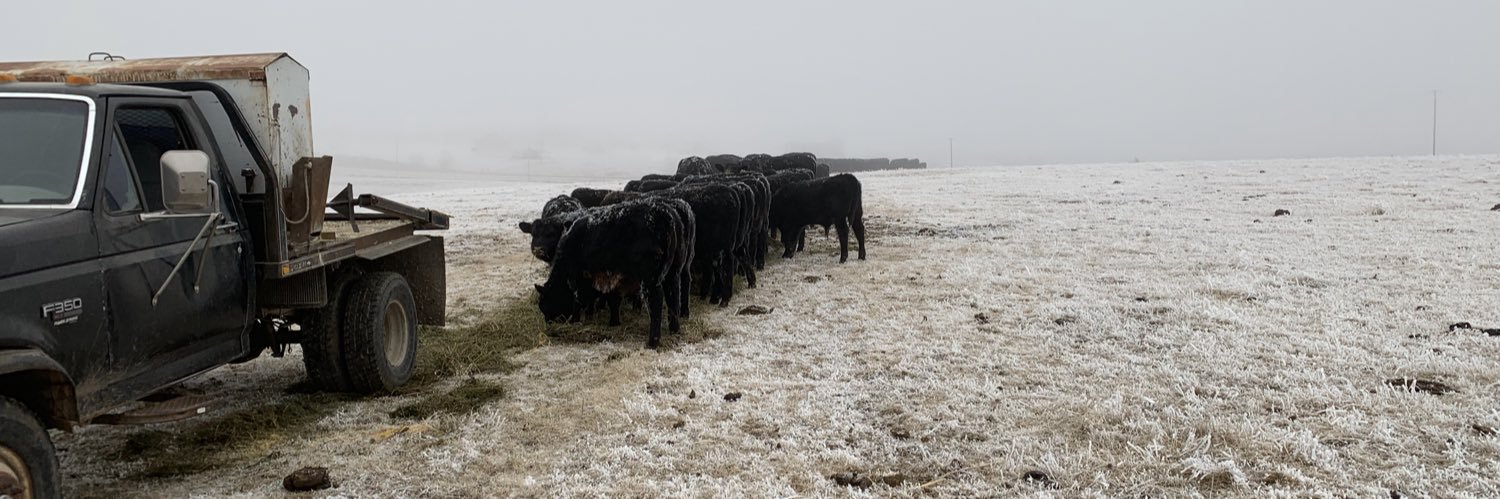
Activist: "Your cows are putting carbon into the atmosphere."
Farmer: "Where did they get it?"
Activist: "What?"
Farmer: "The carbon. Where did the cow get it before it put it anywhere."
Activist: "From... eating?"
Farmer: "From eating grass. And where did the grass get it."
Activist: "The soil?"
Farmer: "The air. The grass pulled it out of the air last spring. The cow ate the grass. The cow breathed some of it back out. It went back into the air it came from."
Activist: "But it's still going into the atmosphere."
Farmer: "It's going back. There's a difference between a thing going somewhere and a thing going back. You've described a circle and you're frightened of it."
Activist: "Then just don't have the cow."
Farmer: "The grass still dies in autumn. It rots where it falls. The carbon goes back into the air either way, just without anyone getting fed in the middle."
Activist: "It's not that simple."
Farmer: "It's grass, cow, breath, grass. Or it's grass, rot, air, grass. Same circle, fewer dinners. If that's complicated for you I'd stay away from the water cycle. That one's got clouds in it."

English
Kara Huck retweetledi

@ATribeCalledLOM @Emegothefirst It’s the weird “cheeks watering” for me - sure sign that barfing is imminent 🥴
English

@Emegothefirst The worst part is that nauseas feeling where you dont know if your gonna throw up or not. Then all of a sudden your running to the nearest bathroom
English
Kara Huck retweetledi

Reading thirty minutes a day adds two years to your life. Yale tracked 3,635 people over fifty for twelve years to find that out. The 23-month gap held no matter your gender, wealth, education, or starting health.
A University of Sussex study hooked people up to stress monitors and timed how fast different activities calmed them down. Six minutes of reading cut stress by 68%. Music came in at 61%. A cup of tea got 54%. A walk did 42%.
In October 2025, King's College London ran a study at the Courtauld Gallery. Fifty people aged 18 to 40 spent twenty minutes looking at real Van Goghs, Manets, and Gauguins. Cortisol, the body's main stress hormone, dropped 22% in those twenty minutes. A control group looking at copies only saw an 8% drop. Two inflammation markers tied to heart disease and depression also fell, by 30% and 28%.
At McGill in 2011, scientists stuck people in a brain scanner and played them their favorite songs. Music made their brains release dopamine, the same pleasure chemical that floods you during sex, eating, or doing drugs. The bump measures 6 to 9%, slotting music between a good meal and a hit of cocaine on the brain's pleasure scale. Just waiting for the chorus to drop is enough to start it.
Norway followed 35,902 adults for eight years. People who never went to art exhibits were 28% more likely to die from heart disease. People who did music, singing, or theatre were 27% less likely to die from cancer.
Paul Zak runs storytelling research at Claremont Graduate University, funded in part by the US military. In one experiment, he showed people short films and tracked their brain chemistry. Stories with strong characters flooded the brain with oxytocin, the same hormone that bonds a mother to her newborn. After watching a short clip about a dying child, viewers gave away more of their own cash to strangers in a lab game.
The average American spends 16 minutes a day reading for personal interest, according to the Bureau of Labor Statistics. Two hours and 21 minutes a day on social media. 95 minutes on TikTok alone. American teens hit 4 hours and 48 minutes a day on social apps. In 2012, 27% of American 13-year-olds read for fun almost every day. By 2023, that number had been cut nearly in half, to 14%.
Thirty minutes of reading. One album you actually listen to all the way through. Twenty minutes in front of a painting instead of a phone. A two-hour movie without scrolling. Each one shows up in your blood within twenty minutes.
Sethy@Brizksie
WATCH MORE MOVIES!!! READ MORE BOOKS!!!! LISTEN TO MORE MUSIC!!!! ENJOY MORE ART!!

English
Kara Huck retweetledi