

klucha.eth
2.7K posts
klucha.eth
@kluchacryptoman
Tesla refferal: https://t.co/ALTSBg7tmT
Katılım Haziran 2021
242 Takip Edilen88 Takipçiler
Sounds like Tesla FSD V14.3 is what HW3 Tesla owners have been waiting for.
The new MLIR-based system in Tesla’s software update is designed to pull more performance from existing hardware. This could allow older HW3 chips to support more advanced features than ever before.
This update is much bigger than people think. I suggest reading @CernBasher’s summary below.
Cern Basher@CernBasher
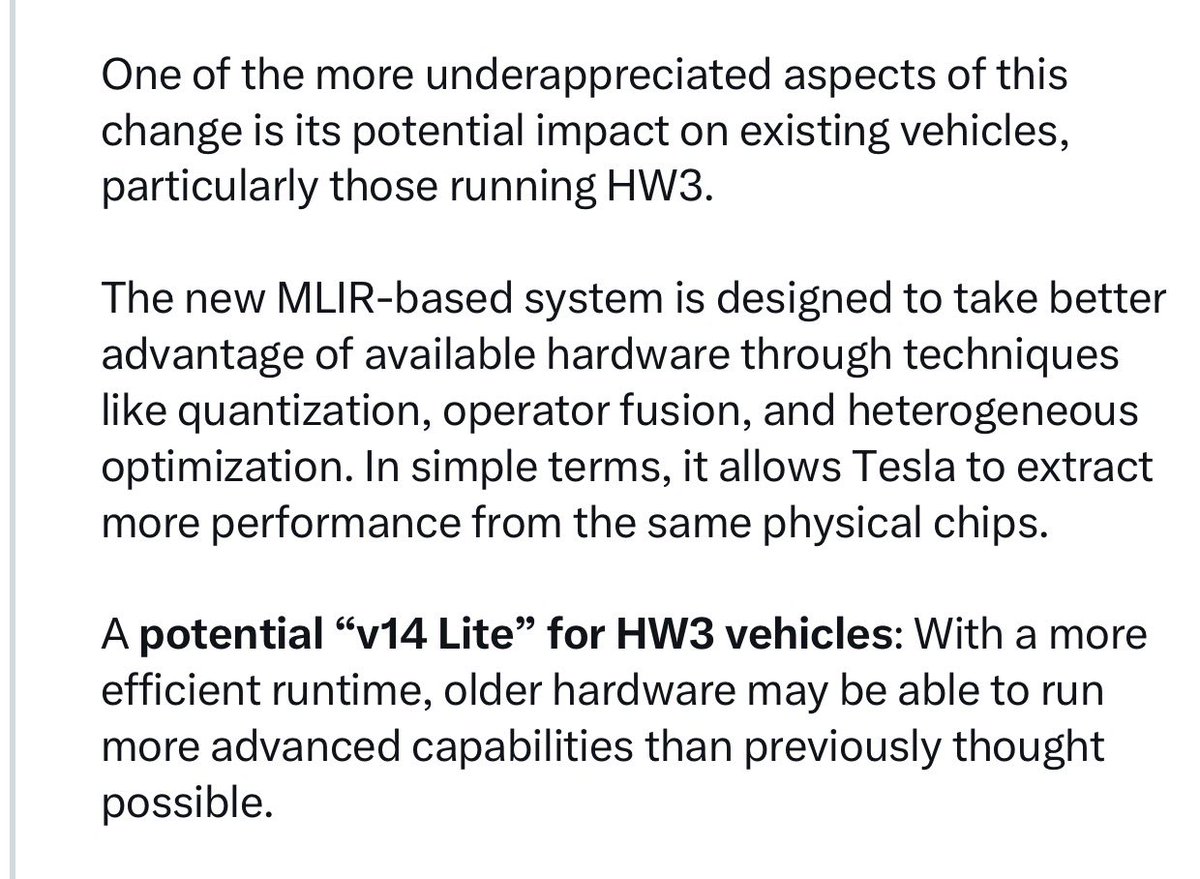
Tesla FSD v14.3: The Removal of a Bottleneck Most people looking at FSD v14.3 see a familiar story: incremental improvement. A bit faster, a bit smoother, a bit more refined. The headline number - roughly 20% faster reaction time - sounds like a solid upgrade, but nothing revolutionary. That interpretation misses the point entirely. v14.3 is not about improving the model. It’s about replacing the system underneath the model. To understand why this matters, you have to separate two parts of Tesla’s AI stack. First, there is the training environment. This is where Tesla uses massive compute clusters to build increasingly powerful neural networks. In this environment, the models can be as large and as sophisticated as Tesla wants. Second, there is the runtime environment inside the car. This is where those models actually have to operate - in real time, under strict constraints of compute, memory, and latency. Historically, the gap between these two worlds has been a major constraint. Tesla could train a highly capable model on the server side, but when it came time to deploy that model into the vehicle, compromises were unavoidable. The model had to be compressed, simplified, and optimized to fit within the limitations of the vehicle hardware. In the process, some of its capability was inevitably lost. The result was not a lack of intelligence, but a bottleneck in how that intelligence was delivered. With v14.3, Tesla rebuilt both the compiler and the runtime from the ground up using MLIR (Multi-Level Intermediate Representation). The compiler is responsible for taking a trained model and translating it into a form that can run efficiently on the vehicle. The runtime is responsible for executing that model in real time inside the car. By rewriting both layers, Tesla has fundamentally improved how models are converted and how they are executed. This is why the improvements show up not just in raw speed, but in qualitative behavior. Early testers are reporting smoother responses, more natural decisions, and a noticeable increase in responsiveness. These are not just signs of a better model - they are signs of a better system delivering that model. For the past several versions - v12 through v14 - progress was largely driven by improving the model itself. But the underlying inference framework remained largely the same. That meant progress was increasingly constrained. Even as the model improved, the system responsible for running it became the limiting factor. So, v14.3 marks a shift in approach. Instead of continuing to push only on model performance, Tesla upgraded the entire stack. The focus is no longer just on how smart the model is, but on how efficiently that intelligence can be translated and executed in the real world. Elon Musk has referred to this kind of change as a “final piece of the puzzle.” That phrasing can be misleading if interpreted as an endpoint. In reality, this is a reset. By replacing the underlying system, Tesla has removed a key constraint that was limiting future progress. The implication is not that FSD is complete, but that future versions - v15, v16, and beyond - can advance much more rapidly and with fewer compromises. In practical terms, this means larger, more capable models can be deployed more effectively. It means improvements made in training are more likely to carry through to real-world performance in the vehicle. And it means iteration cycles can accelerate. One of the more underappreciated aspects of this change is its potential impact on existing vehicles, particularly those running HW3. The new MLIR-based system is designed to take better advantage of available hardware through techniques like quantization, operator fusion, and heterogeneous optimization. In simple terms, it allows Tesla to extract more performance from the same physical chips. A potential “v14 Lite” for HW3 vehicles: With a more efficient runtime, older hardware may be able to run more advanced capabilities than previously thought possible. So, the real story here is that Tesla has addressed a structural limitation in its AI system. It has improved the way intelligence is packaged, delivered, and executed. This is not just an upgrade. It is the removal of a bottleneck. v14.3 should not be viewed as the culmination of Tesla’s FSD efforts. The visible changes today may seem incremental. The invisible changes beneath them are anything but. Tesla did not just make the system faster. It made it ready for what comes next.
English
@kluchacryptoman FSD didn’t ship in the U.S. until october 2020
English
@kluchacryptoman Tesla is ready, that’s how people were running the software in Europe. the delay is purely regulatory.
English
@SantoroSystems Lol I'm one of them and it's been almost 10 years, no one gonna do shit
English
@kluchacryptoman Potentially, but there are a decent number of owners and fans who won't put up with that shit for much longer.
English
@wholemars I would accept this if that would be taking year maybe 2 but 10 years? Tesla simply wasn't ready then.
English
you should channel your anger towards your regulators. They are the ones preventing you from using FSD, Tesla wants you to have it.
Bartosz Hernas@bartosz
Who do I ask for FSD package refund? I paid 8k EUR extra during my car purchase for traffic aware cruise control, and this was now stolen away from me. I would like the refund please. @teslaeurope @Tesla @elonmusk It's my car, I do not want to update it
English
English
@ZacksJerryRig @brandenflasch What if V15 can’t run on HW4 cars… 😬😂
English

He did the meme again. You guys aren't sick of this cash grab fraud yet? It's so obvious. It's been 10 years.
Elon Musk@elonmusk
Tesla V14.3 self-driving review. The point releases will bring polish. V15 will far exceed human levels of safety, even in completely unsupervised and complex situations.
English

Tesla V14.3 self-driving review. The point releases will bring polish.
V15 will far exceed human levels of safety, even in completely unsupervised and complex situations.
Zack@BLKMDL3
600 miles in with FSD v14.3 already and here are my thoughts: The improved reaction time is immediately noticeable and definitely quicker than a human could react. Yesterday a semi truck swerved fast into my lane and the car reacted insanely quickly to get me around them. Tesla says it’s 20% quicker but feels more than that- and it was already extremely good. I’ll start by saying FSD was already so great with v14.2 that it’s sometimes hard to find new things, but there some huge apparent changes immediately noticeable with v14.3. To those who think it’s not a big improvement over v14.2.x+, you’ll be very impressed and especially with some more polish. The reinforcement learning upgrades and thinking are noticeable. Parking is where you immediately notice some changes. In the release notes it says that parking is quicker and more decisive and it’s true. It has picked spots closer and quicker to the selected pin. My Y isn’t showing the new P pin graphic for parking pin for some reason, but it’s definitely parking closer than before with more thought to it. Looking forward to eventually getting more options to hopefully park either closer or further away from people. For the very first v14.3+ build, I have to say it’s pretty polished. The only gripe I have is the way it won’t get out of the left lane soon enough on highways. It likes to cruise in the left lane which isn’t ideal, it’s gotten better but the addition of reduction in unnecessary lane changes needs to be dialed back a bit. Lane changes are a huge plus with this build and they are quick, decisive and executed very well, smooth as butter too. Turn signals come on at way better times now in parking lots and at the perfect time on the road. I was lucky enough to get the update with 600 miles left of my 1800 mile Oregon road trip, so I pulled over to install it so I could get as much experience as possible with it to share with you all. So far 600+ miles in, I’m impressed. A few rough edges with the left lane behavior and the last few inches of parking are a bit slow 1/5 times until it puts it into park but with a point release update everything should be dialed in. The 350 mile drive home today from the Bay Area had zero intervention including all parking and charging. One thing I would love to see implemented is a reset button for the FSD stats page. Would be cool to have a specific trip meter for FSD stats on Trip A/B or make your own trip. I’ve been hinting at a pretty cool road trip next month with my 2025 Model 3 so it would be cool to have a reset for that. Speed control seems good on highways, it’s matching traffic speed great. Braking is very impressive for sudden slowdowns, had a big one in San Jose last night it did a great job with from 80-10mph. HUGE improvements with stop sign behavior. The acceleration and deceleration are way smoother than before, much more pleasant. Mad Max takes off strong but again, a better curve than before. Mad Max is also polished a bit and feels great. FSD v14.3 did a great job in LA traffic once I got back and will go out this evening to film videos for everyone on my normal test loops. Let me know if there’s anything specific I should try or check out. Can’t wait to see how v14.3+ progresses especially with the upgraded reasoning coming to all scenarios soon. Some awesome additions here. THANK YOU everyone @Tesla_AI for all the hard work getting this update out. More videos to come.
English
@doctorbu11 @bartosz @Tesla @teslaeurope @elonmusk @wholemars No he's not, imagine you watch movie that isn't available in your country on Netflix through VPN then Microsoft telling you your PC WWW access has been removed because of this
English

@bartosz @Tesla @teslaeurope @elonmusk @wholemars When literally everyone is telling you that you're retarded - maybe you are
English
Hi @Tesla @teslaeurope @elonmusk. I would like official answer: if I buy Boost package and I overspeed, will Tesla take it away retroactively? If we installed drift wheels and anti radar (third party device), will the Boost package be disabled? I wonder what @wholemars and other Tesla influencers think about this whole fiasco. Imagine: you say you don’t like Elon, your Tesla heated seats stop working. They did it once already. Scary precedent
English
@praeteritia @alleymeows @bartosz So should Microsoft remove your PC access to WWW because you use VPN?
English

@alleymeows @bartosz if a US gamer cracked their Steam cache so that they could play early that would also be theft.
English
Imagine if Audi would do “we don’t like the new suspension/exhaust” you added so we disabled your climate control that you paid for.
I paid for FSD, I put third party mod on a thing (car) that I own. Tesla doesn’t like it so now 8k€ spent on FSD (in EU it means traffic lights aware cruise control) was disabled.
What’s next @elonmusk ? We don’t like you speeding, we took your Boost package? We don’t like the wrap you put on the car, auto park was disabled for your car.
Can I get refund of the FSD now please @teslaeurope ? I don’t want to update the car, it’s not safety you are worried about, do I own the car or do I not? Where do I send my bank account for the 8k€ refund since you disabled it? The car thinks I don’t have the FSD anymore yet my bank account is 8k € out of pocket.
Whole Mars Catalog@wholemars
the fun is over for people using FSD in Europe 😭
English
@praeteritia @bartosz Lol what if you paid for game 8 years ago and game hasn't arrive yet is this theft? Scam?
English
@blafasel42 @bartosz Tesla won't be held accountable because FSD doesn't exist yet it's supervised. If you mod your BMW install Ecu chip does other manufacturers should limit your engine power to manufacturing spec? BS
English
@bartosz i think you miss the point: Someone added a CAN Bus device that interferes with the electronics of the car. And since Tesla will be helt accountable for everything the car does when in FSD, they stop FSD. For regulatory compliance and risk
English
@FlamebearerEno @bartosz So you saying all tunned and moded cars should be limited by Manufacturer? Like you have stage 2 mod and BMW will say sorry guy we limit your engine power to manufacturing spec?
English

@bartosz Did it void your agreement by modding your car? How can Tesla make claims about FSD if someone has an illegally modified version of the car that could act outside of the expected parameters because of your modifications? How do you know you didn't obstruct key components?
English
@jeremybryce @bartosz "Unlock functionality you weren't supposed to have" lol he paid £8k for this functionality if this system aren't approved in Europe yet and is illegal and he choice to use it anyway is not tesla Buissness
English

I don't get why you keep stating "traffic light awareness is fully legal in Europe." So? Are you purposefully trying to conflate the issue? You installed a literal 3rd party device to unlock functionality you weren't supposed to have, then cry like a bitch about it on X when its disabled?
Tesla disabled the entirety of FSD when you got caught. If you don't understand the reason it was disabled, everyone is wasting their time talking to you.
English
@SenMikeLee Do you think we really care? Stop whining and leave
English
Our withdrawal from NATO would be long overdue.
NATO has run its course. The threats that existed at its inception are no longer relevant 76 years later. Europe has been leaning on American taxpayers for their security for decades, offering too little in return.
That’s why I introduced the Not A Trusted Organization (NATO) Act last year, and why President Trump is right to question American membership today.
Department of State@StateDept
PRESS SEC: It’s quite sad that NATO turned their backs on the American people over the last six weeks when it’s the American people who have been funding their defense. President Trump looks forward to having a very frank and candid conversation with Secretary Rutte.
English


I don’t think Tesla’s 70% degradation for battery warranty is acceptable. Anything over 80% is absolutely unacceptable and should warrant replacement. It’s obvious Tesla is playing the numbers because new models are seeing far more degradation than earlier models did. Current battery quality is worse than 8 years ago. Completely unacceptable
English
@PopularLiberal In Europe it was other way round people was making sure tesla was built in China not in US as China had better panel gap better built quality
English

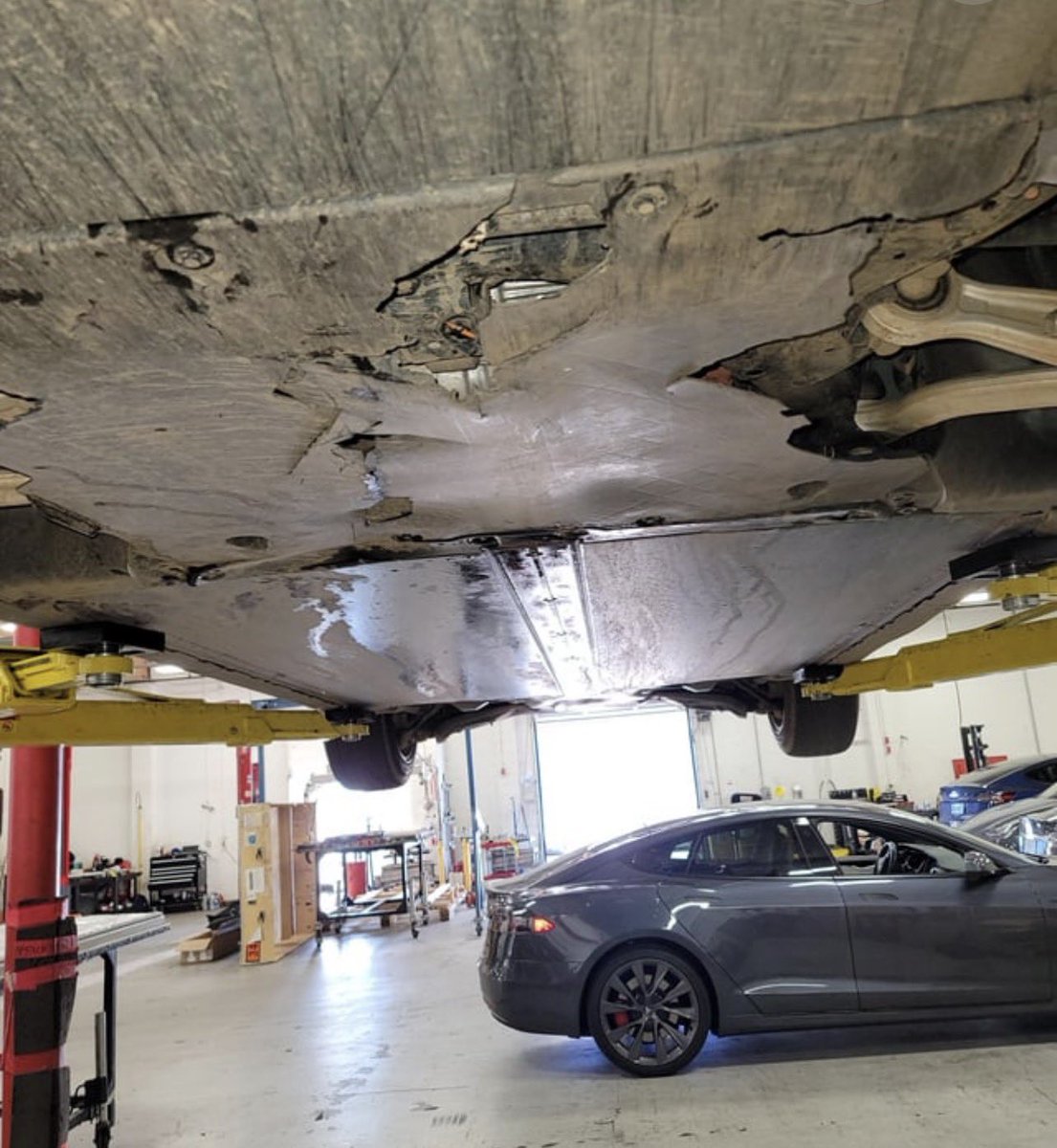
WOW! THE $17,000 TRAPPER KEEPER
10,000 miles. Coolant leak. Bottom rusted out, falling off the lift and looking like cheap scrap metal. $17,000 battery replacement. Where did this junk come from?
52% of "American" Teslas are made in China. Shanghai Gigafactory: 851,000 vehicles. 400 Chinese suppliers. 95% Chinese components. This isn't a US automaker—it's a Chinese company with a Texas PO box.
Trump's 54% tariffs destroyed Tesla's energy division (built on Chinese LFP batteries). Then Trump's 125% retaliatory tariffs banned California-made Model S and X from China entirely. Elon backed Trump with $250 million and got his luxury cars kicked out of his biggest growth market.
California builds the premium product. Elon bashes Cali while his China operation ships you rust that falls apart at 10k miles. Make it make sense. OMG 👀
English
@Airshiptycoon @dlLambo Btw in no way I support anything in this post
English
@Airshiptycoon @dlLambo Well in 1948 Isreal gained independence hence most of Jews living abroad emigrated to Isreal driven by Aliyah
English

Israel is now more dangerous than Nazi germany was.
A deep ideological hatred of all around them with a desire to seize lands.
Fully armed by the West and with legal impunity.
Nuclear armed and a total religious supremacist outlook.
The most dangerous entity to ever exist.
English