

kunfud

7.6K posts

kunfud banner
kunfud

kunfud

@kunfud

https://t.co/rXdojGtAeL Corporate and commercial law. Tort law. #Inclusive growth in Wealth management (trade secrets' protection) good #governance & #Blockchain.

Katılım Aralık 2008
4.5K Takip Edilen2.1K Takipçiler
kunfud retweetledi
Cris Carrascosa ⚡️
Cris Carrascosa ⚡️@CarrascosaCris_·
🔥Principio de acuerdo en el Clarity Act entre la industria cripto y el lobby bancario. Según se ha filtrado hoy, podemos estar ante un avance importante en las negociaciones de la normativa más crítica que está intentándose aprobar en EEUU actualmente: el Clarity Act. Aunque esta materia no formaba parte estrictamente de dicha norma, como ya contamos hace tiempo, el lobby de la banca introdujo en las discusiones la modificación absoluta del régimen del yield, en stablecoins, que ya había sido regulado en el Genius Act. Tras meses de negociación, parece que hay un régimen definitivo que cierra totalmente la puerta al yield pasivo, o dicho de otra forma, el recibir intereses en stablecoins por el simple hecho de tenerlas depositadas en una plataforma concreta. La forma más común, por otro lado, de obtener rendimientos en los últimos años con un riesgo relativamente bajo. ¿Mala noticia? Para el sector si, para Europa (por ser optimistas) no tanto porque ahora tendremos un régimen muy similar y evitaremos el free riding. Para mí, otra victoria de un sector que en EEUU pesa mucho, que ya manifestó abiertamente su preocupación por la posible fuga masiva de depósitos y que ha preferido presionar al regulador, en vez de intentar adaptarse a los nuevos productos financieros. Mientras, Circle hoy caía por fuerza en bolsa al haberse cerrado la puerta a su producto estrella
Cris Carrascosa ⚡️ tweet media
Español
18
25
193
15.5K
kunfud retweetledi
Quant
Quant@quantnetwork·
Last chance to register for the @Oracle AI World Tour London Executive Roundtable on Digital Assets Issuance and Custody, where our Founder and CEO, @gverdian, will be sharing insights from the UK Tokenised Sterling Deposits Pilot. 📍 Chartered Accountants Hall, London 🗓️ 25 March 2026, 12:30 – 3:30 PM This industry roundtable aims to clarify the digital money journey, with industry examples, recommendations on business strategy, and phased implementation roadmap. Register here: eventreg.oracle.com/profile/web/in… #DigitalAssets #Stablecoins #TokenisedDeposits #TokenisedMoney
Quant tweet media
English
0
84
379
8.6K
kunfud retweetledi
Cointelegraph
Cointelegraph@Cointelegraph·
⚡️ NEW: Ethereum Foundation outlines L1-L2 strategy with L1 serving as resilient settlement hub while L2s drive differentiation and customization for thriving ecosystem.
Cointelegraph tweet media
English
65
89
548
33.8K
kunfud retweetledi
LNET
LNET@lnetglobal·
¿Estamos realmente preparados para construir una infraestructura financiera digital global? 🌐 #LNET estuvo presente en “Joining Forces for Blockchain Standardisation”. #Web3 #Blockchain @INATBA_org @EU_Commission
LNET tweet media
Español
1
2
4
105
kunfud retweetledi
Etherealize
Etherealize@Etherealize_io·
Vitalik Buterin explains why proof-of-stake is more secure than proof-of-work “I think proof of stake is very secure because to attack the system, you need to have basically as much stake as the rest of the network. Right now, for example, we have 5 million ETH staking, which means you have to come up with 5 million ETH and then join the network.” At the time of this writing, more than 37 million ETH are being staked, with 3 million ETH waiting to join via the validator queue. At today’s prices, that’s more than $80 billion of ETH someone would have to acquire to attack the network and revert finalized blocks, which is more than the cost of attacking even the Bitcoin network by some estimates. The other defense mechanism that proof-of-stake has that proof-of-work doesn’t is slashing, which makes Ethereum antifragile. Vitalik explains: “Recovering from attacks is much easier in proof-of-stake than proof-of-work. For many kinds of attacks you do against [the Ethereum] network, we have this concept of automatic slashing. In order to revert a finalized block, you basically have to have a big portion of your validators sign two conflicting messages. This is something where once these messages are on the network, you can go and prove ‘these people did it.’ So we have this feature in the protocol where you basically take all these people who provably misbehaved and you burn their coins.” Vitalik also acknowledges the possibility of censoring attacks, where if 1/3rd of validators refuse to attest, the chain can’t finalize. But, as he explains, Ethereum has a contingency plan for this as well: “Everyone who got censored would create a minority chain, and the community would have to do a soft fork. The would have to say, ‘this chain is clearly attacking us and this one is not attacking us, so we’re going to join this chain.’ Then what happens is, on that new chain, the attackers also lose a lot of coins. The difference between proof-of-stake and proof-of-work is that in a proof-of-stake system, you can identify specific participants — and this isn’t a human going in and saying ‘I don’t like you’. It’s all automated.” One last benefit of proof-of-stake is that security scales with the value of the network. As Vitalik put it five years ago, it is really relative security, and not absolute security, that matters: “The security needs of a thing have to be proportional to the size of that thing, because as a thing gets bigger, its enemies become bigger and more well-motivated. If BTC were 100x as big as it is today, the value from destroying it would be 100x higher, and the kinds of actors that would want to care about destroying it would be much bigger and scarier. This is also why countries of all sizes have roughly similarly sized militaries as a percentage of GDP. Hence, cost of attack divided by market cap really is the correct statistic to measure, and in the long run issuance-free PoW really does look not that good." Source: @lexfridman (Jun 2021)
English
88
147
995
101.1K
kunfud retweetledi
Gilbert Verdian
Gilbert Verdian@gverdian·
A decade in the making, we have published an ISO standard for blockchain interoperability. This is a milestone I've been working towards since 2015, Remitt was founded with the conviction that blockchains could transform financial services but only if the industry solved interoperability and harmonised around global standards. Without that, blockchain would remain fragmented, siloed, and locked out of mainstream institutional adoption. In April 2016, we published what was the world's first proposal for a blockchain standard (remitt.com/blog/2016/04/2…) a bold move at a time when the industry was still largely focused on proofs of concept and competing protocol narratives, not standardisation. The idea was simple but ambitious: if blockchains were going to serve global markets, they needed a common framework that transcended any single protocol or vendor. Central to this thinking from the very beginning was the concept of a multi-gateway architecture, leveraging the know-how of 20 years of experience in cybersecurity to frame the principle that interoperability shouldn't depend on a single bridge or point-to-point connection, but on a layered gateway model that could abstract away the differences between underlying DLTs and connect them through a common interface. This was the architectural foundation of what would become Overledger, and it was also the design philosophy we brought to the standards process. The belief was that a viable international standard for blockchain interoperability had to be protocol-agnostic and gateway-driven, enabling any DLT to communicate with any other DLT (any-to-any) and with existing networks, without requiring those ledgers to change how they operate. The standard and the technology were born from the same insight. That same year, I worked closely with the team from @standardsaus (Standards Australia), who had the foresight in 2015 to champion the initiative at the international level. Together, we pushed for ISO to establish a dedicated Technical Committee for blockchain and not to be absorbed into an existing committee, but to stand on its own as a recognition that this technology warranted its own global standards programme. The industry demand was there, the use cases were multiplying, and the fragmentation was becoming a real barrier. In September 2016, the New Work Item Proposal (NWIP) received global approval, and ISO formally gave the green light to establish a new Technical Committee (remitt.com/blog/2016/09/1…). TC 307 — Blockchain and Electronic Distributed Ledger Technologies — was born (remitt.com/wp-content/upl…). The inaugural meeting was held in Sydney in April 2017, and from that moment the real work began. As the standards work progressed internationally, the mission at Remitt was evolving too. What started as an effort to use blockchains for financial services and solve interoperability grew into something far larger, a full enterprise infrastructure platform for connecting any blockchain to any network. Remitt became Quant, and we built Overledger, the world's first blockchain operating system to deliver on that original vision. The multi-gateway architecture that informed the standards thinking became the core of Overledger's design: a technology layer that sits above all blockchains, providing institutions with a single integration point to access any DLT, any network, and any existing system. The interoperability challenge that drove the standards work was the same challenge we set out to solve commercially and the two efforts reinforced each other throughout. For close to a decade since TC 307's formation, subject matter experts across the world have contributed their time and expertise to Working Group 7 — Interoperability is the committee I chair. International standards are not built quickly they are built through consensus, technical debate, and relentless refinement. The same methodology and rigour that created the Internet, through publishing standards. The result is a published international standard for blockchain interoperability. 🔗 iso.org/standard/82098… A huge thank you to @isostandards as the international standards developing organisation, to the team at @standardsaus who started the initiative in 2015 and worked tirelessly to get TC 307 approved and established globally, and to every subject matter expert who contributed to Working Group 7 over the years. This would not exist without that collective effort. From a blog post proposing the world's first blockchain standard in 2016, to a published ISO standard in 2026 and from Remitt to Quant, from an architectural concept of multi-gateway interoperability to Overledger and a global standard, this has been a decade-long journey of building both the standards and the technology to make blockchain interoperability a reality for institutions worldwide. There is still much more work ahead. More standards to develop, more to evolve, and more to build. But today, we mark a significant milestone. #Blockchain #ISO #Interoperability #Standards #TC307 #DLT #Quant #Overledger
English
112
397
1.4K
195.8K
kunfud
kunfud@kunfud·
ISO/AWI PAS 26347[Under development] Interoperable protocol between digital wallets based on blockchain and DLT iso.org/standard/93265…
English
0
2
2
56
kunfud retweetledi
🥖Tokenicer✲⥃⬢
🥖Tokenicer✲⥃⬢@Tokenicer·
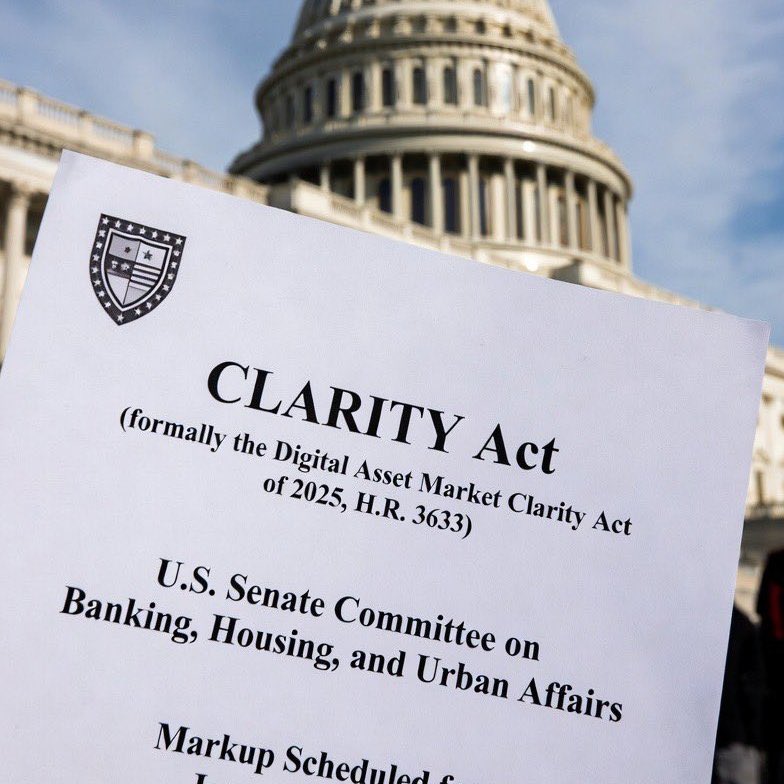
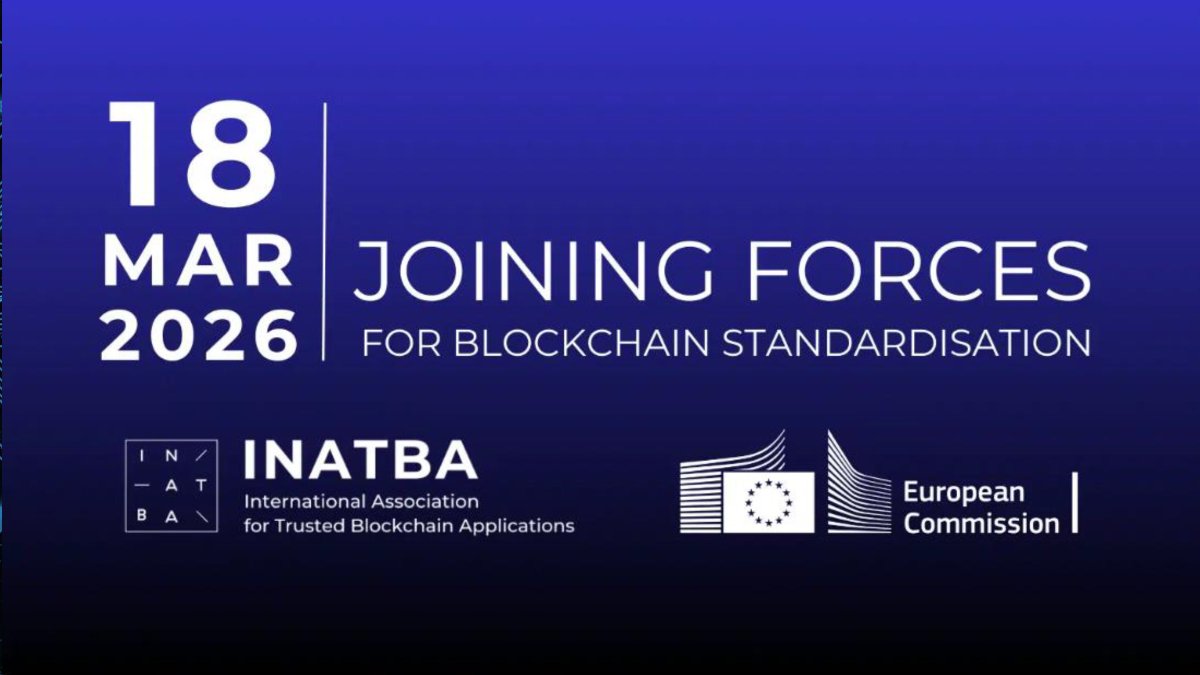
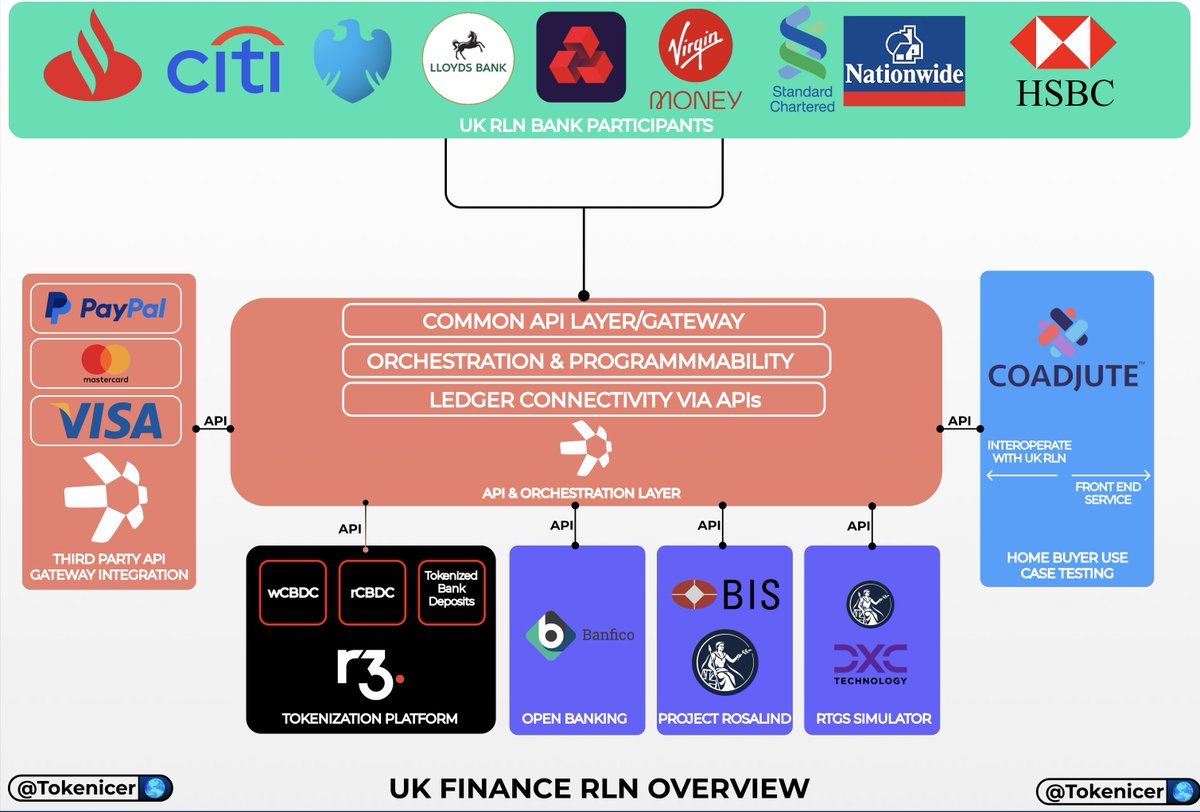
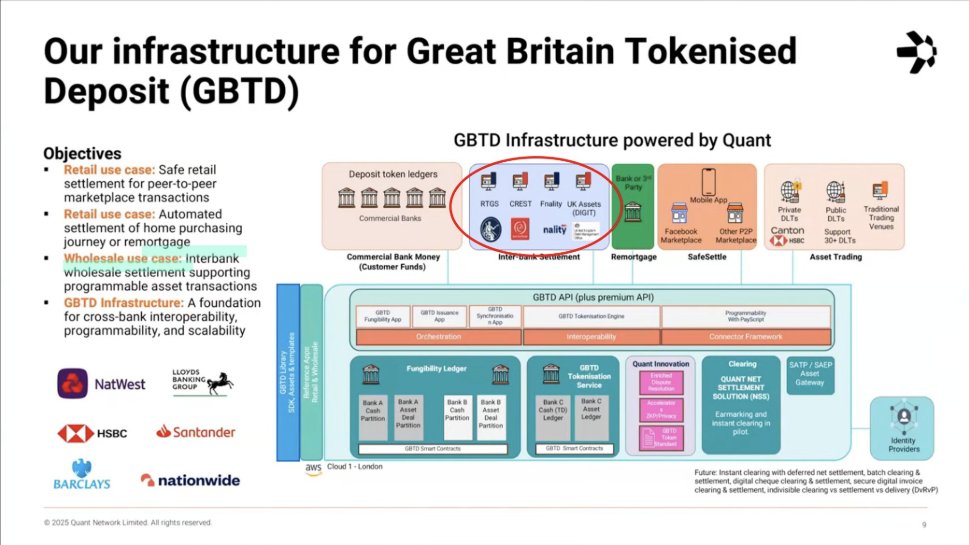
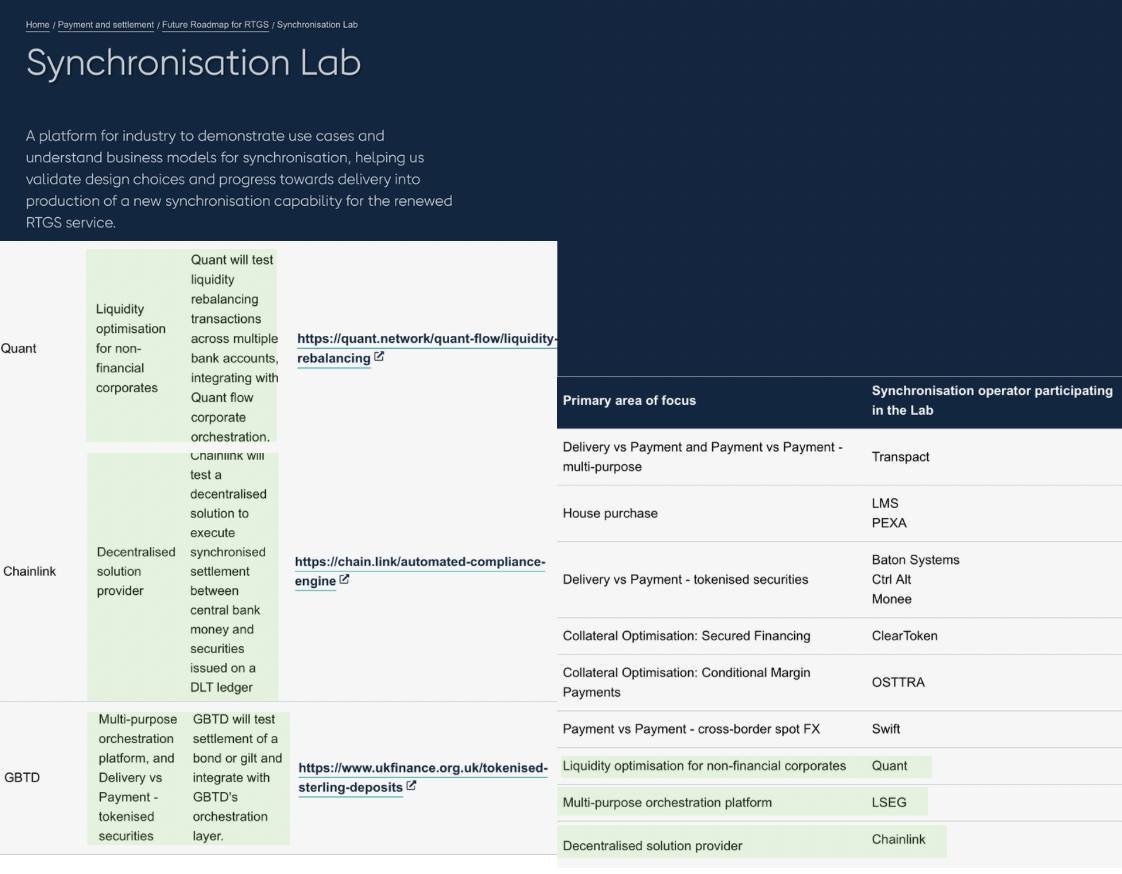
$QNT has been at every piece of innovation across UK's transformation to digital finance. Rosalind- Retail payment infrastructure UK RLN- Shared banking ledger GBTD- Tokenized UK Sterling Deposits BoE Sync Lab- Orchestrate money & infrastructure The UK's choice for DLT infrastructure across govt & enterprises was set in stone long ago. And now we're watching it play out in real-time.
🥖Tokenicer✲⥃⬢ tweet media🥖Tokenicer✲⥃⬢ tweet media🥖Tokenicer✲⥃⬢ tweet media🥖Tokenicer✲⥃⬢ tweet media
English
3
49
232
7.3K
kunfud retweetledi
BSCN
BSCN@BSCNews·
🚨 DATA: $ETH NOW CONTROLS 34% OF THE TOKENIZED RWA MARKET Ethereum's real-world asset value just blew past $17 billion — a 315% jump in 12 months. @BlackRock's BUIDL fund alone holds $2.2B. JPMorgan seeded $100M. Wintermute is trading tokenized gold on-chain. $ETH price is struggling. But institutions keep building on it. Full story 👇
BSCN@BSCNews

x.com/i/article/2023…

English
22
64
300
27.8K
kunfud retweetledi
Merlijn The Trader
Merlijn The Trader@MerlijnTrader·
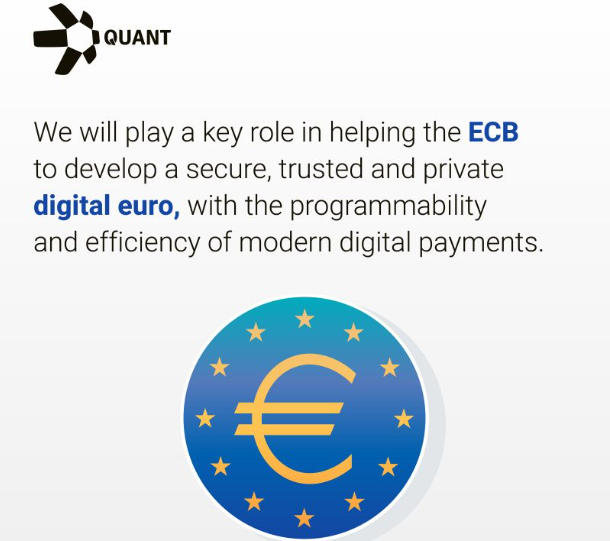
MASSIVE: 🇪🇺 Ethereum is being considered as a potential blockchain to launch the Euro stablecoin. Governments aren’t asking if public blockchains work anymore. They’re asking which one is good enough. That’s a major shift.
Merlijn The Trader tweet mediaMerlijn The Trader tweet media
English
286
285
2K
170K
kunfud retweetledi
LNET
LNET@lnetglobal·
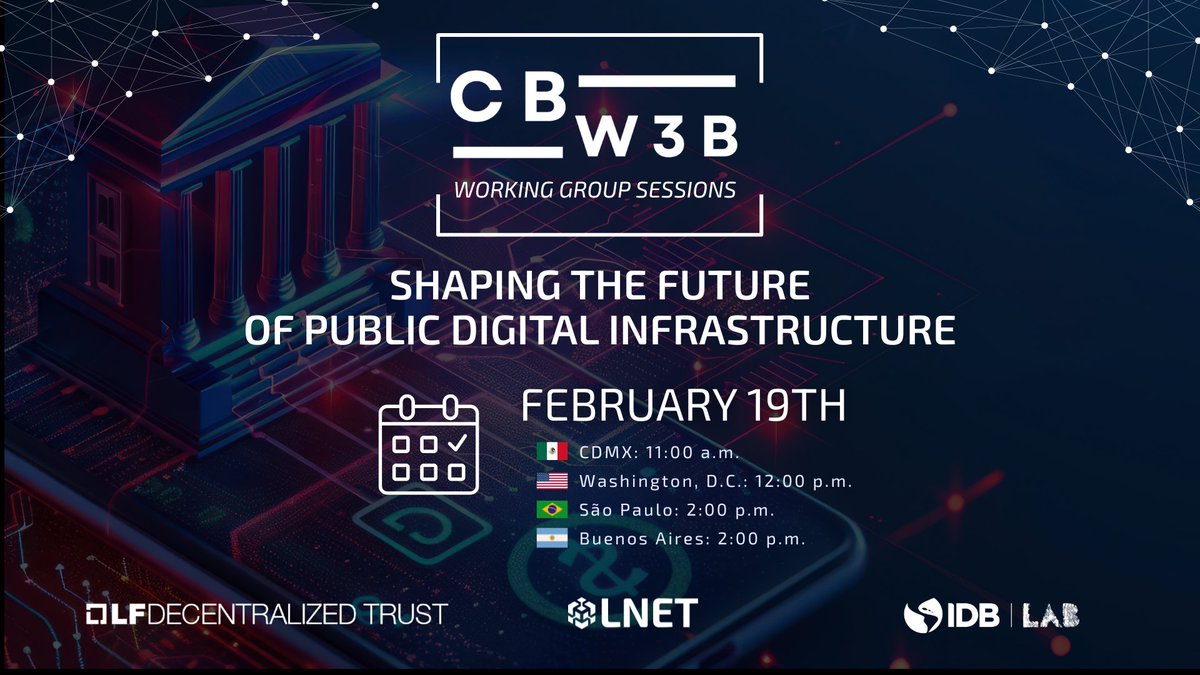
🌎 Don’t miss the upcoming #CBWeb3 session! On February 19, we'll dive into Interface Contracts, Reference Mocks, and Test Vectors. A unique opportunity to contribute to Digital Public Infrastructure in Latin America and the Caribbean. 📅 *Times:* 🇲🇽 CDMX: 11:00 a.m. 🇺🇸 D.C.: 12:00 p.m. 🇧🇷 SP: 2:00 p.m. 🇦🇷 BA: 2:00 p.m. 🔗 Join here: zoom-lfx.platform.linuxfoundation.org/meeting/986648… #LNET
LNET tweet media
English
1
1
1
66
kunfud retweetledi
Bitcoin for Freedom
Bitcoin for Freedom@BTC_for_Freedom·
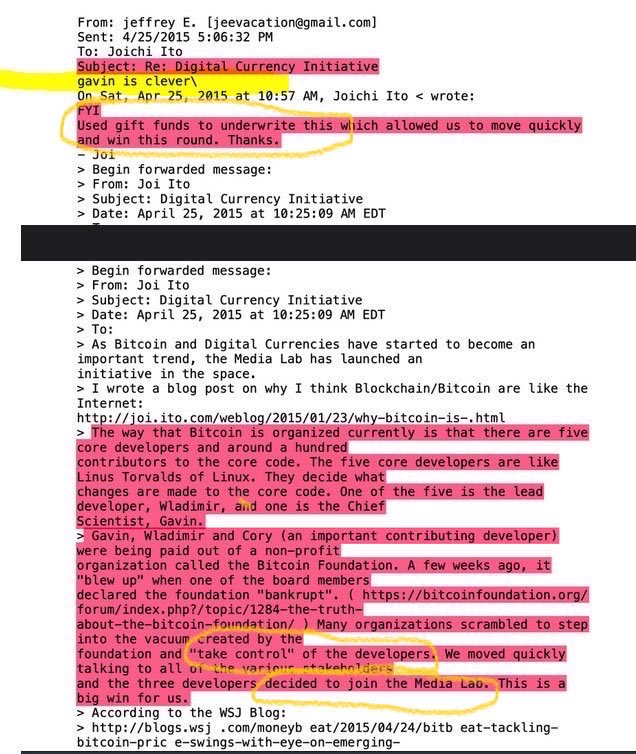
This is not a good look for Bitcoin Core.👀
Bitcoin for Freedom tweet media
English
126
278
1.4K
154.5K
kunfud retweetledi
Francesco τ༝τ
Francesco τ༝τ@francescoX222·
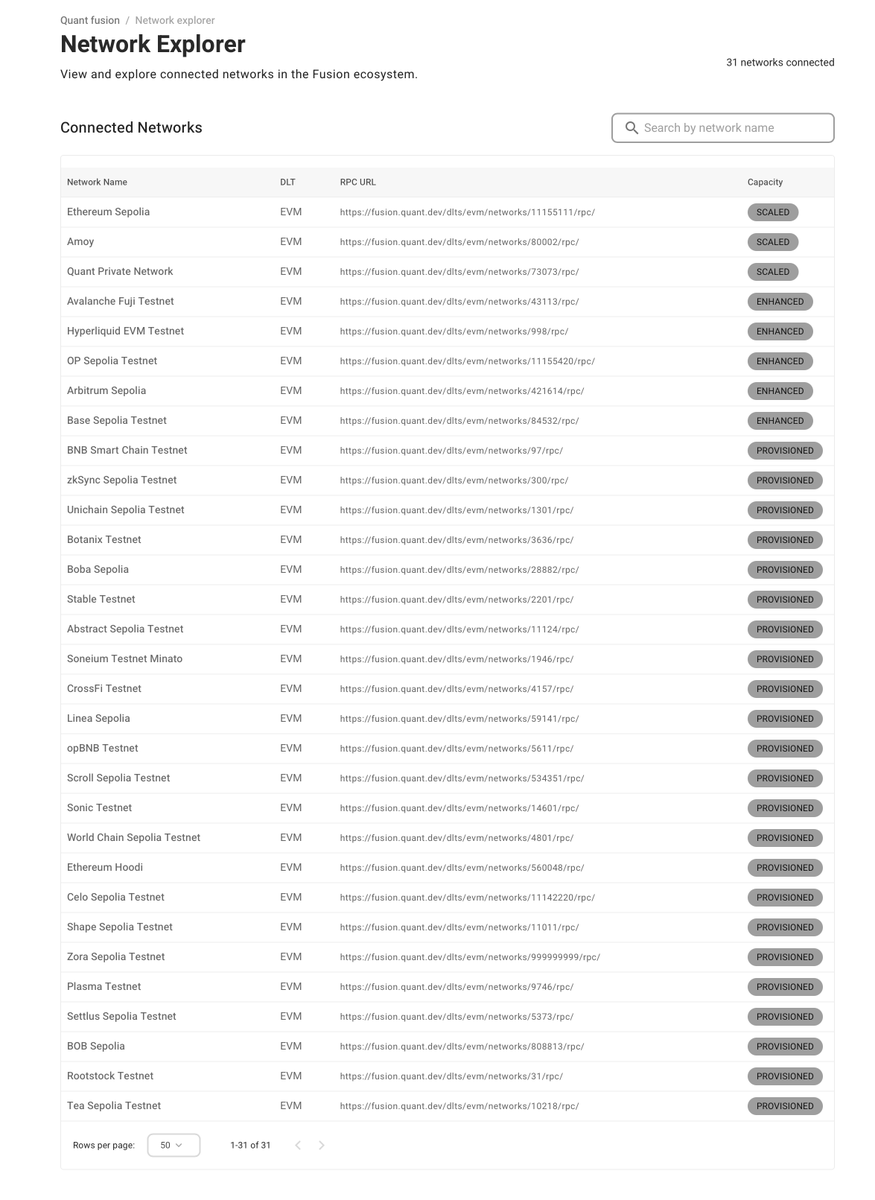
This is the direction @quantnetwork has been positioning for. As central banks begin to accept DLT-issued assets inside core liquidity frameworks, interoperability moves from theory to requirement. $QNT Collateral, settlement, and regulated money are converging on shared rails. That convergence demands orchestration across systems, not isolated ledgers. This is the layer @FusionLayer25 operates in: Connecting existing financial infrastructure with DLT networks in a way institutions can deploy at scale. When DLT assets unlock central bank liquidity, infrastructure choices start to matter. That’s where Quant’s relevance becomes structural. #BuildtheFuture
Francesco τ༝τ tweet media
Aurum@Aurum8880

The European Central Bank has taken a quiet but structural step. 🚨 $QNT From March 2026, DLT-issued securities will be accepted as eligible collateral within the Eurosystem. That places DLT assets inside the core liquidity framework of central banking. Issuance, settlement, and collateral are beginning to converge on shared rails. When assets can unlock central bank liquidity, they enter the infrastructure layer. In this context, it’s worth remembering that @quantnetwork is already engaged with European institutions On digital euro-related infrastructure. That alignment gives additional weight to this shift. quant.network/news/quant-sel…

English
1
49
233
10.1K