losingnow
7.8K posts
losingnow
@losingnow
Fan of perennial losers: Indian cricket,Cubs,Bears | MACROeconomics is fake science run by cults | Experts, Intellectuals are smug and useless
Katılım Ocak 2009
374 Takip Edilen173 Takipçiler

A great article by my good friend @hvgoenka on the ACTUAL STATE OF OUR CRICKET. Some enlightening points like stadiums. I don’t agree on shortening the tournament. In fact it should be stretched elongated- ipl as a format could now move to a full window of home and away played for 6-7 months starting in November and played Thursday - Friday - Saturday- Sunday - the 94 games required under the structure proposed need to be adhered to. Bcci should now push this agenda thru. Bilateral matches if and when should be scheduled during rest of the year and at times between @ipl windows. For example they could be midweek. Or ipl paused for those week to allow bilateral window that season as is done in football. It’s inevitable that will happen

English
@ankurnagpal Yep.
In $s (the reserve currency of the world) and post-tax (with the right strategies like tax loss harvesting).
English

One of the under appreciated reasons Americans are wealthy relative to the rest of the world:
Access to the US financial markets
Regular rich people around the world have not had any part of their net worth in an asset compounding 10% annually
English

@ankurnagpal Long term access to deep capital markets and strong equity returns has quietly been one of the biggest wealth creation advantages Americans have had for generations @ankurnagpal
English
@Backhand_Slice_ Yep. Miller and Ashutosh should have played all matches and up the order. Total screw up by badani
English


Every IPL match is a humongous expense on electricity (in stadia) and fuel (in lakhs of vehicles), and wastes precious incomes of lakhs of people (that must be conserved now, given massive economic uncertainty). And anyway, who earns from IPL? Only the super-rich.
Scrap all IPL matches right away.
Save energy. Save electricity.
Save Indian economy.
English
When two giants miss the playoffs, the internet wins. 😭🏏
That’s the beauty of the Indian Premier League — reputations mean nothing once the game begins. One bad week, one dropped catch, one wrong call… and the suitcase comes out early. ✈️😂 #IPL #MI #LSG @mipaltan @lucknowsupergiants @ipl
Everyone at the edge of their seats in the last over. A free hit. Bat chipping. Wides. A single on a wide. A no ball. A wicket. Then a six - But in the end a second last ball finish - and @RCBTweets wins and eliminates mumbai indians chance of a playoff. This is ipl. Most unpredictable league in any sport.

English
@VazeKshitij Well said .. we have no dignity of labor .. the intellectuals mock hard manual work as “coolie jobs” .. says it all :(
English

I got so, so much to say about this man. This is going to be long, so buckle up.
There is a mental block in Indians that stems from the British rule. Someone who sits in a cabin, surrounded by papers and constantly looking busy has historically been associated with power, intelligence, and importance. During the colonial era, this perception made perfect sense.
The people occupying those offices were not merely employees - they were extensions of the administrative machinery that governed the country. The clerk, the officer, the babu, the man behind the desk with stamps, files, and authority, represented access to power itself. Entire lives could be altered based on what happened inside those rooms. Naturally, generations grew up internalizing the idea that proximity to paperwork and administration equated to status.
The British left decades ago, but cultural conditioning does not disappear with a flag change. The structure survives long after the rulers are gone. Even today, Indians subconsciously associate office environments with success and dignity in a way they rarely do with industrial or technical labor.
A BPO employee wearing a formal shirt, sitting in an air-conditioned office and speaking English into a headset often commands more social respect than a CNC machinist capable of manufacturing components with tolerances tighter than a human hair. One is perceived as “corporate,” the other as “factory labor,” despite the latter possessing an extraordinarily specialized and economically valuable skillset.
And that disconnect says something deeply uncomfortable about how we value work.
A skilled machinist can take a raw block of metal and convert it into high-precision components that may end up in automobiles, aircraft, industrial robots, medical devices, or defense systems. That requires mathematical understanding, spatial reasoning, knowledge of materials, tooling strategy, machine behaviour, thermal expansion, tolerance stack-ups, feeds, speeds, vibration control, and process discipline. Mistakes are expensive.
Precision is unforgiving. The work has tangible consequences in the real world. Yet socially, this individual is often viewed as somehow “below” someone doing process documentation for a foreign client in an outsourcing firm.
India developed an economy where appearing professional became more important than producing something real. Entire generations were taught that escaping physical or industrial work was the ultimate marker of upward mobility. Parents wanted their children in offices because offices symbolized safety, cleanliness, English-speaking environments, and social elevation.
Factories, workshops, shop floors, and machine environments became associated with struggle rather than expertise. The tragedy is that this mindset emerged precisely in a country that desperately needed strong manufacturing capability to become economically self-sufficient.
You can see the consequences everywhere. We celebrate startup founders making apps that optimize food delivery by 3%, but rarely admire the people who understand tooling, fabrication, embedded systems, production engineering, process automation, or manufacturing reliability. We romanticize “corporate culture” while ignoring the fact that nations become powerful through industrial competence, not PowerPoint presentations.
A society that cannot respect the people capable of building and maintaining physical systems eventually becomes dependent on those who can.
The irony is almost absurd. The CNC machinist, the welder, the industrial technician, the maintenance engineer, the assembly line specialist - these are the people who convert engineering from theory into reality.
Without them, designs remain drawings and simulations remain fantasies. They are the interface between ideas and existence itself. Yet because their expertise exists on a shop floor instead of inside a glass office cabin, society often treats them as lesser.
And honestly, it makes me sick to witness.
Sanskar Modi@sanskarmodi22
India doesn't have a manufacturing problem. India has a respect problem. We respect the guy who cracked CAT more than the guy who can build an engine from scratch. And that concludes the whole story.
English

I arrived in San Francisco from the South Pacific
I expected to go through the usual global entry process but there were no kiosks for a picture, no passport review … a woman looked at me and said welcome back Mr. Gibson …
English
@crsanchezx D is best and A is worst :)
Is this a spanish thing? Is that how letter grades are awarded in school/college in Spain?
English

¿Qué suscripciones NO deberías estar pagando?
[Última versión 2026]
De mejor a peor...
D (Aún aceptable)
• Spotify
• Amazon Prime
• YouTube Premium
• Google One
C (Regular)
• Netflix
• HBO Max
• Disney+
• Apple Music
B (Trampa) ↓↓
Español
@agingroy @JAMA_current How do you measure cardio respiratory fitness? Is there a test for measuring this that a common man can access?
English

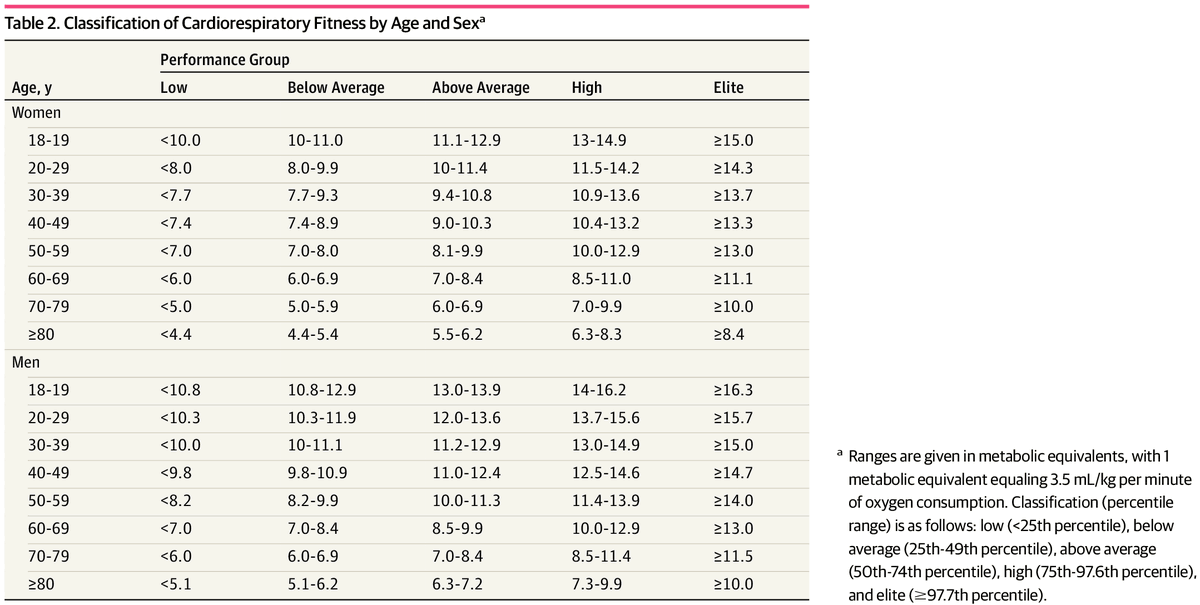
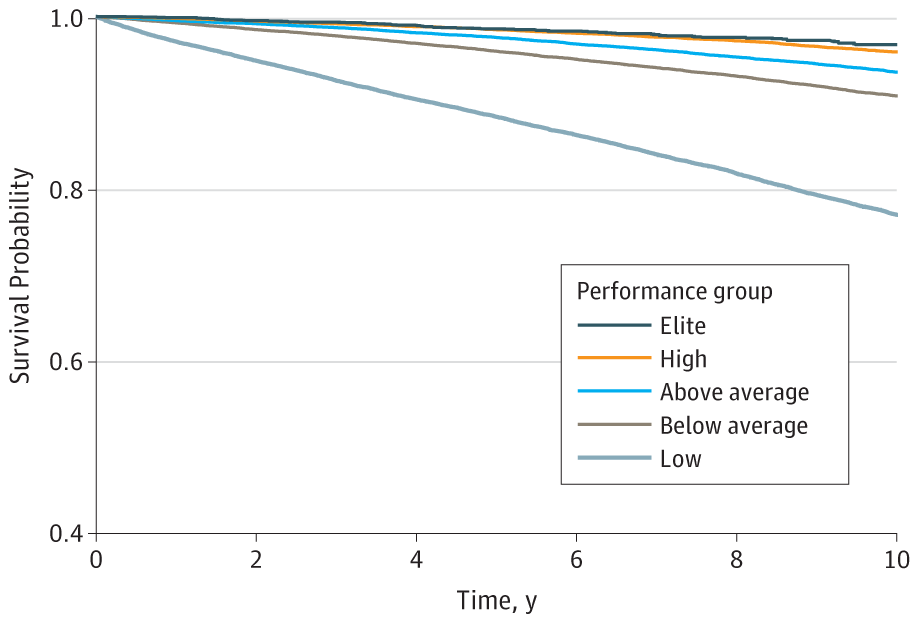
A treadmill test predicts your odds of being alive in 8 years better than diabetes, smoking, or end-stage renal disease.
122,007 patients. @ClevelandClinic followed for 8.4 years.
Patients with elite cardiorespiratory fitness had 5x lower mortality than those with low fitness. The benefit kept rising at the very top of the curve. No ceiling.
The “fit but not too fit” advice your cardiologist gave you isn’t supported by the data.
English
@anish_koka you fell for Obamacare when young .. ouch !
Glad to see you publicly acknowledging that you were fooled once. That snake oil salesman got many (including @elonmusk).
English

These are the folks that I listened to when I voted for Obamacare as a young doctor.
Surely these smart policy people from Harvard and Yale would “fix” healthcare.
They sold the public on ACOs, vertically integrated networks that owned the whole health care stack as the path to better more affordable care.
They were completely wrong and made things much worse. Consolidation in the healthcare space basically ended private practice and care became more costly and less affordable.
Some of the programs they set up like the heart failure readmission reduction program almost definitely increased heart failure mortality.
As the saying goes.. fool me once… shame on you, fool me twice..
Zack Cooper@zackcooperYale
Got a new essay out today in the The New York Times . The argument: we should address issues like prior authorizations and care denials, but if we want to lower premiums and health spending, we need to focus on hospital pricing. Cite a a book called The Silent World of Doctor and Patient by Jay Katz that Lainie Ross assigned when I was an undergrad that gets at why it’s hard to both be grateful for care and hold health care providers accountable. Let me know your thoughts. nytimes.com/2026/05/04/opi…
English

@YashicaDutt Thanks Yashica, it’s great to be lectured at by a Columbia grad about oppression and dominance. All the years I was jobless, dropped out of college, zero income zero network is worth it to be called a dominant caste. Thank you so much for your empathy.
English

Good for you Anang! Welcome to 2016, where dominant caste Indian Americans still got away with making ignorant statements like these.
Anang Mittal अनंग मित्तल@anangbhai
@JCColtin @YashicaDutt @CityAndStateNY I have never cared about my caste in my 20 years in America and the only time I was asked about it was in 2020 thanks to caste obsessed people like this. If this is Desi identity I want nothing to do with it.
English

Just talked to a UHNW guy who has an equal weighted portfolio of four stocks:
$GOOG
$CRWD
$JPM
$NVDA
No RE. No alternatives. No privates.
And no fees. No lockups. No headaches.
He has outperformed 99% of fintwit.
English


Hardik took the ‘girlfriend culture’ news personally.
No Mahika, No Play
#MIvLSG
Mufaddal Vohra@mufaddal_vohra
🚨 THE BCCI TO TAKE STRICT ACTIONS AGAINST GIRLFRIEND CULTURE GOING IN THE IPL. 🚨 1️⃣ BCCI preparing to enforce strict rule on Girlfriend culture. 👫 2️⃣ BCCI wants to be careful before any major blunder happens. ‼️ 3️⃣ Some of the players are even staying at the team’s hotel with their Girlfriends. 🏨 4️⃣ A BCCI official confirms the BCCI will be discussing about this. ✒️ 5️⃣ The BCCI is clear that family members and wives are not problem, but Girlfriends are. 🧑🧑🧒🧒 6️⃣ The new rules could be implemented from IPL 2027. 🗓️ 7️⃣ BCCI believe that if no strict regulations are taken then any major controversies could arise in future. (Abhishek Tripathi).
English
@ErikaMorris79 @nibraz88cricket Is virat an overseas player now :)
English

@ScottJenningsKY lol..
--
How the hell did people fall for this clown and elect him president? Never mind :)
English


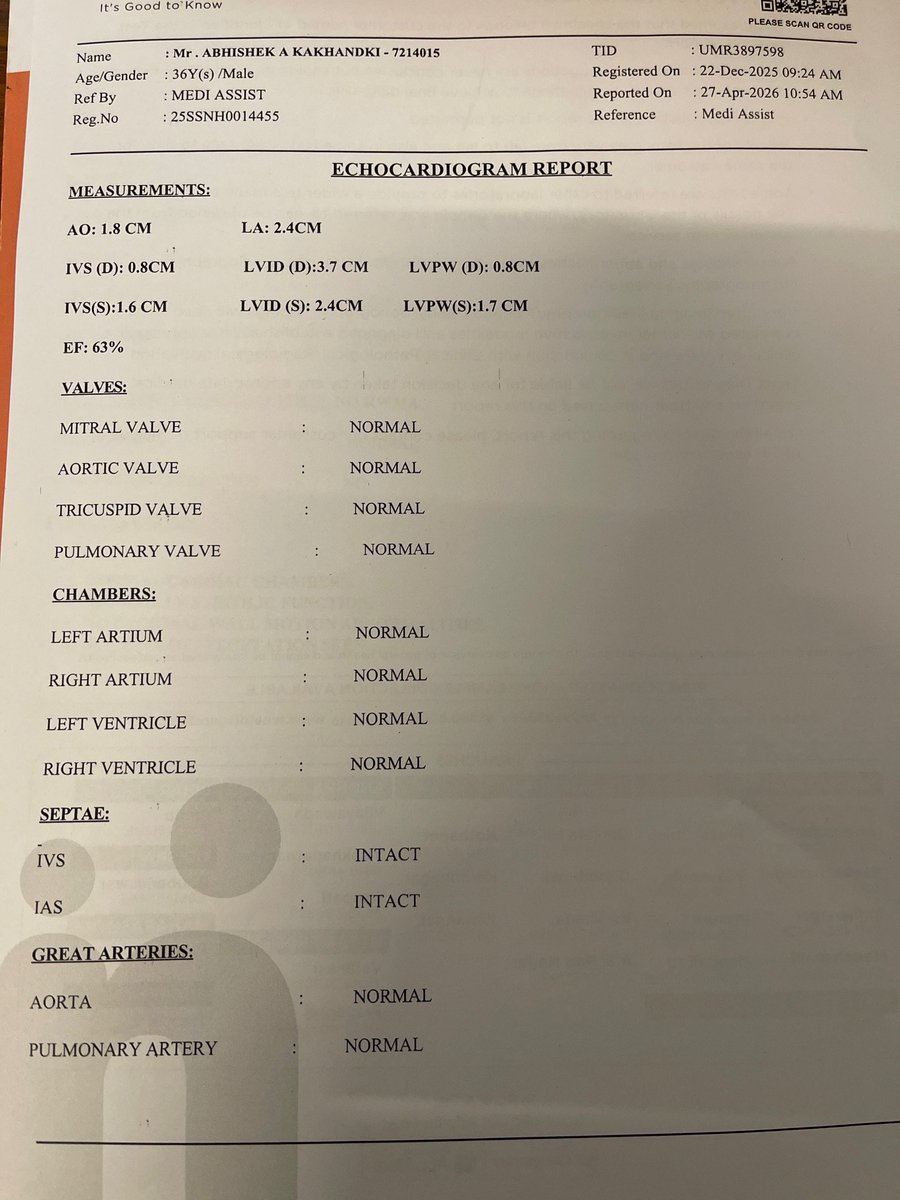
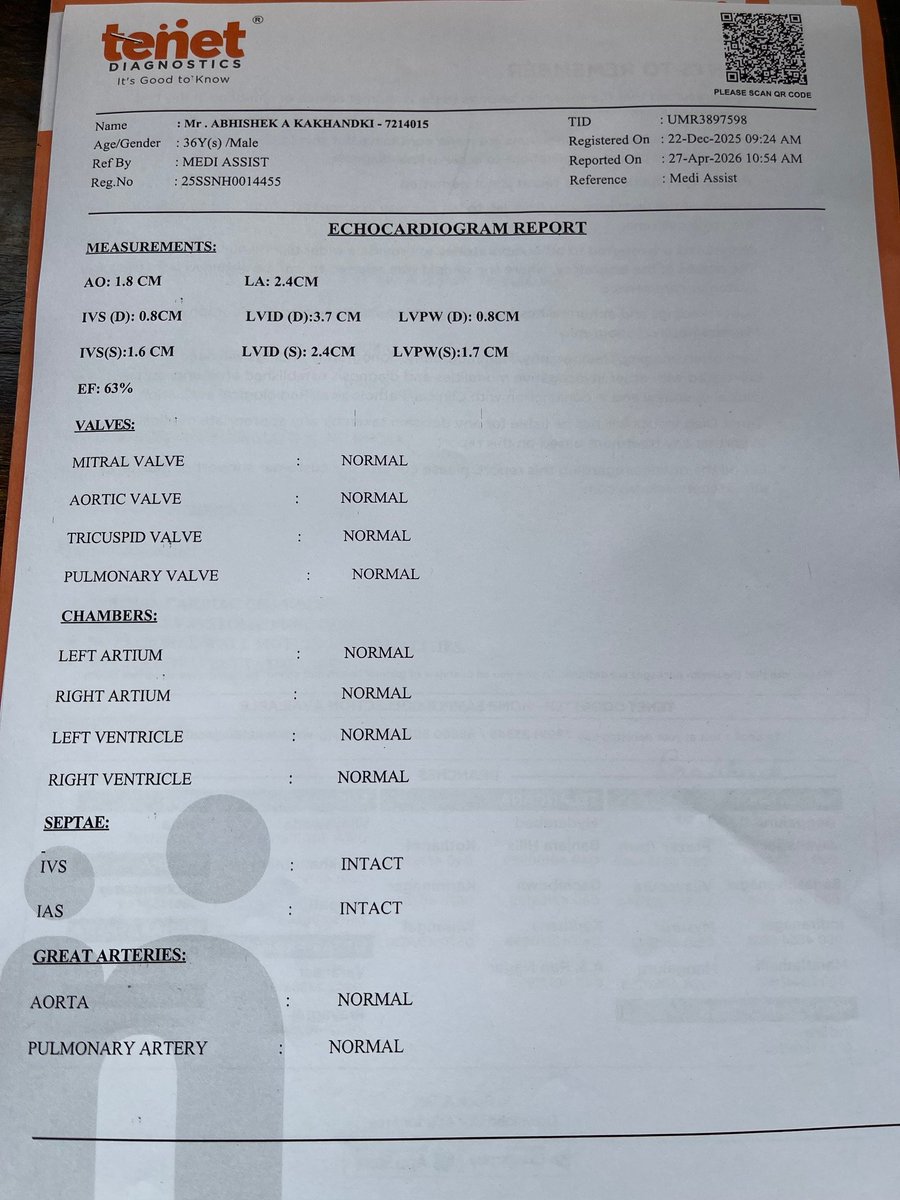
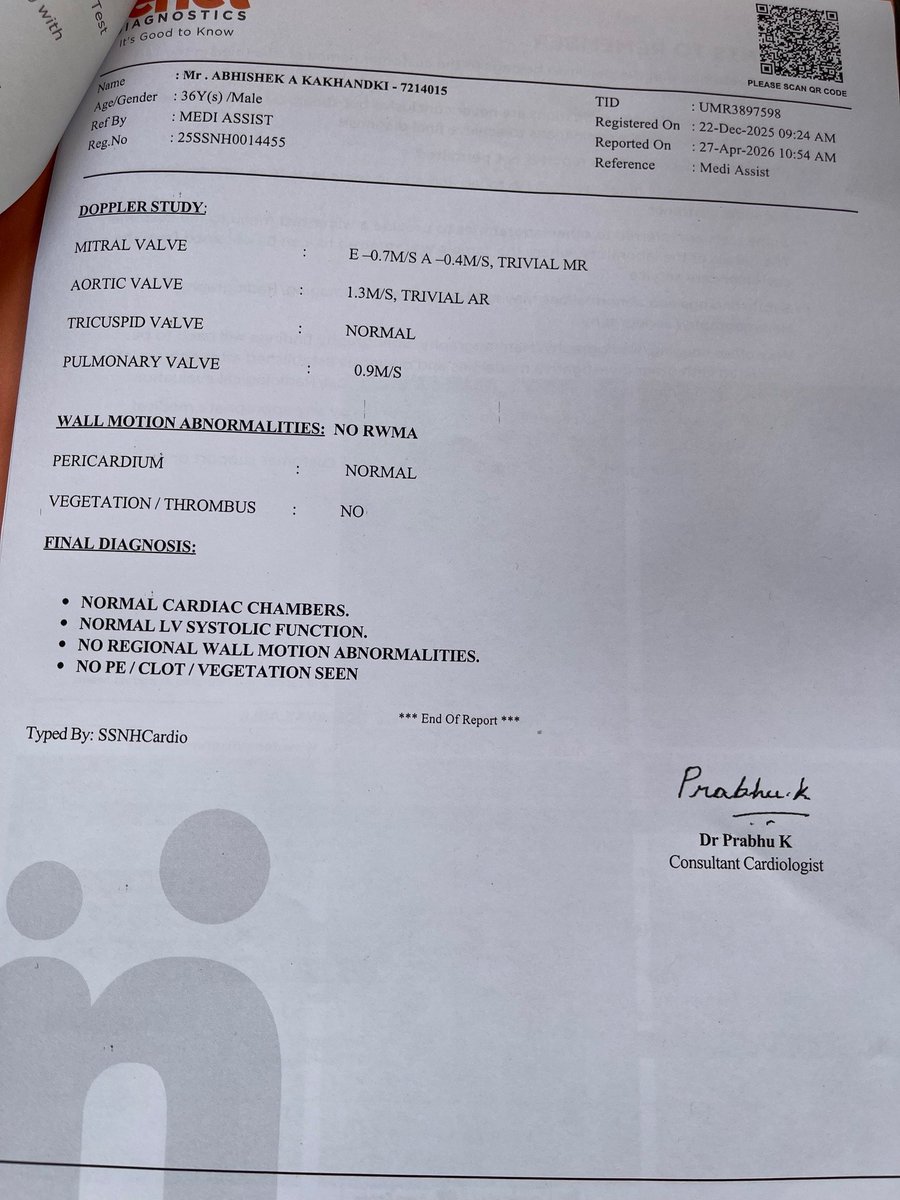
I got my heart scanned. Report says "NORMAL"
But here is what most people don't get it
"Normal" doesn't mean what you think, Details below & bookmark this tweet.
1. Pumping Power (EF-Ejection Fraction)
EF: 63%
Normal Range:55-70%.
This means
>Heart pumps efficiently
>No Systolic Dysfunction
>No early signs of heart failure
English