
Lucas Rojek

7.3K posts

Lucas Rojek banner
Lucas Rojek

Lucas Rojek

@lrojek

Chemical engineer and community leader in Calgary's Beltline / @beltlineYYC

Canada & China Katılım Temmuz 2009
595 Takip Edilen378 Takipçiler
Lucas Rojek retweetledi
Aakash Gupta
Aakash Gupta@aakashgupta·
There's a physicist at Stanford named Safi Bahcall who modeled this exact principle and the math is wild. He calls it "phase transitions in human networks." When you're stationary, your probability of a lucky event is limited to your existing surface area: the people you already know, the places you already go, the ideas you've already been exposed to. Your opportunity window is fixed. When you move, your collision rate with new nodes in a network increases nonlinearly. Double your movement (new conversations, new cities, new projects) and your probability of a serendipitous encounter doesn't double. It roughly quadruples. Because each new node connects you to their entire network, not just to them. Richard Wiseman ran a 10-year study at the University of Hertfordshire tracking self-described "lucky" and "unlucky" people. The single biggest differentiator wasn't IQ, education, or family money. Lucky people scored significantly higher on one trait: openness to experience. They talked to strangers more, varied their routines more, and said yes to invitations at nearly twice the rate. The "unlucky" group followed the same routes, ate at the same restaurants, and talked to the same 5 people. Their networks were closed loops. No new inputs, no new collisions. Luck isn't random. Luck is surface area. And surface area is a function of movement. The lobster emoji is doing more work than most people realize. Lobsters grow by shedding their shell when it gets too tight. The growth requires a period of total vulnerability. No protection, no armor, soft body exposed to the ocean. That's the cost of movement nobody posts about. You have to be uncomfortable first. The new shell only hardens after you've already moved.
@D9vidson

a moving man will meet his luck 🥀

English
495
13.9K
67.2K
4.3M
Lucas Rojek retweetledi
Linda
Linda@LndamyDark·
I know Bill Maher is not a lot of people's favorites. But here he is making sense once again. Israel is not going anywhere.
English
249
2.1K
10.8K
114.3K
Lucas Rojek retweetledi
Today in History
Today in History@TodayinHistory·
Historic! This is the highest quality video ever taken of the moon!
English
1.2K
13.2K
79.7K
2.1M
Lucas Rojek retweetledi
Secretary Marco Rubio
Until recently, Hamideh Soleimani Afshar and her daughter were green card holders living lavishly in the United States. Afshar is the niece of deceased Iranian Major General Qasem Soleimani. She is also an outspoken supporter of the Iranian regime who celebrated attacks on Americans and referred to our country as the "Great Satan." This week, I terminated both Afshar and her daughter's legal status and they are now in ICE custody, pending removal from the United States. The Trump Administration will not allow our country to become a home for foreign nationals who support anti-American terrorist regimes.
English
31.6K
66.6K
350.8K
18.3M
Lucas Rojek retweetledi
Javier Blas
Javier Blas@JavierBlas·
China produces ~80% of its urea from coal rather than (as most other nations do) natural gas. The method is insulating Beijing from rising nitrogen fertiliser prices. I wrote ⤵️ this @Opinion column about the Chinese coal-to-chemicals industry last June. bloomberg.com/opinion/articl…
English
66
954
3K
293.1K
Lucas Rojek retweetledi
Terry O'Reilly
Terry O'Reilly@terryoinfluence·
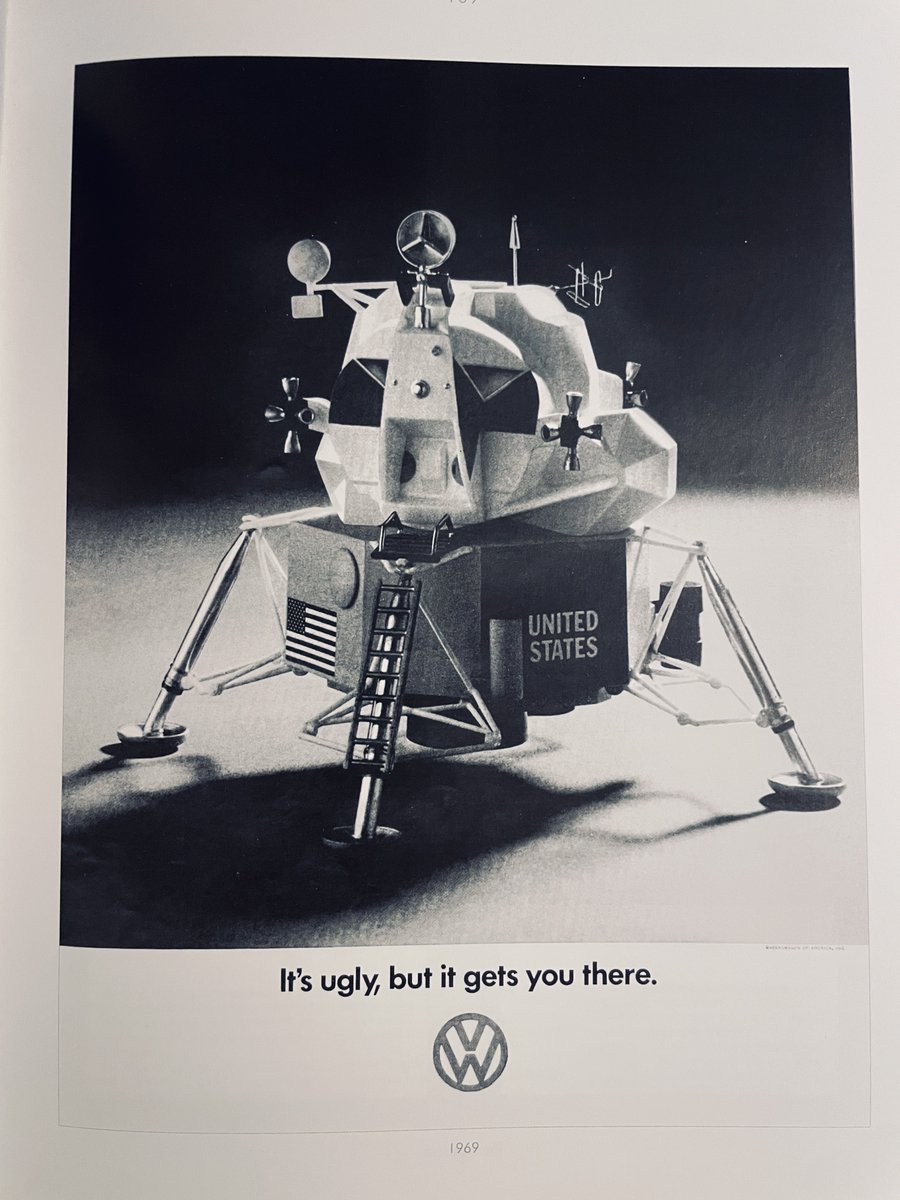
In honour of Artemis II, one of my fav ads of all time:
Terry O'Reilly tweet media
English
25
370
5.2K
53.8K
Lucas Rojek retweetledi
Heather Exner-Pirot
Heather Exner-Pirot@ExnerPirot·
The Easter egg in this story is the revelation that the BC NDP has introduced the prospect of raising royalties on natural gas… just as two LNG mega projects are nearing a final investment decision. Eby’s government is an anchor on Canada’s economy. ca.finance.yahoo.com/news/opinion-w…
English
29
155
531
35.1K
The Reader
The Reader@TheReader41261·
Here's a quick History lesson for you... Iran, originally Persia didn't become a Muslim nation overnight. Muslim or Arab conquests Began shortly after Muhammad’s death under the Rashidun Caliphate around 630 with the Battle of Qadisiyyah and the fall of the Sasanian capital Ctesiphon. The Sasanian Empire was fully annexed by around 651. This brought Persia under Muslim political rule. Conversion of the population was not an immediate forced conversion for the masses. It was faster in urban areas due to social and administrative incentives and integration as mawali or clients. Rural and Zoroastrian priestly resistance lasted quite a bit longer. By the middle of the 9th century it was about 40% Muslim. By the 10th century the majority had converted and by the end of the 11th century, Close to 100% in urban contexts. Most Iranian Muslims followed Sunni Islam and and then there was a shift to Shia Islam. After the Safavid dynasty Iran became distinctly Shia, which remains the majority faith today. The 1979 Iranian Revolution established the modern Islamic Republic, but that was a political shift within an already Muslim Shia society.
English
1
0
0
56
Dr. Maalouf ‏
Dr. Maalouf ‏@realMaalouf·
Iranian woman in Australia tells her story about escaping the Islamic regime in Iran: “No one is Muslim in Iran. After 47 years of Islamic regime, we all hate Islam. Under Sharia, we can’t have dogs, women can’t sing, and I would be killed for dressing like this. We are peaceful people. We just want normal lives and to live in peace with everyone.” Free Iran from the Islamic regime!
English
189
5.5K
17K
200.5K
Lucas Rojek retweetledi
Shanaka Anslem Perera ⚡
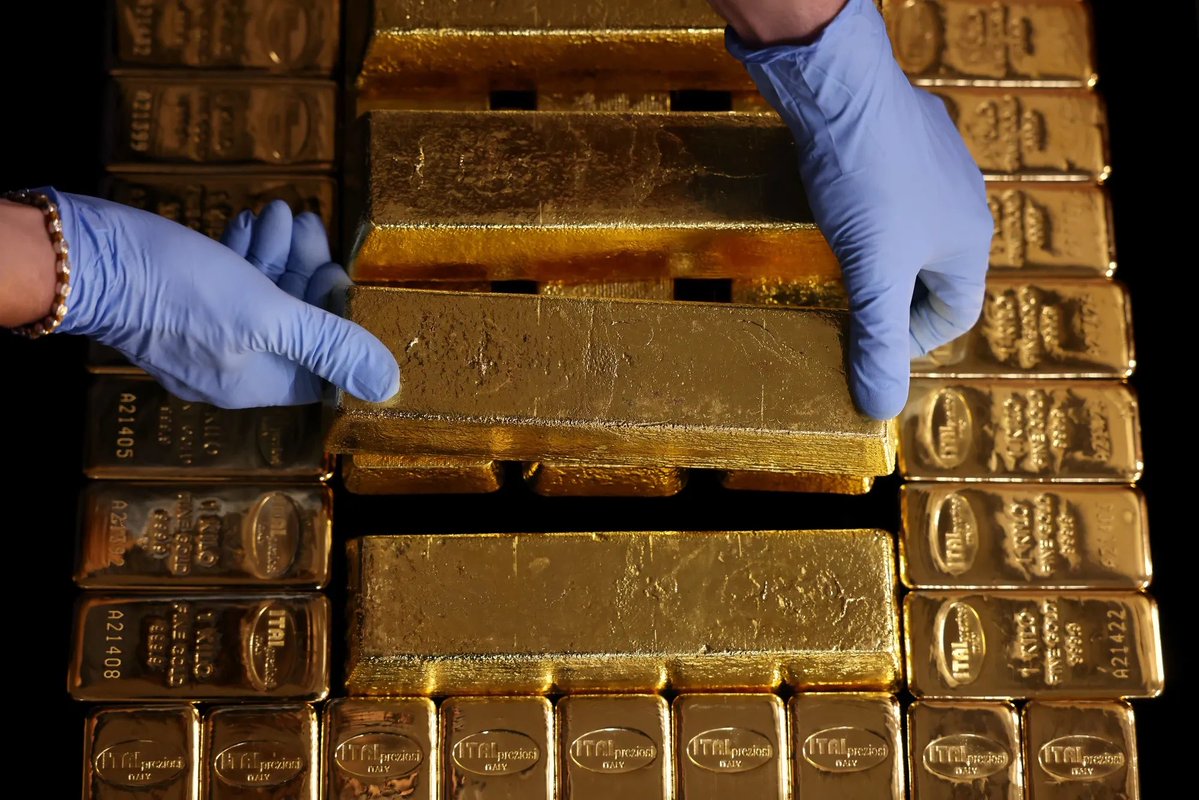
France moved 129 tonnes of gold from the Federal Reserve Bank of New York to Paris between July 2025 and January 2026. Every ounce of French sovereign gold is now stored on French soil. The Banque de France sold non-standard legacy bars held in New York at record prices and simultaneously purchased equivalent compliant bars in Europe, booking a capital gain of 12.8 billion euros without changing its total reserves of 2,437 tonnes by a single gram. The transaction was described as operational, not political. But the outcome is political regardless of the motive: a founding NATO ally has removed 100 percent of its gold from American custody. Germany did this between 2013 and 2017. Now France. The pattern is consistent: Western central banks are bringing their gold home from New York, quietly, without fanfare, while publicly maintaining that the moves are routine. Nobody repatriates 129 tonnes of sovereign metal across an ocean because the storage fees were inconvenient. They do it because the world that made New York the safest vault on earth is the same world that froze $300 billion in Russian reserves in 2022, and every central bank on the planet watched. China has purchased gold for 16 consecutive months. February 2026 was the latest: one tonne, modest, disciplined, bringing total reserves to 2,308 tonnes valued at $387.6 billion, approximately 10 percent of total foreign exchange reserves. China has simultaneously reduced its US Treasury holdings by $638 billion. The buying is not speculative. It is architectural. Every tonne purchased and every Treasury sold moves the centre of gravity of China’s reserve portfolio from an asset that can be frozen to an asset that cannot. India repatriated 274 tonnes to domestic vaults, bringing 66 percent of its gold home. It reduced US Treasury holdings by 18 percent in 2025. Poland added 20 tonnes in February alone and is targeting 700 tonnes total. Uzbekistan added 8 tonnes. The structural bid from central banks that watched the 2022 freeze is running at 863 tonnes per year with no sign of slowing. Then there are the sellers. Russia sold 6 tonnes in February and approximately 15 tonnes in the first two months of 2026, the largest drawdown since 2002. The country that triggered the global repatriation movement by getting its reserves frozen is now selling gold to fund the war deficit that the freeze was supposed to prevent. Turkey sold 8 tonnes in February and utilised approximately 50 tonnes in March for lira defence and liquidity operations. The irony is precise: the war that proves gold’s value as a sanctions-proof reserve is simultaneously forcing the countries most exposed to sanctions to liquidate their gold to survive the war’s economic consequences. The net global position remains positive. Central banks added 19 tonnes in February despite Russia and Turkey selling. The buyers outweigh the sellers. But the composition tells the story. The buyers are countries building sovereignty: China, India, Poland, Uzbekistan. The sellers are countries defending survival: Russia funding a war, Turkey defending a currency. And the repatriators are countries hedging trust: France and Germany bringing metal home from the vault of the ally whose financial weapons they watched deployed in 2022. Gold is at $4,676 tonight and down 8 percent from its January high. The correction is the trade. The repatriation is the structure. And the structure says that the world’s central banks, collectively, have decided that the safest place for sovereign gold is no longer New York. It is home.
Shanaka Anslem Perera ⚡ tweet media
English
108
803
2K
334.6K
Lucas Rojek retweetledi
Aakash Gupta
Aakash Gupta@aakashgupta·
The story behind the rise of USB-A is wild. In 1990, an Intel engineer named Ajay Bhatt couldn't get his wife's printer to work for their daughter's school project. A printer. In his own house. He was a senior architect at the world's biggest chip company, and he couldn't make a printer talk to a PC without rebooting three times and opening the case. He pitched the idea of a universal connector to his managers. They didn't just pass. They told him nobody would want it. Bhatt switched teams, found a manager who said yes, and spent the next four years convincing Compaq, IBM, Microsoft, NEC, and Nortel to sit in the same room and agree on a single plug. Seven companies that competed on everything else agreed to share one connector. The USB 1.0 standard shipped in January 1996. Almost nobody used it. Windows 95 barely supported it. USB was basically dead on arrival. Then Steve Jobs did something nobody expected. He shipped the 1998 iMac as USB-only. No serial port, no parallel port, no floppy drive. Just USB. Apple, the company that fought standards harder than anyone, single-handedly forced an entire industry onto Bhatt's connector. Intel owned the patents. They made the entire thing royalty-free. Any manufacturer on earth could build a USB-A port for pennies. By 2009, 6 billion USB products were in the market, with 2 billion more shipping every year. Making the connector reversible would have doubled the cost, so Bhatt kept it one-sided to keep adoption cheap. "In hindsight, we blew it," he said years later. The most cursed design decision in consumer electronics, and it was a deliberate trade. USB-A killed serial ports, parallel ports, PS/2 connectors, game ports, and eventually the floppy disk. One rectangle replaced an entire generation of cables. The connector is 30 years old and as of 2024, Type-A still accounted for 46% of all USB device shipments. Billions of ports in airplane seatbacks, hotel nightstands, hospital beds, and office walls. The EU mandated USB-C on all new devices in December 2024. The installed base of USB-A will take 20 years to turn over. One guy's printer problem became the most successful connector standard in computing history. And now the rest of us carry a bag of dongles everywhere we go because of it.
Scott Wessman@scottew

feels like the world collectively overinvested in USB-A infrastructure

English
101
973
6.5K
1.3M
Lucas Rojek retweetledi
Shanaka Anslem Perera ⚡
Shanaka Anslem Perera ⚡@shanaka86·
BREAKING: The world spent fifty years and hundreds of billions of dollars building Strategic Petroleum Reserves so that no geopolitical shock could starve civilization of energy. Nobody built the equivalent for fertilizer. That is the most expensive oversight in the history of modern statecraft, and you are about to pay for it at the grocery store. The Strait of Hormuz does not merely carry 20% of global oil. UNCTAD estimates roughly one-third of all seaborne fertilizer trade passes through it. The Fertilizer Institute estimates that conflict-exposed exporters account for nearly 49% of global urea exports and nearly half of global sulfur trade. Since February 28, daily ship transits have collapsed by 97%. Here is what almost nobody understands about why this is not "just another commodity spike." It was not the missiles that closed the strait. It was the insurance. Multiple P&I clubs cancelled war-risk extensions for the Gulf after 26 months of Red Sea losses had already depleted their Solvency II capital buffers. War-risk premiums surged from 0.25% to as high as 5% of hull value per transit. A urea cargo cannot absorb that. The economics of fertilizer shipping through Hormuz became impossible before a single mine needed to detonate. The Trump administration announced a $20 billion sovereign-backed reinsurance facility with Chubb as lead underwriter. There is no confirmed public evidence that a single fertilizer vessel has used it. Insurance pays for financial loss. It does not intercept anti-ship missiles. Physical security remains the binding constraint, and the US Navy confirmed on March 12 it is "not ready" for commercial escorts. Now here is the part that should terrify every allocator on Earth. Agriculture runs on biological deadlines. Corn Belt farmers need nitrogen applied by mid-April. Indian Kharif season prep starts in May. Australian winter crop needs urea by June. These are not financial deadlines that reprice. They are photosynthetic deadlines that, once missed, produce irreversible yield loss. A diplomatic breakthrough on April 15 does not help a farmer who needed fertilizer on April 1. And the yield math is nonlinear. Wall Street models fertilizer-to-output as proportional. It is not. The response is quadratic. In developed systems that over-apply nitrogen, a 15% reduction costs 2-5% of yield. In the Global South where farmers already under-apply, the same reduction pushes crops off a biophysical cliff. Sri Lanka proved this in 2021 when a sudden fertilizer ban collapsed rice production 40% in a single season and brought down the government. The market is pricing a 45-day disruption. The insurance architecture says 120 days minimum. Even after a hypothetical ceasefire, Solvency II capital rebuild, reinsurance treaty renegotiation, and vessel re-underwriting take months. The Red Sea precedent: 26 months after Houthi attacks began, war-risk premiums never returned to pre-crisis levels. Both sides are rejecting negotiations. Trump rebuffed ceasefire mediation March 14. Iran's foreign minister on March 15: "We never asked for a ceasefire." Meanwhile: 51% of US corn areas in drought. El Nino favored by June at 62% probability. Skymet assigns 60% chance of below-normal Indian monsoon. Bangladesh has shut five of six urea factories. India formally asked China for urea on March 12. Egypt faces $28 billion in debt repayments while importing 12.7 million tonnes of wheat. WFP identifies 318 million people already at crisis-level hunger. The world stockpiled oil but forgot to stockpile the molecules that produce half its food. The clock is the position. Full analysis in the link! open.substack.com/pub/shanakaans…
Shanaka Anslem Perera ⚡ tweet media
English
61
739
1.6K
540.1K
Lucas Rojek retweetledi
Kyle Brittain
Kyle Brittain@BadWeatherKyle·
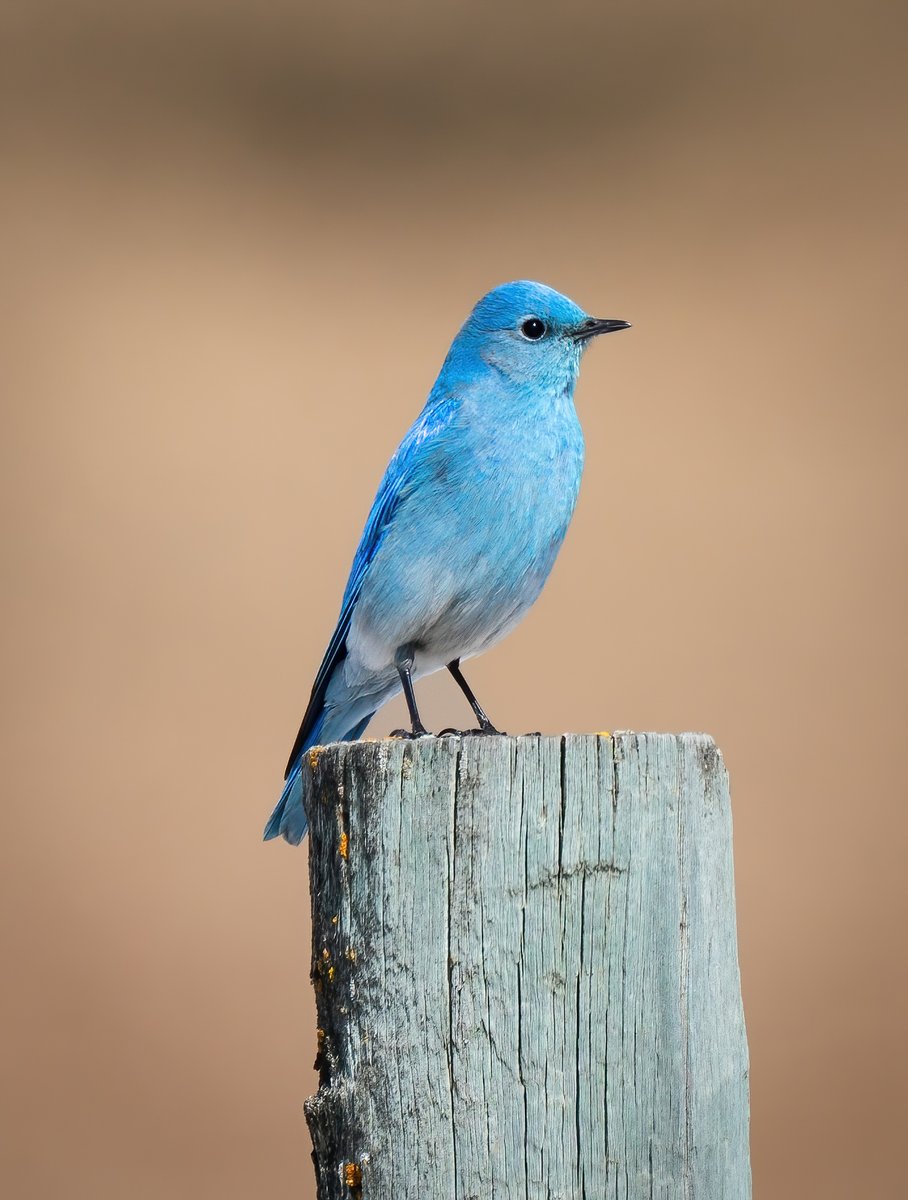
Mountain Bluebirds are back in the Alberta foothills! Hard to find a more beautiful blue...
Kyle Brittain tweet media
English
39
261
2K
20.5K
Lucas Rojek retweetledi
Dr. Lemma
Dr. Lemma@DoctorLemma·
43 years ago, at 41,000 feet in the air, a brand new passenger plane carrying 69 people went completely silent. Both engines died at the exact same time. The massive jet had just run out of fuel mid-flight. The reason was a simple math mistake caused by a confusing transition. Canada was right in the middle of switching to the metric system. This specific plane was the very first one in the airline's fleet to use kilograms. The ground crew was still used to the old system. They calculated the fuel weight in pounds. The plane took off with less than half the fuel it needed to make the trip. What happened next should not have been survivable. The captain happened to fly small, unpowered gliders as a hobby. He had to do something no one had ever done with a commercial jet. He flew the heavy, powerless plane like a giant paper airplane toward an old abandoned military runway his co-pilot remembered. Neither of them knew the old base had been turned into a public car track. Neither of them knew there was a family racing event happening right on the asphalt that afternoon. Go-karts, cars, and kids on bicycles were directly in their path. The plane came down completely silently. There was no loud engine noise to warn the people below. The pilot forced the plane to drop out of the sky sideways just to slow it down. He came in fast. The front wheels collapsed when they hit the runway. The nose of the plane scraped across the concrete, throwing sparks everywhere until the huge jet skidded to a halt. The back end was sticking three stories up in the air. Nobody on the ground was hit. Every single one of the 69 people on board walked away. When airlines later put other pilots in simulators to try and copy the landing, every single one of them crashed. The plane was repaired and flew for another 25 years.
Dr. Lemma tweet media
English
379
2.2K
15.8K
915.5K
Lucas Rojek retweetledi
Barack Obama
Barack Obama@BarackObama·
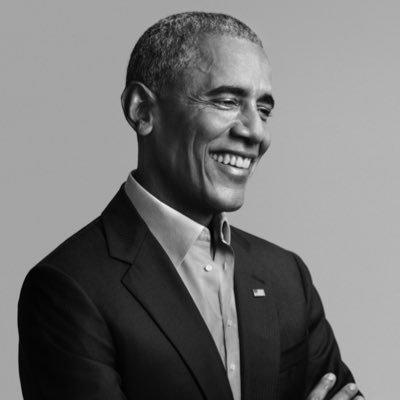
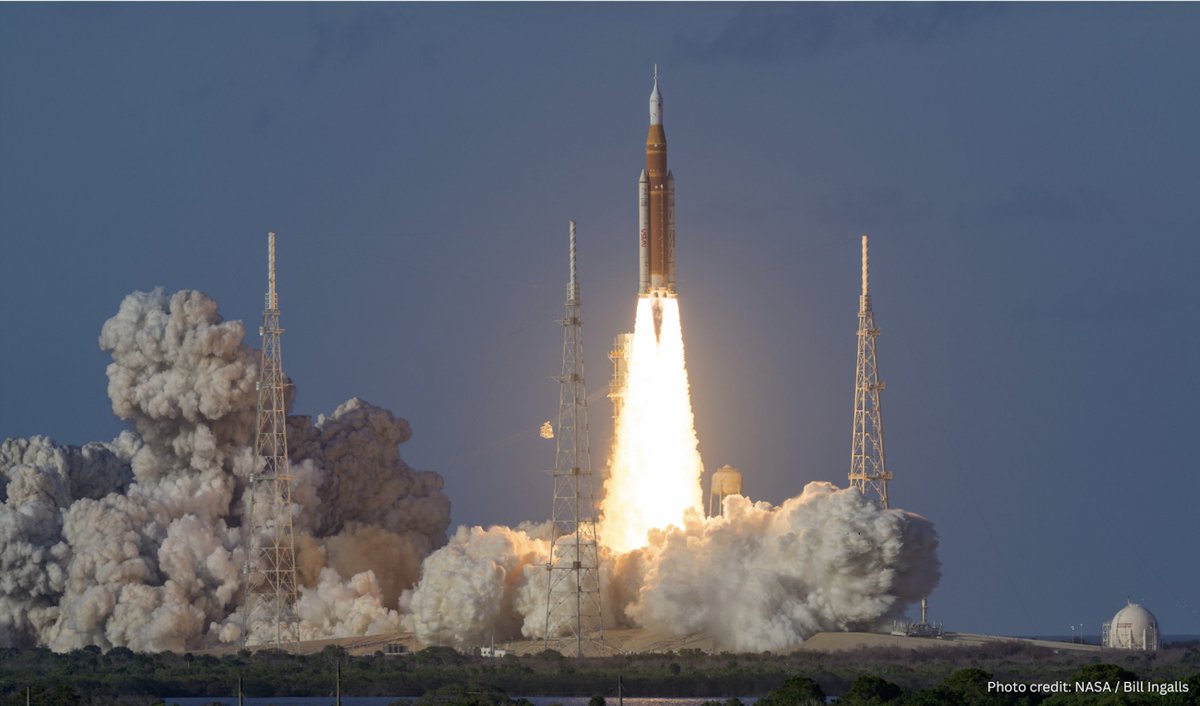
It was inspiring to watch the Artemis II launch yesterday — @NASA’s first crewed mission around the moon since 1972. Our space program has always captured an essential part of what it means to reach beyond what we thought was possible, and I hope the four brave astronauts on this mission will inspire a new generation to follow in their footsteps.
Barack Obama tweet mediaBarack Obama tweet media
English
13.4K
31.9K
456.8K
57M
Lucas Rojek retweetledi
Anish Moonka
Anish Moonka@anishmoonka·
Christina Koch was a firefighter at the South Pole at -111°F before she ever applied to be an astronaut. That was maybe the fourth most interesting line on her resume. She grew up in North Carolina, got three degrees from NC State, and her first real job was building deep-space instruments at NASA. Then she left for Antarctica. Spent three and a half years bouncing between the Arctic and Antarctic as a research scientist, including a full winter at the South Pole base. That means going months without sunlight or fresh food, with a crew of about 50 people and no way out until flights resume. While she was down there, she also joined the glacier search-and-rescue team. After coming back, she went to Johns Hopkins and built instruments for two NASA missions (one of them is still orbiting Jupiter right now). She figured out how to start a tiny vacuum pump that NASA designed for a future Mars rover. Johns Hopkins nominated it for their Invention of the Year in 2009. Then she went back to the field. More time in Antarctica and a stretch up in Greenland. A government research station in northern Alaska, near the top of the world. Then she ran another one in American Samoa, near the equator. In 2013, NASA selected her from 6,300 applicants. Eight people got in. Her first space mission was supposed to be a normal rotation on the International Space Station, but NASA extended it. She ended up staying 328 straight days and orbiting Earth 5,248 times, covering about 139 million miles (roughly 291 round trips to the Moon). Up there, she ran over 210 experiments, including tests of cancer drugs in zero gravity and 3D printers that can build structures close to human tissue. Six spacewalks, 42 hours floating outside the station. She learned Russian for the training. She flies supersonic jets. Right now, Koch is on Artemis II, heading for a flyby behind the far side of the Moon. The crew launched on April 1 and is on track to travel about 252,000 miles from Earth, which would break the all-time human distance record of 248,655 miles set by Apollo 13 in 1970. That record has stood for 56 years, and it was set during a disaster that nearly killed the crew. Fred Haise, one of the Apollo 13 astronauts, is 92 now. He told Koch: "I heard you're going to break our record." Nobody had left Earth's neighborhood since December 1972. Koch and her three crewmates are the first in 53 years, and they are coming home at about 25,000 mph. That is faster than any crewed spacecraft has ever come back through the atmosphere.
All day Astronomy@forallcurious

BREAKING🚨: Artemis II astronaut Christina Koch officially becomes the farthest any woman has ever traveled from Earth.

English
334
6.3K
38.9K
1.9M
Lucas Rojek retweetledi
Annie Dufour
Annie Dufour@anniedufour99·
Hegseth just decapitated the US Army. In 24 hours, he fired his Army Chief of Staff, the chief of its training command, and its top chaplain. War is raging in the Middle East. Thousands of US soldiers are being deployed. The most critical phase of the Iran War is upon the USA. Why would Hegseth handicap his forces by making such drastic, disruptive cuts ? Imagine : the man responsible for the whole Army, the Man responsible for training all the soldiers, the Man responsible for caring to all their spiritual needs. All gone, in one day. With only one replaced, the Chief of Staff, by Hegseth former assistant... Why ? Because of what is to come. Decisions they would have never agreed with. It is ominous. Dark and dangerous days are coming. #IranWar@SecWar #uspoli #cdnpoli #Euronews
Annie Dufour tweet mediaAnnie Dufour tweet media
English
31
270
630
38.9K
Lucas Rojek retweetledi
Shanaka Anslem Perera ⚡
Shanaka Anslem Perera ⚡@shanaka86·
JUST IN: You do not fire your Army Chief of Staff in the middle of a war for no reason. You fire him because of what comes next. Pete Hegseth called General Randy George on April 2 and told him to retire immediately. The Pentagon confirmed it within hours. No reason was given. Not publicly. Not privately. A senior Army official told Fox News that Hegseth offered George nothing: no misconduct, no operational failure, no policy disagreement on the record. Just a phone call and a career ending in the middle of the most significant American combat operation in two decades. George is the 24th general or admiral Hegseth has removed. But he is not the 24th. He is the one that matters. The Army Chief of Staff. The man whose signature sits between a president’s intent and the order that sends soldiers across a beach or into a tunnel complex. The 82nd Airborne is deploying right now. Marines from the 31st MEU are staged on the USS Tripoli. JSOC operators are at forward bases in Israel, Jordan, Saudi Arabia, and the UAE. Kharg Island, 90 percent of Iranian oil exports, sits 16 kilometres off a coast that someone will have to decide whether to approach. And the four-star general whose job it was to advise whether that approach should happen was removed 48 hours after Trump told the nation the war would continue for two to three more weeks. The replacement is Vice Chief General Christopher LaNeve. He was Hegseth’s senior military aide before this appointment. The man who carried the Secretary’s briefcase now commands the Army the Secretary is reshaping. The chain of command did not break. It shortened. The distance between a television studio and a combat order just collapsed to zero intermediaries who were not personally selected by the man giving the order. No reason was given. That is the tell. When someone is removed without explanation during a crisis, the explanation is the crisis itself. George either objected to something or was about to. The ground option. The power plant strikes. The Kharg raid. The escalation that turned a highway bridge in Karaj into rubble on the same day he was told to leave. Something in the next two weeks requires a chief who will not push back, and the Pentagon solved that problem by installing one trained as Hegseth’s aide. A former Fox News weekend host just fired a four-star general with combat tours in Iraq and Afghanistan, replaced him with his own former assistant, and did it during a live war in which the next decision could put American soldiers on Iranian soil for the first time in history. No hearing was held. No misconduct cited. The Army woke up on April 3 with a new chief it did not choose, in a war it did not start, preparing for a phase the previous chief apparently could not be trusted to execute. The question is not why George was fired. Every general in the building knows why. The question is what order is coming in the next fourteen days that required removing the one man in the chain of command who might have said no. The war has no perimeter. The chain of command has no objectors. And the next phase has no one left to stop it. open.substack.com/pub/shanakaans…
Shanaka Anslem Perera ⚡ tweet media
English
2.8K
16.3K
38.3K
5.5M
Lucas Rojek retweetledi
Chad Falkenberg
Chad Falkenberg@FalkenbergChad·
@lance_wunsch @jengerson I'm not following behind those absolute whack jobs that are currently leading the alberta separatist movement. No thanks. I'm not tying my name to a gong show that insinuates we will expel all immigrants and progressives. An independent Alberta must include all Albertans.
English
2
1
2
37
Lucas Rojek retweetledi
Landon Johnston
Landon Johnston@Landonforward14·
Total closed door council meetings to this point in our term: This council: 18 Last council: 9
Landon Johnston tweet media
English
17
22
68
3.5K