Luke Zhang

424 posts

Luke Zhang banner
Luke Zhang

Luke Zhang

@lukezy

WA Katılım Temmuz 2009
238 Takip Edilen40 Takipçiler
Luke Zhang retweetledi

Startup Archive
Startup Archive@StartupArchive_·
NVIDIA CEO Jensen Huang: “I really discourage 1-on-1s” Jensen famously has 60 direct reports. When Stripe founder Patrick Collison points out that this isn’t conventionally considered best practice, Jensen shares his reasoning: “I don’t do 1-on-1s, and almost everything I say, I say to everybody all the time. I don’t really believe there’s any information that I operate on that only one or two people should hear about… I believe that when you give everybody equal access to information, that empowers people. And so that’s number one… Number two, if the CEO’s direct staff is 60 people, the number of layers you’ve removed in a company is probably something like seven.” Patrick offers to steal man the other side of the argument: “1-on-1s are where you provide coaching, where you maybe talk through personal goals and career advancement, where maybe you give feedback on something that you see somebody systematically not doing so well… Do you not do those things or do you do them in a different way?” Jensen responds: “I give you feedback right there in front of everybody. In fact, this is a really big deal. First of all, feedback is learning. For what reason are you the only person who should learn this?… We should all learn from that opportunity… Half the time I’m not right, but for me to reason through it in front of everybody helps everybody learn how to reason through it. The problem I have with 1-on-1s and taking feedback aside is you deprive a whole bunch of people that same learning. Learning from other people’s mistakes is the best way to learn.” Video Source: @stripe
English
113
742
5.5K
1.4M
Luke Zhang retweetledi
Fernando Cao
Fernando Cao@thefernandocz·
This is Matthew Walker. He’s the best sleep scientist of the 21st century. His message? The shorter your sleep, the shorter your life. Here's his evidence-backed protocol for getting high-quality sleep every single night:
Fernando Cao tweet media
English
268
1.3K
9K
4.5M
Luke Zhang retweetledi
Nassim Nicholas Taleb
Nassim Nicholas Taleb@nntaleb·
Maximum Ignorance Probability: What do you do when you must estimate a probability and there is ZERO information? Surgeon did 60 operations & 0 failure. What's the failure rate? I realized the trick wasn't in the literature when someone wrote a paper in SPL on my blog post.
English
35
160
1.1K
235K
Luke Zhang retweetledi
Elon Musk
Elon Musk@elonmusk·
ZXX
30.3K
41.1K
414.8K
54.5M
Luke Zhang retweetledi
Chamath Palihapitiya
Chamath Palihapitiya@chamath·
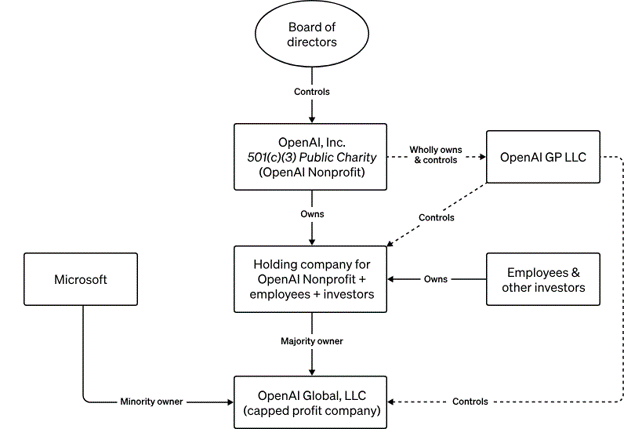
A Short History of OpenAI On Friday, OpenAI ousted its co-founder Sam Altman as CEO. While OpenAI cites a lack of consistent candor in Altman’s dealings with the board as the key reason for his removal, there is widespread speculation about other motives behind his termination. These range from disputes concerning the profit vs nonprofit motives of the company to the discovery of artificial general intelligence, a type of AI that can surpass human intelligence for most tasks. We wanted to look back at the history and corporate structure of OpenAI to understand how we got here. Here’s the story: Inception and Early Strides (2015-2018) OpenAI was initially founded in 2015 by Sam Altman, Elon Musk, Ilya Sutskever and Greg Brockman as a non-profit organization with the stated goal to “advance digital intelligence in the way that is most likely to benefit humanity as a whole.” The company assembled a team of the best researchers in the field of AI to pursue the goal of building AGI in a safe way. The early years of OpenAI were marked with rapid experimentation. The company made significant progress on research in deep learning and reinforcement learning, and released ‘OpenAI Gym’ in 2016, a toolkit for developing and comparing reinforcement learning algorithms. OpenAI showcased the capabilities of these reinforcement learning algorithms through its ‘OpenAI Five’ project in 2018, which trained five independent AI agents to play a complex multiplayer online battle arena game called ‘Dota 2’. Despite operating independently, these agents learned to work as a cohesive team to coordinate strategies within the game. A crucial development occurred in June 2018. The company released a paper titled "Improving Language Understanding by Generative Pre-Training", which introduced the foundational architecture for the Generative Pre-trained Transformer model. This later evolved into ChatGPT, the company’s flagship product. Transition From a Non-Profit (2019) In 2019, OpenAI transitioned from a non-profit to a “capped-profit” model. According to the company’s blog post, OpenAI wanted to increase its ability to raise capital while still serving its mission, and “no pre-existing legal structure they knew of struck the right balance”. Per the IRS, for-profit entities and not-for-profit entities are fundamentally at odds with each other, so in order to combine the two competing concepts, OpenAI came up with a novel structure which allowed the non-profit to control the direction of a for-profit entity while providing the investors a "capped" upside of 100x. This culminated in a $1Bn investment from Microsoft, marking the beginning of a key strategic relationship, but complicating the company’s organizational structure and incentives. The non-profit entity, OpenAI Inc., became the sole controlling shareholder of the new for-profit entity OpenAI Global LLC, which answered to the board of the nonprofit and retained a fiduciary responsibility to the company’s nonprofit charter. Crucially, the board was responsible for determining when OpenAI attained artificial general intelligence (AGI), which the company defines as a “highly autonomous system that outperforms humans at most economically valuable work.” The structure of OpenAI is outlined below: Becoming ChatGPT (2020-2023) In 2020, bolstered by new funding, OpenAI unveiled GPT-3, a large language model (LLM) capable of understanding and generating convincing human-like text. This was a watershed moment for OpenAI and the broader AI community. As the company grew, its LLMs continued to become larger and more intelligent. However, OpenAI's innovation didn't stop with language models. In 2021, the company expanded its horizons by launching Codex, a specialized AI model for programming, and DALL-E, an AI system adept at creating original artwork from text descriptions. December 2022 marked another major milestone for OpenAI with the release of GPT-3, laying the groundwork for the consumer-focused application ‘Chat-GPT’. Chat-GPT rapidly captured global attention, becoming the fastest app to amass 100 million users within just two months of its launch. Capitalizing on this success, OpenAI introduced a subscription model and unveiled its most sophisticated model yet, GPT-4, ~10x more advanced than its predecessor and capable of analyzing text, images, and voice. Further developer tools and a turbocharged version of GPT-4 were announced at the company’s Developer Day on November 6th, 2023. Removing Sam Altman (2023) On Friday, OpenAI announced that it was removing its co-founder Sam Altman as CEO, citing a lack of consistent candor in his communications with the company’s board. According to the company's official statement, the board “no longer has confidence in Altman’s ability to continue leading OpenAI.” OpenAI’s board of directors has undergone numerous changes since inception. Elon Musk resigned from his board seat in 2018, citing a “potential future conflict of interest” with Tesla’s AI development for driverless cars. Elon later expressed disappointment over the company’s for-profit motivations and dealings with Microsoft. Since Elon’s departure, a number of other board members have left the company, including former congressman Will Hurd who cited a Presidential bid, LinkedIn co-founder Reid Hoffman over an investment conflict, and Neuralink director Shivon Zilis. The remaining board members who removed Altman are: - Adam D’Angelo - CEO of Quora - Tasha McCauley - Co-Founder of Fellow Robotics and adjunct senior management scientist at RAND Corporation - Ilya Sutskever - Co-Founder and Chief Scientist of OpenAI - Helen Toner - Director of Strategy and Foundational Research Grants at Georgetown University’s Center for Security and Emerging Technology Altman’s removal as CEO prompted the resignation of President and Co-Founder Greg Brockman and three of the company’s senior scientists. Reports suggest that this may have been orchestrated by the company’s other Co-Founder and Chief Scientist Ilya Sutskever over concerns that Altman was pushing to commercialize the company too quickly. Sutskever was recruited to OpenAI from Google in 2015 by Elon Musk, who describes him as “the linchpin for OpenAI being successful”. A tweet from Greg Brockman confirms that Ilya was a key figure in Altman’s removal. x.com/gdb/status/172… Since OpenAI’s for-profit entity was ultimately accountable to the charter of its non-profit parent, its rapid commercialization may have conflicted with the company’s primary goal of developing AGI in a safe way. According to their 2019 IRS filings, OpenAI does not have a written joint venture policy but the company’s structure explicitly prioritizes the purposes of its nonprofit entity over maximizing profits, preventing OpenAI from engaging in activities that would jeopardize the company's non-profit status. As of this writing at 3pm PST on 11/19/2023, there are reports that the board is negotiating for Sam’s return, though it remains to be seen how OpenAI overcomes the challenges of its competing profit and nonprofit interests. Conclusion: While the details of Altman’s removal are still unfolding, it is becoming increasingly clear that OpenAI’s convoluted corporate structure led to conflicting motivations and incentives within the company. There is a key learning here. Whether you are a for-profit or non-profit entity, there are tried and true corporate structures to help you achieve your stated goal. Because just doing that is hard enough as it is. But once you decide what the goal is, you should work as hard as possible to achieve it; you should never compound unnecessary risk into this journey like iterating on corporate structure. While it can make a hero out of lawyers, it is one of these unnecessary risks that’s only blindingly obvious in the rear view mirror.
Chamath Palihapitiya tweet media
English
180
834
4.8K
940.5K
Luke Zhang retweetledi
Marques Brownlee
Marques Brownlee@MKBHD·
Alright so yesterday Apple revealed that yesterday's event was shot on the iPhone (15 Pro/Pro Max) They've also now published some BTS, and as expected there's a LOT of gear alongside that iPhone... but there's still a lot to learn here. Here's my biggest takeaways (Thread)
Marques Brownlee tweet mediaMarques Brownlee tweet media
English
361
1.5K
24.2K
3.5M
Luke Zhang retweetledi
attn
attn@attn·
Arnold @Schwarzenegger has a powerful message for those who have gone down a path of hate.
English
187
1.7K
4.3K
1.3M
Luke Zhang retweetledi
The Figen
The Figen@TheFigen_·
She is cool
English
1.6K
18.6K
138.8K
12.4M
Luke Zhang retweetledi
John Burn-Murdoch
John Burn-Murdoch@jburnmurdoch·
Some quick thoughts on why large parts of the mainstream media keep slipping up on Gaza/Israel (and why it was the same at times with Covid): The main reason is a failure to keep pace with modern news gathering techniques, but there’s more.
English
266
2.6K
8.6K
5.3M
Luke Zhang retweetledi
Tomas Pueyo
Tomas Pueyo@tomaspueyo·
Who has a fair claim on the region of Israel and Palestine? It's time to go deep to understand: • History • Geography • Religion • Legal claims • Morality • And more:
GIF
English
727
4.3K
15.1K
5.2M
Luke Zhang retweetledi
Insider Paper
Insider Paper@TheInsiderPaper·
PHOTO: Clearest image of the Chinese spy balloon taken over Missouri by TSchlitt-Photography
Insider Paper tweet media
English
292
1.4K
4K
655.1K
Luke Zhang retweetledi
硅谷王川 Chuan
硅谷王川 Chuan@Svwang1·
现代人的工作生活习惯里,白天大部分时间在室内,接受的光照不到户外的两百分之一。而晚上室内照明又太亮,是几百年前古人的一百倍以上。这是晚上美洛托宁分泌不足,入睡慢的罪魁祸首。
中文
2
16
63
12.4K
Luke Zhang retweetledi
Fergus Ryan
Fergus Ryan@fryan·
Chinese influencer Li Ziqi has 17.2 million followers on YouTube. She's the biggest by far, but there are thousands of other China-based accounts on the platform. But wait. Isn't YouTube blocked in China? What gives? Here's how it all works. 🧵
English
146
1K
2.6K
0
Luke Zhang retweetledi
real廖海波
real廖海波@realliaohaibo·
危邦不入,乱邦不居。 这是常识。 危和乱的定义之一是:没有明确的规则,你的安危/财产依赖于别人的善意。
中文
6
39
156
0
Luke Zhang retweetledi
郭明錤|Ming-Chi Kuo
郭明錤|Ming-Chi Kuo@mingchikuo·
(1/6) Apple's global supply chain management strategy continues to change in response to the de-globalization trend, mainly to reduce the assembly business in China. Here are the latest major survey updates.
English
9
92
451
0
Luke Zhang retweetledi
Kamil Galeev
Kamil Galeev@kamilkazani·
@elonmusk style may look tricksterish. That's understandable. He is an innovator, ergo disruptor and disruption may be sometimes undistinguishable from tricksterism. Content-wise though the problem with Musk is that he's creating new stuff. That he is a non-violent entrepreneur🧵
English
113
401
1.8K
0
Luke Zhang retweetledi
𝐋𝐢𝐧𝐠 𝐋𝐢
𝐋𝐢𝐧𝐠 𝐋𝐢@lingli_vienna·
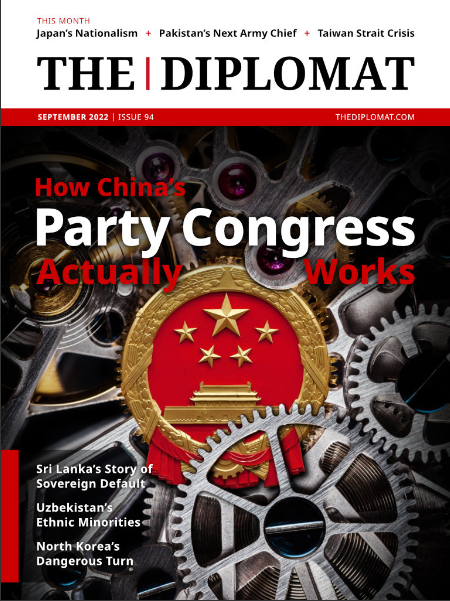
I wrote a long-form piece for The Diplomat, explaining how the Party Congress works. I also identify the formally authorized group who makes the final approval of nominated candidates for the membership of the Central Committee. Main takeaways. A thread.
𝐋𝐢𝐧𝐠 𝐋𝐢 tweet media
English
27
418
1.4K
0
Luke Zhang retweetledi
Robin Brooks
Robin Brooks@robin_j_brooks·
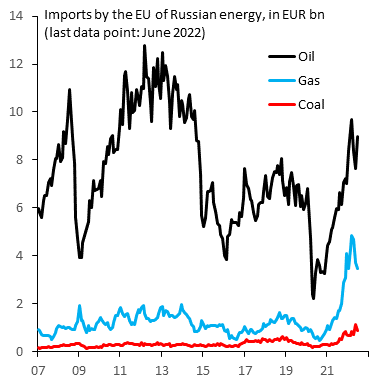
An embargo of Russian energy is about intertemporal trade-offs. An embargo would have front-loaded pain for the West with high energy prices & recession. But it would have wrought economic devastation on Russia and - with high probability - would have forced Putin to end the war.
Robin Brooks tweet media
English
26
72
355
0
Luke Zhang retweetledi
The Logan Bartlett Show
The Logan Bartlett Show@loganbartshow·
In fascinating conversation with @williamhockey on episode 30, he talks about the product decision that he estimates created 90% of @Plaid's market cap
English
4
15
190
0