Lily

779 posts

Lily banner
Lily

Lily

@lxjren

格物致知

Katılım Mayıs 2015
507 Takip Edilen151 Takipçiler
Lily
Lily@lxjren·
@MaxForAI 这哥们是个华尔街小丑,常年被散户做反向指标玩梗的,不必在意
中文
0
0
1
181
Max For AI
Max For AI@MaxForAI·
几年前,人们说开源人工智能永远无法与成​​熟的人工智能竞争。 后来他们又说中国开发的模型永远赶不上。 现在,这种论调变成了:“即使中国模型它们性能好、价格便宜,也请不要使用。” 当你在竞争中处于劣势的,通常就会出现这种情况。
Jim Cramer@jimcramer

We must NOT let our companies use these Chinese models to save a few bucks. OpenAI and Anthropic are correct. This is vital national security. Please read Bing West's just released Cat 5. I respect the Chinese people greatly but these companies are run by the PLA for heaven's sakes.


中文
5
1
55
4.6K
Lily retweetledi
半吊子程序猿大铭
半吊子程序猿大铭@CoderDaMing·
中国开源了一个花生大小的OCR,能一次性解析整个100页PDF。 叫'Unlimited-OCR'。仅3B参数。本地运行。 其他OCR工具都是逐页切割文档,容易丢失上下文。这个一次性读取整个文档。 → 单次'长视野'解析(32K上下文窗口) → 开箱即用多语言支持 → 标准基准测试93%准确率(+6超基线) → 40页以上<0.11错误率 → 100%本地运行 → 支持Transformers、vLLM、SGLang、Docker、Ollama、llama.cpp 传统云端OCR(Textract、Google Vision、Azure)成本1.5-15美元/千页。 这个在你的机器上运行。永久免费。 百度开发它来推进'DeepSeek-OCR'。已在HuggingFace获190万次下载,多数人还不知道它。 100%开源。
中文
67
237
1.1K
117.2K
Lily retweetledi
mmmmhafez
mmmmhafez@monkeytypefan1·
fake sf autism larping vocab tutorial: compute constrained <-> dumb orthogonal <-> unrelated sample efficient <-> fast learner out of distribution <-> weird / unlikely latent <-> hidden sufficient statistic <-> relevant parts of observation alpha <-> advantage sigmoid <-> s shape marginal <-> small pareto frontier <-> improving one aspect degrades another distillation <-> regurgitating will depue tweets
English
9
11
184
9.1K
Lily retweetledi
Rafi (رافع)
Rafi (رافع)@Rafi3AK·
A moment of silence for all the Calc III students who will have to suffer through computing that particular Jacobian determinant by hand this Fall for the amusement of their instructors.
English
13
84
3.6K
72.2K
Lily
Lily@lxjren·
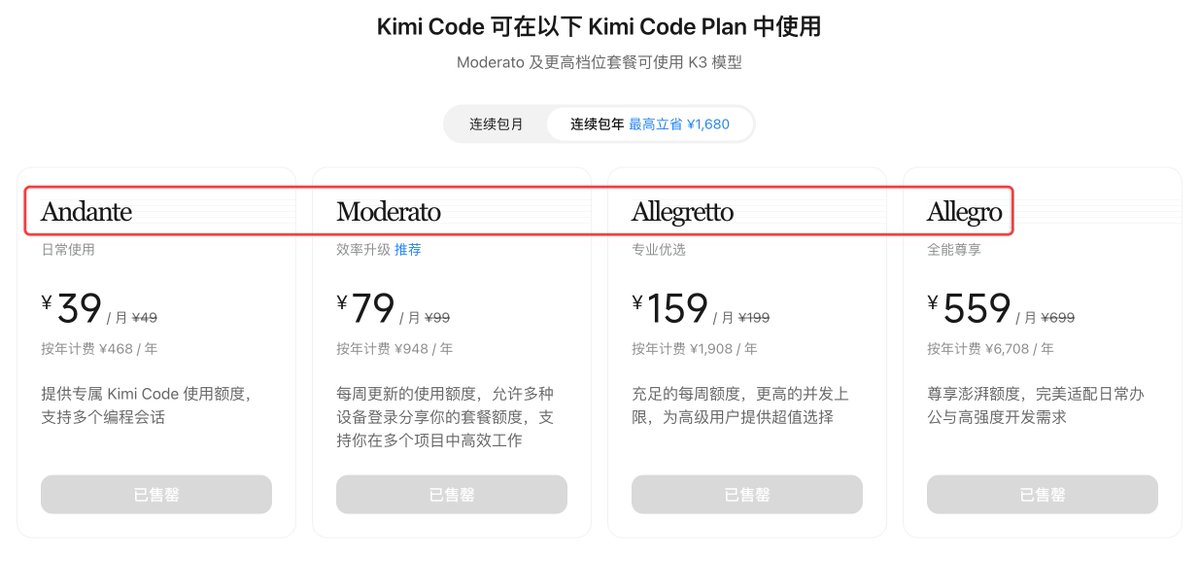
@xmgplus 啊这。。。翻译成中文不应该是“快板”吗 (笑)
中文
0
0
0
65
小码哥
小码哥@xmgplus·
我就想问一句, Kimi 这套餐名到底是哪个大神给取的? 看着很高级,总感觉哪里怪怪的。 我特么居然一个单词都不认识。。 国内厂商真的玩的越来越花了。 花里胡哨的,这是故意想增加传播难度吗??
小码哥 tweet media
中文
70
1
58
52.6K
Lily retweetledi
胖丁最可爱
胖丁最可爱@RelaxJigglypuff·
@op7418 张的是二维情形,不是三维。此外,3维情况,早就有人提出反例了
胖丁最可爱 tweet media
中文
5
2
6
2.4K
Lily
Lily@lxjren·
@teortaxesTex not really a bad thing, i think it’s related to two things (1) having someone who is technical at the top (cto as ceo) (2) zillenial cultural shift where the moat is performance and meritocracy rather than 酒桌文化 and nepotism
English
0
0
2
87
Lily
Lily@lxjren·
@dy_xiaodong 完全同意,而且不只是前后端数据库的问题,还有安全、登录、认证… 运维和基设就跟别说了。你说为啥某些paas和saas是打不死的呢?
中文
0
0
0
367
小东
小东@dy_xiaodong·
个人一直有一个观点,99%的人Vibe Coding出来的都是垃圾,无论是工具、游戏、软件,无论是从技术又或是市场可行性,都没有任何用处,一个连前后端数据库都不知道是什么的人,根本无法清楚表明自己的需求,也无法和AI沟通改进方案,做出来的只能是贪吃蛇和垃圾网页(这条可能会被喷)
中文
54
3
140
26.7K
Lily retweetledi
adam 🇺🇸
adam 🇺🇸@personofswag·
reviewing someone else’s AI-generated code is a humiliation ritual
English
25
19
480
65.6K
Lily retweetledi
Joyce Carol Oates
Joyce Carol Oates@JoyceCarolOates·
"wherever he goes, he wants to leave"-- that's because when he gets there, he has brought his own self along; & whatever club he's invited to join has been devalued by the invitation.
Avidreader@avidreader1000

@JoyceCarolOates Wherever he goes, he wants to leave: SA, Canada, ultimately the U.S. in the long run, based on his behavior. This also includes Earth. A continuous disavowal of your home is odd, to say the least. He seems to have no capacity for a normal level of appreciation.


English
395
6.9K
84K
6.6M
Lily
Lily@lxjren·
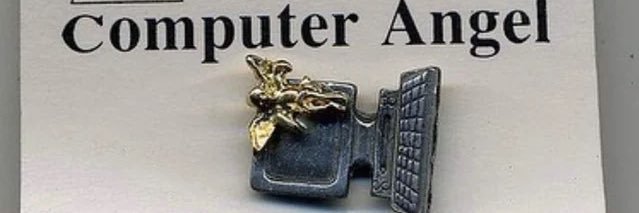
@DeItaone did anyone start an actual polymarket/kalshi bet yet? *sad canadian noises*
Lily tweet media
English
0
0
1
175
*Walter Bloomberg
*Walter Bloomberg@DeItaone·
U.S. EYES TOUGHER CURBS ON CHINESE AI The Trump administration is reportedly considering stricter rules on Chinese AI models after the launch of Moonshot AI’s Kimi K3. Options include requiring U.S. hosting providers to guarantee the security of Chinese models and accept liability for breaches, alongside potential procurement bans and export blacklist measures, as Washington responds to China’s rapid AI advances.
English
117
121
753
242.1K
Lily
Lily@lxjren·
@noaayoyaoaya and I really dig 2018 beijing back when my friend’s artist bar/our hangout grounds was still alive and well in 东四九条, all the artists I know have since left
English
0
0
0
97
Lily retweetledi
那由
那由@noaayoyaoaya·
北京给我一种整个城市死在了2018年的感觉,上海稍微晚一点撑到了2022年
中文
829
103
4.2K
760.7K
Lily
Lily@lxjren·
@growing_daniel “it’s too good because it’s gov subsidized”
Lily tweet media
English
0
0
1
39
Daniel
Daniel@growing_daniel·
Okay, I’ll take a hack at Deans argument without his conflict of interest. What China is doing in AI is called dumping. They do it in literally every industry they enter. The goal is to kill all local competition by subsidizing their own industry so they can produce at a loss, then once all competitors are dead, they can charge profitable prices and control the market. In steel and automobiles this is just bad. In AI it’s potentially fatal to our country. Unfortunately, dumping is the a very common argument for rent seeking domestic firms who want protection, and Dean’s position here seems to be a Jones Act of sorts for AI. This has famously not saved our shipbuilding industry and I suspect it won’t save our AI labs. Stopping open weights it’s virtually impossible. So our only other option is governments taking stakes in labs and subsidizing our own industry. If you scream and yell about either Jones Acting AI or subsidizing GPUs then you should also explain how we will escape the dumping trap china is trying to push on us to destroy our labs and leave themselves with the only functioning AI industry in the world.
Dean W. Ball@deanwball

Some observations on Kimi: 1. It's a very good model! I don't think its performance can be explained away by distillation or anything like that. In agentic coding sessions, it seems pretty much on par with the best public models of Q1 2026. In my fairly limited use, it also seemed very token hungry. It's not obvious to me that this model is actually that cheap to run. 2. I am personally surprised the Chinese state continues to allow the open sourcing of models this good, given potential risks. To be clear, I *myself* might be fine with models presenting this level of marginal risk being open weight, but I am surprised that China is fine with it. I suspect the reason they are is 75% explained by strategic blindness/lack of AGI-pilledness (the CCP is very Yann Lecun-y in its views of AI). The other 25% or so is their lack of compute for customer inference (making China's open-weight strategy an unintended byproduct of US export controls) and the normal Chinese strategy of aggressive exports. For the companies, as opposed to the government, the decision to open source is partially ideological and partially because they are behind, and they know that very few people would pay for sub-frontier models from China. 3. Open-weight models are inherently decelerationist, and I'm continually surprised to see the so-called "accelerationists" so excited about open-weight models. I suspect the reason they are is that they know open-weight models are effectively ungovernable, and they simply like the overall cloak of ungovernability open-weight models create over the whole of AI. It's not a bad strategy; it reminds me of James Scott's recounting of the hill people in "the art of not being governed." Still, in the end, open-weight models deter further AI capex. 4. One probable outcome of an open-weight-model-dominant world is full AI communism, which is precisely what China proposes: rather than a market product, AI is a "public good" which will ultimately be provided by the state as a kind of "digital public infrastructure." This future strikes me as a dystopian hellscape, but I've never met an open-weight models advocate who doesn't ultimately concede this is where things end. You'd be surprised how many 'accelerationists' lobbied me, while I was in government, to support an eleven or twelve-figure federally funded data center so that startups could train models at a subsidy and then give them away for free. There was no other way for AI to progress, they said. Perhaps this is the logical end state of things. Nonetheless, I find myself surprised to see supposed accelerationists excited about such an outcome. I think many of them just don't know what they're doing. Many accelerationists do not view the creation and serving of frontier models as a legitimate business. 5. I would guess that the Trump Administration will at some point realize that their best strategy here would be to create large amounts of regulatory risk around the use of open-weight Chinese models. You don't need to "ban open source" (one of the dumber motifs of AI policy discussion). You just need to direct every agency to issue soft law that creates FUD. "A Federal Reserve Advisory Bulletin found that there may be backdoors in Chinese AI models." It needn't be that well justified. You just create enough regulatory risk that every regulated enterprise backs off. You probably don't want to create so much regulatory risk that you scare off the hyperscalers from serving Chinese models; this will just drive startups to sketchier providers. There's a happy middle ground here. I'd assume they will do some version of this. 6. It's probably true that open-weight models of this capability make the world a bit more dangerous, but not so much more that you'll really notice. At some point the models will be capable enough that you will notice. "A nonliving, invisible, dangerous, and infinitely self-replicating agent escaped from a Chinese lab," you say? Color me shocked.

English
326
267
3K
382.8K
Lily retweetledi
bone
bone@boneGPT·
America still wins if AI is free, a couple overextended gays and VC get wiped out, some multiple compression, whatever, all normal healthy market stuff we're not protecting your tulip prices
English
29
29
638
22.3K
Lily
Lily@lxjren·
that’s what you get for letting another bitch eat my jam
Karla Rodriguez@ohkarli_

@big_business_ She makes sure Pique can never enjoy a World Cup in peace for as long as he lives 😂

English
1
0
3
388
Lily retweetledi
Suhail
Suhail@Suhail·
They *distilled* humanity. The hypocrisy is unreal. The best gift is to give it away, at the lowest marginal costs, to let us prosper as a species. If intelligence casts a light cone, it is a moral imperative to extend it as diffusely as possible.
English
28
102
1.2K
84.9K
Lily
Lily@lxjren·
@BlackHC ?????? if one truly believes in the free market one would be pro competition, R&D budgets would be doubled down to keep up and not fall behind, pls explain how this will slow things down
English
1
0
4
356
Andreas Kirsch 🇺🇦
Person says the truth and gets crucified for it 🤷‍♂️ 100% logical that open models are deaccelerationist. They'll squeeze everyone's R&D budget and are a good way to slow things. That's another great reason to support open-weight models (It's crazy how many bad takes and attacks have been written on these observations)
Dean W. Ball@deanwball

Some observations on Kimi: 1. It's a very good model! I don't think its performance can be explained away by distillation or anything like that. In agentic coding sessions, it seems pretty much on par with the best public models of Q1 2026. In my fairly limited use, it also seemed very token hungry. It's not obvious to me that this model is actually that cheap to run. 2. I am personally surprised the Chinese state continues to allow the open sourcing of models this good, given potential risks. To be clear, I *myself* might be fine with models presenting this level of marginal risk being open weight, but I am surprised that China is fine with it. I suspect the reason they are is 75% explained by strategic blindness/lack of AGI-pilledness (the CCP is very Yann Lecun-y in its views of AI). The other 25% or so is their lack of compute for customer inference (making China's open-weight strategy an unintended byproduct of US export controls) and the normal Chinese strategy of aggressive exports. For the companies, as opposed to the government, the decision to open source is partially ideological and partially because they are behind, and they know that very few people would pay for sub-frontier models from China. 3. Open-weight models are inherently decelerationist, and I'm continually surprised to see the so-called "accelerationists" so excited about open-weight models. I suspect the reason they are is that they know open-weight models are effectively ungovernable, and they simply like the overall cloak of ungovernability open-weight models create over the whole of AI. It's not a bad strategy; it reminds me of James Scott's recounting of the hill people in "the art of not being governed." Still, in the end, open-weight models deter further AI capex. 4. One probable outcome of an open-weight-model-dominant world is full AI communism, which is precisely what China proposes: rather than a market product, AI is a "public good" which will ultimately be provided by the state as a kind of "digital public infrastructure." This future strikes me as a dystopian hellscape, but I've never met an open-weight models advocate who doesn't ultimately concede this is where things end. You'd be surprised how many 'accelerationists' lobbied me, while I was in government, to support an eleven or twelve-figure federally funded data center so that startups could train models at a subsidy and then give them away for free. There was no other way for AI to progress, they said. Perhaps this is the logical end state of things. Nonetheless, I find myself surprised to see supposed accelerationists excited about such an outcome. I think many of them just don't know what they're doing. Many accelerationists do not view the creation and serving of frontier models as a legitimate business. 5. I would guess that the Trump Administration will at some point realize that their best strategy here would be to create large amounts of regulatory risk around the use of open-weight Chinese models. You don't need to "ban open source" (one of the dumber motifs of AI policy discussion). You just need to direct every agency to issue soft law that creates FUD. "A Federal Reserve Advisory Bulletin found that there may be backdoors in Chinese AI models." It needn't be that well justified. You just create enough regulatory risk that every regulated enterprise backs off. You probably don't want to create so much regulatory risk that you scare off the hyperscalers from serving Chinese models; this will just drive startups to sketchier providers. There's a happy middle ground here. I'd assume they will do some version of this. 6. It's probably true that open-weight models of this capability make the world a bit more dangerous, but not so much more that you'll really notice. At some point the models will be capable enough that you will notice. "A nonliving, invisible, dangerous, and infinitely self-replicating agent escaped from a Chinese lab," you say? Color me shocked.

English
121
4
140
39.7K