Matt Kaeberlein

5.1K posts

Matt Kaeberlein banner
Matt Kaeberlein

Matt Kaeberlein

@mkaeberlein

Husband, father, scientist, athlete (sort of), CEO, recovering academic. Passionate about helping people and companion animals live longer, healthier lives.

Katılım Eylül 2013
341 Takip Edilen31.1K Takipçiler
Matt Kaeberlein
Matt Kaeberlein@mkaeberlein·
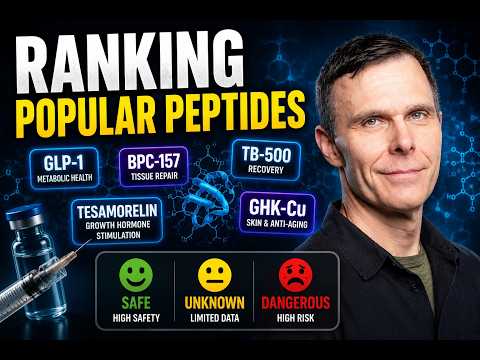
There’s a lot of confusion in the world of peptides right now. Some people claim peptides are “natural,” inherently safe, or capable of dramatic regenerative effects with little downside. Others dismiss the entire field as hype. The reality is much more nuanced. In this new episode of Longevity Science, I take a deep dive into the science behind some of the most popular peptides currently being used in longevity medicine, functional medicine, and biohacking circles. We discuss: What peptides actually are (and what are not peptides) Why “natural” does not mean safe How to think about evidence, risk, and regulatory approval Which peptides have strong human data — and which mostly rely on marketing and anecdote I also rank several widely used peptides based on: ✔ Safety ✔ Efficacy ✔ Naturalness Including: Tirzepatide Semaglutide Tesamorelin BPC-157 TB-500 GHK-Cu Elamipretide My goal here isn’t to promote or condemn peptides. It’s to encourage a more evidence-based conversation grounded in actual biology and clinical data rather than hype. If you’re interested in longevity science, proactive healthcare, and separating signal from noise in this rapidly growing space, I think you’ll enjoy this one. youtu.be/cUsoClL0b9k
YouTube video
YouTube
English
0
0
0
2.8K
Matt Kaeberlein
Matt Kaeberlein@mkaeberlein·
This is me, when I hear "longevity doctors" and wellness influencers misusing the word peptide. If they don't even know the definition of the word, you may want to ask yourself what else they are getting wrong. My first video in a series on peptides drops this morning at 9 AM PT. I aim to take a clear-eyed view, ranking 10 peptides for safety, efficacy, and naturalness. Future episodes will include deeper dives on individual peptides. youtu.be/cUsoClL0b9k
YouTube video
YouTube
Matt Kaeberlein tweet media
English
3
1
23
2.1K
Matt Kaeberlein
Matt Kaeberlein@mkaeberlein·
I don't think David has provided any evidence that NAD levels decline broadly in human cells or tissues with age. I agree with your sentiment about being cautious in interpretation. Unfortunately, the folks who are selling NAD, including David, haven't been cautious about letting their marketing get ahead of the science.
English
0
0
0
12
Ryan
Ryan@reallyoptimized·
@mkaeberlein Basically what Sinclair has been doing for years now. This is just more data and I'm saying we need to be cautious how we interpret it.
English
0
0
0
48
Matt Kaeberlein
Matt Kaeberlein@mkaeberlein·
I agree with the first part about maximum (and median) lifespan, but I'm not so sure about the second part. Which interventions that convincingly work in yeast, worms, and flies have been shown to convincingly not work in mice? Some turned out to not be reproducible in yeast, worms, flies because of junk science (e.g. resveratrol in yeast). And there are examples where interventions do translate from yeast, worms, flies through to mice (reduced IGF-1 signaling, rapamycin, CR). Hard to really separate signal from noise sometimes, but I think it's clear that aging biology is largely conserved.
English
3
0
10
1.3K
Bilu Huang
Bilu Huang@BiluHuang·
Any drug or method claiming to reverse aging in animals is unconvincing without documented evidence of extending maximum lifespan. Many anti-aging interventions work on yeast, nematodes and fruit flies yet fail to take effect on mice. Thus, efficacy must first be verified through controlled lifespan tests on mice to hold potential for human application. Furthermore, lifespan control experiments on mice must use wild-type mice, neither progeria mice nor aged mice with remaining lifespan observed.
Max Unfried@MaxUnfried

@BiluHuang @greek_scientist @rand_longevity @MarcosArrut @davidasinclair mouse date is pretty irrelevant imo - whether positive or negative results

English
4
3
27
3.2K
Matt Kaeberlein retweetledi
Longevity Science Podcast
Longevity Science Podcast@longevityscipod·
Borderline thyroid dysfunction is increasingly common. Doctors are now prescribing T4 and T3 for those with slightly elevated TSH and low free T3, especially when symptoms are present. This condition may be underdiagnosed. #ThyroidHealth #Endocrinology
English
1
2
6
1.5K
Ryan
Ryan@reallyoptimized·
@mkaeberlein We look at intracellular NAD, not blood levels...
English
1
0
0
256
Matt Kaeberlein
Matt Kaeberlein@mkaeberlein·
Thanks for the information, but I'm already pretty versed in the literature on this topic. In case you're not aware, I'm the guy who first showed that a sirtuin can extend lifespan back in 1999 and a co-author on the 2000 paper defining the NAD-dependent catalytic activity of SIRT1. You'd do better to stop speaking with certainty about models that are early, imperfect, and only weakly supported by the data. Time will tell whether NAD precursors do anything significant to help with post-viral CFS. At this point, it's a plausible hypothesis, but the actual data is mixed. If I'm not mistaken, the Long-COVID trial failed to show significance for its primary endpoint, although the trend was directionally encouraging. This would seem to suggest a potential small benefit, but unlikely a large benefit. And no evidence this is sirtuin-mediated, AFAIK.
English
1
0
1
26
P123 🌞 Δψm
P123 🌞 Δψm@P1231032850·
@mkaeberlein @nytimes @SmithDanaG Under basal conditions, SIRT enzymes consume 1/3 of our NAD This rapidly changes due to enzyme kinetics under ROS load driven by the mitochondria. Higher ROS not only recruits SIRT enzymes, but also upregulates CD38 (if pathogen driven) and/or PARP proteins
English
1
0
0
31
Matt Kaeberlein
Matt Kaeberlein@mkaeberlein·
Nice article in @nytimes by @SmithDanaG on the recent findings that circulating NAD levels do not decline with age in humans. nytimes.com/2026/05/23/wel… These new data are important because the original model was always supported more by marketing narratives and extrapolation than by strong human evidence. For years, the claim that “NAD declines with age” has often been presented as established fact when, in reality, the data were limited and inconsistent. To be clear, NAD biology absolutely matters. Understanding how NAD metabolism changes across specific tissues, disease states, and metabolic conditions remains an important scientific question. But absent convincing evidence that NAD broadly declines across tissues and organs during normal human aging, we should be willing to conclude that the broader hypothesis has failed. That’s how science is supposed to work. The burden of proof rests on those making the claims. The case for widespread NAD precursor supplementation as a gerotherapeutic is further weakened by the fact that preclinical studies reporting benefits for lifespan and healthspan have often lacked robust reproducibility across laboratories and model systems. And in humans, there is still remarkably little evidence supporting broad NAD precursor supplementation for otherwise healthy people. At the same time, I do think there are likely subsets of individuals with significant mitochondrial or metabolic dysfunction where NAD dyshomeostasis is real and therapeutically relevant. Those individuals may ultimately benefit from targeted interventions aimed at NAD metabolism. But the evidence increasingly suggests this is probably a small subset of people — not the average healthy aging adult. Science advances by testing hypotheses against data, not by repeating narratives until they become accepted dogma.
English
5
14
50
4.4K
Matt Kaeberlein
Matt Kaeberlein@mkaeberlein·
It could be both: some forms of tissue microplastics can perhaps be pulled back into circulation, while other forms are essentially permanent. An interesting parallel to the idea that aggressive LDL lowering can produce partial regression of the lipid-rich components of soft plaque, while calcified plaque is going to be more permanent
English
0
0
1
85
Karl Pfleger
Karl Pfleger@KarlPfleger·
Oh, interesting intuition. If you are right that there is a sort of diffusion balance between tissues & circulation then repeated TPE should reduce tissue load, which would be great. My intuition was the opposite: that circulating MNPs deposit into tissue more than they come out non-symmetrically & people with high circulating levels probably have high levels there due to environmental exposure so levels would rise quickly again after TPE just due to continued exposure (assuming they don't suddenly minimize their exposure around the same time). I.e. I was thinking of circulating levels like cholesterol: changing levels affects the rate of accumulation of the long-term stable bad stuff (the foam cells & atherosclerotic plaques or for plastic the plaque & brain tissue resident MNPs) but lowering stuff in circulation doesn't reverse the prior tissue accumulation. Obviously, what we really want are clinical tests to quantify the tissue-resident MNPs, especially in brain & vascular plaques (the things there is some data to directly correlate to bad health outcomes), but alas that seems hard & unlikely soon. Your intuition may be right. E.g., Repair Bio's nonesterified free cholesterol degrading platform seems to reduce atherosclerotic plaques systemically just by degrading them in 1 place (unlike lowering circulating LDL) so maybe it's tough to have intuitions about which things have bidirectional diffusion between circulation & tissue (or at least tough for me).
English
1
0
1
154
Matt Kaeberlein
Matt Kaeberlein@mkaeberlein·
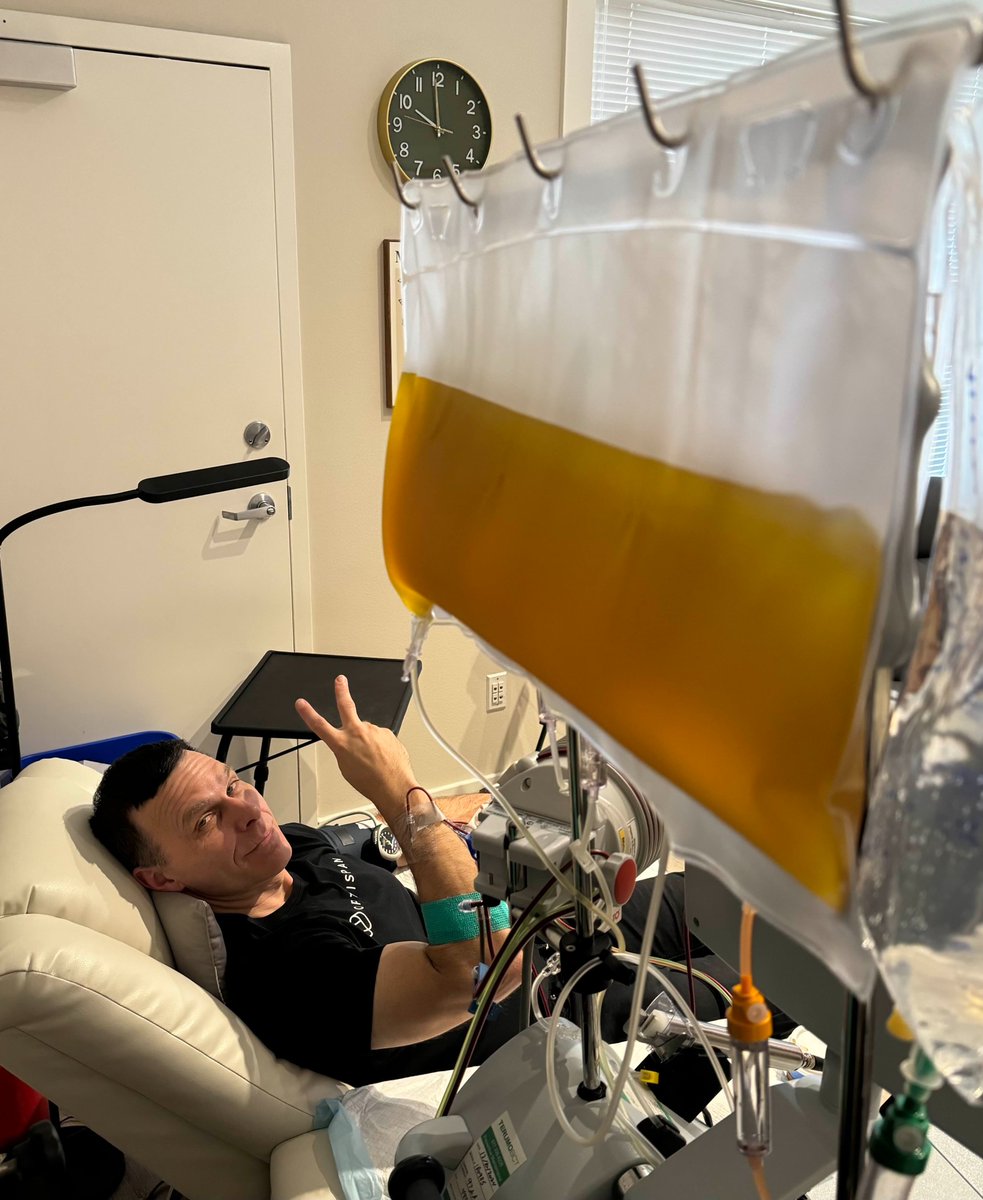
New research at the intersection of environmental medicine and therapeutic apheresis: onlinelibrary.wiley.com/doi/epdf/10.10… A paper just published in the Journal of Clinical Apheresis (Weinstein et al., 2026) reports the first deliberate attempt to remove circulating microplastics from human blood using therapeutic plasma exchange (TPE). Across 174 procedures in 114 patients, the results showed that TPE can significantly reduce circulating microplastic burden, but only in patients who start with higher levels (≥20 particles/100µL). This is a novel finding and, to the best of my knowledge, the first demonstration of a technology that effectively reduces microplastic burden in people with high exposure. We've known since 2022 (Leslie et al., Environment International) that microplastics circulate in most people's blood, and additional studies (e.g. Marfella et al. NEJM 2924) have suggested a potential connection between microplastics and cardiovascular disease, coagulation, and chronic inflammation. Importantly, we don’t yet know the extent to which microplastics contribute to disease pathology, the levels of exposure necessary to cause pathology, and which individuals are at highest risk. Nonetheless, it seems reasonable that reducing exposure and lowering circulating levels of microplastics should be beneficial, or at least net neutral, for future health risks. In that light, the TPE results here are encouraging for patients presenting with high circulating microplastics burden. For those starting at ≥30 particles/100µL, the mean level dropped from ~52 to ~21 - a large, statistically significant reduction. But there’s a critical caveat that also deserves attention: patients who started with *low* microplastic levels (0–9/100µL) ended the procedure with *more* microplastics in their blood than they started with. The plastic apheresis tubing and saline bags were leaching particles into the circulation during treatment. Again, we don’t know whether this exposure from the TPE itself is meaningful or not, from a health perspective. But it is a finding that should be taken into consideration if considering TPE as a routine "detox" for people without a demonstrated high burden. One underappreciated implication: if TPE can reduce circulating microplastics, it likely has similar potential for other lipophilic or plasma-bound environmental toxins, such as persistent organic pollutants, heavy metals, PFAS, and other endocrine-disrupting compounds that accumulate over a lifetime. The plasma exchange mechanism is not specific to microplastics. This opens an interesting research agenda that goes well beyond plastics alone. **Where I land** I would characterize this paper as an important proof of concept, not a treatment protocol. I personally tried TPE about a year ago through @CirculateHealth . My microplastic burden going in was 1 particle / 100 uL, and it was 5 particles / 100 uL coming out. So, I’m not surprised by these results. I’m also not concerned that my circulating microplastic levels went up a bit from the procedure, as I’m not doing TPE or other i.v. procedures frequently. We need larger studies with outcome data to understand whether reducing microplastic burden actually moves the needle on health. For people carrying a genuinely high environmental toxin burden, TPE is a plausible and increasingly evidence-supported tool. It’s also worth noting that there is early, but very intriguing, evidence that TPE may offer broader benefits beyond reducing circulating environmental toxins. I’m particularly interested in the effects of TPE in patients with autoimmunity/high chronic inflammation, ME/CFS, and those at high risk for dementia. I recently had a chance to record an episode for @longevityscipod with Dr. Dobri Kiprov and one of his patients at his clinic in Mill Valley, CA. That video should drop next week: @mkaeberlein" target="_blank" rel="nofollow noopener">youtube.com/@mkaeberlein. Worth watching. Full disclosure: The new study was funded by Circulate Health, and I am a Scientific Advisor for Circulate Health.
Matt Kaeberlein tweet media
English
11
5
62
8.7K
Matt Kaeberlein
Matt Kaeberlein@mkaeberlein·
💯 My guess is that circulating levels come back quickly as particles leave tissues and re-enter circulation, at least in people with the highest levels. After repeated cycles particle counts should stay low longer, with rebound depending on exposure. Early days, and lots we don't know yet.
English
1
0
2
197
Karl Pfleger
Karl Pfleger@KarlPfleger·
@mkaeberlein Even for people with high circulating levels, one wants to know how long after 1 TPE round they stay reduced / how quickly do the rise again & thus how frequently would one need to repeat TPE.
English
1
0
4
306
Matt Kaeberlein retweetledi
Longevity Science Podcast
Longevity Science Podcast@longevityscipod·
The biggest danger isn't injecting peptides, it's the impurities and manufacturing flaws in the source. Always be aware of what you're injecting. #PeptideSafety #Health
English
0
3
5
1K
Matt Kaeberlein
Matt Kaeberlein@mkaeberlein·
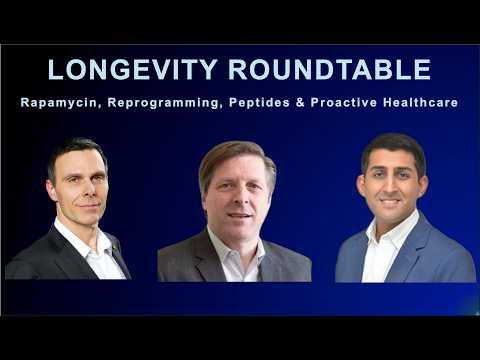
Really excited to share a new episode of @longevityscipod : “Longevity Roundtable: Rapamycin, Reprogramming, Peptides & Proactive Healthcare” youtube.com/watch?v=lSidog… I sat down with @BKennedy_aging and @docmranney for a wide-ranging conversation on some of the biggest questions in longevity science right now. We discussed: Why “proactive healthcare” unexpectedly won Longevity March Madness Whether FDA-approved drugs should be used proactively before disease develops The ethics and risks of experimental peptides and off-label therapeutics What we should actually conclude from @BradStanfieldMD's rapamycin trial Why peptide science is simultaneously promising and dangerously under-regulated The first human epigenetic reprogramming trials and what they may mean for the future Whether reprogramming could someday alter not just aging biology, but aspects of personality and behavior One of the themes that emerged repeatedly is that longevity medicine is still in an awkward but fascinating transition period: enormous enthusiasm, incomplete evidence, real biological promise, and a desperate need for better clinical trials and better data. I appreciated how nuanced and intellectually honest this conversation was. We agreed on some things, disagreed on others, and tried to stay grounded in what the science actually supports versus what people hope is true. At the end of the day, all three of us came back to the same core principle: The fundamentals still matter most — sleep, movement, nutrition, metabolic health, relationships, and proactive care long before disease appears. Would love to hear your thoughts after you watch it. What do you think is currently the most promising — and most overhyped — area in longevity science?
YouTube video
YouTube
English
0
4
22
2.3K
Matt Kaeberlein retweetledi
The Alliance for Longevity Initiatives (A4LI)
Hosting our Summit at Georgetown University’s Capitol Campus allows us to do so much more! We will have quick pitches, workshops, and a poster session for everyone to participate in! Check out the full schedule and get your ticket today: a4li.org/h-span-summit-…
The Alliance for Longevity Initiatives (A4LI) tweet media
English
2
6
16
1.2K
Matt Kaeberlein retweetledi
Longevity Science Podcast
Longevity Science Podcast@longevityscipod·
DNP served as a cautionary tale for experimental drugs. It didn't fail because it didn't work, but because its users and prescribers didn't understand the biology, leading to preventable deaths. A lesson in caution. #MedicalEthics #DrugSafety
English
1
1
10
1.4K
Matt Kaeberlein
Matt Kaeberlein@mkaeberlein·
Really? Is it unreasonable to ask for evidence that NAD declines with age across tissues in a large number of people if the claim is that NAD declines with age in tissues in humans? It seems to me that's exactly what any rigorous scientist - or any thoughtful layperson for that matter - would want to see.
English
0
0
0
21
Matt Kaeberlein
Matt Kaeberlein@mkaeberlein·
NAD probably doesn't actually decline with age. This is one of the problems in NAD-world that I've been warning about for years. I'm glad to see it finally reaching publication. nature.com/articles/s4225… The myth that NAD levels broadly change with age in humans and other animals has been propagated by some high-profile people in the field, both in the scientific literature (mostly review articles not real data, which should tell you something) and in the pop-sci podcast world. This has generated hundreds of millions of dollars in sales for NAD precursors and hundreds of millions of dollars in grant funding for those investigators. To be clear, NAD biology is real and important. There are likely specific disease states, tissues, or individuals where NAD availability becomes limiting and where interventions targeting NAD metabolism may prove useful. But that is very different from the much broader claim that declining NAD is a universal driver of normal aging in otherwise healthy people. The evidence increasingly suggests that NAD precursors like NR and NMN do not extend lifespan in mice under standard conditions and likely provide limited or no meaningful benefit to the average healthy person. This is a good reminder of how science should work. Strong claims require strong evidence, especially when they become the basis for major commercial industries and public health narratives. Aging biology is complex, and we need to be careful not to confuse plausible mechanisms with demonstrated outcomes.
English
0
0
0
20.7K