

Max Khalkhali
2.1K posts

Max Khalkhali
@max_gex
Taking chances on people I admire
Katılım Temmuz 2009
3.2K Takip Edilen945 Takipçiler
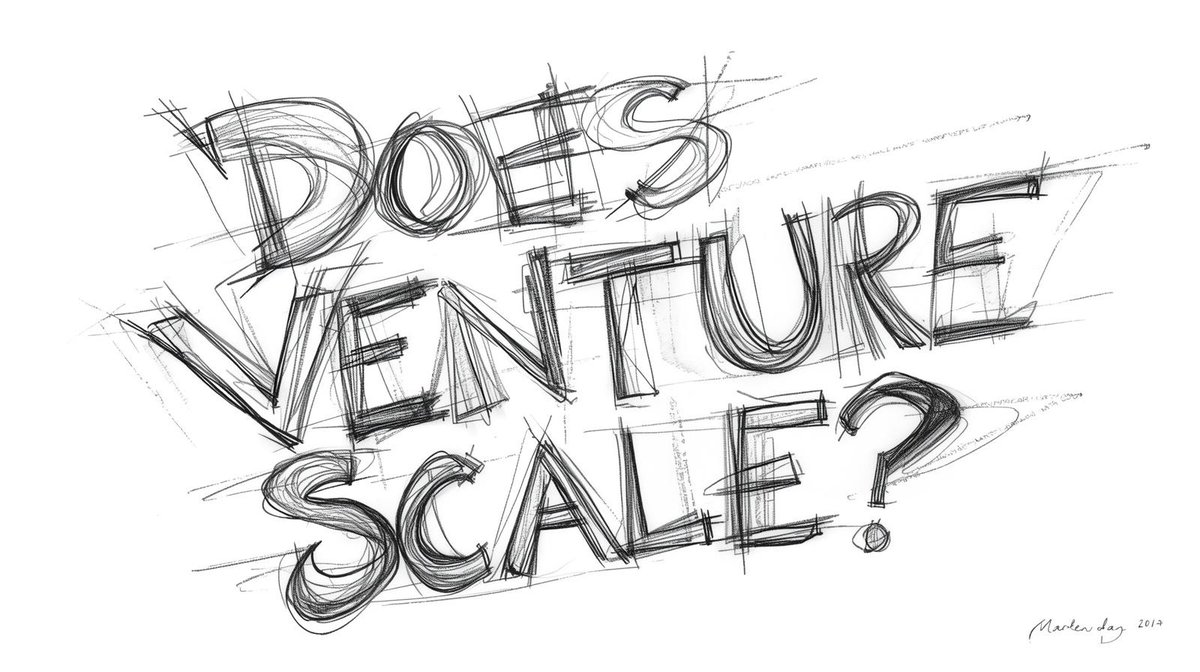
NVIDIA in 2015: categorized under “Supporting Technologies” in an AI landscape chart.
NVIDIA in 2026: most valuable company on Earth.
The best investments are hiding in the footnotes.

English
Max Khalkhali retweetledi

2017: Despite billions in funding, most autonomous vehicle companies remain in early-stage demo with scaled deployments years away.
2026: Despite billions in funding, most physical AI companies remain in early-stage demo with scaled deployments years away.
English

LPs should spend more time with founders.
At minimum, it makes the job way more fun.
English


Marc Andreessen calls him "the best AI CEO nobody knows about."
Elad Gil calls his company "the most successful, most quiet company in AI."
Qasar Younis (@qasar) is the co-founder and CEO of Applied Intuition—which brings AI to vehicles, like tractors, planes, submarines, mining rigs, cars, and more.
The company is valued at over $15B, making ~$1B in ARR, with 18 of the top 20 global automakers (and the U.S. Department of Defense) as customers.
And @Qasar's story is wild: Born on a farm in Pakistan. Emigrated to the U.S. at age 5. Grew up in Detroit managing engine lines at GM. Harvard MBA. Became COO of @Y Combinator (during the era that funded OpenAI, Cruise, DoorDash, and Coinbase). Then left to start Applied Intuition in 2017.
As Qasar shared, "not many people run a $15B+ physical AI company with revenue and free cash flow. And by not many, I think literally zero other people."
In a rare and in-depth interview, we discuss:
🔸 The counterintuitive reason he's stayed quiet and built in private
🔸 Why reading old books and cleaning your own office makes you a better founder
🔸 How to build a culture where the best idea wins, not the loudest voice
🔸 Why the best companies show traction early—and what to do if yours doesn't
🔸 How physical AI will transform farming, mining, and construction before it ever reaches your home
Listen now 👇
youtu.be/_rcniEb9bLw
YouTube
English
There's a new playbook in vertical AI: building one compounding engine with two interfaces.
In prior cycles, B2C and B2B evolved in distinct waves.
Google and Amazon first built massive consumer audiences. Then, over years (decades), they exposed capabilities as infrastructure to the market. AWS didn't follow S3...it took time. The cycles were long and sequential.
What we're seeing now is a compression of that happening in real time. Consumer and infrastructure aren't sequential anymore. They're simultaneous.
The arc looks something like:
• Launch as a consumer-facing assistant or tool
• Build differentiated intelligence or interaction layer
• Realize the leverage in embedding that layer elsewhere
• Expose APIs / SDKs / agent capabilities as a natural extension of what the consumer surface already built
• Evolve into both product and infrastructure
My working hypothesis:
Consumer builds...
• Data
• UX iteration
• Brand
• Real-world feedback loops
Infrastructure builds....
• Revenue durability
• Distribution hedge
• Strategic leverage
• Added valuation multiple
In other words, consumer AI may increasingly function as the front-end acquisition, while infrastructure becomes an economic moat. They're not two separate businesses — they're one compounding engine.
We’re seeing early versions of this pattern:
@mindtripai — an AI travel planner now building an agent-first layer that can be embedded via API or integrated agent-to-agent. The consumer product builds the travel identity graph; the infrastructure ambition is to own the decision layer.
@shopondaydream — a consumer visual shopping experience now powering visual search and recommendations directly on brand websites, decoupling the intelligence layer from the consumer UI.
@duckbillai — a human concierge now introducing MCP to bring human-in-the-oop trust into broader agent ecosystems.
@tryheroapp — a proactive daily assistant now extending AI Autocomplete as enterprise infrastructure embedded in third-party text boxes.
The same predictive intelligence powers both surfaces.
These companies aren’t just adding enterprise as a monetization path, but aiming to become vertical control planes — the intelligence layer others depend on — especially in a world where distribution may concentrate around a few dominant AI interfaces.
If OpenAI wins distribution, you want to be the vertical brain it calls.
If distribution fragments, you want to own the daily habit directly.
Not all vertical AI → infra expansions are equal.
The real question: is there a single intelligence core compounding across surfaces — or simply two adjacent products under one roof? The latter is just operational complexity, but the former is a control plane.
English
@JohnGleeson10 If you're not spending $10k/year on AI personally, you're not seeing the real benefits
English
A lot of go-to-market leaders right now know the AI in their company’s products, but in their personal lives the AI they're using is mostly what's offered for free in the major apps.
I’m noticing a big gap in their understanding, they're using year-old models and rapidly falling behind in the broader AI wave. It’s not noticed “in-seat” at their current company but when they go to change jobs they are so far behind they’re no longer candidates for companies that will matter going forward.
English
Max Khalkhali retweetledi

AIs will use prediction markets more than humans
Shelwin@shelwin_
POV: You give Perplexity Computer a Kalshi API Key
English

@max_gex @elonmusk Sorry, I misidentified it earlier. The screenshot is from the CONSOL3 app by MATT3R, which tracks Tesla FSD stats (requires their K3Y device for full features).
Download:
iOS: apps.apple.com/us/app/consol3…
Android: play.google.com/store/apps/det…
English


English
I know and trust that this is the case. But unsupervised can’t come fast enough.
Not being able to use my phone while FSD, makes me TURN IT OFF so I can reply to a text message, which defeats the whole purpose.
When I am tired or have been working late, it is a God send. 🙏 AND it saved the model Y from a crash.
Lady, which I hadn’t even noticed, was invading my lane and FSD moved us out of the way. Not as insane as some videos I’ve seen here, but aggressive enough that initially I thought that the Model Y had gone crazy.
But the time I took over we were already half way into the next lane, and completely out of danger.
English
@max_gex @elonmusk The screenshot is from the Tessie app for Tesla.
Download:
iOS: apps.apple.com/us/app/tessie-…
Android: play.google.com/store/apps/det…
English
“AGI is the ability to figure things out. That’s it.*” sequoiacap.com/article/2026-t… via @sequoia
English
Loved this from @ttunguz: "Currently, AI infrastructure spending is ~1.6% of GDP, compared to the peak of the railroad era at 6.0%. At this rate, AI data center buildouts would be equivalent to the national highway system as an investment percentage of GDP."
tomtunguz.com/google-earning…
English
Love this, this is so meta!
Aravind Srinivas@AravSrinivas
We're launching Perplexity Model Council for all Perplexity Max users on web. Council Mode lets you delegate to a swarm of frontier reasoning LLMs, where they work async, and a chair LLM synthesizes a more accurate answer considering multiple perspectives.
English