Winnie Kiiza@WinnieKiiza
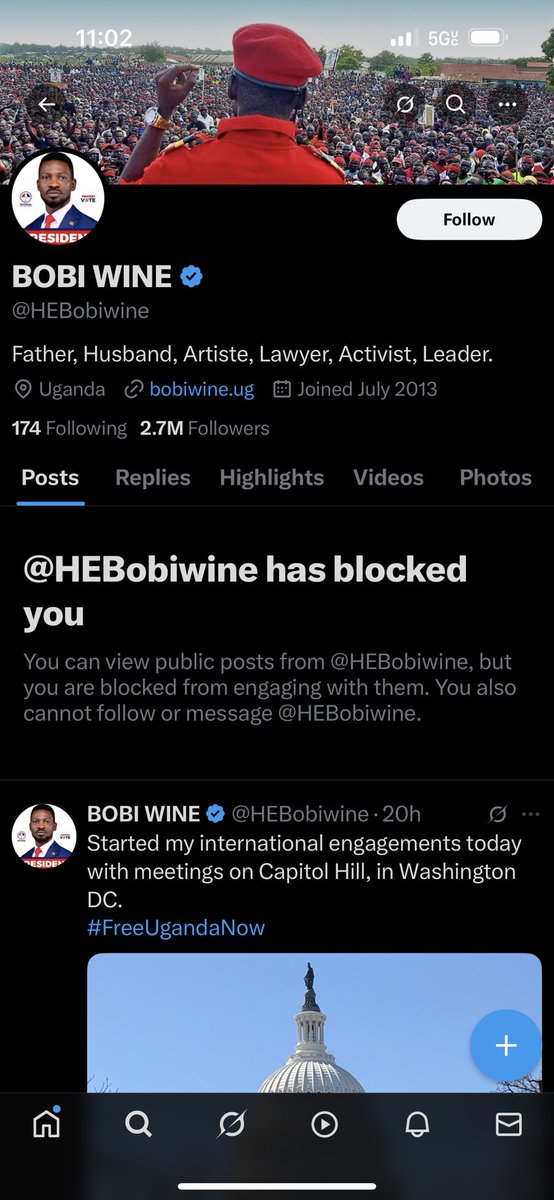
I have observed individuals on this platform, who present themselves as pan Africanists, criticising Hon. Kyagulanyi (@HEBobiwine) for engaging with authorities on Capitol Hill. Their principal argument is that “African problems must be solved exclusively by Africans.” While this position may appear principled at first glance, it becomes less convincing when examined against historical and present realities.
For several decades, the government of Pres. Museveni has depended significantly on U.S. financial assistance, military cooperation, and strategic partnerships to maintain its authority and sustain its programmes. Substantial volumes of development aid, security sector support, and bilateral trade arrangements have played a central role in underpinning our current political order.
Contrary to the accusations levelled against him, Hon. Kyagulanyi is not requesting that the U.S. assumes responsibility for resolving Uganda’s or Africa’s internal challenges. Rather, he is respectfully urging Washington to stop providing unconditional support to repressive regimes, to refrain from enabling continued violations of human rights and democratic principles through unchecked aid, military assistance, and diplomatic cover. In any case, such a call aligns closely with pan African ideals because it seeks to protect African citizens from domestic authoritarianism by removing the external forces that have prolonged their oppression.
Authoritarian governments, by their nature, prefer that their opposition remains strictly domestic. When dissent is confined within national borders, it is far easier to suppress without attracting meaningful international scrutiny or consequences. However, when legitimate grievances are brought to global attention, there’s a possibility of action, which can be in the form of sanctions, suspension or reduction of foreign aid, and diplomatic isolation. This, if realised, can actually impose real costs on those in power.
So the criticisms directed at Hon. Kyagulanyi for seeking international solidarity appear less as genuine expressions of pan African conviction and more as efforts to safeguard the prevailing political and economic arrangements that benefit those presently in power. Genuine commitment to African liberation and self determination requires consistency. If external partnerships are acceptable when they sustain those in government, they cannot reasonably be condemned when employed by citizens seeking accountability and justice. True pan Africanism embraces every effective avenue, be it, local resistance, regional cooperation, and principled international pressure, to secure dignity, freedom, and accountable governance for African people.