Matt

772 posts

Matt banner
Matt

Matt

@mtg0827

Always looking to learn more

Katılım Ağustos 2010
605 Takip Edilen98 Takipçiler
Matt
Matt@mtg0827·
@JohnTinsman It’s better than the 1.5% & 20% he charges his LPs. His 16.2% annualized return over 22 years increases to 19% annualized using the flat 2% fee structure. The S&P 500 returned 10.2% annualized over that same time period. I’m not saying the fees aren’t high, but context matters.
English
0
0
1
58
Matt
Matt@mtg0827·
@GavinNewsom You did it too. Why don’t you try to get all of the state governors together and do your jobs. Come up with a fair solution that all states agree to adopt so this BS stops. We need actual adults in the room. It’s honestly pathetic…on both sides.
English
0
0
0
5
Gavin Newsom
Gavin Newsom@GavinNewsom·
Louisiana’s GOP governor just declared a STATE OF EMERGENCY to CANCEL an election. Not for a storm — but to redraw maps so he can ERASE a historically Black district. They’re not even hiding it. MAGA is rigging elections to silence YOU.
English
6.7K
16.6K
62.5K
1.1M
Matt
Matt@mtg0827·
@TheLaurenChen This needs to be called out on both sides. It’s wrong regardless of the party that’s doing it. And now the parties in power, Rs and Ds, have abandoned any sense of trying to actually win over voters. They just prefer to game the system. It’s a joke and it needs to stop.
English
0
0
1
1.6K
Lauren Chen
Lauren Chen@TheLaurenChen·
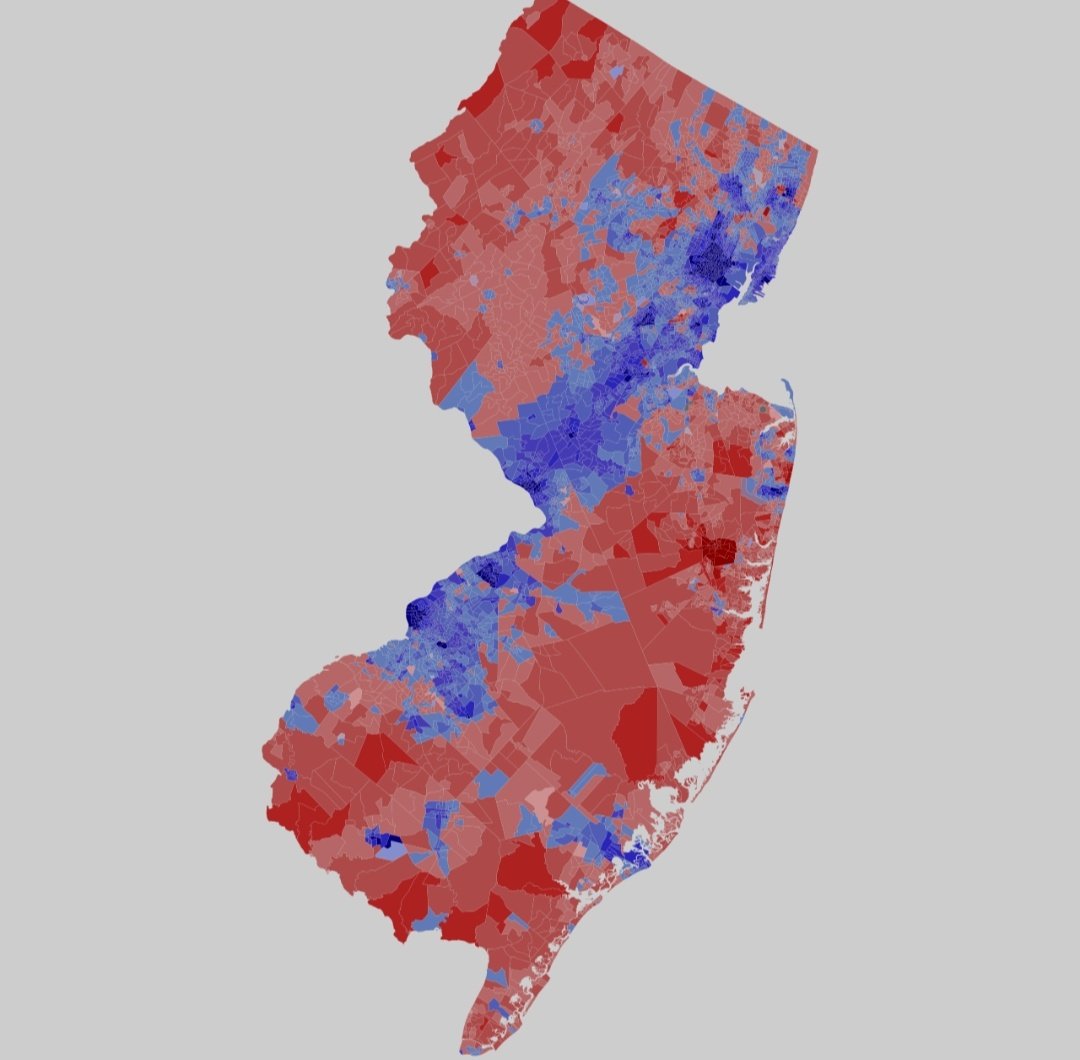
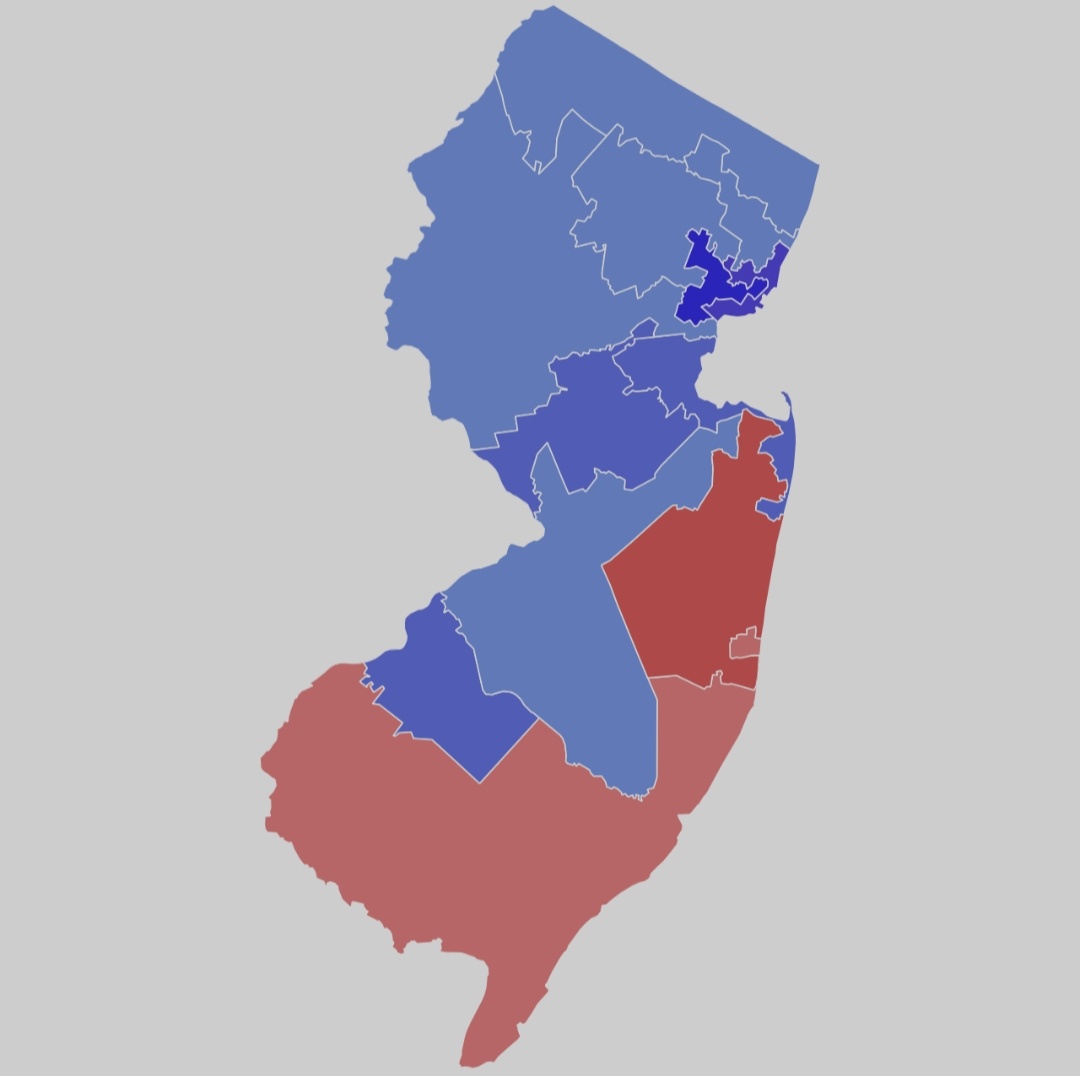
Most people have no idea how much Democrats have screwed over Republicans with their gerrymandered districts On the left are the results from New Jersey's 2025 gubernatorial election by precinct On the right are the same results by congressional district How is this allowed?
Lauren Chen tweet mediaLauren Chen tweet media
English
336
2.8K
10.1K
420.7K
Matt
Matt@mtg0827·
@JayCostaUSA This is a race to the bottom on both sides. Anyone who sits there and blames one side is being completely disingenuous. Both sides need to stop and we need a nationwide solution to this gerrymandering BS. Otherwise no one’s votes matter.
English
0
0
1
206
Jay Costa
Jay Costa@JayCostaUSA·
🚨 WOW - NJ Governor Mikie Sherrill just stated that she plans on REDISTRICTING the State of New Jersey to make it EVEN MORE BLUE! Most of the country thinks that New Jersey is an ALL BLUE state, but all you need to do is LIVE HERE for more than 5 minutes (which is about how long Mrs Sherrill has been here for) to realize that our state has a TON of RED. As of now, New Jersey has 9 Democrats in US Congress and 3 Republicans. If Mrs. Sherrill had her way, it would be 12-0! Even though over 60% of New Jersey is NOT registered with the Democrat Party, Mrs. Sherrill wants us to have ZERO representation! This has happened in the ENTIRE region of New England, where even though many of those states have MILLIONS of registered Republicans, they have ZERO representation in Congress. NOT HAPPENING! Behind Enemy Lines, indeed. Keep Fighting 🇺🇸
English
391
650
1.5K
283.2K
Matt
Matt@mtg0827·
@NickNemo17 BREIT did the same thing not too long ago. Not a good look.
English
0
0
0
12
Matt
Matt@mtg0827·
@marginofdanger Bulls would argue that $PS is essentially all management fees, which get a much higher multiple than performance fees. Also, $PS has a much smaller asset base than the peers, so incremental dollars of AUM are much more impactful to fee growth. New CEFs provide more upside.
English
0
0
1
329
marginofdanger
marginofdanger@marginofdanger·
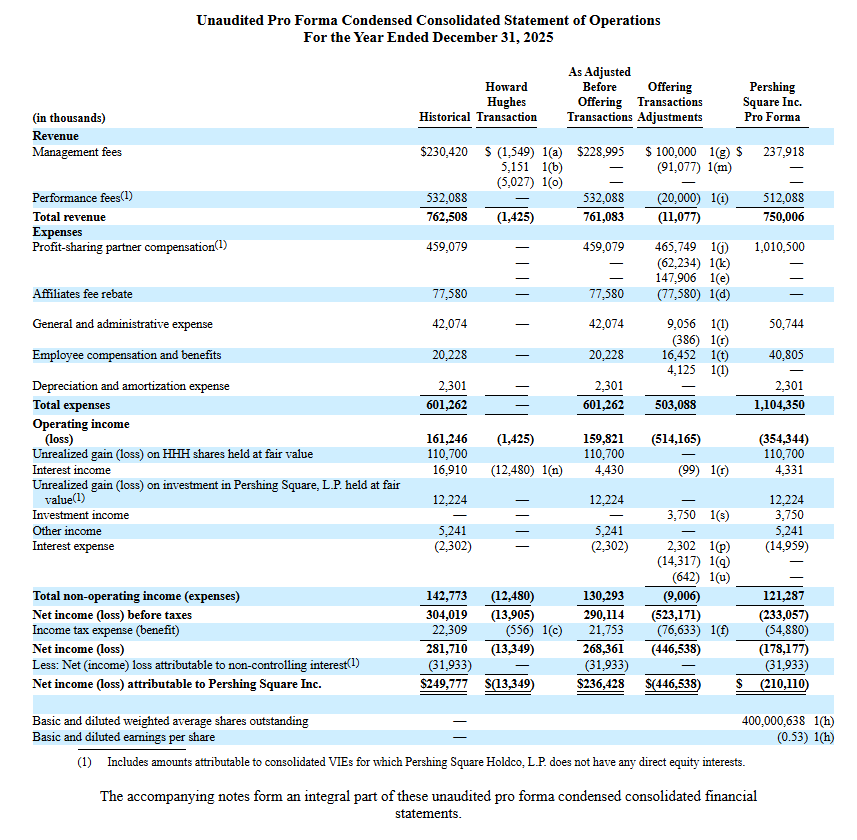
I pasted two screenshots from $PS's 424B4. If you look at fee paying AUM, it's $16 bn excl HHH which has a de minimis mgmt fee/carry. Add in $PSUS and you are at $21 bn of fee paying AUM. $PS discloses pro forma mgmt fees of $238 mm but that is net of $91 mm of non-cash amort related to the IPO. So I'm going to give them credit for $329 mm of mgmt fees. Assuming a 65% operating margin and a 20% tax rate, that gives me effective fee paying earnings of $171 mm. $PSH.LN has a 16% incentive fee and $PS is entitled to the performance fees on the first 5% (the team gets beyond that). On $15 bn, this is $15 bn * 5% * 16% = $120 mm or $96 mm after tax. Add up the mgmt fee and performance fee share, and I get $267 mm of expected earnings or $0.67/share. Implies $PS is trading at around ~50x EPS vs. $KKR at 17x, $ARES at 20x, $BX at 21x. Of course you can layer in some minor $HHH economics and it takes down the multiple a couple of turns. But you could also layer in a few years of sub 5% returns and that takes away the performance fee too. Certainly a 50x EPS valuation is pretty common for a fast growing higher ROIC biz. But it's by no means cheap. The question is, how will Ackman raise any money from here? $PSH.LN is at a discount to NAV, $PSUS is at a discount to NAV and $HHH is at a discount to NAV. One thing that will allow $PS to grow into its valuation is great results as that will 1) scale up the earnings (as it's based on % of AUM) and 2) facilitate new investors. Another way to contextualize the valuation is to simply look at fee paying AUM of $21 bn and compare that to the equity value of $13 bn. That is pretty unprecedented in the land of asset managers but reflects in part the permanent capital and the limited float (I think its just the 20mm shares given in the IPO). Could easily see a lot of price pressure once the 380mm non-IPO related investors are free to sell.
marginofdanger tweet mediamarginofdanger tweet media
English
11
2
50
16K
Matt
Matt@mtg0827·
@zerohedge Can he actually run his hedge fund strategy in an ETF? Leverage, hedging, etc. Also, while a flat 2% management fee is very high, it’s a meaningfully better fee structure than the 1.5%/20% he charges his LPs.
English
0
0
0
133
zerohedge
zerohedge@zerohedge·
Because he gets to charge a ridiculously high 2% vs 0.1% for an ETF. That’s why only retail investors would buy it in the first place
Eric Balchunas@EricBalchunas

@BillAckman Why not launch this in an ETF? Price will track NAV. Then you and the investors don’t have to worry about this guessing game on whether discount is going to close or expand.

English
24
16
383
155.4K
Matt
Matt@mtg0827·
@LogWeaver For every share of $PSUS IPO investors bought, they received 0.2 shares of $PS (private placement investors got 0.3 shares and are locked up for six months). As of yesterday’s close, for every $50 invested, investor have $48.31 in value. Not nearly as bad as you’re saying.
English
0
0
1
200
Logan Weaver
Logan Weaver@LogWeaver·
BREAKING: Bill Ackman just IPO'd his hedge fund. He targeted $25 billion two years ago. He raised $5 billion yesterday. And the retail investors he spent two years courting on X didn't show up. Here's what actually happened, and why it matters for every investor who thinks following a famous name is a strategy. Wednesday, April 29. Bill Ackman rang the opening bell at the New York Stock Exchange. Two listed entities hit the market. Pershing Square USA (PSUS), the closed-end fund. Pershing Square Inc. (PS), the asset manager. PSUS priced at $50 a share. It opened at $42. It closed at $40.90. Down 18% on debut. One of the most famous hedge fund managers on the planet went public, and his fund lost nearly a fifth of its value in a single trading session. Now look at how the money actually came in. Of the $5 billion raised, $2.8 billion came from a private placement. Family offices took 30% of that. Pension funds took 25%. Insurance companies took 22%. Ultra-high-net-worth investors took 12%. Institutional investors accounted for over 85% of total orders. The remaining $2.2 billion came from a public offering of 44 million PSUS shares. Some of that was retail. Most of it was not. Ackman has 2 million followers on X. He spent two years marketing this fund as a way for regular people to access hedge fund returns at $50 a share. He even said it on CNBC the morning of the IPO: "Hedge funds are sort of known for managing money for rich people. And now we have the opportunity for someone with $50, could be a long-term shareholder. Usually, the retail gets cut massively back, the institutions are favored. We did the opposite." The retail audience he was talking to didn't believe him. The institutions did. Two years ago, the original target was $25 billion. Yesterday, the final number was $5 billion. That's an 80% downsize. This is one of the most watched investors in the world. He gets booked on every major financial network. He posts daily to millions of followers. He has been pitching this exact deal since 2024. And the deal still came in 80% smaller than planned. Here's the part nobody is connecting: The retail audience for hedge fund products is fundamentally different from the retail audience for personality content. Ackman built a following by being loud on X. Loud on takeovers. Loud on politics. Loud on universities. Loud on ETFs. Loud on macro calls. Followers love that. They follow. They reply. They retweet. But following someone is free. Wiring money into their closed-end fund at NAV with no performance fees and a fee structure most retail investors can't even read is an entirely different decision. The market just made that distinction for him. Now zoom out, because this is the structural lesson. The $2.8 billion private placement was wrapped up before retail even saw the deal. Family offices. Pension funds. Insurance companies. Sovereign wealth. These are the buyers who get the call before the IPO is announced. They get the term sheet. They negotiate. They commit. By the time the public sees the listing on a Wednesday morning, the institutions have already locked in their allocation. The retail investor sees the same news, gets the same prospectus, and reads the same ticker. Different game. Same name on the door. And then PSUS opened down 16% and closed down 18%. Every retail buyer who put in $50 at the IPO price was sitting on a $9 paper loss before lunch. The institutions had locked in better terms in the private placement. Same fund. Same manager. Two completely different starting positions. This is how the structure of capital markets actually works. Every. Single. Time. The brochure says democratization. The cap table says the institutions got there first. This is the same lesson the Blue Owl and BlackRock private credit stories taught us last year. When a famous money manager opens a vehicle to retail, the fine print and the fee structure and the timing of the allocation all favor the people who already have access. You can have a manager with no performance fee, with bonus shares attached, with two million social followers, and a stage on CNBC. The math of who gets in first and at what price is still the math. So what does this mean for you? It means a famous name on the cover is not a strategy. It means following an investor on X is not the same as being invested with them. It means the retail audience for entertaining finance content is enormous, and the retail audience for actually deploying capital into a complex product is not. The wealthy don't pay famous investors for personality. They build systems that don't depend on a single human being having a good year, or a good fund debut, or a good narrative on social media. Ackman's reputation got him on the front page. It didn't get the stock above its IPO price. The math always catches up. The personality doesn't change the math. Boring? Yes. Effective when a $25 billion vision becomes a $5 billion raise that opens down 18%? Also yes. This is exactly why we built Surmount. Automated, rules-based investment strategies. Built for the retail investor who doesn't want to bet a portfolio on whether a famous fund manager has a good debut:
English
60
42
382
219.8K
Matt
Matt@mtg0827·
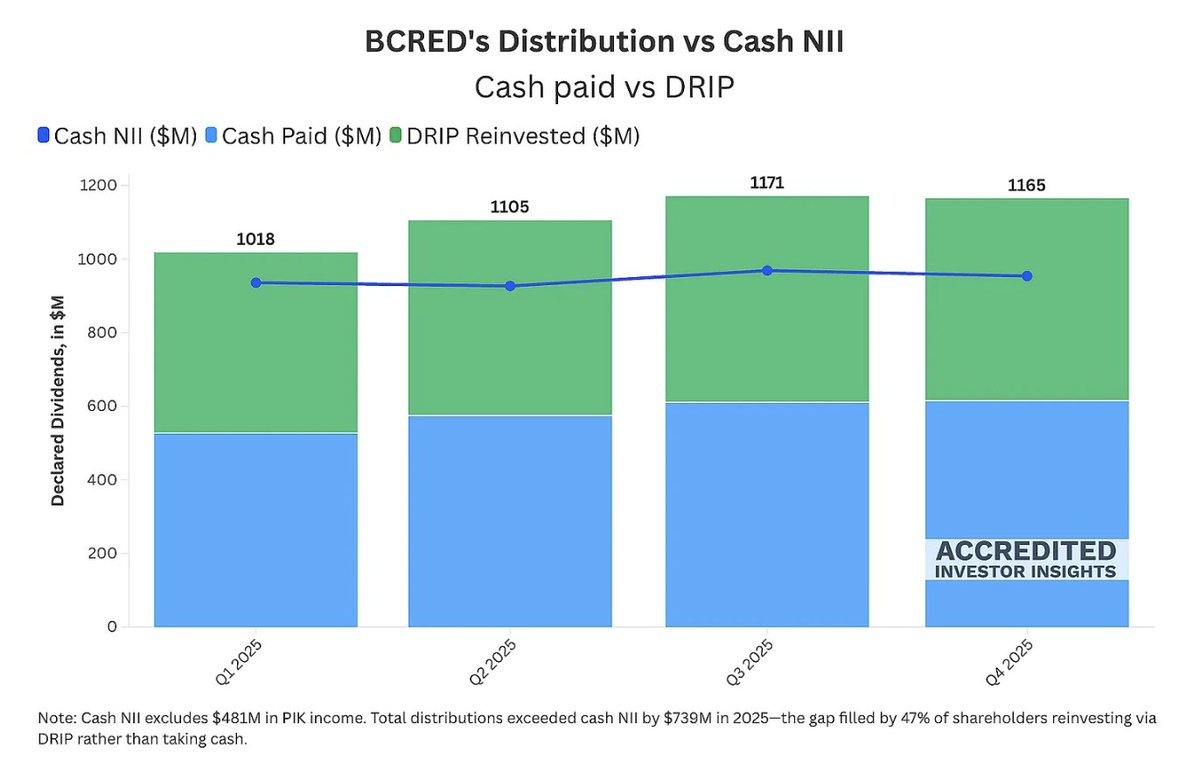
@LeylaKuni I hate when these funds consistently payout more than they earn. They say it’s to smooth out income. But it means you’re paying out of NAV, which isn’t sustainable. I’d much prefer a more stable NAV and lower cash flows.
English
0
0
2
67
Leyla
Leyla@LeylaKuni·
BCRED is the world's largest private credit fund, with $80.5B in assets. The fund used to be an "earn and pay" story. Alas, no more. My visual-making skills were stretched here (not quite as stretched as the marks, though), so let me explain what you're looking at: - Columns = distributions (blue: cash paid, green: DRIP) - Dark blue line = cash net investment income (GAAP NII less PIK) See the gap between the top of the column and the blue line? That's the shortfall (declared distributions exceeding what the fund actually earns in cash). The gap gets filled by new investor capital and DRIP participants buying shares at a declining NAV. Is this accretive to NAV/share? Trick question, of course it's not. But that's not why NAV is down 2.5% in FY 2025. The deep dive is live (link in comments)
Leyla tweet media
English
7
6
34
5.9K
Matt
Matt@mtg0827·
@LeylaKuni @PoloniusCrambe Thanks. What was the % of loans rated 3 before the transaction, and what is it post the transaction?
English
0
0
0
17
Leyla
Leyla@LeylaKuni·
Re: portfolio sale. They sold the better assets (rated 1 and 2 in the internal 5-point scale), which represented ~30% of total assets. The problem children (loans rated 3 and above) remain on the books - and now represent a higher % of the overall portfolio (denominator problem) I did the math here: accreditedinsight.com/p/hoot-there-i…
English
1
0
1
26
Leyla
Leyla@LeylaKuni·
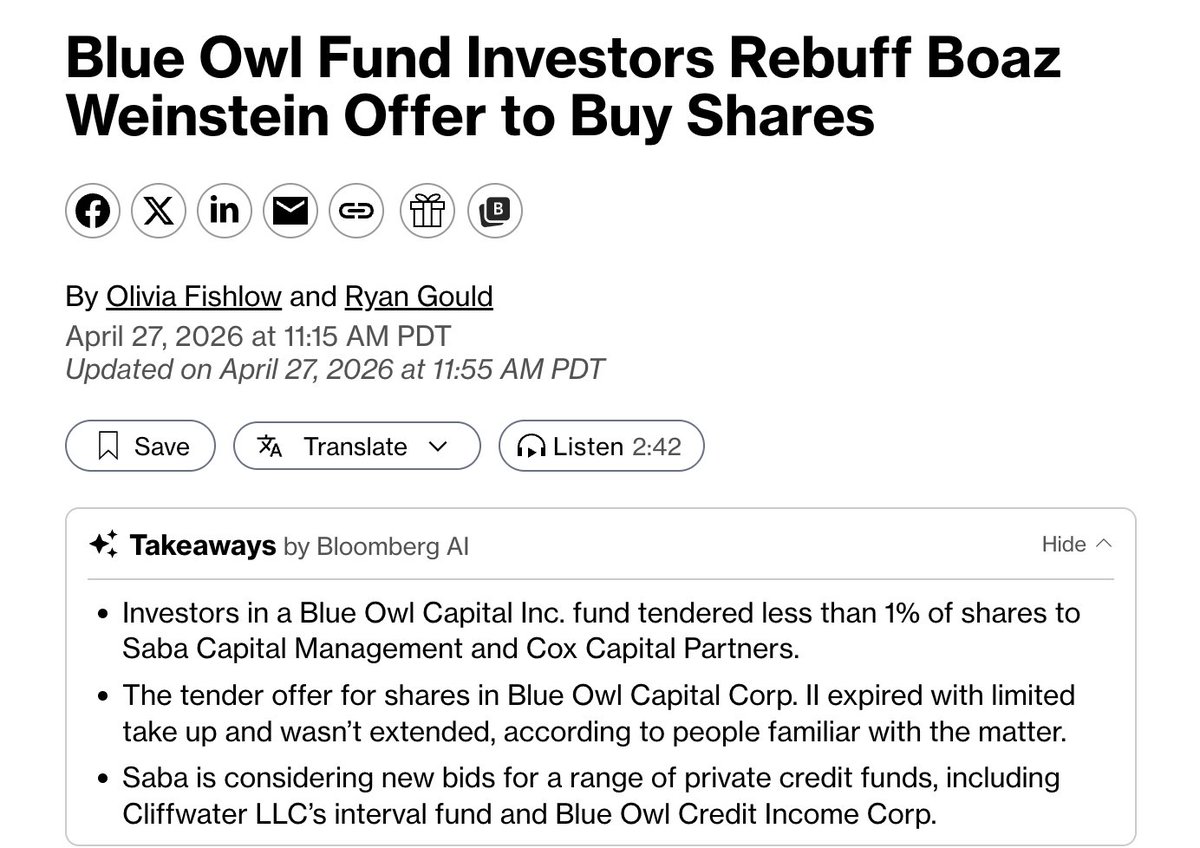
That's an interesting outcome - - so LPs are convinced they'll get out fairly soon-ish at or close enough to NAV.
Leyla tweet media
English
15
1
61
8.9K
Matt
Matt@mtg0827·
@PoloniusCrambe @LeylaKuni Then provide some details on why taking SABA’s offer is better. My view is investors were right to not take the offer. What are your assumptions as to otherwise?
English
0
0
0
13
Matt
Matt@mtg0827·
@PoloniusCrambe @LeylaKuni They sold a very large cross section of the underlying portfolio (pieces of many loans) to return the first 30%, so it’s hard to argue they sold the best assets. Again, the question is whether taking SABA’s steep discount now is better than receiving capital back over time.
English
2
0
0
30
Polonius
Polonius@PoloniusCrambe·
@mtg0827 @LeylaKuni The best assets are being sold first. The NAV as % original cost will come down as they get to the dregs
English
1
0
0
25
Matt
Matt@mtg0827·
@dailydirtnap @profplum99 Assuming Option A delivers its return via interest, given it’s a FDIC-insured bank account, it is a much less tax efficient way than Option B. In that case, Option B is superior.
English
1
0
5
3.1K
Jared Dillian
Jared Dillian@dailydirtnap·
You have two options: Option A: An FDIC-insured bank account that returns 10.99% percent a year, with a realized volatility of zero. Option B: An S&P 500 index fund, that returns 11.00% (on average) a year, with a realized volatility of about 16. Which do you choose?
English
144
6
112
179.9K
Matt
Matt@mtg0827·
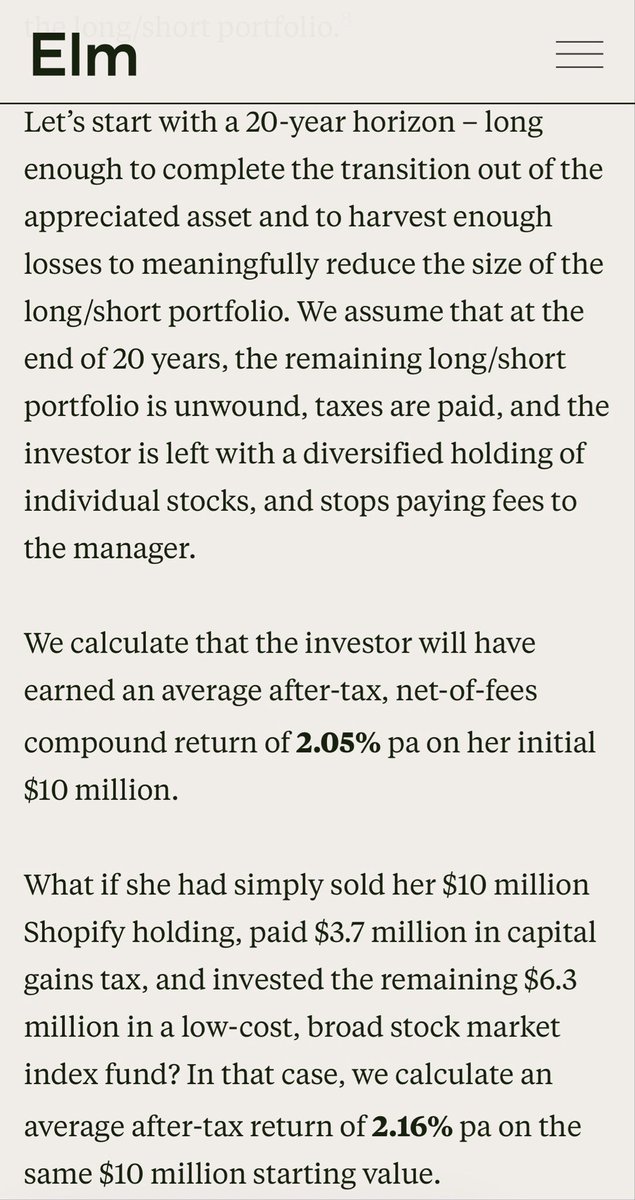
@MarkTMeredith @ElmWealth My point is that it’s a significant input in the analysis given they assume 50 bps, which fits nicely w/their conclusion. AQR, the largest player in this space, has produced historical alpha of several hundred bps. Whether that alpha will continue can and should be debated.
English
0
0
0
80
Matt
Matt@mtg0827·
@MarkTMeredith @ElmWealth This assumes no meaningful alpha from the L/S overly. If that’s the case, then of course the strategy won’t look good. You need to confident there will be alpha otherwise the strategy doesn’t make sense.
English
2
0
1
288
Matt
Matt@mtg0827·
@pvtcreditguy What do you estimate the “real” default rate to be when you incorporate both of those items?
English
2
0
0
33
Matt
Matt@mtg0827·
@LeylaKuni If an advisor wants to charge a placement fee, he/she shouldn’t be able to also collect a trail. It should be one or the other.
English
0
0
0
91
Matt
Matt@mtg0827·
@Fongern_FX The vast majority of PC funds do not allow for redemptions as they are draw down vehicles. Using total AUM and private BDC redemptions is completely misleading.
English
0
0
0
38