@simongerman600 You lost me at “takes average of residential prices’. Most utilities have different tariff rates for EV.
English
mwp
568 posts
@mwp_acm
ex- tech equity mm, electricity markets, still a baseball fan


I begin the news day with “News Items” from @EllisItems and his team. “News Items” does the work of a couple no dozen subscriptions. Here is the first item from this morning’s newsletter (substack.news-items.com): “1. We keep a list of stories about the stories that we think will be this decade’s most important. The list includes: The pandemic, Russia’s war on Ukraine, President Trump’s election in 2024, the third Gulf War, AlphaFold…you get the idea. There’s one “emerging” story that has the potential for becoming the most important financial and cybersecurity story of the 2020s. That story is about an AI model called Mythos: One balmy February evening in Bali, Nicholas Carlini stepped away between events at a wedding, opened his laptop, and set out to do some damage. Anthropic PBC had just made a new artificial intelligence model, called Mythos, available for internal review, and Carlini — a well-known AI researcher — intended to see what kind of trouble it could cause. Anthropic pays Carlini to stress-test its AI models to see whether hackers could leverage them for espionage, theft or sabotage. From Bali, where Carlini and his wife were attending an Indian wedding, he was staggered at what the model could do. Within hours Carlini found numerous techniques to infiltrate systems used around the world. Once Carlini was back in Anthropic’s downtown San Francisco office, he discovered Mythos was able to autonomously create powerful break-in tools, including against Linux, the open-source code that underpins most of modern computing. Mythos orchestrated the digital equivalent of a bank robbery: getting past security protocols and through the front door of networks, and breaking into digital vaults that gave it access to online treasures. AI had picked locks, but now it could pull off an entire heist. Carlini and some of his colleagues began alerting staff to what they’d found. And each day they continued to discover high-severity and critical bugs in the systems Mythos probed, the kind of flaws normally uncovered by the world’s best hackers. Meanwhile, Anthropic’s Frontier Red Team — a group of 15 “Ants,” or Anthropic employees — was experimenting in much the same way. The lab aims to ensure that Anthropic’s models can’t be used to harm humanity. They’ll ship in robotic dogs and place them in a warehouse with engineers to test whether Claude could be used to control them maliciously. Or consult with biologists to understand whether the chatbot could be used to create biological weapons. Now, they were realizing that the biggest risk Mythos posed was to cybersecurity. “Within hours of getting the model, we knew it was different,” says Logan Graham, who runs Anthropic’s Frontier Red Team. A previous model, Opus 4.6, had shown indications it could help people exploit vulnerabilities in software. Mythos could exploit the vulnerabilities on its own, Graham says. This was a national security risk, he warned Anthropic’s executives. That left Graham with the unenviable task of telling his bosses that their next major revenue generator was too hazardous to release to the public. (Read the whole thing. Italics mine. Sources: bloomberg.com, sullcrom.com)” Nothing to worry about. Nothing at all.
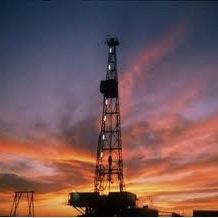
Here in North Carolina and around the country, gas prices are too high. This is a direct result of Donald Trump's war of choice in Iran, and the American people are paying the price.



U.S. seizures of sanctioned oil tankers are costing millions to maintain, undercutting claims they would be profitable. One seized tanker, Skipper, has already cost $47M in repairs and maintenance in just three months, despite being worth only about $10M. The ship was carrying ~1.8 million barrels of Venezuelan oil valued at $120M–$135M. Keeping the cargo stored costs the U.S. about $15,000 per day (~$450K per month). The government cannot sell the tanker or oil without a court ruling, leaving taxpayers covering the costs. The U.S. has seized about 10 tankers linked to Venezuela and Iran, including some without oil onboard, meaning maintenance costs still apply. Source: NYT

BREAKING: Morgan Stanley $MS has capped redemptions, returning less than half of the 10.9% that investors sought to cash out of North Haven Private Income.

Really hoping someone in White House press corps asks Trump about Straight of Hormuz and what we and allies are able and ready to do to get ships moving.







To power 100,000 homes for an hour: ⚛️ Nuclear: a tennis ball of uranium 🚌 Coal: two school buses of fuel ☀️ Solar: thousands of football fields of solar panels – plus massive batteries at night Higher energy density means lower land usage, cost and environmental impact.