ncRNAworld
1.8K posts

ncRNAworld
@ncRNAworld
Our purpose is to share data, new publications, to organise journal clubs and discussions on #ncRNA #mitochondrial and #cellular #signaling.
Barrey E, GABI, INRAE, France Katılım Aralık 2020
323 Takip Edilen209 Takipçiler
ncRNAworld retweetledi

A new mechanism for “RNA memory”! 😱
Thrilled to share another crazy paper from the lab (can’t believe we posted 2 in 2 days!), summarizing >10 years of research:
Work on transgenerational inheritance of small RNAs in the powerful model organism C. elegans changed how we think about what’s possible in inheritance and evolution, because it allows the most heretical thing: inheritance of parental responses to the environment! However, it’s still unclear whether RNAs are inherited across generations in other animals, largely because the RNA-dependent RNA polymerases that amplify heritable small RNAs and prevent their dilution in C. elegans are not conserved in mammals.
In this new work, an amazing collaboration with the Rink and Wurtzel labs, we show that planarians establish long-lasting and heritable small RNA–based gene regulatory states despite lacking canonical RNA-dependent RNA polymerases and nuclear RNAi machinery (that are required in C. elegans).
You might say “they are both worms…” BUT planarians are evolutionarily very distant from C. elegans (flatworms vs. roundworms, diverged more than 500 million years ago), making this particularly surprising. These are totally different animals.
We find that ingestion of double-stranded RNA induces sequence-specific silencing that persists for months and survives repeated cycles of whole-body regeneration. Even more strikingly, RNAi can be transferred between animals, echoing James V. McConnell’s controversial “RNA memory” experiments from the 1970s (his lab was targeted by the Unabomber terrorist Ted Kaczynski, who sent McConnell a bomb. This and other controversies ended this line of experiments…)
Mechanistically, we find that the response transitions from a transient systemic dsRNA-triggered phase to a stable, cell-autonomous post-transcriptional “memory phase” maintained by antisense small RNAs. Using a new luminescence reporter (transgenesis is currently impossible in planarians), we show that silencing spreads along the targeted gene and identify a weird type of planarian small RNAs with untemplated polyA tails.
RNAi inheritance without canonical RdRPs establishes planarians as a powerful system for studying RNA-based regulatory inheritance beyond C. elegans and raises the possibility that RNA-mediated inheritance may be more broadly conserved in animals, potentially even in mammals.
Here’s a video of a planarian that is treated by RNAi against β-catenin and develops multiple heads instead of just one. This is one of the phenotypes that is inherited. Another phenotype is “loss of eyes” (which we show is not only inherited across multiple regeneration cycles, but can also be transmitted between animals in transplantation experiments).
Amazing work led by first authors Prakash Cherian and Idit Aviram (co-supervised by Omri and me).
Please read the preprint, the link is in the next tweet, and share!
English

ncRNAworld retweetledi

Extracellular vesicles carrying microRNAs can predict kidney decline and cardiovascular risk in CKD, offering a minimally invasive tool for earlier risk stratification. - @sciencetokyo_en exosome-rna.com/predicting-car…
English
ncRNAworld retweetledi

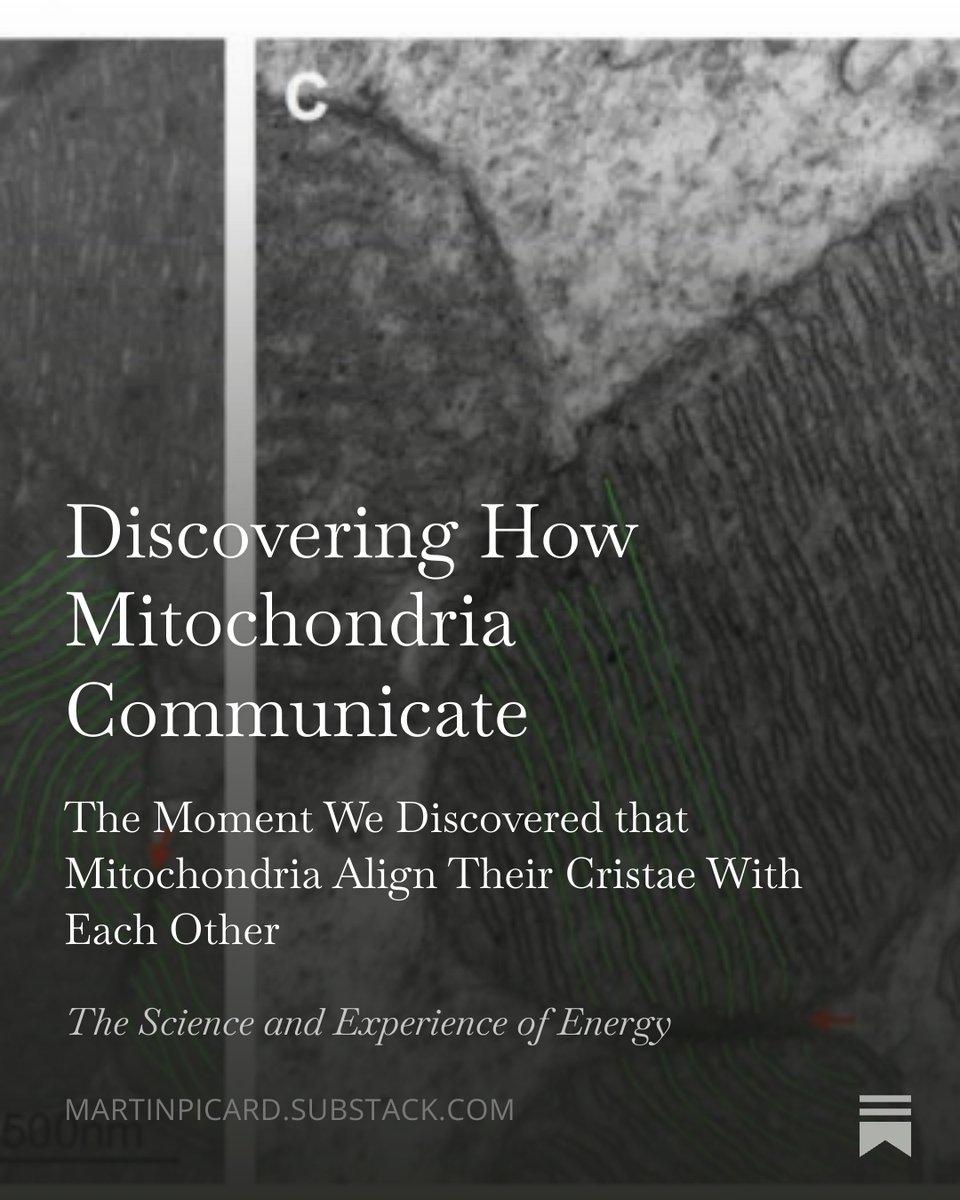
The first physical evidence that mitochondria exchange information with one another transformed how I think about these beautiful organelles. From isolated beans to social collective.
In 2015, we discovered that the inner membranes of mitochondria, where the oxygen we breathe and food-derived electrons converge, somehow interact BETWEEN mitochondria.
This is the story, with videos and pictures, of how this happened while working with Meagan McManus @MitoLoveLab in Doug Wallace's lab.
open.substack.com/pub/martinpica…

English
ncRNAworld retweetledi

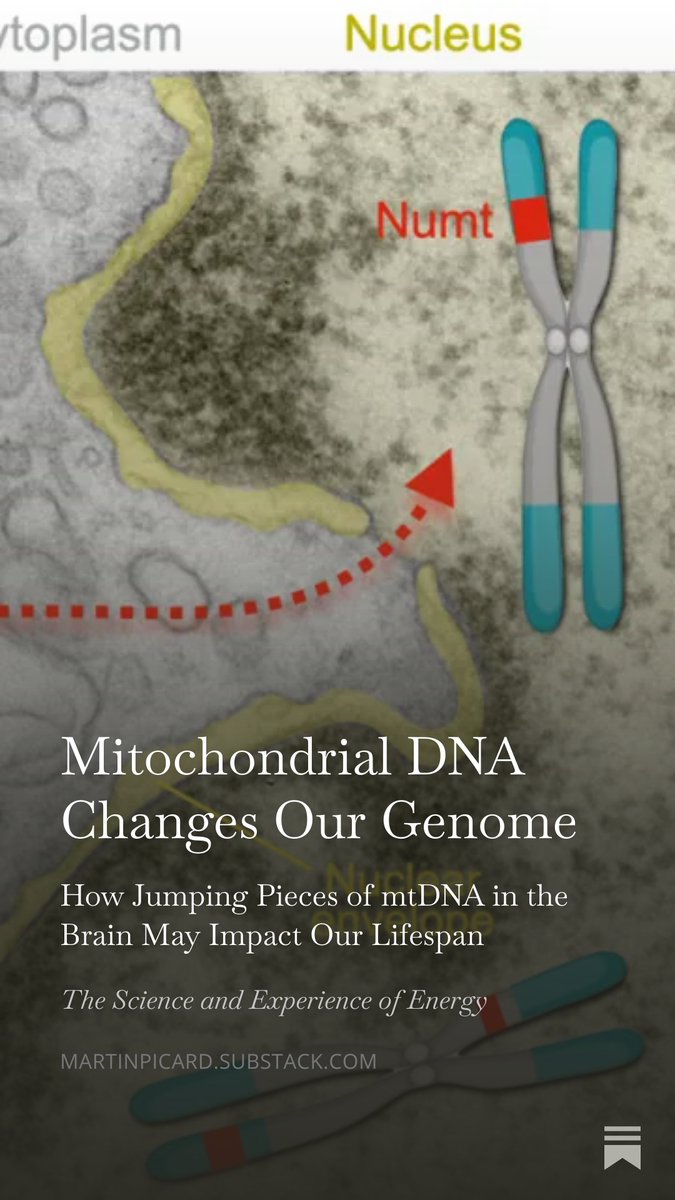
Today we discuss the remarkable fact that pieces of mitochondrial DNA translocate and insert into the nuclear genome--including in the human brain as we age.
Mitochondria contribute to shaping behaviors through energy transformation and dozens of different signaling pathways. Changing the nuclear code is probably the most definitive way in which mitochondria can change the organism's behavior.
Learn about the biology of nuclear mitochondrial DNA insertions (Numts) discovered by @kalpitark @ArthurZhou10 @ryan_e_mills in collaboration with @sturm_gav Hans Klein and the ROSMAP team in Chicago
open.substack.com/pub/martinpica…

English
ncRNAworld retweetledi

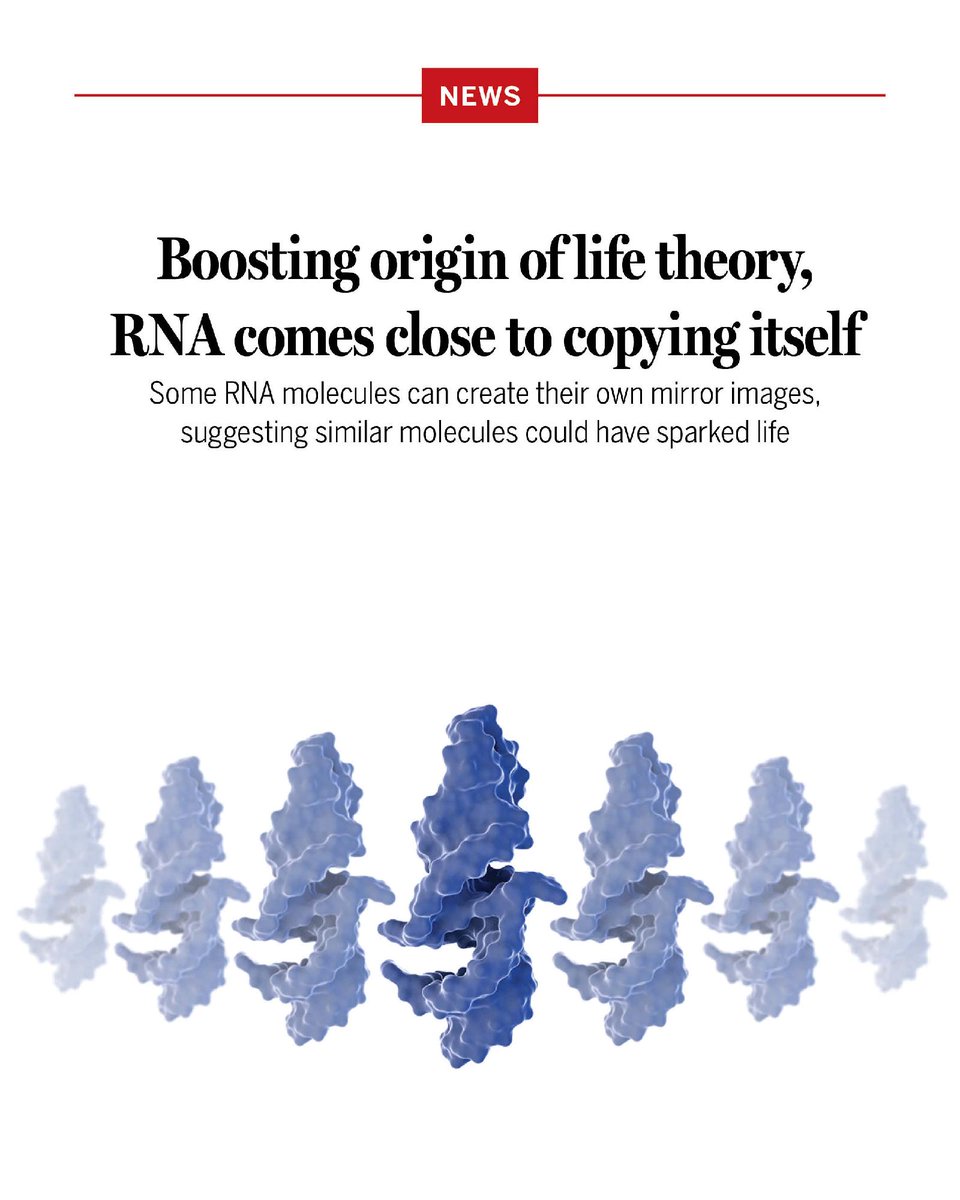
Today RNA may seem overshadowed by its glamorous cousin DNA, but many scientists think RNA molecules were the star players in the origin of life. By both storing genetic information and copying themselves, they might have touched off the march of evolution that produced increasingly complex life forms.
So far, researchers haven’t found RNAs that can replicate themselves, a key feature of living things. But they now have something close.
In a new paper, researchers report creating RNAs that can generate a sort of mirror image of themselves and use that template to generate the original. Learn more: scim.ag/4awamko

English
ncRNAworld retweetledi

AI is cool and all... but a new paper in @ScienceMagazine kind of figured out the origin of life?
The paper reports the discovery of a simple 45-nucleotide RNA molecule that can perfectly copy itself.

English
ncRNAworld retweetledi

🌟Presenting Our Article Paper🌟
"#miRNA Library Preparation Optimisation for Low-Concentration and Low-Volume Paediatric Plasma Samples" from Oenone Rodgers et al. @WWIEM_QUB
#ncrna #paediatric @MDPIOpenAccess
Full text: mdpi.com/2311-553X/11/1…

English
ncRNAworld retweetledi

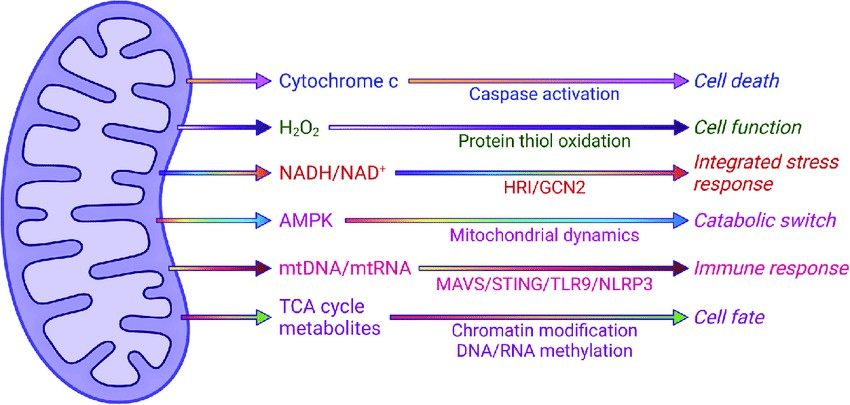
Mitochondria are not just power plants.
They are decision-makers.
They regulate inflammation, aging, and disease.
A quick breakdown:
🔵 Energy signaling, not just energy production
Mitochondria don’t just make energy.
They decide how energy is produced, where it’s used, and when cells change their behavior.
Energy itself acts as a signal that tells cells what to do.
🟣 Inflammation control
When mitochondria are damaged, they release internal components into the cell.
The immune system interprets these as danger signals and turns inflammation on, even without infection.
🟡 Aging regulation
As we age, cells become worse at clearing damaged mitochondria.
These dysfunctional mitochondria build up, increasing oxidative damage and low-grade inflammation that drives aging.
🟢 Why many diseases look different but share the same root
Neurodegenerative disease, heart disease, diabetes, obesity, autoimmune disease, sepsis, and cancer all involve failure of mitochondrial function.
Different organs. Same underlying problem.
🟠 Why “antioxidants” alone miss the point
The problem isn’t just damage.
It’s where the damage happens, why it happens, and whether the cell can remove the broken machinery afterward.
🔴 Why this changes how we think about health
You don’t treat dozens of unrelated diseases separately.
You support mitochondrial health—and multiple systems improve together.
What this all means:
• Mitochondria are control centers, not batteries
• Inflammation often starts as an energy problem
• Aging reflects declining cellular maintenance
• Many diseases are the same biology showing up in different tissues
Health isn’t just chemistry.
It’s how cells manage energy.
And mitochondria sit at the center of the system.
Doi:10.1038/s41392-025-02253-4

English
ncRNAworld retweetledi

@ExploreCosmos_ Thank you so much for your insightful posts—they’re always a bright spark! Wishing you a wonderful 2026, and here’s to another year of your outstanding scientific surveys. Keep up the inspiring work!
English
ncRNAworld retweetledi

Mitochondrial dysfunction in cellular senescence: a bridge to neurodegenerative disease
nature.com/articles/s4151…
English
ncRNAworld retweetledi

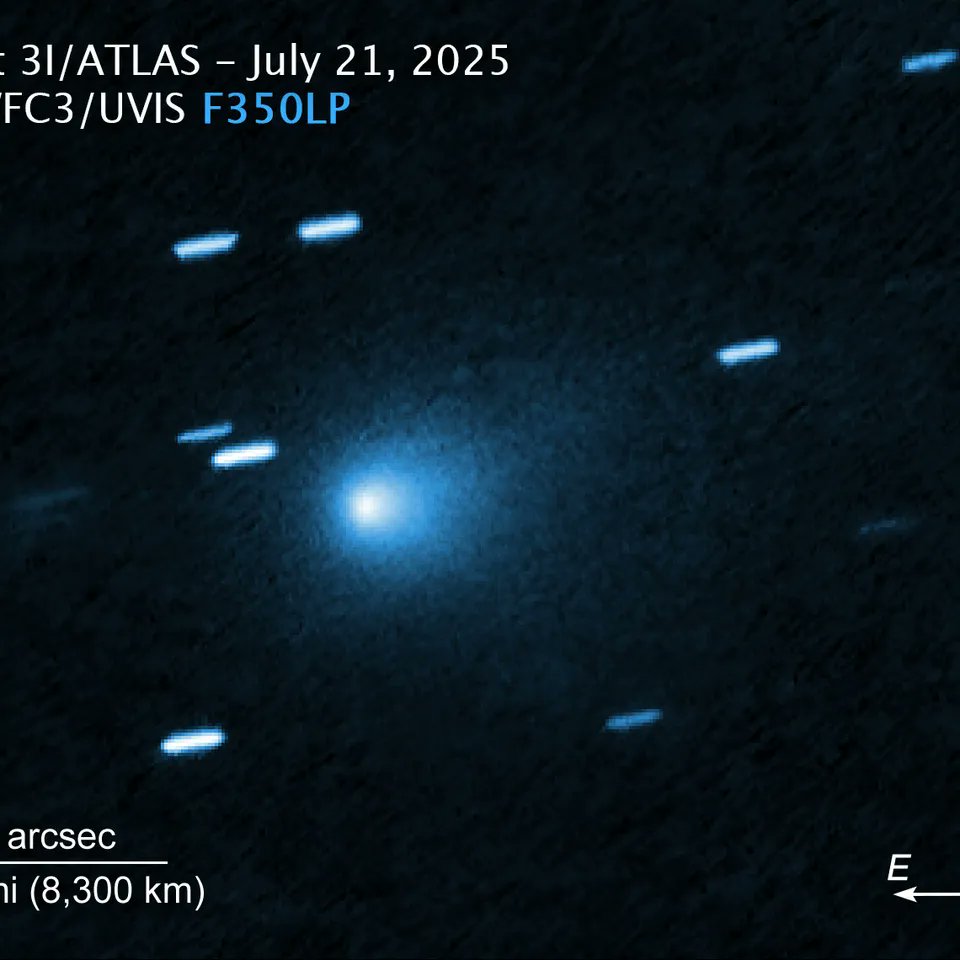
Astronomers using the South African radio telescope array MeerKAT have detected a clear radio-frequency signal from the interstellar object 3I/ATLAS, bringing strong support to the idea that it is a natural comet rather than an artificial object.
The signal consists of absorption lines of hydroxyl radicals (OH) at 1665 MHz and 1667 MHz, molecules commonly found when icy bodies near the Sun sublimate and generate a gaseous coma.
Because 3I/ATLAS was approaching its closest point to the Sun, the geometry favored absorption of radio signals rather than emission, matching expected behaviour of an active comet rather than a transmitter.
Earlier speculations had entertained the possibility of technological origin, fanned by social-media theories and even proposals by controversial astrophysicist Avi Loeb, but this molecular signature strongly tilts the balance toward a natural origin.
Although the detection alone does not shut down every alternative hypothesis, it significantly reduces the plausibility of a “probe” interpretation and underscores the comet-like nature of 3I/ATLAS.
The observations were made on 24 October, shortly before the object’s perihelion, and after earlier unsuccessful attempts on 20 and 28 September.
Further monitoring will help clarify whether the hydroxyl production is steady or variable, how extended the gas tail is, and how the object’s trajectory responds to non-gravitational forces.
In this way, the new radio detection offers a compelling piece of evidence that 3I/ATLAS is a bona-fide interstellar comet, a visitor from beyond our Solar System behaving in line with our known cometary physics.

English
ncRNAworld retweetledi

I'm super pleased to share that SegmentNT, our single-nucleotide resolution genome annotation model, has been featured in Nature Methods! 🚀
SegmentNT builds on our Nucleotide Transformer foundation model to deliver on the ultimate task: single-nucleotide resolution classification across entire DNA 🧬 sequences. It predicts 14 distinct genomic and regulatory elements, processing sequences up to 50,000 nucleotides in length, all in a single inference call 300X faster than sliding binary classifiers!
Unlike traditional tools that are limited to a single task, SegmentNT is built for multi-task annotation at scale. It outperforms widely used approaches such as sliding-window classifiers, delivering strong results in both speed and accuracy. It also generalises across 17 species, including those evolutionarily distant from humans, making it potentially useful in many practical cases.🧑🔬
I'm truly proud of the @instadeepai team who delivered brilliant work getting to this achievement. Can't wait to see how SegmentNT contributes to biological discovery in the future! 🙌
GIF
English
ncRNAworld retweetledi

📖 Read the full story in our blog: bit.ly/4o8C6kN
🔍 Dive into the paper in @NatureMethods: go.nature.com/47pM9La
English
ncRNAworld retweetledi

ncRNAworld retweetledi

Happy to have played a small part in this great work led by Élena Morin, Emmanuel Doumard, Mathieu Vigneault and Jean-Philippe Pradère: EMito-Metrix enables automated evaluation of mitochondrial morphology across species | Nature Metabolism nature.com/articles/s4225…
English
ncRNAworld retweetledi

New Online! The new era of single-molecule RNA modification detection through nanopore base-calling models bit.ly/4n5RoFA

English