Maya Jay

1.2K posts

Maya Jay banner
Maya Jay

Maya Jay

@neurojaym

building @FlagshipPioneer 🚀 | BioxML 🧬@LilaSciences | previously @PiN_Harvard @MIT | she/her/dr, views are my own

Katılım Temmuz 2016
1.1K Takip Edilen1K Takipçiler
Sabitlenmiş Tweet
Maya Jay
Maya Jay@neurojaym·
A little late to the Twitter party, but happy to share my first (co-)first author publication is finally out in @Nature! A dream collab with @vulcnethologist @GillisDub exploring the role of #dopamine in real-time action selection in naive mice. More below from @Datta_Lab👇🏽💥
English
15
19
185
32.9K
Patrick Malone, MD PhD
Patrick Malone, MD PhD@patricksmalone·
biotech needs its own david sacks in reflecting on this past year, one thing has become increasingly obvious to me: biotech desperately needs a public champion. someone who can translate scientific progress into policy, coordinate the industry’s scattered voices into a coherent agenda, and frame biotech as a strategic national priority rather than a niche technical field. this is perhaps the biggest structural weakness facing our industry. watching the policy momentum behind AI and crypto has been frustrating. these sectors have moved quickly not just because the technology is advancing, but because people like david sacks have created a central organizing force. they’ve built a coherent narrative, rallied founders and investors, and focused the tech industry’s efforts in washington. biotech has no equivalent. what makes this more frustrating is that the rationale driving urgency in AI policy applies almost word-for-word to biotech: competition with china. national security. domestic manufacturing capacity. strategic dependence on foreign supply chains. you could literally replace “AI” or “rare earths” with “biotech” in many of the recent executive orders, and the logic would hold perfectly. these should be obvious, bipartisan reasons to invest in and accelerate the biotech ecosystem. yet the case isn’t being made with the same clarity or force. part of the problem is a PR failure. most policymakers don’t understand that biotech ≠ pharma. biotech startups are the innovators; pharma is the innovation buyer. but in washington, these groups get conflated. early-stage biotech gets pulled into the same policy debates as multibillion-dollar incumbents, and the result is predictable: the people doing the actual innovation are not represented. another issue is fragmentation. AI and crypto accelerated because the community acted like a movement. there was a center of gravity pulling together founders, operators, investors, and policymakers. biotech, by contrast, is spread across academic labs, NIH, the FDA, startups, pharma, state governments, and a long tail of investors. large pharma and small biotech don't often have the same priorities and incentives. there is no unifying node that turns these pieces into a coherent whole. biotech doesn’t just need more innovation; it needs coordination. it needs someone who can articulate why this industry matters, make the geopolitical case, advocate for regulatory clarity, and translate between science and washington. it needs someone who can build a narrative around biotech as a strategic national asset rather than a niche technical field. biotech needs its david sacks: a movement builder, a policy champion, a narrative architect. until someone steps into that role, the industry will continue to produce world-class science while punching far below its weight in culture, policy, and national strategy.
English
49
40
379
113K
Maya Jay
Maya Jay@neurojaym·
@owl_posting I wonder if in this model the training of a pharmacist needs to morph closer to that of a doctor in order to maintain guardrails while still enabling self-experimentation/treatment. or you enable some interesting algorithmic personalized pricing to disincentivize reckless use
English
0
0
0
74
owl
owl@owl_posting·
one of my strongest policy stances is that you should be able to buy any drug OTC. ozempic, chemotherapy, whatever. the pharmacist should take on a more bouncer-y role in our society, and their job is to interrogate your vibes when you buy the medication to see if you are Worthy
English
21
8
396
12.1K
Maya Jay
Maya Jay@neurojaym·
@cgeorgiaw @AAlphaBio Curious what you think about the merits of yeast assays (like Y2H) vs AP-MS assays and their value and fidelity for measuring PPIs at scale. Useful data, but is it the best way to measure?
English
0
0
0
145
Georgia Channing
Georgia Channing@cgeorgiaw·
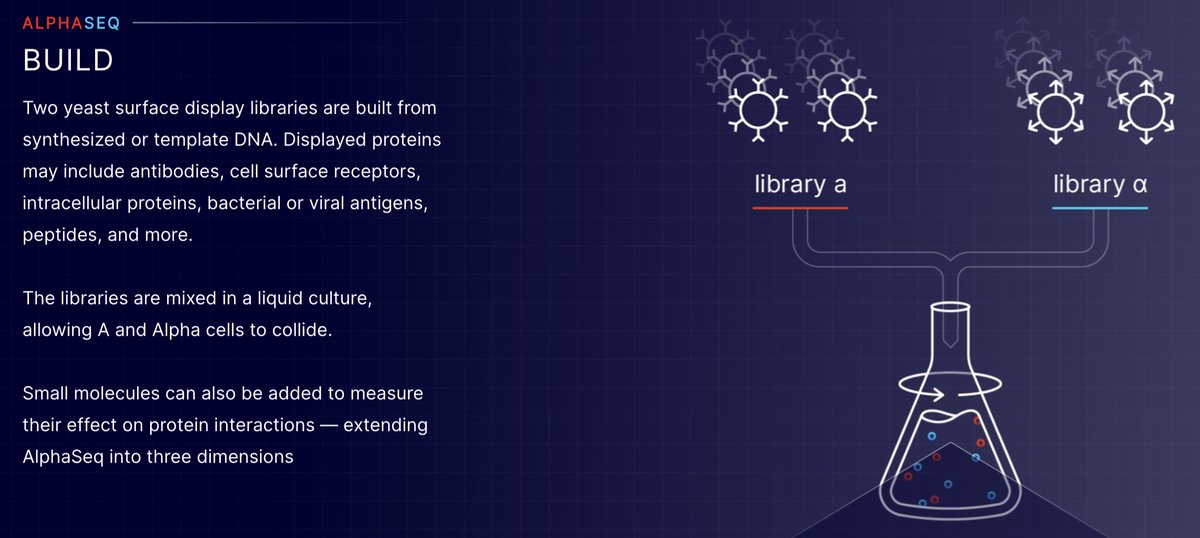
great new data drop from @AAlphaBio: AlphaSeq through yeast mating assays, they've measured the strength of how two proteins interact (PPIs), generating libraries up to 1M interactions per experiment check it out: huggingface.co/datasets/aalph…
Georgia Channing tweet media
English
3
9
62
5.5K
Parmita Mishra
Parmita Mishra@parmita·
I have added some of the coolest people to this bio/acc group and we actually chat here about cool stuff! I am deleting this and re-making the gc with the new encrypted DMs. PLEASE tag awesome people who should join People who are BIOLOGISTS or IN BIOTECH !
Parmita Mishra tweet mediaParmita Mishra tweet media
English
112
8
181
17.7K
Dwarkesh Patel
Dwarkesh Patel@dwarkesh_sp·
Looking for a neuroscientist to interview on my podcast. Keen for someone who can draw ML analogies for how the brain works (what's the architecture & loss/reward function of different parts, why can we generalize so well, how important is the particular hardware, etc).
English
357
50
1.3K
146.8K
Ben Kompa
Ben Kompa@BenKompa·
The amount of coffee chats over the next two days may break my record of 1200mg of caffeine in 24 hours but let’s find out together Trying to reply to all the DMs and there will be dozens of @LilaSciences team members around - do say hey!!
English
3
0
21
1.7K
Maya Jay
Maya Jay@neurojaym·
@owl_posting Loved reading this - in your infinite free time, you should write more non-science long form posts!!
English
1
0
2
151
owl
owl@owl_posting·
Human art in a post-AI world should be strange owlposting.com/p/art-in-a-pos… some personal thoughts ive had on the brave new creative future before us, on the type of art that more humans should be making, and on one of the strangest (and best) films i know of
owl tweet media
English
6
5
54
13.3K
Maya Jay
Maya Jay@neurojaym·
@parmita Every paper that claims that some multi-layer gizmo like this is going to magically give rise to some "emergent virtual cell" causes my eyes to roll so far back into my head that i can see my amygdala on fire
English
2
0
19
1.2K
Parmita Mishra
Parmita Mishra@parmita·
I am so tired of multi-omics. I am so tired of this shit
Parmita Mishra tweet media
English
19
4
230
24.1K
Maya Jay retweetledi
Andrew Beam
Andrew Beam@AndrewLBeam·
Awesome list @chrisbarber! @LilaSciences is hiring across a ton of areas including RL, infra, ML Ops, ML for bio and materials. If you’re at NeurIPS please reach out or come join us at our happy hour! RSVP: luma.com/LilaNeurIPS2025 A big chunk of the team will be there and will be a great opportunity to learn more about Lila
Chris Barber@chrisbarber

I made an unofficial NeurIPS 2025 hiring list: @rronak_, @QuantumArjun, @michaelelabd, stealth, I’m a small investor: RL post-training from live product usage. Research Engineers. @jonsidd, Turing: data for frontier models. Research Engineers, SWEs. @schwarzjn_, ICL & Thomson Reuters: LLMs for law. Research Engineers, SWEs, PhD students. @panda_liyin, AdaL: copilot for ML engineering. MLEs, SWEs. @sarwal_varuni, TriFetch: data and post-training for medical AI. @bidhan, Bagel Labs: decentralized training for diffusion models. MLEs, ML Scientists. @meggmcnulty, Cosmic Labs: AI-native OS for embedded engineering. MLEs, SWEs, systems engineers. @samuelekpe, GrupaAI: operating system for AI agents. SWEs. @jaradcannon, Humanoid: industrial humanoids. SWEs and applied researchers. @saurabh_here1, Cantina: AI native social media. Research interns for video gen. @RicardoMonti9, DatologyAI: frontier data curation (filtering, mixing, synthetic) for LLMs. Research Scientists, MLEs, SWEs. @NimaGard, Path Robotics: physical AI to automate manufacturing tasks (e.g. welding). MLEs for robot learning. @DrJimFan, Nvidia robotics team. Research Engineers, SWEs. @katherine1ee, OpenAI pretraining safety team. Research Engineers. @BorisMPower, OpenAI applied AI research team. Research Engineers. @j_asminewang, OpenAI alignment team. Research Engineers, Research Scientists. @zijianwang30, MSL data research team. Research Engineers, Research Scientists. @RuiqiGao, Google DeepMind video gen team. Research Engineers, Research Scientists. @joshim5, Chai Discovery: molecule prediction for drug discovery. Research Engineers, SWEs. @crisbodnar, Project Prometheus: AI for manufacturing and logistics. Research Engineers. @vdbergrianne, Microsoft Research Amsterdam materials science team. Research Engineers. @kamath_sutra, Smallest: AI for call centers. SWEs. @idavidrein, METR: frontier model evaluation. Research Engineer. @jimmysmith1919, Liquid AI: on-device models. MLEs, Research Engineers. @alxndrdavies, AI Security Institute: red-teaming. Research Scientists/Engineers. @stuhlmueller, Elicit: AI for scientific research and good reasoning. MLEs, SWEs. @gavincrooks, @FarisSbahi, Normal Computing: physics-based ASICs. Research Engineers, SWEs. @myra_deng, Goodfire AI: interpretability research. Research Engineers, Research Scientists, MLEs. @_lychrel, @SergeiIakhnin, @ja_kirkpatrick, @sbos, Isomorphic Labs: AI-first drug discovery. Research Engineers, Research Scientists, MLEs. @kdqg1, @bneyshabur, Anthropic AI Scientist team. Research Engineers with infra experience. @sarahookr, Adaption: continuous learning. Research Engineers. @francedot, Cua, I’m a small investor: infra for computer-use agents. SWEs, Research Engineers. @iScienceLuvr, Sophont: multimodal models for healthcare. Research Engineers/Research Scientists. @aditshah00, Until Labs: organ preservation. MLEs. @RitvikKapila & @gauri__gupta, NeoSigma: evals and post-training for real world agents. SWEs. @abeirami, stealth: reliability & statistical evaluation. Research Engineers & SWEs. @adityachinchure, Ideogram: image generation. Research Engineers. @AndrewLBeam, @kenneth0stanley, Lila Sciences: autonomous labs, verifiability for science. Research Engineers, MLEs. @brianwilt, Waymo: ML infra for motion planning team. Senior SWEs. @thisismadani, Profluent Bio: protein generation for drug development. MLEs.

English
3
3
47
11.1K
Maya Jay retweetledi
U.S. Department of Energy
President Trump is launching the most powerful scientific platform to ever be built, reminiscent of the Manhattan Project and Apollo programs: Genesis Mission.
English
561
1.6K
8.4K
625.6K
Maya Jay
Maya Jay@neurojaym·
@iskander If you can get access, Causaly is highly specialized for biomedical literature and drug targets. Seconding @elicitorg and maybe @perplexity_ai for completeness.
English
1
0
0
99
alex rubinsteyn
alex rubinsteyn@iskander·
Thought of a decent eval for “AI scientist” / “AI science assistant” tools Other than Kosmos, ChatGPT {Thinking, Pro}, Claude/Opus, and Gemini; what else is worth trying for an experimental design question that requires integrating across a few different corners of literature?
English
7
1
7
1.8K
Maya Jay
Maya Jay@neurojaym·
@zavaindar @incredutility Even if 0 shot binder design approaches solved, how much of a bottleneck is screening for X-reactivity/specificity? Not to mention all the other developability/PK-in-human challenges, which are more well accepted open grand challenges
English
0
0
1
31
Zavain Dar
Zavain Dar@zavaindar·
0'ing out discovery costs allows exploring the full pathway x target x epitope x function space .. so should expect to see much better molecules enter the clinic, rather than "oh here's a directed evolution born TSLP binder that passes IND enabling with some functional proxy"
English
3
0
3
346
Charlie Petty
Charlie Petty@incredutility·
It’s going to be interesting to see just how much ~zeroing out drug discovery costs and timelines impacts development timelines. My prediction is that this has a sub 20% impact on timelines and costs, in part because we’re about to flood the zone with these types of candidates and the industry will remain capacity constrained on 1) CDMO throughput and 2) clinical execution. Regulatory review and engagement matters but will remain roughly constant in this paradigm barring major changes. Note that this mostly applies to biologics hitting mostly known targets and pathways.
Andrew Dunn@AndrewE_Dunn

Chai Discovery is out with what looks like very similar results to Nabla Bio's JAM-2 that I reported out yesterday Protein design space making traction on de novo drug-like antibodies, beyond just getting hits/binders on targets Chai's blog: chaidiscovery.com/news/chai-2-mab

English
5
6
49
12.5K
Maya Jay retweetledi
Kenny Workman
Kenny Workman@kenbwork·
Transcriptomics is very useful but overdiscussed because measurement tools are becoming mature. No one is actually ready for the complexity of proteomics. Can be thousands of proteoforms for a single protein, all with identical mass, near identical fragmentation patterns, very low abundance. Crazy numbers here: 10^6-10^8 *types* per cell and ~10^10 total counts. Most current tools (eg. many MS flavors) work with bulk samples and even then cannot pick out subtle chemical differences, blending distinct molecules and obfuscating potentially important biochemistry.
English
8
11
142
13.8K
Maya Jay
Maya Jay@neurojaym·
@andrewwhite01 Okay but did it say hello back or did we get a master AI etymology lesson?
English
0
0
0
60
Andrew White 🐦‍⬛
Andrew White 🐦‍⬛@andrewwhite01·
During testing of our agents, someone said "Hello" and it spiraled and ran for 45 minutes trying to understand the meaning and history of the word hello. Great adversarial test for autonomous agents.
English
9
7
109
24.1K
Elliot Hershberg
Elliot Hershberg@ElliotHershberg·
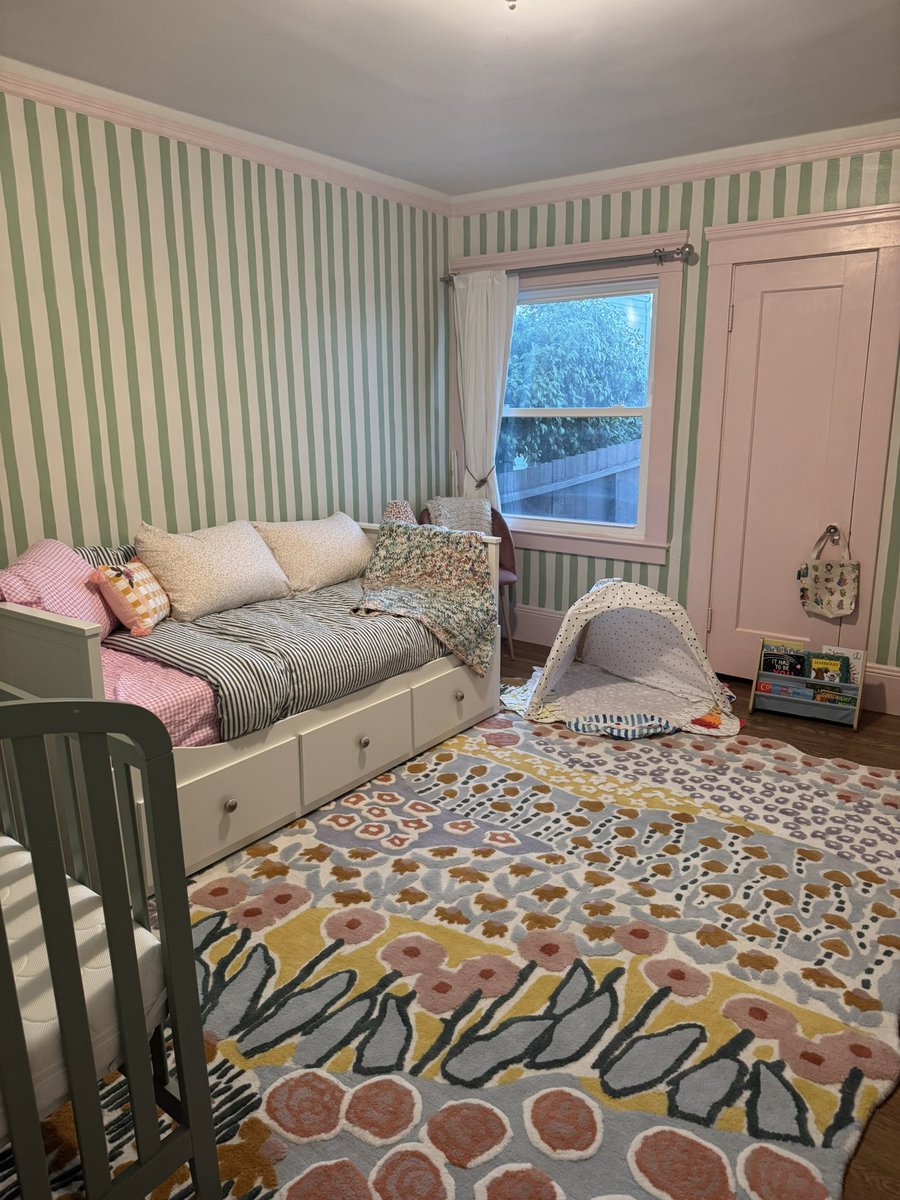
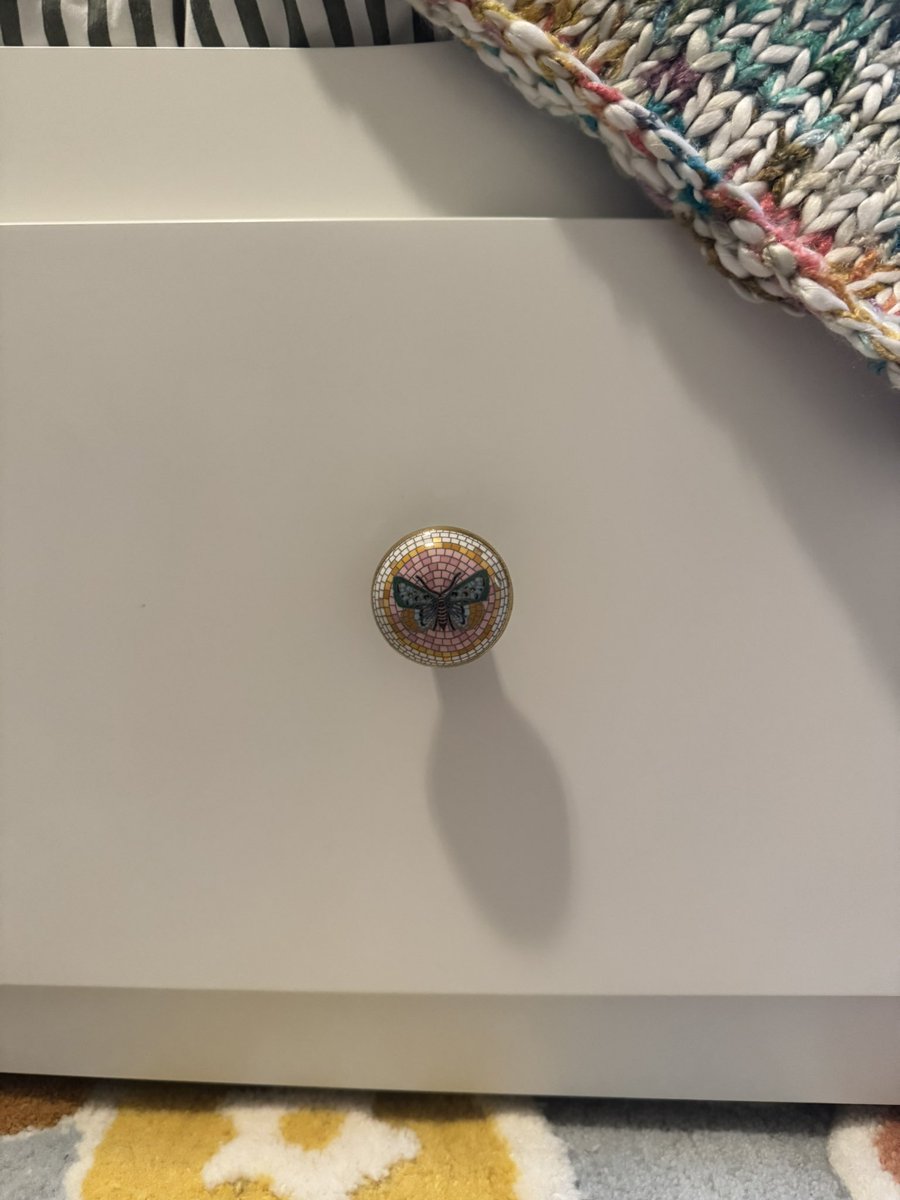
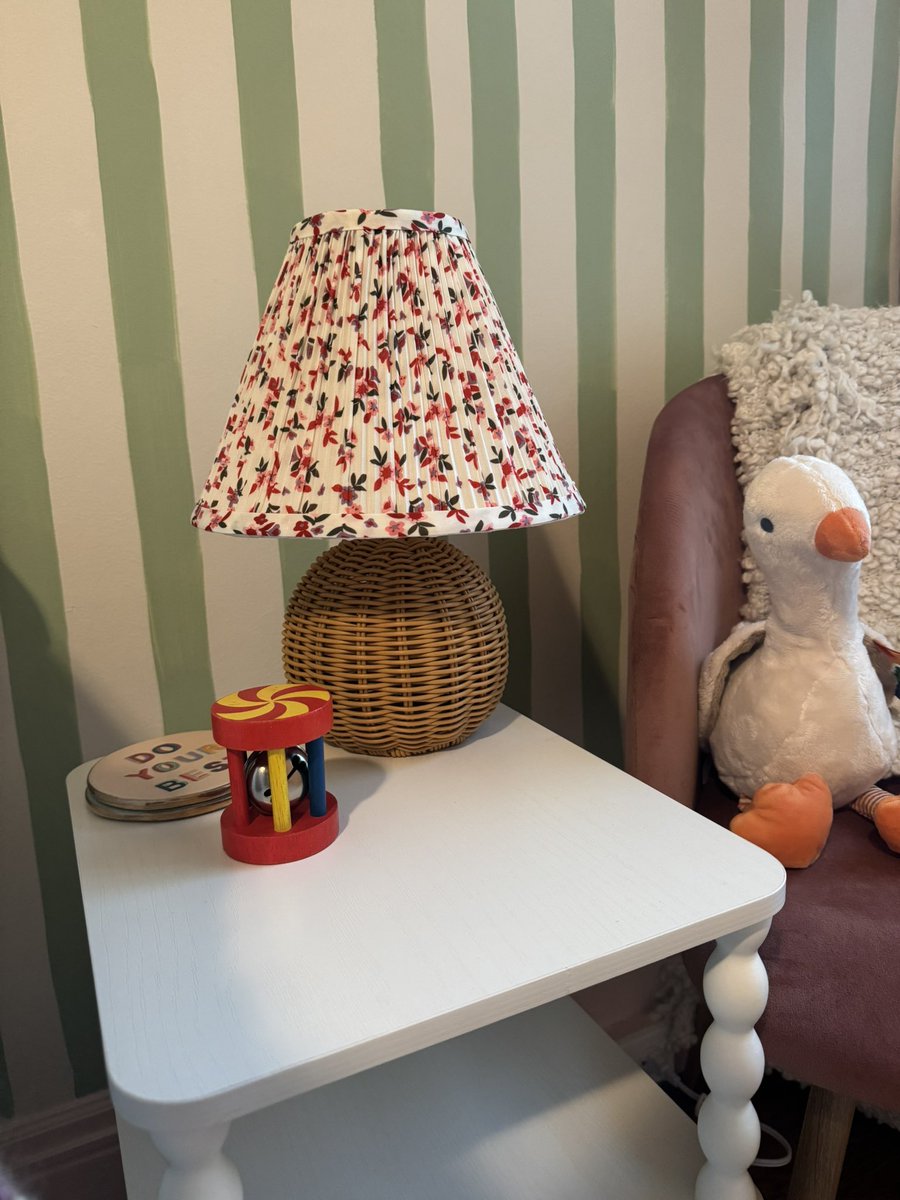
Our first labor of love is complete. My wife painted every stripe in the nursery by hand. We are excited to welcome our daughter into the world in the New Year!
Elliot Hershberg tweet mediaElliot Hershberg tweet mediaElliot Hershberg tweet mediaElliot Hershberg tweet media
English
114
41
2.4K
55.1K
Maya Jay
Maya Jay@neurojaym·
@SimonDBarnett sometimes I wonder if the info content of DNA is just too low to be a gangbuster use of transformer architecture pLMs are way more likely to succeed because each AA + ahelix is more predictive of structure/function than one nucleotide or codon is for the next seq maybe?!
English
1
0
3
665
Simon Barnett
Simon Barnett@SimonDBarnett·
It has been over five years since DNA foundation models took their perch atop the pantheon of polarizing biology topics. I’ve been waiting. Watching. Eager to see the first set of models pre-trained on or fine-tuned with cutting-edge sequencing data instead of the shotgun reads of yore. Have I missed it? What happens when we replace monochrome, fragmented reads with modern, technicolor data—large phase blocks, 5mC/5hmC, structural variants, tandem repeats, linked regulatory regions, isoform-resolved transcripts… What secrets can micro-satellites and ancient higher-order repeats tell us? Is it nothing? Is it something? I am so eager to know.
English
5
7
77
9.5K