Patrick Malone, MD PhD

1.1K posts

Patrick Malone, MD PhD

Patrick Malone, MD PhD

@patricksmalone

physician-scientist turned biotech investor @KdT_Ventures | helping founders build science and tech-driven companies | writing at https://t.co/w5M8DV8u92

DC Katılım Mart 2011
1.5K Takip Edilen7.3K Takipçiler
Sabitlenmiş Tweet
Patrick Malone, MD PhD
Patrick Malone, MD PhD@patricksmalone·
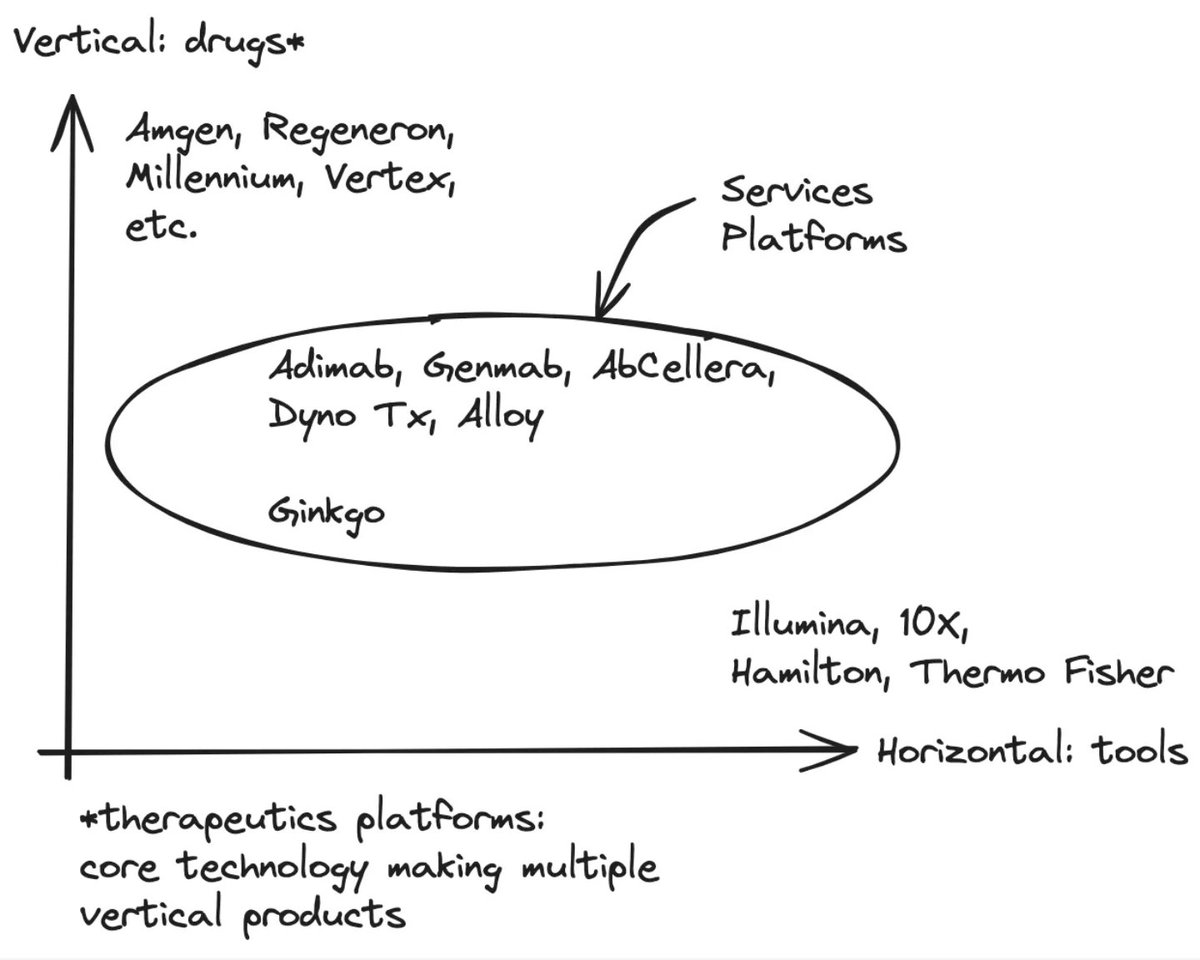
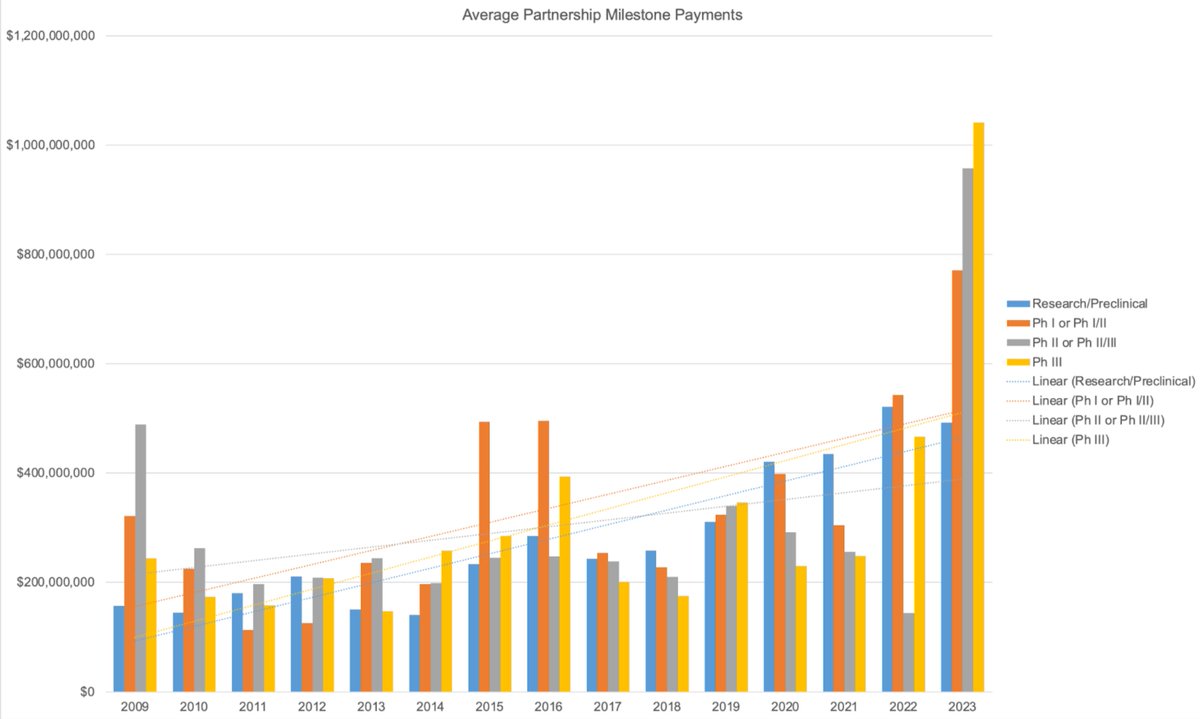
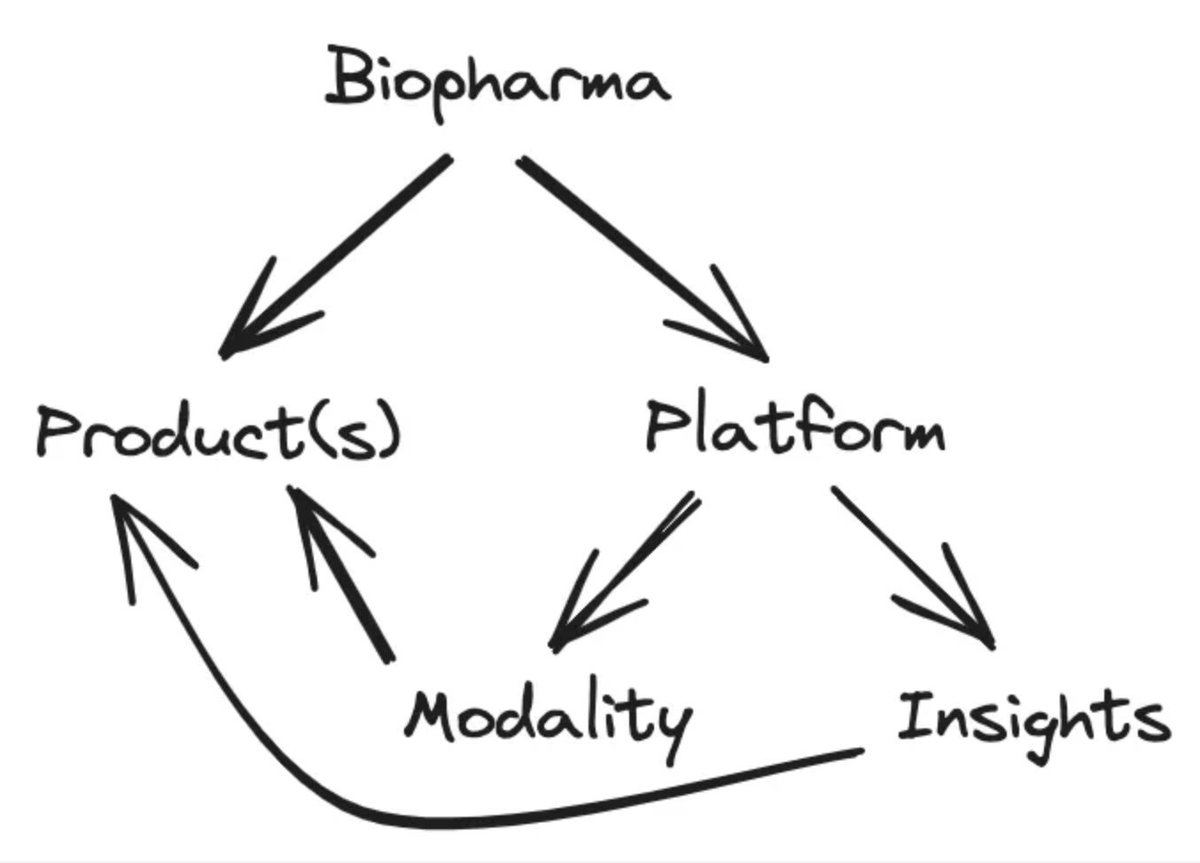
on biotech platform strategy in a new essay, @ElliotHershberg and I riff on biotech platform typology and partnering dynamics. we unpack why many biotechs pivot from external partnerships to internal programs, and why that trend might change in the near future. we start with a framework from biotech veteran Steven Holtzman for categorizing biotechs into product and platform companies, and the differences between therapeutic modality platforms and disease insight platforms. the business strategy pursued by each biotech ultimately comes down to the details of the underlying technology, but historically, a vertical focus on internally developed drugs has been the most successful value creation strategy in all of biotech. building a services platform, which exclusively pursues external partnerships with no internal pipeline, is really, really hard. the list of companies that have done this successfully is short, and many end up shifting strategy to developing their own wholly owned assets. a partnership-only business model in biotech has been difficult to scale successfully, but will this trend continue? to address this question, we analyzed data from biopharma partnerships over the last ~15 years. if platform technologies are becoming more proven and validated, average partnership deal value should increase over time. if average deal value continues to increase, at some point it will be feasible (and even preferable) to pursue a services/partnerships-only model as a platform biotech. we found a trend towards increasing average total deal value, average milestone payments, and total number of partnerships over time, effectively increasing the total addressable market for services platforms. there are some important caveats and confounds with these data, but qualitatively, these trends suggest that there may be a shift in pricing power from partners to technology platform developers. if this trend continues, external partnerships as a mechanism of value capture will improve relative to wholly owned internal programs, thus improving the scalability and success-rate of services platforms in biotech. this was a fun one to write. the full piece is packed full of perspective and conjecture worth disagreeing with, so reach out if you want to discuss!
Patrick Malone, MD PhD tweet mediaPatrick Malone, MD PhD tweet mediaPatrick Malone, MD PhD tweet media
English
10
24
258
56.2K
Patrick Malone, MD PhD
Patrick Malone, MD PhD@patricksmalone·
@zachweinberg yea I like that use case. but still see reproducibility as less about methodological errors and more about incentives and things not captured in the paper eg selective reporting, random artifacts, genuine signals that don’t generalize, etc
English
0
0
1
58
Tweets from Zach Weinberg
Tweets from Zach Weinberg@zachweinberg·
@patricksmalone Is one benefit here we can ask LLM's to be critical about the underlying study design? My assumption is many flaws in published research come from study design flaws that LLM's should be trained to quickly spot. Maybe I'm off.
English
1
0
0
260
Patrick Malone, MD PhD
Patrick Malone, MD PhD@patricksmalone·
i’ve been reflecting on how much my own behavior has shifted from reading scientific papers to asking AI to interpret the literature. as LLMs get better, more of our interaction with knowledge is mediated through generated summaries rather than primary sources. that shift is not just about how we consume information. it undermines the economic layer that has historically funded truth generation, across both journalism and science. in news, if LLMs can produce infinite “journalism-like” articles, the marginal value of content collapses. subscriptions erode, ads weaken. when anyone can generate something that looks like reporting, the institutions that fund actual reporting, including investigation, sourcing, and verification, start to break. the traditional business model was already cracking, and AI may collapse it entirely. in science, the same dynamic plays out. if LLMs can generate “paper-like” PDFs, the supply of plausible research explodes and signal is lost in the noise. journals and citations, already imperfect proxies for truth, become even less reliable. when publishing is cheap, it stops being a meaningful filter for correctness. the incentive shifts toward producing more papers, not more correct ones. the core issue is that our systems reward the production of content, not the generation of truth. journalists get paid to publish, not to be right. researchers are rewarded for output, filtered through peer review systems with no skin in the game. reviewers do not profit from identifying important work or lose from endorsing weak work. prediction markets offer a different architecture, one that shifts incentives from output to accuracy. instead of rewarding publication, markets reward correct forecasts. if you uncover a scoop, generate a dataset, or replicate a result, you can monetize that knowledge directly by taking a position in a market tied to the truth, then revealing the information. this changes the unit of value. it is no longer a paper or article, but a resolved question, such as whether a clinical trial succeeds or a result replicates. anyone who can answer these questions early, including journalists, researchers, labs, and AI agents, has an incentive to do the hard work of discovery and verification. this is particularly powerful for science. today, novelty is rewarded over correctness. replication is undervalued, and null results never get published. in a market system, the incentives flip such that shorting a flashy result or replicating an overlooked finding are profitable. the broader shift is that journals, news outlets, and preprint servers become oracles feeding into markets, rather than the primary locus of value capture. the economic reward flows to whoever is most accurate about reality before it is obvious. AI makes content cheap, which makes correctness more valuable. prediction markets may be one of the first mechanisms that directly reward it.
English
4
7
39
4.5K
Patrick Malone, MD PhD retweetledi
Elliot Hershberg
Elliot Hershberg@ElliotHershberg·
Going Founder Mode On Cancer centuryofbio.com/p/sid Sid Sijbrandij is a generational founder. He founded and led GitLab, one of the largest remote companies in the world, from idea-stage startup to NASDAQ-listed software giant. But in 2022, a six centimeter mass growing from his upper spine threatened to end all of that. He had cancer. What happened next is nothing short of remarkable. Sid went founder mode on his care journey. In the years since, he's deployed cutting-edge genomics to profile his disease. Based on this data, he's developed a growing armamentarium of personalized therapies. As a result, his disease is now undetectable. A simplistic version of this story could be, “Wow! A brilliant billionaire seemingly cured his cancer. Good for him!” But as I’ve gotten to know Sid, it’s become abundantly clear to me that there is more to the story than that. In an in-depth profile for The Century of Biology, I explore Sid's journey and what this might mean for the future of cancer care.
Elliot Hershberg tweet media
English
44
176
1K
454.7K
Patrick Malone, MD PhD
Patrick Malone, MD PhD@patricksmalone·
one observation helps explain why so much of the public distrusts the biopharma industry: drugs are generating *more* revenue while treating *fewer* patients than ever before. in 2010, the top drug in the US, Lipitor, generated ~$7 billion in revenue while reaching tens of millions of patients. by 2020, the top drug, Humira, more than doubled that revenue to ~$16 billion, but the number of patients treated collapsed to ~300,000. a combination of science, regulation, and economics pushed the industry to focus on smaller patient populations, shifting away from mass-market medicines (e.g. statins, antidepressants) toward specialty drugs like gene therapies for rare diseases. these breakthroughs have delivered transformative benefits to patients who previously had no options, but they also feed a social return gap (rising revenues paired with shrinking reach), and widen the distance between how our industry defines success and how the public experiences it. we often define success in our industry based on the depth of impact for patients, but it is important to remember that the public also judges us by aggregate reach. both perspectives are valid, but they often clash. restoring public trust in our industry will require recommitting to medicines that reach large populations and improve everyday health at scale. GLP-1 drugs for obesity and diabetes point to a path forward. they generate blockbuster revenues while reaching tens of millions of patients and delivering meaningful, population-level health benefits. rebuilding public trust will require replicating this model and demonstrating that biopharma can deliver both blockbuster economics and population-level health gains.
English
2
4
45
4.7K
Patrick Malone, MD PhD
Patrick Malone, MD PhD@patricksmalone·
biotech needs its own david sacks in reflecting on this past year, one thing has become increasingly obvious to me: biotech desperately needs a public champion. someone who can translate scientific progress into policy, coordinate the industry’s scattered voices into a coherent agenda, and frame biotech as a strategic national priority rather than a niche technical field. this is perhaps the biggest structural weakness facing our industry. watching the policy momentum behind AI and crypto has been frustrating. these sectors have moved quickly not just because the technology is advancing, but because people like david sacks have created a central organizing force. they’ve built a coherent narrative, rallied founders and investors, and focused the tech industry’s efforts in washington. biotech has no equivalent. what makes this more frustrating is that the rationale driving urgency in AI policy applies almost word-for-word to biotech: competition with china. national security. domestic manufacturing capacity. strategic dependence on foreign supply chains. you could literally replace “AI” or “rare earths” with “biotech” in many of the recent executive orders, and the logic would hold perfectly. these should be obvious, bipartisan reasons to invest in and accelerate the biotech ecosystem. yet the case isn’t being made with the same clarity or force. part of the problem is a PR failure. most policymakers don’t understand that biotech ≠ pharma. biotech startups are the innovators; pharma is the innovation buyer. but in washington, these groups get conflated. early-stage biotech gets pulled into the same policy debates as multibillion-dollar incumbents, and the result is predictable: the people doing the actual innovation are not represented. another issue is fragmentation. AI and crypto accelerated because the community acted like a movement. there was a center of gravity pulling together founders, operators, investors, and policymakers. biotech, by contrast, is spread across academic labs, NIH, the FDA, startups, pharma, state governments, and a long tail of investors. large pharma and small biotech don't often have the same priorities and incentives. there is no unifying node that turns these pieces into a coherent whole. biotech doesn’t just need more innovation; it needs coordination. it needs someone who can articulate why this industry matters, make the geopolitical case, advocate for regulatory clarity, and translate between science and washington. it needs someone who can build a narrative around biotech as a strategic national asset rather than a niche technical field. biotech needs its david sacks: a movement builder, a policy champion, a narrative architect. until someone steps into that role, the industry will continue to produce world-class science while punching far below its weight in culture, policy, and national strategy.
English
49
40
380
112.9K
Patrick Malone, MD PhD
Patrick Malone, MD PhD@patricksmalone·
@christymaginn That’s part of the point. The aggregate serves an important role; but you also need an individual / face of the movement. Would love to see the list tho!
English
0
0
3
672
christymaginn
christymaginn@christymaginn·
@patricksmalone Biotech does have its own David Sacks- en masse. I have list of them if you need them! But the issue is that Technology does not have the pharma reputation boomerang. Congress and pharma have insanely low reputation polling causing many to tune out.
English
1
0
2
804
Patrick Malone, MD PhD
Patrick Malone, MD PhD@patricksmalone·
you can ignore politics, until politics decides it can’t ignore you
DoctorDueDiligence@DueDoctor

@patricksmalone Hard to find because most biotech CEOs want more sleep / time with family than working on policy With that being said policy is pertinent for the American edge and something we drastically need to change (aka get out of our own way) The harsh truth is that $$$ lobbying needed

English
0
0
20
3.8K
Patrick Malone, MD PhD
Patrick Malone, MD PhD@patricksmalone·
@DueDoctor he is good, but we need a champion for little biotech not just large pharmaceutical companies. little biotech will resonate more with current admin / political zeitgeist
English
1
0
18
1.5K
Patrick Malone, MD PhD
Patrick Malone, MD PhD@patricksmalone·
@TheChiefNerd @DrSusanOliver1 did you actually read the paper? that's the period when the researchers sat down and ran the code, not the period of follow-up. they aren't ignoring 3 years of all-cause mortality after vaccination.
English
3
0
10
536
Chief Nerd
Chief Nerd@TheChiefNerd·
@DrSusanOliver1 So we’re just going to ignore the all-cause mortality for the 3 years after they were vaxxed? 🤔
Chief Nerd tweet media
English
22
38
497
15K
Patrick Malone, MD PhD
Patrick Malone, MD PhD@patricksmalone·
excited to co-host the 2nd annual Future Neuro Founders Workshop for entrepreneurial scientists and engineers, a collaboration between @KdT_Ventures and @PsymedVentures. this is a virtual workshop for scientists that want to build a neuroscience startup. we'll cover team building, development and fundraising strategies, navigating partnerships, and more. last year we had scientists from 100+ universities. speakers (top neuro founders & investors) will be announced soon. application in the comments!
Patrick Malone, MD PhD tweet media
English
2
2
10
840
Patrick Malone, MD PhD
Patrick Malone, MD PhD@patricksmalone·
the biotech and healthcare industry is completely fumbling the response to RFK and MAHA. the industry and media is engaging in a strategy of total, undifferentiated opposition to the MAHA/RFK agenda. this is not only ineffective, it is counterproductive. RFK is right on a lot of things. our healthcare system is too reactive, insufficiently proactive, and has failed to contain the crisis of chronic disease. he has tapped into a broad public frustration that healthcare is more about managing disease than promoting health. these ideas resonate because they are true. but he’s also massively wrong - especially on public health, vaccines, and what constitutes “gold-standard science.” by treating RFK's commonsense recommendations like exercise and diet with similar level of alarm as his attacks on public health, we are making a strategic error. when *every* single point is treated as a threat, the public loses the ability to discern what the *actual* serious threats are. the consequence is that we as an industry are bleeding credibility, precisely at the moment when credibility is needed most. total opposition to RFK strengthens his narrative: that entrenched interests reflexively resist change, even when it’s obviously right. the smarter path is differentiation - acknowledge and even embrace what he gets right, while drawing clear, bright lines against what is dangerous.
English
7
5
91
8.9K
Patrick Malone, MD PhD
Patrick Malone, MD PhD@patricksmalone·
one thing some investors do that drives me insane: ghosting founders. everyone is busy—but a transparent "not a fit" takes seconds. ghosting creates uncertainty, makes managing a fundraising process difficult, and is frankly just a shitty way to treat people. let's do better.
English
6
0
34
1.5K
Patrick Malone, MD PhD
Patrick Malone, MD PhD@patricksmalone·
a core tension in applying "virtual cell" models to therapeutic development is the mismatch between the scale at which we measure biology and the scale at which we intervene. we often measure at the cell level (eg single-cell RNA-seq), but we treat at the tissue or organ level (e.g., cardiac fibrosis, skin rash). drugs act on tissues or organs, sometimes with cellular specificity, but often not. biologics and CGT are increasingly targeted, but their impact still depends on the broader tissue context. so the outcome of an intervention—efficacy, toxicity, side effects—emerges at the organ or patient level, not the single cell. a cell-level model might predict that drug X will downregulate the TGF-β pathway in fibroblasts. but will that reverse lung fibrosis in vivo? that depends on: - whether the drug reaches the relevant cell types, - whether it affects the broader ECM remodeling loop, - whether the immune system modulates or counteracts it, etc this is why virtual cell predictions can be correct but irrelevant—they solve a problem at the wrong level of abstraction. a couple promising strategies to address this: - multiscale modeling, embedding cellular simulations inside larger tissue-level or organ-scale models - spatial transcriptomics, which adds context to cell-level data by preserving spatial relationships—more closely mirrors tissue biology - surrogate modeling, training higher-level predictors (e.g., for clinical biomarkers or histopathology) using outputs from cell models
English
13
18
123
13.6K
Patrick Malone, MD PhD retweetledi
Jacob Robinson
Jacob Robinson@JTRobinsonLab·
Are we headed toward a technology revolution in therapeutic BCI? I just wrote this piece about why I believe neurotech will become an indispensable tool for addressing the growing mental health crisis and become as common as personal computing. 🧵 open.substack.com/pub/brainjacob… #BCI
Jacob Robinson tweet media
English
4
10
63
5.3K
jpa
jpa@josephpalbanese·
new project: cleo (kindle + llm) 📚 cleo is an ios app that pairs whatever book you're reading on kindle with an llm (o3) — ask questions, get recaps/summaries, or listen/discuss (think audiobooks but interactive). the llm has context on exactly where you are + the book contents. best part? no complex setup needed. just link your kindle account and that's it. it just works. reply / rt for testflight invite 👇
English
1.2K
492
3.6K
628K
Patrick Malone, MD PhD
Patrick Malone, MD PhD@patricksmalone·
right questions, the key will be rewarding the biology first-mover without letting them become a bottleneck. couple ideas: use-it-or-lose-it where exclusivity would lapse if the original team hasn’t started or succeeded in a PoC study within X years. forces them either to keep pushing or to license the target quickly, so no one can “sit” on a pathway.
English
0
0
2
69
Artemy Shumskiy
Artemy Shumskiy@ArtemyShumskiy·
@patricksmalone Answering my question, the original team can probably license the right to use this new biology, but I still feel that could end up a major roadblock for the RnD pace
English
1
0
2
98
Patrick Malone, MD PhD
Patrick Malone, MD PhD@patricksmalone·
one frustrating aspect of drug development is that the incentives favor “me-too” programs that chase already-validated targets (e.g., TYK2, GLP-1, PD-(L)1). this is in large part due to the fact that patents protect molecules, not the biology behind them. once a target shows human efficacy, capital piles into copy-cat programs, while truly novel pathways and biology—often tied to the toughest diseases—go unfunded. one idea to shift the incentives: what if we broadened patent protection to include novel biology? give the first team that proves human modulation of an un-drugged pathway a time-limited (8-12 yr) marketing-exclusivity right for that target. others can still research, but they must license the “pathway patent” to launch commercially—similar to orphan-drug or priority-review vouchers. this would finalize incentive investors and drug-developers to take more target risk, and would result in faster progress and more first-in-class therapies in higher-unmet-need diseases with complex biology.
English
18
7
93
14.7K