niwaa

722 posts

niwaa banner
niwaa

niwaa

@niwaeth

collect what i like

⚡️ Katılım Aralık 2019
2.6K Takip Edilen386 Takipçiler
niwaa retweetledi
Citrini
Citrini@citrini·
JUNE 2028. The S&P is down 38% from its highs. Unemployment just printed 10.2%. Private credit is unraveling. Prime mortgages are cracking. AI didn’t disappoint. It exceeded every expectation. What happened?​​​​​​​​​​​​​​​​ citriniresearch.com/p/2028gic
English
1.9K
4.2K
27.7K
28.6M
niwaa retweetledi
Peter H. Diamandis, MD
Peter H. Diamandis, MD@PeterDiamandis·
The top 5 AI unicorns are now worth more than ALl the dot-com era IPOs combined.
English
25
15
249
19.1K
niwaa retweetledi
sphinx
sphinx@protosphinx·
AGI is not coming. We are nowhere near AGI. What we have today is inference, not learning. Models get trained once on huge fixed datasets, then frozen. You ask questions, they remix patterns they already saw. Nothing updates. Nothing sticks. Talking to the model does not make it smarter. It does not learn from you. Ever. Learning is still slow, expensive - and offline. Look at self driving. You drive around a pothole, make a U turn, and come back. The car’s AI does not learn that you just solved that exact problem. It reacts the same way every time using sensors and rules. Do this 20 times a day and it still has zero memory that the pothole exists. It just re sees it. That is why edge cases never die. There is no local learning. No accumulation. No 'oh yeah, I’ve seen this before' LLMs work the same way. Tell it your name and it does not remember. The only reason it looks like memory is because scaffolding keeps shoving your name back into the prompt every time and sanitizing the output. The model itself has no idea who you are and cannot learn from interaction. It is structurally incapable. And the scaffolding is the worst part. It is pure duct tape. Just prompts on prompts on prompts around a frozen model. When something breaks, nobody fixes learning. They add another layer. Another rule. Another retry. Another evaluator model judging the first model. So you end up with systems that are insanely complex but mentally shallow. Debugging is hell because behavior comes from hack interactions, not a learnable core. Tiny prompt tweaks cause wild behavior shifts. Latency goes up. Costs go up. Reliability goes down. None of this compounds into intelligence. It just hides the cracks. Until we have real persistent learning and real memory inside the system, there is no AGI. LLMs are not built for this. You cannot prompt your way out of it. You need a totally different architecture. Yann LeCun is right. And even then, what architecture can actually learn online, store memory, and stay stable on today’s hardware? Best case, maybe 5-10 yrs. Right now it is all inference. It looks magical, but the emperor has no clothes. A lot of people see it. Almost nobody says it out loud.
English
971
1.1K
9.2K
889.7K
niwaa
niwaa@niwaeth·
@Capetlevrai tu compter l’acheter sur quel plateforme ?
Français
1
0
0
188
niwaa retweetledi
Andrew Côté
Andrew Côté@Andercot·
It just seems implausible this is what we are made of, essentially, nanotechnology about a billion years beyond anything we can design or make ourselves.
English
1.7K
6.7K
53.4K
8.6M
niwaa retweetledi
David Sinclair
David Sinclair@davidasinclair·
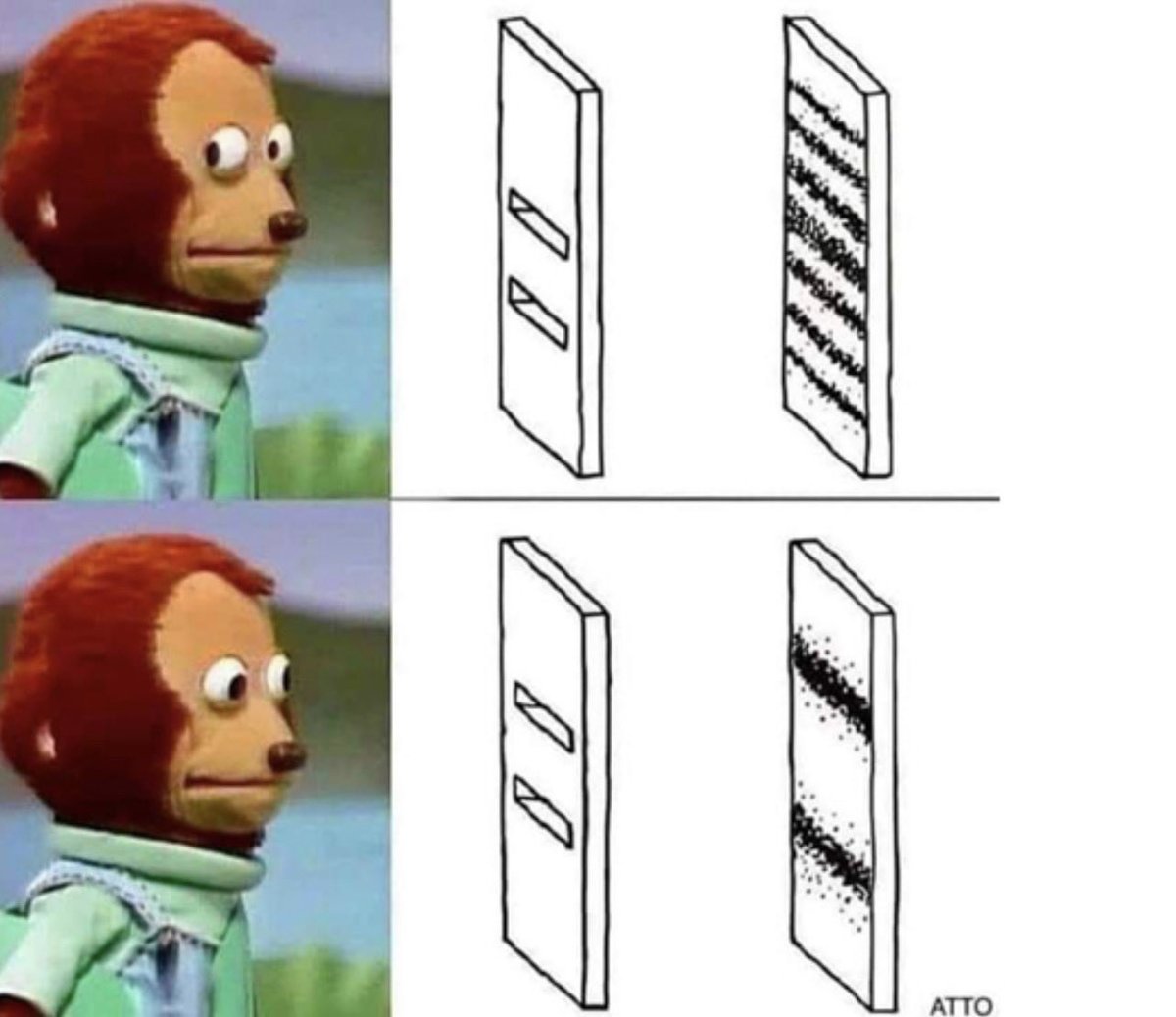
The double slit experiment is one of the weirdest results ever. Particles don’t have a position until they are observed. New @nature paper shows this is true for molecules with as many as 7000 atoms. Someone should definitely try this with viruses nature.com/articles/d4158…
David Sinclair tweet media
English
164
181
2.1K
183.3K
niwaa retweetledi
chester
chester@chesterzelaya·
i’m never deleting this app
chester tweet media
English
194
491
21.6K
708.6K
niwaa retweetledi
gaut
gaut@0xgaut·
to all my fellow bookmarkors
gaut tweet media
English
999
9.1K
62.1K
1.1M
niwaa retweetledi
Justin Skycak
Justin Skycak@justinskycak·
I know someone who felt pressed financially living single on $70k, and thought all his problems would go away once he doubled his salary. He got a new job that pays $120k. Now he lives in a fancier apartment & keeps little in the fridge (eats out / orders in most meals), feels the same financial pressure, and thinks that pressure will go away once he starts making $200k.
Money Quotes@MoneyQuotesX

If you don’t respect $100, you’ll never respect $1,000,000.

English
140
675
20K
2.2M
niwaa retweetledi
Bilal Zuberi
Bilal Zuberi@bznotes·
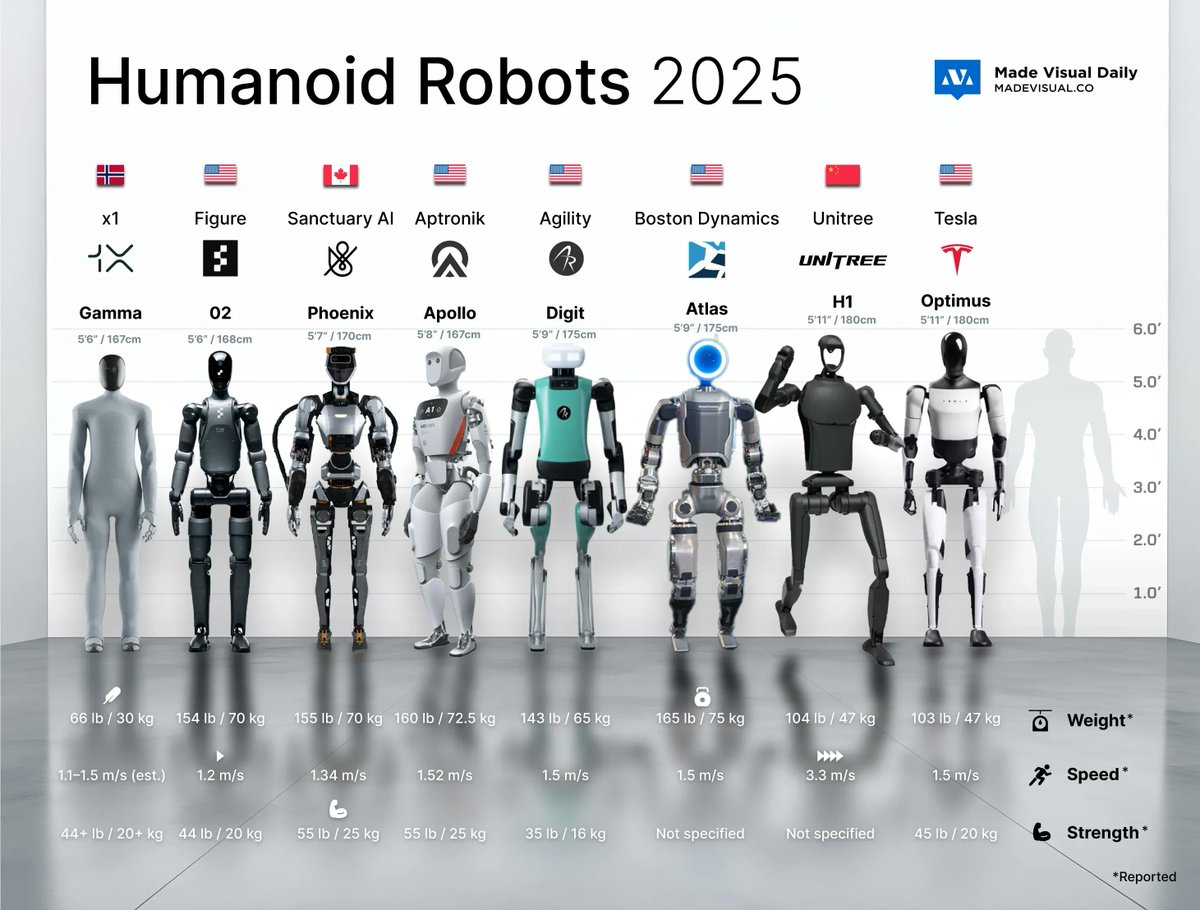
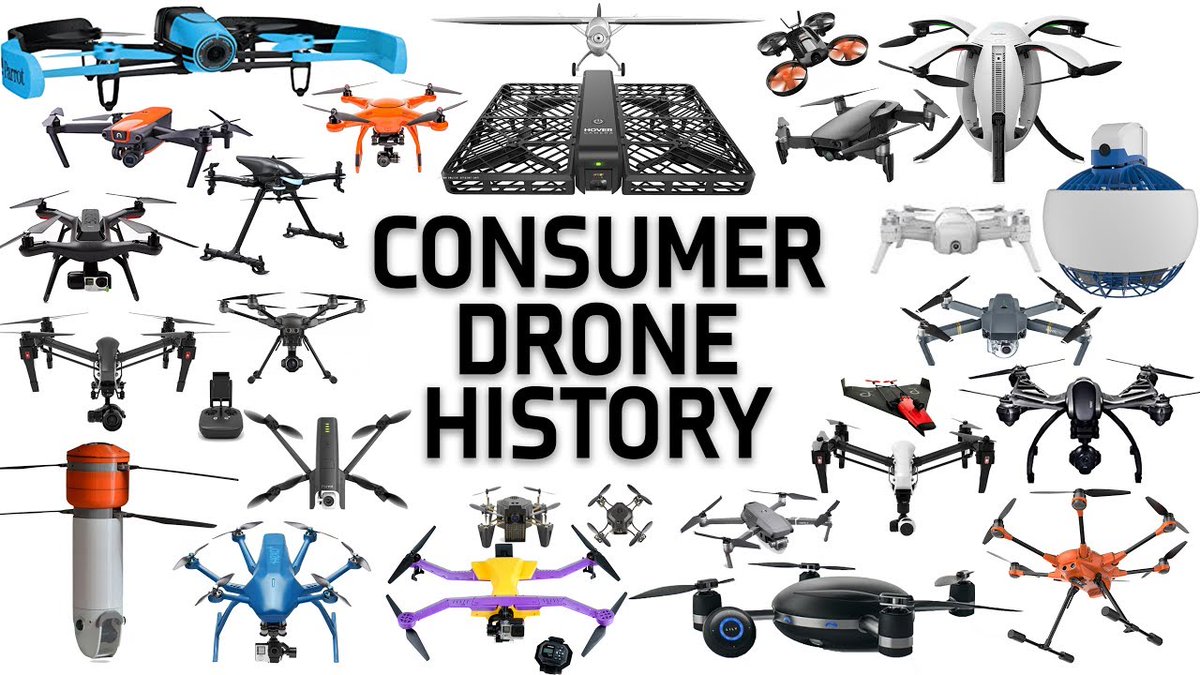
Humanoid robots remind me of consumer drones circa 2015 Humanoid robots 🤖 seem to be where consumer drones were approx 10–12 years ago. Those were early days, lots of demos that mostly didn’t become successful products, and there were tons of cute tchotchke videos produced by startups on a near daily basis. I believe it was in 2015 that consumer drones became one of the best selling Christmas presents. And by then every major VC firm thought they needed to have ‘a play’ in drones as it was the next technology platform. Maybe people remember videos of consumer drones decorated as Star Wars Millennium Falcon and TIE fighters? Drones that also crawled on walls. Drone racing? Selfie drones? A stack started to develop around drone hardware, software, systems to manage fleets, and more. And questions arose around battery life, safety, privacy, etc. Unfortunately most of those companies struggled. Industry was just a tad bit too early, too much VC money got teams distracted and defocused, and our regulatory complexity and government inaction frankly screwed the industry. That said, slowly, and then suddenly, consumer drones got better. Technology improved, prices dropped, more people got used to drones, and out of the trough of disillusionment a real industry emerged. Drones became reliable, cost effective, and more autonomous. Eventually consumer drones showed up in deadly battles across Europe and Middle East. But fortunately also at weddings for photography, at construction sites, doing delivery, used by emergency personnel/security, engaged in elaborate drone light shows, and more. Today China is by far the biggest player in consumer drones. With that analogy in mind, it seems reasonable to say these are early days for humanoid robots as well. Technology stack is new and developing, supply chains somewhat non-existent, and products appear to be traversing an uncanny valley. We see impressive new videos emerge on a regular basis with robots doing tasks at work or at home, or otherwise randomly jumping over boxes. And robotics/Physical AI is all the talk these days at SV parties. Every investor wants to ‘not miss’ this space. Investors are betting across the stack, trying to outsmart each other in their ability to prosecute where value will accumulate. And also importantly, we are once again in neck to neck competition with China. My gut says that it is likely that the most successful humanoid company of the future hasn’t even been founded yet. And final products may not look like the sexy bots doing acrobatic tricks, folding laundry, and DJ-ing concerts that we see in videos. End products may have many more arms than two, may roll around on wheels vs legs, and may be built very differently for home vs industrial environments. Today we have both missionary and mercenary founders riding the robotics hype curve, but we still need more entrepreneurs to use this tech to solve practical and real problems. There is a lot of promise, but founders need to focus on building businesses — and businesses have products, customers, revenues, and margins. All said and done, I am hopeful and usually an optimist when it comes to advanced technology. And as Amara’s law goes: “we overestimate the impact of technology in the short-term and underestimate the effect in the long run.” Finally, for the sake of our national and economic security, I hope unlike in consumer drones space, China competition won’t be allowed to run too far ahead of us. We have much work to do to win that battle.
Bilal Zuberi tweet mediaBilal Zuberi tweet media
English
3
6
37
3.8K
niwaa retweetledi
qw
qw@QwQiao·
brain says we go up - qe, tga, rate cut, everything that the macro bros r saying but gut says it’s over - crypto is a self fulfilling asset class and the 4-yr prophecy must self-fulfill frustrating situation
English
152
95
1.3K
324.8K
Pick.trade
Pick.trade@PickDotTrade·
🚨 BREAKING: FOLLOWING A UNANIMOUS DECISION BY SOLANA USERS, UPTOBER HAS BEEN REPLACED BY PICKTOBER 🚨
Pick.trade tweet media
English
18
8
18
2.2K
niwaa retweetledi
Ash
Ash@ahboyash·
Prediction markets Overview 1. TLDR • Allows users to trade “shares” on future events (sports, politics, culture, crypto) that pay $1 if the event happens and $0 if it doesn’t • In theory, markets aggregate dispersed information into better forecasts; in practice the UX and distribution are shifting fast toward social, feed-native experiences • Daily volumes are around ~$30M each on Polymarket ($1b valuation) and Kalshi (~$2B valuation) and a friendlier U.S. regulatory stance on this market • Adheres to the "hypergamble/hyperfinancialisation" thesis and a growing social element --> every post has an attached market and “bets become statements” (identity + reputation), lowering intent/friction and broadening participation - - - - - 2. Project landscape a) Markets • @Polymarket: largest crypto-native venue on @Polygon whose markets resolve through UMA’s optimistic oracle • @Kalshi: A CFTC-regulated, U.S.-accessible exchange --> contracts listed on a Designated Contract Market with event specifications • @DriftProtocol B.E.T: DeFi native market on @solana b) Terminals & bots building on top • @fliprbot: social trading bot + terminal that started on X, goal to become a cross-venue aggregator • @polycule_bot: @telegram-native bot for Polymarket with copy-trading • @betmoardotfun: a Polymarket web terminal with breaking-news feeds, on-page trading, wallet/profiles analytics - - - - - 3. The risks (and why disputes happen) • Unclear market rules: Recent example was the $14M “Zelenskyy suit” where the market showed how even widely reported “facts” (most outlets said he wore a suit) can still be argued both ways --> what is perceived fairness? • Oracle design & governance trade-offs: On Polymarket, many markets ultimately rely on UMA token-holder votes. In the Venezuela election market, critics argue UMA voters overrode the event’s posted resolution rules (primary source of truth was the official results) and paid out based on a media-consensus standard instead --> i.e. conflicts if voters can also be traders • Manipulation risk: can shift from “truth-seeking” to “tautology-seeking” --> incentives to push narratives rather than measure them They were initially quite niche, but quickly moving into mainstream + socially distributed products. The upside is faster, crowd-priced info; but the big downside is that wording, oracles, and incentives still has to be solved. - - - - - *Notable project mentions a) Prediction markets • @Truemarketsorg@HedgehogMarket@noise_xyz@inertia_social@trylimitless@swaye_co@metaculus@narrativexyz@trepa_io@xomarket@ManifoldMarkets@BRKTgg@MyriadMarkets@PredictBase b) Sports focused • @azuroprotocol@Overtime_io@SX_Bet
Ash tweet media
English
112
51
525
60.8K
niwaa retweetledi
Zoomer Oracle
Zoomer Oracle@ZoomerOracle·
Koreans were bidding $ENA last night They recently used a new slogan for Ethena called: 충돌 없는 루나 (translated: “Luna without a crash”) The hypergambling nature of the korean joe in crypto is something to be studied
Zoomer Oracle tweet media
English
30
41
517
66.4K
Degn.com
Degn.com@AirmoneyDegn·
Such a good day to long bera, retire the bloodline and get cancelled
English
49
34
357
54.8K