
Jeff Sherlock

1.6K posts

Jeff Sherlock banner
Jeff Sherlock

Jeff Sherlock

@olds

Building. x @Meta @Pinterest @Degreed @GetJobber. Utahn. Dad of 3.

Salt Lake City, UT Katılım Haziran 2008
684 Takip Edilen282 Takipçiler
Jeff Sherlock
Jeff Sherlock@olds·
The irony of this SaaS reset is that it’s a long term gift to the survivors. Low multiples will dry up the incentive and capital for new competitors, ensuring that incumbent revenue remains sticky. In two years, we’ll look back at this as the moment the market accidentally fortified the moats of some it thought were starting to drain.
English
0
0
0
24
Jeff Sherlock
Jeff Sherlock@olds·
What's wrong babe? You've barely touched your vibe coded CRM this week.
English
2
0
6
253
Jeff Sherlock
Jeff Sherlock@olds·
Building software is an exercise in decision-making, not just typing. When AI makes feature velocity infinite, the premium shifts entirely to restraint and curation. Customers pay you to filter the noise, not amplify it.
English
0
1
1
127
Jeff Sherlock
Jeff Sherlock@olds·
DoAnything is one of the more interesting AI products I've used in the last year. Really acts like a complete "assistant". Very fun and powerful.
Garrett Scott 🕳@thegarrettscott

INTRODUCING: @doanythingapp Do Anything Agents are a totally new kind of agent They: - work independently for weeks/months+ - have their own email - self manage entire projects - can use almost any tool on the web Today the alpha opens to the public. Here's how they work:

English
0
0
0
253
Jeff Sherlock
Jeff Sherlock@olds·
It’s truly bewildering to build with tools like Cursor as a product person. I can now create a working prototype in 1/10th the time it used to take just to get alignment on an idea. The long-term impact on how PMs operate is going to be enormous.
English
0
0
6
175
Jeff Sherlock retweetledi
Blake McClary
Blake McClary@BlakeMcClary·
Spending my Saturday going through the FY26 @SLCgov budget. The doc is 300+ pages long! Here are some highlights, so you don't have to read it.
English
3
5
53
9.2K
Jeff Sherlock
Jeff Sherlock@olds·
I wish I wanted anything in life as much as GLG wants a 30 minute phone call with me.
English
0
0
6
283
Scott Wessman
Scott Wessman@scottew·
***Longer post, feel free to skip*** On Choosing High-Bandwidth Activities My wife and a few of the kids are into baking, and (brag alert) we are never too many days removed from a home-baked good of some sort. For my part, occasionally I will pick up a book like Flour Water Salt Yeast, and in it I learn about fermentation, types of flour, what a good loaf of bread should look and feel like coming out of the oven, and how long to wait before slicing it and slathering it with butter and jam. When I read it, I imagine the loaves I will make when I dig in. Maybe it will be a weekly ritual! I can almost taste the bread. Reading the book makes me feel smart about bread, almost as if I am baking it in that moment. Nice loaf you got there, be a real shame if someone were to recreate it in real life At the same time, I am reading the book from the couch a few steps from the kitchen, where flour and water and salt and yeast sit ready for use. I haven’t measured out any flour. I haven’t maintained a starter, paid attention to how high the dough has risen, or punched it down. I have not caused baked goods to actually exist in our kitchen. What is all this knowledge about gluten and proofing worth compared with a hot, fresh loaf of bread that we can smell, taste, touch, and hear? How many words or facts equals one slice of hot, fresh bread? What is the exchange rate on imagined loaves to a real one in your hand? We can do both, of course, and in my family's case, the ones who bake do a fair bit of reading themselves to understand how to do it better. They also watch Instagram reels, pin ideas on Pinterest, print out recipes they've seen online and put them in binders, and lots more gathering of information. Someone in the house made it, but not me. High-Bandwidth Activities vs. Low-Bandwidth Activities High-bandwidth experiences are real—most or all of the senses engaged. They usually involve action and some chance of failure. Control over every variable in high-bandwidth activities is usually impossible. They are subject to fate. They often have a specificity to them: they happen in a particular place, at a particular time, with particular people. They often demand (or at least, deserve) our full attention. They "feel" rough, unmediated by algorithms or other customization. By contrast, low-bandwidth activities often rely heavily on watching something on a screen, having just a few senses engaged, hearing about something, reading about something. They are often location-independent and time-independent. They usually can be done alone, and may be quite difficult to do in a group. Low-bandwidth activities can often be done while multi-tasking, demanding (or deserving) less-than-full attention. Low-bandwidth activities are increasingly delivered to each person via an algorithm carefully customized to our preferences. They feel more smooth. There is a spectrum of low-bandwidth experiences, ranging from plain text to pictures to audio to full video and beyond. But they usually have a synthetic, substituting quality to them. The Shrinking Slice of High-Bandwidth Activities Low bandwidth substitutes for high-bandwidth activities now exist at our fingertips for every possible hobby and pursuit. In the 90s, if we didn't have a chance to actually go skiing and wanted some kind of fix, the only substitute was a ski magazine or going to Abravanel Hall to watch the occasional Warren Miller ski film. Now I pull up Instagram and have an unlimited series of reels and posts showing me perfect footage of every mountain and run. The things they did on those skinny skis, man Every hobby, destination, and pursuit has abundant, low-bandwidth alternatives available via devices. This is not a bad development, to the extent that it augments our lived experience. Unchecked, however, this low-bandwidth abundance is siphoning away the time we would spend doing the real thing. COVID Time We lacked the choice during COVID, with many of us forced with work and school to adopt lower-bandwidth versions of our main activities. We had to use video chats in place of in-person conversations with coworkers and friends—a trade down in bandwidth. Social isolation increased as well, as people (both naturally and due to venue closures) avoided gathering in person as frequently as before. On the other hand, for some people the same remote work or school increased in-person, high-bandwidth time with family and roommates. Lots of kids were relegated to Zoom classrooms, often valiantly trying to learn and socialize in a low-bandwidth substitute for an in-person classroom. As time passes the absurdity of a requirement that children attempt to replace the entire mix of scholastic and social experiences via stationary screen time seems more obvious, yet it is worth considering whether having dozens of children in the same classroom (seated quietly at desks for crowd-control) is itself a lower-bandwidth experience than they deserve. Actually Doing the Thing Theory is supposed to be a leavening agent to practice, and the greater of these is practice. Practice—the act of doing the thing, trying it out, seeing what happens—is the true virtue. Actually doing something is an entirely different experience from talking about it or dreaming of it or watching others do it. Doing something directly is the highest-bandwidth version of the thing. Life is about doing the thing. Running Our ideas about a given pursuit never fully survive the actual engagement in the activity. Reality is always different from what we have in concept. Footage of someone running along a road does not compare with being outside and running along the road. In addition to the "main thing," the act of running, I notice the homes nearby, the slight unevenness of the pavement as it slopes toward the shoulder, a blast of wind as a truck goes by, my breath labored or easy depending on the day, my sour or upbeat mood. There is a fulness to the experience of running, a blend of elements that add up to something different each time. A ways to go before home Travel Travel tends to bring a layered richness that mere footage of landmarks cannot replicate. When you leave your home and go somewhere else, you smell different things, the sun shines differently, people drive different cars or speak different languages, or the distance between buildings is different. People may carry themselves differently, perhaps not smiling so much (or smiling more than people tend to where you are. These layered differences add up to a feast for future consideration. Over time, we begin to unpack those differences, noticing new things when we return home and perhaps when we go back to that place in the future. We put into reserve a countless array of micro-moments that provide a reservoir for future thinking and ideas. Gathering with People Gathering with people in person is high-bandwidth. Being around a table with friends or family has a multi-layered quality to it. On one layer, there is the simple fact of who is in the room in that moment. Another layer is the way in which people are sitting or standing, the way they are looking at each other, speaking, making noise, chewing, eating, being jolly or serious. The place itself might be significant—a person's home, the conference room of a building, a camping table in a forest. Politics Bandwidth extends to politics—reading about a campaign pales in comparison to the experience of being a candidate, actually calling people to raise money, actually knocking on doors to ask for support, actually winning or losing. Not everyone is cut out for it, but the ones who choose to try are in for a high-bandwidth experience. Actually serving in government is a higher-bandwidth experience, and much messier of course, than following politics online. Business It is by now a trope but there really is something different and respectable about being "in the arena" compared with watching from the sidelines. Having to actually do the thing—to make the tradeoffs necessary to build a functioning business—is a far richer, nuanced, challenging act than to talk about it online. We should not pretend that the two are the same, even as we wisely augment real-world experience with theory and ideas from others. A Bias toward Higher-Bandwidth Not every moment of every day must be high-bandwidth. Some nights, we really just need a 30 minute session watching cat videos to gently carry us off to sleep. That’s okay. But maybe tomorrow we can go outside, spend some time in person with our family, friends, or coworkers, take on a tough job directly, start a business, run for office, go down to that soup kitchen and sweep a floor, or bake a loaf of bread. Maybe the bread we bake will be good, or maybe not. Either way it will be a thing we actually did. Notes: No generative AI was used to write this. I wrote on the topic previously in a newsletter post.
Scott Wessman tweet mediaScott Wessman tweet mediaScott Wessman tweet mediaScott Wessman tweet media
English
8
0
29
2K
Jeff Sherlock
Jeff Sherlock@olds·
@8teAPi OpenAI must go up the value chain to justify its valuation and keep growing. OpenAI receptionist, data analyst, and engineer are probably next.
English
0
0
3
1.3K
Prakash
Prakash@8teAPi·
OpenAI Leaks Sales Agent in Tokyo Early pre-release prototype shown to Japanese audience > Sales Assistant is a 45k per year job > 3.1 million in 🇺🇸 ~ 1% of population OpenAI Demo > customer fills in Contact Sales webpage on main site > contact details come in to OpenAI task pane as Lead > Sales Agent calls a number of tools >> enrich_lead which runs a Deep Research like search on the lead to fill in information about the lead like address, size, sector etc >> get_calendar_availability to check timeslots available to setup meeting >> send_email to draft an appropriate email to schedule the sales meeting > ends Task Unclear whether this is a mock-up of a product its API users could build or an actual release for Enterprise customers.
Prakash tweet media
English
50
163
1.9K
481.9K
Darby Bailey, Ph.D. 🖍️💫
What are these explosion sounds in downtown Salt Lake City? I can’t find anything about it. avalanche control? looks like its in memory grove.
English
5
0
10
1K
Jeff Sherlock
Jeff Sherlock@olds·
I'll claim half credit here. @codahq got acquired (merged?) by @Grammarly and the driving force is likely 3 things in rank order from Coda's PoV: 1. Out-executed by Notion for the broad appeal b2b use cases, but also not quite robust enough to compete with Jira/Atlassian for larger eng/product teams and workflows. Great product, but their ICP is narrow (product/eng teams of 20-100 people). 2. AI impact as a potential overhang. How much collaboration do you need in 5-10 years if your average engineering team is 5x more productive and therefore you have way fewer eng/design/pm headcount in general? 3. #1 makes growing difficult and #2 makes it difficult to raise money from investors. Merging with another tool in the b2b suite potentially gives you more ammunition to compete for customer budgets (now you get Grammarly AND Coda for one monthly price) - but it'll be a tough slog to retrain the market and credibly show the synergies. coda.io/blog/about-cod…
Jeff Sherlock@olds

Thesis: OpenAI needs to work their way "up" the value chain inside organizations to where the work happens to fulfill their potential as a product and business. They can't scale the business of just being an AI endpoint. Prediction: @coda_hq would be a very logical acquisition towards that end. I think OpenAI or maybe Anthropic will buy @coda_hq in the next 12-18 months.

English
0
0
3
1.1K
Jeff Sherlock
Jeff Sherlock@olds·
I don’t mean to lean on my last name like this, but yall I think this UnitedHealthcare assassin might not be American: 1. Rode a bus for 20+ hours from Atlanta instead of flying 2. Stayed at a hostel 3. Rode a bike as his getaway
English
1
0
9
666
Rex Salisbury
Rex Salisbury@rexsalisbury·
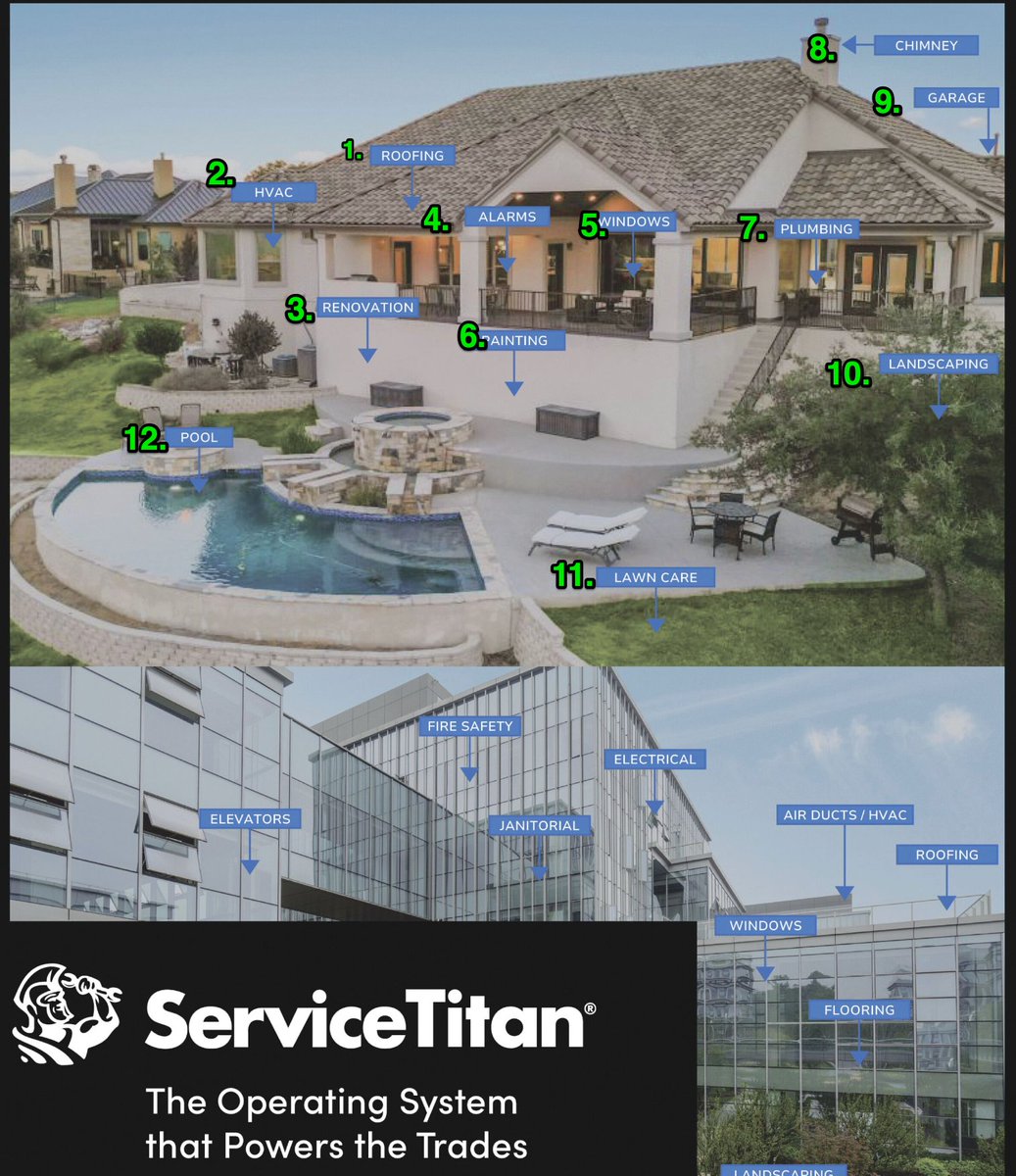
biggest takeaway from @ServiceTitan S1. 10+ reasons to never ever own a home.
Rex Salisbury tweet media
English
3
1
128
27.9K
Jeff Sherlock retweetledi
Y Combinator
Y Combinator@ycombinator·
Find and secure money after a death. Use @SunsetEstateApp (YC F24) to fund a retirement account after losing a loved one. Finding and closing the accounts of a loved one can take months—often years—and hundreds of hours of work. Most people have to do that while grieving, but now Sunset does it for you, helping you fund a retirement account after losing a loved one. ycombinator.com/launches/MAc-s… Congrats on the launch, @stephen_walter and @kaelaworthen!
English
7
22
122
25.9K
Jeff Sherlock retweetledi
Kaela Worthen 🍋
Kaela Worthen 🍋@kaelaworthen·
So unbelievably excited for @gilbertglee & @torusrev. The technology they've built solves such a massive problem for climate change, literally saving the world. They couldn't deserve this award more. In awe of what they're doing torus.co/blog/torus-nov…
English
1
2
24
613
Jeff Sherlock
Jeff Sherlock@olds·
@hpdailyrant TCT: Task Completion Time. Ideally whatever you're shipping decreases the median* amount of time required to complete the task. * you may want to choose something like p90 or p70 depending on the variability and complexity of the task.
English
0
0
1
112
Lenny Rachitsky
Lenny Rachitsky@lennysan·
I've got @naomigleit, Head of Product at Meta, coming on the podcast this week. Any questions you'd love for me to ask her about how PM works at Meta, early days Facebook stories, growth tactics and lessons, or anything else?
English
26
3
105
19.7K