
Olivia Oran

3.9K posts

Olivia Oran banner
Olivia Oran

Olivia Oran

@ozoran

Strategic comms director, Brunswick Group. Former @businessinsider @reuters journalist. [email protected]

NYC Katılım Ocak 2010
1.2K Takip Edilen5.8K Takipçiler
Olivia Oran retweetledi

Ryan Tracy
Ryan Tracy@ryanjtracy·
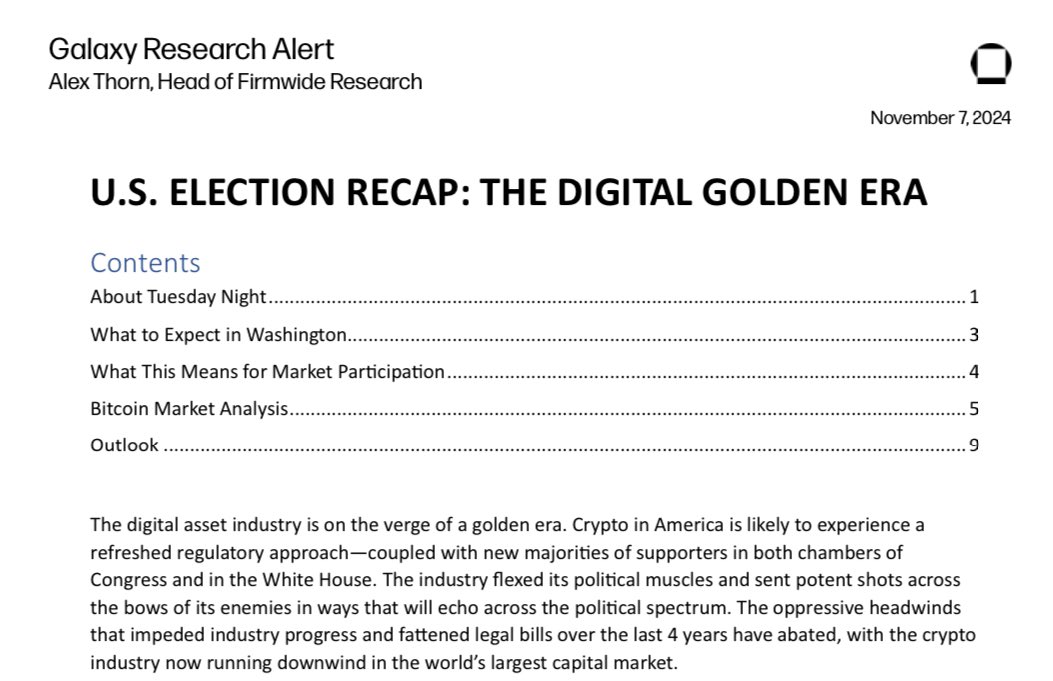
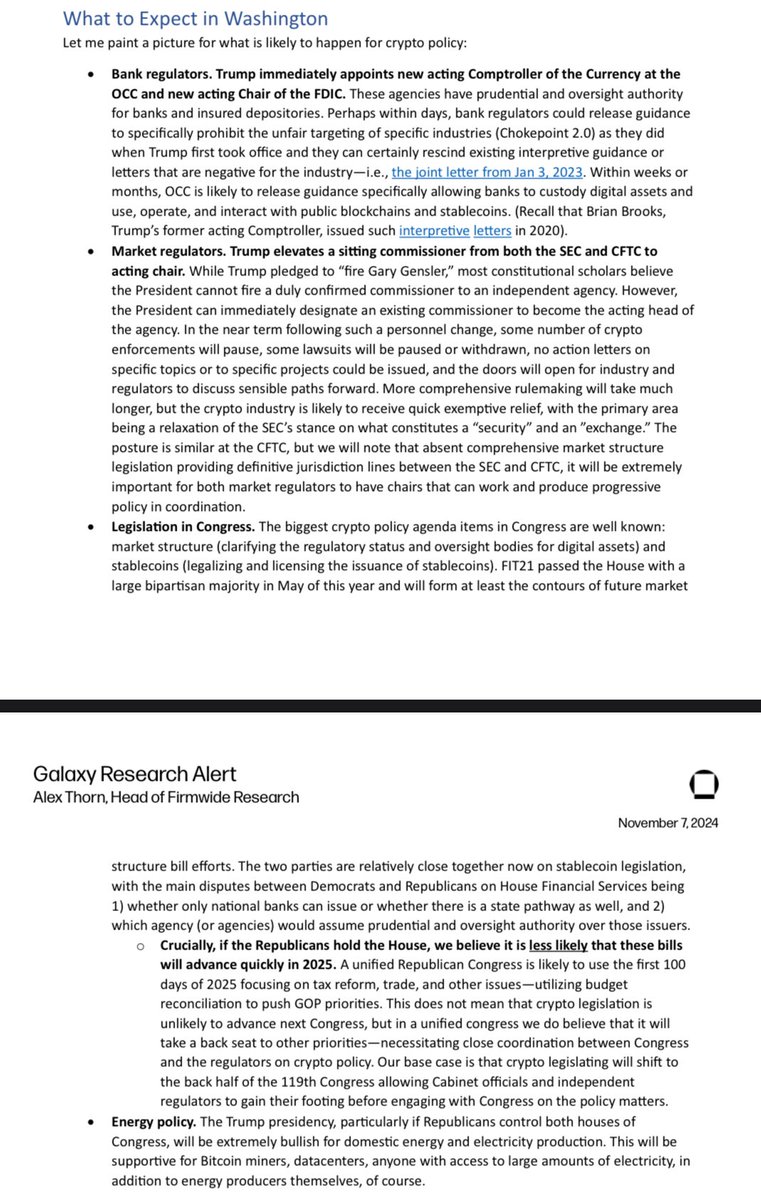
The CFPB has backpedaled on the open banking rule. Instead of fully surrendering to banks in the ongoing litigation, the bureau now wants to pause the suit and instead do an "accelerated rulemaking." Good for fintech/crypto, bad for banks. CFPB filing today:
Ryan Tracy tweet media
English
1
3
14
3.4K
Olivia Oran retweetledi
Dan Frommer
Dan Frommer@fromedome·
~Half of podcast listeners consider podcasts more accurate and truthful than traditional news media - 20% of US consumers who listen to podcasts say they think podcasts are "much more accurate and truthful" than traditional news sources - This is higher among men, Gen. Z and Millennials, high earners, and Republicans - Also higher among those who listen to @TuckerCarlson, @joerogan, and @hubermanlab pods Source: Consumer Trends 2025 Mid-Year Report by @newconsumer and Coefficient Capital, July 2025 survey by @TolunaCorporate
Dan Frommer tweet media
English
1
4
4
1.3K
Olivia Oran retweetledi
Arjun Sethi
Arjun Sethi@arjunsethi·
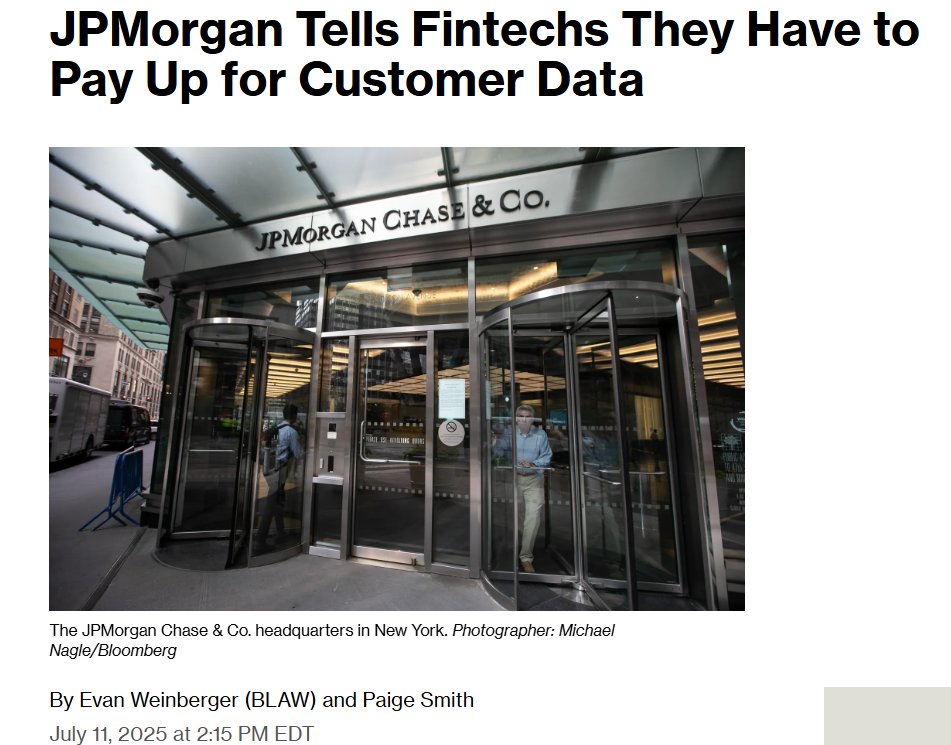
JPMorgan Is Charging for Access to User Data. This Is a Pivotal Moment for Financial Infrastructure JPMorgan is moving to charge fintech companies for access to customer data. This data includes transaction histories, balances, and behavioral signals generated by end users interacting with the banking system. Until now, this information has been accessible through data aggregators or direct APIs, enabling fintech innovation across payments, budgeting, lending, and more. By introducing a pricing model on top of this access, JPMorgan is making a calculated move. It is asserting ownership over data that is generated by users but stored inside infrastructure the bank controls. This is not a one time policy update. It is a structural shift that tells us something fundamental about where the legacy system is headed. The pattern When a platform gains enough market power and dependency, the default next step is to extract from it. This is not new. Operating systems, app stores, payment networks, and telecom infrastructure have all followed the same curve. In the beginning, the focus is on distribution. Then it shifts to control. Finally, it becomes about rent. The moment a core financial entity begins charging others simply to read user authorized data, you are watching that final step in real time. The technical concern Financial APIs are not like public protocols. They are controlled endpoints with rate limits, usage restrictions, compliance gates, and contractual dependencies. By charging for access to these APIs, banks can determine who is allowed to build and what those builders can afford to offer. The more critical the API becomes to the product experience, the higher the leverage. This is not a technical innovation. It is a toll. And once data becomes a revenue stream for the infrastructure provider, the incentive is to fragment it, lock it in, and sell it at margin. This fundamentally limits what can be built on top. Why crypto matters here Public blockchains invert the architecture. Data is written to globally accessible networks with permissionless read and write access. State is maintained by consensus, not by counterparties. Identity is tied to cryptographic credentials, not private account systems. Code is open and composable, rather than licensed or restricted. In this model, access is not a business development negotiation. It is a property of the system itself. Smart contracts execute logic predictably across all users. Data lives on a ledger that is equally available to every participant. Protocols can be composed together without friction or arbitration. Builders do not need to ask for access, and users do not need to trust an intermediary to store or release their own information. This creates a fundamentally different environment for innovation. It also creates an escape path from platforms that want to monetize every layer of user activity while preventing competition from emerging. The global context This issue is not specific to the United States. In Europe, PSD2 created mandatory data sharing between banks and third party providers, but many institutions have resisted compliance or introduced friction through authentication flows. In China and India, national financial infrastructure is increasingly centralized, combining state linked identity with payment systems that reduce user level portability. In Latin America, superapps are racing to consolidate finance, identity, and commerce into vertically integrated platforms. The common theme is the same. Centralization leads to restriction. Restriction creates dependency. Dependency turns into control. We are watching the same structure repeat, just with new actors. The decision in front of us There is a version of the future where every financial interaction is intermediated by systems that monitor, price, and gate access to your own data. Where portability is limited, composability is artificial, and new products are taxed by the incumbents who control infrastructure. That is the natural trajectory of closed systems. We have seen it before, across industries and geographies. It is happening again now. Crypto presents an alternative. But that alternative is not guaranteed. The question we need to ask is whether we are actually building toward something more open, or simply recreating the same constraints under new names. Regulatory engagement and institutional maturity are not bad. In many cases, they are necessary to scale. But if those efforts result in recreating the same forms of control that define the legacy system, then the project has already lost its edge. We should not be optimizing for defensibility through restriction. We should be leveraging our position and profitability to build better access, more open architecture, and more composable systems. That means investing in protocols, not just platforms. It means participating in shared infrastructure, not just extracting value from it. At @krakenfx , we are attempting to do both. To support and secure the protocols that define this industry, and to build on top of their rails. Not just ours. Not just one chain or one stack. A multi chain, multi environment, multi purpose world. The goal is not just uptime or product coverage. It is staying true to what this system was designed to enable in the first place. Global permissionless always on access to financial infrastructure that anyone can build on and anyone can benefit from. If we are serious about that, then we need to avoid the trap that every generation of infrastructure builders has fallen into. Closed gardens are easy to justify. They offer control, reliability, and short term leverage. But they are also the reason we are here in the first place. We should not spend a decade building open systems only to end up recreating the same constraints with better branding.
English
72
157
493
151.4K
Olivia Oran retweetledi
Nik
Nik@NikMilanovic·
Almost immediately after the @CFPB announced that it would kill its Open Banking Rule, which gave customers the right to own their financial data, @jpmorgan announced that it will now charge customers to use their own data at fintechs.
Nik tweet media
English
7
5
74
297K
Lauren Hirsch
Lauren Hirsch@LaurenSHirsch·
I’m expanding my role at @nytimes as I dive deeper into the biggest stories on Wall Street and across corporate America. I’ll continue to contribute to @DealBook and forever be grateful for 5 years working for @andrewrsorkin and the opportunity to learn from the best in the biz
Lauren Hirsch tweet media
English
17
12
144
24.6K
Kevin Clark
Kevin Clark@bykevinclark·
My wife, Emily Glazer, just won the Pulitzer Prize. I’ve known this was going to happen since the day I met her. She is the best reporter in America and she’s also the best person I’ve ever met and an elite mom–here’s our son Teddy celebrating in the WSJ newsroom right now.
Kevin Clark tweet media
English
158
153
7.3K
747.8K
Olivia Oran
Olivia Oran@ozoran·
@maxwelltani agree, YouTube in the background turns into essentially ambient noise... Having something on in the background, absorbing maybe 40% of it.
English
0
0
3
112
Brian Morrissey
Brian Morrissey@bmorrissey·
There is no escaping this guy for me. I don’t know what I did to the algorithm to deserve this fate.
Brian Morrissey tweet media
English
2
0
24
1.6K
Olivia Oran
Olivia Oran@ozoran·
@eagerber Super influential investors and the concept is completely disruptive and innovative—could kill the Hollywood studio model.
English
1
0
1
757
Emilie Gerber
Emilie Gerber@eagerber·
I work on several funding announcements a month and have never come across a reporter willing to cover the news if the company won't disclose the round size. How in the world did Promise AI get coverage for an "undisclosed seed round" in WSJ, Reuters, Variety, and Hollywood Reporter? I want to learn from the person that made this happen.
English
11
1
69
9.2K
Rebecca Kaden
Rebecca Kaden@rebeccakaden·
We’re having a New York bagel taste test next week @usv (as part of an important meeting, obviously.) New Yorkers: which bagels need to be included? (Current contenders: Apollo, Bobs, Ess a Bagel, Bagel Shop…)
Newark, NJ 🇺🇸 English
212
6
284
114.6K
Ken Sweet
Ken Sweet@kensweet·
Packing up my desk before heading on academic leave and @eisingerj is coming with me:
Ken Sweet tweet media
English
2
0
12
642
Olivia Oran retweetledi
Grace DeGraaf
Grace DeGraaf@grace_degraaf·
For anyone impacted by layoffs at LA Times or elsewhere, small reminder that I'm always looking for pitches on trends in the economy, workplace, tech, or culture writ large. Research-based analysis, reported essays, and fascinating deep dives are all welcome. Email me!
English
5
76
173
31.1K