Paul Irving

118 posts

Paul Irving banner
Paul Irving

Paul Irving

@PaulGTM

GP @gtmfund.

Vancouver, Canada Katılım Eylül 2021
188 Takip Edilen219 Takipçiler
Paul Irving
Paul Irving@PaulGTM·
@thogge has been in the room at some of the most interesting inflection points in fintech over the last decade. He was an early operator at Wealthfront, then VP of Product at Divvy when it went from zero to $100M ARR in under five years and sold to BILL for $2.5 billion. He is former Partner at @Pelion_VP, Utah's oldest and largest venture fund, deploying out of their eighth fund. His view on what investors should actually provide is where I keep landing. There are two parts to it: 1. The product founders want to buy is improved odds of success. Tyler frames the investor value proposition in two modules: trusted advisor and helping machine. The trusted advisor piece sounds simple but most investors fail it. Does the founder know you'll tell them the truth? Can they call you with bad news and have a productive conversation? Do they look forward to your texts or cringe a little? He took this further with Redo by creating what he called a "bend the odds" contract with the CEO, committing to a specific quota of customer intros, engineer candidates, and product sessions each month. Then at the end of the month, he sent the CEO his own investor update covering what he delivered, rather than waiting for the founder to send one. There aren't many investors doing that. 2. Software value is approaching zero, which means business model innovation matters more than product innovation. Tyler's read on Divvy is that the product innovation got a lot of attention, but the business model innovation was actually more impactful. Give the software away for free, monetize on interchange. That seemed obvious in hindsight, but no one was doing it. His view now is that the same logic applies more broadly. Charging for software alone can't anchor a venture-scale business anymore. The founders who figure out how to pair a product with a business model that captures value differently, outcomes, rake, coverage, something that isn't seat-based, are the ones who'll build the next generation of durable companies. Full conversation on YouTube or wherever you get your podcasts. Big thank you to our series partner, @AngelList, who have been instrumental in helping @gtmfund scale since the early days.
English

0
0
2
68
Paul Irving retweetledi
Max Altschuler
Max Altschuler@HackItMax·
The AI bubble debate is a distraction. Yes, there are parallels to 1998: big money, fast growth, infrastructure buildout. But the numbers tell a completely different story. 4 years after the internet launched publicly: 70 million users globally. ChatGPT and AI apps today: 1 billion monthly active users (in less time). 90% of the current infrastructure buildout is pre-committed. In the fiber era, it was 3%. This is real demand, real revenue, and real constraints (energy, land, GPUs) that make it structurally different from what we saw before. But here's what operators and founders need to understand right now: 1. The value destruction is real, too. Legacy B2B SaaS is being written down to zero faster than anyone expected. Companies worth $10 billion in 2021 are gone. It's the cost of a platform shift. 2. Distribution is the game. The gap between the #1 default brand in a category and everyone else is widening every single week. You cannot build your way out of a distribution deficit anymore. 3. Speed compounds. Move fast, establish the brand, let the product catch up. The companies getting this right are pulling away fast, and the mega funds are watching. @PaulGTM and I cover this in full before the next VC episode with the incredible @JenniferHli, Partner at @a16z. Available in full here on X, and the full episode wherever you get your podcasts!
English
0
4
10
663
gtmfund
gtmfund@gtmfund·
EVENT: Founder x CVC matchmaking is back as part of CVC Week on September 29th. We’re excited to partner with @counterpartvc to bring a strong group of early-stage founders into the room. With hundreds of corporate venture investors coming into San Francisco, we’re creating a dedicated moment for founders to plug directly into that network. This is the only event where founders can meet 10+ corporate venture investors in their industry in under an hour. Unlocking both capital and potential enterprise customers in one setting (at no cost). Founders are grouped into sector-specific pods, and CVCs rotate through for focused, 1:1 conversations. Thank you to our partners @HUBInsurance and @awscloud for helping bring this event to life. Spots are limited and approvals are required: luma.com/nz62lwb0
English
2
2
6
155
Paul Irving
Paul Irving@PaulGTM·
Honored to see @gtmfund named to the Confluence 50. 50 firms @confluence_vc_ and @harmonic_ai selected for shaping what this asset class looks like next. They spent months on it: AUM, follow-on rates, GP backgrounds, thesis clarity, portfolio quality. The goal was to find the firms that will look inevitable in five years, before they do. Grateful to @ClayNorris10, ConfluenceVC, and Harmonic for the rigor behind this.
English
1
0
2
30
Paul Irving retweetledi
Brandon Terry
Brandon Terry@IAmBrandonTerry·
When my daughter was diagnosed with a rare genetic condition, my family entered a healthcare system that simply wasn’t built for kids like her. We spent years navigating waitlists, fragmented care, and thousands in monthly out-of-pocket costs — all while acting as the quarterback between providers who rarely spoke to each other. And we learned quickly that we weren’t alone. Nearly 1 in 5 children in the U.S. face developmental, behavioral, or mental health needs — and millions of families are navigating the same broken system. That’s why Village exists. Today, we’re excited to announce that Village has raised $9.5M led by @upfrontvc , with participation from @blingcapital , @gtmfund , and @PerceptiveVC to build a modern health system for specialty pediatrics. Fortunate to have so many great partners like @kesarvarma @XtinaFattore @kevinyzhang @msuster @bling0 @kylelui @KomalKothariMD @HackItMax @PaulGTM @CamiloBAcosta and so many more. We’re building infrastructure that helps families find care faster, enables providers to focus on patients instead of paperwork, and brings care teams together in one place. This is just the beginning. Grateful to our team, providers, families, and investors who believe this system can be rebuilt. Read more in Axios here: axios.com/pro/health-tec…
English
2
4
11
5.1K
Paul Irving retweetledi
George Kurdin
George Kurdin@GeorgeKurdin·
Today @usemonk is announcing our $25M Series A co-led by @footworkvc and @AcrewCapital with continued support from @btv_vc. $3T sits in U.S. accounts receivable. Our mission is to close the gap between earning revenue and receiving it. For most B2B companies, that gap is 45-90 days, thousands of hours of manual work per year, and millions in trapped working capital. It's a tax every growing business pays. Monk invented the Intelligent Collections category. Most AR tools automate the easy parts. We built for the edge cases, portal uploads, PO mismatches, and disputes. On average, customers see 40% lower DSO, 24% higher collections response rate and 25+ hours/month saved. Thank you to @ElevenLabs, @tryprofound, @siro_app, and our customers for the trust. Our platform typically pays for itself in month one. Book a demo to learn more.
English
83
80
556
2.6M
Paul Irving
Paul Irving@PaulGTM·
@auren has a way of seeing around corners. He's been building and backing companies for over three decades. Live Ramp, Safe Graph, Coinbase, Chime, Rippling, Replit, Vercel. Now running Incubate and deploying capital out of @flexcapital at roughly one investment a week. He thinks in decades. And he's willing to say things that sound crazy until they're obvious. But that’s the game of early investing! You want to always stay a year or two ahead of consensus. Auren said a lot of things worth repeating in this episode. His view on moats is where I keep landing. There are two parts to it: 1. The only surviving moat is product velocity. Auren put it plainly: Many large incumbents haven’t improved their core product in years. That worked before, but it won't work going forward. The companies that survive are the ones that are making their product meaningfully better every single month. The pace of iteration is now table stakes, not a differentiator. 2. The buy vs. build calculus is getting rewritten. Most people frame AI as a cost-cutting story. Auren reframes it as a spending expansion story. Companies have always spent more making software than buying it. AI makes the making cheaper and faster, which means total software spend goes up, not down. The question isn't whether software is dead, it's who's building the right thing fast enough to matter. The baby boom theory is worth hearing too. I won't spoil it! Big thank you to our series partner, @AngelList, who have been instrumental in helping GTMfund scale since the early days.
English
1
0
2
61
Paul Irving
Paul Irving@PaulGTM·
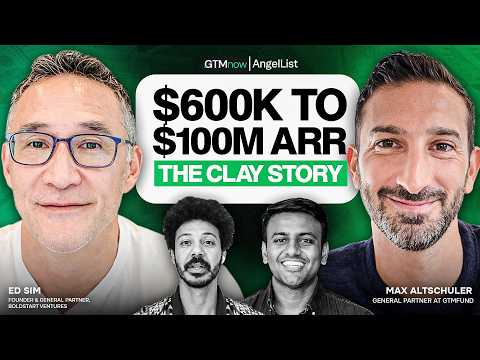
@edsim is someone we’ve spent a lot of time learning from. He’s been investing at the earliest stages for three decades, backing companies like Protect AI, Kustomer, Clay, Superhuman, and Snyk. More importantly, he’s done it across multiple platform shifts, each one forcing a reset in how companies get built. What makes Ed’s perspective different is how consistent his lens is, even as the environment changes. He still starts in the same place. The founder, and the problem they’re obsessed with. A lot stuck with me from this conversation. The thing I keep coming back to is how he thinks about durability when the pace of change keeps accelerating. There are two parts to it: 1. The advantage is shifting from what you build to how you adapt. In previous cycles, you could build a wedge, prove demand, and spend time turning it into a scalable go-to-market motion. That timeline is compressing quickly. Ed’s point around the “jet stream” is real. Products can be recreated or absorbed much faster now, which means the edge comes from how quickly a founder can learn, reposition, and stay ahead of where the market is moving. 2. The companies that win are being built differently from the inside. One of the most practical shifts he called out is how teams are using agents. Engineering is no longer the clear bottleneck. In many cases, teams are shipping faster than the rest of the company can absorb. That creates pressure across go-to-market, hiring, and leadership. The founders who are leaning into this are redesigning how their companies operate around that speed. The Clay example is a good reminder of how this actually plays out. They spent years iterating without a clear breakout. Stayed disciplined on burn. Stayed close to user behavior. When the wedge showed up, they were ready to move on it. ~$600K → $4.6M → $30M → $100M+. That path is messier than most people expect, but also more common than you realize. Full conversation on YouTube or wherever you get your podcasts. Big thank you to our series partner, @AngelList, who have been instrumental in helping GTMfund scale since the early days.
English
3
3
8
868
Paul Irving retweetledi
Max Altschuler
Max Altschuler@HackItMax·
Before every episode in our VC series, @PaulGTM and I talk through what we're seeing across founders, funds, and go-to-market teams right now. Here’s what we covered - available in full here on X. - Why the core of great GTM hasn't changed in 30 years - Why you should show the product earlier and deploy before you close - How the entire discovery and research layer just became automatic - What happens to the humans in the motion when the admin work disappears - Why the rep who used to spend half their time on Salesforce hygiene now has no excuse not to show up prepared
English
1
2
8
416
Paul Irving
Paul Irving@PaulGTM·
Beyond excited to have @JasonDemant onboard as the newest Partner at GTMfund. Feels like a long time in the making. Big things ahead, my friend!
Max Altschuler@HackItMax

Huge news here at GTMfund. We’re excited to share that we’ve brought on a new Partner: @JasonDemant ! It’s a big moment for @gtmfund . Most importantly, it’s a big moment for our founders and LPs, as Jason is going to bring so much value to multiple areas of the firm. After deploying Fund II, we knew the team would grow. We weren’t strapped for capacity, which allowed us to be opportunistic on the new team member joining the mission. We could be patient and wait for the right person. Over the past year, we’ve had a ton of inbound - Partners and Principals from well-known firms, institutional LPs, and world-class operators. It’s also been incredibly meaningful to see that momentum. The firm, the media company (GTMnow), and the GTMfund brand have grown a lot since we started the firm 5 years ago. Jason had invested in 100+ emerging manager funds over his 6 years at Foundation, and GTMfund was at the top of his list of firms he would join if the opportunity arised. We spent months talking about what a partnership could look like. His vision for the future of GTMfund, our vision, and how those intersected. It was a perfect fit. We couldn’t be more excited to have him onboard! There’s a bonus episode on The GTMnow Podcast that just went live today if you’re interested in more details on the decision from me, Paul Irving, and the team, along with hearing from Jason directly.

English
0
0
4
76
Paul Irving
Paul Irving@PaulGTM·
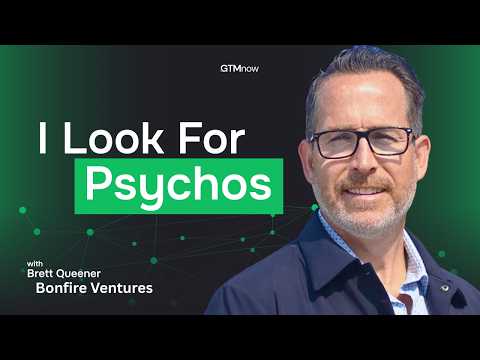
As a firm built around operators turned investors, @bqueener has always been someone we look up to. He joined Salesforce early on and helped build the GTM playbook that defined a generation of SaaS. He helped build the playbook that defined a generation of SaaS. After all of that, he then co-founded SmartRecruiters, angel invested in companies like Outreach and Pendo, and eventually joined Bonfire Ventures as a Partner to back the next generation of founders building B2B software. What makes Brett's perspective different is that he's sat in every chair there is. Operator at two of the fastest-growing companies in enterprise software history. Founder who learned the hard way that the playbooks he knew from large orgs didn't transfer. Investor who's watched the entire SaaS motion get rebuilt from the ground up. A lot stuck with me from this conversation. But the thing I keep coming back to is how he thinks about what actually creates a durable edge when software is cheap and fast to build. There are two parts to it: 1. The moat isn't the product anymore. It's how fast you learn and reposition around it. In previous gen software, you could build a wedge and spend 18 months turning it into a go-to-market machine. That's over. Brett's watching his portfolio companies revisit their ICP, value prop, and messaging every 30 days. The founders who win treat positioning like a living document. 2. The best founders right now are the ones building inside their own company. Brett isn't just looking for founders who have a technical co-founder. He's looking for founders who are personally in the tools: using Claude Code, building agents, running their go-to-market differently because of what they're learning. If you're not building, you can't have a sharp enough point of view on what you're selling or how to run the org that sells it. The functional GTM leader who chooses to delegate and views their job as showing up with a pretty pitch deck is being phased out fast. This episode is packed. Full conversation on YouTube, Apple, and Spotify. __ Big thank you to our series partner, @AngelList, who have been instrumental in helping GTMfund scale since the early days.
English
1
0
0
67
Paul Irving
Paul Irving@PaulGTM·
@pitdesi If you spend some time in Vancouver, I got you on restaurant reccos!
English
0
0
0
29
Sheel Mohnot
Sheel Mohnot@pitdesi·
Anyone taken the Rocky Mountaineer? We are thinking about doing a family trip on it from Vancouver to Jasper... debating if the journey is worth it.
Sheel Mohnot tweet mediaSheel Mohnot tweet media
English
52
1
218
61K
Paul Irving retweetledi
Max Altschuler
Max Altschuler@HackItMax·
Before each podcast episode as part of our VC series, @PaulGTM and I have some fun chatting through our (many) opinions on what we’re seeing across the broader landscape. Here’s what we covered - available in full here on X. - Build vs. buy and why "software is dead" is the wrong framing. - Why nobody is going to vibe code DocuSign out of existence. - How the middle layer of SaaS is getting squeezed as value shifts to the action layer and the data layer. - What moats still matter for founders today (hint: speed and resources no longer cut it). - Buyer hesitation and why nobody can commit to more than a 12-month contract right now. - The $50T+ knowledge economy that the "SaaS is dead" crowd keeps ignoring. -What is the "mojo metric"?!
English
1
2
9
611