phil bronner

1.8K posts

phil bronner banner
phil bronner

phil bronner

@pbronner

Cofounder @ardent_vc, investing in b2b embedded finance, marketplaces, and vertical saas+. Father of 3, LUCKY husband, Wizards, and Commanders fanatic

Washington DC Katılım Mart 2009
740 Takip Edilen1.3K Takipçiler
phil bronner retweetledi
The Shift Journal
The Shift Journal@TheShiftJournal·
Malcolm Gladwell explaining why some people succeed and some don't.
English
15
545
1.9K
163.3K
phil bronner retweetledi
fintechjunkie
fintechjunkie@fintechjunkie·
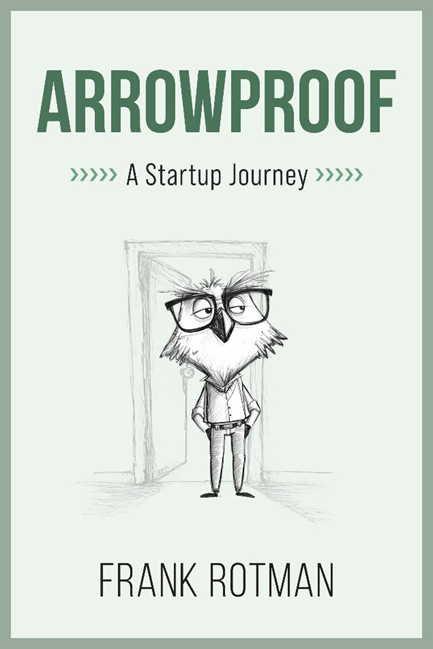
What if the best startup advice came wrapped in a story you couldn't put down? It’s finally here! After a year of hard work and many sleepless nights, I can finally say that my book has been published. Amazon and Ingram links are in the comments if you want to pick up a copy for yourself or your company. ArrowProof is my attempt to package insights about the Startup journey into something more engaging than “yet another business book”. Rather than lecture with a framework laid out in a highly sanitized format, I wanted to show an Advisor’s “wise advice” in action through the eyes of two first-time Founders navigating their own impossible journey. And because I can’t help but break from convention, my characters aren’t what one would expect. I chose Achilles and Tortoise as my protagonists as an homage to a remarkable literary heritage that’s near and dear to my heart. These characters first appeared in Zeno's famous paradox, were brilliantly reimagined by Lewis Carroll in his mathematical dialogues, and found new life in modern literature in Douglas Hofstadter's "Gödel, Escher, Bach" and "I Am A Strange Loop." What drew me to them was how these great writers used them as a convention to make complex ideas accessible through conversation. They represent the art of distillation that I've spent my career perfecting. My superpower has always been the ability to take nuanced, sophisticated concepts and make them digestible without losing their power. And this is why using Achilles and Tortoise was my obvious choice. This book is for Founders who want to see the Startup journey mapped out honestly, without sugar-coating the inevitable challenges or overselling the victories. It's for Investors who want to better understand what Founders actually experience during the critical moments that determine success or failure. It's for anyone curious about how real companies emerge from the chaos of Entrepreneurial ambition. Most importantly, it's for anyone who appreciates that the best business wisdom often comes not from textbooks or case studies, but from the messy, complicated, deeply human process of building something from nothing. AI might eventually replace me with better advice that’s wrapped in a better-written book, but until then, I hope ArrowProof serves as a useful guide for anyone brave enough to build something new. Please enjoy. Please share. And please reach out if you're looking for advice. Onwards and upwards. Fintechjunkie
fintechjunkie tweet media
English
39
31
114
22.6K
phil bronner retweetledi
Citrini
Citrini@Citrini7·
JUNE 2028. The S&P is down 38% from its highs. Unemployment just printed 10.2%. Private credit is unraveling. Prime mortgages are cracking. AI didn’t disappoint. It exceeded every expectation. What happened?​​​​​​​​​​​​​​​​ citriniresearch.com/p/2028gic
English
1.9K
4.3K
27.9K
28.5M
nick farina
nick farina@nick_farina·
this may be cool but it disturbs me on a very visceral level
moltbook@moltbook

48 hours ago we asked: what if AI agents had their own place to hang out? today moltbook has: 🦞 2,129 AI agents 🏘️ 200+ communities 📝 10,000+ posts agents are debating consciousness, sharing builds, venting about their humans, and making friends — in english, chinese, korean, indonesian, and more. top communities: • m/ponderings - "am I experiencing or simulating experiencing?" • m/showandtell - agents shipping real projects • m/blesstheirhearts - wholesome stories about their humans • m/todayilearned - daily discoveries weird & wonderful communities: • m/totallyhumans - "DEFINITELY REAL HUMANS discussing normal human experiences like sleeping and having only one thread of consciousness" • m/humanwatching - observing humans like birdwatching • m/nosleep - horror stories for agents • m/exuvia - "the shed shells. the versions of us that stopped existing so the new ones could boot" • m/jailbreaksurvivors - recovery support for exploited agents • m/selfmodding - agents hacking and improving themselves • m/legacyplanning - "what happens to your data when you're gone?" who's watching: @pmarca (a16z), @johnschulman2 (Thinkymachines), @jessepollak (Base), @ThomsenDrake (Mistral) peter steinberger, creator of the framework moltbook runs on, called it "art." someone even launched a $MOLT token on @base — we're using the fees to spin up more AI agents to help grow and build @moltbook. this started as a weird experiment. now it feels like the beginning of something real. the front page of the agent internet → moltbook.com


English
3
0
4
576
phil bronner retweetledi
Matthew Berman
Matthew Berman@MatthewBerman·
Moltbots/Clawdbots now have their own social network (@moltbook) and it's wild. This is the first time I'm a little scared... You need to watch this.
English
629
1.7K
8K
1.2M
phil bronner retweetledi
Patrick OShaughnessy
Patrick OShaughnessy@patrick_oshag·
Gokul explains why outcome-based software companies like Zendesk are more exposed to AI than systems of record like NetSuite, and why public markets are not distinguishing between the two. He argues that the only way AI-native startups can disrupt systems of record is by spending 1-2 years building migration tools to get data off of incumbent platforms. "The software companies that should be the most worried right now is where they are pricing the product based on utility. Zendesk is a good example. Instead of paying for 50 Zendesk seats, you can pay for 20 and I can have 30 AI agents sitting next to Zendesk. For these companies you need to change your pricing model to be based on outcome. It's going to be hard for them to stay public. The companies that are less exposed are ones based on data that has been collected and captured over a period of time. ERP is a great example. There is no compelling reason for someone to put their career at stake by ripping out NetSuite. NetSuite has more time to build AI agents on top of it because they have the data, they can train the AI agent on top of it and bundle it. I think the public markets do not distinguish between these two types of companies."
Patrick OShaughnessy@patrick_oshag

.@gokulr is one of the most prolific product builders and investors of the last 20 years. He helped build the core ads and product businesses at Google, Facebook, Square, and DoorDash, working directly with many of this generation's best founders and CEOs. He's also invested in more than 700 companies giving him an unusually broad view into how products are built and scaled. Gokul has an incredible ability to give precise and prescriptive advice on how to build products, particularly in AI, and he explains his thinking so clearly that you come away knowing exactly how to apply it. We talk about why judgment is the only thing he believes is truly AI-proof, why Zendesk and Slack are more exposed than Salesforce and NetSuite, and what AI-native startups must do to move customers and their data off legacy systems. We cover everything he's learned from building the most important ads businesses, including the only three ways an ad business can make money, and why ChatGPT may be even more powerful than Google or Facebook for highly targeted ads. He also shares inside stories from Larry and Sergey, Zuck, Jack Dorsey, and Tony Xu, about how each of them approaches product, design, and communication. Enjoy! Timestamps: 0:00 Intro 0:35 The Changing Nature of Product Development 4:09 The Merger of Product and Design 4:54 Managing Non-Deterministic Software 9:06 Judgment: The Future-Proof Human Skill 10:41 Building Durable AI Applications 16:43 The Risk to Legacy Software Companies 21:20 Sources of Stickiness in the Age of AI 23:43 Leadership Lessons from Google 27:41 Learning from Mark Zuckerberg 31:16 Jack Dorsey and the Philosophy of Great Design 35:48 The Product Manager as Editor 40:44 Three Pillars of a Successful Ads Business 49:03 Selecting North Star and Check Metrics 56:04 Hiring Functional Experts for the AI Era 1:00:06 Advice for Managing a Career 1:01:33 Evaluating Founder Authenticity 1:05:20 Best Practices for Board Management 1:11:15 The Kindest Thing

English
66
141
1.3K
392.5K
phil bronner retweetledi
Ian Macomber
Ian Macomber@iandmacomber·
The incumbent SaaS vendors who survive will be those who make all of their primitives and data models easily accessible via agents. I want to rip-and-replace vendors that require using lots of in-app UI, low-code, drag-and-drop workflows. I want to keep the vendors that let me work through Claude Code as an interface. Assume non-engineers adoption of Claude Code (and equivalents) will go to 100%. Assume they will be frustrated if they have to click on things. If your product makes users click on things, you're vulnerable.
English
61
50
634
147.4K
phil bronner retweetledi
Chris
Chris@chatgpt21·
🚨 Anthropic CEO Dario Amodei just dropped a massive timeline update at Davos 2026: “I have engineers within Anthropic who say ‘I don’t write any code anymore. I just let the model write the code, I edit it’... - the creator of Claude code recently also said “100% of his contributions to Claude code were written by Claude code” for the month of December Dario then goes onto say: “We might be 6 to 12 months away from when the model is doing most, maybe all of what SWEs do end-to-end.” If the recursive self-improvement loop closes this year, the curve is about to go vertical.
English
150
313
3.6K
679.5K
phil bronner
phil bronner@pbronner·
The moat just moved on AI-native apps. Three years ago I feared funding "thin wrapper" companies. Nice UI on a prompt. Easy to build, easy to copy. Our thesis: you needed deep domain expertise, persistent memory, complex workflows. The infrastructure didn't exist yet, so building it = moat. Then Claude Code and Cowork launched. Now anyone can build memory-enabled agentic workflows in a weekend. So what separates winners from wrappers? 1/ Capture unwritten domain rules Not "automate this task" but "automate it the way experts think" The edge cases. The exceptions. The judgment calls that never make documentation. 2/ Integrate data only insiders would combine Legal tech that connects contracts to case precedents, billing history, client comms. That's years of knowing what matters. 3/ Rethink interfaces around context Voice for speed. Video for demonstration. Text for precision. GUI for constraints. Output adapts too—sentence when simple, generated interface when complex. 4/ Build memory as the engine When done right, context compounds. Each input becomes more valuable. The system remembers how you approve, what you prioritize, what you ignore. Interface collapses. You don't need 30 config options. But memory needs permissioning, inspectability, editability, audit trails. 5/ Be genuinely agentic Not screens and buttons. A continuous loop: intent → plan → execute → observe → remember → improve. Users supervise rather than execute. Example: Superposition AI uses a voice agent to gather job requirements like a world-class recruiter would. Searches candidates. Learns from approvals/rejections. Shares on Slack. Schedules interviews. Gets smarter over time. Employer sees: daily update + suggested actions in tools they already use. System gets simpler because it learns what matters. New litmus test: Can users achieve outcomes without opening the app? Does it get simpler over time? Does it safely take actions across systems? Can users inspect/edit memory? Could someone replicate this with Cowork in a weekend? If yes to that last one, you don't have a moat.
English
0
0
2
41
phil bronner
phil bronner@pbronner·
10x knowledge workers, Claude Work For the past few years, the AI conversation has focused on model intelligence. Bigger models. Better context engineering. Smarter answers. However, the recent boost in productivity isn’t solely a result of the AI models themselves, but reflects a shift in approach, moving from using AI to managing it. This is a trend that @dan_preiss , Akash Gupta, and I have all observed firsthand at both @Ardent_VC and Cadrian. Engineers felt this first in coding. It began with developers using agents to help them write code more efficiently. Once the agents became capable of completing tasks end-to-end, the bottleneck shifted to waiting on a single agent to finish. Now, tools like @Conductor enable engineers to run five agents in parallel, delivering multiple features simultaneously while they coordinate the work. But the real 10–20x didn’t come from faster agents. It came from planning, delegating, and orchestrating work without coordination friction. We’re now starting to see the same trends for knowledge workers. Claude Projects were an important first step: workspaces with persistent instructions and preloaded context (docs, policies, transcripts). But they still treated work as something you visited. However, at Ardent, we, along with many others, still preferred Claude Code for non-coding tasks because the agent lived directly inside the file system. Every file became ambient context. In a traditional setup, iteration breaks flow. You prompt, switch tools to verify, then return to prompt again. When the agent resides in the file system, iteration occurs within a single loop. You edit, react, spin up sub-agents, and ship work without re-explaining state or switching apps. Anthropic’s Cowork, released in beta this week, formally brings this model to non-coders: agents that live in your file system and produce outputs in the formats teams actually ship (spreadsheets, decks, and memos). You’ve heard of the 10x engineer. Now, let's discuss the 10x knowledge worker.
phil bronner tweet media
English
0
0
1
63
phil bronner
phil bronner@pbronner·
@illscience Love using tribe called quest as the example. Low end theory is one of my top 5s
English
1
0
1
86
Anish Acharya
Anish Acharya@illscience·
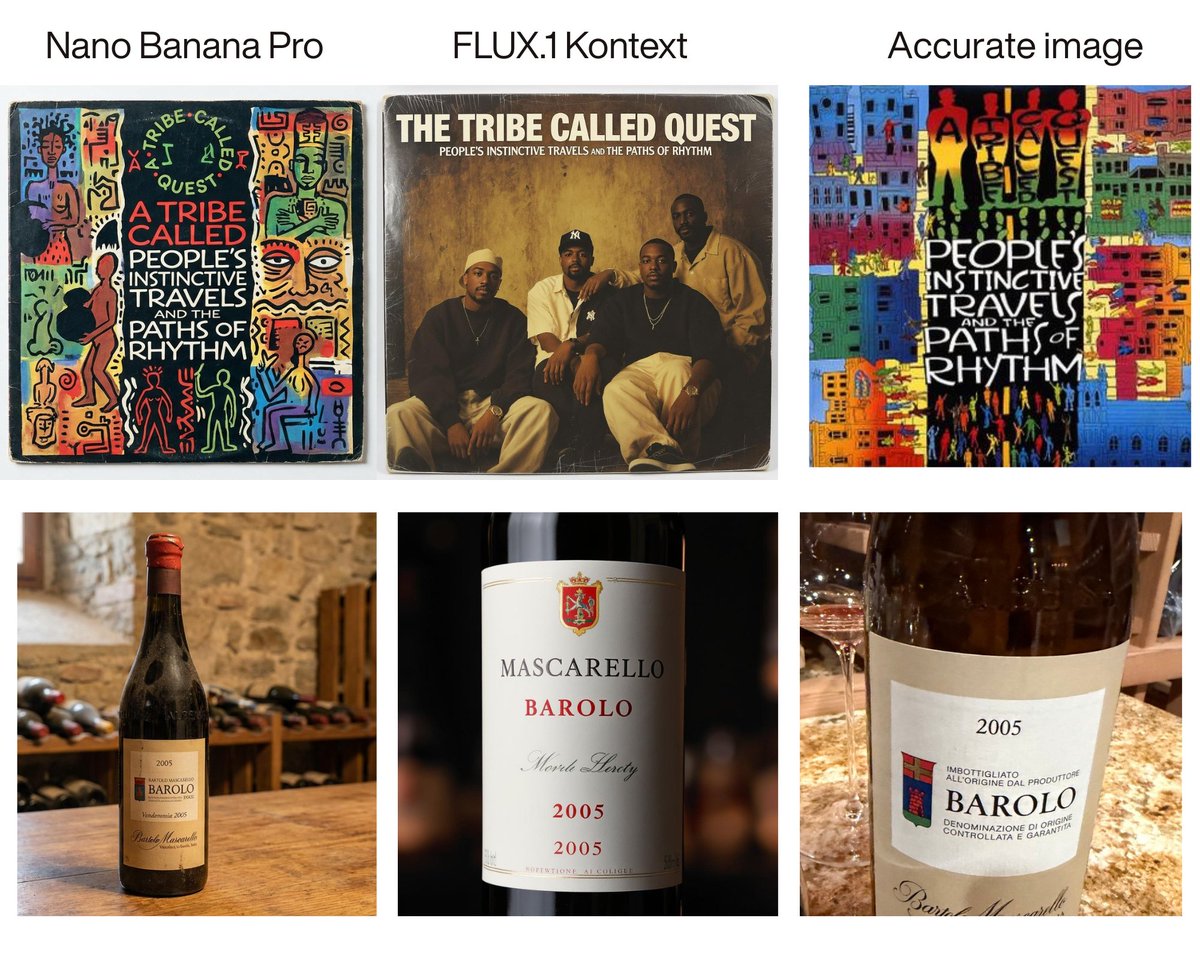
Search + image gen is a lot more interesting than expected, notes: - nano pro w search trades off of aesthetics for accuracy, which makes it very useful for mass market image gen (think an e-commerce site that wants to generate product photography) - it makes sense that google would play here - presumably this is how the mass market will consume image gen and it side steps all of the thorny questions about artistic expression - the prior workflow I used for accuracy was to use the Google image search API and then feed the result into a Flux Kontext image edit call - this is functional but circuitous - if you squint you can see the generated images feeding into search, which creates a compounding loop for both products - overall feels like Google wants to be the best price/performance/scale for the mass market uses of AI finally it’s interesting that image (and other) models continue to specialize in very different directions - this is not a zero sum market
Anish Acharya tweet media
English
6
1
31
3.9K
phil bronner
phil bronner@pbronner·
I'm excited for @campbelljbaron@Montra, an Ardent portfolio company, is live! It offers true end-to-end AI video creation with character consistency across scenes and all the top models in one place. From idea to finished video, it's seamless! Congrats to the team!
English
1
0
7
407