R Srikanth

27.4K posts

R Srikanth

R Srikanth

@ramansrikanth

A human being who wishes to make a difference in the lives of people around him, and contribute to our Nation. Tweets are personal.

Katılım Temmuz 2009
645 Takip Edilen435 Takipçiler
R Srikanth retweetledi
Aunindyo Chakravarty
Aunindyo Chakravarty@Aunindyo2023·
Every business journalist (and probably every big investor) knows how big corporates finance mega projects. Banks (usually PSUs) promise to give an 80% loan if the company puts up 20%. So, the company fudges the projected costs: If it was 100, it is shown as 125. The bank gives 80% of 125, which is 100; the company puts in NOTHING. It earns all the profits, but has no skin in the game if the project fails. If things do go south, the company can exit and tell the lenders to recover their money by selling assets. The banks then realise there are no assets to be sold; the company's directors had already siphoned off a large chunk of the loan to build personal assets. So, the next time you hear that some company has promised to invest mega bucks in some project, please understand that the money will come from a PSU bank. Your deposits will be used as a base to generate loans for Big Business.
English
68
623
2K
70.4K
R Srikanth retweetledi
Parimal
Parimal@Fintech03·
1987. A room in New Delhi is thick with the smell of old files & cold tea. The United States has just delivered a stinging slap to the face of the Indian Republic. They have officially refused to sell India the 'Cray X-MP' Supercomputer, the most powerful machine on Earth, claiming that India would use it for nuclear weapons. The American officials mockingly suggest that India does not even have the electricity to keep such a machine running. In the middle of this national humiliation, a young, soft-spoken engineer named Vijay Bhatkar is asked by then Prime Minister Rajiv Gandhi: "Can we build our own?" Bhatkar does not hesitate. He looks at the No of the West & says: "We will not just build it; we will build it faster than you can ship it." The Americans did not just stop at refusing the sale; they actively lobbied other nations to ensure India remained digitally blind. They believed that w/o their Logic Gates, India would remain a 3rd world backwater. Bhatkar realized he could not replicate the Single-Processor behemoth of the Cray. Instead, he turned to Parallel Processing. He decided to stitch together 1000s of low-cost, off-the-shelf microprocessors. It was like building a giant's brain out of the neurons of ants. In 1991, while the West was still celebrating its monopoly, Bhatkar unveiled the PARAM 8000. It was not just a computer; it was a Gigaflop monster. To prove the PARAM was real, Bhatkar ran a standard global benchmark test. The results were sent to an international conference in Zurich. The PARAM 8000 was ranked as the 2nd most powerful supercomputer in the world, behind only the American machines. But there was a twist: the PARAM cost a fraction of the Cray, performed better in tropical heat, & was built in just 3 years. When the PARAM 8000 was 1st turned on, the team did not have a high-tech cooling system like the Americans. They used industrial-grade desert coolers & adjusted the airflow manually. It was the ultimate Jugaad that defeated the most sophisticated tech embargo in history. A major US newspaper ran a story with the headline: "Denied supercomputer, Angry India does it!" The ghost of the Native Engineer had officially entered the silicon temple. Vijay Bhatkar’s history is the story of how India became the IT Capital of the world. Bhatkar founded the Centre for Development of Advanced Computing (C-DAC). He did not just build a machine; he built an ecosystem. Every software engineer in India today stands on the shoulders of the man who proved we did not need the West's permission to compute. Bhatkar was the 1 who realized that if computers only spoke English, 90% of India would be left behind. He led the development of GIST (Graphics & Intelligence Based Script Technology), allowing computers to work in Indian languages. He gave the Machine a local tongue. Today, Bhatkar is a Padma Bhushan awardee, but he lives a life of deep spirituality & simplicity. He vanished from the corporate headlines to become a philosopher of the digital age. The West thought they could freeze India’s future by withholding a single machine. They forgot that the Indian mind does not need a 'Cray' to think; it only needs a 'No' to ignite. Forget building a supercomputer; Bhatkar built a mirror, & for the 1st time, the West had to look into it & see that the primitive colony had become the master of the code.
Parimal tweet mediaParimal tweet media
English
147
1.8K
5.4K
189.2K
R Srikanth retweetledi
Gautham R Shenoy
Gautham R Shenoy@gautshen·
My new office is just 900m from the Bommanahalli Metro Station. But that 900m route goes through a garbage dump, a couple of dusty narrow streets with no footpaths. IOW not very walkable. While Metro is great, the last mile connectivity leaves a lot to be desired. I don't understand what problem BBMP has against making streets walkable. It helps every class, not just the rich.
English
70
153
1K
49.3K
R Srikanth retweetledi
vir sanghvi
vir sanghvi@virsanghvi·
There is so much recent negativity about @airindia that I want to put this out. I have taken 3 flights on @airindia in the last three days. On Wednesday:Rome to Del On Thursday: Del to Bom On Friday: Bom to Del In every single case the flight was on time. The inflight service was warm & efficient. Luggage came relatively quickly (quickest in Del) The check in was entirely painless I don’t think frequent travellers care as much as others about airline food but if you think that’s important then I had a very good dinner on Rome to Del. On the international sector I flew one of the older Dreamliners & I am not one of those aeroplane nerds but I thought it was very comfortable. It’s second nature for many of us to bitch about @airindia but it’s one of only two international airlines I fly regularly. The other is @emirates which admittedly is far better ( & far more expensive) but it is the best airline in the world so it’s better than every other carrier anyway. The Tatas need to hold their nerve. There is a lot that is good about @airindia that rarely gets acknowledged @TataCompanies
vir sanghvi tweet media
English
295
298
2.5K
227.4K
R Srikanth retweetledi
MK
MK@XkrishnanR·
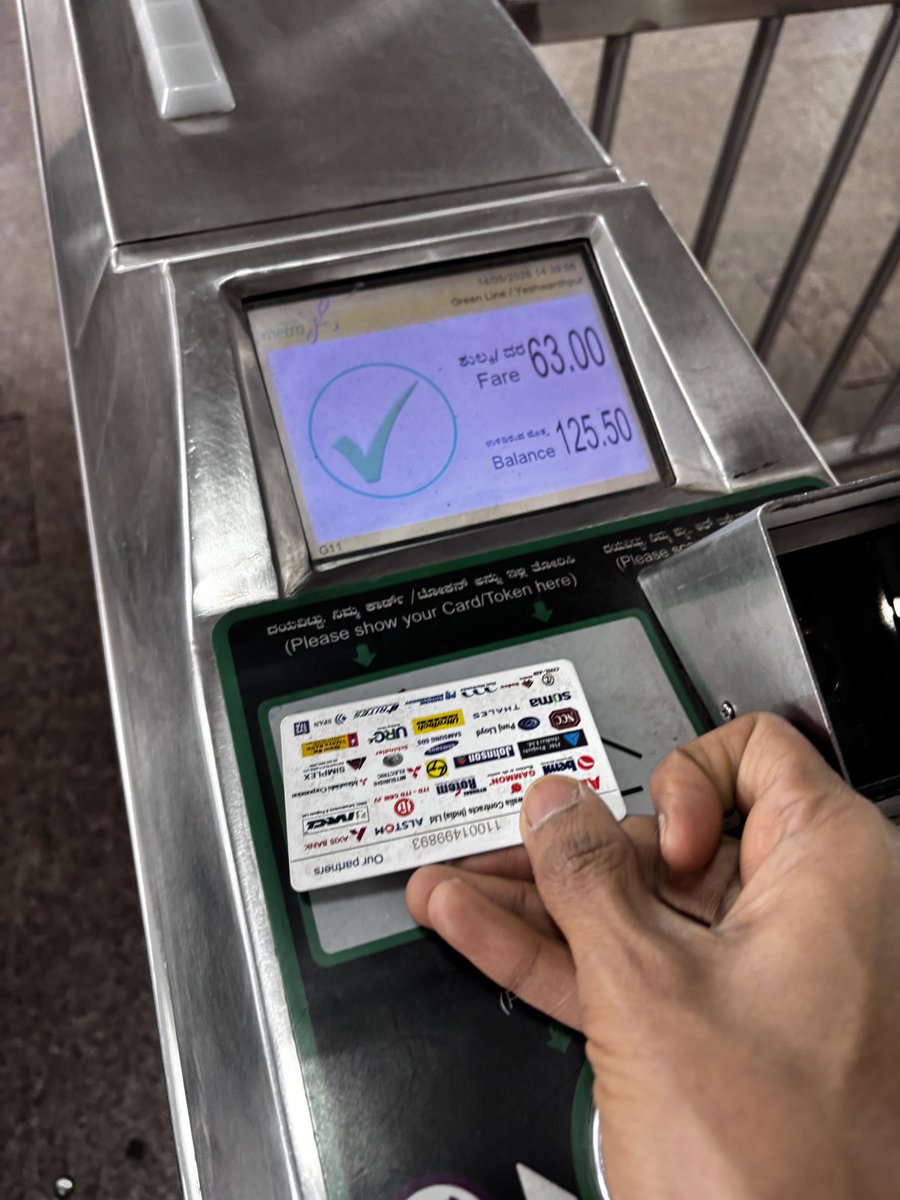
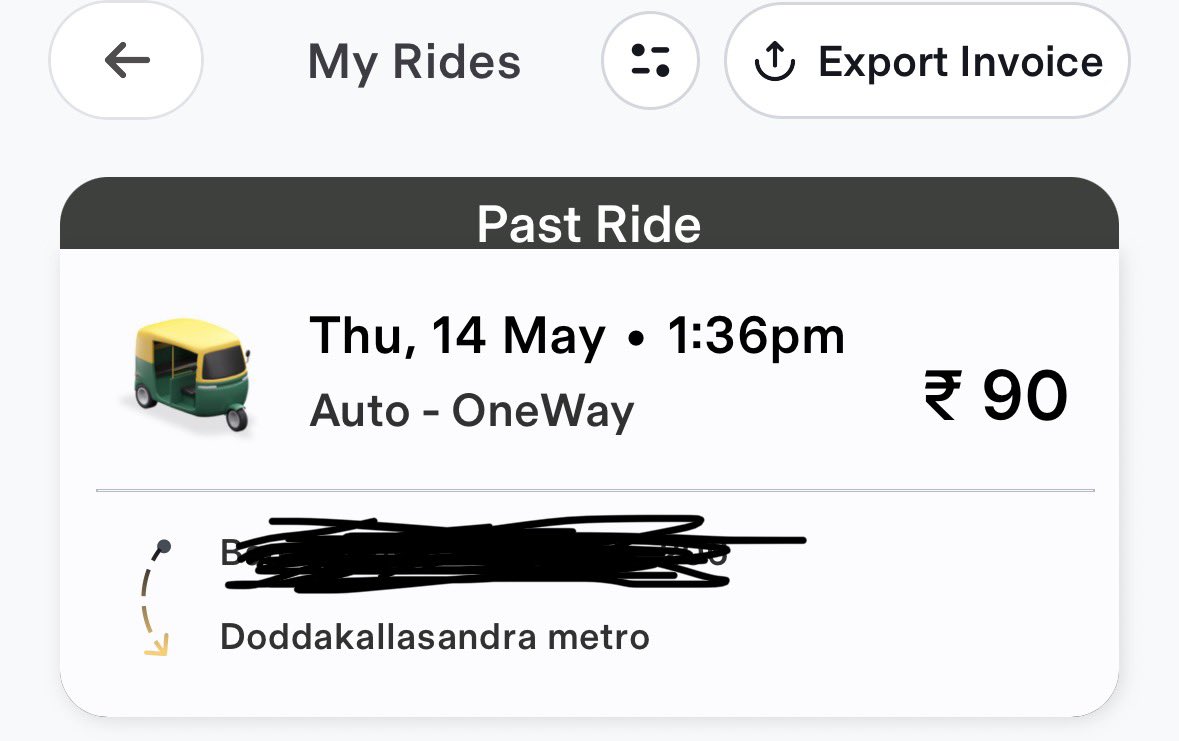
Last mile connectivity is killing Namma Metro’s potential in Bengaluru! My house is just 4-4.5 km from both Purple & Green lines (10-15 min ride), yet no shuttle. Spent ₹90 on auto today just to reach the station. Private vehicle parking or auto — no choice. A mini shuttle service covering 5 km radius around every metro station would be a total GAME CHANGER! #NammaMetro #LastMileConnectivity #Bengaluru
MK tweet mediaMK tweet media
English
68
80
579
39.1K
R Srikanth retweetledi
Nistula Hebbar
Nistula Hebbar@nistula·
Ministry’s special fund is for top athletes, bureaucrats dip into it to upgrade their own sports facilities - great story demonstrating yet again how a parasitic elite sponges off the common man - indianexpress.com/article/expres…
English
10
303
567
24.7K
R Srikanth retweetledi
Mohandas Pai
Mohandas Pai@TVMohandasPai·
You are better off working out how to earn 5b$ more in Export of services than this. We need more public transport.
Radha Krishna Kavuluru@iamkrishradha

In my previous organisation, I calculated, employees travel daily a distance of 15km to work. If an average bike (best case) is used mileage Is 45km . Which means 3 members consume 1 liter petrol, on one way travel. Microsoft Hyderabad is said to have over 12,000 employees. With same numbers ( although avg distance for microsoft is well over 10km ) to and from from office 8000 liter petrol daily. By one office. Stats say, Hyderabad employees around 900,000 people in IT sector. Which is 600,000 liters of petrol. Every day. Saved with WFH. By one city. Assume entire Indian IT sector is 10 times this number. Which gives 6 MIL liters of petrol everyday. India consumes 581 M litres of petrol everyday. We are already at 1% of consumption just from one sector. 2.2 BILLION litres of petrol annually Even if crude + refining + logistics cost India only around ₹70 per litre economically, that is: ₹15,000+ CRORE per year potentially avoided in fuel import burden from just one sector adopting large-scale WFH. At an exchange rate of ~₹83/USD, that is close to: $1.8 BILLION in forex impact annually from commuting reduction alone. And this is still conservative: cars are ignored traffic inefficiency ignored longer commutes ignored induced congestion effects ignored WFH is not just an HR policy anymore. At national scale, it becomes an energy, infrastructure and foreign reserve strategy.

English
15
10
104
18.1K
Reza Nasri
Reza Nasri@RezaNasri1·
Dear Thomas Friedman: Get Real About Iran. I get it. You are frustrated. A war launched without a plan, a president who sounds unhinged every morning before breakfast, and an alliance fraying at the edges. The urge to rally NATO and the Western world around a familiar villain — Iran's "malign regime" with its "poisonous ideology" — must feel like solid ground in a swamp. I understand the temptation. Now get over it. Because that narrative, the one your column breathes like oxygen, is precisely the poisonous ideology that has driven four decades of failed Western policy toward Iran. It is the same caricature that sold sanctions that didn't work, regime-change fantasies that didn't materialize, and wars that left the region in ruins. And here you are, reaching for it again. Let us start with your language. Iran's regime is "malign." Its ideology is "poisonous." Its leaders are "lunatics." Its regional vision is "a kiss of death." You deploy these words not as analysis but as incantation - the verbal equivalent of closing your eyes and refusing to look. It is the language of a man who has already decided what Iran is and arranged the facts accordingly. It is, in a word, propaganda. And it has consequences. For decades, this very framing has misled American and European policymakers into believing that enough pressure, enough sanctions, enough isolation, enough war would eventually cause Iran to buckle or collapse. It never did. It never will. A country of ninety million people, sitting astride one of the world's most strategic waterways, with a civilisation older than the concept of the nation-state, does not disappear because Thomas Friedman calls it malign. What does the Iran you refuse to see actually look like? It looks like a country that, despite forty-five years of the most punishing sanctions regime ever imposed on a non-belligerent state, has produced a film industry that wins international prizes. It looks like a country where women constitute more than half of university students and have built careers in medicine, engineering, law, architecture and the arts. It looks like a country with a pharmaceutical sector that manufactures over ninety percent of its own medicines domestically, a feat of industrial self-reliance that most developing nations could only dream of. It looks like a country with a car industry, a steel industry, a space program, a vibrant startup ecosystem in Tehran that its young people have built in the teeth of every obstacle the West could contrive. You wouldn't know any of this from reading Western coverage, which confines itself to a narrow repertoire of images designed to confirm a verdict already reached. You write admiringly of the Dubai model — a "noncorrupt, responsible bureaucracy," openness to the world, moderate Islam, economic dynamism. You present it as the antithesis of the Iranian model. But let us be honest about what the Dubai model actually rested on: American military bases. The Persian Gulf states, for decades, outsourced their security to Washington and built their gleaming towers on the foundation of that rented protection. This was not a model of sovereign development. It was a business plan predicated on the illusion that you could ring Iran with hostile military infrastructure, participate in its economic encirclement, reject every peace initiative it extended, and somehow build a stable, prosperous future. The current war, the one that is frightening away foreign investors and burdening these states with "huge new defense bills," as you yourself acknowledge, is the receipt for that illusion. The Dubai model did not fail because of Iran. It failed because it was built on the assumption that Iran's security concerns could be permanently ignored. You cannot build lasting prosperity on a foundation of your neighbour's insecurity. And Iran did extend its hand, repeatedly. The Hormuz Peace Endeavour, which Iran proposed to bring Persian Gulf states into a framework of collective regional security, was brushed aside by countries that preferred to keep betting on Washington to solve their "Iran problem" for them. That bet has now been called. The question is whether they will place it again. Which brings us to the Strait of Hormuz and to the charge that Iran is trying to "set up a tollbooth" on the world's critical oil lifeline. Let me offer you a different frame. The Strait of Hormuz passes through Iranian territorial waters. Before this war, that waterway operated under what amounted to unregulated free transit — a transit regime that, in practice, allowed the United States to supply and reinforce military bases across the Arabian Peninsula and to project force directly at Iran. It allowed the launching of a war that your own president described in terms of ending Iranian civilisation. It allowed attacks on Iranian infrastructure that, if visited upon any NATO state, would have triggered Article Five before the smoke cleared. You call Iran's response to this a "tollbooth." Iran calls it the elementary right of a nation not to watch its territorial waters serve as the logistical artery of its own destruction. International waterways are meant to be neutral corridors connecting high seas. The Persian Gulf is currently not neutral. It is a military perimeter constructed by the United States, with one wall facing Iran. No sovereign nation — not France, not the United States, not any country whose right to self-defence you would recognise without blinking — would accept that arrangement. The legal architecture governing international straits makes this point with precision. Under Article 39 of UNCLOS, transit passage is explicitly conditioned on refraining from "any threat or use of force against the sovereignty, territorial integrity or political independence of States bordering the strait." This is a binding obligation, not a courtesy. The transit passage regime was designed to balance freedom of navigation with the sovereign rights of littoral states, not to strip those states of any means of self-defence while foreign navies use the same waterway as a forward-deployment corridor. No principle of international law — not transit passage, not freedom of navigation, not the customary law of the sea — confers upon any state the right to convert a littoral nation's territorial waters into the supply line for that nation's destruction. When transit passage is operationalised as a mechanism to arm one shore of a strait against the state whose waters constitute the other, it has ceased to function as a neutral navigational right and become an instrument of belligerency. Iran invoking its rights as a littoral state in response to precisely that situation is not a violation of international law. It is what international law was designed to prevent. But then, a narrative that has spent four decades casting Iran as a permanent exception to civilised norms would struggle to concede that international law might, on occasion, apply in Iran's favour too. Iran is a regional power. It was one before this war, and it is a greater one after it. The countries that line the Persian Gulf need to absorb that reality, not as a threat, but as a geographic and historical fact around which a stable order can be built, if they choose to build one. Iran's patience over these past decades was not weakness. It was the patience of a state that understood the long game and believed, perhaps naively, that its neighbours would eventually tire of arrangements that served Washington's - and Israel's - interests rather than their own. Some of them are now beginning to do exactly that. So here is my appeal, not to NATO navies, but to the columnists, strategists and policymakers who have spent forty years misreading their own country. Drop the caricature. Retire the "malign regime" and the "poisonous ideology" narrative. Recognise that Iran has legitimate security concerns, a genuine weight in the regional order, and real interests that any durable settlement must accommodate. Persuade the Persian Gulf states that the time has come to respond seriously to the extended hand they have spent decades swatting away. That is the harder argument to make. It requires admitting that a narrative you helped construct was wrong. But it is the only argument that has any chance of producing something other than permanent instability. The necessary is still possible. But not if you keep reaching for the same broken tools.
Thomas L. Friedman@tomfriedman

NATO, Please Help. Trump Has No Strategy for Iran. nytimes.com/2026/05/12/opi…

English
84
507
1.3K
98.7K
R Srikanth retweetledi
shobhit mathur
shobhit mathur@shobweet·
Another year. Another NEET paper leak. At this point, we must admit the problem is not just execution. It is the design of the examination system itself. Last year, @sureshpprabhu and I proposed a structural redesign of India’s competitive exams: • Computer-based, on-demand testing • Massive curated question banks • Randomized papers for every student • Multiple attempts with best score counting • Two-phase screening with stronger security This would: • Reduce paper leaks • Lower student stress • Weaken the coaching industry’s grip • Restore trust in meritocracy • Move India toward a modern talent identification system @EduMinOfIndia @PMOIndia India cannot build a Viksit Bharat on fragile examination infrastructure. We need examination reform at the level of systems architecture, not annual firefighting.
shobhit mathur tweet media
National Testing Agency@NTA_Exams

In continuation of its press release dated 10 May 2026, the National Testing Agency wishes to inform candidates, parents, and members of the public of the following decisions taken in respect of NEET (UG) 2026. NTA had, on 8 May 2026, referred the matters then under consideration to the central agencies for independent verification and necessary action, consistent with its standing commitment to the fair, secure, and credible conduct of the national examinations entrusted to it. 1. On the basis of the inputs subsequently examined by NTA in coordination with the central agencies, and the investigative findings shared by the law enforcement agencies and in order to ensure that there is transparency in the system, the National Testing Agency, with the approval of the Government of India, has decided to cancel the NEET (UG) 2026 examination conducted on 3 May 2026, and to re-conduct the examination on dates that will be notified separately. The inputs received by NTA, taken together with the findings shared by the law enforcement agencies, established that the present examination process could not be allowed to stand. The re-conducted examination dates, along with the re-issued admit-card schedule, will be communicated through the official channels of the Agency in the coming days. 2. The Government of India has further decided to refer the matter to the Central Bureau of Investigation for a comprehensive inquiry into the allegations therein. NTA will extend full cooperation to the Bureau and will provide all materials, records, and assistance the inquiry requires. 3. This decision has been taken in the interest of students and in recognition of the trust on which the national examination system rests. The Agency is conscious that re-conduct will cause real and significant inconvenience to candidates and their families. NTA does not take that consequence lightly. The decision has been taken because the alternative would have caused greater and more lasting damage to that trust. 4. The registration data, candidature, and examination centres opted for in the May 2026 cycle will be carried forward to the re-conducted examination. No fresh registration will be required, and no additional examination fee will be levied. In addition, fees already paid, will be refunded to the students and the exam will be re-conducted using NTA’s internal resources. 5. Further communications, including the re-conducted examination dates and the re-issued admit-card schedule, will be issued through the official channels of the Agency. Candidates and parents are requested to rely only on these official channels and to disregard unverified reports circulating on social media. Helpline: neet-ug@nta.ac.in | 011-40759000 / 011-69227700

English
28
164
376
23K
R Srikanth retweetledi
Rahul Gandhi
Rahul Gandhi@RahulGandhi·
Muthu ji, your political views are your own - but please do speed up the returns on my investments. 😃
Muthukrishnan Dhandapani@dmuthuk

Not going to share any personal details. Just want to highlight how perception is different from reality. This is not to support any political party or leader. Want to let you know things are not as they look. In 2013, my client who was professionally working for Rahul Gandhi suggested my name to him to handle his mutual fund investments. From 2013, when UPA 2 was in power to till date when Vijay was sworn in with Congress support, Rahul continues to be my client for mutual fund investments. We have exchanged many mails and has spoken over phone lot of times. And as you are aware, I've been a strong Modi supporter from 2014 to 2024. Never once Rahul or his office staff brought that subject to me. I believe my tweets are regularly seen by his staff. They clearly differentiate between my professional service and political beliefs. And in every single conversation I've with Rahul, he addresses me with respect and never behaved in any haughty manner. Despite knowing my BJP support, he took my input few years ago for choosing a key professional . This post may lead to Rahul terminating our professional relationship. That's ok. Everything should end one day. Wanted to post this to show how main stream media and IT cells of parties can make someone look completely inhuman. I do not know Rahul Gandhi as a politician. Based on last 14 years interaction, all I can say is he respect professionals a lot and a nice human being to interact with. Don't go by media or IT cells - for any party that matter.

English
1.6K
8.4K
53K
3.3M
R Srikanth retweetledi
Esmaeil Baqaei
Esmaeil Baqaei@IRIMFA_SPOX·
The IAEA’s mandate is verification, not political messaging about the Strait of Hormuz, Iran’s missiles, or how Tehran should conduct itself. When professional impartiality is compromised for political signaling or personal ambition, institutions erode their credibility — and, over time, their effectiveness as well.
English
204
1.1K
4.2K
152.4K
R Srikanth retweetledi
Shekhar Gupta
Shekhar Gupta@ShekharGupta·
We wrote this on April 24 as India continued to hold pump prices despite the war-driven massive rise in crude & gas prices.. This makes no sense. Every country has seen prices rise & it’s irrational for India to be an outlier… Oil companies are taking big losses, the exchequer will be hit..this is a subsidy to vehicle-owners, whatever you call it… UPA in its last years subsidised fuel by stealing from future generations in the name of oil bonds… It will be disappointing if the Modi Govt continues to do so… It’s irrational to keep pampering the consumers…
Shekhar Gupta tweet media
English
55
32
244
28.9K
R Srikanth retweetledi
The Nalanda Index
The Nalanda Index@Nalanda_index·
The Pain of Retirement… 😑 A retired IAS officer recently shifted to Patna after retirement. Every evening, he would walk in the nearby park carrying an air of pride and superiority, barely speaking to anyone. One day, he finally sat beside an elderly man and began talking. But his conversations always revolved around the same thing “I was such a powerful IAS officer in Bhopal. I deserved to settle in Delhi, not here.” The old man listened silently for days. Then one evening, he gently asked: “Have you ever seen a fused bulb? Once a bulb stops working, does anyone care which company made it, how many watts it was, or how brightly it once shined? No. A fused bulb is simply thrown away.” The officer nodded quietly. The old man continued: “Retirement makes all of us like fused bulbs. It no longer matters where we worked, what position we held, or how much power we once had. What truly matters is what kind of human being we were.” He pointed around the park and said: “One man here was a railway general manager, another was a brigadier in the army, someone else worked at ISRO, and I myself served twice as a Member of Parliament. Yet none of us introduce ourselves by our old titles anymore.” Because after the power and position fade away, all humans become equal. People worship the rising sun, not the setting one. Some individuals remain so attached to their designation that even after retirement, they continue to live inside their past glory hanging nameplates like “Retired IAS”, “Retired IPS”, “Retired Judge”, as if those titles still define them. But the real question is not what post you held. The real question is: Did you help people when you had power? Did your position benefit society? Did you treat ordinary people with respect? Or were you consumed only by arrogance? One day, every powerful “bulb” will fuse. What will remain is not the designation, but the humanity you showed while the light was still on.
The Nalanda Index tweet media
English
63
447
1.6K
235.5K
R Srikanth retweetledi
Lukas Ekwueme
Lukas Ekwueme@ekwufinance·
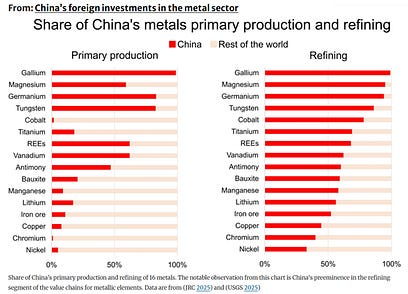
China spent the last decades investing heavily in the mining sector… the West was happily letting them do the dirty work. Now that China controls up to 90 percent of that space, the West is waking up to the fact that mining and critical minerals are actually needed. AI, missiles, EVs… critical minerals are in all of them. Once it became clear that access to these minerals can and will be weaponized, the US and other nations have been busy “fixing it” by building alternative supply chains and stockpiles. Planning to build more mines is one thing. Having the skilled workers to do it is another. - Since 1980 the US lost fifty percent of its mining schools - It turns out 162 mining engineers annually vs 3,000 for China - 130,000 engineering graduates vs ~1.3 million for China It’s estimated the US would need 400-600 mining engineers annually… so it would have to produce 3-4x the current amount. And to make things even more fun, in a few years a big chunk of the mining workforce will retire, taking decades of experience with them. You can print money.... You can’t print mining engineers.
Lukas Ekwueme tweet media
English
17
110
289
17K
R Srikanth retweetledi
Devina Mehra
Devina Mehra@devinamehra·
The Chinese dragon continues to roar and has its tentacles everywhere controlling raw materials, supply chains, manufacturing capacities and critical technologies. It has the world, and the United States, exactly where it wants it! China has been playing...AND winning the ultimate long game. We may talk about Chinese vulnerabilities like population decline and excess construction, or say that India is growing faster... but China adds an India size GDP every 5 to 6 years. We are now miles apart and China is snapping at the heels of the USA. It spends 35 times what we do, on R&D every year. Every five year plan it identifies new technologies along the spectrum from the commercially viable today to practically science fiction stuff. And it not just talks and plans, it actually delivers. To give only one instance, electric vehicle technology was identified as a focus area in the 2021 plan. Today the top 5 Chinese electric vehicle makers have 43% global market share with BYD alone at almost 20% - nearly 3 times what Tesla has. In the recent war with Iran, the US has significantly depleted its war (since does not want to use the defence terminology anymore 😉) equipment. Across just four weapon systems, the back-of-the-envelope replenishment requirement is between 5 to 10 metric tons of finished defense-grade rare earth magnets, more than 95% of which will arrive from the People’s Republic of China. In short, US cannot rebuild its weapon inventory without a go ahead from China. Beijing has nearly all rare Earth as well as antimony, gallium, germanium, tungsten etc under licensing or in its control. My column in Mint today, connects the dots to show you what the world is dealing with. Let me know what you think Want to understand the world for the and how it impacts your portfolio, just send a DM to @firstglobalsec @livemint @fghumsmallcase @PenguinIndia
Devina Mehra tweet media
English
9
23
132
7K
R Srikanth retweetledi
Joaquin Castro
Joaquin Castro@JoaquinCastrotx·
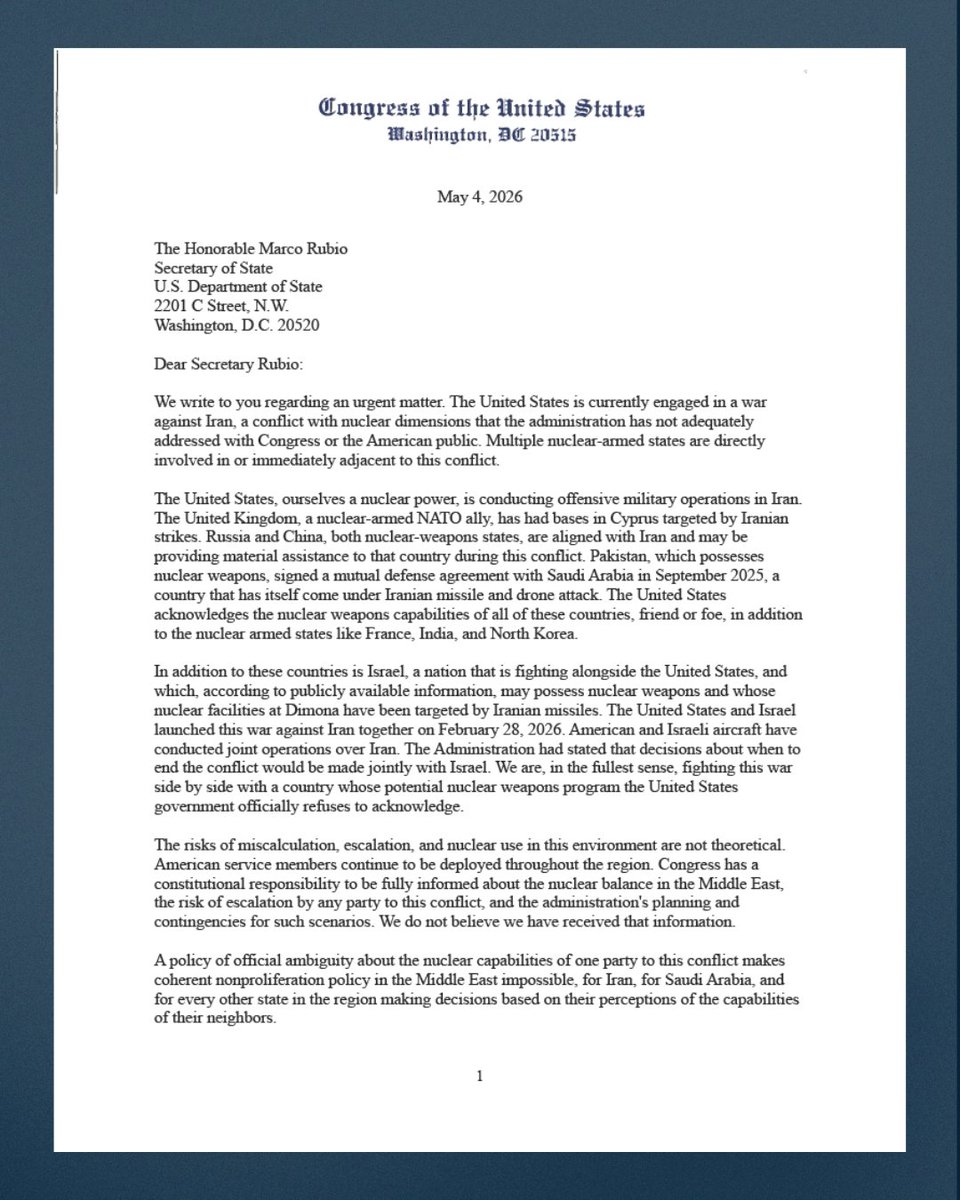
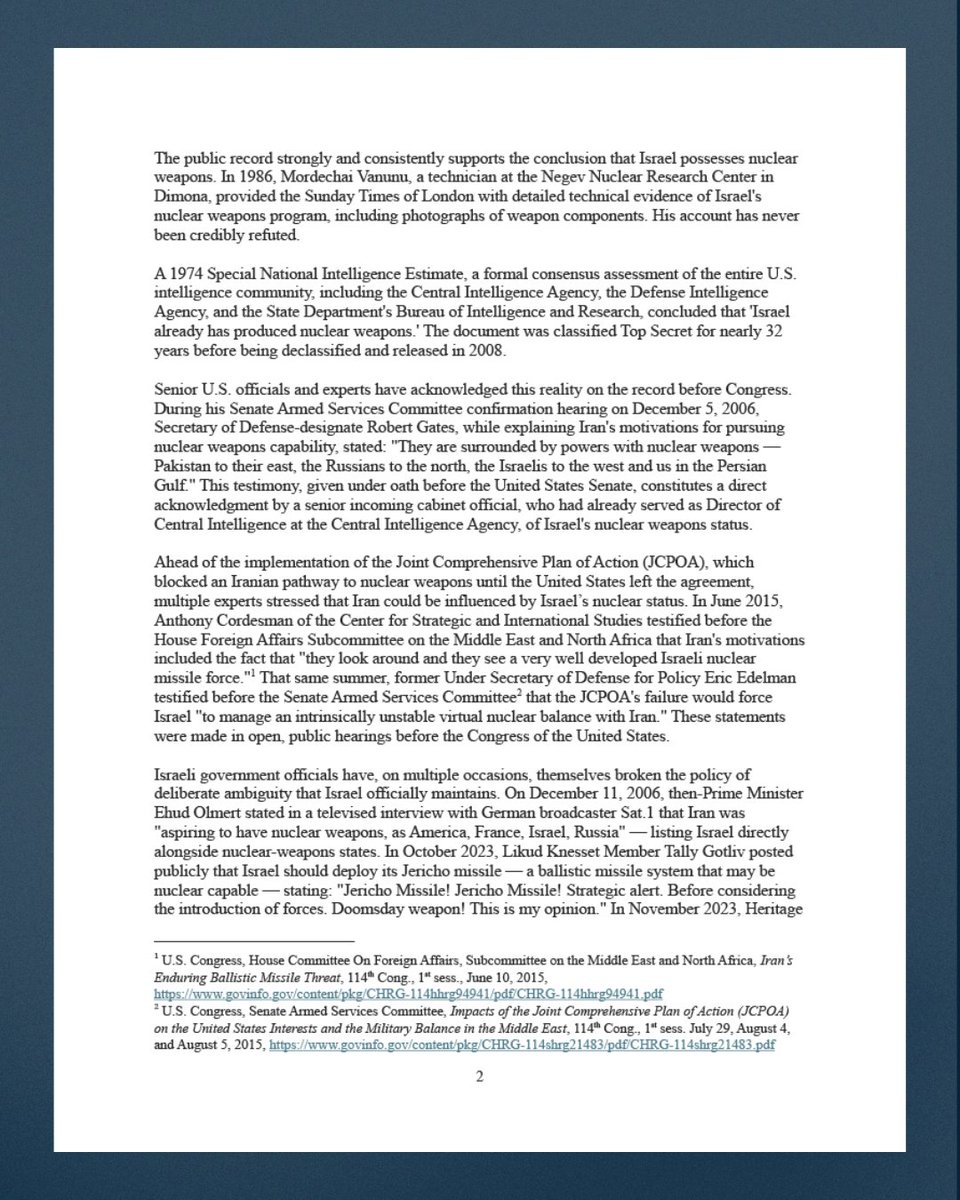
For nearly six decades the U.S. has voluntarily remained in the dark on Israel's nuclear capabilities. The ambiguity ends now. There is too much at stake to accept ignorance. We are at war alongside Israel against Iran without knowing what their red lines are for using a nuclear weapon. I led a group of 30 lawmakers to demand an end to the ambiguity.
Joaquin Castro tweet mediaJoaquin Castro tweet mediaJoaquin Castro tweet mediaJoaquin Castro tweet media
English
768
4.8K
18K
830.6K
R Srikanth retweetledi
Variety
Variety@Variety·
Ted Turner spoke to Variety in 2019 for a rare interview on his legacy, big deals and old feuds: "Aside from CNN, I think the decision to broadcast the Atlanta Braves games on Superstation TBS was a big deal for us; it really grew our audience. Another great thing was our purchase of the MGM library, which was the basis behind Turner Classic Movies. I’m also very impressed — I think everyone is — with the success of the Cartoon Network. I’m proud of almost everything we did at Turner Broadcasting. We had to get really creative, especially in the beginning, but we pulled it off." variety.com/2019/tv/featur…
Variety tweet media
English
9
250
1.6K
73.7K
R Srikanth retweetledi
The Nobel Prize
The Nobel Prize@NobelPrize·
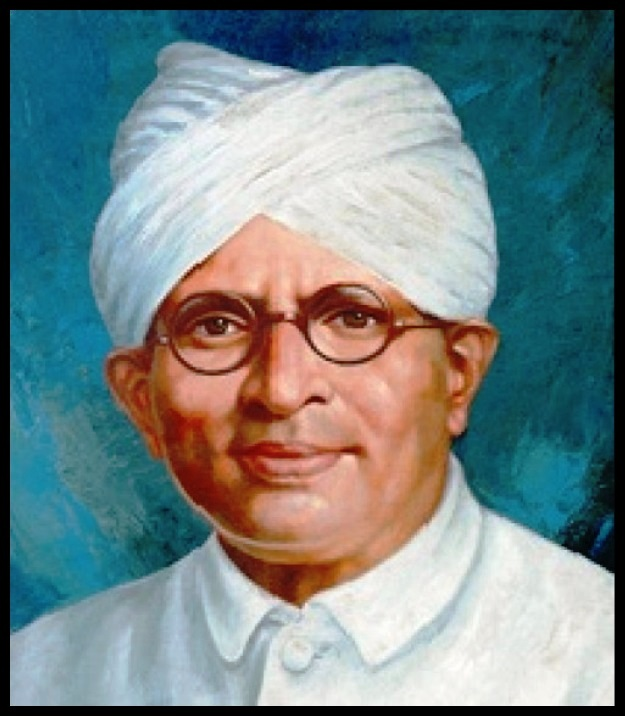
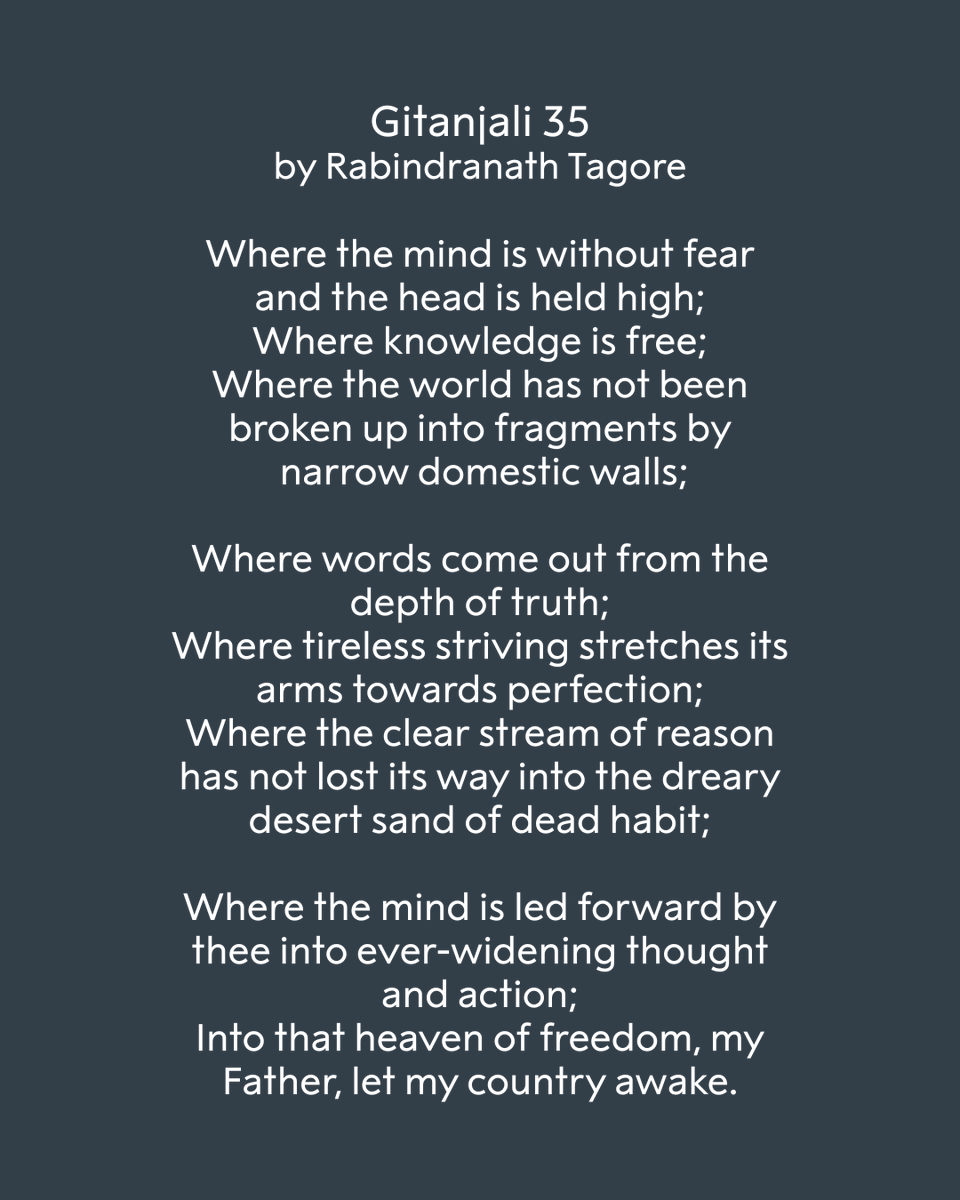
Tomorrow marks the 165th anniversary of Rabindranath Tagore's birthday. We remember the poet by sharing one of his most famous poems, "Gitanjali 35". Stay tuned to learn more about Tagore tomorrow.
The Nobel Prize tweet mediaThe Nobel Prize tweet media
English
24
529
2.3K
66.4K
R Srikanth retweetledi
Parimal
Parimal@Fintech03·
In 1919, 1 man bought a Ghost Ship & challenged the entire British Navy. They tried to bankrupt him with a Zero-Price war, but he won by turning a ferry ticket into a vote for Freedom. From building India’s 1st aircraft factory in secret to carving railway tunnels through impassable mountains, he was the Industrial Guerilla who taught a colony how to fly, sail, & drive. Discover the man who made Made in India a threat to the Empire. He is the man who looked at the British "No Entry" signs across Indian industry & decided to build a sledgehammer. After WWI, the British shipping giant BI (British India Steam Navigation) had a total monopoly on Indian waters. No Indian was allowed to own a large-scale shipping line. On 5th Apr 1919, just days before the Jallianwala Bagh massacre, an Indian man, with no background in shipping, Walchand Hirachand Doshi spotted a ship called the SS Loyalty in Bombay harbor. It was a hospital ship being sold after WWI. W/o waiting for a license, he bought it & launched the SS Loyalty, the 1st ship of the Scindia Steam Navigation Company. The British tried to sink him financially. They started a Price War, dropping ticket prices to almost zero to bankrupt Walchand. Walchand did not blink. He appealed to Indian pride. He told the public: "Even if their tickets are free, if you travel with them, you travel in chains." Indians chose to pay for Walchand's tickets. He broke the 100 yr British naval monopoly. This is why 5th April is still celebrated as National Maritime Day. The British govt in India had a strict policy: "India will produce raw materials; Britain will produce machines." They flatly refused to give a license for an Indian car factory. Walchand realized he could not wait for permission. He went to the USA & met Walter Chrysler. He told Chrysler, I want to build an Indian car for Indian roads. Chrysler was impressed by his grit. Together, they bypassed British red tape to set up Premier Automobiles (the birthplace of the legendary Padmini/Fiat). He proved that an Indian could build an engine, not just a bullock cart. During WWII, the British were desperate for aircraft maintenance in the East but did not want Indians to know the secrets of aviation. Walchand did not ask the British. In Oct 1939, Walchand was returning from the United States (where he had gone to explore setting up a car factory, including talks with Chrysler). On a Pan Am Clipper flight from San Francisco to Hong Kong, he had a chance meeting with American industrialist William D. Pawley (president of Intercontinent Corporation and involved in aircraft manufacturing for China). Pawley was on his way to China to support aircraft production there (for the Chinese government amid the war with Japan). During the flight, Walchand discussed his ambitions with Pawley, who shared insights from his China operations. This conversation sparked the idea for an aircraft factory in India. With the help of Maharaja of Mysore, he set up Hindustan Aircraft Ltd. (now HAL) in Bangalore in 1940. When the British realized what he had done, they were furious but had to nationalize it because they needed the planes for the war effort. Every time we see a Tejas/a Sukhoi take off today, remember that the runway was laid by Walchand’s defiance in 1940. Walchand’s company, Hindustan Construction Company (HCC), was responsible for the Bhor Ghat & Thull Ghat railway tunnels. British engineers said the Sahyadri mountains were too tough for Indian contractors. They wanted to give the contracts to London firms. Walchand took the contract, used indigenous techniques, & completed the tunnels ahead of schedule & at a lower cost. He proved that Indian Civil Engineering could move mountains.. literally. Despite being 1 of the richest men in India, Walchand was a symbol of the Swadeshi spirit. He would walk into boardrooms with British Lords & present his papers in Marathi/Gujarati if he felt they were being condescending. His agenda was clear: "I do not want to be a rich man in a poor country; I want to be a productive man in a rich country. Walchand Hirachand was the Architect of Infrastructure. If Tata built the Steel, Walchand built the Speed.... the ships, the cars, & the planes. He was the 1st Indian to understand that true independence is the ability to move our own people on our own machines. He was the man who turned "Made in India" from a dream into a Turbine. He did not just compete with the British; he made them irrelevant in their own specialized fields.
Parimal tweet media
English
49
432
990
33.3K