Ranjan Jagannathan

515 posts

Ranjan Jagannathan

Ranjan Jagannathan

@ranjan_j

founder @daywiseapp. head of behavioral science @CRED_club, mentor @Techstars, @IIMAVentures. philosophy & AI fellow @tofth__,behavioral science @dukeu

Berkeley, CA Katılım Aralık 2009
576 Takip Edilen412 Takipçiler
Ranjan Jagannathan retweetledi
signüll
signüll@signulll·
one of the most refreshing things on the planet is talking to someone who just *gets it*. like you don’t need a preamble, & you don’t need to articulate the shape of the thought before you can share it cuz they just meet you where you already are. as if they skimmed your mind & married to the culture before you say a single word. these people are rare, & conversations with them are incredible because you skip the surface layer entirely & land in the depth almost immediately. they’re the best ppl to riff with, ideate with, & think forward with.. the bandwidth is wide & already open. this is true for any type of relationship.
English
123
347
4.4K
175.8K
Ranjan Jagannathan
Ranjan Jagannathan@ranjan_j·
isn't 'differently intelligent' a nice way to qualify AI?
English
0
0
3
33
Ranjan Jagannathan
Ranjan Jagannathan@ranjan_j·
all entertainment is self reflection. the psychological benefit of entertainment is to witness (un)expressed versions of ourselves play out through characters in different scenarios and interactions.
English
1
1
7
113
Ranjan Jagannathan
Ranjan Jagannathan@ranjan_j·
one of the biggest learning flywheels for humans was other people. our ability to model other people and their ability to do that to us led to the development of the social cortex. as the size of the network grew, so did the social cortex. moltbook + continual modeling humans will lead to the next explosion: AI social cortex.
English
0
0
2
230
Paras Chopra
Paras Chopra@paraschopra·
Learning flywheels are all you need One intuition pump for the future of AI is to see what happened with human intelligence in our evolutionary past. Our ancestors 100k years ago had the same cognitive capacity as us (evolution works slowly) and yet all modern technology and knowledge has only emerged in the last 1000 years or so. Why such a sudden jump? It’s not because our individual intelligence improved, but that we assembled learning flywheels over time (writing, books, schools, colleges, scientific method) and those caused each individual to be compound over the previous generation leading to the culture explosion that were going through. A lot of AI/LLM skeptics are missing the fact that it’s the learning flywheels that matter (once you have a threshold level of cognitive capacity, which we seem to have right now even with open source models). And apparently these learning flywheels for LLMs are already in motion - you have a model that does OK on high school math, and you can put that model in a loop to eventually do graduate level math. These learning flywheels are going to get assembled over time and then I expect with AI systems we will see what we saw with humans - not much happening for a while and then everything suddenly changing at once. /syndicated
English
18
16
320
13.3K
Ranjan Jagannathan
Ranjan Jagannathan@ranjan_j·
a creator is a designer of attention. an orchestrator of emotional states. this is true for (AI) musicians, (AI) comics, (AI) writers, (AI) artists.
English
0
0
3
89
Ranjan Jagannathan
Ranjan Jagannathan@ranjan_j·
new life skill: learning to think exponentially.
English
1
0
2
100
Ranjan Jagannathan
Ranjan Jagannathan@ranjan_j·
played around with Almanac last week. love how @vinodgansan and @findingnische are thinking about shared environments and tools for humans and AI agents.
Almanac@thinkwithalma

You’ve curated the sources. You’ve researched everything. You know exactly what you want to say. You just can't get it out of your head and onto the page. We are building Almanac exactly for this. Experience the beta version here: try.almanac.so Here are a few things you can do with Almanac👇

English
2
1
4
468
Aakrit Vaish
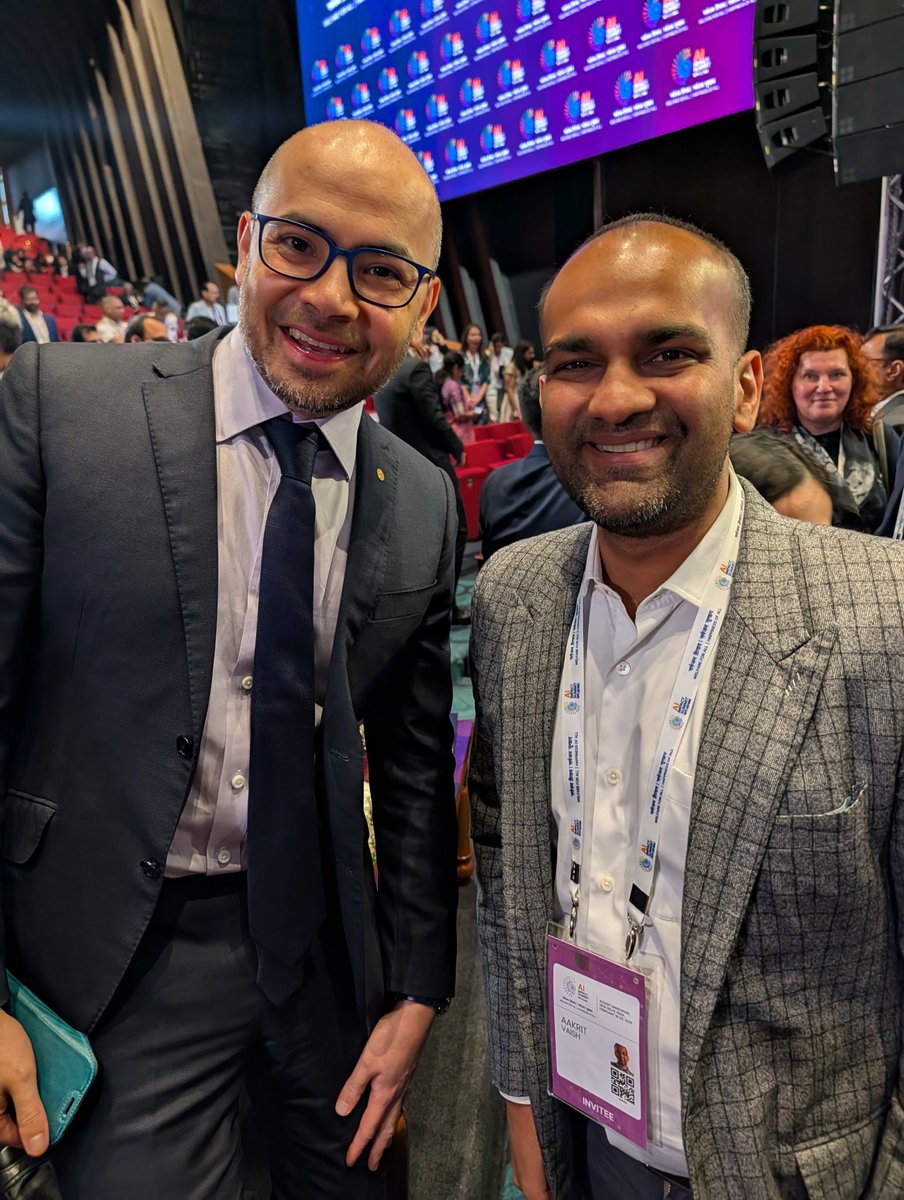
Aakrit Vaish@aakrit·
He's so humble and excited about India. I look forward to hosting him soon with India's startup ecosystem. @demishassabis
Aakrit Vaish tweet media
English
6
5
334
8.3K
Ranjan Jagannathan
Ranjan Jagannathan@ranjan_j·
great products have no obligation to organize themselves into neat frameworks.
English
0
0
3
209
Ranjan Jagannathan
Ranjan Jagannathan@ranjan_j·
great post. imo, the organizing principle for future nostalgia is what I call 'generational exceptionalism'. to think that their generation alone is central (sometimes rightfully so) to the human experience [aka hero complex in millennial lingo -> main character energy in genZ talk]. a core need of generational exceptionalism is to clearly demarcate oneself from the previous generations through symbols and language. in other words, each generation is a collective reaction to what came just before it. to satisfy these demarcation needs of generational exceptionalism, we need media. the role that novels -> plays -> movies -> media -> social media has always remained the same: to provide identity creating infrastructures. to supply answers to the question "how should I be?". all the generational symbols from maruti car to naruto is constantly supplied and reinforced by these infrastructures. this is why instagram is arguably the only common infrastructure across generations: it allows anyone to compare themselves with another person and ask 'Should I be like them or unlike them?' the through-line for nostalgia among all the symbolic generational markers is identity. - in what ways is the current generation actively looking to distance itself from the previous ones? - in what ways is the current generation choosing to stay close to the previous generations? all future nostalgia and infrastructure identities exist to serve the demarcation needs of the generational exceptionalism.
Harnidh Kaur@harnidhish

There's a consumer insight I can't shake: future nostalgia. Not the Dua Lipa kind, but something more fundamental about how generational wants are evolving in India at breakneck speed. For our parents, there are two distinct kinds of nostalgia that define their consumer memory: pre-liberalization and post-liberalization. Pre-lib nostalgia is hand-ground masalas, neighborhood kirana stores, joint family Sunday lunches, Ambassador cars, Doordarshan serials, handwritten letters, and local festivals untouched by commercial branding. It's the memory of scarcity that felt like abundance because it was all you knew. Post-lib nostalgia is early cable TV, the first Maruti cars, initial mall experiences, landline phones, physical music cassettes, and the genuine excitement of "foreign" brands arriving on Indian shores. It's the memory of access feeling revolutionary. For us millennials, our nostalgic anchor is post-lib, pre-internet: Orkut profiles, text messaging limits, physical video game cartridges, waiting for downloads, MTV and Channel V, early mobile phones as status symbols, internet cafes, and the tactile experience of shopping before everything went online. But here's where it gets interesting. The generational cycle is compressing. Gen X to millennial took about 15 years. Millennial to Gen Z took 7-8 years. Gen Z to Gen Alpha is happening even faster. This isn't just demographic pedantry. The time between generational wants shifting is shrinking because each generation is accessing the internet sooner and faster than the last. Gen Z's future nostalgia is already forming around the last moments of "effort" and "waiting”: the final generation to remember buffering, to have experienced both physical and digital music, to remember when social media required a computer. Their nostalgia centers on Instagram before Reels, early gaming communities, the brief moment when having an iPhone meant something, and physical books existing alongside Kindles. Gen Alpha's future nostalgia is the most fascinating. They're the first truly post-scarcity generation in terms of content and entertainment. Their nostalgia might be about things being "harder to get”: remember when you had to physically go places? Remember when content wasn't infinite? Remember when AI couldn't create anything you wanted instantly? This compression shows up most clearly in how each generation defines meaningful experiences. Mom's generation: Stapu (physical, local, spontaneous) •⁠ ⁠Happened in your gully •⁠ ⁠Required nothing but chalk and friends •⁠ ⁠Zero adult mediation •⁠ ⁠Pure physical joy Our generation: Shiamak Dawar/Danceworx dance classes (structured, aspirational, skill-building) •⁠ ⁠Required enrollment, payment, traveling to a "destination" •⁠ ⁠Adult-facilitated but youth-focused •⁠ ⁠Building toward something: performance, skill, belonging •⁠ ⁠Very city-specific cultural marker Gen Z: Not concerts (concerts are too millennial, too much planning, too expensive, too "event-ified") Instead: pop-up experiences that appear in their feed, café-hopping with aesthetic documentation, gaming sessions, thrift shopping as social activity, spontaneous group orders where the ordering process itself becomes the hangout, "getting ready" together virtually, micro-adventures triggered by Reels. Their experiences are ambient social: less structured than dance classes, more digital-native than stapu, but still requiring some physical presence and effort. The pattern emerges: Physical purity → Structured aspiration → Ambient digital-physical hybrid → ? What Makes Future Nostalgia? Not everything becomes nostalgic. There's a crucial difference between what sticks and what doesn't. I think a solid 1/1 is matcha versus Labubu. Matcha has depth, ritual, learning curve, cultural weight. It's experiential and has room for mastery. Labubu is pure aesthetic consumption without depth. Future nostalgia needs friction, story, some "you had to be there" quality. The shapers of this nostalgia are shifting too. We've moved from traditional media gatekeepers to algorithm-driven micro-influencers and platform dynamics. TikTok can create a nostalgic feeling for something that happened six months ago. For brands and businesses, this acceleration means traditional generational marketing is obsolete. By the time you've figured out millennial preferences, Gen Z has moved on. By the time you've cracked Gen Z, Gen Alpha is already forming different wants entirely. The companies that will win are those that can identify what has the ingredients for future nostalgia: depth, ritual, some degree of effort, cultural resonance, and build around those elements before they become obvious. The question isn't what Gen Z wants now. It's what they'll miss when it's gone.

English
1
0
2
409
Ranjan Jagannathan
Ranjan Jagannathan@ranjan_j·
great post. imo, the organizing principle for future nostalgia is what I call 'generational exceptionalism'. to think that their generation alone is central (sometimes rightfully so) to the human experience [aka hero complex in millennial lingo -> main character energy in genZ talk]. a core need of generational exceptionalism is to clearly demarcate oneself from the previous generations through symbols and language. in other words, each generation is a collective reaction to what came just before it. to satisfy these demarcation needs of generational exceptionalism, we need media. the role that novels -> plays -> movies -> media -> social media has always remained the same: to provide identity creating infrastructures. to supply answers to the question "how should I be?". all the generational symbols from maruti car to naruto is constantly supplied and reinforced by these infrastructures. this is why instagram is arguably the only common infrastructure across generations: it allows anyone to compare themselves with another person and ask 'Should I be like them or unlike them?' the through-line for nostalgia among all the symbolic generational markers is identity. - in what ways is the current generation actively looking to distance itself from the previous ones? - in what ways is the current generation choosing to stay close to the previous generations? all future nostalgia and infrastructure identities exist to serve the demarcation needs of the generational exceptionalism.
English
0
0
0
300
Harnidh Kaur
Harnidh Kaur@harnidhish·
There's a consumer insight I can't shake: future nostalgia. Not the Dua Lipa kind, but something more fundamental about how generational wants are evolving in India at breakneck speed. For our parents, there are two distinct kinds of nostalgia that define their consumer memory: pre-liberalization and post-liberalization. Pre-lib nostalgia is hand-ground masalas, neighborhood kirana stores, joint family Sunday lunches, Ambassador cars, Doordarshan serials, handwritten letters, and local festivals untouched by commercial branding. It's the memory of scarcity that felt like abundance because it was all you knew. Post-lib nostalgia is early cable TV, the first Maruti cars, initial mall experiences, landline phones, physical music cassettes, and the genuine excitement of "foreign" brands arriving on Indian shores. It's the memory of access feeling revolutionary. For us millennials, our nostalgic anchor is post-lib, pre-internet: Orkut profiles, text messaging limits, physical video game cartridges, waiting for downloads, MTV and Channel V, early mobile phones as status symbols, internet cafes, and the tactile experience of shopping before everything went online. But here's where it gets interesting. The generational cycle is compressing. Gen X to millennial took about 15 years. Millennial to Gen Z took 7-8 years. Gen Z to Gen Alpha is happening even faster. This isn't just demographic pedantry. The time between generational wants shifting is shrinking because each generation is accessing the internet sooner and faster than the last. Gen Z's future nostalgia is already forming around the last moments of "effort" and "waiting”: the final generation to remember buffering, to have experienced both physical and digital music, to remember when social media required a computer. Their nostalgia centers on Instagram before Reels, early gaming communities, the brief moment when having an iPhone meant something, and physical books existing alongside Kindles. Gen Alpha's future nostalgia is the most fascinating. They're the first truly post-scarcity generation in terms of content and entertainment. Their nostalgia might be about things being "harder to get”: remember when you had to physically go places? Remember when content wasn't infinite? Remember when AI couldn't create anything you wanted instantly? This compression shows up most clearly in how each generation defines meaningful experiences. Mom's generation: Stapu (physical, local, spontaneous) •⁠ ⁠Happened in your gully •⁠ ⁠Required nothing but chalk and friends •⁠ ⁠Zero adult mediation •⁠ ⁠Pure physical joy Our generation: Shiamak Dawar/Danceworx dance classes (structured, aspirational, skill-building) •⁠ ⁠Required enrollment, payment, traveling to a "destination" •⁠ ⁠Adult-facilitated but youth-focused •⁠ ⁠Building toward something: performance, skill, belonging •⁠ ⁠Very city-specific cultural marker Gen Z: Not concerts (concerts are too millennial, too much planning, too expensive, too "event-ified") Instead: pop-up experiences that appear in their feed, café-hopping with aesthetic documentation, gaming sessions, thrift shopping as social activity, spontaneous group orders where the ordering process itself becomes the hangout, "getting ready" together virtually, micro-adventures triggered by Reels. Their experiences are ambient social: less structured than dance classes, more digital-native than stapu, but still requiring some physical presence and effort. The pattern emerges: Physical purity → Structured aspiration → Ambient digital-physical hybrid → ? What Makes Future Nostalgia? Not everything becomes nostalgic. There's a crucial difference between what sticks and what doesn't. I think a solid 1/1 is matcha versus Labubu. Matcha has depth, ritual, learning curve, cultural weight. It's experiential and has room for mastery. Labubu is pure aesthetic consumption without depth. Future nostalgia needs friction, story, some "you had to be there" quality. The shapers of this nostalgia are shifting too. We've moved from traditional media gatekeepers to algorithm-driven micro-influencers and platform dynamics. TikTok can create a nostalgic feeling for something that happened six months ago. For brands and businesses, this acceleration means traditional generational marketing is obsolete. By the time you've figured out millennial preferences, Gen Z has moved on. By the time you've cracked Gen Z, Gen Alpha is already forming different wants entirely. The companies that will win are those that can identify what has the ingredients for future nostalgia: depth, ritual, some degree of effort, cultural resonance, and build around those elements before they become obvious. The question isn't what Gen Z wants now. It's what they'll miss when it's gone.

English
12
12
208
18.2K
Ranjan Jagannathan
Ranjan Jagannathan@ranjan_j·
turns out, the path to flying cars was paved through 140 characters after all.
English
0
0
1
131
Bryan Johnson
Bryan Johnson@bryan_johnson·
5 things you can do to combat phone addiction 🧵 1. Set ALL NOTIFICATIONS OFF as your default It takes 23 mins on avg to regain focus after being distracted by your phone. Only allow text notifications from people who contact you in an emergency.
Bryan Johnson tweet media
English
44
80
1.5K
195.3K
Ranjan Jagannathan
Ranjan Jagannathan@ranjan_j·
the Turing test is now more a test of human gullibility than machine intelligence.
English
0
0
1
294
Ranjan Jagannathan
Ranjan Jagannathan@ranjan_j·
@jsngr @cobotco great stuff Jordan and the Cobot team! very thoughtful. excited to try it out. would be cool to see suggested tasks and spaces. maybe even a few tasks that I didn't think I wanted but are done for me. eg the stock picking and news might be a good candidate.
English
0
0
3
551
Jordan Singer
Jordan Singer@jsngr·
today we're excited that you can now use @cobotco in beta with our TestFlight and web app here's a walkthrough:
English
99
38
878
154.3K
Ranjan Jagannathan
Ranjan Jagannathan@ranjan_j·
strongly agree. our most used thinking tool is to think of one thing in terms of another - analogies. the term analogy machines is in itself an analogy. for the first time, we have AI as a vantage point to see ourselves from another's point of view and not just in terms of another.
English
0
0
0
19
Ranjan Jagannathan
Ranjan Jagannathan@ranjan_j·
emojis are our microexpressions in text form. we've evolved to produce and read microexpressions in real time and model our responses accordingly. we're training each other in real time through microexpressions. this works in smaller face to face conversations. how do we scale microexpressions our textually? emojis stand in for microexpressions in a non face to face conversation. abstracted out: emojis serve as pointers to our universal internal states. since AI doesn't have an embodied experience of our internal states, emojis become less effective as a pointer. 'vibes' on the other hand can be a more useful shortcut of modeling the human AI interaction. there's an opportunity to compress lengthy stylized midjourney prompts into a new shorthand for eg. Google's Imagen has some early markings of this: youtu.be/oP1rIPkJte0?si… in short, 'vibes' can be the new emojis and pattern library in an AI first world.
YouTube video
YouTube
English
0
0
1
56
Joshua Levy
Joshua Levy@ojoshe·
I have a question for all you Twitter techno-futurists. When it comes to systems of human communication, in retrospect the rise of emoticons then emojis in the 2000s makes a lot of sense. With email and texts at all times of the day via mobile phones, the frequency (and in particular the ratio of written vs spoken) of communication between people had skyrocketed. So more time-efficient, evocative symbols had to arise. Then keyboards on mobile devices adapted to make this easier. Now with LLMs, the volume of communication in written and spoken language between humans and software is skyrocketing. So what are the emojis of the AI age? I am not sure the exact form it will take, but it seems inevitable this will change the way we communicate again. We need higher level representational shorthands. Typing in formal English makes little sense if an LLM will be equally precise in its understanding. With emojis, a key bottleneck was conveying emotion. It’s too easy in a few words to miscommunicate the emotion associated with a message. With prompts, emotion isn’t so much of a bottleneck but detail and semantic precision is. It’s often easy to miss a key part of intent in a prompt. So seems like it evolve to a format somewhere between English, keyword search, and macros/commands. Also even while efficient commercial BCI could be a ways off, multimodality is maturing so maybe hybrid visual/typed input mechanisms will improve. Sort of like the kana or romaji systems for entering kanji on mobile. Could things like this work to represent common ideas or intentions? What else might emerge? Curious to hear ideas of what will seem obvious in retrospect.
English
5
0
3
602
Ranjan Jagannathan
Ranjan Jagannathan@ranjan_j·
we wanted a bicycle for the mind, but got a hamster wheel instead. we are meant to be more than mere consumers and the instagram class. AI has the potential to jolt us from the consumerism trance.
English
0
0
4
295