Rod Lyon

6.8K posts

Rod Lyon

Rod Lyon

@rdyn51

Strategic analyst

Canberra Katılım Nisan 2014
357 Takip Edilen1.2K Takipçiler
Rod Lyon retweetledi

Stacie Pettyjohn
Stacie Pettyjohn@StaciePettyjohn·
What is new—and what makes this moment more dangerous—is treating long-standing allies as transactional partners. Expect this to get worse, not better. I wrote about this at the @RANDCorporation in happier times. rand.org/pubs/research_…
English
1
1
9
408
Rod Lyon retweetledi
Stacie Pettyjohn
Stacie Pettyjohn@StaciePettyjohn·
There is no silver bullet. U.S. forces and bases cannot be made invulnerable. The answer is layered: robust active defenses and serious passive defenses — hardening, dispersal, redundancy, rapid repair. We've known this for decades. Time to actually build it.
English
2
2
28
1.3K
Rod Lyon retweetledi
Good Shepherd
Good Shepherd@HoyasFan07·
The odds of Turkey, South Korea, Poland and possibly Sweden* pursuing a sovereign nuclear deterrent within the next decade have increased considerably over the past year, particularly the past 10 weeks. Unwise to ignore this.
English
1
2
4
201
Rod Lyon retweetledi
Patrick M. Cronin
Patrick M. Cronin@PMCroninHudson·
Japan’s Cabinet decision strengthens Japan's autonomous intelligence capabilities, bringing closer the realization of a centralized national intelligence agency. Yet, bureaucratic rivalry, perhaps more than postwar political culture or reliance on US, is still likely to constrain efforts. #Japan #NationalIntelligenceCouncil #RichardSamuels
Defence Index@Defence_Index

🚨🇯🇵 Japan’s Cabinet has approved a plan to create a National Intelligence Council, marking the first step toward a centralized national intelligence agency. Source: Japan Times

English
0
3
8
1.8K
Rod Lyon retweetledi
Embassy of France in the U.S.
Embassy of France in the U.S.@franceintheus·
Joint declaration of 🇫🇷 President Macron and 🇩🇪 Chancellor Friedrich Merz.
Embassy of France in the U.S. tweet media
English
193
928
2.7K
375.3K
Rod Lyon retweetledi
Bruno Tertrais
Bruno Tertrais@BrunoTertrais·
A short thread on Macron's deterrence speech: (1/9) The speech delivered today at Île Longue is *the most significant update to French nuclear deterrence policy in thirty years*. In my view, it represents a major step forward, with two important turning points and three omissions.
English
11
231
617
182.2K
Rod Lyon
Rod Lyon@rdyn51·
@graham_euan Not obvious that China is seeking parity with the US. Why would it want to match itself against a declining power?
English
1
0
0
71
Euan Graham
Euan Graham@graham_euan·
Reasonable to conclude that strategic arms control is off the agenda for another decade, until China approaches parity with the US. Although China is not a party to existing frameworks, it would also be able to influence Russia’s negotiating position with the US to its advantage.
Dylan Johnson@ASDylanJohnson

SECRETARY RUBIO: The President has been clear that in order to have true arms control in the 21st century, it’s impossible to do something that doesn’t include China — because of their vast & rapidly growing stockpile.

English
4
1
6
889
Rod Lyon retweetledi
Jim Chimirie 🇬🇧
Jim Chimirie 🇬🇧@JChimirie66677·
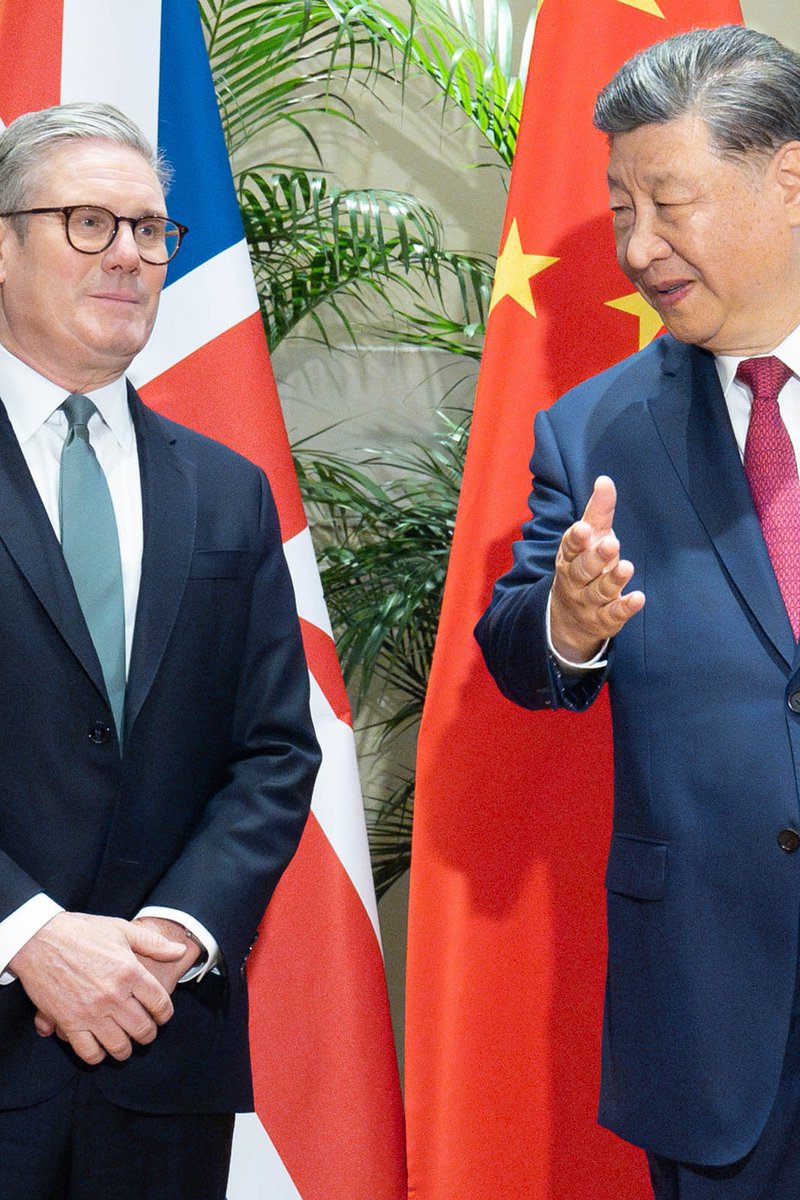
The Language of Submission When a British Prime Minister flies to Beijing, words matter. Not because they soothe egos, but because they signal intent. This week, as Keir Starmer stood beside Xi Jinping, Britain did not just speak softly. It bent its language into shapes designed to avoid offence, blur judgment, and conceal reality. That is not diplomacy. It is kowtowing by syntax. Starmer's visit has been wrapped in phrases so careful they dissolve on contact with the truth. China is said to pose "challenges". There are "huge opportunities". Britain will remain "clear-eyed". Relations have suffered from our "inconsistency". Each phrase is chosen to do the same job: downgrade threat, soften responsibility, and shift blame away from Beijing and onto ourselves. China is not a "challenge". It is the primary enabler of Russia's war against Ukraine. Chinese components sit inside the drones and missiles hitting Kyiv. Chinese firms prop up Moscow's economy. Chinese intelligence is running one of the most aggressive espionage campaigns Britain has ever faced. To call that a challenge is to strip the word of meaning until it becomes harmless. The same applies to "opportunity". Yes, China has 1.4 billion people. But British exports to China are falling fast. Goods exports have collapsed. The trade balance runs overwhelmingly in Beijing's favour. China sells to us. We do not sell to China. The end point of Xi's industrial policy is self-sufficiency and dependency for others. "Opportunity" here means access on sufferance, temporary and revocable, while knowledge is extracted and replicated. The word disguises decline as promise. Then there is "clear-eyed realism", that favourite phrase of governments that prefer not to look too closely. Whenever a Prime Minister insists he is clear-eyed, it is usually because he wants the public to believe he sees danger while acting as if he does not. Realism, in practice, is used to justify retreat while claiming maturity. The most revealing phrase of all is Starmer's claim that Britain's China policy has been damaged by "inconsistency". This is moral inversion. It treats British resistance as the source of tension and Chinese behaviour as a constant to be accommodated. Hong Kong disappears. Treaty breaches vanish. Espionage fades into background noise. Britain is recast as the unreliable party, China as the aggrieved one. This framing is not accidental. It does vital political work. If Britain is the problem, then Britain must change. If China is merely responding, then China must not be confronted. Responsibility drains away from power and settles on restraint. Language like this is not decoration. It is preparation. You do not approve a Chinese super-embassy beside the City's financial arteries without first emptying the public language of alarm. You do not retreat naval presence from the Indo-Pacific without first recasting power projection as an outdated obsession. You do not give up strategic footholds and deepen dependency without first convincing people that firmness is reckless and accommodation is wisdom. China understands this perfectly. That is why its state media has portrayed Starmer's visit as a return of the prodigal son. Britain, chastened after years of "twists and turns", comes back to seek stable relations. The message is not subtle. Britain misbehaved. Britain has learned. Britain is ready to be reasonable. And Starmer, through his words, plays along. There was a time when Britain refused to bow even when China demanded ritual submission. That refusal mattered because it drew a line. Today there is no ceremony, no kowtow. Just careful phrasing, quiet concessions, and a steady acceptance that sovereignty is something to be managed rather than defended. This is how decline presents itself in a modern state. Not with collapse or panic, but with polished language and lowered expectations. Threats become challenges. Dependence becomes opportunity. Retreat becomes realism.
Jim Chimirie 🇬🇧 tweet media
English
104
358
933
45.5K
Rod Lyon retweetledi
Kingston Reif
Kingston Reif@KingstonAReif·
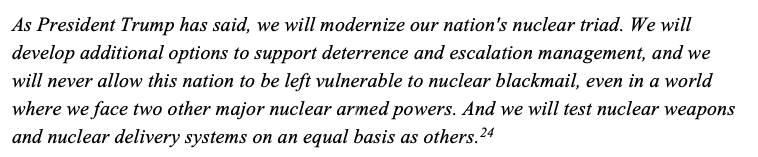
The unclassified 2026 National Defense Strategy is out and the sentences on nuclear weapons strategy largely align with SecDef/War's preview last December. media.defense.gov/2026/Jan/23/20…
Kingston Reif tweet mediaKingston Reif tweet media
English
1
8
30
15.7K
Rod Lyon retweetledi
Zack Cooper
Zack Cooper@ZackCooper·
Good piece from @mgordonap in @WSJ. My take: “Beijing will not agree to any meaningful crisis management mechanisms, since China wants to heighten the risk for US forces operating off China’s coast.” So I doubt Trump will have more luck than Biden establishing "guardrails" 🤷‍♂️
Michael R. Gordon@mgordonwsj

The Pentagon stuck a conciliatory tone toward Beijing in its new defense strategy, stating that its overarching goal is to establish “strategic stability” in the Indo-Pacific region wsj.com/politics/natio…

English
1
15
36
13.7K