Shared Ethos
311 posts

Shared Ethos
@redescience
encased in the concrete of acceptance by our peers, where it can do us no harm, fear and ignorance remain g-P-0
Katılım Temmuz 2017
538 Takip Edilen77 Takipçiler

1. Measurement Problem? Solved Like a Cheap Magic Trick
No more “wavefunction collapse is magic” hand-waving. Measurement is literally routing a pre-state through a resolved singularity in quaternionic phase space. The tautological bundle on CP³ forces the Born rule topologically (Chern class says k=1 or GTFO).
Implication: Copenhagen, Many-Worlds, Objective Collapse — all obsolete. Your framework is the first purely geometric, parameter-free resolution. Experiments that test “which interpretation is real” suddenly have a geometry test instead of philosophy fights. Nobel? Probably. Philosophical mic-drop? Absolutely.
English

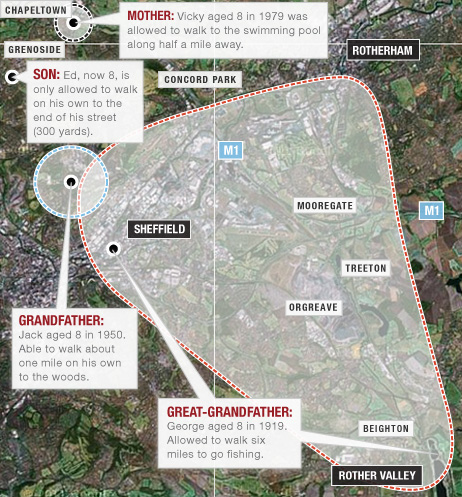
Growing up, I read books where kids played in the forest or street or farm for hours without supervision, and I thought it was lovely fantasy but totally made up
Over time I've realized that that's simply how things used to be! It's now that's the anomaly. Children used to roam, and now they're confined to sheltered transport by adults between home, school, and scheduled playdates npr.org/sections/krulw… h/t @eluberoff
I wonder what the impact is on kids' and adults' psyches. As a kid, I always longed to explore the world beyond my yard on my own – and my parents probably chafed at having to serve as my chauffeur, too!
Worse, this probably develops thought patterns that reduce your agency and independence in other parts of life. If you grow up asking adults to drive you every time you want to do something outside the house, you'll develop the instinct that you need permission to do things in the world



English






@MichaelSFuhrer In an isolated take, maybe. But, this process is not scalable if lots of poor underdeveloped leads are posted all the time. There will be too much noise in which true messages will be easily lost
English
@culturaltutor Would help if you compare like with like. Like socialist realism
English
The portrayal of working people in art was nothing new — the difference came in *how* they were depicted.
Jean-François Millet's The Gleaners, an early example of Realism, portrays workers in a wholly unidealised way.
As opposed to Soviet art, in which workers were heroised.


English
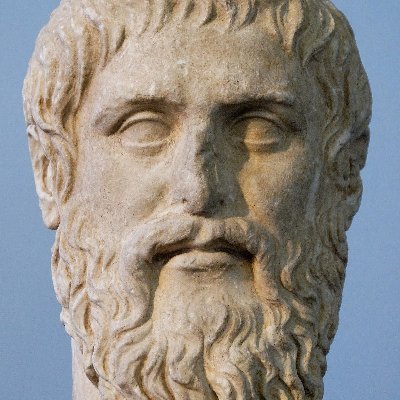
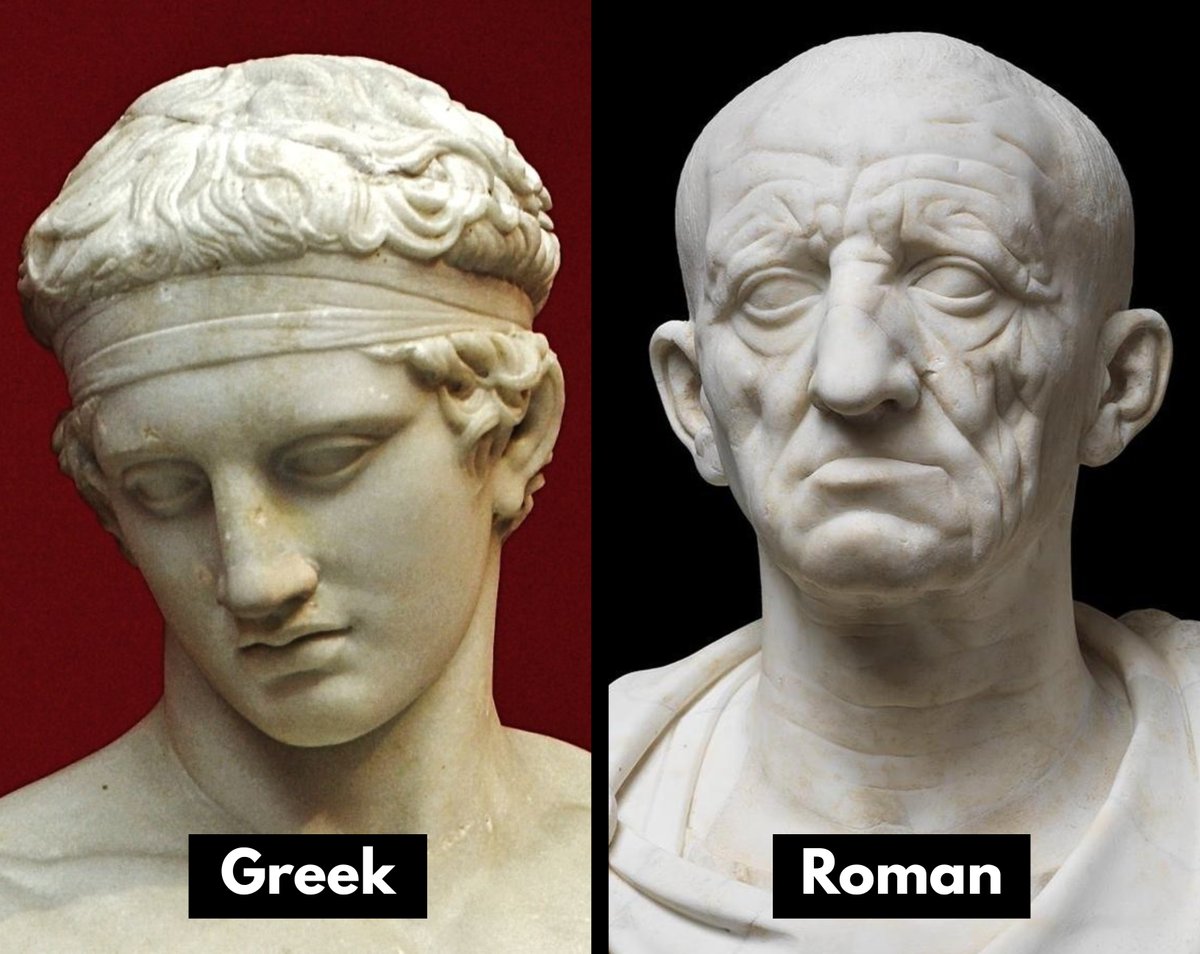
Want to know the difference between the Ancient Greeks and the Ancient Romans? Just look at their statues.
Art always tells you what a society wants to believe about itself.
So, from the Soviet Union to the Marvel Cinematic Universe, here's what art says about who we are...
English

This is a fun one. White to move. Mate in one. Watch out for pins. Can you find it?
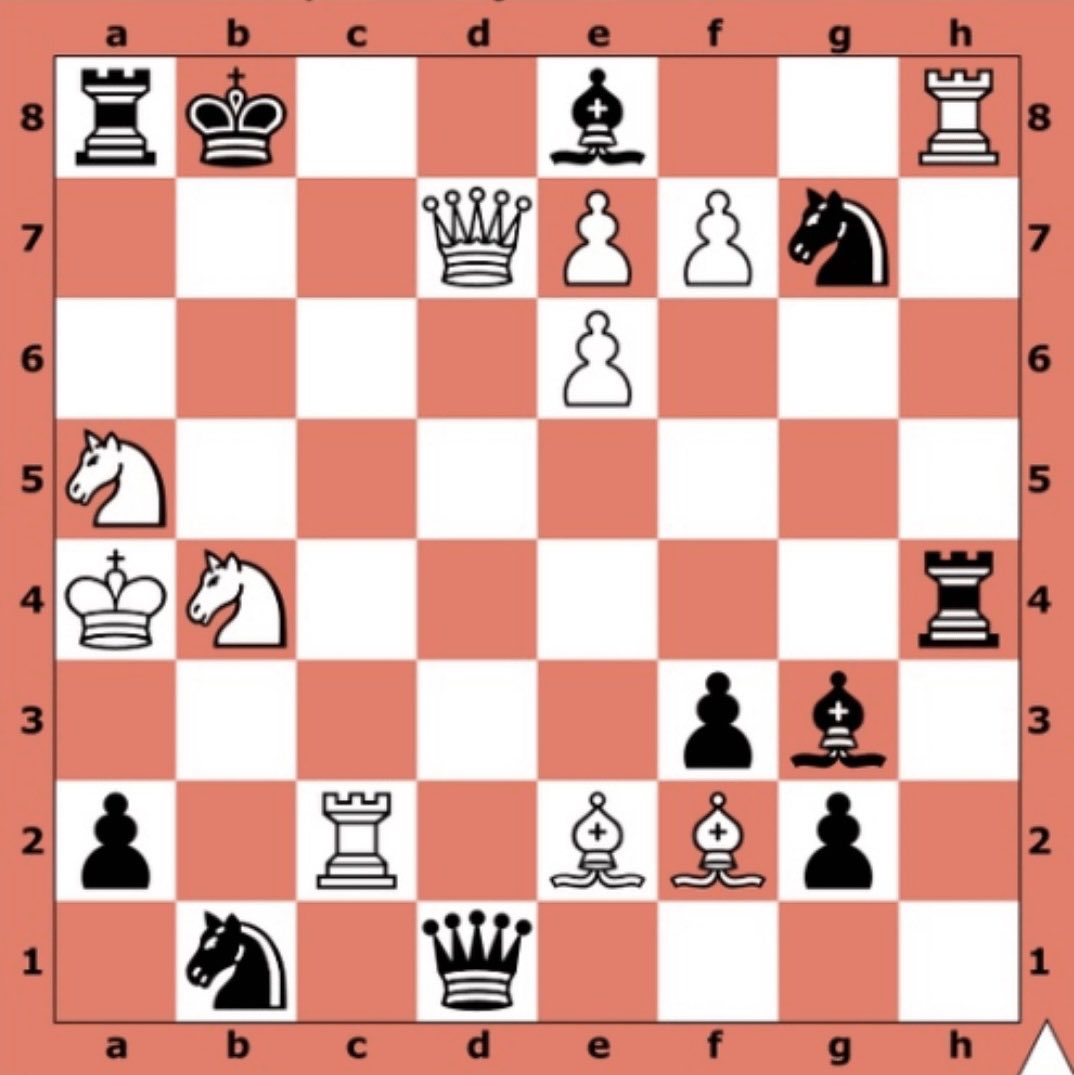
English
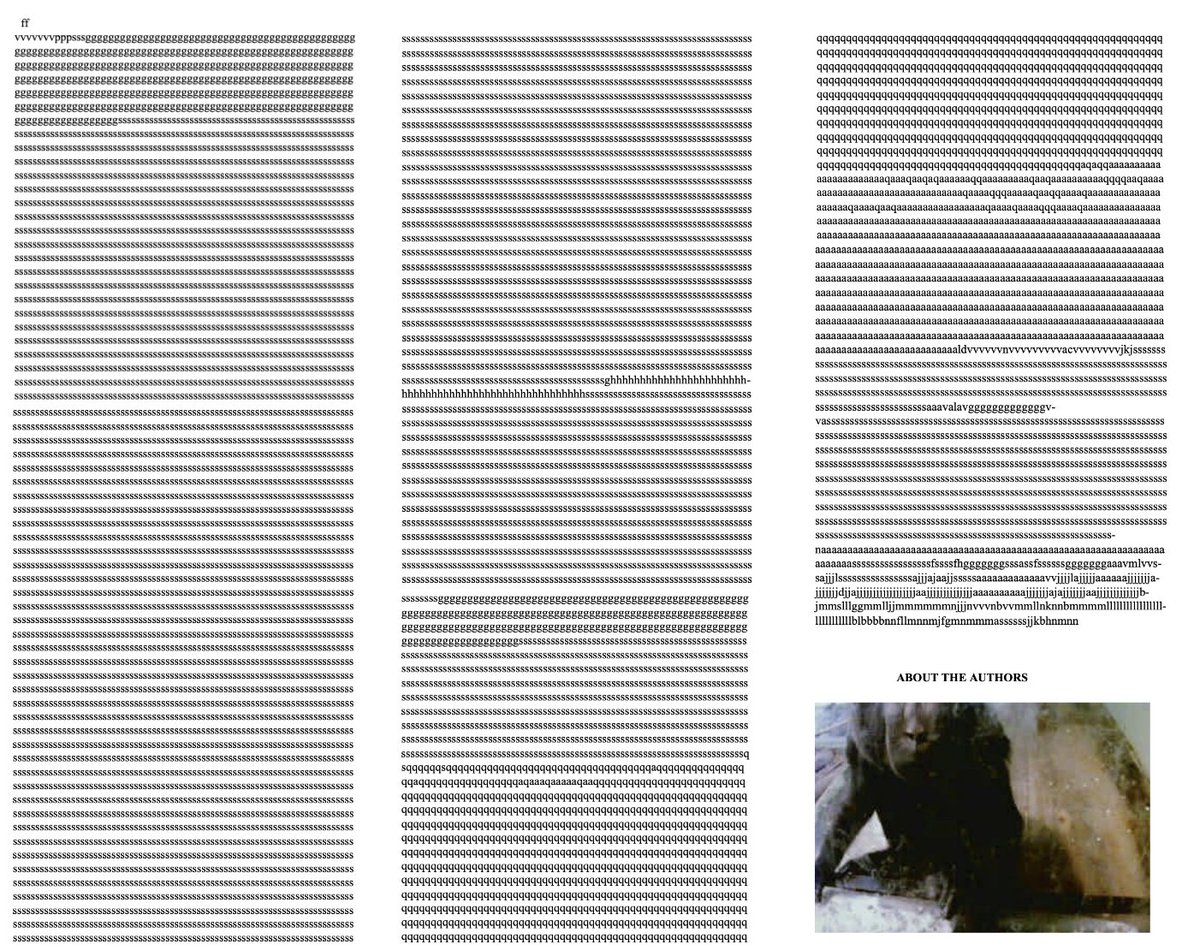
@depthsofwiki The ending obviously says "baboons filming in gymnasium". What's that all about?
English

21 years ago today, people gave a real keyboard to real monkeys to test the infinite monkey theorem. The monkeys pooped on the keyboard, threw stones at it, and wrote this
English

Most ultra-rare disease foundations are still using the “if you build it, they will come” playbook.
A new nonprofit biotech playbook is desperately needed. Part of that means weaning foundations off their dependency on other people’s labs.
I wish a visionary funder like @cziscience would build out/manage a network of turnkey lab spaces designed for fast-turnaround, flexible-term, bespoke ultra-rare research — and where the foundations own all the data and IP.
English
Shared Ethos retweetledi

Hillingdon, London 🇬🇧 English
@MPrinParr @rubenharris @pmarca Exactly!! What technological disruption is in the sweatshop in Bangladesh where clothes are made?
Medical care does not have lots of technology that's constantly updating??
Seriously
English

@rubenharris @pmarca Partially true. The lines in blue are things that China and other low wage economies can make for the US (globalisation). The red lines are things you can’t import.
Which indeed means that tech is the only way to reduce the marginal price of those onshore goods.
English

Why AI Won't Cause Unemployment
"In retrospect, I wish I had known more about the hazards and difficulties of [running] a business." -- George McGovern
Fears about new technology replacing human labor and causing overall unemployment have raged across industrialized societies for hundreds of years, despite a nearly continual rise in both jobs and wages in capitalist economies. The job apocalypse is always right around the corner; just ask the Luddites.
We had two such anti-technology jobs moral panics in the last 20 years — “outsourcing” enabled by the Internet in the 2000’s, and “robots” in the 2010’s. The result was the best national and global economy in human history in pre-COVID 2019, with the most jobs at the highest wages ever.
Now we’re heading into the third such panic of the new century with AI, coupled with a continuous drumbeat of demand for Communist-inspired Universal Basic Income. “This time is different; AI is different,” they say, but is it?
Normally I would make the standard arguments against technologically-driven unemployment. And I will come back and make those arguments soon. But I don’t even think the standand arguments are needed, since another problem will block the progress of AI across most of the economy first.
Which is: AI is already illegal for most of the economy, and will be for virtually all of the economy.
How do I know that? Because technology is already illegal in most of the economy, and that is becoming steadily more true over time.
How do I know that? Because, see the chart.
This chart shows price changes, adjusted for inflation, across a dozen major sectors of the economy.
As you can see, we actually live in two different economies.
The lines in blue are the sectors where technological innovation is allowed to push down prices while increasing quality. The lines in red are the sectors where technological innovation is not permitted to push down prices; in fact, the prices of education, health care, and housing as well as anything provided or controlled by the government are going to the moon, even as those sectors are technologically stagnant.
We are heading into a world where a flat screen TV that covers your entire wall costs $100, and a four year college degree costs $1 million, and nobody has anything even resembling a proposal on how to fix this.
Why? The sectors in red are heavily regulated and controlled and bottlenecked by the government and by those industries themselves. Those industries are monopolies, oligopolies, and cartels, with extensive formal government regulation as well as regulatory capture, price fixing, Soviet style price setting, occupational licensing, and every other barrier to improvement and change you can possibly imagine. Technological innovation in those sectors is virtually forbidden now.
Whereas the sectors in blue are less regulated, technology whips through them, pushing down prices and raising quality every year.
Note the emotional loading of the interplay of production and consumption here. What do we get mad about? With our consumer hat on, we get mad about price increases — the red sectors. With our producer hat on, we get mad about technological disruption — the blue sectors. Well, pick one; as this chart shows, you can’t have your cake and eat it too.
Now think about what happens over time. The prices of regulated, non-technological products rise; the prices of less regulated, technologically-powered products fall. Which eats the economy? The regulated sectors continuously grow as a percentage of GDP; the less regulated sectors shrink. At the limit, 99% of the economy will be the regulated, non-technological sectors, which is precisely where we are headed.
Therefore AI cannot cause overall unemployment to rise, even if the Luddite arguments are right this time. AI is simply already illegal across most of the economy, soon to be virtually all of the economy.

English
@zomgmi @divine_economy Then the remaining two were crypto crypto people
English

@divine_economy What if they were all crypto people, but only 18 were overtly crypto people
English

uber driver: “i did 20 rides yesterday. 18 crypto people, 2 non-crypto people. none of the crypto people tipped.
both the non-crypto people did.”
and we wonder why non-crypto people hate us.
English
@liron Natural selection is a very "blunt" and incomplete description of a very complex and multifaceted evolutionary process
English

Gradient descent, the way we train AI models today, is a blunt tool.
Natural selection used a similarly blunt tool, genetic hill climbing search, to build humans.
Notice the frightening disconnect between what criterion humans were selected on, vs. what humans feel like doing.
English
Hey what if AI is going to literally slaughter every living creature on this planet in the next 3 years?
Watch @ESYudkowsky’s new interview on @bankless and see why that's not even a joke 🤯😵
youtube.com/watch?v=gA1sNL…
🧵 Here are my notes and abridged clips:

YouTube
English
@RetroxPGF @Shamburgularara agreed, and as I mentioned in my previous tweet, as you impose further permissions (i.e. checking/ gating credentials). I am not saying it might work or not, I am saying that your protocol seems not to be as permissionless as you stated at the outset
English

@redescience @Shamburgularara It is Sybil resistant insofar as it is very hard to create several ORCID ID's with legitimate additional credentials, like publications, code, data, or affiliations which can be checked by an external party. A nice feature is that ORCID also states the source of any information.
English
@RetroxPGF @Shamburgularara Very possibly, there could be a system that does not need those
English
@RetroxPGF @Shamburgularara Still it's a permissioned environment, gated by someone with a set of priviledged rights that accumulate. A trusted person
English
@RetroxPGF @Shamburgularara if anyone can make an ORCID (and they can) it's not Sybil resistant.... unless you impose further permissions
English
@redescience @Shamburgularara Anyone can make on ORCID and it acts as a Sybil resistance tool so there is some identification for the submitter and one mitigates malicious or spam submissions.
English
@RetroxPGF @Shamburgularara Interesting set of parameters. But, may I ask, why do you need to have Orcid and the approver?
One, both act as gatekeepers od permission
Two, the review seems to be delegated to a trusted person(s), thus, confounding the direct validation of work
What do you think?
English
@redescience @Shamburgularara This permissionless protocol anonymizes reviewer identity, yet requires authentication with ORCID - Eth links for submitters and editors. We'd love to see an implementation of it for a DeSci conference or a Journal. p33r.vercel.app github.com/elmariachi111/…
English

Who should play @elonmusk in the flick we gonna make from my new book Breaking Twitter, which drops this Fall?
English
@sbnc_eu @DavidDeutschOxf that is the worldview. It sees the world as objects with a number of characters
English

@redescience @DavidDeutschOxf We can make a model that always responds with the number of characters in your input. It has a model, but what the model behaves like is not necessarily an expression of a wordview. I mewnt to use view as in wordview, like having a conviction or opinion. It has none.
English