Rick Nucci

1.8K posts

Rick Nucci banner
Rick Nucci

Rick Nucci

@ricknucci

Co-founder of @guru_hq, Founder of @boomi. Success is not a license for arrogance.

Philadelphia, PA Katılım Aralık 2007
892 Takip Edilen2.8K Takipçiler
Rick Nucci retweetledi
Chris Pedregal
Chris Pedregal@cjpedregal·
@appenz @meetgranola OK, so exact same tool calls in MCP but in an API instead would do the trick? Is it just that you want to hard code certain calls?
English
5
2
17
6.6K
Rick Nucci retweetledi
Hiten Shah
Hiten Shah@hnshah·
For a long time, I thought progress was supposed to feel clean. The right decision would feel obvious. The next step would line up with the last one. If I was doing things correctly, the story would sound reasonable while I was still living it. That hasn’t been my experience at all. Most of the moves that mattered felt unfinished when I made them. I acted without a fully formed explanation. I trusted that I could figure things out as I went, not because I had a master plan, but because standing still felt worse than moving with intent. There’s a difference between recklessness and good faith. Good faith is showing up honestly to the work in front of you. Taking responsibility for learning. Believing you can adapt when you hit something you did not anticipate. It is not pretending you know how it all ends. When people talk about conviction, they often mean confidence in outcomes. What they rarely talk about is confidence in their ability to respond. That distinction matters. I wasn’t certain the choices were right. I was certain I could live with the consequences, learn from them, and adjust without losing my center. Staying close to what was actually happening mattered more than being right early. Only later did the pattern reveal itself. That’s when the quote finally clicked for me. Steve Jobs once said you can’t connect the dots looking forward, only backward. I used to hear that as reassurance. Now I hear it as description. The dots aren’t obvious while you’re moving. They emerge through strain, correction, and decisions that age into sense. Nothing connects until you’ve spent enough time inside the work. The danger is waiting until things make sense before you move. That usually means you never do. The future rarely rewards certainty. It responds to people willing to engage without guarantees. When the story finally coheres, it will feel obvious in hindsight. It just won’t resemble the version you would have written in advance. That’s the cost of learning in the real world. And when you’re acting in good faith, it’s a cost worth paying.
English
3
3
22
2.3K
Rick Nucci
Rick Nucci@ricknucci·
@jcspinell @patrick_oshag hmmm well a lot of my list is for the over 21 cohort :) but some recos…Franklin Institute, Pizzeria Beddia, Angelos, Shanes confectionary, riverrink skating, eastern state penitentiary
English
0
0
0
32
Patrick OShaughnessy
Patrick OShaughnessy@patrick_oshag·
What are the must do’s (see, do, eat) in Philly? I’ll be with my son (12). Want to build an amazing weekend, hit me with any recommendations!
English
94
3
69
49.1K
📙 Alex Hillman
📙 Alex Hillman@alexhillman·
I've been using Cursor for building internal tools, but every time I try using Claude Code instead I feel like I lose my sense of what's going on. Would love to watch some videos of people switching from fairly proficient Cursor usage to Claude Code to help it click. Any recos?
English
6
0
3
1.8K
Rick Nucci retweetledi
Ethan Mollick
Ethan Mollick@emollick·
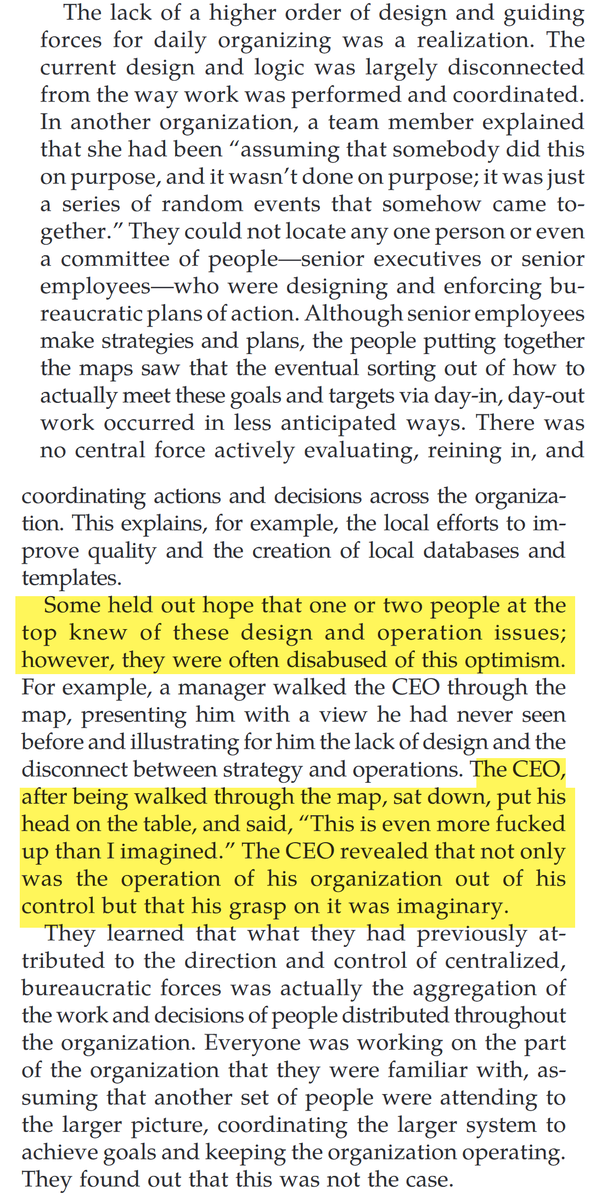
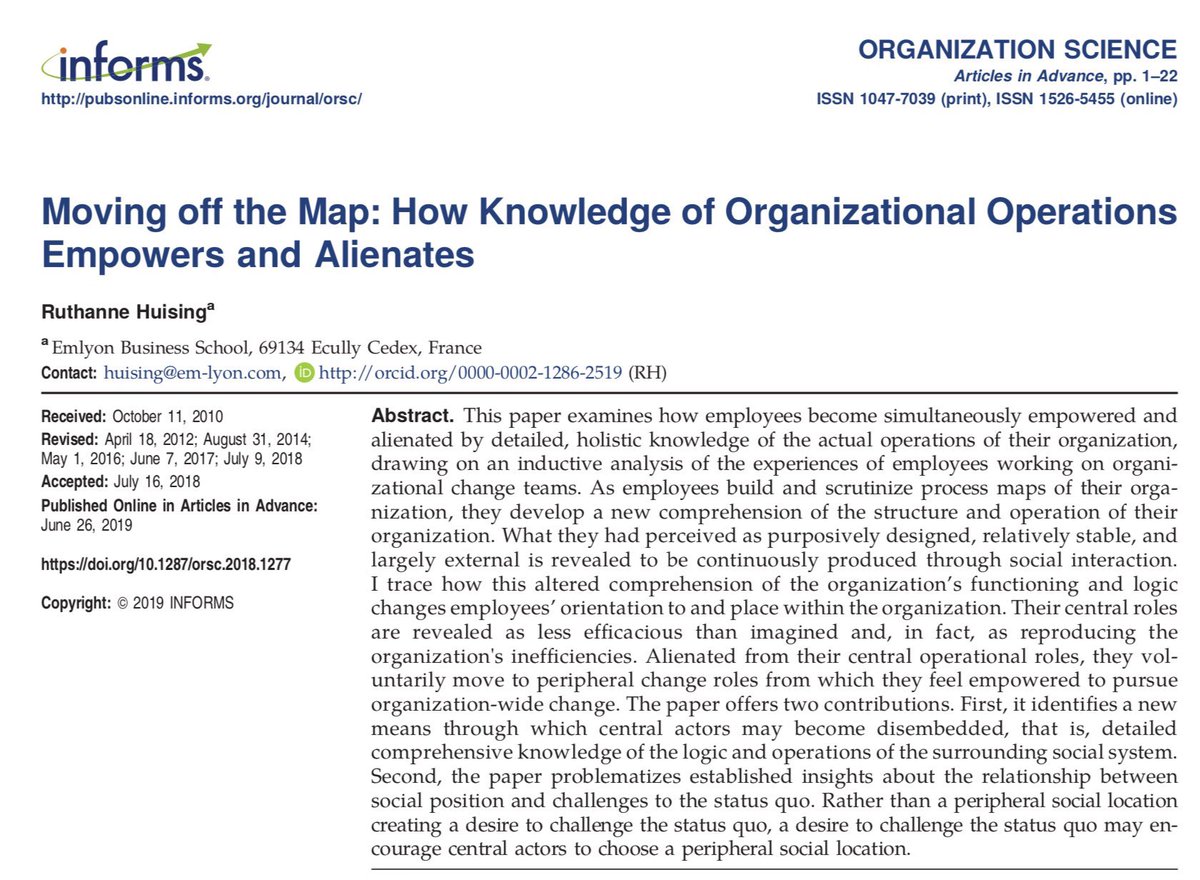
A challenge with AI adoption is that organizations are not built to a Grand Plan where AI can just be slotted in, but rather socially constructed, random & in flux Here's an anecdote from a paper on how a process re-engineering effort led to revelations that drove people insane.
Ethan Mollick tweet mediaEthan Mollick tweet media
English
25
51
454
40.5K
Rick Nucci retweetledi
Jack Altman
Jack Altman@jaltma·
Some people view everyone as a potential competitor and others view everyone as a potential collaborator. I'm not sure which is more successful on average, but the collaborators certainly seem happier.
English
72
42
638
39.6K
Rick Nucci retweetledi
Adam Grant
Adam Grant@AdamMGrant·
It’s a mistake to outsource most writing to AI. Even if the output is accurate and engaging, something valuable is lost in the process. Jotting down intuitions and spelling out hunches is how we develop and refine our ideas. Writing is where we do our best thinking.
English
143
662
3.2K
171.6K
Rick Nucci retweetledi
Santiago
Santiago@svpino·
People calling MCP just “tool calling” fundamentally misunderstand the protocol. MCP is much more than that. The protocol defines a set of primitives that go well beyond function invocations. Server-side primitives (capabilities the server exposes to the model): • Tools - Executable functions that the model can invoke through the server • Prompts - These are instructions or templates that can guide the model • Resources - Structured data or documents that can enrich the model’s context or memory Client-side primitives (capabilities the client exposes to the server): • Roots -  Entry points into the client's filesystem (if access is granted) • Sampling - A mechanism that allows the server to ask the host to generate completions from its local model On top of it, the protocol provides authorization capabilities (using OAuth 2.1) to enable clients to make requests to restricted servers. Every major company is all-in on MCP: Google, OpenAI, Anthropic, Zapier, Docker, Postman, GitHub. Most modern IDEs support MCP: Cursor, JetBrains, Visual Studio Code, Windsurf. Every startup I talk to supports MCP or is currently adding support to it. If you still think MCP is a fad, I don't know what else to tell you.
English
56
71
853
136.8K
Rick Nucci retweetledi
Gokul Rajaram
Gokul Rajaram@gokulr·
ENTERPRISE AI: BUILD AGENTS, NOT TOOLS In the past 2 weeks, I've met several AI agent tooling startups that have each realized that the biggest problem in large enterprises is NOT the tooling to build, test and deploy agents, but that these enterprises don't have the talent density / people / knowhow to build real life agents for complex workflows. So these startups are pivoting to: (a) building and running agents themselves and (b) offering their original service as part of running the agent. tldr Enterprise AI defensibility and value creation might lie in the full-stack approach to building, running and evaluating agents. Almost consulting-ish. Trying to be a pure tech platform might be a losing proposition in these early days. Some other hungry startup will own the agent and they won't use your technology stack.
English
59
84
837
197K
Rick Nucci retweetledi
Max Shaw
Max Shaw@_maxdshaw·
@DavidSacks I'll take the opposite side. An Okta-like system for agent auth will emerge, but most value will accrue to vertical agents optimized for specific roles. Integrations are easy (especially with MCP)—the real battle is intelligence, not integrations.
English
2
1
20
4.3K
Rick Nucci retweetledi
Jack Altman
Jack Altman@jaltma·
I think grit is one of the most underappreciated traits of successful founders. There are so many daily disappointments for years on end and you just have to keep showing up to fight like nothing happened.
English
118
218
2.2K
207.8K
Rick Nucci retweetledi
Sebastian Siemiatkowski
Sebastian Siemiatkowski@klarnaseb·
Yes, we did shut down Salesforce a year ago, as we have many SaaS providers—an internal estimate is about 1,200 SaaS shut down. No, I don't think it is the end of Salesforce; might be the opposite. Here is what actually happened and how/why we originally intended to NOT share it publicly: At Klarna, we decided early to explore the potential of AI and LLMs—mostly ChatGPT—while being open to testing all things that seemed to be trending. We encouraged all employees to do so and allowed them to pursue ideas organically rather than following "management direction" on exactly what they should be building. In the early days of ChatGPT, we heard a lot: "this tool allows you to feed all your PDFs, all your data sources to a LLM!" However, the old universal truth of data scientists still holds true, even in AI: "shit in, shit out." Feeding an LLM the fractioned, fragmented, and dispersed world of corporate data will result in a very confused LLM. We started instead exploring a few key concepts: What of our data was actually valuable? What data was duplicative, incorrect, or contradicting? Why was it like that? While people nowadays can criticize things like Wikipedia, we also reflected on the fact that it is a remarkable achievement—having over 20,000 people collaborate on the largest graph of knowledge that is still fundamentally of high quality, accessibility, and accuracy. What could we learn from this? A Swedish company, @neo4j, and @emileifrem introduced us to the beautiful world of graphs. We further explored data modeling, ontology, and, of course, vectors, RAGs, and many things. Key to our explorations became the conclusion that the utilization of SaaS to store all forms of knowledge of what Klarna is, why it exists (docs), what it tries to accomplish (slides, tickets, kanban boards), how it is doing (sheets, analytics), who is it dealing with (CRM, supplier management), who works here (ERP, HR) and what it has learnt was fragmented over these SaaS—most of them having their own ideas and concepts and creating an unnavigable web of knowledge that required a tremendous amount of Klarna specific expertise to operate and utilize. We also recognized that enterprise software has a standard set of features that are vital for it to operate—features such as audit, versioning, access and edit management, and similar universal needs. We need them as well, but that fragmentation again adds friction, admin overhead, and more. So, we decided to start consolidating; to put things together, connect our knowledge, and remove the silos. The side consequence of this was the liquidation of SaaS—not all of them, but a lot of them. And not for the license fees, even though those savings have been nice, but for the unification and standardisation of our knowledge and data. So no, we did not replace SaaS with an LLM, and storing CRM data in an LLM would have its limitations. But we developed an internal tech stack, using Neo4j and other things, to start bringing data=knowledge together. Ultimately, we found this very interesting, but more importantly starting seeing serious productivity gains. We allowed our internal AI to use this knowledge, and we realised with the help of @cursor_ai we could quickly deploy new interfaces and interactions with it. So, I discussed with one of my board members: should we share this publicly? We decided not to. We hold no grudge against SaaS (not true—I hate some of it, but won't tell you which one). But we are a payments company and a neo bank, there is limited value for us to share this externally. However, Klarna, being a bank, holds quarterly calls with its investors, and in passing on of these calls, I mentioned that we had removed some SaaS software including Salesforce. It turns out that the recording was leaked to @SeekingAlpha, and they put out a news post about it. And from there, it went crazy. Suddenly, @Benioff was asked on stage why Klarna was leaving Salesforce. I was tremendously embarrassed. So, to summarise, what does this mean? Will all companies do what Klarna does? I doubt it. On the contrary, much more likely is that we will see fewer SaaS consolidate the market, and they will do what we do and offer it to others. Those are likely to be your next SaaS. And it is very likely that Salesforce will be one of those companies. As highlighted many times, they do so much more than CRM today and hence have the opportunity to become that hub of knowledge that modern companies will seek. But there are also risks for them and others; a lot of our large enterprise SaaS providers suffers from a fallacy. They started as companies with a clear opinion of how to do things, but over time, as they try to satisfy every whim of any random person working at any large enterprise, they become somewhat of a glorified database and lose their opinion. Opinionated software is worth something, as opinions represent an experience of what works, what produces results. And this is the ultimate value. So I hope with sharing this we can clarify a lot of speculation and misunderstandings and in the end same thing as is always true, just like when mobile came along, we talked about mobile first, now you need to be AI first. Of course all SaaS companies will need to learn adopt and evolve. But if they do there is tremendous opportunity ahead.
English
80
208
1.8K
328.4K
Rick Nucci retweetledi
Adam Grant
Adam Grant@AdamMGrant·
The purpose of negative emotions is not to cause misery. It’s to prevent mistakes. Outrage is a signal to speak. Disappointment is a cue to persist. Anxiety is a prompt to prepare. Guilt is a reminder to repair. Pain reveals principles. Where we hurt is a clue to what we value.
English
74
877
4.1K
225.4K
Rick Nucci retweetledi
Joe Pop
Joe Pop@JoePops_·
View from Broad St in Philadelphia Buckle up New Orleans
English
250
2.1K
21.2K
1.4M
Rick Nucci retweetledi
Massimo
Massimo@Rainmaker1973·
August 2024 was the hottest August on record, and the last 3 months comprised the hottest summer since modern recordkeeping began. August 2024 is the 15th month in a row of record-breaking monthly temperatures. pic.twitter.com/EowVYqt20g
English
58
21
82
36.4K
Rick Nucci retweetledi
Massimo
Massimo@Rainmaker1973·
Believe it or not, in the years 1950-1951, the A. C. Gilbert Company distributed the Gilbert U-238 Atomic Energy Lab, a toy kit allowing kids to make nuclear reactions at home using actual radioactive material. It was taken off the shelves in 1951.
Massimo tweet media
English
94
280
1.3K
129.1K