Ridvan Emini

13 posts

Ridvan Emini banner
Ridvan Emini

Ridvan Emini

@ridvan_emini

Ridvan Emini - Researcher at Institute for Hybrid Warfare Studies "OCTOPUS", President KPHA, Editor Dukagjini, Director Symposium "Filosofema"

Katılım Haziran 2025
188 Takip Edilen18 Takipçiler
Ridvan Emini
Ridvan Emini@ridvan_emini·
HYBRID INTERFERENCE IN ELECTIONS (“Victimization” as a Strategy for Destabilization) With different approaches, but a common target. One demonizes Albin Kurti for mobilization purposes, while the other demonizes the West, promoting the message of hope for a “favorable moment.” The statements made by Petkovic and Vucic following the takeover of railway stations in Zvecan and Leposavic by Kosovo institutions converge in the strategy of “victimization,” projecting the normalization of Serbia’s interference in the June 7 elections. The director of the so-called “Office for Kosovo” described the actions as “looting of Serbian property and attacks by gangs” carried out for Kurti’s electoral purposes, while also labeling Minister Racic as his “servant.” He once again called on Serbs to “remain under one flag” and vote for the Serbian List as the “only entity fighting for the interests of the Serbian people” (KoSSev, 28.05.2026). Such statements imply not only political pressure on the Serbian community, but also efforts to sabotage political pluralism and maintain control over Serbian representation within Kosovo’s institutions. On the other hand, Vucic appeared even more “victimized,” stating that “Serbs in Kosovo expect many troubles, even after the elections,” while accusing the West of “enjoying their persecution.” “This is something we must carry as a burden and wait for a favorable moment in international relations, when the Brussels Agreement can be fulfilled and the UN Charter can be respected,” Vucic said (Danas, 26.05.2026). These statements, made at the conclusion of his visit to China and seemingly “inspired” by Serbia’s major anti-Western ally, not only reveal Serbia’s strategic orientation, but also its perception of the Association of Serb-Majority Municipalities as a ‘legal’ instrument for undermining Kosovo, while using UN Resolution 1244 as a “card” for its hegemonic ambitions. Despite their different deceptive narratives, both Serbian officials are united in the strategy of “victimization”: they portray themselves as the threatened side while interfering in Kosovo under the guise of being “protectors of the Serbs.” Through emotional incitement, various forms of pressure to vote for the Serbian List, and the demonization of Kosovo’s institutions, Belgrade aims to preserve its destabilizing influence and portray Kosovo as a “failed state.” Therefore, Serbia’s interference is not merely an issue of electoral integrity, but above all a matter of state sovereignty and a threat to national and regional security. #KosovoElections #ListaSrpska #Kosovo #Serbia #Vucic @USEmbPristina @UN @RobertaMetsola @EP_President @Europarl_EN @ECPMF @EP_EPRS @OSCE @OSCEKosovo @vonderleyen @MFA_Croatia @HelsinskiOdbor @albinkurti @UNHumanRights @kajakallas @MartaKosEU @albulenahaxhiu_ @TC_PristineBE @aliciakearns @DorisPack2 @agim_musliu @NATO_KFOR @GunterFehlinger @Sandulovic_N @i_videnovic @DanielSerwer @GermanAmbKOS @pvengu @carlbildt @EjupMaqedonci @ivananusic12 @DailyShqip @ThisisKaltri @Romanistan1971 @petritmalaj @shkamberi @NewsOnKosova @GlobalPatriaX @gurakuqkuqi
Ridvan Emini tweet media
English
0
2
10
338
Ridvan Emini retweetledi
Octopus Institute
Octopus Institute@iskhoctopus·
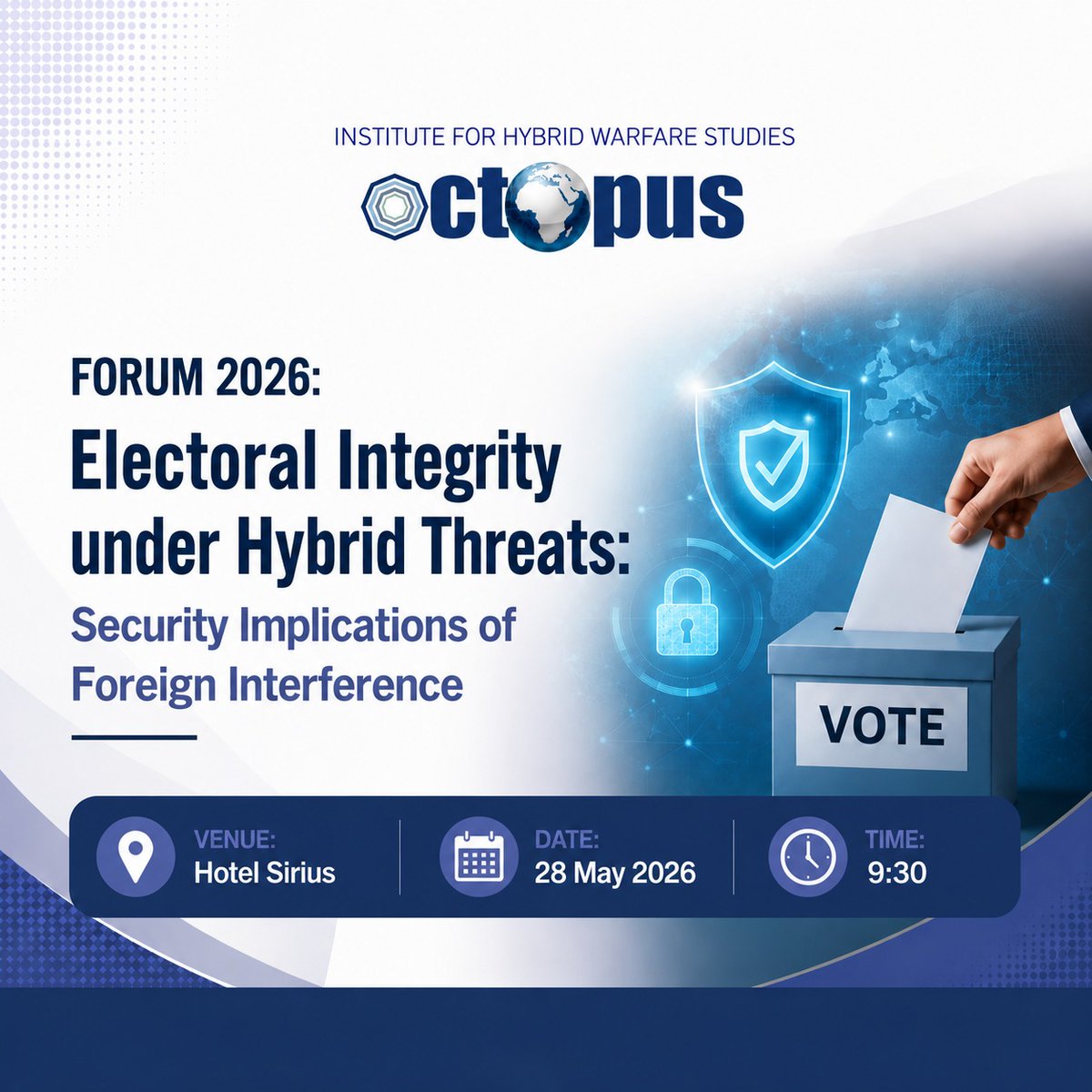
📢 OPEN INVITATION TO THE PUBLIC The Octopus Institute has the pleasure of inviting you to participate in FORUM 2026, on the topic: “Electoral Integrity Under Hybrid Threats: Security Implications of Foreign Interference” 🗓️ Date: May 28, 2026 🕘 Time: 09:30 📍 Venue: Hotel SIRIUS, Prishtina The forum will bring discussions on the challenges of electoral integrity, the impact of hybrid threats, and the implications of foreign interference for national security. 🔹 Participation is open, but for organizational purposes, please contact us at: 📧 Email: info@octopusinstitute.org 📱 WhatsApp: +383 45 666 449 We look forward to welcoming you! #Kosovo #Election #HybridWarfare
Octopus Institute tweet media
English
0
5
6
251
Ridvan Emini
Ridvan Emini@ridvan_emini·
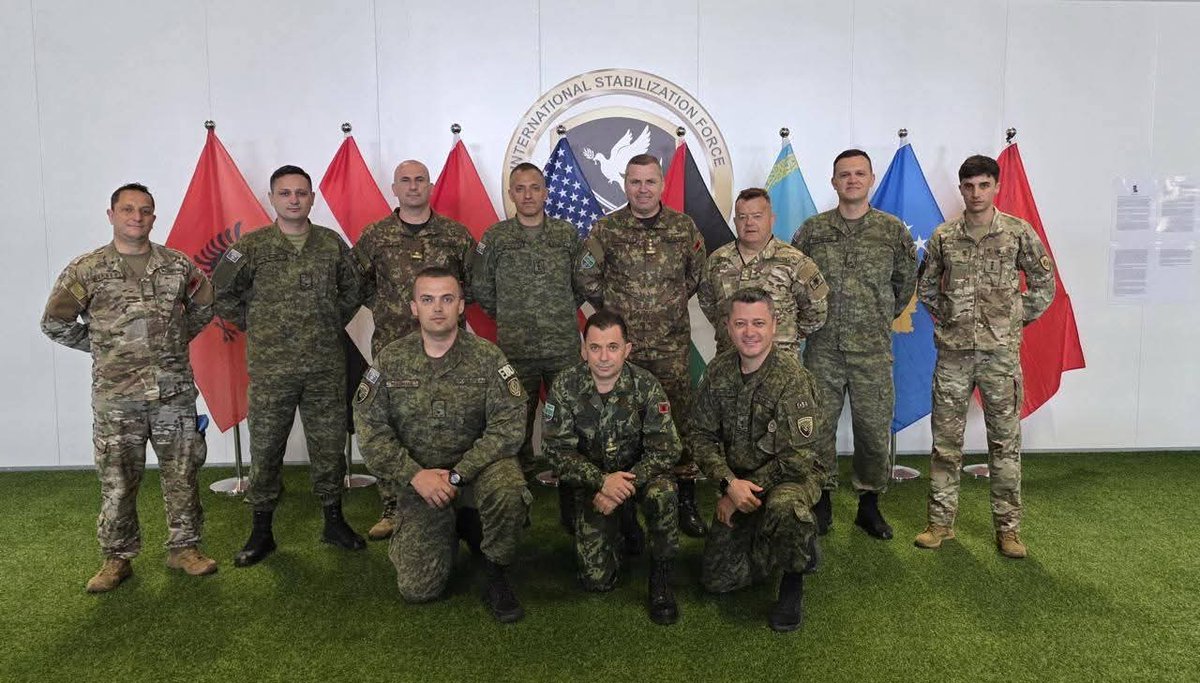
KSF has sent a team to Gaza to carry out reconnaissance of the area where its contingent is expected to operate as part of the peacekeeping mission within the International Stabilization Force.
Ridvan Emini tweet media
English
0
0
2
59
Ridvan Emini
Ridvan Emini@ridvan_emini·
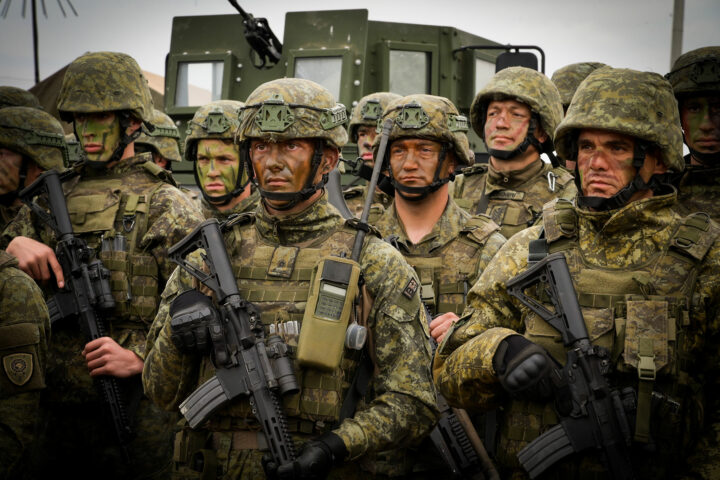
The Assembly of Kosovo has approved the deployment of the Kosovo Security Force (KSF) to a peacekeeping mission in Gaza. This decision confirms the strength of its military capacities and its provision of politico-military contributions to international peace.
Ridvan Emini tweet media
English
0
0
1
76
Ridvan Emini
Ridvan Emini@ridvan_emini·
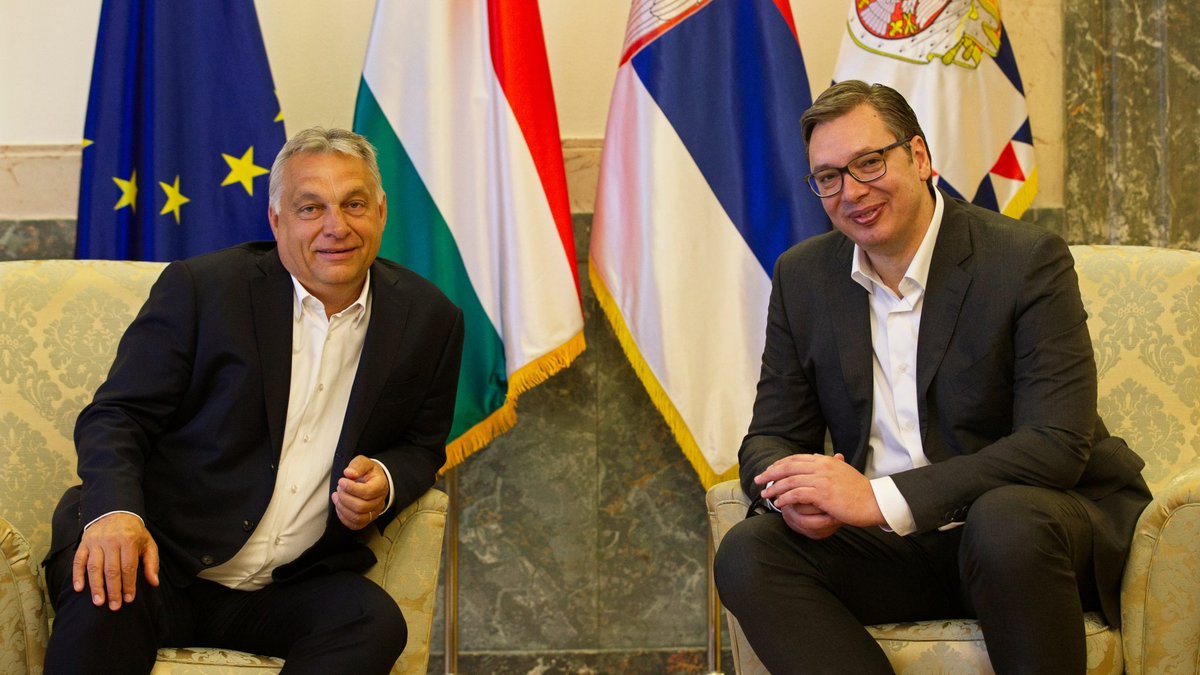
The loss of Viktor Orbán in Hungary is a hope for European liberal democracy. The next figure who might face Orbán’s fate is Vučić in Serbia.
Ridvan Emini tweet media
Română
0
0
1
106
Ridvan Emini
Ridvan Emini@ridvan_emini·
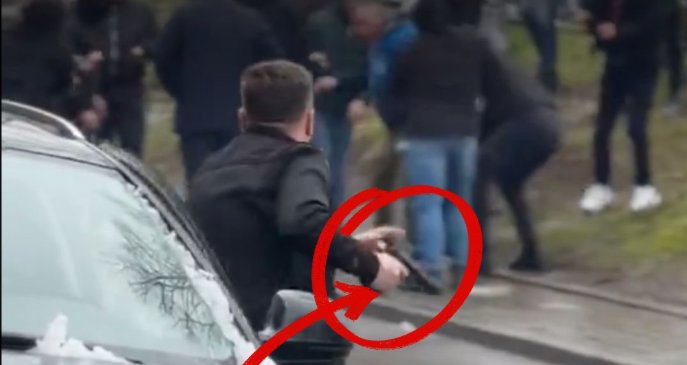
The true face of A. Vučić’s regime was revealed once again today during the voting for the Local Elections. Supporters and officials of the regime used violence against students and political opponents. Mass reports of violence and direct interference in the electoral process.
Ridvan Emini tweet media
English
0
0
1
100
Ridvan Emini
Ridvan Emini@ridvan_emini·
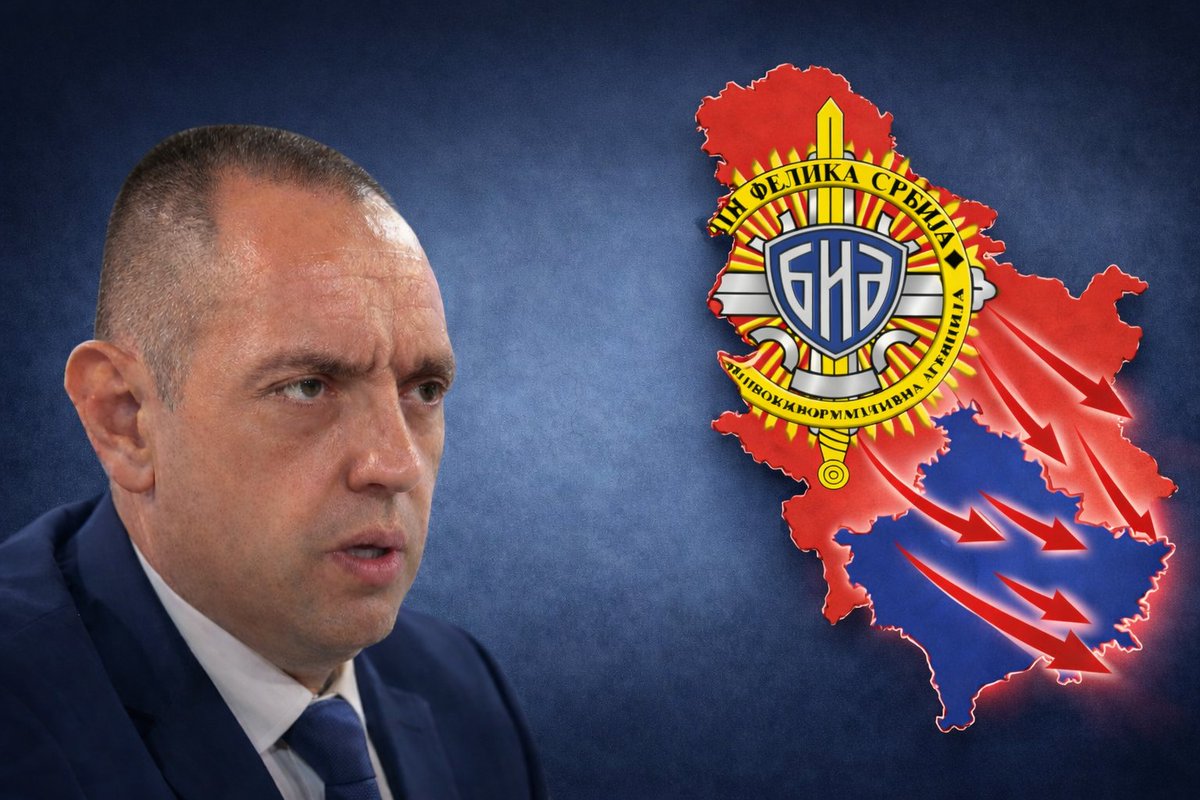
Serbia threatens again, the EU must react The statements of the former head of Serbia’s Security Intelligence Agency (BIA), Aleksandar Vulin, constitute a serious warning and an alarming threat to the security of Kosovo. dukagjini.com/emini-serbia-k…
Ridvan Emini tweet media
English
0
1
2
302
Ridvan Emini
Ridvan Emini@ridvan_emini·
Disinformation as an Instrument of Destabilization The regime of Aleksandar Vučić continues to use lies as a “weapon,” much as it did in the era of his former patron, Slobodan Milosevic. gazetametro.net/emini-dezinfor…
Ridvan Emini tweet media
English
0
0
2
61
Ridvan Emini retweetledi
Gurakuç Kuçi
Gurakuç Kuçi@gurakuqkuqi·
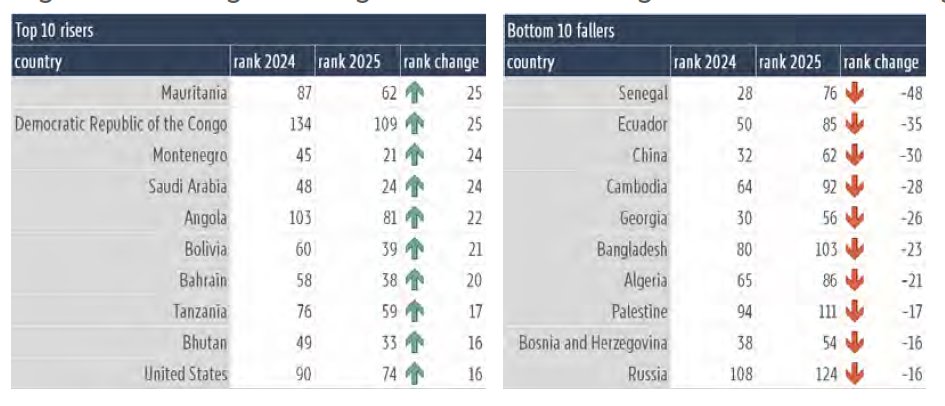
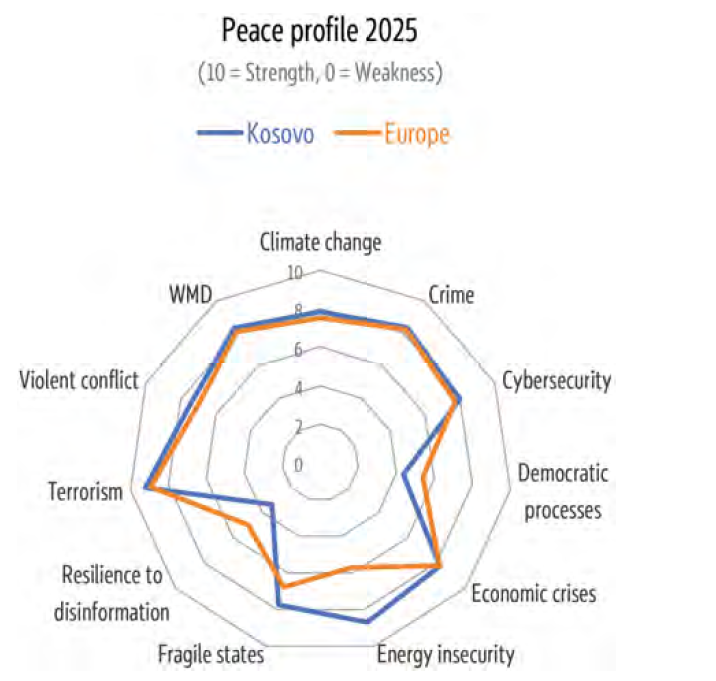
EU: Kosovo ranks 13th worldwide for strategic security, Montenegro a positive surprise, Serbia in decline According to the Normandy Index 2025, prepared by the European Parliamentary Research Service (EPRS), Kosovo ranks 13th globally for having one of the lowest levels of threats to peace and democracy. In practical terms, this places Kosovo in the top 10% of the most resilient countries worldwide and clearly positions it as the most resilient state in the Western Balkans in terms of strategic security. The Normandy Index does not measure how “peaceful” a country appears on the surface. Instead, it assesses how exposed a state is to real-world risks, including political destabilization, disinformation, external pressure, economic stress, energy insecurity, and hybrid threats. It is designed as a policy-support tool for the European Union to identify vulnerabilities and resilience in a deteriorating global security environment. How the Western Balkans rank under the Normandy Index 2025: - Kosovo (13) stands out as the regional leader. It demonstrates strong institutional and societal resilience, with the primary vulnerability linked to exposure to disinformation, largely originating from external actors. - Albania (20) shows solid and stable performance, ranking above most regional peers, with manageable institutional and democratic risks. - Montenegro (21) emerges as one of the most positive cases in the index, recording a notable improvement compared to previous years and ranking among the countries with the strongest upward movement globally. - North Macedonia (26) registers a slight decline, mainly driven by internal political tensions and institutional weaknesses. - Serbia (41) ranks significantly lower. The index identifies serious shortcomings in democratic processes and resilience to disinformation. It also notes that Serbia is a founding member of China’s 16+1 initiative and maintains close strategic ties with Russia, factors that increase its exposure to geopolitical pressure and hybrid security risks. - Bosnia and Herzegovina (54) remains among the most fragile states in the region, characterized by weak governance, democratic dysfunction, and a persistent risk of destabilization. At the broader level, EU member states continue to be less exposed to security threats than the global average. The report highlights that Russia and China are among the countries experiencing the sharpest decline in their strategic security profile, while the United States ranks among those with the most significant improvement. The global average score for 2025 stands at 5.79 out of 10, indicating a world that is increasingly insecure, yet still within a range where risks remain manageable. For more information, you can find the document at the EU Parliamentary web. #Kosovo #Serbia #Albania #NorthMacedonia #Montengero #BosniaHerzegovina #WesternBalkans #EuropeanUnion #EPRS #NormandyIndex #StrategicSecurity #SecurityPolicy #Democracy #Resilience @RobertaMetsola @EP_President @Europarl_EN @EP_EPRS @USEmbPristina @UN @OSCE @OSCEKosovo @vonderleyen @HelsinskiOdbor @albinkurti @VjosaOsmaniPRKS @UNHumanRights @kajakallas @MartaKosEU @TC_PristineBE @aliciakearns @DorisPack2 @agim_musliu @GunterFehlinger @Sandulovic_N @i_videnovic @natasakandic @DanielSerwer @GermanAmbKOS @DailyShqip @ThisisKaltri @Romanistan1971 @petritmalaj @shkamberi @FlamurKrasnq @NewsOnKosova @GlobalPatriaX
Gurakuç Kuçi tweet mediaGurakuç Kuçi tweet mediaGurakuç Kuçi tweet mediaGurakuç Kuçi tweet media
English
6
13
62
4.1K
Ridvan Emini
Ridvan Emini@ridvan_emini·
According to the Normandy Index 2025, prepared by the European Parliamentary Research Service (EPRS), Kosovo ranks 13th in the world for having the lowest level of threats to peace and democracy.
Ridvan Emini tweet media
English
0
0
0
28
Ridvan Emini retweetledi
Octopus Institute
Octopus Institute@iskhoctopus·
RACAK IN SERBIA’S HYBRID STRATEGY (The Anatomy of Denial on the 27th Anniversary of the Massacre) Ridvan Emini - Researcher at Institute for Hybrid Warfare Studies "OCTOPUS" The denial of the Racak Massacre by Serbia is not merely a battle with “truth” over guilt or innocence; rather, it is part of a broader strategy tied to its hegemonist project of the “Serbian World.” This involves an intensive political, media, and cultural engagement—including the role of the Orthodox Church—aimed at generating confusion in order to evade responsibility, as the only way to “legitimize” the continuation of its hegemonist policy toward Kosovo and other countries in the region. The Racak Massacre also symbolically exposes the narrative of alleged international “injustice” toward Serbia, stemming from insinuations by Aleksandar Vucic and other state officials that it was “a fabrication to justify NATO’s intervention.” Alongside the denial of the genocide in Srebrenica and the glorification of war criminals as a “heroic sacrifice” in defense of Serbs, within the framework of a hybrid strategy against Kosovo, Racak has also been subjected to an “artistic and cultural” denial—presented as a more “refined” method of distorting the truth for both the Serbian public and the international audience. “Culture” as a Hybrid Instrument After failing to conceal the crime through institutional manipulation, Serbia has continued its campaign by combining official denial with the instrumentalization of art and culture. Numerous documentaries, feature films, exhibitions, and operatic projects have been invested in promoting the “truth” about Racak and the “defense” of Kosovo. Subtitling in foreign languages and dissemination abroad through official channels and broadcasting platforms demonstrate that these productions are not intended solely for a domestic audience, but also for the international one. Radio Television of Serbia (RTS), as a megaphone of Serbian propaganda, has played—and continues to play—a key role in this regard. The documentary “Račak – istine i laži”(Racak – Truths and Lies, 2009) is its production marking the tenth anniversary of the massacre, portraying civilian victims as members of the Kosovo Liberation Army (KLA) and directly attacking the head of the OSCE Kosovo Verification Mission, William Walker, as an alleged “stager” of the crime. Together with the Ministry of Internal Affairs of Serbia (MUP), the broadcaster also produced a documentary series entitled “Dosije Kosovo” (The Kosovo File, 2021–2024), consisting of four parts, which “chronologically recount” events and the fates of civilians and Serbian security forces in Kosovo during the period 1998–2004. In each episode, the “facts” are manipulated with the aim of portraying the Kosovo Liberation Army (KLA) as a “terrorist” force. The first partfocuses on the year 1998, where, through staged interviews, KLA attacks and killings in villages inhabited by Serbs are “presented as evidence.” The second partaddresses the Racak Massacre, portraying civilian victims as “disguised” members of the Kosovo Liberation Army (KLA) wearing civilian clothes. This episode represents the peak of propaganda aimed at denying this mass crime committed by Serbian forces. Meanwhile, the third part deals with the so-called “Yellow House”, accusing the Kosovo Liberation Army (KLA) of kidnapping Serbs and engaging in organ trafficking—a fabrication that has since been discredited, yet one that has had serious consequences for Kosovo and former KLA leaders, who continue to be tried by the Kosovo Specialist Chambers in The Hague. The fourth partaddresses the events of March 2004, demonizing the state of Kosovo and accusing Albanians of an alleged ethnic cleansing of Serbs. The interviews and narration in English, Russian, and Albanian indicate that Serbia, through this documentary, aimed to disseminate its false narratives not only in the international arena but also among Albanian public opinion. Immediately after the completion of this documentary cycle, an alleged “independent production” released the film “Anatomy of Deception – Racak” (2023), which represents a continuation of the Serbian narrative on Racak. This film demonizes the figure of Ambassador William Walker, portraying him as an alleged CIA agent with a destabilizing mission, and further “elaborates” the conspiracy theory depicting the Racak Massacre as a “fabrication.” On the other hand, in order to obstruct Kosovo’s membership in UNESCO, alongside direct state-to-state lobbying, Serbia has also employed the documentary “Kosovo: A Moment in Civilization” (2017). This production was financially supported by the so-called Office for Kosovo within the Government of Serbia, as well as by the Serbian Cultural Center in Paris. Through this documentary, Serbia sought to portray Albanians as vandals, Kosovo as an incapable and barbaric state, and Serbs as persecuted and suffering—precisely on the eve of the vote on membership in UNESCO, issuing an open call for a vote against it. Meanwhile, the Office for Public and Cultural Diplomacy, led by Arnaud Gouillon, has promoted propaganda through the organization of exhibitions and activities across numerous countries worldwide, including the exhibition “Encounters with the Last Serbs in Kosovo and Metohija” in Paris, deliberately calculating the disinformation of international audiences about Kosovo. Thus, alongside documentaries, feature films construct a symbolic universe portraying Serbs as perpetual victims and Albanians as aggressors and morally unworthy. This logic also extends to the newest operatic project, “The Battle of Kosovo”, announced by the Serbian National Theatre in Novi Sad. This project is not merely an artistic initiative, but represents the latest investment in the narrative warfare against Kosovo. Through opera, as an elite form of cultural communication, the regime of Aleksandar Vucic will seek to generate sympathy for—and legitimize—the Serbian myth of Kosovo on prestigious international stages. In this way, cultural products are instrumentalized to deny crimes, in service of the hegemonist objectives of the so-called “Serbian World.” Internationally Denounced ‘Concealment’ The denial strategy also involved the then investigating judge Danica Marinkovic, who continues to attempt to distort the truth. After efforts to conceal the crime in Racak failed, she ordered the transfer of the bodies for autopsy, seeking to construct a deceptive narrative through control over the evidence. However, authorship of the crime was confirmed by the forensic medical expertise of the European Union team led by Dr.Helena Ranta, which approximately two years later reportedthat “all those killed and massacred were unarmed Albanian civilians, forcibly removed from their homes and taken to Babush Hill for execution.” The two-year “delay” gave Serbia room for manipulation, but independent international media reported the truth and exposed Serbian attempts to conceal this crime. Despite this, Serbia has continued its policy of denial through the Security Information Agency (BIA) as well, implicating espionage networks in Kosovo in fabricating claims about a KLA military hospital in Monopollc, following a pattern similar to the “Yellow House” scenario. The Indictment as a Denunciation of Serbia The filing of an indictment by the Special Prosecution of the Republic of Kosova against 21 individuals held responsible for the crimes committed in Racak represents the latest development demonstrating that this is not merely a procedural step of justice, but also a direct confrontation with Serbia’s falsifying narrative. This indictment, although delayed, confirms that the crime committed by Serbia in Racak has not been forgotten and that criminal responsibility does not “expire” with time. According to the Special Prosecution of the Republic of Kosova, the suspects are charged with the joint perpetration of the murder of 42 Albanian civilians, as members of the Army of the former Yugoslavia, the 243rd Mechanized Brigade, the Third Army—known as the Pristina Corps—as well as members of the Ministry of Internal Affairs of Serbia (MUP). They are also accused of inhuman treatment, destruction of property, mass expulsion, and ethnic cleansing of the civilian population. With this development by the justice institutions, the Racak Massacre now also receives a juridical “seal” of Serbia’s state responsibility, as a crime documented 27 years ago—despite the persistent use of various “filters” to eclipse it.
Octopus Institute tweet media
English
0
1
0
106