
Rob Krugman
487 posts

Rob Krugman
@robkrugman
Chief Digital Officer @Broadridge / focused on #digitalsolutions, #defi,#customerengagement & #idmgmt / more than 25+ years of experience in #tech. Views my own
New York Katılım Haziran 2009
612 Takip Edilen346 Takipçiler

@AmericanAir flight 1925 from
DFW to LGA sitting waiting 10 feet from the gate to be tugged to the gate for 15 minutes. Do better
English
Rob Krugman retweetledi

Spend time shipping product, not slide decks
Short documents only (if you must)
Nick Prince🛡@Nick_Prince12
coinbase banned slide decks a few years ago. one of the best decisions ever. your idea should stand on its own in a document without shiny slides.
English
I hired an ex McKinsey consultant to compile all my companies' sales materials.
I wanted to see how each company reaches over $20M in annual revenue.
He collected:
- Recordings of sales calls
- Sales scripts
- SOPs
- Led gen systems
- etc
100s of top companies paid me for access to it.
Today I'll give it away for free.
Comment "sales" to get a copy.
English
Enjoyed speaking with @JillMalandrino from #Consensus2025 to discuss the future of financial market infrastructure on chain
TradeTalks@TradeTalks
Chief Digital Officer Rob Krugman joins @JillMalandrino on @Nasdaq #TradeTalks from #Consensus2025 by @CoinDesk to discuss the future of financial infrastructure delivered via blockchain and AI. twitter.com/i/broadcasts/1…
English

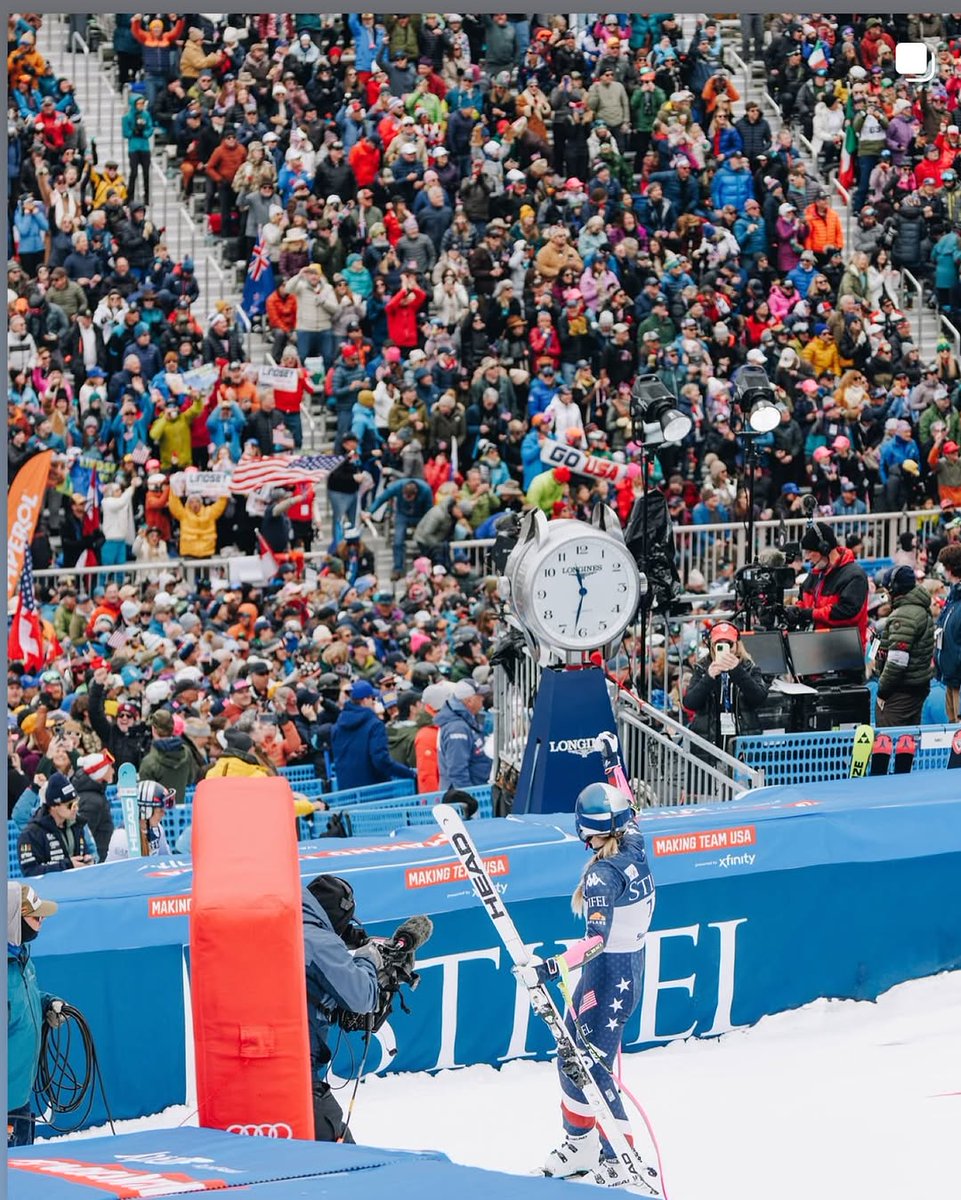
I DID IT!!!! 🥈P2‼️After everything I’ve been through, I fought my way back on to the podium!! I can’t even start to describe what this means to me… I have been overwhelmed with emotion and support from so many people. I want to say thank you to everyone who believed in me! Going to enjoy this moment and reflect. More soon!
Sun Valley, you showed up! Thank you 🙏🏻🙏🏻 🇺🇸 🇺🇸 USA!!!

English
Whatever genius is responsible for the new traffic pattern at JFK should be fired immediately. I get there is construction but come on, this is moronic
English
Rob Krugman retweetledi

Well folks, I think I've found the "Photo of the Day." My goodness, what a shot of Gabriel Medina!
📸 Jerome Brouillet/AFP via Getty Images

English
Rob Krugman retweetledi

Interested in learning about DAOs?
Here are some of our resources.
🧵
English
I just purchased onchain on Base Cafe - State of Crypto. One click buy and gasless on @slice__so and @coinbasewallet slice.so/slicer/basecaf…
English
Rob Krugman retweetledi
Watch how Steve Jobs responded to an aggressive question (1997)
English
Rob Krugman retweetledi
Stablecoins will happen in the U.S. because BlackRock and the banks want them to happen.
This could not be more obvious.
The new BlackRock BUIDL fund on Ethereum is a high bandwidth pipeline between U.S. Treasuries and USDC.
Pipelines will bring trillions onchain.
The USDC issuer Circle is (likely) will IPO soon. BlackRock has ownership in Circle.
The banks will backdoor themselves into stablecoins - by acquiring/partnering/controlling crypto native companies - and they'll lobby for stablecoin legislation and make it happen along the way.
The US does not have the political will to build a central bank digital currency. They're create one defacto through private bank issued stablecoins on public crypto networks like Ethereum.
As long as we preserve open, permissionless, decentralized protocols like Ethereum at the bottom of the stack - then crypto wins.
The liquidity and legitimacy from this will make crypto unstoppable.
English
Rob Krugman retweetledi

By encouraging your top performers to consider outside job offers, you’re communicating that you care about their development. s.hbr.org/3u66jKv
English
Rob Krugman retweetledi

A @Broadridge survey found many people use conventional financial metrics to decide how to invest—even though you can't apply cash flows to assess crypto.
@robkrugman argues crypto needs a purpose-built data
#StateofCrypto2023, sponsored by @chainalysis
trib.al/l0c28sD
English
Rob Krugman retweetledi

Rob Krugman retweetledi

In 2009, Stanford business professor Tina Seelig split her class into groups and issued a challenge:
Each group had $5 and 2 hours to make the highest return on the initial money.
At the end, they'd give a short presentation on their strategy.
The results were fascinating...
Most of the groups followed a basic approach:
• Use the $5 to buy a few items.
• Barter or resell those items.
• Repeat
• Sell final items for (hopefully) more than $5.
These groups made a modest return on their initial $5.
A few groups ignored the $5.
They thought up ways to make the most money in the 2 hours of allotted time:
• Made and sold reservations at hot restaurants.
• Refilled bike tires on campus for $1 each.
These groups made a better return on their initial $5.
The winning group took an entirely different approach.
They had three core realizations:
1. The $5 was nothing more than a distraction.
2. The 2 hours of time was not enough to make an attractive, outsized return with a mini-business (like selling restaurant reservations or filling bike tires).
3. The most valuable "asset" was actually the presentation time in front of a class of Stanford students.
Realizing the value of this hidden asset, they offered the presentation time to companies looking to recruit Stanford students.
They struck a deal to sell the time slot for $650, netting a monstrous return on the $5 of initial capital.
The losing groups thought in linear, logical terms and achieved a linear, logical outcome.
The winning group thought differently.
So, what can we learn from this story?
There are two types of problems:
1. Low-Stakes: Lower potential, linear rewards. Decisions are easily reversible.
2. High-Stakes: Higher potential, asymmetric rewards. Decisions are not easily reversible.
With low-stakes problems, given the reward potential is low and the decisions are easily reversible, we can use shortcuts and heuristics to choose our path. We can take a logical, linear approach.
With high-stakes problems, the high, asymmetric reward potential means we need to think differently. We want to take a creative, non-linear approach.
Three steps to start thinking differently:
Step 1: Avoid the Distraction
There will always be an "obvious" solution that is simple, clear, and entirely wrong.
In the challenge, the $5 was nothing more than a distraction. It was a trap.
To find the best path, you have to avoid the distraction.
Step 2: Ask Foundational Questions
Ask and answer questions that expose and vet underlying assumptions and logic.
• What's the real problem you are trying to solve?
• What's your hypothesis? Why?
• What are your core assumptions? Why?
• What evidence do you have?
• What are your core options?
• What alternatives exist?
This takes time, but it's an essential exercise when facing a problem with the potential for non-linear rewards.
Step 3: Select the High Leverage Approach
Slow down and evaluate the options on the table.
Select the path most likely to generate the asymmetric, attractive risk-adjusted returns.
If the story teaches us one thing, it's this:
Creative, non-linear, asymmetric thinking generates creative, non-linear, asymmetric outcomes.
If you enjoyed this or learned something, follow me @SahilBloom for more in future.

English