
R. Saravanan (sarava.net)

1.3K posts

R. Saravanan (sarava.net) banner
R. Saravanan (sarava.net)

R. Saravanan (sarava.net)

@RSarava

Professor & climate scientist at Texas A&M University. (@sarava.net on https://t.co/VoQ6v5Fenh) Author: https://t.co/mh2O5M4ItO, https://t.co/Oz4qbiiD0P Edu: @Princeton/@NOAA_GFDL, @IITKanpur

Texas A&M University Katılım Ağustos 2010
317 Takip Edilen812 Takipçiler
Sabitlenmiş Tweet
R. Saravanan (sarava.net)
Howdy Aggies (and friends of Aggies)! The Texas A&M Department of Atmospheric Sciences will be marking the 60th anniversary of its establishment at the 7pm Tuesday (Jan. 27) reception during the AMS Annual Meeting in Hilton Americas-Houston. Come join us!

R. Saravanan (sarava.net) tweet media
English
0
1
1
637
R. Saravanan (sarava.net) retweetledi
Daniel Rothenberg
Daniel Rothenberg@danrothenberg·
@WeatherProf The class of models evaluated in this study are overly diffusive because they are optimized against an RMSE-like loss. Contemporary AI weather models are instead optimized against CRPS losses and produce both sharper feature resolution and better calibrated predictive dists
English
1
1
5
436
R. Saravanan (sarava.net) retweetledi
John Arnold
John Arnold@johnarnold·
If you can’t convincingly articulate your edge in a market, whether sports betting, prediction markets, stocks, commodities, or whatever else, trading may provide some entertainment but you’ll almost certainly lose money over the long term.
John Arnold tweet media
English
37
142
1.5K
350.7K
R. Saravanan (sarava.net)
@foam_boat @danrothenberg @SpaceKoala I don't pay much attention to year-to-year variations in EEI (or other climate variables like global avg T). There's a lot of uncertainty and models can't do close heat budgets well. Climate is a multidecadal average of weather. So I'd wait a while before worrying about high ECS
English
0
0
0
12
Floating Ursus 🦞🇺🇸
@RSarava @danrothenberg @SpaceKoala Sorry to be late but this is appearing on my feed now for some reason. Do you still buy 3C ECS? Seems like trends in EEI would indicate ECS is much higher. I’ve been trying to follow the debate but it’s challenging.
English
1
0
0
20
Space Koala
Space Koala@SpaceKoala·
Reducing sulfur emissions in bunker fuel is driving at least part of this. The sad part is people on the right don't want to admit global warming is happening, and people on the left don't want to admit that this environment regulation managed to make things worse.
Space Koala tweet media
The Washington Post@washingtonpost

Since the 1970s, the Earth — fueled by greenhouse gas emissions — has been warming at a fairly steady rate. But 2023, 2024 and 2025 were far warmer than previous trends. A Post analysis shows the warming rate over the past decade increased by 42 percent. wapo.st/4aq8xpa

English
7
2
41
1.7K
R. Saravanan (sarava.net)
@noahqk @RogerPielkeJr I guess both of you are saying that a carbon tax (or equivalent regulation) should be set at some "reasonable" level, i.e., below the economic pain threshold, rather than computed using a highly assumptive cost-benefit analysis framework typically involving global avg T. Agree.
English
1
0
2
47
Noah Kaufman
Noah Kaufman@noahqk·
@RogerPielkeJr @RSarava William Baumol wrote a paper in 1972 that basically said, Pigouvian taxes are great in theory, but in reality we often can't reasonable estimate damages, in which case we should pick reasonable enough targets and pursue them cost-effectively jstor.org/stable/1803378…
English
2
0
4
40
R. Saravanan (sarava.net) retweetledi
Noah Kaufman
Noah Kaufman@noahqk·
Climate economics is a broad subfield with terrific scholars and useful insights on topics from climate risks to mitigation pathways. This article raises a narrower (but important) issue: our inability to produce policy-relevant estimates of total climate damages.
The Honest Broker@RogerPielkeJr

You Can’t Trust ‘Climate Economics’ Governments, banks and other institutions have based policies on models unconnected to reality. wsj.com/opinion/you-ca…

English
3
5
30
8.1K
R. Saravanan (sarava.net)
@RogerPielkeJr @noahqk After a quick read, I generally agree with the preprint's conclusions on adaptation. However, answering the mitigation question seems to be out of its scope (except for the bit about subsidizing innovation). Without SCC, what are acceptable costs of a carbon tax or cap-and-trade?
English
1
0
0
46
R. Saravanan (sarava.net) retweetledi
Rishika Pardikar
Rishika Pardikar@rishpardikar·
Folks at @CICERO_klima, along with IIT-Bombay and IIT-Roorkee, have launched a series of monthly briefings that provide an overview of India’s climate and energy space. I have previously found their work to be quite valuable. Check it out ecpulse.in
English
0
11
39
1.7K
R. Saravanan (sarava.net)
@noahqk @RogerPielkeJr *It's not good to shorten "ACC damages" to simply "climate damages" because it conflates anthropogenic impacts with damages from naturally occurring severe weather. Quantitative risk attribution to ACC is still very hard most types of severe weather, except perhaps for heat waves
English
0
0
1
37
R. Saravanan (sarava.net)
@noahqk @RogerPielkeJr The question I have for both of you is: If we cannot reliably estimate global damages from anthropogenic climate change (ACC)*, how can we justify any mitigation steps that have non-zero costs? Adaptation costs are perhaps easier to justify as the benefits are sectoral and local.
English
2
0
3
75
Daniel Rothenberg
Daniel Rothenberg@danrothenberg·
Something is seriously broken with Claude; I used up an entire session's quota with a single compaction and straightforward query - no more than 10 minutes of usage.
English
4
0
1
793
R. Saravanan (sarava.net)
@noahqk Energy policy beyond a decade has to make assumptions about the non-stationarity of climate. So the future is always viewed through a lens. There's the climate-change lens and the no-climate-change lens (which may sound like no lens). Not sure one is more coherent than the other.
English
0
0
1
49
Noah Kaufman
Noah Kaufman@noahqk·
At some point I’d like to live somewhere with such a coherent climate strategy that people debate other energy policy issues on their own merits instead of thru a climate lens. Too much to ask?
English
6
1
19
1.8K
R. Saravanan (sarava.net)
@noahqk @matthewgburgess Could you give some concrete examples of this approach for mitigation? Would you just focus on costs or also benefits (which would be global for mitigation)? How do you decide if it's "cost effective"?
English
0
0
0
12
Noah Kaufman
Noah Kaufman@noahqk·
@RSarava @matthewgburgess There’s no perfect answer but by setting reasonable goals and developing cost effective strategies to achieving them we can do much better than fly blind.
English
1
0
1
25
R. Saravanan (sarava.net) retweetledi
Noah Kaufman
Noah Kaufman@noahqk·
Economists are savage to each other in seminars but often too polite to each other in public. The implication of this paper is that a lot of policy guidance from climate economists over the last 30 years was build on sand.
Finbar Curtin@FinbarCurtin

1/n) New working paper: “The empirically inscrutable climate-economy relationship”, with @matthewgburgess. We argue that it is not possible to reliably estimate economic climate damages from historical data. Link below.

English
9
22
195
41.5K
R. Saravanan (sarava.net)
@noahqk @matthewgburgess I have struggled with the same question: if impact uncertainties are large, how much $$ should we be willing to spend on climate change mitigation? My glib answer would be: About as much $$ as we waste on inefficient health care in the US. We aren't anywhere close that, i think..
English
1
0
1
41
Noah Kaufman
Noah Kaufman@noahqk·
@matthewgburgess If someone is claiming that the SCC is $1000/ton and therefore any action is justified, your point in response about no-regrets policies is well taken. But, alternatively, if someone is claiming that the SCC is $10/ton, you might say that much more costly policies are justified
English
3
0
3
124
R. Saravanan (sarava.net)
@FinbarCurtin El Niño and Global Warming both increase global T but have very different spatial signatures and likely very different economic impacts. E.g. people assume the currently predicted super El Niño is an expression of GW, but it may just be natural variability metamodel.blog/posts/big-bad-…
English
0
0
1
23
Finbar Curtin
Finbar Curtin@FinbarCurtin·
16/n) The methodology of Bilal and Känzig (2026) requires that 0.1°C of climate change induce the same effect as 0.1°C of warming from ENSO, solar cycles, etc. Such is the result of reducing climate (and climate change) to a single variable.
English
3
0
7
2.1K
Finbar Curtin
Finbar Curtin@FinbarCurtin·
15/n) We argue that Bilal and Känzig (2026) rely on an unrealistic exclusion restriction: temperature shocks affect GDP only through temperature levels. If shocks coincide with other climate phenomena (e.g., ENSO), the effect isn’t well-identified.
English
1
0
11
2.2K
R. Saravanan (sarava.net) retweetledi
Texas A&M Arts & Sciences
Texas A&M Arts & Sciences@TAMUArtSci·
Congratulations to @tamu_atmo alum Lai‑yung Ruby Leung, Ph.D. ’91, recipient of the Michael T. Halbouty Geosciences Medal! 🌎 A remarkable leader in geosciences and a proud Aggie making lasting contributions. 👏 #TAMU
Texas A&M Arts & Sciences tweet media
English
0
1
2
113
R. Saravanan (sarava.net) retweetledi
Andrej Karpathy
Andrej Karpathy@karpathy·
- Drafted a blog post - Used an LLM to meticulously improve the argument over 4 hours. - Wow, feeling great, it’s so convincing! - Fun idea let’s ask it to argue the opposite. - LLM demolishes the entire argument and convinces me that the opposite is in fact true. - lol The LLMs may elicit an opinion when asked but are extremely competent in arguing almost any direction. This is actually super useful as a tool for forming your own opinions, just make sure to ask different directions and be careful with the sycophancy.
English
1.7K
2.4K
31.4K
3.4M
R. Saravanan (sarava.net)
@noahqk As someone who appreciates your work and who is also a subscriber to WSJ, I was taken aback by their characterization of you! I think of you as someone who takes a boldly moderate, and somewhat skeptical, stance on climate economics—a rarity.
English
1
0
0
32
Noah Kaufman
Noah Kaufman@noahqk·
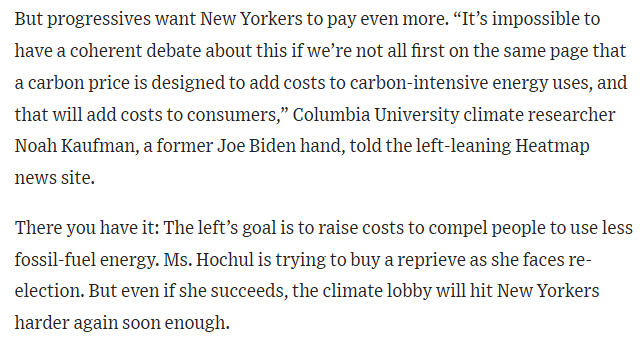
Nobody likes this kind of whining, but I told a reporter that a constructive climate policy discussion in New York requires stakeholders to recognize tradeoffs, and this WSJ editorial took me out of context here. This kind of propaganda is so destructive to good policymaking.
Noah Kaufman tweet media
English
7
2
30
7.4K
R. Saravanan (sarava.net)
R. Saravanan (sarava.net)@RSarava·
@danrothenberg @SpaceKoala Experiencing slightly higher global warming is the "lesser evil" compared to the serious direct health impact of breathing pollutants like SO2. With climate sensitivity of 3C and radiative forcing of 4W/m2 for doubled CO2, the implied warming is 0.1C, similar to the sunspot cycle
English
1
0
1
31