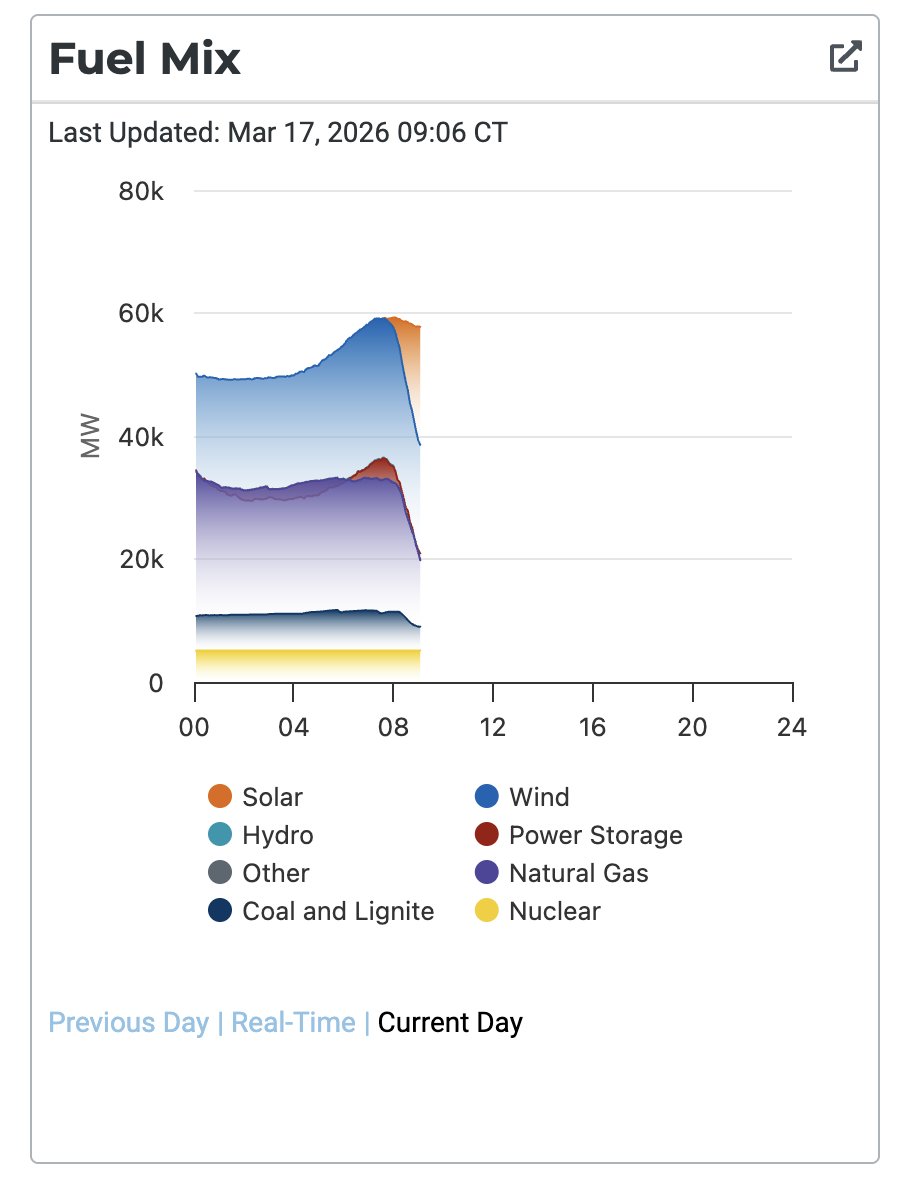

Pretty astonishing. In Texas, between 10:00 am and 4:00 p.m., 80-90% of electricity comes from carbon free sources. And storage is already a significant contributor in the early morning and evening
Ryan Stanton ⚡️🛻
830 posts

@ryan_sw
⚡️Electricity geek @ TVA | Father | Opinions / tweets = my own

Pretty astonishing. In Texas, between 10:00 am and 4:00 p.m., 80-90% of electricity comes from carbon free sources. And storage is already a significant contributor in the early morning and evening


The cost of solar has dropped 99.8% worldwide since 1975 and 94.4% since 2008. Solar is the future.


NEWS: Elon Musk's @boringcompany received approval today from the Tennessee DOT to officially begin construction on the Music City Loop tunnel in Nashville! • 100% privately funded • Only @Tesla vehicles will be used in the tunnels • Will connect downtown & the Convention Center to Nashville International Airport • Transit time of ~8 minutes • Tunnels will result in the removal of thousands of vehicles daily from roadways and state highways, easing congestion • Will be capable of moving thousands of people per hour with predictable transit times • Expansion: Possibilities include additional communities and 40+ stations following the initial route • Construction will be immediately “The Music City Loop shows what’s possible when we leverage private-sector innovation and American ingenuity to solve transportation challenges,” said U.S. Transportation Secretary Sean Duffy. “TDOT’s lease approval will help advance this ambitious project as we work to reduce congestion and make travel more seamless for the American people. Congratulations to Governor Lee, the City of Nashville, and The Boring Company on this significant step toward a faster, more efficient transportation future.”

This is the most useless infrastructure project imaginable for a city in desperate need of real public transit.


@AlexEpstein Horrible take. Solar and wind are the two least expensive sources of electricity. It's not even disputable. There are many developers out there embarking on fresh solar+wind+battery storage across the central US right now.


I just spent an hour responding to the hundreds of people who tried to refute my argument that solar+batteries is an economically catastrophic way to try to provide reliable power. Which is why no company using lots of power, certainly not any of Elon's, actually tries to do it.

Solar is now the dominant source of new U.S. power capacity and is on track to surpass coal in total installed capacity before the end of 2026. 70 GW of new solar capacity is scheduled to come online in 2026–2027 → a 49% increase in operating solar capacity from the end of 2025.

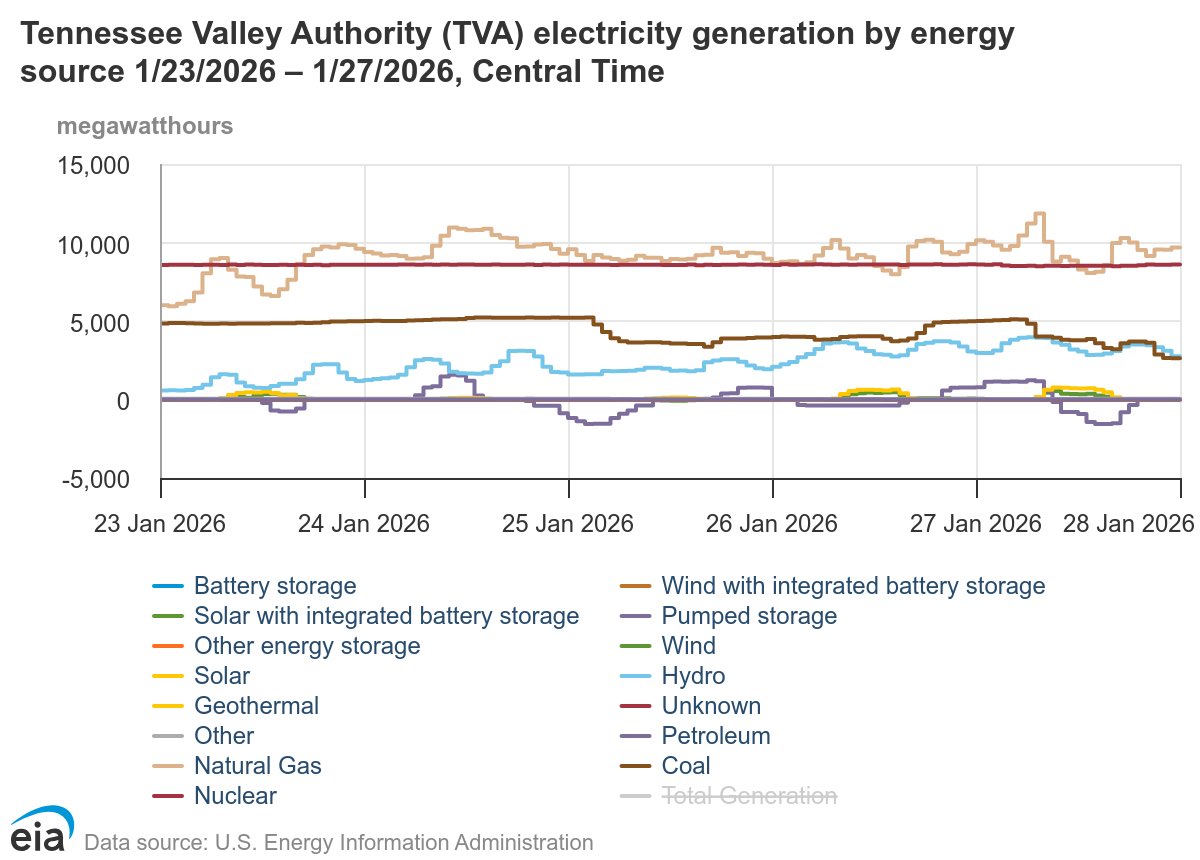
Serious question for determining the upper limit of solar adoption: under what scenario could solar + storage can meet demand during winter storms like Fern? What size batteries would be needed to ride through multi-day winter events? And what’s the capital cost and associated LCOE for a scenario like this? Winter-peaking regions pose a major challenge for solar adoption beyond say ~20% of net annual generation. Case in point: During WS Fern, the Tennessee Valley saw multiple consecutive cloudy days (with snow + freezing rain), followed by extended severe cold. Throughout a 5 day period (1/23-1/27) Nashville had near-continuous cloud cover and an average temp of 21F. The ~1500 MW of solar on TVA’s system contributed virtually no generation during this period. Same challenge exists for the rest of the Northeast, Midwest, and parts of the Southeast, where 50% of the population lives. Solar is a much easier sell for summer-peaking regions like California, Texas, and Florida (where influential solar advocates like @Elonmusk and @chamath happen to live). But when residents in the rest of the country depend on electricity for heating the most, solar is completely absent. It’s nuclear, gas, coal, and hydro that keeps homes warm.

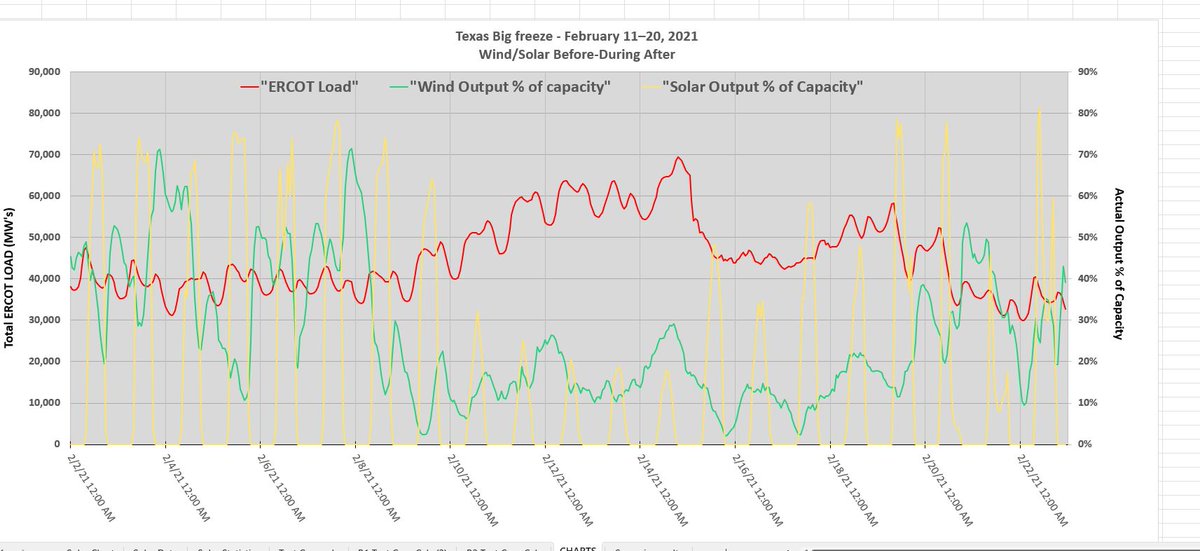
Solar sucks as a real power source even compared to wind. Wind is intermittent but at least blows some almost 24/7 so if you overbuild enough and add a lot of storage you get something resembling capacity. Solar disappears 1/2 the time no matter how much you overbuild and thus requires catastrophic amounts of storage to handle real world conditions. Don’t get me wrong, wind+storage is wildly cost-ineffective but solar+storage is an absolute joke in terms of actually powering the grid 24/7/365, including through the winter storm many just experienced. Solar only looks like the future when you confuse its intermittent fuel savings with real power.