

Stijn 'Vioo' Diependaele
2.5K posts

Stijn 'Vioo' Diependaele
@sdiepend
Freelance DevOps Engineer Building: - https://t.co/SPTuvS2qJD - https://t.co/nrEBDhpBVS Broad interest in the things of life https://t.co/RiHVi5bZfw
@sdiepend.bsky.social Katılım Aralık 2008
854 Takip Edilen275 Takipçiler
Stijn 'Vioo' Diependaele retweetledi

this post cuts to something i’ve been personally thinking & posting about a lot which is how the human mind’s forgetting machinery is underrated as a design primitive.
in our first product we’ve built our memory model around a specific decay factor influenced by multiple variables..
each memory degrades by default unless actively reinforced. this relies on a combination of recency, retrieval frequency, & contextual reactivation. this ain’t perfect any means.
but it’s annoying af that current llm memory implementations essentially treat every retrieved fact as equally alive. that’s likely not how cognition works.
idk if our approach is the final answer but i’m increasingly convinced the forgetting curve is as important as the learning curve. & the right memory model may be way more about what you let go than what you store.
Andrej Karpathy@karpathy
One common issue with personalization in all LLMs is how distracting memory seems to be for the models. A single question from 2 months ago about some topic can keep coming up as some kind of a deep interest of mine with undue mentions in perpetuity. Some kind of trying too hard.
English
If grinding for jail time is your goal.
0xGeeGee@0xGeeGee
This man is a billionaire and was removing labels with a hair dryer personally, you're simply not grinding hard enough
English

@sdiepend Dropped as in released or taken away?
English
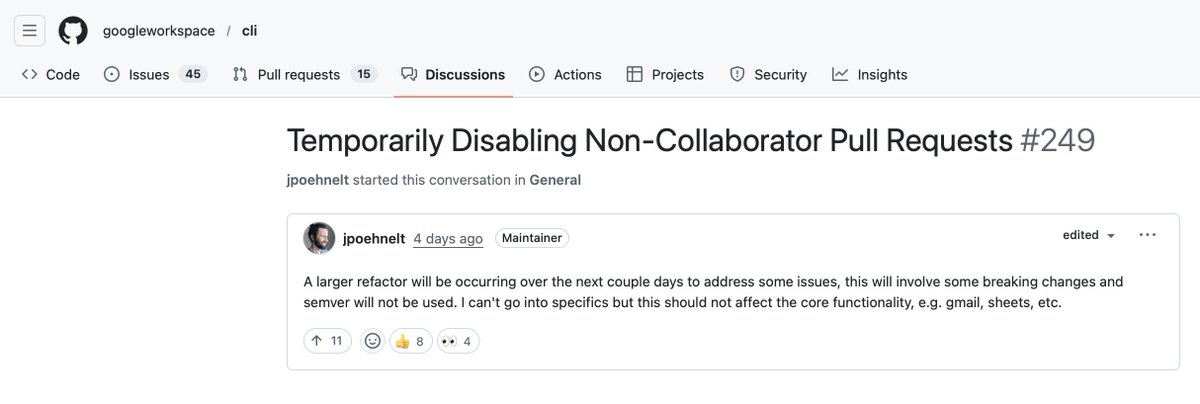
MCP support already dropped without any reason?
Wes Bos@wesbos
Google just dropped an official CLI for gmail, drive, calendar sheets and more complete with skills and an MCP server 👌
English
English

@wesbos @sdiepend #discussion-9583922" target="_blank" rel="nofollow noopener">github.com/googleworkspac…
QME
Stijn 'Vioo' Diependaele retweetledi

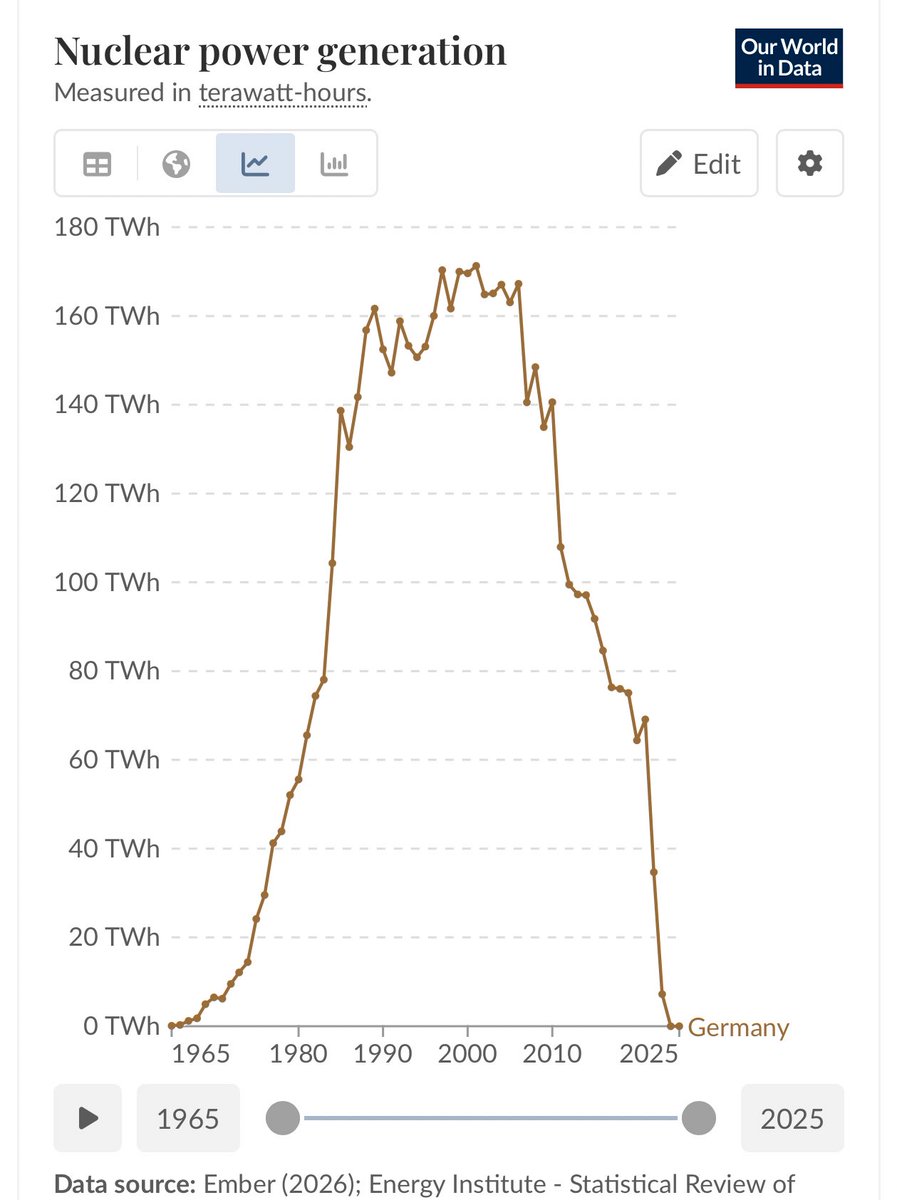
Unreal numbers 👀⚡️
"JPMorgan estimates that, had Germany not phased out nuclear power, the country would have generated 50% less electricity from fossil fuels and 84% less electricity from natural gas in 2024. Electricity prices in Germany would have been around 25% lower, and the country would have imported half as much electricity.."
English
@MoodiSadi @rohit4verse Do you have a detailed breakdown of your setup?
English

@rohit4verse /loop is the real game changer. I've been using it to run nightly PR reviews with worktree agents - catches 3-4 issues before morning standup. The key: keep loops under 500 lines and use MCP for state persistence.
English

This is quietly the biggest Claude Code update yet.
/loop turns Claude from a tool you use into an agent that works for you 24/7, for days at a time.
Boris Cherny@bcherny
Released today: /loop /loop is a powerful new way to schedule recurring tasks, for up to 3 days at a time eg. “/loop babysit all my PRs. Auto-fix build issues and when comments come in, use a worktree agent to fix them” eg. “/loop every morning use the Slack MCP to give me a summary of top posts I was tagged in” Let us know what you think!
English
12M impressions on X alone. This is some great earned media.
All the smart pants analyzing, laughing, sharing are contributing to the free advertising. This video has been out for a while and now resurfaces.
Greg Baroth@gbaroth
This is what happens when you don’t have enough “no people” on your team. There’s 1 million yes men but you need someone that’s gonna say no Nobody felt confident enough to be able to say “hey we shouldn’t release this. It looks weird” Common sense consultancy group
English
@DafyddFD @aakashgupta People will still watch YT, Tiktok, Instagram, …
English

@sdiepend @aakashgupta Why not just ask said AI buyer agent to go online for you and never have to see an ad again?
English

When building costs drop 90% but distribution costs stay flat, you get a gold rush where everyone digs and nobody sells.
That’s what this chart actually shows. New websites up 40%. iOS apps up 50%. GitHub pushes up 35%. Everyone read “barrier to building disappeared” and heard opportunity. The correct read is that 557,000 new apps hit the App Store last year, a 24% spike, flooding a discovery channel that was already dead on arrival. 90% of senior mobile professionals surveyed said organic App Store discovery was effectively over before this wave even hit. Half of all App Store searches are just people typing in brands they already know.
The supply side hockey-sticked. The demand side didn’t move.
This is why tech layoffs doubled to 264,000 in 2025 while code output simultaneously exploded. Companies don’t need more builders. They need people who can get the thing in front of someone who’ll pay for it. Distribution, positioning, audience, brand. The functions that never got the AI productivity boost.
Nicholas nails the conclusion that taste and knowing what to build are what matter now. But taste is only half of it. You also need the channel. The unsexy reality is that a mediocre app with 100,000 newsletter subscribers will outperform a beautiful app with zero distribution every single time. The apps winning in 2026 aren’t the best-built ones. They’re the ones attached to someone who already has an audience.
Building software used to be the moat. Now building software is the commodity. Distribution is the new moat, and unlike code, it doesn’t get cheaper with AI.
Nicholas Charriere@nichochar
I think we are witnessing the biggest explosion in software creation in history. New website creation is up 40% year on year. New iOS apps are up nearly 50%. GitHub code pushes in the US jumped 35% and in the UK around 30%. All of these metrics were flat for years before late 2024. The entire graph looks like a hockey stick. You no longer need a six month runway and a dev team to ship something real. We see this in our metrics as well! People who never wrote a line of code are building and launching apps. The barrier to building software just disappeared. What matters now is knowing what to build and the taste to build it right.
English
@DafyddFD @aakashgupta Or they buy whatever gets shoved in their face through ads.
English
@aakashgupta Wrong. Clearly, distribution also gets 100x cheaper with AI.
So much so that humans get overwhelmed with the number of potentially interesting communities/influencers to follow.
Inevitably they will delegate to an AI buyer agent to find the most relevant offerings for them
English
To me it boils down to what your objective is. Do you want to learn a new python library or do you want to build and ship user relevant features? Does it matter if you learn and understand 17% less?
Just like many other skills you can let a machine do it or you dive deep and do it by hand to learn the intricate parts.
I think good practice is what @mitchellh suggested in his blog to start out the day with an hour or more of unassisted work. deep thinking about problems, architecture and systems to keep your mind sharp.
Alex Prompter@alex_prompter
Anthropic's own researchers just proved that using AI to learn new skills makes you 17% worse at them. and the part nobody's reading is more important than the headline. the paper is called "How AI Impacts Skill Formation." randomized experiment. 52 professional developers. real coding tasks with a Python library none of them had used before. half got an AI assistant. half didn't. the AI group scored 17% lower on the skills evaluation. Cohen's d of 0.738, p=0.010. that's a real effect. and here's what makes it sting: the AI group wasn't even faster. no significant speed improvement. they learned less AND didn't save time. but the viral framing of "AI bad for learning" misses what actually matters in this paper. the researchers watched screen recordings of every single participant. they identified 6 distinct patterns of how people use AI when learning something new. 3 of those patterns preserved learning. 3 destroyed it. the gap between them is enormous. participants who only asked AI conceptual questions scored 86% on the evaluation. participants who delegated everything to AI scored 24%. same tool. same task. same time limit. the difference was cognitive engagement. the highest-scoring AI users actually outperformed some of the no-AI group. they asked "why does this work" instead of "write this for me." they generated code then asked follow-up questions to understand it. they used AI as a thinking partner, not a replacement for thinking. the lowest-scoring group did what most people do under deadline pressure: pasted the prompt, copied the output, moved on. they finished fastest. they learned almost nothing. and here's the finding that should concern every engineering manager alive: the biggest score gap was on debugging questions. the skill you need most when supervising AI-generated code is the exact skill that atrophies fastest when you let AI do the work. the control group made more errors during the task. they hit bugs. they struggled with async concepts. they got frustrated. and that struggle is precisely what built their understanding. errors aren't obstacles to learning. they ARE learning. removing them with AI removes the mechanism that creates competence. participants in the AI group literally said afterward they wished they'd "paid more attention" and felt "lazy." one wrote "there are still a lot of gaps in my understanding." they could feel the hollowness of having completed something without understanding it. that's not a productivity win. that's debt. this paper isn't an argument against using AI. it's an argument against using AI unconsciously. Anthropic publishing research showing their own product can inhibit skill formation is the kind of intellectual honesty the industry needs more of. the practical takeaway is simple: if you're learning something new, use AI to ask questions, not to skip the work. the struggle is the product.
English
Stijn 'Vioo' Diependaele retweetledi
Stijn 'Vioo' Diependaele retweetledi

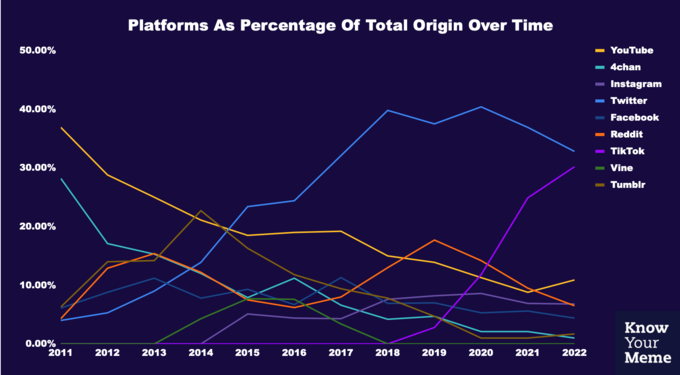
One of the most interesting ways to see the true 'center' of social media was this graph of meme origins from KnowYourMeme.
YouTube + 4chan dominated early internet culture, Tumblr had a few influential years, then Twitter was the center of everything until the rise of TikTok.
It's a shame it cuts off in 2022, would love to see more recent data. TikTok is surely #1 by now, but by how much?
Asad🗽🍎@AsadFromNYC
Just went on Bluesky and like 40-50% of what I saw was just people posting screenshots of tweets from here and dunking on them there. You almost never see the reverse. Twitter is still the center.
English
@Woo_dating @levelsio If you have an idea what your LTV is, ads can work.
English

This is solid on the product side.
But the real problem most bootstrapped founders hit isn’t tech or funding. It’s distribution.
You can ship in a weekend.
You can run on a $10 VPS.
You can charge from day one.
None of it matters if nobody sees you.
Marketing is the hardest part because attention is saturated. Being technically right doesn’t make you visible. Being good doesn’t make you discoverable.
The graveyard of bootstrapped startups isn’t bad code.
It’s no distribution.
Building is optional now.
Being seen isn’t.
English

how to build a bootstrapped startup without funding:
1. pick a problem you personally have. if you don't use your own product daily, quit now
2. skip the pitch deck. open your code editor. ship something ugly in a weekend
3. charge money from day 1. free users give you nothing but support tickets
4. use boring tech. PHP, SQLite, vanilla JS. frameworks are a trap that mass waste your time
5. host on cheap VPS ($5-20/mo). not AWS. you don't need kubernetes for 1,000 users
6. do customer support yourself. it's the fastest product feedback loop that exists
7. automate everything you do more than twice. cron jobs > employees.
8. grow on Twitter/X by building in public. your journey IS the marketing
9. keep your burn rate near zero so you never need to raise. ramen profitable > series A
10. say no to investors, cofounders, and "advisors" who want equity for intros
i've been doing this for 10+ years now. no employees, no funding, no board meetings
the entire VC game is designed to make you think you need permission to start
you don't
English
Stijn 'Vioo' Diependaele retweetledi

My son asking me a lot of questions. It’s a distillation attack obviously.
English
Since when is number of commits and LoC an important metric?
Max Marchione@maxmarchione
Today, we share our AI doctor for the first time The future is an AI that knows more about your body than any human ever could. 247 commits. 140,000 lines of code. Months of engineering. Here it is:
English
Got so much shit done today, if you’re not doing this you’re falling behind
taoki@justalexoki
pro tip: give claude aws credentials and just let him do whatever he needs. read logs, re-deploy something, update something. he'll get shit done
English