SeekerOfTruth
1.1K posts


My dad served in a "sales floor" type mission. His mission president was the CEO of a door-to-door vacuum cleaner company, so I guess it wasn't too surprising.
Each zone conference, the mission president read off the names of baptized converts from the previous few months, one by one. After each name, he'd have the missionaries who baptized that convert stand and he'd ask the other elders in the chapel to give those missionaries a big round of applause.
My dad had a snarky and somewhat purist companion at the time-- super strong testimony and doctrinal understanding, but bristled at authority, especially when he thought that authority was wrong.
That transfer when their mission president had finished applauding the top sellers-- er, baptizers-- in the mission, my dad's companion stood up and shouted:
"And now, let's all give a big round of applause for the Holy Spirit! After all, He's the one who does the actual work of conversion!"
He then started slow-clapping in that awkwardly silent chapel.
Not all heroes wear capes. Some wear badges and get on their leaders' nerves.

Matthew Watkins@ITalkOfChrist
Why do we keep baptizing people without checking for basic understanding first? Many other "high-demand" faiths likewise see baptism and conversion as supremely sacred covenants. In an effort not to "cast pearls before swine," they require aspiring converts to attend a class to learn the doctrine and demonstrate their determination to adhere to their faith's standards before official admittance into the rolls of the church. In the Latter-day Saint faith, our missionaries are supposed to fill that role. Read the missionary handbook and the training materials—the Church is quite clear that missionaries are supposed to regularly ask probing questions and use spiritual discernment to ensure those they are teaching actually understand our unique message, comprehend the depth of the sacred covenants we are inviting them to make, and sincerely intend to live them. But not surprisingly, that process often loses much of its rigor when you delegate it to an untrained 18-year-old boy with a preschool-level grasp of the convert's language and shuffle him to a new congregation every few weeks, stopping him from developing meaningful connections with those he's teaching. Then add a mission president who plays the numbers game and treats the mission like a corporate sales floor, and it's no wonder the missionaries often seem to just "dunk and move on." Missionaries are instructed in their manual to involve members in their teaching. But with lessons during work hours and 90% of lessons canceling, they often don't. So converts suddenly find themselves in a ward that doesn't know them, and now the missionaries are gone. A few members say hi and sit by them, but the wheels of bureaucracy turn slowly. Most converts are gone within a few weeks—months before they would have received the key things they need right away: a calling, a ministering companionship, and new member lessons. Just look at Brigham Young—he investigated the Church for almost two years straight before he finally felt ready for that commitment. When I look at the scores of converts I've worked with, I see the same clear trend: those who frustrate missionaries by constantly turning down their baptismal invitations, saying "I need more time," are the ones who eventually do get baptized and become solid pillars of the ward. Why? It's the parable of the sower: the seed that sprouts fast does so because it has no depth to its soil. Solid people need time to form roots and develop relationships with members. The current missionary system just isn't designed for that. That's why retention is in the trash. There's an easy solution to the retention problem: take some of this process out of the hands of the missionaries. Assign the very best teachers you have in the ward to teach investigators, with the missionaries taking mainly a finding role. Require a full 6+ months of investigation and regular ward attendance followed by a careful interview by the Bishop prior to baptism. Retention numbers will skyrocket, and we'll see the most committed members of our generation. So why don't we do that? Because retention isn't the point. And actually, neither is baptism. The growth of the Church is ancillary to the primary goal of the missionary program, which is the retention of the missionaries. Lowering the missionary age is one example of this. Quoting from Pres. @NelsonRussellM's biography: "The MEC [Missionary Executive Committee] had begun exploring the possibility of an age change for several reasons, [including that] some young men weren’t as pure at nineteen as they had been a year earlier and subsequently disqualified themselves from serving. "In one meeting, where the pros and cons of lowering the age requirement were aggressively explored, Elder Nelson cited the various reasons youth, particularly young men, were choosing not to serve and then drew on his medical background to characterize the situation: 'We are losing the lifeblood of this Church,' he said, 'and in my world we’d call that a hemorrhage.'" So the age was lowered. More missionaries served, but baptisms did not increase and many problems surfaced. When people brought these complaints to Pres. Nelson, he reminded them: "We did not make this change because we expected more converts. We did it to stop the hemorrhage and to save the lifeblood of the Church… Remember why we made these decisions. We made them to save the next generation." One important lesson for everyone to learn in the Church: If the Lord really cared about the efficiency of the Church and its programs, He wouldn't call mortals to run them. The Lord has repeatedly reminded us, "I am able to do mine own work." Yet He chooses to involve us in the process. Having us kids "help" in the family chores is more important than those chores getting done "right." Efficiency takes a back seat to participation. So be patient when things—or even people—seem to fall through the cracks. Be patient when overeager missionaries flood your ward roster with randos who have no idea what the Book of Mormon is. Be patient when you inevitably fail in your own calling. The Church grows despite calling 18-year-old boys as its proselytizing force, plumbers as stake presidents, and lawyers as nursery leaders. That's the miracle of the Restoration. And the Lord who does His own work will make sure everyone gets an equal opportunity at salvation, in this life or the next, despite our mortal failings and program inefficiencies. Just be grateful we get the opportunity to participate, and see the blessings rain down as God works His wonders out of our imperfect offerings. PS: I wrote a blog post about this a while back-- might be worth a read: powerinthebook.com/posts/efficien…
English

This video ticked me off, unlike most anti-Mormon videos I watch in my research.
Brian (repeating common trinitarian talking points) posits that one attribute of a greatest possible being is impassibility: his state cannot be affected or dependent upon anything outside of himself.
Sounds nerdy and harmless at first, but then you realize that this means mankind cannot affect God. If I go to hell God will be just as happy as if I go to heaven. Technically speaking, you and I have 0 value to the creedal God.
And remember, Brian and other creedalists (though not all) argue that this is what makes God so great!
Absolutely not! Joseph Smith was right to call it an abomination.
Brian Holdsworth@briankeepsworth
If I can conceive of something greater than your God, then he isn’t God. In the case of Mormonism, I can definitely conceive of something greater than their definition of God. 📽️ Watch Below👇
English
@Primary_Pianist Most older temples could do this by using the space formerly used by the cafeteria.
English

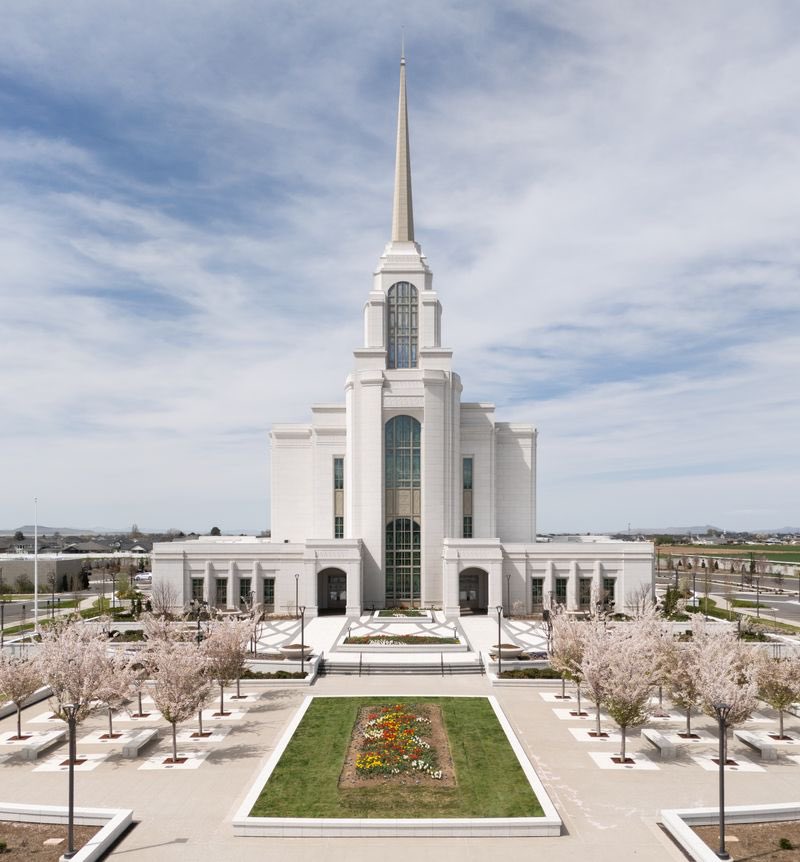
Can anyone tell me what makes this temple unlike every temple that came before it?
There is something unusual inside.
🧵
English

I travel a lot. I can't stand SLC Airport. I don't understand anyone who has a positive view of it.
No easy way of getting around other than walking. Gate B is forever away and has no separate dropoff or TSA. TSA is always terrible and backed up. Every single time we travel with car seats, it takes forever to get them. Can't believe LAX and FAT of all places handle car seats better than SLC 😂
SLC International needs so much work to be remotely good.
English
@BaT_MaN_23 @grok Hundreds of years and trillions of dollars. Those are mountains needing removal.
English







This is a frame from the Indiana Jones movie released in 1981.
What do you notice?
English


@Sierra_rak They are paid to say positive things about the film.
English

I'm surprised at all the positive reviews of Christopher Nolan's The Odyssey.
One wonders if critics are just afraid of saying anything too negative about such a high profile director and cast, because the films' flaws did not feel subtle or insignificant to me.
English
@Merkabah13 @nathapee_ Evan though there are historical records of him?
English

@nathapee_ Jesus is a fictional character & more of a symbol that represents spiritual/esoteric concepts, rather than a person.
English


@nathapee_ Putting in them hours at carpentry, making some sick ass furniture and shit. Probably turning some water into PBR or Coors, going out fishin with the bros. Ya know, the good life
English


@the_Greglodon @Latterdaytruth “I don’t know,” -Greg Brown, 25 July A.D. 2026.
English


Do you believe Adam and Eve had celestial bodies in the garden?
Anon Saint@YourAnonSaint
Based.
English
@Xmusknewsx Deport all radical Muslims. Whether they’ve committed a crime or not.
English


@jondelarroz There were some shows. I think that they claimed were Star Trek, but I don’t think they were.
English

Why did they suddenly stop making any Star Trek in 2005 and never return to it?
It was such a popular franchise.


English

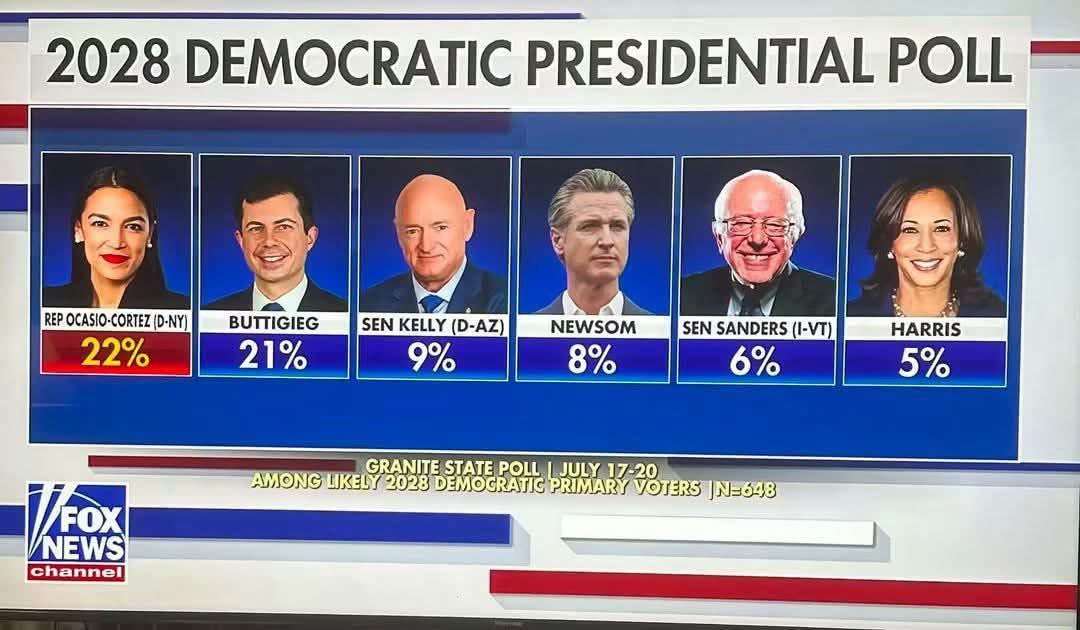
What are the chances you’d consider him in 2028?
A. 100
B. 50
C. Zero

English

Name a movie that everyone should see at least once in their life...
I'll Start: Highlander
GIF
English
@lance_corporate Maybe the company just started making the same truck every year because innovation had ended.
English

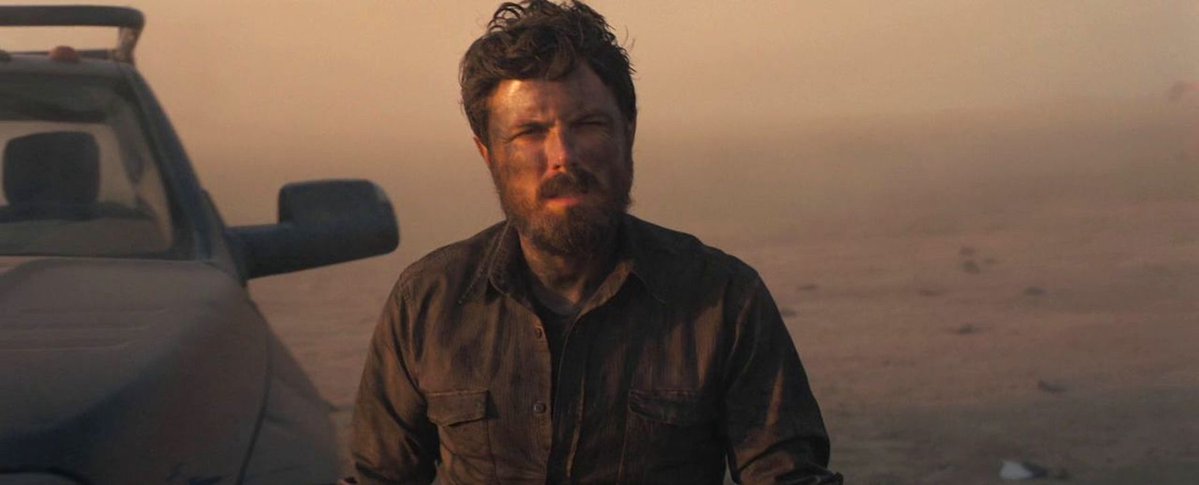
The most amazing part of Interstellar has nothing to do with wormholes, quantum physics, or time dilation. It's the longevity of Cooper's truck.
At the start of the movie, when they're chasing the drone through the cornfield and all that, the year is supposedly 2067. That's a 2013 Ram 3500 Heavy Duty he's driving, making the truck about 54 years old at this point.
Fast forward to the end when now-40-ish-year-old Murph is starting to figure out what's going on and why her dad left approximately 30 years ago. Tom, her brother, is seen driving the exact same truck, which would now be roughly 85 years old.
That would be like driving a truck made in 1941 as your daily driver today.


English