
Senator Mustafe Mohamed
296 posts

Senator Mustafe Mohamed
@senatormustafe
The re-recognition of #Somaliland, which gained its independence on 26 June 1960 from the UK Great Britain & Ireland, is both legally justified & morally right.
#EXHIBIT: While the Republic of Somaliland has achieved transparent governance, a functionally judiciary & a vibrant democracy over the past 35 years, the people of Somaliland have achieved this success through a long struggle that began from the grassroots based on social unity.



#Somaliland: a beacon of hope in a troubled region. #Freedom
Historic moment: @RepJohnRose has introduced the Somaliland Economic Access and Opportunity Act in Congress. Thank you, Congressman Rose and cosponsors @PatHarriganNC and @AndyOgles, for recognizing that Somaliland's financial inclusion serves both our nations' economic and security interests. This is meaningful progress. What is the Somaliland Economic Access and Opportunity Act, introduced today by @RepJohnRose? Here's what this legislation does and why it matters for U.S.-Somaliland relations. The bill acknowledges a critical challenge: Somaliland faces significant barriers accessing U.S. and international financial systems– affecting consumer banking, trade, counterterrorism, and anti-money laundering efforts. These barriers impact our 6.2 million citizens and limit economic cooperation with strategic partners. The legislation directs the Treasury Secretary to submit a comprehensive report to Congress within 180 days analyzing: • Legal and regulatory barriers to financial access, including the SWIFT payment system • Compliance with international AML/CTF standards • Steps Somaliland can take to enhance transparency • How the U.S. can facilitate responsible financial engagement. Why this matters: The bill recognizes Somaliland's strategic position in the Horn of Africa and finds that "enhanced financial access, conducted under appropriate compliance safeguards, would serve to strengthen U.S. policy objectives in the region.” This is how security partnerships advance – through transparency, compliance, and mutual interest. Thank you again to @RepJohnRose and cosponsors @PatHarriganNC and @AndyOgles for this important step forward.
𝗪𝗮𝘀𝗵𝗶𝗻𝗴𝘁𝗼𝗻 𝗘𝘆𝗲𝘀 #𝗦𝗼𝗺𝗮𝗹𝗶𝗹𝗮𝗻𝗱 𝗮𝘀 𝗕𝗲𝗶𝗷𝗶𝗻𝗴 𝗥𝗲𝗮𝘀𝘀𝗲𝘀𝘀𝗲𝘀 𝗜𝘁𝘀 𝗔𝗳𝗿𝗶𝗰𝗮 𝗙𝗼𝗼𝘁𝗽𝗿𝗶𝗻𝘁 𝗔𝗳𝘁𝗲𝗿 #𝗜𝘀𝗿𝗮𝗲𝗹’𝘀 𝗠𝗼𝘃𝗲 The re‑recognition of the Republic of #Somaliland by Israel marked a difficult moment for Beijing and its investments across Africa, Asia and MiddleEast. #Somaliland occupies one of the most strategically significant positions in the Horn of Africa, overlooking the Red Sea, the Gulf of Aden, and the maritime arteries that link Europe, the Indian Ocean, and the wider Indo‑Pacific. Its geography offers rare advantages for maritime security, intelligence cooperation, and logistical connectivity across multiple naval theaters. Following Israel’s decision, #China moved swiftly to suspend new investment activities in #Israel, underscoring the geopolitical weight of #Somaliland’s emerging diplomatic profile. Observers note that any future decision by Washington to formally recognize #Somaliland, particularly under the current administration, would carry major strategic implications. Such a move could strengthen U.S. influence in the Horn of Africa, counter decades of expanding #Chinese economic engagement across the continent, and reinforce a network of democratic partners along critical global trade routes.
In 2002 Assistant Secretary of State for African Affairs (@AsstSecStateAF) Walter Kansteiner was asked about the Republic of Somaliland and its strive to gain re-recognition and improve the conditions of its people. The assistant secretary admitted that the Somaliland government was capable and was developing an economic revival despite sanctions and diplomatic isolation Regrettably he deferred the question of Recognition to the Organization of African unity which has now ceased to exist and for the past twenty six years instead pumped billions into state building in the failed state of Somalia. Thanks to @israel the first country to Re-recognize the republic of Somaliland many more countries are moving to welcome Somalilanders back into the family of nations after surviving 35 years of isolation in one of the worst corners of the world to be a peaceful,capitalist and democratic nation
Somaliland will survive, but the real question is what will happen to Somalia? Interview with Mr. @Khaledhzakariah I said over a year ago that the decision makers should focus on the Horn of Africa. And I said the Horn of Africa during 2025 is going to be a very interesting region, and we're going to see a lot of very interesting developments. This was what I predicted for 2025. I think I was right about this because we have seen over the past few months, essentially the Horn of Africa becoming a region where you see a proxy war unfolding, basically. Turkey is sending a lot of tanks to Somalia. Egypt is sending a lot of troops, a lot of military hardware, and Somaliland became this part of the world where essentially that two alliances competing over influence in the Horn of Africa. There is basically the UAE, Israel, and Morocco on one side. Morocco recently also sent drones to Ethiopia. These few countries are competing with Turkey, Egypt, Saudi Arabia and Qatar, who are also involved in arming their own side in the conflict. So I think this is not going to end anytime soon. We're looking at something that potentially will continue for the foreseeable future. I would say we're looking at a decade of conflict in the Horn of Africa and this is not going to end tomorrow. What's very interesting is that the US is not really taking sides. The US can’t decisively decide today to declare recognition of Somaliland. But I think they will eventually, potentially soon In Somaliland, the place there is two competing alliances; the Somalilanders actually don't want this. I think they would rather the people recognize their country, and they want to have trade, they want to have business, they want to have investments, but they don’t want to become a sort of Israel-Palestine, where different sides are competing. Somalia is a failed country Regarding whether the recognition of Somaliland is a strategic benefit for Israel or whether it will create a greater geopolitical cost by pitting the country against Saudi Arabia, Turkey, and the Egyptian camp, i think it's just two different ideologies. It's an ideology that believes that only a certain kind of countries should have influence in Africa and the Middle East. Egypt, Saudi Arabia, and Turkey believe that Somaliland is an Arab country, a Muslim country not to be split. But there are some conspiracy theories that Israel will go there, split Somalia, and take part of the country. They also believe that the U.S. is part of this conspiracy targeting Muslim countries to weaken and surround them. So I think it's part of a historic, decades-long conflict where people are very suspicious of Israel. They're even suspicious of the U.S. Even the Egyptians, who take a lot of money from the U.S., would still tell you they don't trust the U.S. Regarding whether Somaliland can survive in the medium and long term, i think Somaliland can survive. But we can also ask whether Somalia can survive. Somalia is a failed country. In Sudan there is Rapid Support Forces on one side and Sudanese army on the other. The Sudanese army is supported by Saudi Arabia and Egypt, and RSF is supported by the UAE and other sides. According to reports, both sides do not want to stop the war because doing so would mean recognizing each other’s control over territories. If the war stops, the RSF will hold certain territory and the Sudanese army will hold certain territory, leading to a de facto splitting of Sudan. I think a similar situation will be seen in Somaliland and Somalia. Two sides will continue the conflict. Both sides will survive. Somalia will continue to receive support from Sudan and Egypt, and Somaliland will continue to receive support from Israel and others. They both will survive and the conflict will continue, creating a stalemate where not much changes until the US and Europe recognize Somaliland. I think this would be the major difference for Somaliland. Otherwise the status quo will remain as it is today, at least for the next few months. India is unlikely to recognize Somaliland It is very interesting because the UAE, Saudi Arabia, and Israel are all trying to strengthen relations with India, a country of almost 1.4 billion people with a growing economy and significant potential. India is increasingly involved in the Middle East because of trade and other strategic interests. Many Indians work in Saudi Arabia, the UAE, and other Gulf states, which means India has economic ties to those countries. India does not want to become an enemy of Saudi Arabia or Egypt. It prefers to maintain relations with multiple sides. India’s distinctive approach is that it seeks to be friends with many countries, but this also means it avoids taking clear sides in major geopolitical disputes. If you are friends with everyone, you are effectively aligned with no one. For this reason, India is unlikely to recognize Somaliland. There is no strong strategic incentive for doing so. India can trade with Israel, the UAE, and Somaliland without formally recognizing the latter. It prefers to maintain neutrality in contested political issues. Under Prime Minister Modi, India’s approach is expected to continue. India will remain largely neutral in Middle Eastern rivalries, cooperating where interests align but avoiding commitments that could create new geopolitical tensions. Israel’s Abraham Accords as a strategic framework Is it only Somaliland’s geographical and strategic position that attracts Israel, or is there a much broader calculation behind it? I think for the first time in many years, Israel is acting strategically. This is not just about land, or about gaining access in Somaliland, or about the Red Sea. It is about many things, all of them interconnected. Most importantly, it is about having a broader strategy in the Middle East. A strategy in which there is an alliance that includes Morocco, Bahrain, UAE, Israel, and Somaliland. That alliance would function in a similar way to the alliance we see involving Turkey and Egypt. Turkey now manufactures drones with the Egyptian army. They sell drones to the Egyptian army. Turkish drones operate from an airbase in Egypt and conduct strikes in Sudan. Israel observes this and sees an emerging military, economic, and cultural alignment. It is not only about Muslim countries or Sunni countries that perceive Israel as a challenge. There is a strong cultural and political dimension to this alignment. In response, Israel has pursued the Abraham Accords as a strategic framework. This represents a broader alliance intended to create cooperation with states that previously had limited or no relations with Israel. I believe Israel has historically sought to expand its network of partnerships in Africa since its foundation. What is different now is that this strategy is more explicit and moving forward more rapidly. Is the UAE doing for Israel what Qatar did for Turkey? I do not believe that the UAE and Israel have an agreement or a plan to build influence through each other. I think they simply happen to be on the same side. The UAE believes that the Muslim Brotherhood is a threat to stability in the region, and Israel shares that view. The UAE also regards extremism as a threat, and Israel does as well. They therefore found themselves coincidentally aligned in several ways. I do not think there is a plan to expand their influence. The UAE’s strategy is focused on expanding its own influence through investments. It is pursuing an approach similar to China’s, acquiring stakes in ports and infrastructure in different countries, including Egypt. Many Egyptian ports for shipping and logistics have UAE investment, at least in part. The UAE has built a global network of logistics and shipping investments. This strategy serves the UAE’s interests. Israel has not pursued the same model. Israel accepts this partnership because the UAE is considered a stable and reliable partner. They therefore operate in parallel rather than as part of a joint expansion strategy. Egypt’s eye on Israel’s activities in the Horn of Africa I think the Egyptians fundamentally believe that Israel is in the Horn of Africa in order to influence developments there in a way that could ultimately affect the Nile. They believe there is a plan, in cooperation with Ethiopia, that could shape access to the Nile and therefore impact Egypt’s strategic security, given Egypt’s existential reliance on the Nile River. Because of this, I think they view certain issues as red lines. The Egyptians have stated that they have red lines—very serious red lines. They have sent military forces to Somalia, and they also have a defense agreement with Eritrea. They maintain defense agreements with several countries across the Horn of Africa, meaning that if those countries claim they are under attack, we may see military involvement. This could become particularly significant if Ethiopia seeks to gain access to the Red Sea in a way that alters regional dynamics. In that scenario, Egypt would strongly oppose such a development, and Saudi Arabia would likely oppose it as well. I do not believe that if Ethiopia pursues access to the Red Sea through force—such as by taking parts of Eritrea by military action—war is inevitable. If access were achieved through a peaceful agreement, for example if Somaliland agreed to provide Ethiopia with Red Sea access, I do not think war would result. The outcome depends on how such developments occur. However, I believe Egypt and Saudi Arabia will soon face a test of their red lines. They will have to demonstrate whether their statements about red lines were merely political rhetoric or whether they genuinely intend to enforce those positions, including by force if necessary. Can Egypt and Ethiopia go to war? I don't think a war between Ethiopia and Egypt is going to happen, at least not directly. The Egyptian government likely understands that it does not have the capacity for such a conflict. Ethiopia is geographically far from Egypt, which would make military operations very difficult. Even if Egypt carried out airstrikes against the Grand Ethiopian Renaissance Dam (GERD), the question would still be: then what? Ethiopia could simply build another dam if it chose to. In that sense, there is no real military solution to the issue. Sending troops to the Horn of Africa would also risk becoming a long and difficult entanglement. Even major powers like the United States are cautious about deep involvement in the region because conflicts there can drag on for many years. Given Egypt’s economic constraints and the strategic risks involved, such a military attempt would be extremely unwise. For this reason, it is unlikely that Egypt would pursue that path. Turkey sees itself as a regional superpower We see Turkey’s behavior clearly, especially in what it has done in Syria and what it may try to do in Iran as well. They are trying to create a kind of new Ottoman sphere of influence, where Turkey has influence in different parts of the region. At the same time, they are quite concerned about Israel because they see it as a potential threat. The United Arab Emirates would also not accept the emergence of a new Ottoman-style regional influence. However, Egypt appears more comfortable cooperating with Turkey in certain areas. For example, Egypt has allowed Turkish military experts to observe important military facilities. Recently, the chief of the Turkish Air Force was taken to an Egyptian airbase in the Western Sahara. This base is considered one of the most important assets of the Egyptian Air Force, and normally almost no one is allowed there except the Americans. Yet the Turkish Air Force chief was shown the facilities. This indicates that Turkey is gaining significant influence in Egypt, including through the provision of drones and other military cooperation. For Turkey, much of this policy is about expanding influence. It is also connected to an ideology that sees Turkey as a regional superpower, drawing on the legacy of the Ottoman Empire. There is a belief among some policymakers that Turkey should return to its historical position of power and influence in the region. However, while this strategy may achieve some success, it is unlikely to fully achieve all the ambitions associated with it. In the next election, Netanyahu will remain a central figure If Israel is able to eliminate the threat from Iran quickly and without substantial losses—bearing in mind that ballistic missiles could inflict serious damage on Israel, which is simply a fact—then it could boost Netanyahu’s popularity. If the operation goes badly, his popularity would likely decline. Regardless, Israelis understand that addressing this issue is seen as necessary for their security, and they broadly support the government. I do not see any political figure in Israel who currently matches Netanyahu’s level of experience and strategic capability. Figures such as Benny Gantz or Naftali Bennett do not, in my view, possess the same depth of experience. For that reason, I think the next election could produce results similar to the current political configuration, with Netanyahu remaining a central figure. I could be wrong—I am not a domestic Israeli politics expert—but this is how I perceive the situation based on my observations. We are at a crossroads. Iran is a large country with significant resources and potential. If the West and Israel are able to act quickly and successfully, and if the conflict ends fast, that could lead to major changes. It could open the possibility of travel to Iran and, in an optimistic scenario, Iran might eventually become part of frameworks such as the Abraham Accords and develop normal relations with Israel, including trade and investment. Such developments would fundamentally change regional dynamics in ways that are difficult to predict. I would also note that energy markets and oil prices are worth monitoring because they often reflect broader geopolitical risks. It is a period of great uncertainty, and in some ways a very important moment in international affairs.
Somaliland’s Defense Minister to Speak at Athens Defence Summit 2026 Somaliland’s Minister of Defense, Mohamed Yusuf Ali, will participate as a speaker at the Athens Defence Summit 2026, an international security forum scheduled to take place in the Greek capital on May 20–21. The summit will be held under the auspices of Greece’s Ministry of National Defence, along with the country’s state defense companies, Hellenic Defence Systems and Hellenic Aerospace Industry, according to the organizers. Source: @HornDiplomat
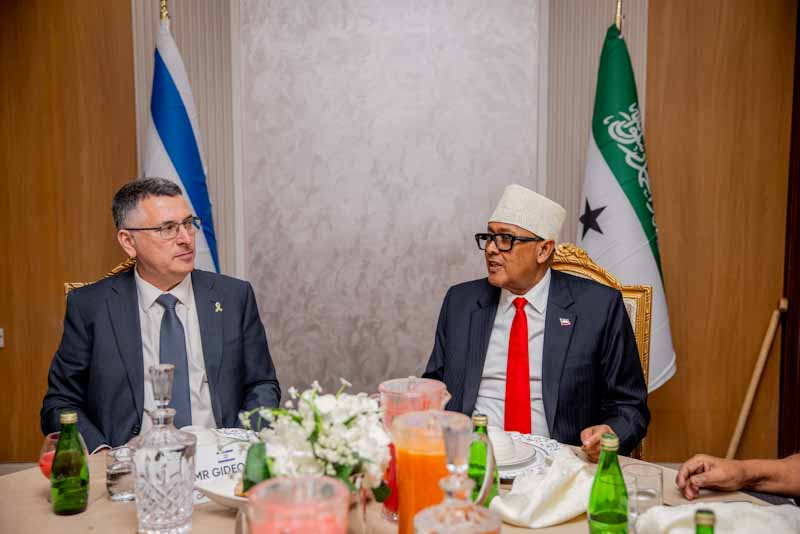
Nurse to nation-builder, Somaliland’s honorary ‘first lady’ hails ‘natural’ ties with Israel Edna Adan Ismail, 88, a former foreign minister of Somaliland and pioneering nurse-midwife, welcomed Israel’s recognition of Somaliland in December 2025, calling ties between the two countries “natural” and strategic. She revealed that efforts to build diplomatic relations with Israel began during her tenure as foreign minister (2003–2006), emphasizing shared interests and mutual survival. Somaliland President Abdirahman Mohamed Abdullahi has accepted an invitation from Israeli Prime Minister Benjamin Netanyahu to visit Israel and sign a trade agreement; Israeli Foreign Minister Gideon Sa'ar visited Somaliland in January 2026. Israel’s recognition has drawn criticism from Somalia, China, Turkey, Egypt, and the African Union. Somalia still considers Somaliland part of its territory despite Somaliland’s self-governance since 1991. Despite limited recognition, Somaliland has maintained relative stability and democratic governance, with a population of about 6 million and low per capita GDP. After returning to a devastated Hargeisa in 1991, Edna sold her possessions to build the Edna Adan Hospital, which opened in 2002 and has delivered over 30,000 babies. She also founded Edna Adan University to train medical professionals. Israeli humanitarian and medical cooperation has grown over time. Save a Child’s Heart (SACH) has treated 41 children from Somaliland in Israel since formal ties were established in 2021, many at Wolfson Medical Center. Edna is a long-time activist against female genital mutilation (FGM). She survived infibulation (Type 3 FGM) as a child and has campaigned against the practice for decades. While advocating total eradication, she supports a gradual approach, noting that the most severe form of FGM is declining in Somaliland. She highlighted that Somaliland issued a fatwa banning infibulation four years ago. Edna attributes her perseverance to determination and expresses pride in Somaliland’s achievements, drawing parallels between Somaliland and Israel as resilient nations defined by survival and resolve. timesofisrael.com/nurse-to-natio… @timesofisrael
So… the Minister believes that reading the Annexes of the International Civil Aviation Organization… is a five-year plan.🤡 it is the time you have to resign. @CAAA_SL @Abdirahmanirro @Huseindeyr @MadaxtooyadaJSL @khadarlooge
The Region Publicly Rejects Somaliland. Privately It Depends on It. Strategic Assessment | @SomalilandChro1 ⬇️ 🇸🇦 Saudi Arabia needs stability opposite Yemen. The southern corridor is insurance for Jeddah and Yanbu. A functioning Somaliland means fewer launch points, fewer shocks to Red Sea trade and energy routes. 🇪🇬 Egypt cannot afford disruption south of Suez. Shipping risk is fiscal risk. A governed coastline across the Gulf of Aden reduces spillover that eventually reaches the Canal. 🇩🇯 Djibouti fears competition from Berbera. It fears chaos more. A stable Somaliland means coordinated borders, predictable port traffic, and a buffer against uncontrolled flows. All three sign statements rejecting Somaliland. All three plan around its stability. Meanwhile 🇹🇷 Turkey embeds in Mogadishu, mediates on its own terms, and fortifies a security architecture that excludes Hargeisa. Sanctions have traced Houthi financial conduits through Turkish channels. No structural dismantling followed. This is not about recognition. It is about operational reality. Somaliland already functions as a distinct actor: controlled coastline, expanding port, continuity where volatility dominates. The rhetoric says one thing. The planning says another. 🔗 somalilandchronicle.com/2026/02/25/the…
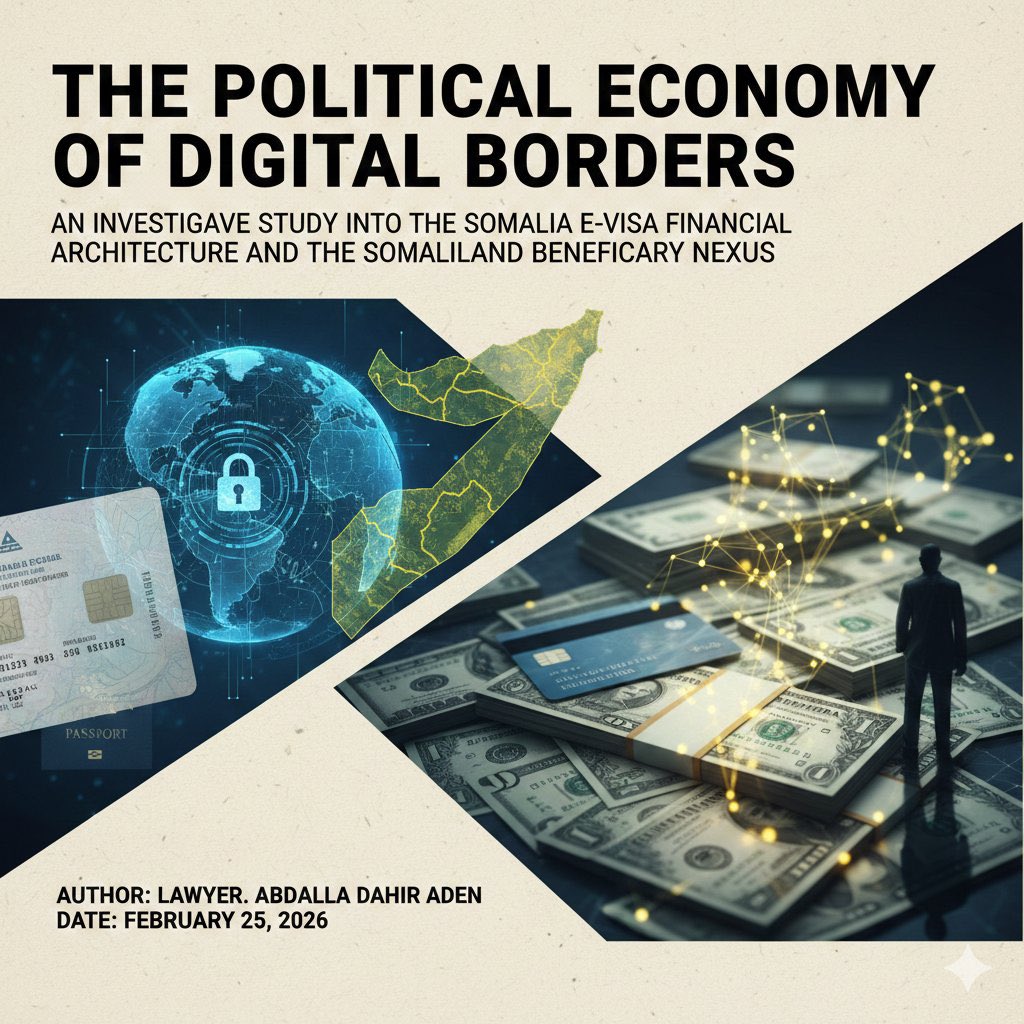

#India and #Somaliland ✔️Somaliland imports from India: Pharmaceuticals Food products Machinery+consumer goods ✔️Somaliland exports to India: Livestock-related goods + Fish products Frankincense and gums ✔️Israel and Somaliland are together, now @narendramodi join in!!
#Somaliland is willing to give the United States access to its minerals and military bases, a minister has told AFP