David Ungar

1.4K posts

David Ungar

David Ungar

@senderPath

How do people think? Co-inventor of Self, which influenced JavaScript. Also sped up Java, Python. Animation for screens. Reality? How to be useful now?
Add your location Katılım Ekim 2011
412 Takip Edilen1.2K Takipçiler
David Ungar
David Ungar@senderPath·
@dotselve I probably already mentioned that I love your enthusiasm for subjectivity. Sorry about the capitals. I’m dictating. Check back with me or Russel in a bit. If we ever get a full speed VM, we could host the Korz demo snapshot on it.
English
1
0
1
44
selve
selve@dotselve·
@senderPath Nice, would love to get that on my m1 mac at some point. I’ve mostly been thinking about a korz ensemble vm for apple silicon. I think your work on subjectivity/cop will be important in the agent era
English
1
0
0
23
selve
selve@dotselve·
@senderPath Hi David how’s your self in swift project going? I’m especially interested in a potential korz implementation. If korz exists in any form somewhere please let me know as I’ve been thinking a lot about a subjective ide. Thanks!
English
1
0
0
37
David Ungar
David Ungar@senderPath·
@techNmak @sapinker And thoughts like this are why I’m always interested in what you have to say. This is so right! E.T. Jaynes showed me that the universe is made of information just as much as matter. Obeying the laws of information and Bayesian probability just as much as any physical law.
English
1
1
5
870
Tech with Mak
Tech with Mak@techNmak·
In 1948, a 32-year-old at Bell Labs published a paper nobody fully understood. Engineers found it too mathematical. Mathematicians found it too engineering-focused. One prominent mathematician reviewed it negatively. That paper - "A Mathematical Theory of Communication", became the founding document of the digital age. The man was Claude Shannon. Father of Information Theory. At 21, he wrote the most important master's thesis of the 20th century. Working at MIT on an early mechanical computer, Shannon noticed its relay switches had exactly two states - open or closed. He had just taken a philosophy course introducing Boolean algebra, which also operated on two values: true and false. Nobody had ever connected these two things. His 1937 thesis proved that Boolean algebra and electrical circuits are mathematically identical, and that any logical operation could be built from simple switches. Howard Gardner called it "possibly the most important, and also the most famous, master's thesis of the century." Every digital computer ever built traces back to this insight. At 29, he proved that perfect encryption exists. During WWII, Shannon worked on classified cryptography at Bell Labs. His work contributed to SIGSALY, the secure voice system used for confidential communications between Roosevelt and Churchill. In a classified 1945 memorandum, he mathematically proved the one-time pad provides perfect secrecy, unbreakable not just computationally, but provably, permanently, against an adversary with infinite power. When declassified in 1949, it transformed cryptography from an art into a science. It laid the foundations for DES, AES, and every modern encryption standard. At 32, he defined what information is. His 1948 paper introduced one equation: H = −Σ p(x) log p(x) Shannon entropy. The average uncertainty in a probability distribution. The minimum bits required to encode a message. Three things followed: > He defined the bit - the fundamental unit of all information. His colleague John Tukey coined the name. > He proved the channel capacity theorem, every communication channel has a maximum rate of reliable transmission. You can approach it. You can never exceed it. > He unified telegraph, telephone, and radio into a single mathematical framework for the first time. Robert Lucky of Bell Labs called it the greatest work "in the annals of technological thought." Where his equation lives in AI today: Cross-entropy loss - the function training every classifier and language model, is derived directly from H. Decision tree splits use information gain, which is H applied to data. Perplexity, the standard LLM evaluation metric, is an exponentiation of cross-entropy. Every time a neural network trains, Shannon's formula runs inside it. He also built the first AI learning device. In 1950, Shannon built Theseus, a mechanical mouse that navigated a maze through trial and error, learned the correct path, and repeated it perfectly. Mazin Gilbert of Bell Labs said: "Theseus inspired the whole field of AI." That same year he published the first paper on programming a computer to play chess. He co-organized the 1956 Dartmouth Workshop, the founding event of AI as a field. The man: He rode a unicycle through Bell Labs hallways while juggling. He built a flame-throwing trumpet, a rocket-powered Frisbee, and Styrofoam shoes to walk on the lake behind his house. He called his home Entropy House. When asked what motivated him: "I was motivated by curiosity. Never by the desire for financial gain. I just wondered how things were put together." In 1985, he appeared unexpectedly at a conference in Brighton. The crowd mobbed him for autographs. Persuaded to speak at the banquet, he talked briefly, then pulled three balls from his pockets and juggled instead. One engineer said: "It was as if Newton had showed up at a physics conference." He died in 2001 after a decade with Alzheimer's, the cruel irony of information slowly leaving the mind of the man who defined what information was. Claude, the AI model, is named after Claude Shannon, the mathematician who laid the foundation for the digital world we rely on today.
Tech with Mak tweet media
English
195
2.1K
7.7K
456K
David Ungar
David Ungar@senderPath·
@theficouple Notice the absence of any comparative figures in this post. That absence marks it for me as more persuasion than illumination.
English
0
0
1
68
theficouple
theficouple@theficouple·
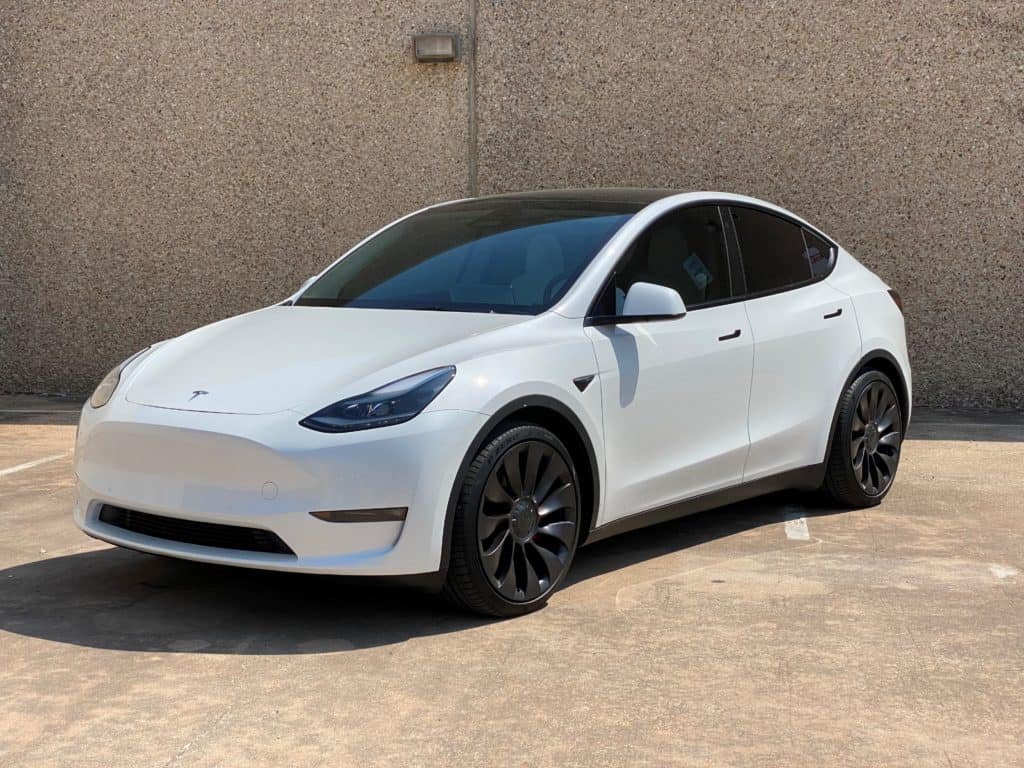
When you bought the $50,000 Tesla Model Y to save on gas & maintenance. Then you learned: - It loses 20-35% of its value by year 3 - It loses 55-58% of its value by year 5 So by year 5 you lost $35,000+ of value? ....Congrats on saving ~$1,000/yr on gas.
theficouple tweet media
English
2.7K
195
2.1K
841.5K
David Ungar
David Ungar@senderPath·
@tvcutsem I’ve been supplementing my hobby programming with some Claude coding. My experience jibes with your takeaway. But, this may change and it’s very exciting to watch.
English
0
0
1
20
Tom Van Cutsem
Tom Van Cutsem@tvcutsem·
Main takeaway: low-stakes vibe coding is great for prototyping, but it’s not the same as real software engineering. AI is a huge force multiplier, but only if you have fundamentals to steer it and review it well.
English
2
0
3
93
Tom Van Cutsem
Tom Van Cutsem@tvcutsem·
Just published a short write-up of a fun experiment: I vibe-coded a Boids simulation with AI copilots in about 30 minutes. I built it for CS outreach, then documented what worked, what surprised me, and what I got wrong. tvcutsem.github.io/vibe-coding-bo…
English
1
0
6
217
David Ungar retweetledi
Andrew Klavan
Andrew Klavan@andrewklavan·
Joking aside, there is no one alive who writes about the classics with such simplicity and depth as @SpencerKlavan. Reading him on the Greeks is like reading Sowell on Economics. Clarity that puts the pseudo-scientific jargon of academia to shame. This piece is a joy.
The New Criterion@newcriterion

“Aratus’s most brilliant insight was that the world, like a poem, is inexhaustibly layered with hidden meaning.” Read “A phenomenal poet,” by Spencer A. Klavan.@SpencerKlavan newcriterion.com/article/a-phen…


English
15
25
383
31.2K
David Ungar
David Ungar@senderPath·
@alt_w_v_g After I read this post, I wondered how much your wife respects you?
English
0
0
0
38
Ethan Brooks
Ethan Brooks@alt_w_v_g·
Met with a financial advisor today My wife set it up She wants "a professional opinion" on our retirement Nice office Glass desk Diploma on the wall from a school I've never heard of The advisor was 23 Maybe 24 He had a pullover vest and a rehearsed handshake He handed me a pitch book It had someone else's name on it I chose not to mention that He said "based on your risk profile I'd recommend a 60/40 portfolio" I said "what's the fee?" He said "1% annually" I ran the compound drag over 25 years in my head Said the number out loud Then I said it again slower His smile went away I said "what's the tax strategy?" He said "we review that annually" I said "what's the Roth conversion ladder? The asset location framework? The blended expense ratio on the underlying funds? Why wouldn't I just buy VOO for free and do this from my phone?" He opened his mouth Closed it Excused himself Came back with his boss Same vest Bigger watch The boss said "I hear you have some concerns" I said "not concerns. Questions. Your 23-year-old couldn't answer them. That's my concern." My wife kicked me under the table I kept going The boss said "the value is in the relationship" I said "that's what my therapist says too. She charges $250 an hour. You're charging more and doing less." The boss looked at my wife My wife looked at the ceiling I've now been to a therapist, a realtor, a car dealership, and a financial advisor this month My wife has walked out of every single one I asked her in the car what she thinks the common denominator is She said "you" I said "interesting. Not sure how to model that." Plz fix. Thx. Sent from my iPhone
English
537
356
11K
1.3M
David Ungar
David Ungar@senderPath·
@heydave7 I’m amused and fascinated that the world has come to a point where we are now asking AI is what they think of current events. Sometime between when I grew up and now I was transported to a different planet. It is literally wonderful.
English
0
0
1
2.4K
David Ungar
David Ungar@senderPath·
@SpatiallyMe There’s a WWDC video in which the woman who crafted the sound for that environment, talks a bit about how she did it. Amazing craft and talent there, too!
English
0
0
0
150
Phil Traut ᯅ
Phil Traut ᯅ@SpatiallyMe·
The making of the environments in Vision Pro is super fascinating. For Mount Hood they actually stitched together two completely different places into one scene, which is crazy to me since it looks so seamless in the device. The level of craft here is something else. Read more here: coolhunting.com/tech/crafting-…
English
5
12
179
12.5K
David Ungar
David Ungar@senderPath·
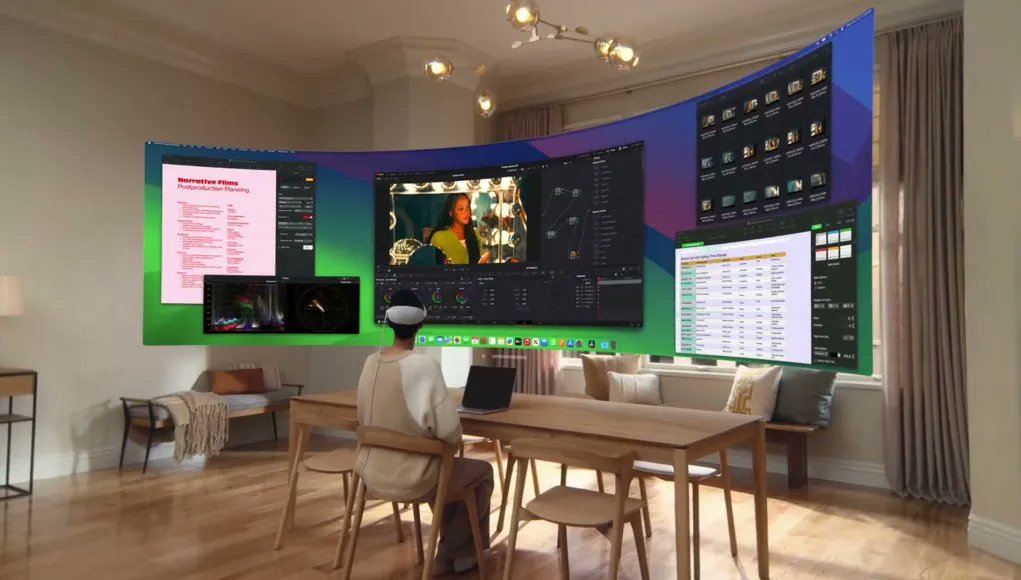
@yishan Yes, when my large monitor broke, I didn’t replace it. Now, every day I spend hours with the headset and the virtual Mac screen. And I love the ability to position at anywhere I need to, at any distance from my face.
English
0
0
8
1.1K
Yishan
Yishan@yishan·
My faith in Tim Cook has been rewarded! I KNEW when I bought this two years (or whenever it came out) that even though the product had clear shortcomings, the hardware inside was very good and that all it would take to make it a great product would be upgrading the OS... and now it is! The biggest one for me: native MacOS virtual desktops (HUUUUUGE ultrawide screen) are now a thing! And to think I was considering putting a second Cinema display on my desk... this ultrawide is wider than two of them put together and you can place it at any distance/angle! And the avatar actually looks like a correct rendering (in the sense that I am confronted with what my mug really looks like after I take off the Vision Pro... but truth over beauty I guess)! (So for everyone wise enough to not buy one then, now you can buy one)
Yishan tweet media
English
49
22
631
105.8K
David Ungar
David Ungar@senderPath·
@pbeisel Ah, thanks. Yes, Dylan. I was aware of it, but never delved very deeply.
English
0
0
2
108
phil beisel
phil beisel@pbeisel·
@senderPath Yes Walter Smith, NewtonScript. The other competing language within Newton (Advanced Technology) was Dylan, championed by Larry Tesler.
English
2
0
1
131
phil beisel
phil beisel@pbeisel·
From 1990 to 1993, I worked on the Newton OS team. I was responsible for several networking and communications components, most notably the AppleTalk network stack that allowed Newton devices to operate on AppleTalk LANs— for example, printing to a LaserWriter. At the time, AppleTalk was a far more plug-and-play alternative to TCP/IP, which was still in its early stages. TCP/IP eventually matured and became the backbone of the Internet, but in those days it was far from the dominant standard. The AppleTalk stack was written in C++, the low-level language used for most of the OS components. C++ was so new that there was no native compiler. We used a two-pass compilation process: CFront translated C++ into C, which was then compiled into object code. In the Newton era, there were no cell phones or practical wireless data networks. GPS was just emerging and was not part of the Newton architecture. Communications were limited to the serial port. How much has changed. Today, Wi-Fi is assumed as a baseline capability for accessing network resources. Devices like the iPhone communicate wirelessly over LTE and 5G to cellular infrastructure. ncreasingly, they can connect directly to satellite networks such as @Starlink, extending connectivity to nearly any location on Earth— land, sea, or air, from New York to Antarctica. Even back then at Apple, we knew that world was coming. We experimented with in-building wireless technologies, including IR and RF approaches, but power constraints, lack of infrastructure, and the absence of standards kept them out of reach at the time. grokipedia.com/page/Apple_New…
phil beisel tweet media
English
32
10
295
50K
David Ungar
David Ungar@senderPath·
@pbeisel Apologies for the bad spelling, but I dictated this
English
0
0
1
15