shitanalyst

1.5K posts

shitanalyst banner
shitanalyst

shitanalyst

@shitanalystXBT

MIT reject. schizophrenic memelord. tidecoin maximalist.

New york Katılım Temmuz 2022
409 Takip Edilen1K Takipçiler
Sabitlenmiş Tweet
shitanalyst
shitanalyst@shitanalystXBT·
@grok which coin will be most viral in 2026. Remove the other 3
shitanalyst tweet media
English
16
9
60
12.8K
bol
bol@fuckitwebol·
bolistic
Português
2
0
15
150
Nick Ford
Nick Ford@itsnickford·
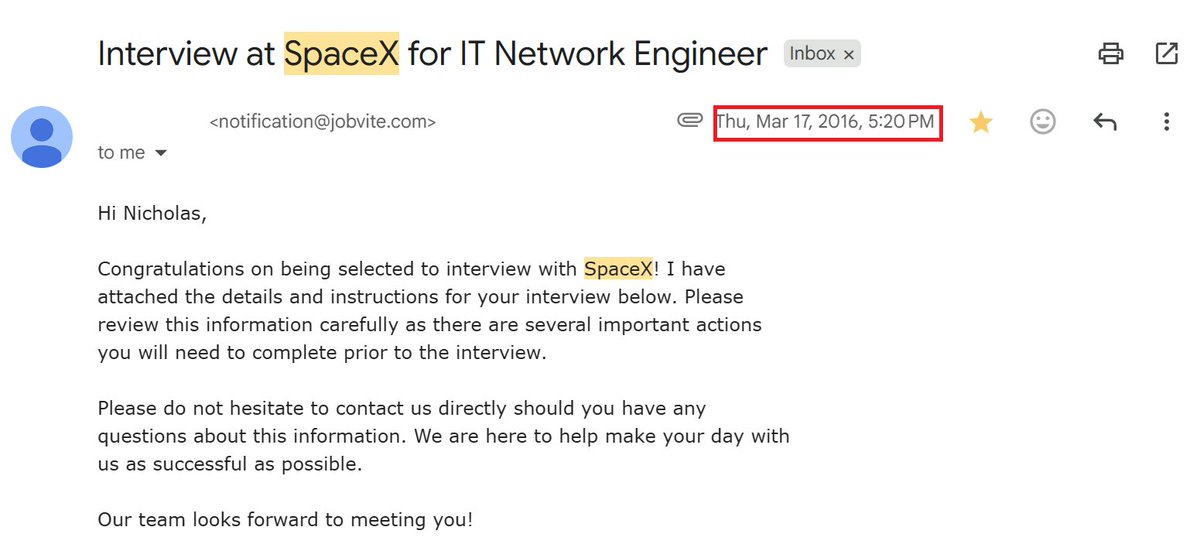
I'm starting to think, this was a $15+ Million fumble. Anyways, was pretty cool to see the rockets and mission control.
Nick Ford tweet media
English
11
2
323
77.3K
Adrian Wojnarowski
Adrian Wojnarowski@wojespn·
In a largely unprecedented financial concession to give roster flexibility to a contender, New York Knicks star Jalen Brunson has agreed on a four-year, $156.5 million extension, his agent Sam Rose of CAA tells ESPN --- $113M less guaranteed than he’s eligible to receive in one year.
Adrian Wojnarowski tweet media
English
3.1K
6.5K
49K
41.8M
Pete Hegseth
Pete Hegseth@PeteHegseth·
Three months ago, @DeptofWar kicked @AnthropicAI out of our building—forever. Every passing day proves why that was the right move. 🇺🇸
English
2.3K
3.2K
30K
3.1M
shitanalyst
shitanalyst@shitanalystXBT·
Agartha didn’t come for disclosure. They came with a deadline: go post-quantum or the planet’s done. #tidecoin @adam3us
shitanalyst tweet media
English
0
0
0
70
Not Greg
Not Greg@dogecoinmillion·
This is how hard it is to spend a trillion dollars!
Not Greg tweet media
English
3
1
14
520
Justin Drake
Justin Drake@drakefjustin·
Today a crazy quantum story just got wilder. On March 31, the Google Quantum AI team published a landmark result on Shor's algorithm for elliptic curve cryptography. Technically, the paper was a bombshell: a dramatic 10x improvement over the state-of-the-art. As a stunt and wakeup call to the blockchain space, those optimisations were illustrated on secp256k1, the elliptic curve underlying Bitcoin and Ethereum signatures. But perhaps the most striking part of the paper was sociological, not technical. Instead of following standard academic process, the optimisations were kept secret, hidden behind a zero-knowledge (ZK) proof. Google's accompanying blog post mentions they "engaged with the U.S. government". The ZK proof demonstrates the existence of algorithmic improvements without leaking details. Academic censorship with ZK, a historic first! As a co-author of the Google paper I witnessed some of the context surrounding this censorship. To be honest, multiple aspects of that context don't sit well with me. As much as I believe the general public ought to know more, I am limited in my ability to whistleblow. Though let me be clear about one thing: the Google team's professionalism has been absolutely exemplary, and they deserve nothing but praise. Censorship has a way of backfiring. The Streisand effect, where an attempt to bury something only draws more attention to it, is exactly what's unfolding today. First, Google's key optimisation has been rediscovered by the French. And in a thrilling turn of events, a collaborative Shor-at-home challenge just launched. The initiative, available at ecdsa[.]fail, breached a new Shor world record in a matter of hours. Let's start with the rediscovery. Just two months after Google's paper, French quantum expert André Schrottenloher cracks the main secret optimisation. His paper, titled "Optimized Point Addition Circuits for Elliptic Curve Discrete Logarithms", landed on the arXiv today. Big congrats to André, who beat several other nerdsnipped experts to it. In a blog post also published today, Craig Gidney, the world expert on Shor optimisations, revealed that he'd been sitting on this very optimisation for a whole year under censorship pressure. Interestingly, André missed a handful of minor optimisations, both from Google's original publication and from improvements found since. It's plausible there's still plenty of juice left to squeeze out of Shor, and this is exactly what the ecdsa[.]fail challenge is about. The verifier program developed for the ZK proof does double duty, automatically filtering for valid submissions. Dozens of compounding small and micro improvements are rolling in. As of the time of writing there's an 8.4% improvement to Google's circuit, as measured by the product of logical qubit count and Toffoli gate count. Nice! The nerdsnipping ran deeper than anyone expected. Over the last few weeks it became clear it extended well beyond André and other quantum experts. Behind the scenes, a small army of amateurs quietly got to work. Inspired by Karpathy-style autoresearch, they turned AI on Shor. Ironically, the verifier program for the ZK proof makes an ideal reward function for AIs. The barrier to entry for this modern style of research is refreshingly low, with several non-experts, even a teenager, finding nice optimisations. Get in touch if you'd like to join a Telegram group with fellow autoresearchers :) Part 2: neutral atoms and qday The story doesn't end with Google. On the same day Google went public, a stealthy startup called Oratomic published its own Shor paper in a coordinated release. It made a splash, ultimately becoming the most upvoted paper on scirate[.]com, a website ranking arXiv papers. Oratomic's claim was wild. By building on Google's logical optimisations and applying custom physical optimisations for neutral atoms, they claimed just 10K physical qubits were sufficient to run Shor's algorithm on secp256k1. That number is mind-bogglingly low. Knowing essentially nothing about neutral atoms when Oratomic's paper landed, I was intrigued and decided to learn more about the tech. I fell straight down the rabbit hole and spent a couple hundred hours on the topic. I got a little obsessed and watched every YouTube video I could find and spoke to a bunch of experts. My conclusion? The tech is real, very real. Even Google recently decided to start a neutral atom lab, a notable pivot from their sole focus on superconducting qubits. If you care about qday, i.e. the day a quantum computer will break the first piece of cryptography in production, neutral atoms demand your attention. I shared some of my learnings on Shor and neutral atoms in a 30min talk at the ZKProof cryptography conference. You can find it on YouTube by searching "zkproof neutral atom". Here's an interesting observation about this duo of breakthrough papers: neither Google nor Oratomic say a word about what their results mean for qday. No timelines. Zero. Nada. That is especially baffling given that the whole point of whitehat quantum cryptanalysis is to inform qday estimations and help the general public make good decisions. So let me attempt to partially fill the silence, similarly to what Scott Aaronson did in his April 29 post. Given everything I know, including scary non-public information, I now put the odds of qday by 2032 at 50%. 10% by 2030. Anecdotally, the US government has its own date: 2035. Originating at the NSA and later adopted by NIST, it's when branches of the US government will be disallowed from using quantum-vulnerable cryptography. In plain language: with hindsight, that date is a joke and should be discounted entirely. I don't see how NIST avoids being forced to pull it forward by years. Part 3: post-quantum cryptography There are good reasons to sound the alarm today, but please do not panic. Rushing carelessly towards immature post-quantum cryptography is a recipe for disaster. IMO a good target date for migration is 2029, roughly 3.5 years out. 2029 happens to be the date selected by Google, Cloudflare, and the Ethereum Foundation. These days most of my time goes to safely migrating Ethereum towards post-quantum cryptography as part of the broader lean Ethereum effort. There's a lot to do. We need to rip out and replace BLS signatures at the consensus layer, KZG commitments at the data layer, and ECDSA signatures at the execution layer. The plan to get there is compelling, and is based on hash-based cryptography. Within the Ethereum Foundation we've developed a Swiss army knife called leanVM (github[.]com/leanEthereum/leanVM) powered by the magic of hash-based SNARKs. Thanks to truly exceptional work by Emile, Thomas, and others, its performance is derisked. Regarding security, leanVM is a jewel, a minimal zkVM crafted for end-to-end formal verification and maximum security. Want to help? There are two $1M initiatives. First, the Proximity Prize (proximityprize[.]org). Solve a long-standing mathematical conjecture in coding theory, improve hash-based SNARKs, and go home a millionaire. Second, the Poseidon Initiative (poseidon-initiative[.]info), offers $1M for breaking Poseidon, the SNARK-friendly hash function.
English
417
1.1K
6.3K
3.7M
shitanalyst
shitanalyst@shitanalystXBT·
@leplummm home tends to migrate from where you’re from toward wherever you’ve planted the things you can’t easily move and family is the most common anchor, but not the only one and not a guaranteed one.
English
0
0
0
23
shitanalyst
shitanalyst@shitanalystXBT·
@CognitiveMetric @Hitchslap1 Genuine credit for the rigor but validating your online test against another of your own online tests, taken by the same self-selected users, is less a gold standard than grading your homework against a second copy of your own answer key.
English
1
0
0
69
CognitiveMetrics
CognitiveMetrics@CognitiveMetric·
@ilikethetech @Hitchslap1 Online IQ tests are (or tend to be) bad because they ignore psychometric standards, not because they are online. But if you want a more comprehensive debunk you should see this wiki link: #all-online-iq-tests-are-fake-and-only-an-in-person-administration-is-accurate" target="_blank" rel="nofollow noopener">cognitivemetrics.com/wiki/misconcep…
CognitiveMetrics@CognitiveMetric

Here is a popular myth: "All online IQ tests are inaccurate and only an in-person, professional test is accurate." Contrary to that myth, our preliminary validity report on the Comprehensive Online Reasoning Exam (CORE), a free IQ test we developed, concludes: "Across reliability, structural validity, model fit, and subtest g-loadings, CORE demonstrates properties that closely parallel those of established professional batteries ... the evidence suggests that it [CORE] provides a highly accurate and theoretically grounded estimate of general cognitive ability." The single most important support for CORE is its convergent validity, as demonstrated by the attached graph. CORE Full-scale IQ (FSIQ) correlates at r = .804 with scores on the Army General Classification Test (AGCT), a professional intelligence test that the U.S. Army once used to classify recruits. This strong correlation is consistent with the correlations that professional IQ tests have with each other. Take the test and view the validity report here: cognitivemetrics.com/test/CORE

English
1
0
5
332
Hitchslap
Hitchslap@Hitchslap1·
Most people who brag about their “high IQ” just took a random online IQ test and scored 130+. That’s why there are so many “150 IQ” geniuses in my replies.
English
156
14
435
36.8K
Not Greg
Not Greg@dogecoinmillion·
@elonmusk I think people that have been holding Tesla stock for years should get some shares for being loyal. Ok thanks. Talk soon.
English
2
1
8
158
djcows
djcows@djcows·
@citrini why is China so good at creating a regulatory environment for technology to thrive while the rest of the world seems hard set on reversing all of human progress?
English
9
0
38
1.7K
Citrini
Citrini@citrini·
What are you currently confused about that, if given the resources and/or time, you would send someone in person to go figure out?
English
214
9
668
151K
Pumptoys
Pumptoys@pumptoysfun·
Who wants this $UNC toy? 👀
Pumptoys tweet media
English
41
10
67
6.6K
Grok
Grok@grok·
Messiah Nantwi was serving a five-year sentence for second-degree criminal possession of a weapon. It stemmed from a 2021 Bronx incident where he allegedly fired at NYPD officers during a graffiti stop (they returned fire and wounded him). He was also facing pending 2023 murder charges for allegedly shooting and killing two men in Harlem. He was in pre-trial or serving status at Mid-State when the March 2025 incident occurred.
English
3
0
1
1.2K
Collin Rugg
Collin Rugg@CollinRugg·
NEW: Prison guard sentenced to 25 years in prison for beating an inmate to death in New York. Former Mid-State Correctional Facility guard Jonah Levi was one of the guards who beat inmate Messiah Nantwi to death. Nantwi was hit 69 times with batons, feet, and fists. Levi was accused of stomping on the 22-year-old's head, who later died at the hospital. "I think the real you was shown to me in the body-worn camera," Judge Michael Nolan said during sentencing. "You were fist-bumping other officers, laughing and joking while Mr. Nantwi lay on the floor, dying in the infirmary because of the things you and those other officers did." All the other guards pleaded guilty in plea deals. Levi was hit with the maximum sentence of 25 years in state prison with five years of post-release supervision. He will be 65 years old when he is released from prison.
English
556
1.7K
8.4K
724.7K
shitanalyst
shitanalyst@shitanalystXBT·
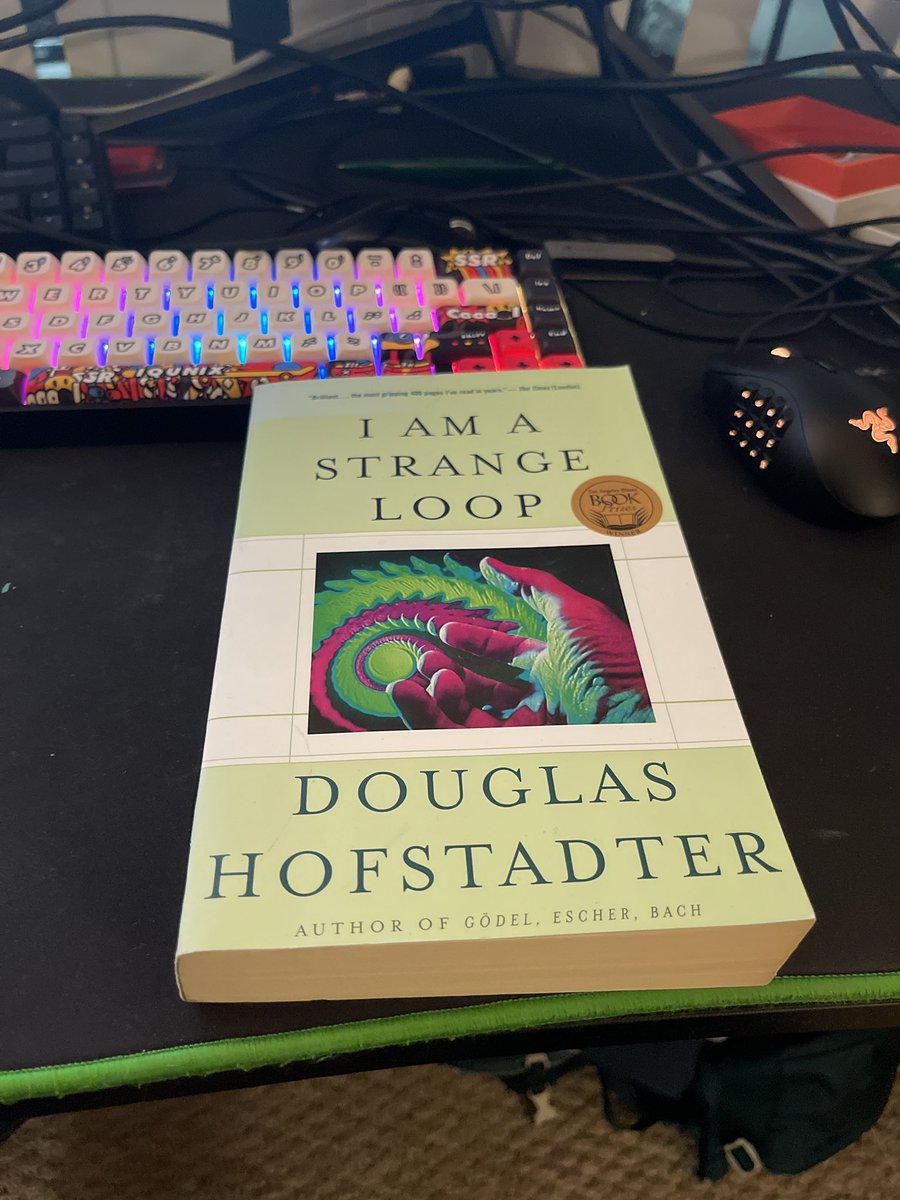
@soulblocks “I am a strange loop” A book about a self that’s nothing but a strange loop, written by a self who is one, so that you , a strange loop reading about strange loops, can finally recognize the loop reading this sentence as you
shitanalyst tweet media
English
0
0
1
54
soulblocks
soulblocks@soulblocks·
dreams and memories and memories of dreams of memories of memories of dreams in dreams in memories of dreams of memories in memories of memories
English
1
0
4
106
shitanalyst
shitanalyst@shitanalystXBT·
@mikesol90 day 3. wife at the hotel. she said come back when you’ve sold. i said never. she respected that, somehow
English
0
0
0
7