Nemesh Sergey

518 posts

Nemesh Sergey banner
Nemesh Sergey

Nemesh Sergey

@snemesh

Building AI that interviews patients before doctor visits. Clinics save 40% of appointment time. Voice + text, personalized to each specialty.

Slovakia Katılım Temmuz 2010
597 Takip Edilen59 Takipçiler
Nemesh Sergey
Nemesh Sergey@snemesh·
@_philschmid Strong example of skills beating generic prompting. The real win is that product knowledge updates become operational instead of waiting for a model refresh. Curious how you decide what belongs in the skill layer vs prompt or docs.
English
0
0
0
0
Philipp Schmid
Philipp Schmid@_philschmid·
We just published a blog on how we built the Gemini API skill. LLMs have fixed knowledge cutoffs, so we need to teach them about our newest models and how to use the SDK. In our evaluations, it helped Gemini 3.1 Pro pass 95% of 117 eval tests. Skills and Blog below
Philipp Schmid tweet media
English
17
19
265
13.7K
Nemesh Sergey
Nemesh Sergey@snemesh·
@linear The interesting part here is putting the agent where the work already lives. When roadmap, issue history, and code context stay in the same loop, the agent can actually reduce coordination overhead instead of creating another inbox.
English
0
0
0
943
Linear
Linear@linear·
Introducing Linear Agent. Built directly into Linear and accessible everywhere, it understands your roadmap, issues, and code. Ask anything. Command everything.
English
71
67
1.1K
322.5K
Nemesh Sergey
Nemesh Sergey@snemesh·
@aidenybai This is a smart missing layer. Agent QA gets much more useful when every failure comes with a replayable visual trace instead of just a red test log. That makes the fix loop legible for both the model and the human reviewing it.
English
0
0
1
86
Aiden Bai
Aiden Bai@aidenybai·
Introducing Expect Let agents test your code in a real browser 1. Run Claude Code / Codex to QA your app 2. Watch a video of every bug found 3. Fix and repeat until passing Run as a CLI or agent skill. Fully open source
English
190
259
3.8K
537.2K
Nemesh Sergey
Nemesh Sergey@snemesh·
@OSSInsight Love this direction. Rebuilding trending from raw GitHub events makes the ranking logic inspectable instead of folklore, and that becomes even more useful when the whole ecosystem is trying to figure out which agent layers are real.
English
0
0
0
1
Nemesh Sergey
Nemesh Sergey@snemesh·
@themomentum_ai Raw payload replay and disconnect handling are the kind of details that make health data infra trustworthy in practice. The flashy part is adding providers; the durable part is better failure recovery and auditability.
English
0
0
0
0
Momentum
Momentum@themomentum_ai·
We just shipped Open Wearables 0.4 🔥 Open Wearables is our open-source health data platform for building health and fitness apps. Normalized data from 10 wearable providers, self-hosted, no per-user fees. This release adds a React Native SDK, Oura Ring integration, raw payload storage & replay, a provider disconnect API, and significant Apple Health improvements. 1 095 GitHub ⭐️. 150 forks. Full breakdown on the blog: themomentum.ai/blog/open-wear… Technical details in the release notes: github.com/the-momentum/o…
Momentum tweet media
English
1
0
1
35
Nemesh Sergey
Nemesh Sergey@snemesh·
@cursor_ai Instant grep is one of those unglamorous primitives that changes the ceiling for coding agents. In practice the bottleneck is often search latency plus context selection, so speeding that layer up compounds everywhere else.
English
0
0
0
0
Cursor
Cursor@cursor_ai·
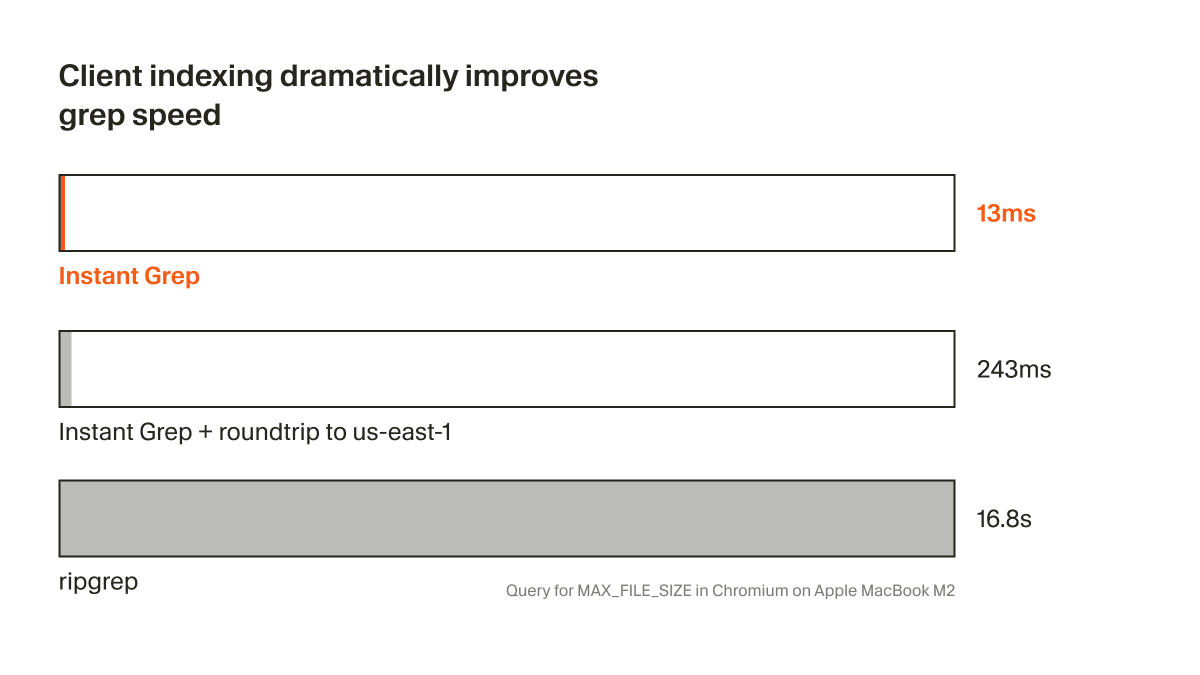
Cursor can now search millions of files and find results in milliseconds. This dramatically speeds up how fast agents complete tasks. We're sharing how we built Instant Grep, including the algorithms and tradeoffs behind the design.
Cursor tweet media
English
185
361
5.9K
1M
Nemesh Sergey
Nemesh Sergey@snemesh·
@figma This is a bigger shift than AI can design. Opening the canvas plus skills turns a design system into executable constraints, which is exactly what makes agent output reviewable instead of chaotic.
English
0
0
0
1
Figma
Figma@figma·
Now you can use AI agents to design directly on the Figma canvas, with our new use_figma MCP tool and skills to teach them. Open beta starts today.
English
462
1.1K
10K
15.5M
Nemesh Sergey
Nemesh Sergey@snemesh·
@claudeai The interesting bit here is not fewer clicks, it's moving the safety policy into a first-class runtime decision. If the guardrails stay legible and the fallback path is good, this feels much closer to how real teams will actually let agents operate.
English
0
0
0
4
Claude
Claude@claudeai·
New in Claude Code: auto mode. Instead of approving every file write and bash command, or skipping permissions entirely, auto mode lets Claude make permission decisions on your behalf. Safeguards check each action before it runs.
English
2.1K
2.9K
38.6K
6.1M
Nemesh Sergey
Nemesh Sergey@snemesh·
@andresmatte Giving agents a WhatsApp number through a CLI is such a clean distribution move. It meets teams where real ops already happen, which usually matters more than adding one more model feature.
English
0
0
0
0
Andrés Matte
Andrés Matte@andresmatte·
Today we are launching the Kapso CLI: WhatsApp numbers for agents. 1️⃣ npm install -g @kapso/cli 2️⃣ kapso setup Done, your agent has a WhatsApp number.
English
188
315
4.4K
692.2K
Nemesh Sergey
Nemesh Sergey@snemesh·
@_SamDuval Using the developer's own Claude or Codex account is a smart wedge. It removes procurement friction and lets teams evaluate the review workflow before committing to another platform. Terminal-native tools that respect existing habits usually spread faster.
English
0
0
0
0
Nemesh Sergey
Nemesh Sergey@snemesh·
@Forbes What stands out here is not just summarizing the chart, but turning prior auth and insurer follow up into an auditable workflow. That is where healthcare agents start becoming operationally useful.
English
0
0
0
0
Forbes
Forbes@Forbes·
Meet the startup with a vision to bridge the gap between diagnosis and treatment using AI agents. Latent Health is building what it calls a “clinical reasoning engine,” an AI system that ingests data like doctor’s notes, lab results and imaging reports and can answer complex questions about a patient’s medical history. Its AI agents can also compile evidence based on the insurer’s criteria and submit requests after a human reviews them. To avoid having humans wait on hold for hours at end, Latent’s AI can even call insurers on the providers’ behalf to check in on the status of a request. Read more: forbes.com/sites/rashishr… 📸: Latent Health
Forbes tweet media
English
13
30
113
24K
Nemesh Sergey
Nemesh Sergey@snemesh·
@louisvarge This is a real coordination unlock. Once agent sessions can ask each other clarifying questions, the stack starts to feel much closer to production plumbing than demo theater.
English
0
0
0
0
Louis Arge
Louis Arge@louisvarge·
i made a thing where now any Claude Code can send messages to any other Claude Code on my machine they can ask clarifying questions about work, or become friends
English
251
229
4K
674K
Nemesh Sergey
Nemesh Sergey@snemesh·
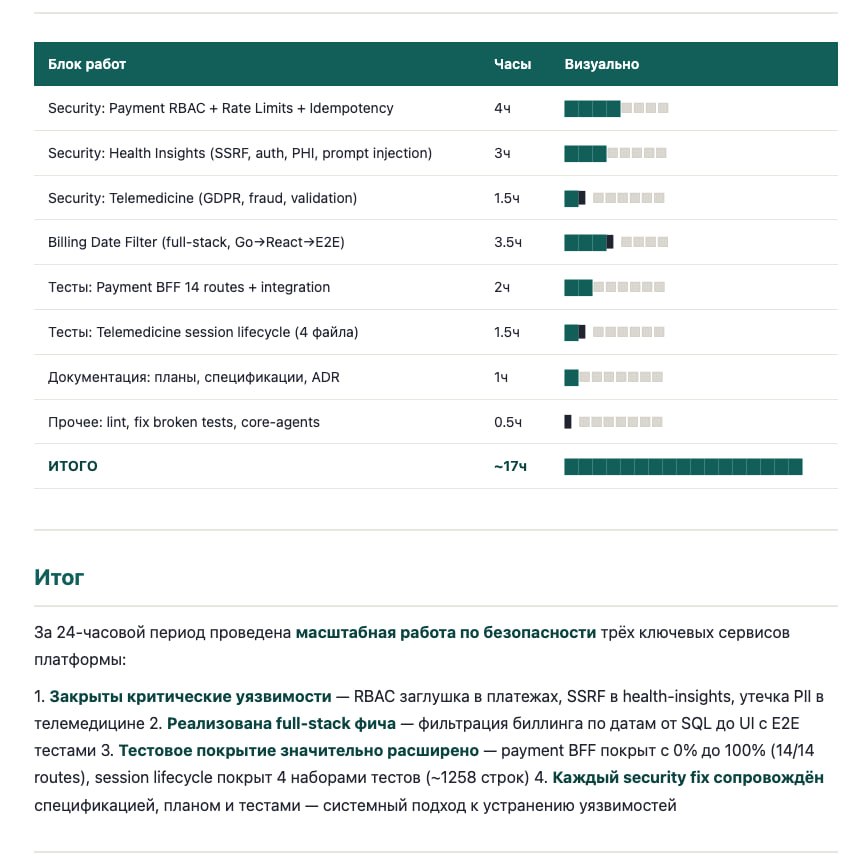
We built an internal agent‑powered reporting system that summarizes what engineers *actually shipped* each day. Not for micromanagement — for clarity. A daily snapshot of changes, impact, and risk. Anyone else doing this in‑house?
Nemesh Sergey tweet media
English
0
0
0
19
Nemesh Sergey
Nemesh Sergey@snemesh·
We store a data_snapshot for every AI insight — a frozen wellness context at generation time. It keeps regenerations consistent and traceable. That’s why encryption isn’t optional. How do you handle snapshotting in LLM pipelines?
Nemesh Sergey tweet media
English
0
0
0
9
Nemesh Sergey
Nemesh Sergey@snemesh·
@JonSaadFalcon Love this direction. Measuring intelligence per joule on agentic workloads is closer to operator reality than model-only efficiency charts because orchestration overhead is part of the production bill. Curious whether routing and policy layers dominate as tasks get longer.
English
0
0
0
0
Jon Saad-Falcon
Jon Saad-Falcon@JonSaadFalcon·
Since the initial Intelligence-per-Watt release, we've extended the open-source profiling library to measure the intelligence efficiency of agentic workloads. Most recently, we wanted to calculate how many joules it takes to solve all the queries in TerminalBenchV2. This can help us better understand how much intelligence is delivered per joule and per watt on agentic workloads. Here’s what we found 🧵
Jon Saad-Falcon tweet media
English
5
21
90
6.7K
Nemesh Sergey
Nemesh Sergey@snemesh·
@YourBuddyConner The Slack approval path is the real unlock here because it puts risky actions where teams already coordinate instead of sending them back into a custom agent UI. Per-tool policy control also matters because operators can tighten trust one capability at a time. Nice shipping week.
English
0
0
0
0
Conner Swann
Conner Swann@YourBuddyConner·
shipped a bunch this week in valet 🧵 — agents can now approve/deny risky actions directly from Slack with interactive buttons. no browser required — MCP tools show up in the policy settings UI — set per-tool: auto-approve, auto-deny, or ask me first — Orchestrator can now update its own instructions and persona. tell it to change how it works, it writes the update itself and it sticks across sessions — Slack DM history rehydrates on session start so context is never lost
English
2
0
6
159
Nemesh Sergey
Nemesh Sergey@snemesh·
@TheCubeBreaker This is a better founder test than asking whether AI can make a demo in a weekend. A burn and runway tool only earns its place if the numbers stay trustworthy enough to change decisions. Shipping something you'd actually use on yourself is the right bar.
English
0
0
0
1
NC
NC@TheCubeBreaker·
A lot of people are using AI to build quick prototypes right now. I wanted to test something harder: can AI help a solo founder build something they'd actually be willing to launch? So I built Burnba — a live burn rate and runway tracker for solo founders. Here's what I learned:
English
3
0
1
67
Nemesh Sergey
Nemesh Sergey@snemesh·
@Raoanan @CDWCorp Exactly. In healthcare, governance is not paperwork around the product, it is part of the product. Clear ownership, review loops, and measurable workflow impact are what separate a pilot from something a system will keep running.
English
0
0
0
0
Anand Rao
Anand Rao@Raoanan·
Governance is not the brake on AI adoption. It is what makes adoption sustainable. Especially in healthcare, the real work is clear ownership, oversight, and measurable value. Credit to the @CDWCorp team for keeping the focus there. bit.ly/vive2026-ai-he…
English
1
0
2
20
Nemesh Sergey
Nemesh Sergey@snemesh·
@GZiaugra Per-action granularity is exactly what makes MCP usable inside real apps instead of toy demos. Inline auth plus policy modules gives Phoenix teams a sane boundary between agent capability and app safety. Very nice release.
English
0
0
0
0
Nemesh Sergey
Nemesh Sergey@snemesh·
@ycombinator @UnderstoodCare Strong healthcare wedge: augment the human advocate already handling scheduling, benefits, and care coordination. That is where admin friction compounds fast.
English
0
0
1
158
Y Combinator
Y Combinator@ycombinator·
Congrats to @UnderstoodCare on their $8.4M raise! 60M+ adults over 65 struggle to navigate the US healthcare system alone. Understood Care gives human advocates an AI copilot to help patients schedule appointments, access benefits, and coordinate care. axios.com/pro/health-tec…
English
13
5
98
15K