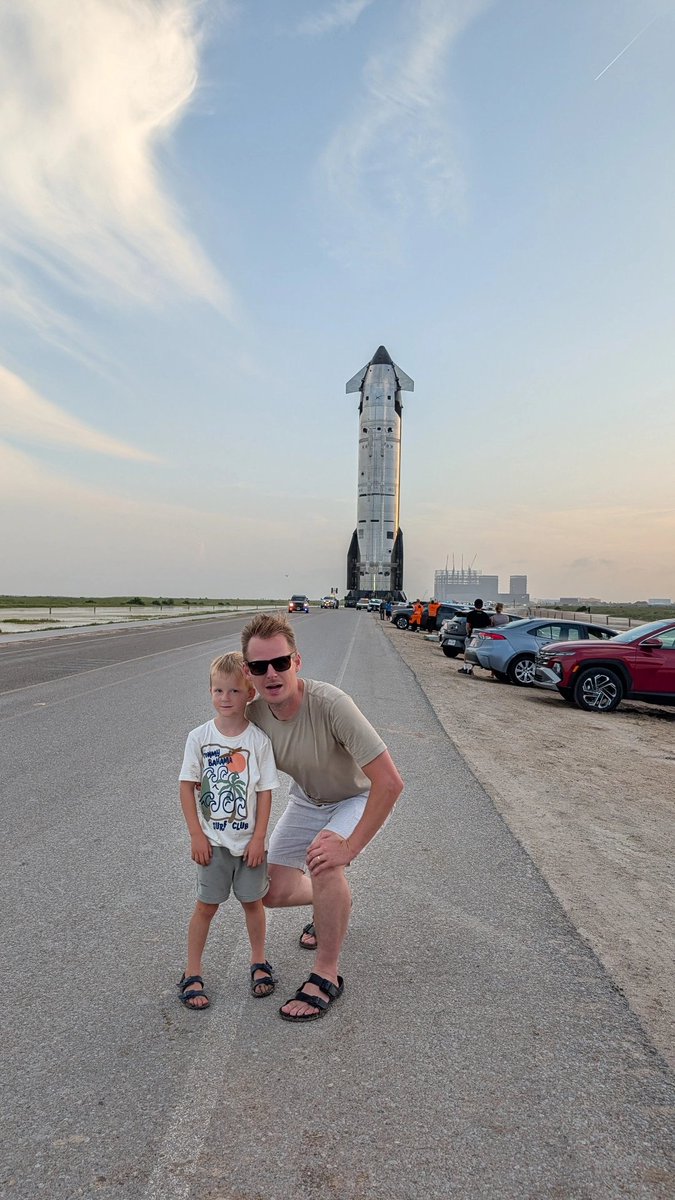
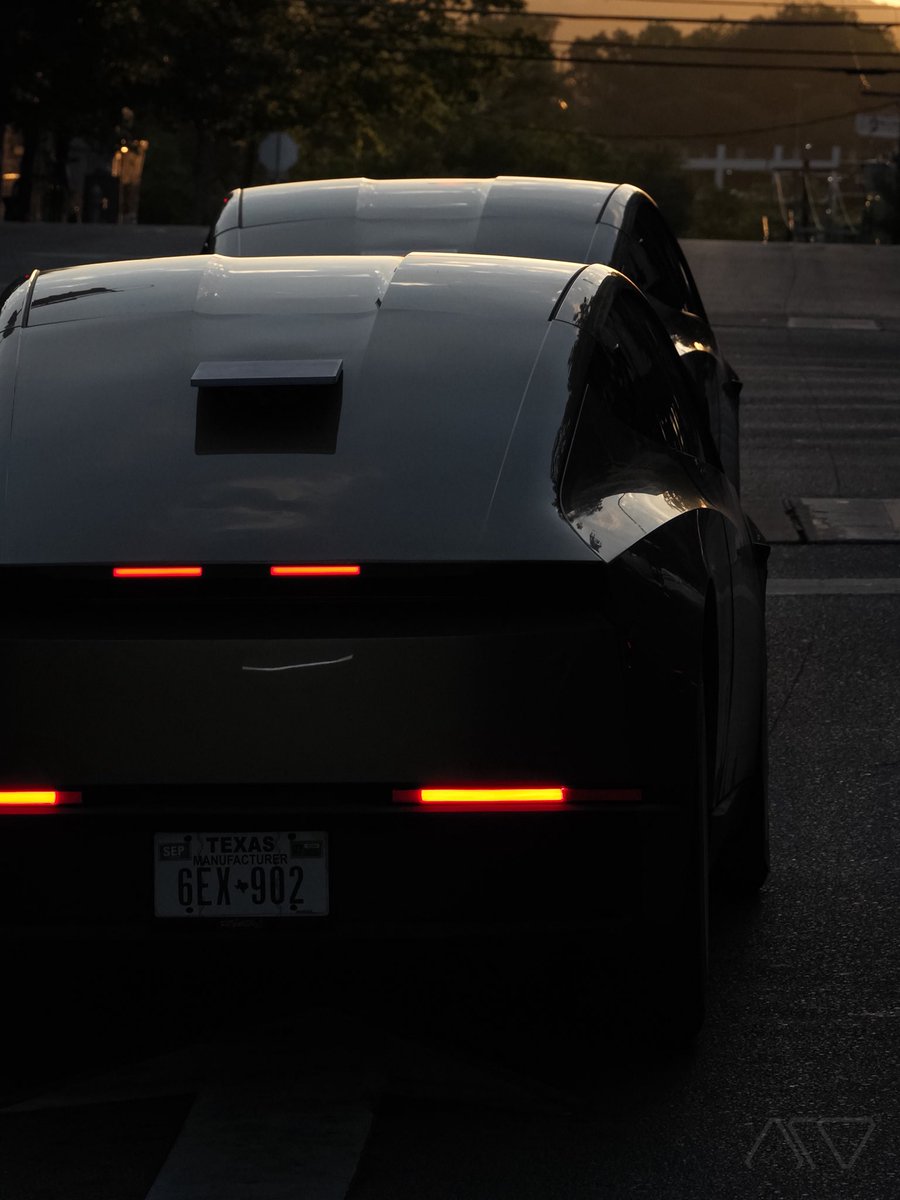
@SawyerMerritt 100%. FSD drives are significantly more comfortable for me, especially around town.
English
Spencer Gardner
6.6K posts

@spencergardner
Co-founder & CTO @tavahealth. Alum @artemisdata @spiff_inc @microsoft, rooting for @byutfxc and @utahjazz, sincere elevator music aficionado.

Someone asked me recently why I’ve become interested in aesthetics after having spent most of my life more interested in STEM-adjacent topics. I hadn’t really considered the question consciously before, but I’m certainly thinking about aesthetics more than I used to. I think it’s a confluence of things: • Many things today are ugly and far uglier than they used to be or need to be. Once you see this, it’s kinda hard to stop perceiving it. (Early twentieth century phone boxes versus modern phone boxes; old water fountains versus new water fountains; etc.) As someone with a naively meliorist assumption that most things should be getting better rather than worse, it’s all a bit perplexing: why did we stop doing things nicely? Is it a choice? Was there a malevolent spell cast upon us? This vein led me to think more about modernism and why much of art became more intentionally "challenging", grotesque, opposed to prettiness, rebarbative, dissonant, etc. Can or should anything be done about this? Is this just how things ought to be? • Relatedly, much of modernism involved a kind of explicit repudiation of cultural continuity and represented a schism with prior practices. This is maybe most evident in American architecture, where the International Style exhibition in 1932 initiated the displacement of a rich tapestry of prior styles. This cultural break seems important and interesting to me, and I suspect that the rejection had important consequences outside of the aesthetic domain. Samuel Hughes has been exploring this question in his recent writing at @WorksInProgMag; @RuxandraTeslo is also pulling on this thread. Elaine Scarry wrote about how beauty inspires creation. If so, the inverse may also be true: ugliness inhibits it. • It’s clearly the case that changes in the aesthetic domain can at least inspire progress in other places. Petrarch helped set some of the preconditions for the Renaissance which in turn fostered the scientific revolution and Enlightenment. Things like World Fairs (the 1851 Fair at the Crystal Palace recorded 6 million admissions when the population was 21 million) reflect the popular interdependency that used to exist between aesthetics and material development. • @tedgioia and others have written about stuck culture and how so many domains seem to have ceased to straightforwardly advance in the way that they did up until the nineties or thereabouts. This is obviously peculiar and interesting. What changed, and what does it mean? Is it about the internet and fragmentation? Is it about a loss of supply? Is it just about having reached the zenith of various mediums? • I’m generally interested in markets and the dynamics of creation. In aesthetics broadly, I find the reflexivity between supply- and demand-side factors to be very thought-provoking. There’s a natural desire to view satisfaction of individual preferences as the yardstick to measure market success, but things get interesting and even a bit unsettling when we start to think about how the supply might start to shape the demand. I often think about this in the context of food. Why is food so much worse in Germany than many of its neighbors? Germany certainly doesn’t have less material ability to produce good food; indeed, Germany is richer than the countries around it. There’s probably something about German food supply chains that is impoverished relative to France and Italy, but the Germans themselves don’t seem too upset about it. It just seems that the Germans are stuck in an objectively worse market equilibrium than their neighbors: the food is bad and they’ve gotten used to it. The obvious question then is where else these kinds of reflexive patterns apply, and where else we’re stuck in some objectively inferior equilibrium, even if preferences are in some superficial sense being sated. • While this is an extremely banal and obvious point, I hadn’t until recently thought much about or internalized how much one can study reasonably objective things ("the status of women in society", say) through artwork. (Thanks to @_alice_evans for opening my eyes here.) In this vein, I’m pretty excited about the possibilities over the coming years in computational art analysis. I want something that’s conceptually similar to Google Ngram timelines but for the visual arts. • We've always tried to do things well at Stripe. I've come to see that attempting to do them beautifully is often a helpful way to break out of standard practices and to do something with greater novelty and in a way that might have other benefits besides. (Also, excellent people want to do great work because it is intrinsically satisfying. Explicitly allowing aesthetic considerations to carry weight avoids having to justify every assessment with some kind of torturous empiricism.) • In his Nobel Lecture, Solzhenitsyn said that, among the Platonic virtues of goodness, truth, and beauty, that beauty is special, for it possesses a unique kind of irrefutability. He notes that arguments, writing, and philosophical systems can all be predicated on misapprehensions, but that “a true work of art carries its verification within itself.” He proceeds to observe that when goodness and truth are threatened, the “ever surprising shoots of beauty will still force their way through.” There is a lot of specious and motivated reasoning in the world today and plenty of questionable value systems. I don’t think that beauty directly reflects any definitive trait, but I’m intrigued by the idea that it can be a marker of deeper metaphysical coherence.


My conversation with @dhh, co-founder of @37signals. 0:00 Cutting Rework From 50,000 Words To 25,000 2:54 Basecamp Was Built In 380 Hours 6:46 Unlimited Resources Build A Blob 10:22 Terminator Beats Avatar By A 1000x 15:24 The Printer DHH Never Wants To Upgrade 17:31 Millions In Profit From 16 Year-Old Software 20:10 The Beauty Of A Finished Product 22:54 I Would Quit Before Working In An Office 25:41 Four Uninterrupted Hours Or The Day Is Lost 31:21 Tobi Lütke Saw The AI Future First 38:51 Apple Pissed Him Off Enough To Switch 42:47 The 19 Year-Old Who Beat Apple 47:16 If Nobody Else Will Build It, I Will 52:02 The Need For Control, Independence, And Freedom 53:44 Chef's Choice, Not A Construction-Kit Burger 56:50 A New Computer Ready In 2 Minutes 1:00:33 A Cheaper Mac Will Never Win 1:02:27 The Best Ideas Sound Stupid At First 1:03:47 Out-Teach Your Competition 1:06:57 The Algorithms Broke Reciprocity 1:10:53 No Investors Is Freedom. No Customers Is Transcendence. 1:13:25 No One Gets To Tell Me What To Do 1:16:49 Your Moral Obligation To Buy A Ferrari 1:23:19 Costs Are The Only Thing You Control 1:26:49 Bezos Paid For The Promise 1:30:17 The Confidence To Say No To Everyone 1:32:59 The Day A Third Of The Company Left 1:36:49 Marc Andreessen Came To Help Includes paid partnerships.