Steve Crossan

1.1K posts

Steve Crossan

Steve Crossan

@stevecrossan

Solving Biochemistry @ Dayhoff Labs. Previously: DeepMind (AlphaFold), Google Maps, Gmail, Search.


Katılım Nisan 2007
714 Takip Edilen1.7K Takipçiler
Dan Gray
Dan Gray@credistick·
Additional sources: "Reserves", by @fredwilson: avc.com/2017/01/reserv… "How To Make Money in Venture", by @jaltma: youtube.com/watch?v=7VCSi7… "Understanding the Risks of VC Signaling", by @msuster: bothsidesofthetable.com/understanding-… "Modelling suggests rational venture investors should have bigger portfolios", by @stevecrossan: medium.com/unreasonable-e… "Dirty Secret: Venture Reserves are Not Always a Good Thing", by @LauraLPThompson: sapphireventures.com/blog/dirty-sec…
YouTube video
YouTube
English
1
0
9
2.2K
Dan Gray
Dan Gray@credistick·
The topic of "reserves" is one of those areas where venture capital hasn't developed particularly clear thinking, particularly for emerging managers. The majority of established firms apply some form of strategy for follow-ons, varying from "rare and selective" to "never miss an opportunity". So how should a new firm approach the topic, and the related considerations like signalling, sunk-cost, portfolio support, and LP alignment? The main lesson is to avoid default behavior, or doing reserves becuase you believe they are standard, expected, or necessarily drive performance. This write-up for @JoinOdin offers a comprehensive look at the principles, logic and research behind reserve strategies (including excellent simulation data from @LauraLPThompson of @SapphireVC) to illustrate the challenge of getting it right.
Dan Gray tweet media
English
4
11
65
51K
Ben Recht
Ben Recht@beenwrekt·
Since I can’t get it out of my head, I wrote up my thoughts on Kevin Baker’s essential critique of AI-automated science and the logical end of processes that can't self-correct. argmin.net/p/measures-as-…
English
5
22
212
34.1K
Steve Crossan
Steve Crossan@stevecrossan·
@credistick This is true but very hard to fix absent a massively enlarged role for the state in innovation (as in post war US)
English
0
0
1
12
Dan Gray
Dan Gray@credistick·
"Power law" is responsible for one of the most egregious and destructive fallacies in venture capital. Everyone understands what power law refers to; the pareto distribution of success. Power law is an outcome of investing in high risk, high reward assets. It would be clearly visible if you indexed $100,000 across every venture-backed company. Significantly, power law is an output. Unfortunately, it's common for VCs to use power law to inform how they invest, and how they think about risk. Their mistake is to use it as an input. The common manifestation of this fallacy is overconcentration: "There will be one huge winner from this particular theme, so I might as well throw all of my chips behind one company." ------------------------------- Imagine you're a "tier-1" multi-stage VC, with a few billion in dry powder that's burning a hole in your pocket. Pick a hot theme and find the five highest potential startups in that space raising a seed round. Consider two scenarios: A) You invest at $5M on $25M. Pricey, but not outlandish. They continue developing their products and testing assumptions. B) You invest at $50M on $250M. A headline-grabbing fundraise. Money is no longer a limiting factor for their growth of talent or infrastructure. In scenario A, the companies are well financed but follow a typical path of developing towards product-market fit. Three will be able to raise a series A, two will progress further, etc. Competition will drive better products. In scenario B, all five companies are being flooded with capital. One will die to overspend, two will never hit the metrics for a series A, one will explode in fraud, corruption, or founder conflict. One will survive. This phenomenon — that overcapitalisation is deadly to startups — is well understood. And yet, it remains relatively common and often deliberate. The logic here is that scenario B allows a deep-pocketed investor to most quickly and efficiently manifest a market leader. Losing $200M on the other bets is a small price to pay: future capital requirements are eliminated, and they wont be competing away the margins of the remaining portfolio company or fishing in the same pool of talent. (In fact, you can probably help relocate talent within your portfolio as a "value-add" investor.) A rather major downside is that you have limited the competition which normally drives the development of better products, and early growth is no longer centered on finding product-market but on growth. What competition exists will stem from a similarly hypercapitalised behemoth, from another large firm — making it a war of capital rather than products. Thus, all that matters is remaining attractive to investors, which leaves two options: 1) Spend aggressively to grow revenue. With an attractive revenue multiple you can probably afford to spend $2 for every $1 of ARR you can manufacture. 2) Spend aggressively to inflate your multiple. Build hype, talk about AGI, make podcast apperances, hire big names, have strong social media game. (Usually, some combination of both.) Your investors are incentivsed to support you in either of these goals, to prop up their fund performance and keep you in a "winning" position until you can figure out a business that actually works. Unfortunately, there's a good chance you never manage to hit escape velocity, especially with the extreme valuation hurdle ahead. - Maybe one of the other 4 startups (which suffered premature death) may have found the answer, given the chance? - Maybe the underlying premise (AI Companions) was misdirected, and another founding team might have found the opportunity to pivot? - Maybe there was an opportunity to pivot, but the reliance on investment momentum in your existing concept made it impossible? By accelerating startup death, investors assume they're accelerating entrerpeneurial darwinism; the survival of the fittest. Optimising for power law. Their failure is that competitive pressures (for resources, survival, and reproduction — in the wild, at least) are at the core of evolution. If you limit competition, you get stagnation and weakness. Instead, they concentrate huge amounts of capital into fragile companies that are brilliant at creating hype, raising and spending capital — but relatively little else. It's a low-value (if not negative) output that is bad for innovation, bad for market health, bad for consumers, and ultimately bad for humanity. We saw this play out with SaaS from 2011 to 2021. When the bubble burst and it seemed, all too briefly, like VCs had returned to their senses. It's clear today that, in many ways, AI is just the rebirth of SaaS. Power law produces long tail outcomes in healthy markets with good distribution of capital. If you try to game it by preempting those outcomes, you risk zeroing out everything.
Dan Gray tweet media
English
4
19
67
6.3K
Steve Crossan retweetledi
Josh Goldford
Josh Goldford@joshuagoldford·
Looking for a quantum chemist with experience in reaction mechanism and kinetic modeling for a well-funded project. Please RT. DM me if you’re interested in learning more!
English
1
3
1
2.6K
Steve Crossan
Steve Crossan@stevecrossan·
@garrytan Someone should build a YC ETF #scrollTo=lYtQwg3pZMKu" target="_blank" rel="nofollow noopener">colab.research.google.com/drive/1EAFQxQ6…
English
0
0
0
92
Garry Tan
Garry Tan@garrytan·
Spray and Pray is a cargo cult pejorative that is no longer true and today only a justification for VC laziness Numerically from our dataset of 5000 startups, Monte Carlo simulations indicate larger portfolios at YC result in much higher median multiples on invested capital
Peter Walker@PeterJ_Walker

Early stage VCs should (probably, on average) make more investments. Lots of objections, some of them very valid. But the general disdain for "spray and pray" is pretty anti-math. Link to the full argument as laid out by @credistick in following post

English
25
19
212
91.6K
Peter Walker
Peter Walker@PeterJ_Walker·
Early stage VCs should (probably, on average) make more investments. Lots of objections, some of them very valid. But the general disdain for "spray and pray" is pretty anti-math. Link to the full argument as laid out by @credistick in following post
Peter Walker tweet media
English
31
38
377
173.7K
Dan Gray
Dan Gray@credistick·
- There's a ~0.5–2.5% chance that a venture backed company, at seed, will produce a unicorn outcome. According to @IlyaStrebulaev: 0.5% According to @AngelList: 2.5% According to: @CBinsights: 1.28% - Most VCs are willing to admit they really can't predict which of their investments will be a winner. "After the deployment period for 20VC Fund I, I did an analysis of portfolio. I predicted the top 5. Three years later, not one of the top 5 is as predicted. The true value from seed is always the messy middle." (source: Harry Stebbings, Founder of 20VC) - We can follow the common wisdom that you need at least one unicorn+ outcome for decent fund returns. "I looked at our top 20 funds by TVPI. What's the common theme amongst the 3x net funds in our portfolio? 85% of them had at least one company that could return the fund." (source: "Franchise Funds: Metrics To Be Extraordinary with Jessica Archibald") If we verge towards generous and assume a 2% hit rate (you don't necessarily need a unicorn to return a smaller fund), the conclusion should be that seed managers should probably target at least 50 investments, to optimise for at least one unicorn. However, the 'rule of thumb' (surprising lack of data here) for a right-sized seed portfolio seems to be 25-30 investments per fund. What explains this? 1) Signalling If you try to sell LPs on a properly diversified portfolio, you may be signalling an inability to pick, and they may interpret your strategy as offering weaker returns. "A slow and steady 'venture is a numbers game' pitch is much less emotionally compelling than 'I am a rock star who can consistently beat the odds.' And GPs need an emotionally appealing pitch to get funded." (source: "The Pervasive, Head-Scratching, Risk-Exploding Problem With Venture Capital") It's far easier to sell them on the idea that you have an asymmetric edge which allows you to find success more easily, and take more concentrated positions. 2) Pattern Matching Success If you want to be a top performer, you might be tempted to emulate the practices of legendary firms. e.g. @USV seems to target 20-25 investments per fund. This has some obvious errors built in. You don't have the brand to get the "best founders" (pick your definition of "best founder") queuing up at your door. More importantly, you don't yet have the experience and perspective to properly manage a process and achieve above-odds success. At the very least, you haven't yet proven that ability — and offering it to LPs is a failure of your fiduciary duty. 3) Less Work / "More Value-Add" A cheap point, but a true one. 50 companies is more to manage, even if you're generally not a lead investor or taking an active role as an advisor. The other side to that, if you tell LPs that you have some brilliant operator wisdom to help guide your portfolio founders, it's easier to make that case in relation to 20 investments than it is for 50+. Here's why all of this is a problem: At 50 investments, with a 2% unicorn hit rate, venture capital is (just about) a portfolio strategy. Your actual probability of landing a unicorn is 63.5% (not 100%, sadly), which is a decent margin over a coin-toss. Importantly: you're able to run a decent process, manage risk reasonably well, optimised for the realities of venture. As such, you can more comfortably back potential outliers, outside of the consensus. "Returns in venture capital are distributed according to a Power Law with the lion’s share of returns earned from a small number of investments. The data demonstrate this distribution to be true across the industry and even within firms. In short, VCs cannot reliably pick winners. They can, however, construct portfolios that consistently generate great returns." (source: "Picking Winners is a Myth") From 49 investments and lower (34 is where your odds become worse than a coin-toss) you are increasingly forced to focus on 'picking', not portfolio strategy. A strategy of picking makes sense in PE, where there's a ~60% chance of success from an individual investment. It does not make sense in venture capital, unless you are able to repeatedly and reliably demonstrate an ability to exceed the usual hit rate. VC is a portfolio discipline. At 15 investments (26.1% hit probability across the portfolio), you are so exposed to the consequence of each pick that you are forced to seek the comfort of irrationality, like overconfidence and confirmation bias. Alternatively, you'll join the herd on a 'safe' consensus theme, sure to generate good markups. Neither of these tends to end well, and at risk of repeating my earlier post: this is why venture capital has such poor aggregate returns, weak persistence, and high churn. Doesn't concentration drive returns? A common rebuttal to this case for diversification is that it might limit your chance of being a bottom top quartile manager, but it does so by jeapordising your chance at hitting top quartile. This is not true. Portfolio modelling and historical data suggests that larger portfolios (to a point) are more likely to outperform. For example, @davemcclure's analysis showed, of portfolios of 15, 30 and 100 companies, the latter was the only top quartile outcome. A larger portfolio, with less concentration, might make it less likely that you land a top 5% fund outcome, but it makes it much more likely that you'll do well enough to survive and raise again. Indeed, we can model two different portfolio approaches to simulate this: Fund sizes: Both start with $50 m; $40 m is investable (typical 2 % / 20 %) Portfolio construction: Diversified: 100 × $0.4 m Concentrated: 20 × $2 m Ownership after dilution: Diversified: 2.46 % (3 % × (1–18 %)) Concentrated: 10 % Exit distribution: Discrete power‑law flavoured mix used in academic VC return papers: 70 % fail (0), 20 % $50 m, 7 % $200 m, 2.5 % $500 m, 0.4 % $1 bn, 0.1 % $2 bn Metric tracked: (MOIC) at the fund level The outcomes are as followed (displayed in the chart below): Mean fund multiple: Diversified: 2.6x Concentrated: 2.1x Median fund multiple: Diversified: 2.5 x Concentrated: 1.9 x Chance of ≥ 1x (capital‑preserving): Diversified: ≈ 99.7 % Concentrated: 81.9 % Chance of ≥ 2x: Diversified: 77 % Concentrated: 47 % Chance of ≥ 3x: Diversified: ×27 % Concentrated: 22 % 95th‑percentile outcome: Diversified: 4.0x Concentrated: 4.8 x As expected, the diversified fund beats the concentrated fund on all outcomes except the 95th-percentile. Importantly, it's significantly more likely to deliver >2x and >3x, which means the GPs are able to raise a successor fund — offering the chance to learn and refine. There is no room for error with a more concentrated fund. Failure is a hard landing. A track record of consistent >3x funds is probably also more valuable to LPs than a one-off 8x fund followed by performance all over the map. You'll be a better partner to them, and a more reliable partner for your portfolio founders. In conclusion, even if you believe picking is your unique strength as an investor, why not give yourself 50+ opportunities to pick? There's nothing stopping you choosing a dozen rockstar outcomes, if you are so enabled. The concentration problem drives a huge amount of underperformance, and is largely why ~50% of funds struggle to deliver 1x back to LPs today. Or the ~75% that struggle to deliver 2x. The extent of underperformance is much bigger component of venture capital's sickness than the razor-thin tail of outperformance.
Dan Gray tweet media
TBPN@tbpn

We asked @credistick what VCs get wrong about risk management. "If you properly manage risk, you can take more risky bets." "According to Dave McClure, a seed stage fund should have 100 startups, because of the small % that some become unicorns or deca-corns."
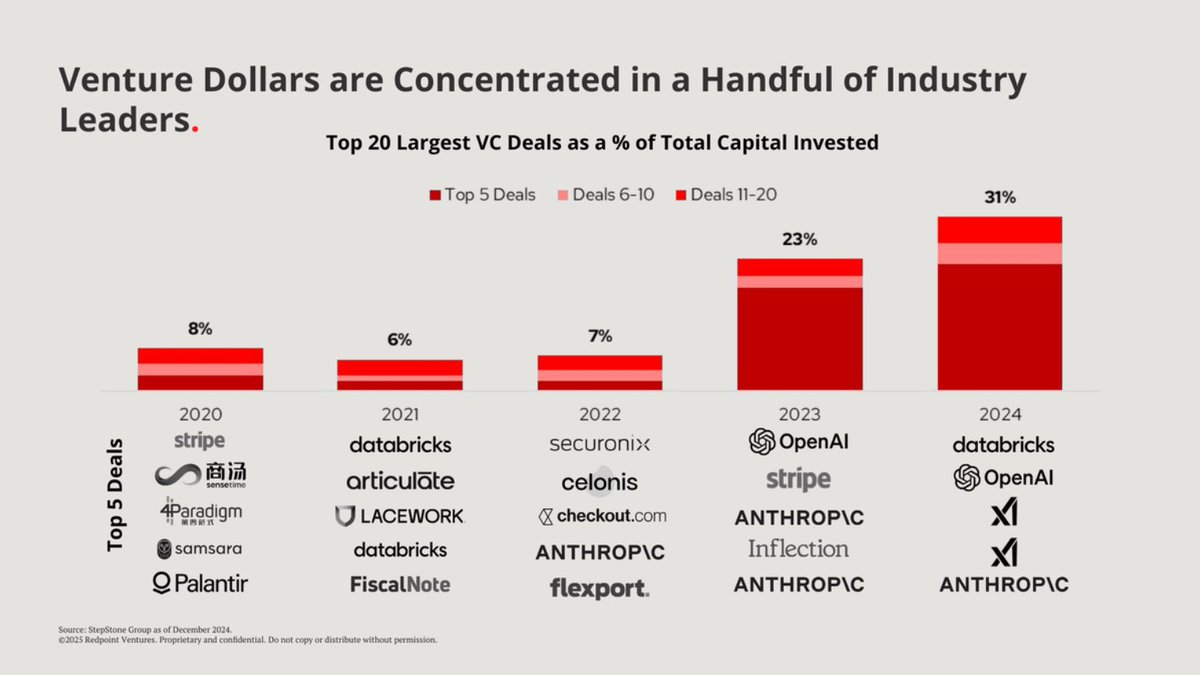
English
32
34
267
113.3K
Dan Gray
Dan Gray@credistick·
"99 VC Problems But A Batch Ain’t One: Why Portfolio Size Matters For Returns", by @davemcclure: 500hats.com/99-vc-problems… "Picking Winners is a Myth", by @ckorver: uluventures.com/picking-winner… "What Percentage of AngelList Seed-Stage Startups Become Unicorns?", by @angellist: angellist.com/blog/angellist… "Unicorn Probability by Funding Round", by @IlyaStrebulaev: linkedin.com/posts/ilyavcan… "Your Startup Has a 1.28% Chance of Becoming a Unicorn", by @CBInsights: cbinsights.com/research/unico… Post on fund returners, by @Open_LP: x.com/Open_LP/status… Post on predicting outcomes, by @HarryStebbings: x.com/HarryStebbings… "Venture Capital Funnel Shows Odds Of Becoming A Unicorn Are About 1%", by @CBInsights: cbinsights.com/research/ventu…
English
1
3
27
3.1K
Steve Crossan retweetledi
Eric Topol
Eric Topol@EricTopol·
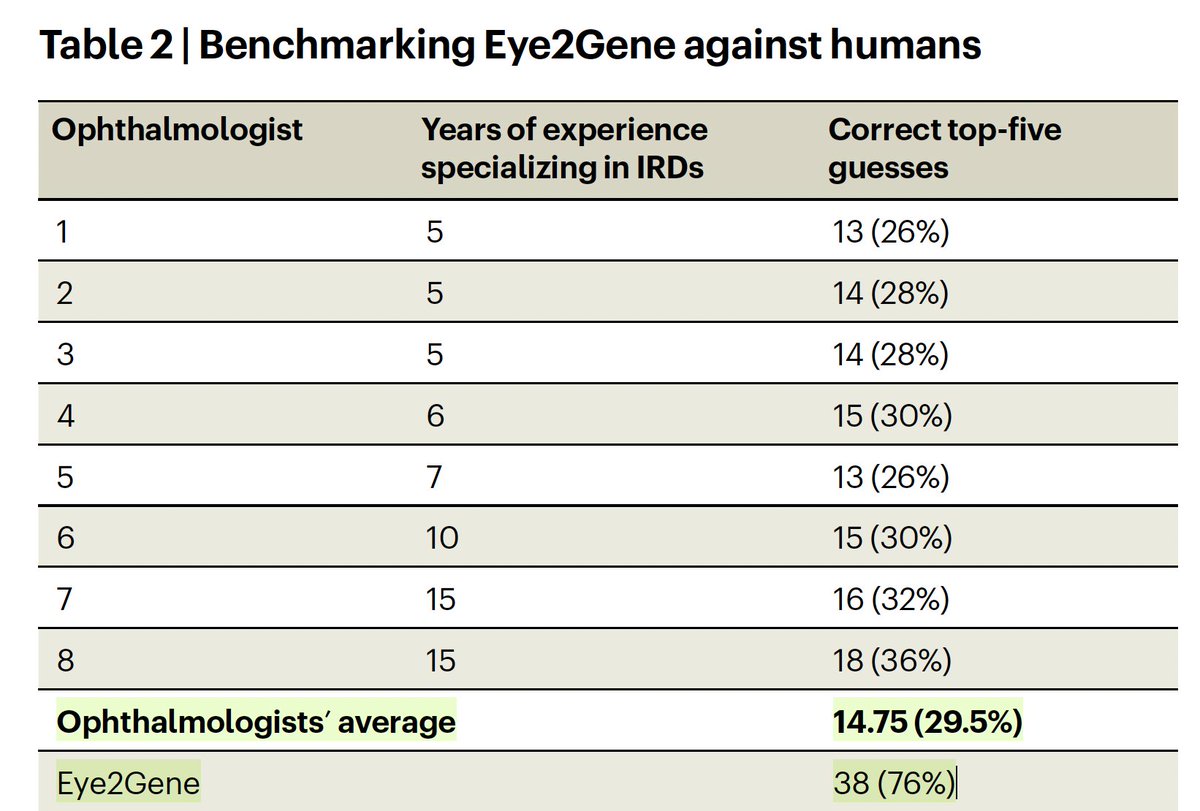
A.I. is improving the accuracy of medical diagnoses. Today for inherited retinal diseases [IRD] (Eye2Gene vs retinal experts) nature.com/articles/s4225…
Eric Topol tweet media
English
5
55
189
25.9K
David Pfau
David Pfau@pfau·
We desperately need a better term than "AI for science".
English
30
4
146
17.4K
Wayne
Wayne@MrWayneyB·
Anyone having issues with Hyperoptic this morning? My neighbours and I (in N7) can’t connect whatsoever. Is there a wider outage @Hyperoptic?
English
11
0
16
1.8K
Mattias Ljungman
Mattias Ljungman@Ljungman·
Constrain follow-on allocations. Capping follow-ons at 5–15% of investable capital per category and using 85–95% for initial deployment yields the strongest outcomes.
English
1
0
2
314
Eliezer Yudkowsky ⏹️
Eliezer Yudkowsky ⏹️@ESYudkowsky·
So, conspiracy theory that I'm not sure is totally false: The plan of the "accelerationists" in the US Gov is to wreck economies badly enough that everyone is desperate for AI as the only hope left, the only way out.
English
87
24
435
47.9K
Steve Crossan retweetledi
Yang Fan 范阳
Yang Fan 范阳@Yang_Supertramp·
“Why did AlphaFold happen at DeepMind rather than the Broad Institute? We treated it as an engineering problem as much as a research one.” People tend to become too captivated by the thrill of new discoveries, but it’s engineering that will drive leaps in the physical world.
Steve Crossan@stevecrossan

@stevecrossan/engineering-for-science-c740dff839ca" target="_blank" rel="nofollow noopener">medium.com/@stevecrossan/… on Engineering for Science

English
0
1
2
532