Lucas Tafur
1.2K posts

Lucas Tafur
@structureltp
Scientist. Personal account.


Second day of the North Carolina NUT Carcinoma Symposium, learning about a broader landscape of analogous fusion driven cancers


Keto-CTA Study MANIPULATED Charts!? Statistical Violations!? youtu.be/AE8VGcyhfnM?si… via @YouTube Regardless of the Cleerly debate looks like this group has some answering to do with regards to their data analysis. And perhaps some learnings for next time they publish.


You’ve completely lost the thread Simon. I can tell you I did not know, and that question has already been asked and answered by Dave. Second, you seem doggedly insistent on avoiding the key questions at hand related to the data. And since it appears two questions is too much for you, how about (1) Do you stand by the original Cleerly analysis? Yes or no? If you aren’t going to provide what a straightforward answer and instead dodge the fundamentals and the data, that provides me another form of answer.


Linoleic acid seems to reduce rates of cancer and do nothing for heart disease.

I recommend to all of my health optimization patients to take at least 2 grams, up to 4, of high-grade pure omega-3s daily. The majority of the over-the-counter brands are loaded with toxins and many are rancid by the time you take them. As a result, I prescribe the omega-3s as a prescription and they cost about the same as the OTC choices but are pure, much stronger and definitely safer. If you’re not taking an omega-3 you’re doing yourself a disservice! Also, on your next labs, have your doctor order an omega 6:3 ratio. You should be in the 1:1 to 4:1 range. Most Americans are 18:1 to 25:1 range, which is super inflammatory secondary to the seed oils loaded with omega 6s. Consume more omega 3s and less omega 6s and your body will thank you!


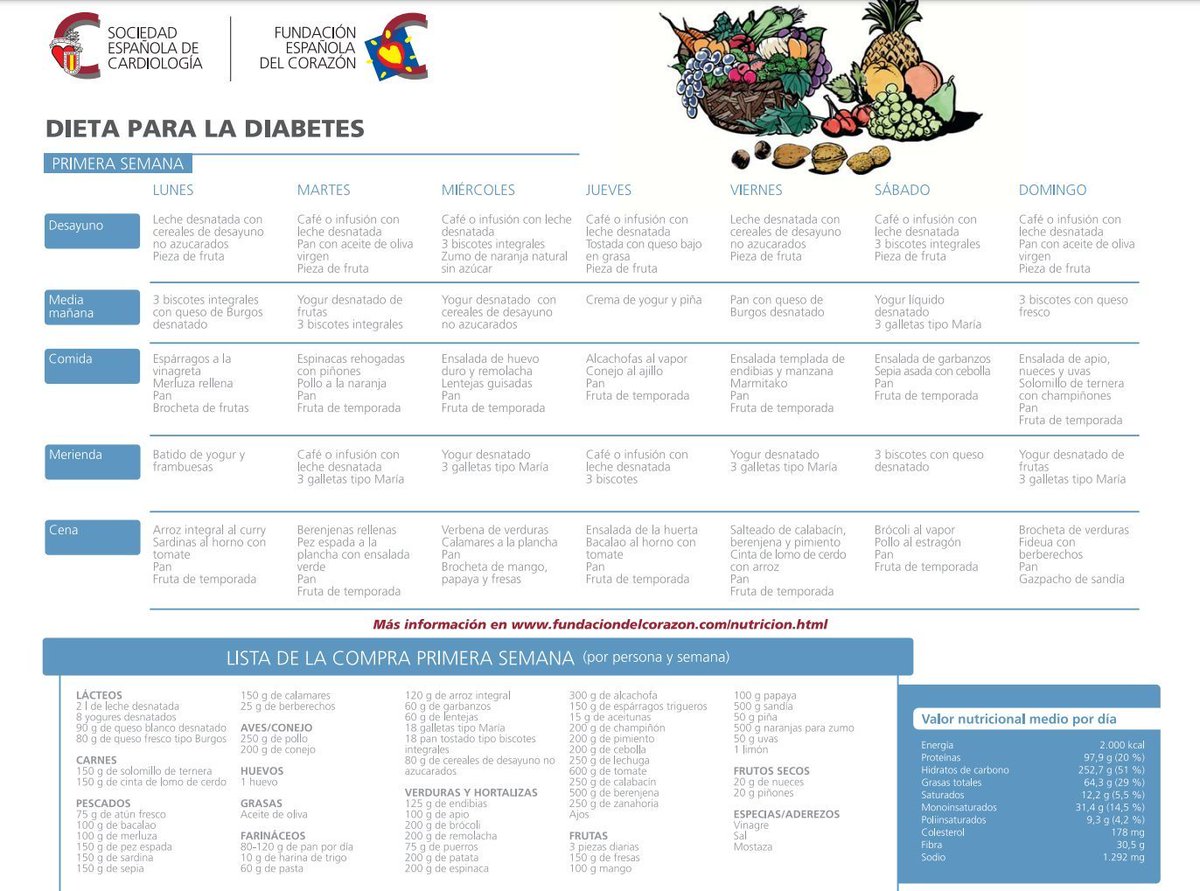
Eric, you’re a chiropractor announcing that chronic disease can be “ended in 10 weeks” if only the world listened to your diet advice. That’s not medicine — it’s marketing. Type 2 diabetes is not simply “too many carbs.” By the time we diagnose it, about 40–50% of pancreatic beta-cell function is already gone, meaning a substantial portion of the insulin-producing islet cells have already failed. That’s why serious physicians talk about remission, not magical “cures.” Weight loss — whether through diet, surgery, or modern medications — can reduce insulin resistance and improve glucose control, sometimes dramatically. But pretending the disease disappears in ten weeks is the sort of claim one hears from supplement salesmen, not endocrinologists. Conspiracies about “pharma hiding the cure” are particularly rich coming from someone who sells his own products online. Medicine deals in physiology and evidence — not YouTube miracles. Dr. Eric Berg @dr_ericberg · 3h Want to hear something truly shocking? We could literally end chronic disease in as little as 10 weeks for many people. How? The most rigorous scientific evidence points to a ketogenic or low-carbohydrate diet. We have over 100 clinical trials showing it can reverse type 2 diabetes, hypertension, cardiovascular risk factors, and non-alcoholic fatty liver disease. And get this: the typical medical approach for type 2 diabetes has a reversal rate of only 0.1%. But with a ketogenic diet, that rate jumps to over 50%! Why isn't this mainstream news? Because pharmaceutical companies fund much of the media and traditional health organizations. Imagine how much money would be lost if chronic diseases like diabetes were widely reversed in just 10 weeks instead of managed for a lifetime.


My weekly blog is back. And my first essay is about the fallout at eLife, the scientific journal. Two years ago, Michael Eisen was fired from his job as editor-in-chief after retweeting a satirical article (from The Onion) about the war in Gaza. Except... that's not really why he was fired. Tensions had already been growing between eLife’s leadership team and its editors and readers. The journal had spent years reforming scientific publishing, and many people were upset about it. First, eLife required authors to publish preprints before submitting to the journal. Then, they got rid of accept-reject decisions entirely. But Eisen increasingly found these policies to be at odds with the norms of the scientific community he was trying to reform. So when Eisen sent out his tweet, the board had an excuse to get rid of him. This is that story. I hope you'll read it. P.S. This story is actually not about eLife or Eisen or his firing or free speech or anything else. It is about what happens to those who try to change the incentive structures of science. eLife is just a journal — one journal of thousands — in a sea of other journals. Its rise, fall, and continued existence is arbitrary, as is so much else about the way we do science. Blog: nikomc.com/2026/03/05/eli…


I feel like I can breathe again! Get ready for a rant I've been waiting to let loose for a year. 🔥 First, here are the core facts about the Keto-CTA study to date: 🚨PART 1: THE FACTS 👉From its inception, Dave, Adrian, and I, being associated via the funding body (the Citizen Science Foundation), were blinded to certain elements of the data. The purpose was to protect the integrity of the project. 👉The profound irony is this also meant that, prior to publication, we couldn’t perform certain ‘checks’ and had to trust others to do so. Speaking for myself, it’s now painfully clear that was a mistake. 👉However, after the April 7th paper was published, "anomalies" (if I’m being polite) were noted with the Cleerly scans. 👉 Cleerly refused to redo the scans, despite multiple requests and being offered payment. 👉Importantly, and to my dismay, the original Cleerly reads were UNBLINDED, introducing a major source of bias. 👉At additional expensive, the scans were rerun through HeartFlow in a properly blinded analysis, and via the pre-specified QAngio methodology. 👉HeartFlow and QAngio agreed with each other and were discordant with the Cleerly analysis. 🚨PART 2: THE NEW NEWS What happened next was brilliant! And, truth be told, I only found out about it yesterday. For my own legal security – and at the recommendation of my friend and colleague who was taking the worst of it on the back end – there was a lot I didn’t know until this point. This is what happened… 👉Several participants independently submitted their scans to Cleerly as a workaround to obtain a truly blinded Cleerly analysis. 👉Those results were highly discordant with the original Cleerly analysis and aligned with the HeartFlow and QAngio analyses. The difference between the original Cleerly scans and the repeated blinded scans was massive! The original unblinded analysis reported a +20.9 mm³ mean increase in non-calcified plaque volume, while the blinded repeats showed a -5.1 mm³ mean decrease. I mean, MY GOODNESS!!! I basically did a backflip when I found out (@realDaveFeldman can release the footage of the meeting at his discretion) If you’ve been following the KETO-CTA story up to this point, the consistency of the findings across HeartFlow, QAngio, and now Cleerly itself (based on the blinded reads) should bring much-needed clarity. The converging results fundamentally reshape the narrative and directly refute the claim that the study demonstrates massive, unprecedented plaque progression in LMHR and near-LMHR And, after all that, the fact remains that every single analysis found no association between ApoB levels or LDL exposure and plaque progression. LET ME REPEAT: And, after all that, the fact remains that every single analysis found no association between ApoB levels or LDL exposure and plaque progression. 🚨 PART 3: NEXT STEPS In terms of next steps, I’ll quote my colleague Dave: “we have already taken steps regarding last year’s paper that contained the original Cleerly analysis.” I’ll leave it at that for now so I don’t overstep. But let me say, that’s the highly polished and diplomatic version. I certainly have stronger words about this process, but perhaps now is not the time. Where I will speak more plainly is in regard to the behavior of some detractors over the past several months. In a few cases, I’ve reached out privately to individuals who should know better, gently suggesting that, in light of the new evidence (Heartflow and QAngio), it might be time to reassess or lighten the abuse. For anyone sincerely paying attention—and for anyone with even modest insight into how scientific bureaucracy works—I hope it is now clear why we were not more forthcoming earlier in the process. 👉And trust me when I say, it’s never been harder to keep my mouth shut about anything in my life. I've accumulated more cortisol AUC in the last 11 months then in the entirety of my life to age 29. 🚨PART 4: SPEAKING FOR MYSELF Speaking for myself, I have been beyond frustrated and disappointed. At multiple stages, it has become painfully—and increasingly—clear to me that our scientific system, which presents itself as purely meritocratic, is far more political than most would imagine. These are difficult words for me to say as someone who comes from a family of doctors and scientists and who has spent his entire career in academic institutions—multiple Ivy League universities @Harvard @dartmouth, two doctorates, and top-ranked institutions in both England @UniofOxford and the United States. I was groomed in conventional academic medicine. If I have any bias, it’s to see the best in conventional medicine and modern scientific process. Most of my loved ones have made their living within this ecosystem. But when you pull back the curtain, the reality can be sobering. To those detractors who have verbally abused or personally attacked my colleagues and me—perhaps out of naivete or ignorance—I will say this plainly: it’s time to check yourselves. Too many people have spoken out of turn, seemingly to score points rather than to engage thoughtfully with an evolving scientific story—one that has been evolving for quite some time. When the HeartFlow and QAngio analyses were released, that alone should have prompted serious reflection. At minimum, it should have raised questions. The subsequent silence from some of the loudest critics, after they believed they had “won” a round, is telling. Science deserves better than scorekeeping. It deserves intellectual honesty and the humility to update one’s position when new evidence emerges. At times over the last year, the lack of curiosity, sincerity, and intellectual honesty from people who I tried to give the benefit of the doubt has made me want to vomit. And trust me when I say, this isn’t a victory lap. This is a promise. We are now over a hurdle that I have been waiting for almost a year. And frankly, I am ready to run headfirst through brick walls with my colleagues and friends by my side — those whom I trust to pursue the hard questions and the honest answers — and do so indefinitely using the tools and resources at our disposal, even when, and especially when, the scales are improperly tilted against us. Lucky for us, the intellectual environment is expanding — the black box of academia beginning to crack open. So someone hand me a crowbar, because I’m committing myself fully and completely, over the coming years and decades, to prying it wide open. Not gently. Not quietly. But decisively. My final words of this verbose dissertation? LFG


What unintended consequences might be coming at us from the new, upside-down food pyramid that our quixotic health secretary is touring the country to promote? One ironic twist will almost surely be a proliferation of #UltraProcessed #protein foods. conscienhealth.org/2026/03/01/ult…

@cremieuxrecueil @DanielJDrucker I will do that comparison because no way CagriSema is worse than sema *preparing to eat my shoe if wrong about this


1 - The authors themselves changed that estimate by several fold years ago 2 - Few people die over 5 years (not much to prevent in the 1st place). Benefit balloons over time example avoiding heart attacks by lowering LDL from 140 to 90: