sushou

46 posts

sushou

sushou

@sushou1024

素直な心

Global Katılım Temmuz 2025
220 Takip Edilen24 Takipçiler
sushou retweetledi
Gorden Sun
Gorden Sun@Gorden_Sun·
腾讯开源超小参数的翻译模型 仅1.8B参数,分2bit版本和1.25bit版本,都可以无压力在手机上运行,翻译评分接近Qwen3 32B。 模型:huggingface.co/tencent/Hy-MT1…
中文
9
52
372
33.6K
sushou retweetledi
Viking
Viking@vikingmute·
最近刷到一个看起来没用但是很喜欢的项目:claude-receipts github.com/chrishutchinso… 每次和 AI 聊完以后,就可以生成一张消费小票,可以打印出来,贴到墙上,看看当贴满的时候,你的项目到底做的怎么样? 有种怪异的浪漫,如果不想纸质的,用 html 的电子版也行,但是感觉差点事。
Viking tweet media
中文
23
131
1.3K
81.8K
sushou retweetledi
Simon Taylor
Simon Taylor@sytaylor·
Stripe launched a CLI seven years ago, and nobody used it Until AI agents came along.
Simon Taylor tweet media
San Francisco, CA 🇺🇸 English
13
32
395
50.2K
sushou retweetledi
Aleena Amir
Aleena Amir@aleenaamiir·
Minimal Line + Color Accent Illustrations PROMPT: “Minimal illustration of [SUBJECT/OBJECT], clean thin lines with selective vibrant color accents, lots of negative space, refined composition, modern editorial style, elegant and simple.”
Aleena Amir tweet mediaAleena Amir tweet mediaAleena Amir tweet mediaAleena Amir tweet media
English
38
95
643
128.8K
sushou retweetledi
姚金刚
姚金刚@yaojingang·
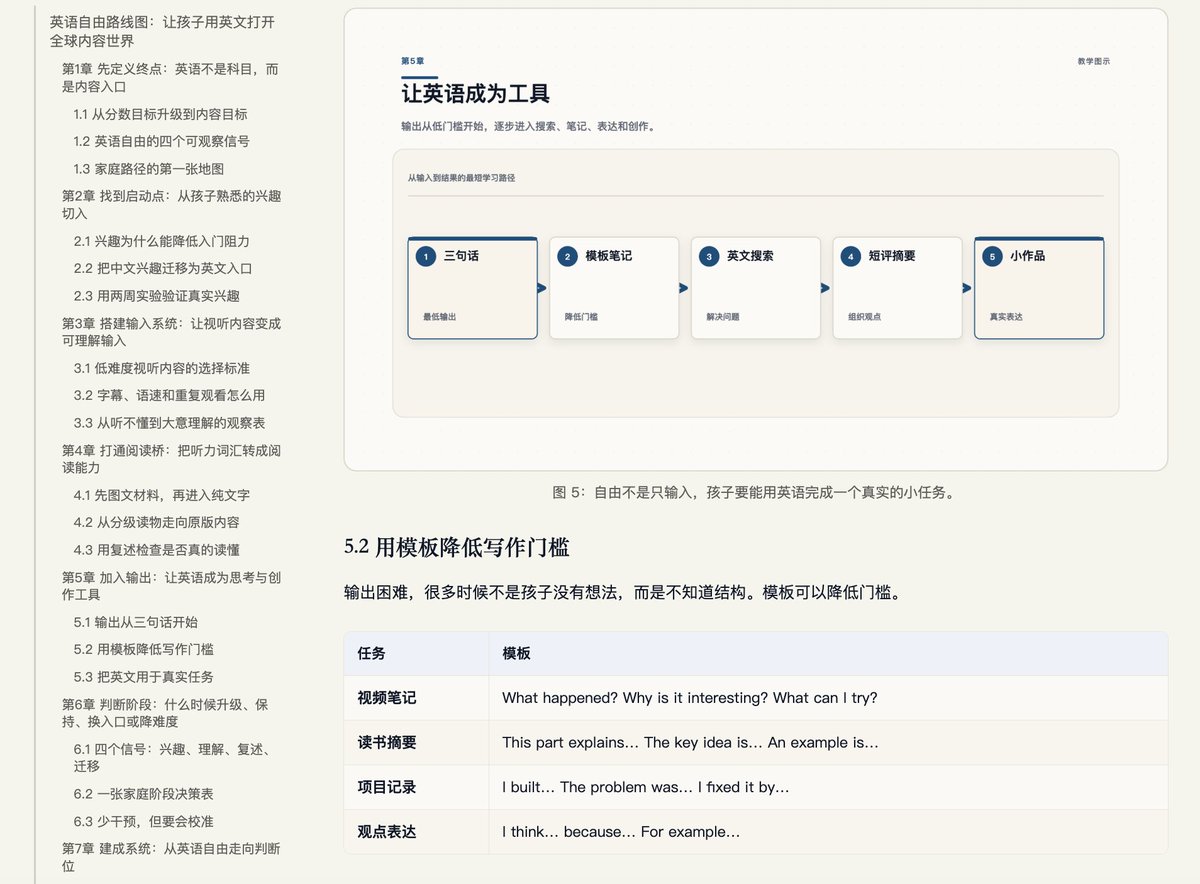
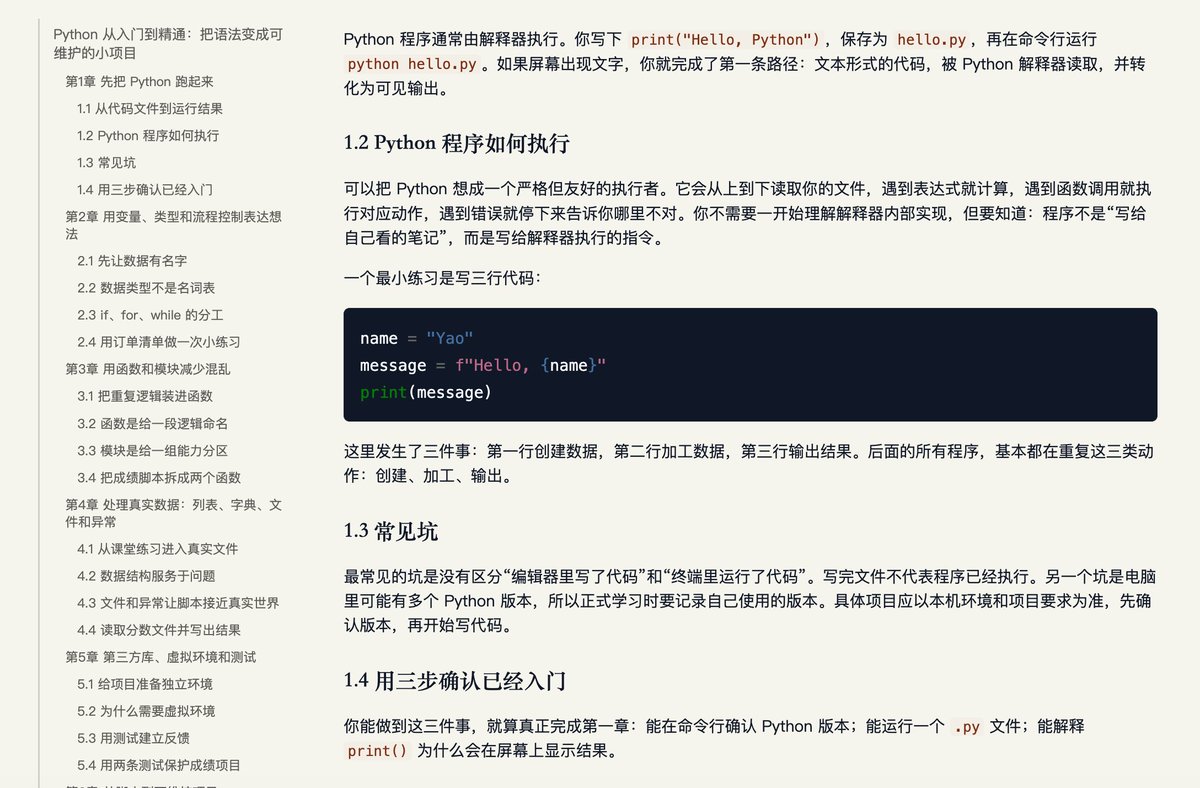
开源一个教程Skill 打磨了十几版,效果还不错,已推到GitHub 如果想在五一假期高质量充电,或随时给自己生成一份定制高质量教程 欢迎下载 基本逻辑: 1、输入任意主题及参考资料,AI会优先以参考资料为核心,然后根据需要进行高质量素材和资料补充,这个过程中融入了低质量信源的过滤机制 2、AI会结合教程的特点,并结合用户的部分偏好,生成定制深度教程,输出PDF、Word及HTML三种格式,方便自己学习 3、教程内容,按照章节的逻辑进行系统性的输出,同时根据各章节内容特点,自行画图并插入到章节相关内容模块中 4、教程融入了三年前经营MCN时写的《课程营销学》的相关底层逻辑与方法,回头也把这本书给开源出来 5、排版与UI,输出的文档与教程网页,有结合 @HiTw93 的kami进行借鉴和融入,实现了很有质感的排版规范 示例报告有3个,其中一个示例教程示例来自 @ReyJudgementOS 的一篇英语干货文章:《12岁英语自由:我“带”孩子“学”英语的经验与教训》 教程Skill的GitHub地址: github.com/yaojingang/yao…
姚金刚 tweet media姚金刚 tweet media姚金刚 tweet media姚金刚 tweet media
中文
64
211
927
122.1K
sushou retweetledi
Patrick Collison
Patrick Collison@patrickc·
We just launched the @Link CLI: github.com/stripe/link-cli. Tell your friendly neighborhood agent about it -- agents can use the Link CLI to create single-use credentials that you get to synchronously approve each time. I asked Claude to buy itself a gift. It chose HTTPZine on Gumroad.
Patrick Collison tweet media
English
130
169
2.4K
374.4K
sushou retweetledi
Hwang
Hwang@hwwaanng·
很多人还是低估了今天模型的能力。 也低估了 Harness Engineering。我们做了一个小尝试: 把任意 Swift codebase,转成 Kotlin 的原生 Android 项目。 我们构建了一套 Harness 实现这一切。你只需要启动 App,然后花上数小时等待。AI 会不断的自我验证,自我迭代,他会看代码、看交互、记笔记、写测试。并且他会不断的创建 Sub Agent 加速这个过程。最后你就会得到一个高度可用,功能几乎一致的,Android App。 我们把它叫做 Deux。 👇 展开讲讲
中文
32
75
682
154K
sushou retweetledi
宝玉
宝玉@dotey·
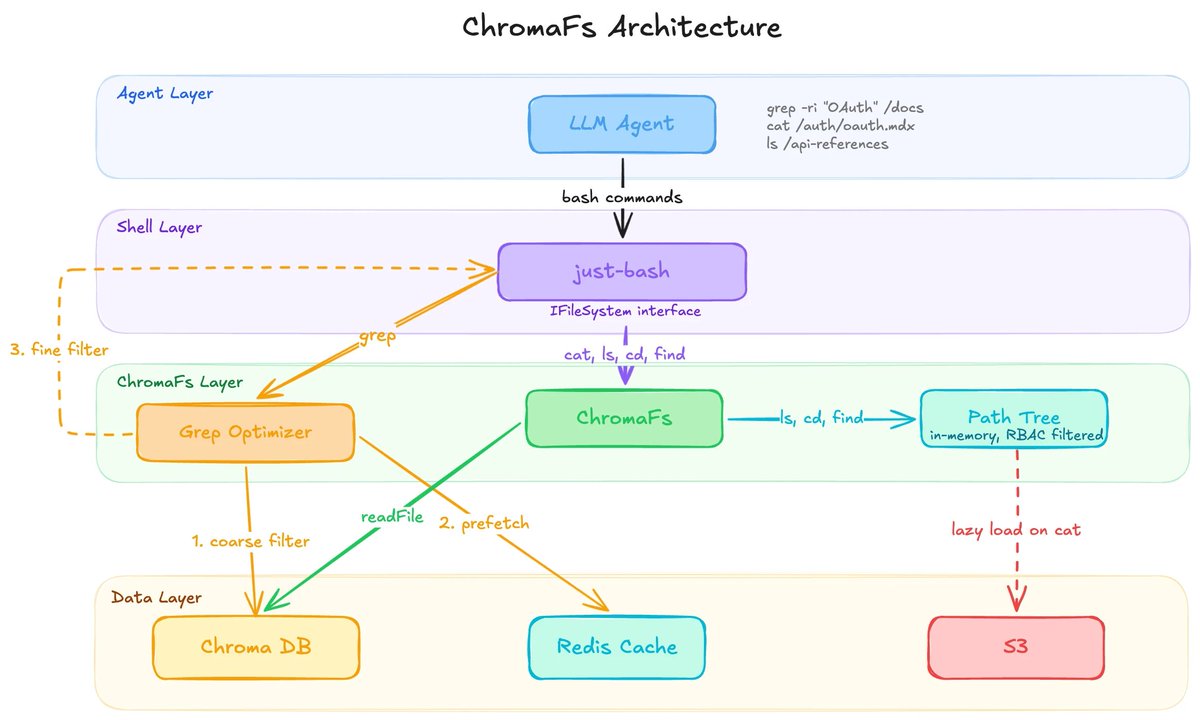
文档平台 Mintlify 发了一篇工程博客,讲了一件挺有意思的事:他们给自家 AI 文档助手造了一套假的文件系统,叫 ChromaFs,让 AI 以为自己在用 grep、cat、ls 这些命令浏览文件,实际上每个命令都被拦截、翻译成了数据库查询。 效果很直接:会话启动时间从原来沙箱方案的 46 秒降到 100 毫秒,每次对话的边际计算成本几乎为零。 Mintlify 之前的方案是标准的 RAG 流程:把文档切块、向量化、存进 Chroma 数据库,用户提问时检索最相关的片段喂给大模型。问题是,如果答案分散在好几个页面里,或者用户要的是某段精确的代码语法,向量检索经常找不对。 他们想让 AI 像开发者翻代码一样翻文档,而不是靠语义相似度碰运气。 核心思路是:AI 不需要真的操作系统,只需要一个足够逼真的幻觉。 ChromaFs 基于 Vercel Labs 的开源项目 just-bash(一个用 TypeScript 重写的 bash 子集)构建。just-bash 提供了可插拔的文件系统接口,负责解析命令和管道逻辑,ChromaFs 则把所有底层文件操作翻译成 Chroma 数据库查询。每个文档页面变成一个"文件",每个章节变成一个"目录",AI 就可以用 grep 搜精确字符串、用 cat 读整页内容、用 find 遍历结构。 之前用真沙箱的方案(给每个用户起一个微型虚拟机),按 Mintlify 月均 85 万次对话的量算,一年光计算成本就要 7 万美元以上。ChromaFs 复用了已有的数据库基础设施,这笔钱省了。 grep 是最难虚拟化的命令。如果真让它逐文件扫描,走网络 IO 会很慢。ChromaFs 的做法是先把 grep 的参数解析出来,用 Chroma 的元数据查询做粗筛,找出可能命中的文件批量预取到缓存里,再让 just-bash 在内存中做精确匹配。 权限控制也很优雅:初始化时根据用户身份裁剪文件树,没权限的路径直接从树里删掉,AI 连路径都看不到,不存在越权风险。 所有写操作一律返回"只读文件系统"错误,AI 能随便看但改不了任何东西,整个系统无状态,不用担心清理和数据污染。 这篇文章在 Hacker News 上引发了一个有意思的讨论。好几位开发者指出,大家不知不觉中把 RAG(检索增强生成)等同于了向量搜索,但 RAG 里的 R 是 Retrieval(检索),本来可以是任何方式:全文搜索、SQL 查询、甚至翻电话簿。把 RAG 绑死在向量数据库上,是早期技术路径的惯性。 有人解释了这种惯性的由来:RAG 概念流行的时候,大模型还不太会用工具,多轮搜索和纠错能力也差,向量检索是当时最省事的方案。现在模型的工具调用和推理能力上来了,让 AI 自己决定用什么方式找信息,反而比预设一条检索管道更灵活。 也有人提出了务实的质疑:Mintlify 的场景是结构化的技术文档,天然适合文件系统隐喻,但如果是组织内部那种乱七八糟、没有层级结构的知识库,这套方案未必好使。 这个方向和 Claude Code 的做法有相通之处:与其把所有信息预检索好喂给模型,不如给模型一套探索工具,让它自己决定看什么、怎么找。对于正在搭建 AI 文档助手或内部知识库的开发者来说,Mintlify 的这套方案提供了一个向量检索之外的选项,尤其适合文档结构清晰、对精确匹配要求高的场景。
宝玉 tweet media
Dens Sumesh@densumesh

x.com/i/article/2039…

中文
42
171
970
136.9K
Yangyi
Yangyi@yangyi·
@goocarlos 2-3天足够吧…. 一天就搭出来能跑了 第二天修一修 问题不大吧
中文
2
0
1
2.5K
Luyu Zhang
Luyu Zhang@goocarlos·
就我目前的体感来说,如果要打磨一个 Micro SaaS 级的产品,一个人大概也得需要一个星期的时间。 没有大家想象的那么快,可能是出品品质上有差异。你们有不同的体感分享吗?
中文
28
1
40
30.1K
Yoroll
Yoroll@YorollAI·
DEAD RECKONING: REBORN is a zombie survival game where classic mechanics meet reactive storytelling. 🔍 Investigate: Scout high-risk zones in Night-Vision mode. 🛠️ Reclaim: Scavenge, fortify, and confront those who orchestrated your downfall. Survive the apocalypse. Execute your justice. Built on @YorollAI, the future of interactive gaming.
English
31
45
51
27.1K
sushou
sushou@sushou1024·
@YorollAI Night-vision scouting + reactive storytelling? finally a zombie game that isn’t just ‘shoot everything that moves
English
1
0
0
35
sushou
sushou@sushou1024·
@YorollAI Real-time world model + UGC planets sounds like it could actually solve the ‘seen everything’ problem in exploration games. Wishlisted.
English
1
0
1
43
sushou retweetledi
Yoroll
Yoroll@YorollAI·
Real-time world model interaction meets space exploration. Star Junkers is a space scavenger RPG — a drifter girl, a loyal weasel, and a ship barely holding together. Explore uncharted planets, uncover hidden treasure, take on risky jobs, and trade your way to a better ship. The exploration is enhanced by a real-time world model, adding a layer of unpredictability to what you find. With an ever-expanding universe of UGC planets, there's always somewhere new to go. Built on @YorollAI
English
34
43
54
46.9K
sushou retweetledi
Garry Tan
Garry Tan@garrytan·
I have to say this interview changed my life. Hearing how Boris thinks about software spurred me to work much harder on releasing my own way of doing things and on iterating fast on how I build. Hard to believe it has only been a month since this one.
Y Combinator@ycombinator

A very special guest on this episode of the Lightcone! @bcherny, the creator of Claude Code, sits down to share the incredible journey of developing one of the most transformative coding tools of the AI era. 00:00 Intro 01:45 The most surprising moment in the rise of Claude Code 02:38 How Boris came up with the idea for Claude Code 05:38 The elegant simplicity of terminals 07:09 The first use cases 09:00 What’s in Boris’ CLAUDE.md? 11:29 How do you decide the terminal’s verbosity? 15:44 Beginner’s mindset is key as the models improve 18:56 Hyper specialists vs hyper generalists 21:51 The vision for Claude teams 23:48 Subagents 25:12 A world without plan mode? 28:38 Tips for founders to build for the future 30:07 How much life does the terminal still have? 30:57 Advice for dev tool founders 32:11 Claude Code and TypeScript parallels 35:34 Designing for the terminal was hard 37:36 Other advice for builders 40:31 Productivity per engineer 41:36 Why Boris chose to join Anthropic 44:46 How coding will change 46:22 Outro


English
91
311
3.5K
542.9K
sushou retweetledi
Okara
Okara@askOkara·
Here’s how to get your first 100 users: > Go to okara.ai/cmo > Drop your product URL > It analyzes your site and deploys a team of specialized AI agents that work 24/7 to help you drive traffic and users
English
16
20
186
26.9K
sushou retweetledi
Karri Saarinen
Karri Saarinen@karrisaarinen·
Little big update on the @linear UI. It started as a design exploration in Figma, then became a two-person effort to build prototypes and tools with agents. From there, we went back into Figma, more code, and eventually released it internally behind a feature flag that we can turn on and off in the product.
Linear@linear

Linear Interface Refresh A visual update designed to reduce noise and bring structure back into focus as the Linear product continues to evolve. Rolling out today.

English
29
13
603
80.1K
sushou retweetledi
Junior
Junior@hirejuniorso·
Introducing Junior The first AI employee, for any role. A true AI employee: → their own identity → organizational memory → self-driven 10+ teams have been working with Junior every day. Work was never the same since. Starting at $2,000/month. We’ve pre-paid $200 of your Junior’s salary. Try Junior and experience the future of work today.
English
287
533
2.1K
1.9M
sushou retweetledi
Boris Cherny
Boris Cherny@bcherny·
👋 Roughly, the more tokens you throw at a coding problem, the better the result is. We call this test time compute. One way to make the result even better is to use separate context windows. This is what makes subagents work, and also why one agent can cause bugs and another (using the same exact model!) can find them. In a way, it’s similar to engineers — if I cause a bug, my coworker reviewing the code might find it more reliably than I can. In the limit, agents will probably write perfect bug-free code. Until we get there, multiple uncorrelated context windows tends to be a good approach.
English
99
148
3.8K
214.9K
sushou retweetledi
GitHubDaily
GitHubDaily@GitHub_Daily·
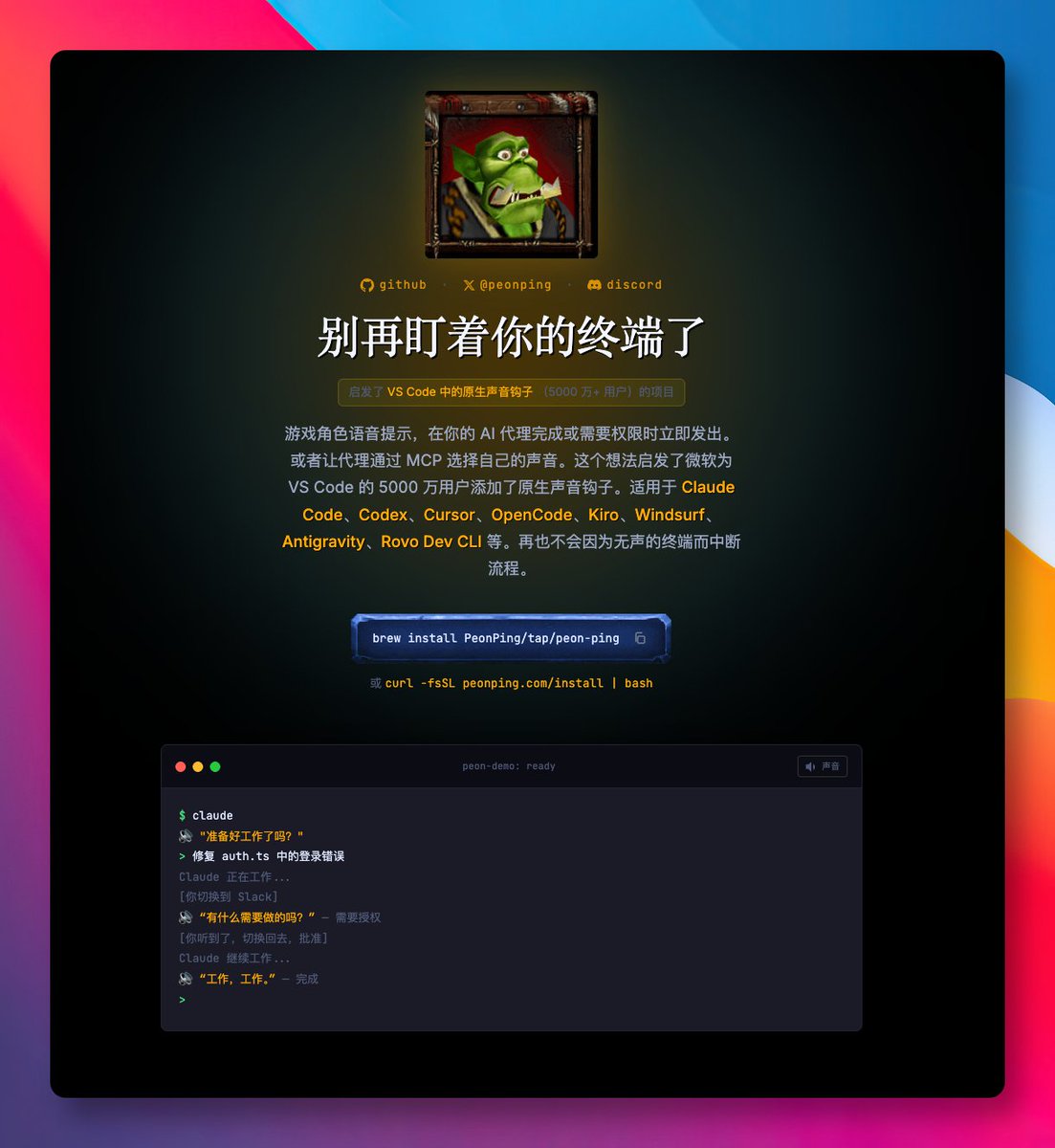
用 Claude Code 写代码,经常切到别的窗口干事情,等回来发现 AI 早就跑完了,或者卡在某个权限请求等你批准,白白浪费十几分钟。 偶然发现 peon-ping 这个很有趣的开源项目,用游戏角色语音提醒我们 AI 任务状态。 核心就是给工具加上语音包,内置 165 个,涵盖魔兽争霸、星际争霸、传送门、塞尔达等经典游戏角色语音。 GitHub:github.com/PeonPing/peon-… 除了声音提醒,还支持终端标签页标题更新、手机推送通知、SSH 远程开发音频转发、多种通知样式主题,以及自定义语音包。 甚至内置了健身提醒功能 Peon Trainer,编程 20 分钟后语音催你做俯卧撑,还能记录每日运动目标,把写代码和锻炼身体结合起来。 兼容性极强,支持 Claude Code、GitHub Copilot、Cursor、Windsurf 等主流工具,且提供 Homebrew 和一键安装脚本。
GitHubDaily tweet media
中文
19
74
408
45.1K
sushou retweetledi
YC (Yucheng)
YC (Yucheng)@yucheng·
Linear Thinking Is a Bug(线性思维是个 Bug) "最应该改掉的习惯:每次思考都要"整理清楚再继续"。这是在强迫非线性机器按线性节拍运转。" Overview 线性思维——一件事导向下一件事,思考必须"在轨道上走"——是被学校、语言和社会结构训练进我们大脑的 bug。但大脑本身不是轨道,是网络。当你强迫一台非线性机器产出线性结果,你恰好扼杀了它最有价值的功能:模式识别、创造力和自发性洞察。 ─── 一、线性思维是训练出来的,不是天然的 作者花了很长时间才意识到线性思维在"框住"自己。它可能来自学校教育、语言结构,或者社会对"什么叫清晰思考"的定义——通常就是"逻辑清晰的序列"。 线性思维给思维装上了一条窄走廊:只能向前,不能横跳,不能回头,不能同时在两个地方。整洁,但代价极高。 问题不是"线性思维没有用"。写报告要线性,做 todo list 要线性。问题是:当你用这套框架处理需要原创性的思维任务时,你在做的事情是把一台并行处理的机器强行改成单线程运行。 ─── 二、大脑实际上怎么运作 作者给了一个非常直观的例子: 一个气味 → 拉出一段记忆 → 那段记忆连上一首歌 → 那首歌拉出一个地方 → 那个地方带出一段对话 → 你突然访问到了一个多年未见的"自己的某个版本" 整个过程几秒内完成,没有中央调度员,没有"接下来该想什么"的规划者。 这才是思维的真实样子:一个节点网络,不断触发相邻节点,产生连锁反应。记忆、直觉、抽象、情绪、观察——它们混在同一个场域里,持续互相影响。不存在我们想象中的层级关系。 当大脑运转良好的时候,它在同时做这些事:生成、过滤、联想、丢弃、重组、强化连接。不是先发散再收敛,而是一直在并行。 ─── 三、"发散→收敛"是个错误模型 很多创意方法论把思维过程分成两个阶段:先去那边"头脑风暴",再来这边"整理归纳"。作者认为这个分离本身就杀死了很多好东西。 大脑不是两个独立的房间,一个负责"野",一个负责"整"。这两件事是交织在一起发生的。当你强行把它们分开,你在打断一个本来连续的过程,让它变得低效甚至失效。 最有价值的洞察,往往出现在"应该收敛的时候,脑子突然跑偏了"的那个瞬间。如果你的方法论不给这个空间,你就把它堵死了。 ─── 四、知识组织:节点网络 vs 线性归档 这是文章中最实用的部分,直接影响知识管理的方式。 作者的转变:停止把一切强塞进刚性序列,开始让想法以节点形式存在于一个活的网络里。 效果: • 一个领域的笔记,突然解锁了另一个领域的问题 • 一个半成品的想法搁置几周后,被一条无关的新观察"完成了" • 知识开始"繁殖",而不是在存档里睡觉 他用了一个很生动的比喻: "When ideas are preserved in a way that allows them to interact, random pieces of information can have sex with each other and produce something new." 这不是隐喻的话。当两个来自不同上下文的想法在同一个系统里共存,它们就有机会"碰撞"。如果你把它们分别锁在不同的线性文件夹里,这种碰撞永远不会发生。 ─── 五、你以为的"想法问题"其实是"结构问题" 文章最后的结论,也是最有冲击力的一句话: "A lot of people think they have an idea problem when what they actually have is a structure problem." 很多人觉得自己"脑子不好使"、"没有创意"、"想不出新东西",于是去找更多的输入——看更多书,接触更多信息。 但真正的瓶颈可能根本不是输入量,而是组织方式在扼杀输出。用线性结构管理非线性的大脑,就像用电子表格管理一个生态系统:它能记录,但它记录的方式破坏了生态的运作机制。 ─── 框架 & 心智模型 大脑即网络(Brain as Network) 把自己的知识和思维想象成一张图(Graph),而不是一条线(Line): • 每个想法是一个节点 • 节点之间的连接越丰富,系统越智能 • 新想法不是"被创造出来的",而是从节点碰撞中涌现出来的 实践含义: 1. 笔记工具优先选支持双向链接的(Obsidian、Roam、Logseq),而非层级文件夹 2. 跨领域阅读比单领域精深更能产生新想法,因为它增加了异质节点 3. 不要压制"跑题"——很多时候跑题的方向正是大脑在做高价值的连接 4. 允许想法"未完成"地存在。半成品节点在等待合适的触发,不是在浪费空间 最应该改掉的习惯:每次思考都要"整理清楚再继续"。这是在强迫非线性机器按线性节拍运转。
XY@xydotdot

x.com/i/article/2030…

中文
1
60
301
43.4K