The Maze Lab

293 posts

The Maze Lab banner
The Maze Lab

The Maze Lab

@themazelab

Understanding the complex interplay between chromatin regulatory mechanisms and neuronal plasticity. @icahnmountsinai @Sinaibrain @HHMINEWS

Mount Sinai-HHMI/Manhattan, NY Katılım Ocak 2017
1.2K Takip Edilen1.6K Takipçiler
Sabitlenmiş Tweet
The Maze Lab
The Maze Lab@themazelab·
I am absolutely humbled and honored to have been selected as a new HHMI Investigator. A huge shout-out to all of my brilliant lab members (past and present), outstanding collaborators and incredible mentors along the way who made this a possibility!!
HHMI@hhmi_science

HHMI News: We are proud to announce our 33 new #HHMIInvestigators. These individuals have the potential to make transformative discoveries over time and we look forward to seeing where their ideas lead them. bit.ly/3AE4OBs

English
22
8
225
0
Jason Shepherd
Jason Shepherd@JasonSynaptic·
Very excited for our new paper, now out in @CellCellPress! /🧵The protein Tau forms intracellular toxic tangles in neurons in Alzheimer’s disease and Tauopathies. Tau pathology slowly spreads from cell-to-cell but the mechanisms of Tau transmission are not clear. /1
Jason Shepherd tweet media
English
33
96
428
49.6K
The Maze Lab
The Maze Lab@themazelab·
Pretty darn cool to find one our recent preprint manuscripts on this newly released 1% list from @qedScience. We're very proud of this work as well, which was led by an amazing Instructor in my lab, Dr. Min Chen @Minnn39851602. Way to go, Min!!
The Maze Lab tweet media
Oded Rechavi@OdedRechavi

Gloves are off! TODAY WE RELEASE THE 1% A list of the year’s very best papers. When we launched QED a little over half a year ago, I told you that our mission is to revolutionize scientific publishing. Revolutions don’t happen overnight… or maybe they do? When new technologies enable it? Time to put the power back in the scientists’ hands, not the journals’. Many scientists are depressed, and think journals will stay the same forever, no matter how dysfunctional, but no, it’s happening. Sooner than most people (or committees, or universities) can imagine. Check this out: When we released our AI review platform, it started a whole debate (and social media storm) on what it is that human reviewers can do that AI review still can’t. There are such things (and I’m happy about it), but the list is getting shorter and shorter. Numerous scientists already use QED to find gaps in their manuscripts and grants and to get constructive feedback that improves their experiments. And now, with your help, we take it to the next level. Today we release reviews and scores for all the experimental Life Science pre-prints that came out last year: 57,455 manuscripts!! If we are being conservative, and estimate that it takes a minimum of 8 hours to review a paper (it takes longer), and if we agree that 3 reviewers are typically required to review every submission, then reviewing this amount of manuscripts would take human experts >1 MILLION REVIEWER HOURS… Assuming you can find so many experts (not going to happen!), and assuming the experts who agree would have no conflict of interest (ha!!). QED did it. Then, we chose the best papers in every field (you can browse and search for key words), based on the originality and validity of the claims being made. We benchmarked our reviews not only using eventual journal selections but also by comparing our evaluations to those of human experts. When there were disagreements between the QED score and journal rank, we asked domain experts to judge who’s right (blindly), and they overwhelmingly sided with QED. No need to rely on glam journals anymore. No need to wait for two years to get their stamp of approval. No need to beg the reviewers, or worse, to write less ambitious papers, so no one would be upset. Want to find the most interesting papers in your field? Want to see where your paper stands? (“What’s your QED SCORE?”) Just visit qedscience.com! One last thing: We want good science to be seen (you can read the winners’ comments about their selection and the stories behind their discoveries on our website). We plan to organize a conference where the first authors (yes, the first authors, not the PIs) will present their work. We are not here to shame anyone (papers that got low scores). The reviews of the best papers that we selected explain why QED’s AI thought these papers are especially good - what’s unique about them, what their strengths are, which conceptual leaps were made, and what cutting-edge tools were developed. However, on the QED Science site you can analyze any paper in private, it’s fully transparent, and see if there are any gaps and what’s missing. Run your paper to see how it can improve, and maybe next time your paper will reach the top (if it’s not there already). Whether you’re on the 1% list of just have a good score that you want to share, on our website you can download the report and share it, for example with your tenure, promotion, or hiring committee, or with your university PR department. Forget about journal embargoes and waiting for it to be “accepted”. Improve your work until it’s good enough for YOU. You decide.

English
3
2
23
7.6K
The Maze Lab
The Maze Lab@themazelab·
dopaminylation in humans and mice. A huge step forward for understanding the biology of parenthood, and the broader role of monoaminylation in the brain. Enormous congratulations to Jen and thanks to all our incredible collaborators and reviewers. Hope you all enjoy!
English
0
0
2
200
The Maze Lab
The Maze Lab@themazelab·
So excited to highlight our new work led by @chanjeneration, a postdoc in my lab recently awarded a K01 and BWF award (and on the job market!), out in @Nature! This project identifies a novel role for dopamine in permanently remodeling the maternal brain through histone H3
Jennifer O'Chan@chanjeneration

Thrilled to share my main postdoctoral work out @Nature! This project tackles a fundamental question: how do pregnancy and postpartum experiences promote lifelong changes to the brain? nature.com/articles/s4158…

English
6
13
60
14.1K
The Maze Lab retweetledi
Leslie Vosshall PhD
Leslie Vosshall PhD@leslievosshall·
Scientific publishing needs to change. In a new preprint, HHMI President Erin O'Shea and Bodo Stern argue that the incentives are misaligned. Researchers should be evaluated on what they choose to share, not what journals select. I’m proud that @hhmi_science is leading the way. Read the preprint here: doi.org/10.5281/zenodo…
English
8
58
247
74.6K
The Maze Lab
The Maze Lab@themazelab·
an autonomous chromatin signaling axis whereby H3Q5ser is read by the Quinone reductase enzyme 2 (QR2) to support human neuronal gene expression and cellular maturation. Happy reading, everyone!
English
0
0
0
121
The Maze Lab
The Maze Lab@themazelab·
Marro, and many others! Since H3 serotonylation occurs at Gln5, we (and others) have previously focused much of our attention on the mark's interactions with adjacent H3K4me3 in guiding permissive gene expression in the brain and beyond. Here, however, we have identified
English
1
0
0
185
The Maze Lab retweetledi
Ishmail Abdus-Saboor
Ishmail Abdus-Saboor@IshmailSaboor·
2nd- or 3rd-year PhD student? Applications for @hhmi_science's #GilliamFellows Program open 9/1! Robust dissertation support, an incredible community of scientists, tailored professional development (for you *and* your thesis advisor), & so much more. bit.ly/4qQArRh
English
0
9
15
2.2K
The Maze Lab retweetledi
Friedman Brain Institute
Friedman Brain Institute@SinaiBrain·
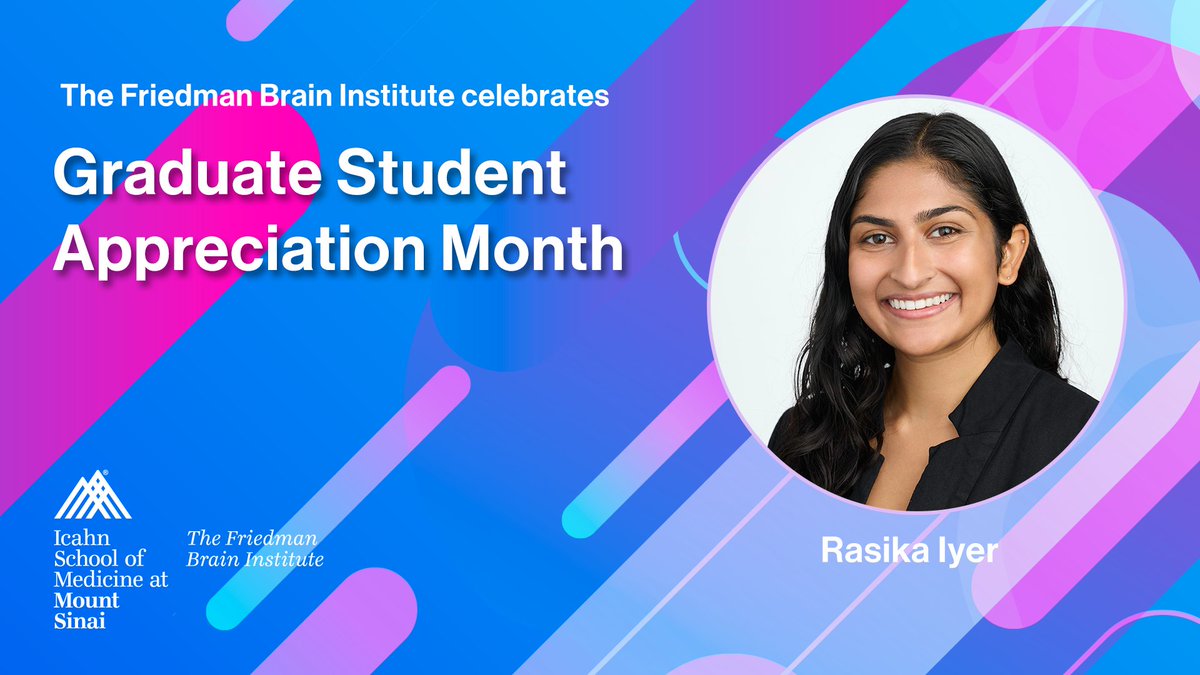
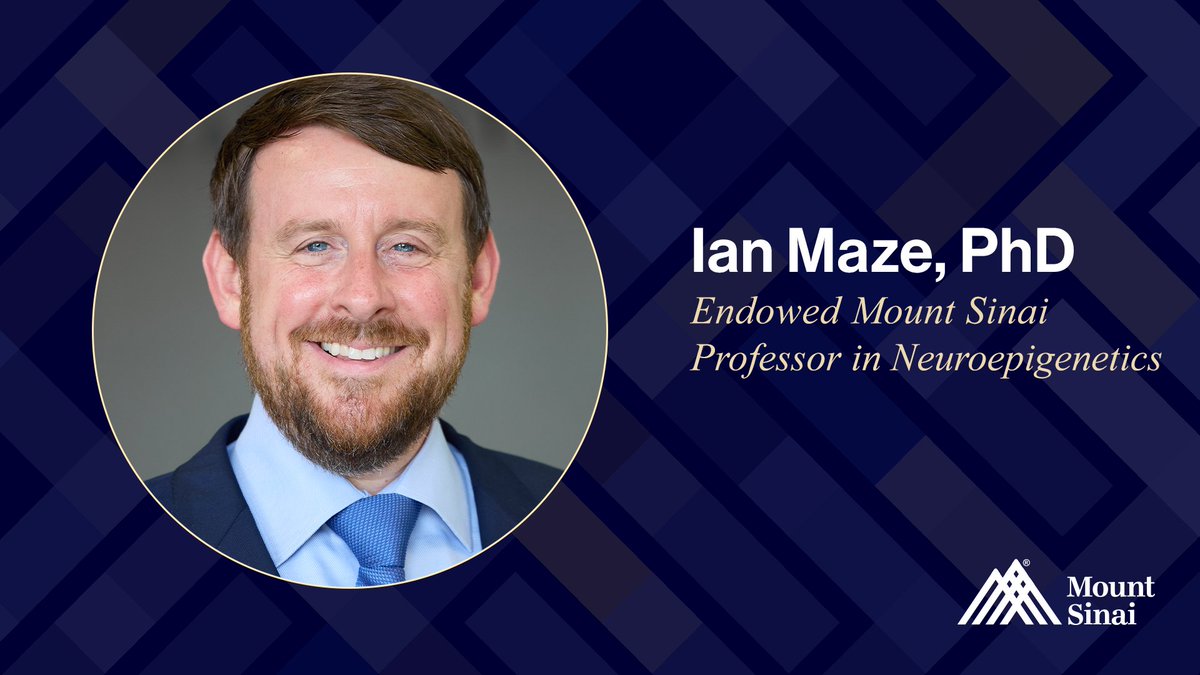
CONGRATULATIONS to @IcahnMountSinai's Dr. Ian Maze on being endowed as a Mount Sinai Professor. This well-deserved recognition is the highest academic distinction a university can bestow upon a faculty member. Incredibly proud to have Dr. Maze as a colleague & mentor!👏
Friedman Brain Institute tweet media
Eric J. Nestler, MD, PhD@EricJNestler

Heartfelt congratulations to @ian_maze2 for becoming the Mount Sinai Professor of Neuroepigenomics and to all past and current members of the Maze laboratory for their life-changing research. @SinaiBrain @IcahnMountSinai

English
3
3
43
3K
The Maze Lab retweetledi
One Mind
One Mind@OneMindOrg·
The One Mind Rising Star Awards were created to fuel bold ideas that improve lives, and 2017 Awardee Ian Maze, PhD, is a powerful example of that vision in action. Congratulations to Dr. @ian_maze2 on receiving the ACNP Daniel H. Efron Research Award for his groundbreaking work that's reshaping how we understand the brain & mental health. When Dr. Maze received his Rising Star Award, One Mind invested in his pioneering effort to develop a simple blood test that could identify who is most vulnerable to stress, who may develop major depression, & who is most likely to benefit from certain antidepressant medications. This kind of test could transform mental health care by helping people get the right support & the right treatments faster. That early support helped accelerate discoveries that have continued to push the field forward. Today, Dr. Maze is a Professor & Director of the Center for Neural Epigenome Engineering at @IcahnMountSinai & one of the youngest Howard Hughes Medical Institute Investigators. His career reflects exactly why the Rising Star Awards matter: identifying exceptional scientists early & giving them the platform to make breakthroughs that improve lives. Learn more about the Rising Star Awards: onemind.org/what-we-do/one… Read the ACNP's full press release: files.constantcontact.com/61d9ccf2601/92…
One Mind tweet mediaOne Mind tweet mediaOne Mind tweet mediaOne Mind tweet media
English
0
2
7
568
The Maze Lab retweetledi
HHMI
HHMI@hhmi_science·
Calling all rising juniors & seniors: Interested in biological or biomedical research? Apply now for our ’26 Summer Undergraduate Research Experience Program! Nine weeks, hands-on research, & mentorship from some of the nation’s top scientists — learn more: bit.ly/CechFellows
English
1
101
173
37.2K