Benjamin Weekley, PhD

1.3K posts

Benjamin Weekley, PhD banner
Benjamin Weekley, PhD

Benjamin Weekley, PhD

@BenjaminWeekley

Postdoc in Ian Maze's lab @ Mount Sinai Studying Neuroepigenetics | PhD in Judd Rice's lab @ USC (Histone Tail Proteolysis) epigenetics/histones/chromatin/neuro

Los Angeles, CA Katılım Temmuz 2018
637 Takip Edilen361 Takipçiler
Benjamin Weekley, PhD retweetledi
David R. Liu
David R. Liu@davidrliu·
Today in @ScienceTM, we report the use of in vivo adenine base editing to correct a variant causing Dravet syndrome, a severe childhood epilepsy and neurodevelopmental disorder, substantially ameliorating disease symptoms and extending lifespan in an animal model. 1/13 drive.google.com/file/d/12rcxew…
English
9
77
438
56.9K
Benjamin Weekley, PhD retweetledi
Friedman Brain Institute
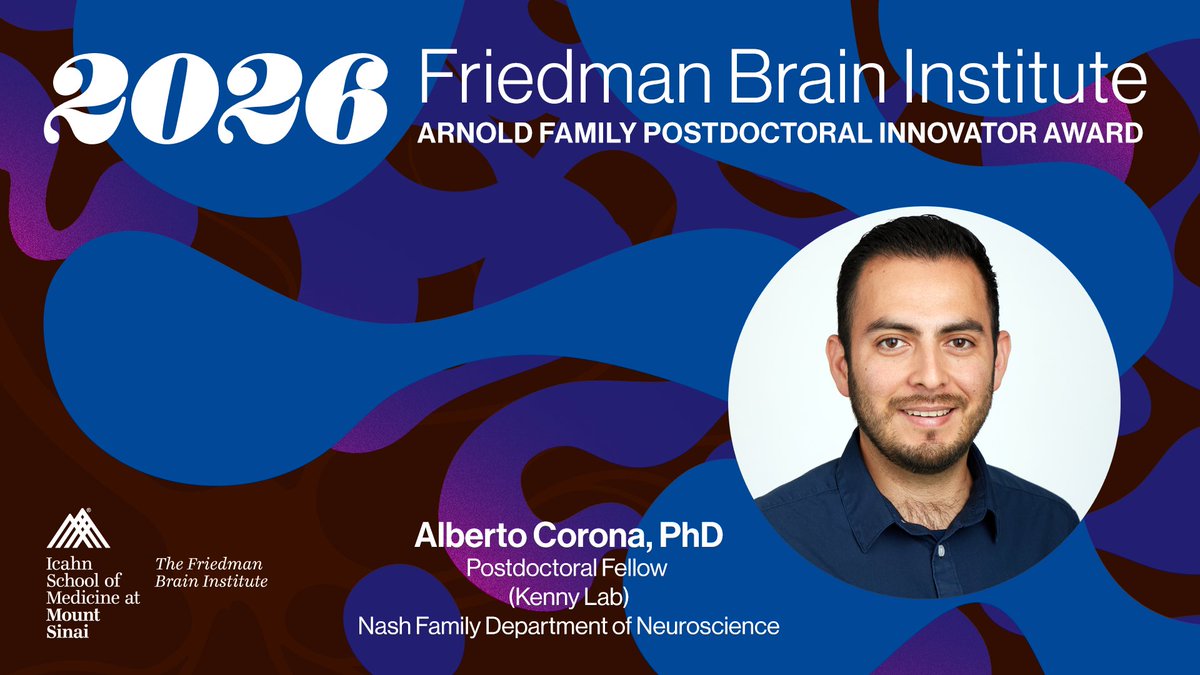
🎉Please join us in congratulating Dr. Alberto Corona on receiving the 2026 #FriedmanBrainInstitute Postdoc Innovator Award. The #KennyLab's @Mr_Beto_Corona is an extraordinarily rigorous young neuroscientist whose work is among the most innovative & compelling. CONGRATULATIONS👏
Friedman Brain Institute tweet media
English
0
2
10
467
Benjamin Weekley, PhD retweetledi
Theofanis Karaletsos
Theofanis Karaletsos@Tkaraletsos·
1/ Excited to share that TranscriptFormer is now published in Science. We trained a generative foundation model on 112 million cells across 12 species spanning ~1.5 billion years of evolution. science.org/doi/10.1126/sc…
English
7
56
296
23.6K
Benjamin Weekley, PhD retweetledi
Paul T Kim
Paul T Kim@paultkim_ipd·
Our preprint for de novo DNA binder design is out! biorxiv.org/content/10.648…. The punchline: methods have gotten good enough that we can find sequence specific DNA binding proteins from screening as few as 96 designs per target.
English
5
28
133
10.6K
Benjamin Weekley, PhD retweetledi
Friedman Brain Institute
Friedman Brain Institute@SinaiBrain·
TOMORROW! On Tuesday, May 5th, 3pm, hosts @PaulKennyPhD, Dr. Ming-Ming Zhou and Dr. Mone Zaidi welcome @Yale's Dr. @CraigMCrews who will give a Special Seminar concerning one of the most exciting areas in drug discovery research today. In-Person - Hatch Auditorium. NOT TO MISS!
Friedman Brain Institute tweet media
English
0
2
3
299
Benjamin Weekley, PhD retweetledi
藤井亮輔 🦒 Ryosuke Fujii (Ryo)
Nature Human Behaviour から "How to design effective scientific figures" というコメンタリーが出ました🎉参考になれば幸いです!! nature.com/articles/s4156… @NatureHumBehav
藤井亮輔 🦒 Ryosuke Fujii (Ryo) tweet media
藤井亮輔 🦒 Ryosuke Fujii (Ryo)@Ryo_epidemiol

I’m thrilled to announce that my new comment titled “How to design effective scientific figures” is now released from @NatureHumBehav This provides five keys to make your graphical items attractive 🎨 Hope this is useful for your project! nature.com/articles/s4156…

日本語
14
222
1.4K
287.4K
Benjamin Weekley, PhD retweetledi
Igor Ulitsky
Igor Ulitsky@IgorUlitsky·
🆕 review with @jp_unfried out in @NatureSMB 🧐. Direct roles of lncRNAs in transcriptional activation. What do we understand about how lncRNAs lure Pol2 and set the stage for RNA production, and what do we still miss? nature.com/articles/s4159…
English
3
25
88
11.2K
Benjamin Weekley, PhD retweetledi
The Fox Radar
The Fox Radar@TheFoxRadar·
🚨Prime editing breakthrough (April 29, 2026) Researchers at UMass Chan Medical School have developed “Prime Assembly”: a method to insert large DNA fragments (up to 11 kb) with high precision and without double-strand breaks in the genome. They use two pegRNAs plus linear donor templates that assemble inside the cell. It works in quiescent cells and has already been demonstrated by inserting full genes such as dystrophin and CARs. Prime Assembly (PA) perfectly complements their platform and PASSIGE technology for large insertions, opening the door to more indications (DMD, allogeneic CAR-T, etc.) with lower risk. Another step that reinforces why prime editing remains the most versatile gene-editing technology. Source: nature.com/articles/s4158…
English
3
29
167
15K
Benjamin Weekley, PhD retweetledi
Hani Goodarzi
Hani Goodarzi@genophoria·
Our paper with Vijay Ramani is out today in @Nature. We show that chromatin has a richer grammar than simple "open" or "closed" DNA. Using IDLI, we read 14 nucleosome structural states across single chromatin fibers and find that this grammar is actively written by transcription factors.
Arc Institute@arcinstitute

Today in @Nature, the @genophoria & Vijay Ramani labs reveal that our picture of how nucleosomes regulate DNA accessibility has been too simple. They find that over 85% of nucleosomes in mammalian cells are structurally distorted, with DNA partially accessible even while wrapped.

English
6
35
191
25.5K
Benjamin Weekley, PhD retweetledi
Satchin Panda
Satchin Panda@SatchinPanda·
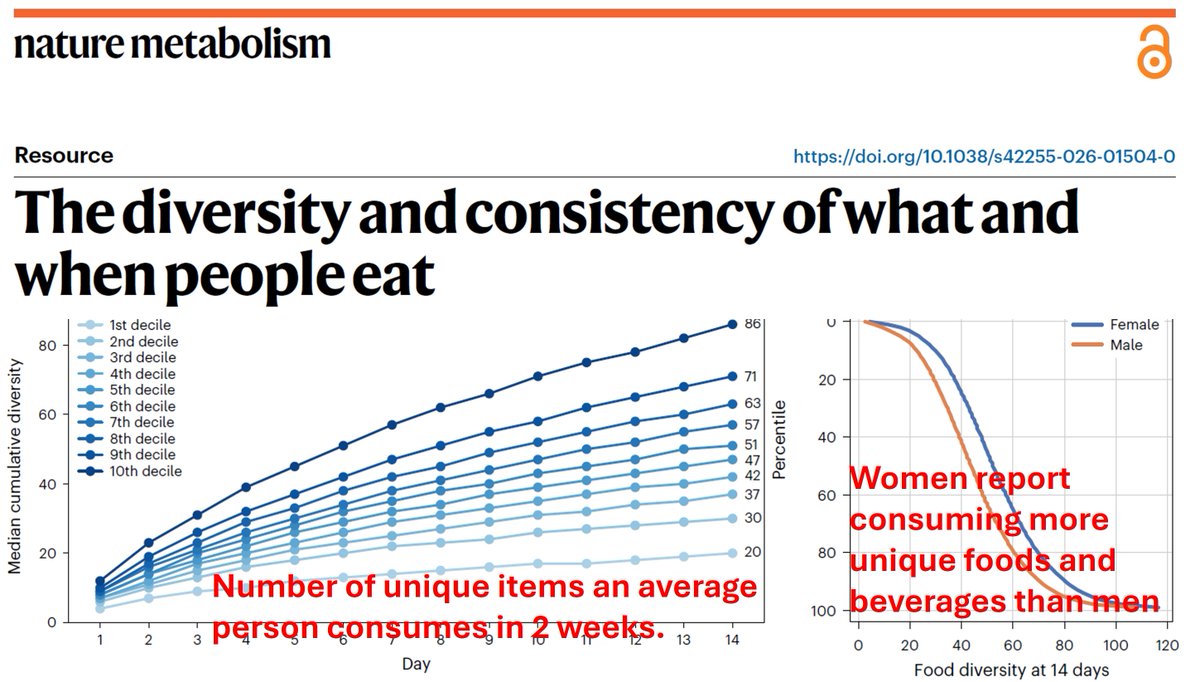
We’re told to “eat a diverse diet”—but how diverse is it in reality? Over 2 weeks: • Lowest 10% consume ~20 unique items • Highest (novelty seekers) reach ~86 Interesting twist: women tend to sample more unique foods than men. Where do you fall? @NatMetabolism
Satchin Panda tweet media
English
3
14
47
4.7K
Benjamin Weekley, PhD retweetledi
Sebastian S. Cocioba🪄🌷
Sebastian S. Cocioba🪄🌷@ATinyGreenCell·
I'm genuinely enjoying working on what will be my SnapGene replacement software. Chiseling away toward my freedom is uniquely exciting and I can promise the software will be maintained...bc I'm using it daily. Aiming for a May 24th release date of v1.0.0 github.com/Binomica-Labs/…
English
12
35
289
9.7K
Benjamin Weekley, PhD retweetledi
Niko McCarty.
Niko McCarty.@NikoMcCarty·
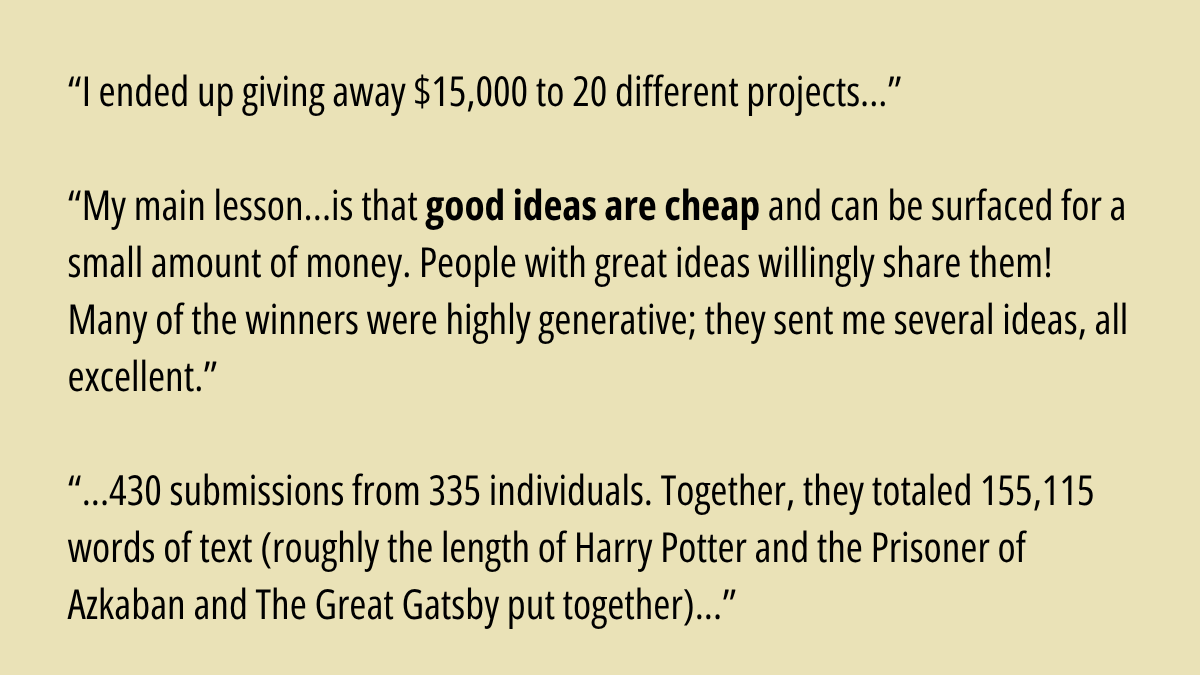
Announcing the winners for the "Fast Biology Bounties." I ended up giving away ~$15,000 for 20 projects after reading 430 submissions from 335 individuals. Many winners were "highly generative," meaning they sent me 3-5 excellent ideas and were glad to have them shared freely and openly. There were some major failure modes, too. Some ideas surfaced repeatedly, but I didn't do a good job of connecting "like-minded" people. I'll fix this next time. Also, I managed everything manually using my personal email. This was tedious, and I'm working on building a platform that will automate a lot of this. I'd like to send feedback and scores for every submission in future contests. Many more details in my blog post, which breaks down all the numbers, what I learned, and highlights some of the winners. Some people who I gave money to: - Sebastian Cocioba for a laser-based PCR thermocycler, in which infrared heating replaces aluminum blocks. - Bryan Duoto for writing and publishing a colony-to-sequence cloning workflow that uses magnetic beads and Nanopore sequencers. Scientists can verify clones in 1–3 hours instead of waiting overnight. - Jeff Nivala for an idea to synthesize proteins directly from DNA, without relying on any RNA intermediates. - Sierra Bedwell for a clever automation system that uses off-the-shelf parts to screen thousands of environmental DNA samples in parallel. - Xavier Bower for "IceCreamClone," an interactive cloning strategy ranker that looks at a scientist’s available “parts,” or sequences, and then determines whether they ought to use Gibson, Golden Gate, restriction digest, or another strategy to assemble them together. The software also catches likely cloning errors and estimates the cost and time required for each option. - Andres Arango for multiple ideas, including using antifreeze to accelerate DNA ligation by 2-3 orders of magnitude, and an idea for computationally designed protein cradles for expressing membrane proteins in E. coli.
Niko McCarty. tweet media
English
19
31
281
44.3K