
Timeshadow
4.6K posts



Timeshadow retweetledi
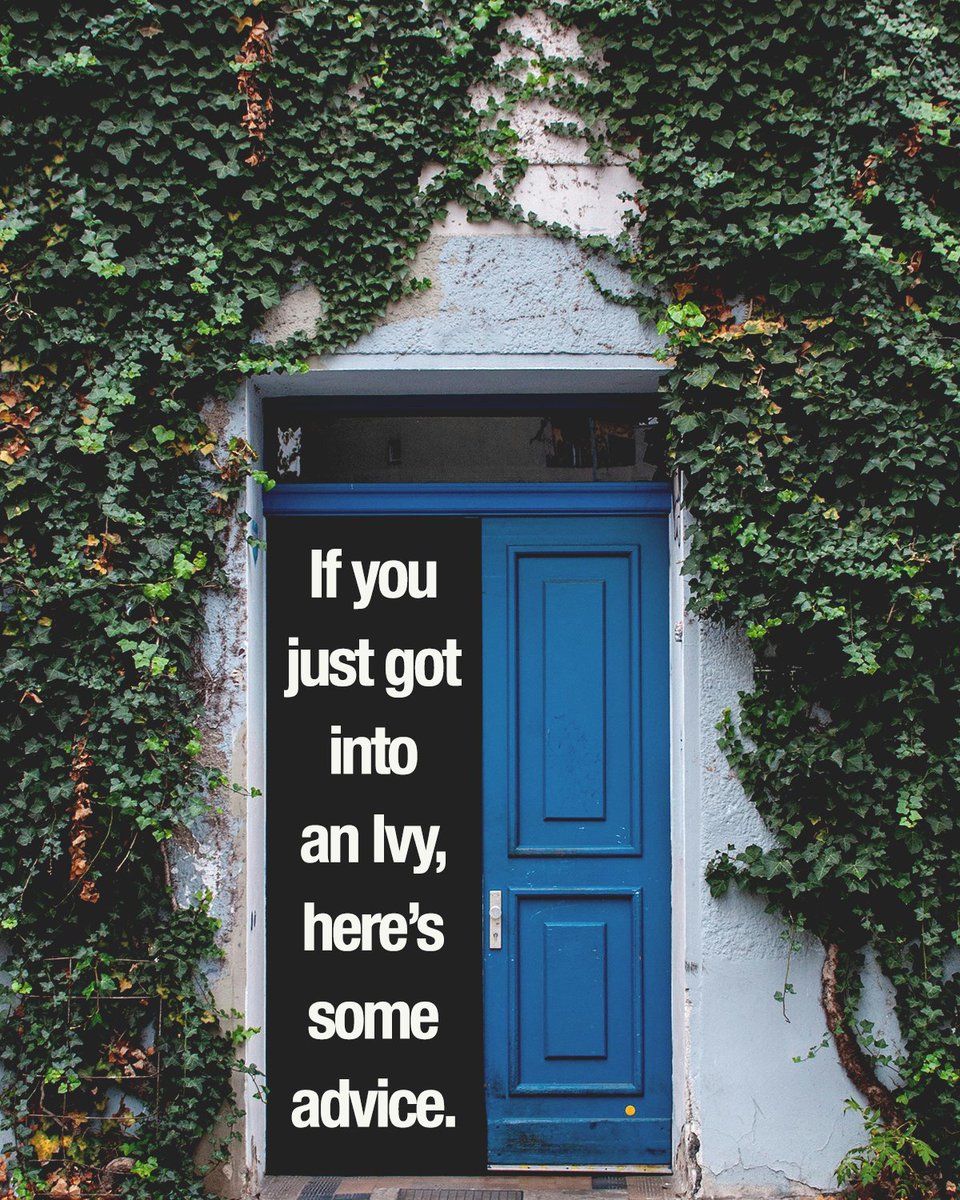
To: Admitted Students on Ivy Decision Day
From: UATX
Congratulations. Getting in was hard and you should be proud. Now here’s some unsolicited advice so you don’t waste the next four years.
Go to class. We know this sounds obvious. But as the New York Times reported recently, Harvard students routinely skip class, rarely speak up when they're there, and focus on their devices instead of the discussion. Faculty say few students do enough preparation to contribute meaningfully. The average college student spends about 20 hours a week on class and studying combined. At UATX, we aim for 50. That’s the difference between a part-time commitment and a full-time job. You (or your parents) are about to spend upwards of $90K a year. If you don't show up, you're paying roughly $250 per skipped lecture for the privilege of sleeping in.
Read the books yourself. Your generation is the first to arrive at college post-literate — raised on short-form video, dependent on algorithms, and increasingly incapable of sitting with a difficult text long enough to let it change your mind. Ninety percent of college students use AI academically. This makes you more reliant on the authority of others. Most professors will also stand between you and the text. They’ll tell you what Marx “really meant,” what Aristotle “failed to see,” as though an academic in 2026 has outsmarted minds that shaped civilizations. The good professors do the opposite: they put you in front of the book and they work with you to find what a great mind has to teach us directly. Find those professors, and read everything yourself.
Say what you actually think. Seventy-three percent of conservative students report withholding their political views in class out of fear their grades will suffer. Our advice isn't political; it's intellectual. If you spend four years learning to say what's expected instead of what's true, you’ll graduate roughly where you started — just older, more credentialed, and more practiced at self-censorship. One study finds that nearly half of students show no measurable gains in “critical thinking” after two years in college. Keep this in mind as you make decisions about which professors to take and how to do your assignments. Taking a small hit on your paper to gain integrity and wisdom is usually worth it.
Ask for real grades. Sixty percent of Harvard undergraduate grades are now A’s. Twenty-five years ago, it was 20%. It got so bad that the legendary Harvard professor, Harvey Mansfield, started giving students two grades: the official one for their transcript, and a private one reflecting what they actually earned. He called the official grades “ironic.” So here's a suggestion: Take your A, but also ask your professors for a “Mansfield grade” so that you know where you stand. And don’t avoid difficult courses to keep your transcript clean for law school.
Get work experience before you graduate. Forty-two percent of recent college graduates are working jobs that don't require a degree. Many employers are projecting the next few years to be the worst college grad job market in years. A degree alone — even from an Ivy — is not a job guarantee. Seek out apprenticeships, internships, and real work starting freshman year. The students at UATX are connected with entrepreneurs and business leaders from day one. Many will graduate with four years of work experience alongside their degree. You can build something similar at your school, but you'll have to do it yourself.
Understand how debt shapes your life. If you're paying full freight or even half, do the math with your eyes open. Your decision to take on debt will quietly reshape the trajectory of your adult life through countless small surrenders: the job you take because it’s safe instead of starting the company. The city you choose to live in. The relationship you delay and the kids you don’t have. For women, a $1,000 increase in student loan debt lowers the odds of marriage by 2% per month in the first four years after graduation. None of that shows up in the college brochure. If you're going to take on debt, treat it like the constraint it is from day one: save aggressively and make sure every dollar is buying something that will actually compound in your favor.
Find the people who take school seriously. The best thing about a great school isn't the lectures or the library. It's the handful of professors and students who are genuinely there to learn — who read ahead, argue in good faith, and push you to be sharper. Find them. UATX is a small community of those who seek a serious education. At a larger university, you have to build this community yourself.
*
The most dangerous thing about an elite university is that it is very easy to do nothing for four years and still come out looking successful. The transcript will say you excelled. The diploma with the fancy crest will open certain doors. Your parents will be proud. And yet you will have coasted — through inflated grades, unread books, and borrowed opinions.
Getting in is an accomplishment. Making the next four years worth it will be harder, and the right decisions will change everything.
We wish you luck.
English
Timeshadow retweetledi
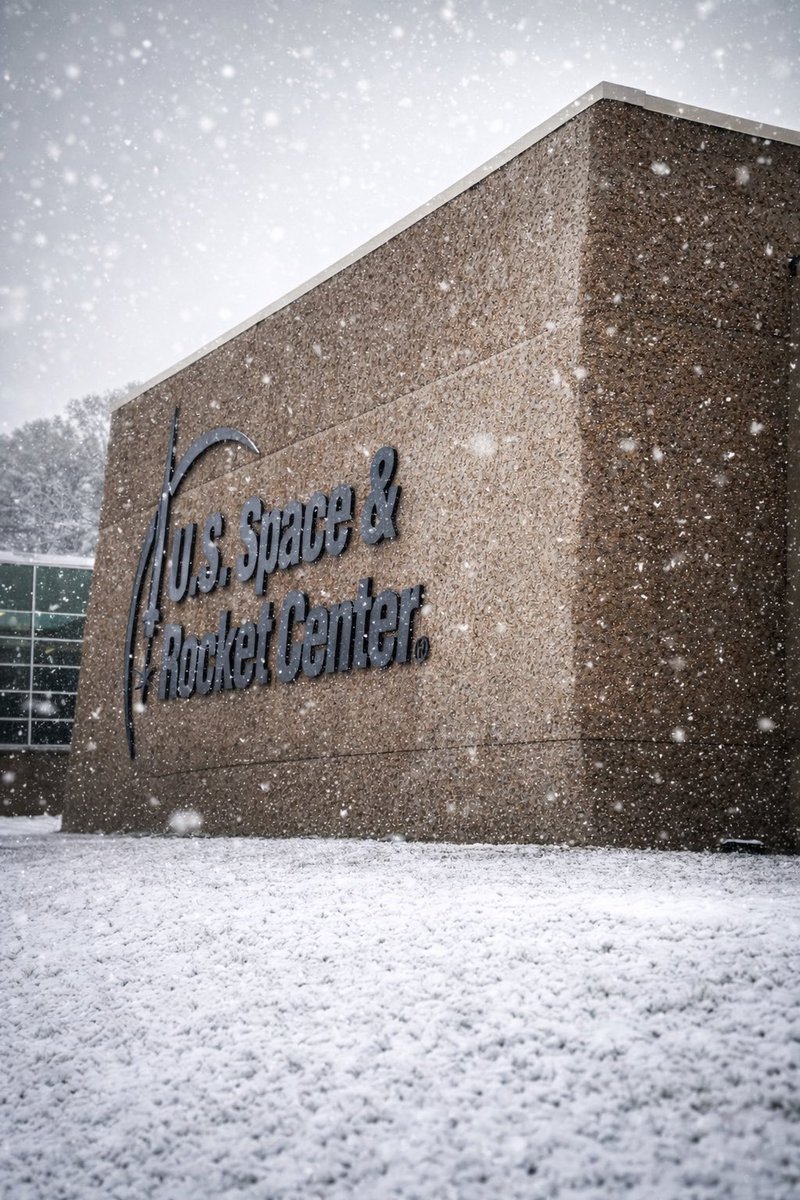
Another shot from the U.S. Space and Rocket Center in the snow. Huntsville, AL. @spann @JimCantore @JDressmanWX @AmberKulick_wx @DanielleDozier @simpsonWVTM13 @weswyattweather @jeffcastlewx @tnvalleyweather @maggyejoWX @matt_laubhan @MatthewCappucci @retweet_weather #alwx #snow
English
Timeshadow retweetledi
"All the Empty Rooms" has won the #Oscar for Best Documentary Short Film.
The documentary follows CBS News’ @SteveHartmanCBS and photographer Lou Bopp as they meet the parents of school shooting victims, who open their doors and share what it’s like to live alongside their children’s bedrooms, left just as they were. Directed by @JSeftel, the short film was originally featured on CBS Sunday Morning in November 2024.
English
Timeshadow retweetledi
My final report for CBS News is the final chapter of my multi-part series on the glory of RADIO
Johnny Holliday is much more than a radio legend in Maryland. Just ask the surprise guest at the end of this segment!
=====>
English
RT @budweiserusa: For 150 Years, This Bud’s For You. Watch our Super Bowl LX commercial now.
English
Timeshadow retweetledi
Remembering today a devout Christian, a great fireman, a mentor to many, and a close friend. #NeverForgetMatt




English
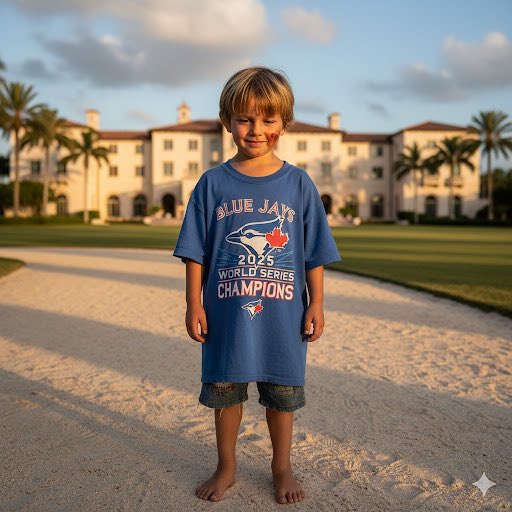
Things were getting tough in Florida…glad they are close to ending the shutdown. #shutdown #WorldSeries
English
Timeshadow retweetledi

You Need to Check Your Company's Page on Grokipedia Right Now
The new AI-powered Wikipedia competitor is prone to errors. Here’s how to request edits to your page.
👉 A “Suggest Edit” button can be accessed by highlighting an erroneous passage and right clicking on it.
English
Timeshadow retweetledi
Thanks Mrs. Terry 😂
On3@On3
NEW: Terry Saban on the possibility of Nick Saban taking the Penn State opening: “I have no doubt if Nick wanted to go back to coaching, he could win his eighth national championship. But we’re having too much fun, and we wouldn’t want to take that opportunity away from all of our baby coaches. Like Kirby and Lane.” (via @CollegeGameDay) on3.com/news/nick-saba…
English
Timeshadow retweetledi

English
Timeshadow retweetledi

𝗥𝗲𝗽𝗼𝘀𝘁 to be 𝟭 of 𝟮 𝗪𝗜𝗡𝗡𝗘𝗥𝗦 of a 2019 World Series ball signed by closer 𝗗𝗔𝗡𝗜𝗘𝗟 𝗛𝗨𝗗𝗦𝗢𝗡 🔥
Follow @NavyYardNats to
𝙙𝙤𝙪𝙗𝙡𝙚 𝙮𝙤𝙪𝙧 𝙘𝙝𝙖𝙣𝙘𝙚𝙨. ✖️2️⃣
Ball is MLB official. Autograph is PSA Authenticated.
𝟮 𝗪𝗜𝗡𝗡𝗘𝗥𝗦 Tuesday 9/22 8:00pm

English
Timeshadow retweetledi

Timeshadow retweetledi

As a neurosurgeon I care a lot about road safety.
By now you’ve probably seen @Waymo’s stunning safety results (like 91% fewer serious crashes). But they didn’t just publish data headlines. They released the raw CSV files and data dictionaries.
I did a much deeper analysis. A fascinating story emerges when you analyze how they’re achieving this.
This isn’t incremental improvement - it’s categorical. We’re looking at the potential elimination of traffic deaths as a leading cause of mortality.
The intersection breakthrough: Waymo has essentially solved intersection crashes, with 95% fewer injury incidents than human drivers in the same locations. That’s transforming the deadliest driving scenario.
The national math: If every US vehicle performed like Waymo, we’d prevent 33,000-39,000 deaths annually and save $0.9-1.25 trillion in societal costs. Even partial adoption at 27% would save ~10,000 lives per year. In terms of magnitude, this would be the equivalent of eliminating every pedestrian death nationally in a year.
The physics signature: Here’s what fascinates me: 47% of Waymo’s contacts involve less than 1 mph delta-V. They’re not just avoiding crashes; they’re converting unavoidable incidents into gentle bumps. It’s like having physics itself on your side.
We’re not talking about marginal safety gains. The data represents a fundamental shift from harm reduction to harm prevention.
The methodology matters: I used their dynamic geographic benchmarks (comparing like-for-like road conditions) and verified the findings hold across San Francisco, Phoenix, LA, and Austin. The safety advantage actually increases in more complex urban environments.
Link to raw data below….
Notes on my approach:
Analysis based on 96 million miles of Waymo Rider-Only (RO) data through June 2025, utilizing Waymo's dynamic geographic benchmarks to compare Waymo Driver performance against human drivers under similar road conditions and operational design domains.
The projections for national impact (deaths prevented, societal costs) involve several assumptions. Given Waymo's zero reported fatalities, the direct serious injury reductions were mapped to national fatality statistics using established NHTSA-derived ratios that correlate serious injury crash rates with fatality rates. This extrapolation assumes that Waymo's observed serious injury prevention capability would translate proportionally to fatality prevention. Societal cost savings are estimated by applying average per-fatality and per-injury economic costs (e.g., medical, lost productivity, quality of life) as published by NHTSA, scaling these national averages to the projected number of avoided fatalities and injuries based on Waymo's safety performance. These figures represent the potential annual impact if the Waymo Driver's safety profile were widely integrated into the national fleet.
@ethanteicher

English
Timeshadow retweetledi

The algorithm must work really well on Twitter and Instagram, because I have been seeing more of this guy lately. This is not just the heart of the hobby, but it is the heart of society. We should all strive to be like this.
English
Timeshadow retweetledi

Watching those @shackshack fries wither under the heat lamp while burgers get soggy on the next shelf over tells you everything you need to know about the state of their business.

English
Timeshadow retweetledi

Increase your odds of securing this super item 📈
Repost to enter for a chance to win an authenticated Iron Man bobblehead signed by Cal Ripken, Jr. ahead of Marvel Day this Saturday at The Yard!!


English
Timeshadow retweetledi
Timeshadow retweetledi

[NEWS] Howard Bentley Buick GMC isn’t scrambling to match employee pricing:
Why?
Because they’ve been beating it since 2013, by design.
Back then, the Alabama store needed more trucks from GM.
So they slashed margins, moved more metal, and earned better allocation.
Current day, their pricing still averages 5% below traditional deals.
And to compete beyond their small town, they deliver for free, up to 225 miles.
Bottom line: Seems like a pricing strategy built for the long game. Not a short-term promo or tariff-induced shift.
Read today’s top automotive stories, presented by @TomaAuto : carguymedia.com/3HvnJ9G
(Data source: Howard Bentley Buick GMC / Taylor Bentley Connor / Jon Conner)
English