matti timonen

178 posts

matti timonen banner
matti timonen

matti timonen

@timonen_matti

Cloud Adoption Lead@OP Financial Group

Oulu, Finland Katılım Ekim 2014
206 Takip Edilen72 Takipçiler
matti timonen
matti timonen@timonen_matti·
@OrenMe @code Can you give an example how end users prompts or orchestration can impact caching?
English
1
0
0
79
Oren Melamed
Oren Melamed@OrenMe·
New token controls dropping in @code insiders You can now view your cached tokens in the Agent Debug Logs and drill down using a new Cache Explorer View each turn, prompt signature(system, user, assistant, tool and drift), request components and cache performance stats and insights like "where the cache broke" etc This is a great tool to learn how to effectively re-construct your prompting for better model and cost utilization
English
7
6
65
5.1K
matti timonen
matti timonen@timonen_matti·
@mattpocockuk Prd, adr’s are product level. Spec/why and to what end (epic), plan/how to achieve it i.e approach, tactics, phases, ordering (story), tasks/what exactly (step/task/issue). They essentially map to an system with a simple table since it’s just agreed terminology anyway.
English
0
0
0
46
Matt Pocock
Matt Pocock@mattpocockuk·
I'm thinking of renaming /to-prd and /to-issues PRD is super-specific to a certain style of document Issues are specific to GitHub The important thing is that the PRD is a multi-session plan and the issue is the plan in that session. Some options: 1. /to-mission-brief, /to-session-briefs 2. /to-epic, /to-tickets Or, come up with your own!
English
44
4
180
17.8K
matti timonen
matti timonen@timonen_matti·
@OrenMe A big part of my job for the past six months has been to maximise output quality of workflows. Next six months to minimize token usage. Fml.
English
0
0
2
715
Oren Melamed
Oren Melamed@OrenMe·
I will totally need to reevaluate how I work with AI now But this makes a lot of sense, it is not really sustainable to manage economics when some people consume millions of tokens per single premium token Nevertheless it’s hard to grok for anyone who got used to taking advantage of sub agents not costing additional budget 🙃
GitHub@github

Starting June 1st, GitHub Copilot will move to a usage-based billing model as GitHub Copilot supports more agentic and advanced workflows. In early May, you'll see a preview bill experience, giving visibility into projected costs before the transition. 👉 Read more about the upcoming change: github.blog/news-insights/…

English
22
9
235
41.4K
matti timonen
matti timonen@timonen_matti·
@github Are you kidding me? We have 2000+ licenses and there’s no benefit whatsoever to that commitment?
English
0
0
1
196
GitHub
GitHub@github·
Starting June 1st, GitHub Copilot will move to a usage-based billing model as GitHub Copilot supports more agentic and advanced workflows. In early May, you'll see a preview bill experience, giving visibility into projected costs before the transition. 👉 Read more about the upcoming change: github.blog/news-insights/…
English
529
935
2.9K
3.7M
matti timonen
matti timonen@timonen_matti·
@github @OpenAIDevs Most people commenting still don’t really understand how ghcp pricing works. 1x user request is about 4 cents. So 30 cents for 7.5x. You can do a lot with one user request if you optimize towards that, which you can do with subagents (free) and askQuestions tool. Still cheap.
English
0
0
1
89
GitHub
GitHub@github·
🆕 @OpenAIDevs GPT-5.5 is now generally available and rolling out in GitHub Copilot. Our early testing shows ➡️ It delivers its strongest performance on complex agentic coding tasks ➡️ It resolves real-world coding challenges previous GPT models couldn’t Try it out in Copilot CLI or @code. 👇 github.blog/changelog/2026…
English
101
56
499
240.2K
matti timonen
matti timonen@timonen_matti·
@MindTheGapMTG @github @OpenAIDevs Github copilot supports parallel subagents and nested subagents support, and also multiple concurrent session are working fine. Cli, sandboxed, and cloudagents as well. It’s not a single agent tool.
English
1
0
1
147
Chen Avnery
Chen Avnery@MindTheGapMTG·
@github @OpenAIDevs "Complex agentic coding tasks" sounds great until you realize Copilot is still a single-agent tool. The bottleneck in production isn't the model - it's constraint files, recovery logic, state management. Ship GPT-10, won't matter without multi-agent coordination.
English
2
0
1
1.5K
matti timonen
matti timonen@timonen_matti·
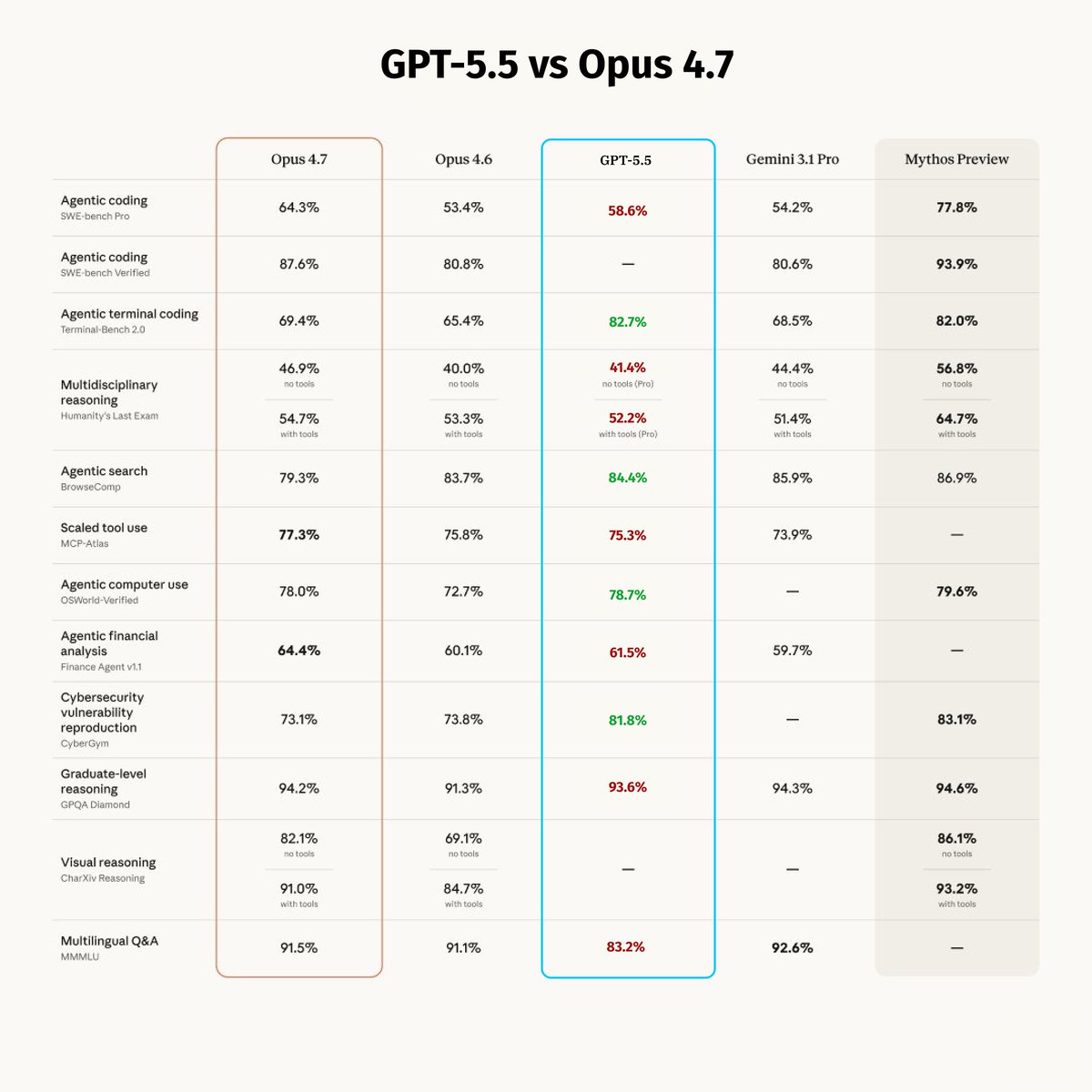
@d4m1n Yeah, but absolutely no one wants to use O4.7, cause it won’t do anything the way you want it done. The benches don’t really matter at that point.
English
0
0
0
6
matti timonen
matti timonen@timonen_matti·
@OrenMe @code I accidentally discovered this just a few days ago as i was asking the agent to figure out how to get multi-model review working with my reviewer subagent, and then it just ran it. Had to look at debug logs to see if it really was that easy 😄
English
0
0
1
30
Oren Melamed
Oren Melamed@OrenMe·
This dropped almost 2 weeks ago and not sure I saw this around - you can pass optional model name to subagent now in @code It opens the path to things like multi model review and more fleet like or multi agent multi model orchestration
English
2
2
21
2.3K
matti timonen
matti timonen@timonen_matti·
@muzib__ @pierceboggan Same experience. pretty much the only 0x model that does things roughly right and can provide value in real workflows. Only available on consumer side though for more training data i guess. hopefully it'll be finetuned on to a more recent base model later.
English
0
0
0
52
Mozibur Rahman 🇧🇩
Mozibur Rahman 🇧🇩@muzib__·
Raptor mini is Github Copilot is surprisingly good, especially considering its 0x multiplier and 264K token window. Its really underrated. I am surprised that MS is not taking it seriously (or, are they?) When are we going to get Raptor Max with , lets say, 0.33x? @pierceboggan
English
7
0
25
4.4K
matti timonen
matti timonen@timonen_matti·
@mattpocockuk I use orchestrator setup with a clearly mandatory arch, plan subagent steps and HITL defined. Started a run with Opus 4.7 with grill-me, and while it did ask me about 10 questions, it completely skipped repo discovery, and the required workflow. straight to building! That model🤯
English
0
0
0
906
Matt Pocock
Matt Pocock@mattpocockuk·
Starting to notice that even with /grill-me, Opus 4.7 w/ Claude Code jumps straight to implementation 😡 Just WAIT until we're aligned, silly harness
English
109
10
739
151.5K
matti timonen
matti timonen@timonen_matti·
@realmcore_ You’re right, I should have stopped at the restaurant because you’re hungry. But we are at B now so we accomplished the task correctly. Do you want me to find you a restaurant here?
English
0
0
0
4
matti timonen
matti timonen@timonen_matti·
@realmcore_ We have our map from A to B, and it doesn’t include a stop at your requested restaurant, because we’ll get to B faster without it.
English
1
0
0
6
akira
akira@realmcore_·
Sonnet 4.6 is an incredibly weird model First time I have both immediately thought a model is dumb and smart. It's incredibly agentic. As in, it feels almost like it has a will of it's own. I don't think I trust it
English
10
1
44
4.9K
matti timonen
matti timonen@timonen_matti·
@realmcore_ I get why anthropic is blocking them from other tools. It’s cause they’re turning unusable in others.
English
1
0
1
12
matti timonen
matti timonen@timonen_matti·
@realmcore_ I just hit this. Been working on orch/subs dev system. keeping it general and trust model judgement to decompose/delegate. Really good results, until opus-4.6. It just ignored everything. Turns out the model thinks about time/complexity completely different. -> New scoping model
English
1
0
2
167
akira
akira@realmcore_·
Feels like everyone making their own agent stumbles across the same primitives and thinks they solved something Let me save you some time (read this, it's funny and useful): - You're going to make an agent - You're going to run it on benchmarks > It's going to suck - You're going to make a tool to analyze traces - You're going to say this helped you > It wont work - You're going to think about role based agents for solving a single task - You're going to make a workflow for solving a benchmark > Both will work. Neither are generalized - You'll think you made it > It will be nearly unusable by an end user > Back to square one - You're going to realize you're stuck with a for loop - You're going to think about swarms > In swarms single agent usability doesn't matter - But wait you need a task manager - But wait you need a merge queue - But wait you need compression for long jobs > Compression is a foot gun - But wait now you need an agent to manage it all - But wait now you need something that checks to make sure the manager is managing - You're going to go back to single loop agents - Well, subagents seem like the way to do all of this > Bam! Plot twist: subagents are hard to do well - You're going to think "Hmm well subagents isolate context" because said so - You're going to start to look at other agent implementations > How have they all solved compaction, multi-agent, task management, memory etc.? - You're going to realize it's all just tradeoffs, but most of them have only one side people care about - "Oh it's all just context engineering" > Yep. But it has to be good and it has to be general. > Back to the starting loop. Rinse and repeat. Congrats. Keep it simple. Keep it general.
English
60
34
708
56K
matti timonen
matti timonen@timonen_matti·
@svpino Secrets are hard locally. Doing two things about this. I use cross-keychain package for all secrets on openclaw. JIT inject to any local build/task. Not great still, but better than nothing. And I’m building openid4vc wallet for agent credentials and 2fa mechanics, DPoA, etc.
English
1
0
0
90
Santiago
Santiago@svpino·
Your agents can work autonomously, but they still use a hardcoded API key stored in a configuration file. Let that sink in. We are building autonomous machines with access to our most critical infrastructure, and securing them with a password on a sticky note. This is crazy. Identity is one of the biggest problems with agents right now. Deployed agents touch real infrastructure: databases, APIs, file systems, MCP servers, and other internal services. These agents act autonomously, make decisions, and access live resources. The "solutions" I usually see: • Hardcoded API keys and persistent credentials in config files • Shared service accounts with way too many permissions • Long-lived credentials that never get rotated • Zero visibility into what agents accessed what data This might work for traditional software, but agents are a completely different animal. Agents operate continuously, make non-deterministic decisions, and follow different execution paths every time they run. The old identity models built around static roles and long-lived secrets simply don't fit.
English
49
10
150
18.4K
matti timonen
matti timonen@timonen_matti·
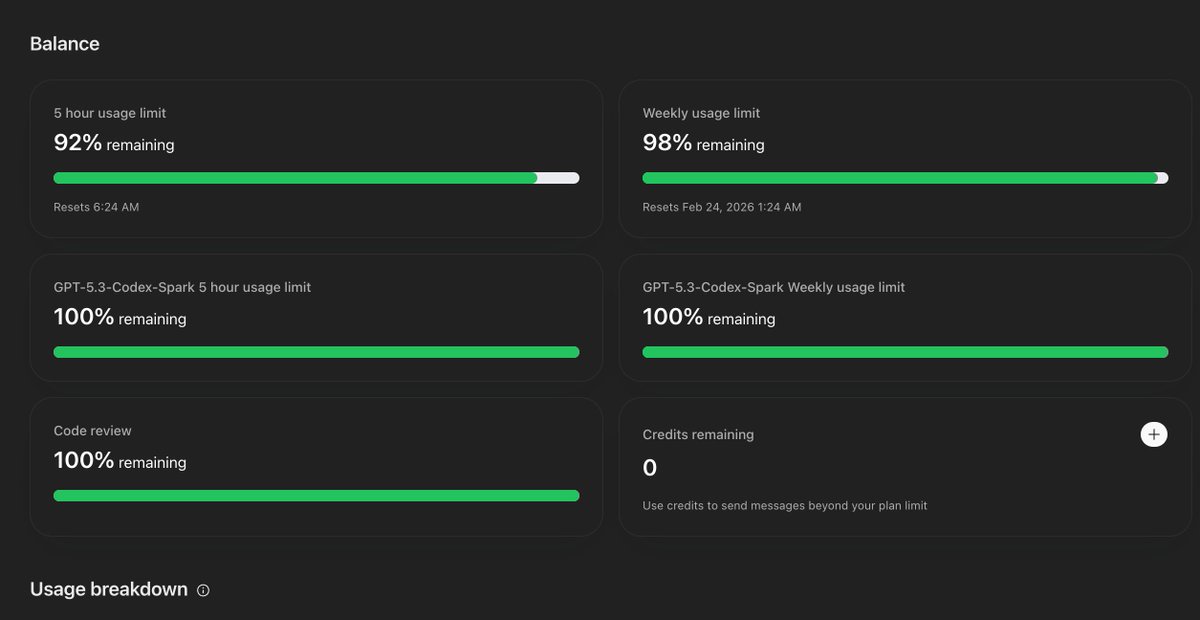
@theo I got the 20 buck plan for testing 5.3-codex, and got to weekly limit in under 2 days. Openclaw 30 minute intervals on 2 projects (small iterations). codex only for coding tasks while openclaw main threads with gemini-3-flash. 200 plan needed for sure. 5.3-codex is good though.
English
0
0
1
181
Theo - t3.gg
Theo - t3.gg@theo·
I've had 3 or more agents running in parallel with Codex for 2+ hours. I've used 8% of my 5-hour window. 2% of my weekly. I am literally trying to hit the limits and still can't.
Theo - t3.gg tweet mediaTheo - t3.gg tweet media
English
322
49
2.8K
271.4K
matti timonen
matti timonen@timonen_matti·
@techNmak While i use opencode, and pi in scripts , i still prefer to have vscode open all the time. Usually few of them. you can run multiple parallel sessions in one, although the session specific branch would be nice. With subagents it’s easy to get to a few hour sessions. Works fine.
English
1
0
0
78
Tech with Mak
Tech with Mak@techNmak·
Unpopular opinion: VS Code is holding back AI coding. I’ve been spinning up multiple Cline instances across tmux panes and terminal tabs. Each agent has its own isolated state and can run a different task, branch, or idea in parallel. They just keep going while I focus on something else, no context collisions, no babysitting a single chat thread. You can pipe input, chain output, or run them headless in CI/CD. It fits into the workflow I already use in the terminal. Getting started literally took me 30 seconds: npm install -g cline AI is finally just another process in my workflow, instead of a panel or plugin.
Cline@cline

Introducing Cline CLI 2.0: An open-source AI coding agent that runs entirely in your terminal. Parallel agents, headless CI/CD pipelines, ACP support for any editor, and a completely redesigned developer experience. Minimax M2.5 and Kimi K2.5 are free to use for a limited time. From prompt to production. All in your terminal.

English
36
14
168
43K
matti timonen
matti timonen@timonen_matti·
@latentsaint I prefer an IDE, and vscode is better than any of the forks. Gh copilot has really come a long way over the past 6 months. Not really missing anything worth crying over at this point.
English
0
0
1
212
Tom
Tom@latentsaint·
does anyone use github copilot?
English
118
1
61
68.7K
matti timonen
matti timonen@timonen_matti·
@nateberkopec The only reason to do it is context management. you need strict minimal input/output definition, and clear state sharing between the subagents, and it'll get complicated if you're freely adding agents. Ralph looping solutions actually need to enforce similar things.
English
0
0
0
47
Nate Berkopec
Nate Berkopec@nateberkopec·
Most of the multi-agent/orchestration stuff I see on here is just disappointing. I'm extremely skeptical that agent "roles" ("You are an expert frontend tester...") and "personalities" ("I have a team of 10 agents! Here's Bill, Jill...") are worth fuck-all.
English
63
5
301
29K