Tomer Raanan

332 posts

Tomer Raanan

Tomer Raanan

@tldraanan

Senior reporter at shipping industry journal @Lloydslist. Views my own.

United States Katılım Ocak 2018
636 Takip Edilen792 Takipçiler
Sabitlenmiş Tweet
Tomer Raanan
Tomer Raanan@tldraanan·
A tanker acquired by the UN for $55m to prevent a massive oil spill off Yemen is essentially being used by the #Houthis as floating storage for Russian oil, while costs for running the vessel are still being fronted by the UN. The UN purchased the VLCC Yemen in 2023 as part of an operation to salvage the oil on board FSO Safer, a 49-year-old floating storage unit that was in danger of sinking. Both Yemen and the still floating FSO Safer are now under the effective control of the Houthis, the Iran-backed Yemeni militia group responsible for attacking over 100 ships since November 2023. @LloydsList🔗in comments. With @Lloydslisted. Comments and insight from @Ndawsari and @ImRalby. (img from @planet)
Tomer Raanan tweet media
English
15
118
384
88.6K
Tomer Raanan retweetledi
Becky Anderson
Becky Anderson@BeckyCNN·
“There are supply chain ripples that are going to be felt for years as a result of what we have seen over the last three weeks” @Lloydslisted tells me about escalating attacks on Iran and the Gulf’s energy facilities. As for getting ships through the Strait of Hormuz, he’s tracking Iran taking increasing control through a de facto “tollbooth”
English
0
12
22
3.6K
Tomer Raanan retweetledi
dan linnaeus
dan linnaeus@DanLinnaeus·
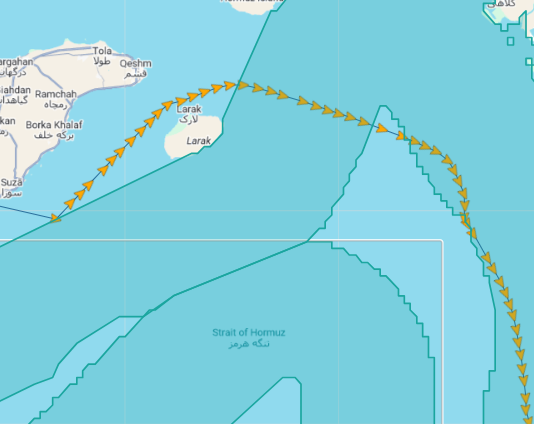
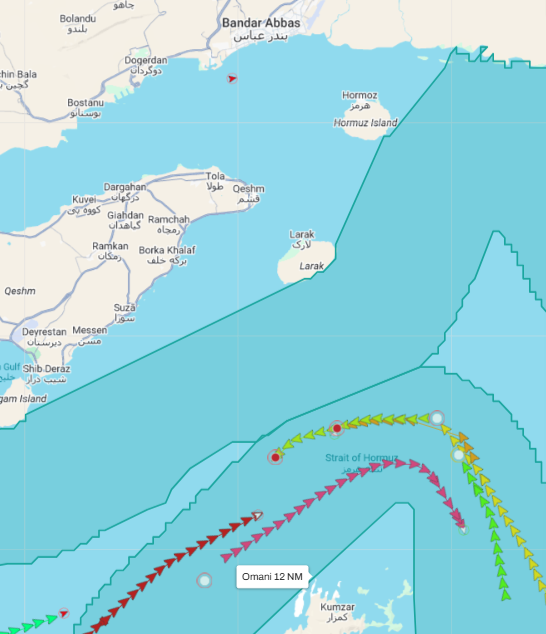
According to Lloyd's List direct talks with Tehran are underway with India, Pakistan, Iraq, Malaysia and China regarding an IRGC administered maritime corridor between Qeshm Island and Larak Island in Iranian waters. Importantly, initial reporting indicates that the IRGC has already begun extracting rent for the SoH maritime workaround from tankers it registers and approves. One reported case is understood by Llyods' sources to have involved a payment of $2 million for 'safe' passage in the maritime scheme. At least nine ships have transited the emerging SoH reroute which relies on IRGC Naval authorities stationed on Larak Island for visual confirmation, per LL's report. For the full report: Meade, R., Diakun, B., & Raana, T. (Mar 18, 2026) Iran establishes ‘safe’ shipping corridor for approved and paid for transits. Lloyd's List lloydslist.com/LL1156656/Iran… Richard Meade @Lloydslisted Bridget Diakun @bridget_diakun Tomer Raanan @tldraanan
dan linnaeus tweet mediadan linnaeus tweet media
English
11
55
126
43.7K
Jason Brodsky
Jason Brodsky@JasonMBrodsky·
The regime in #Iran is drunk on the Kool-Aid over the Strait of Hormuz: it is considering a proposal to levy transit fees on vessels passing ​through the Strait of Hormuz, a lawmaker ‌said on Thursday. If it tries to undertake such a scheme, the U.S. won't allow it. reuters.com/world/middle-e…
English
7
19
57
10.3K
Tomer Raanan retweetledi
Lloyd's List
Lloyd's List@LloydsList·
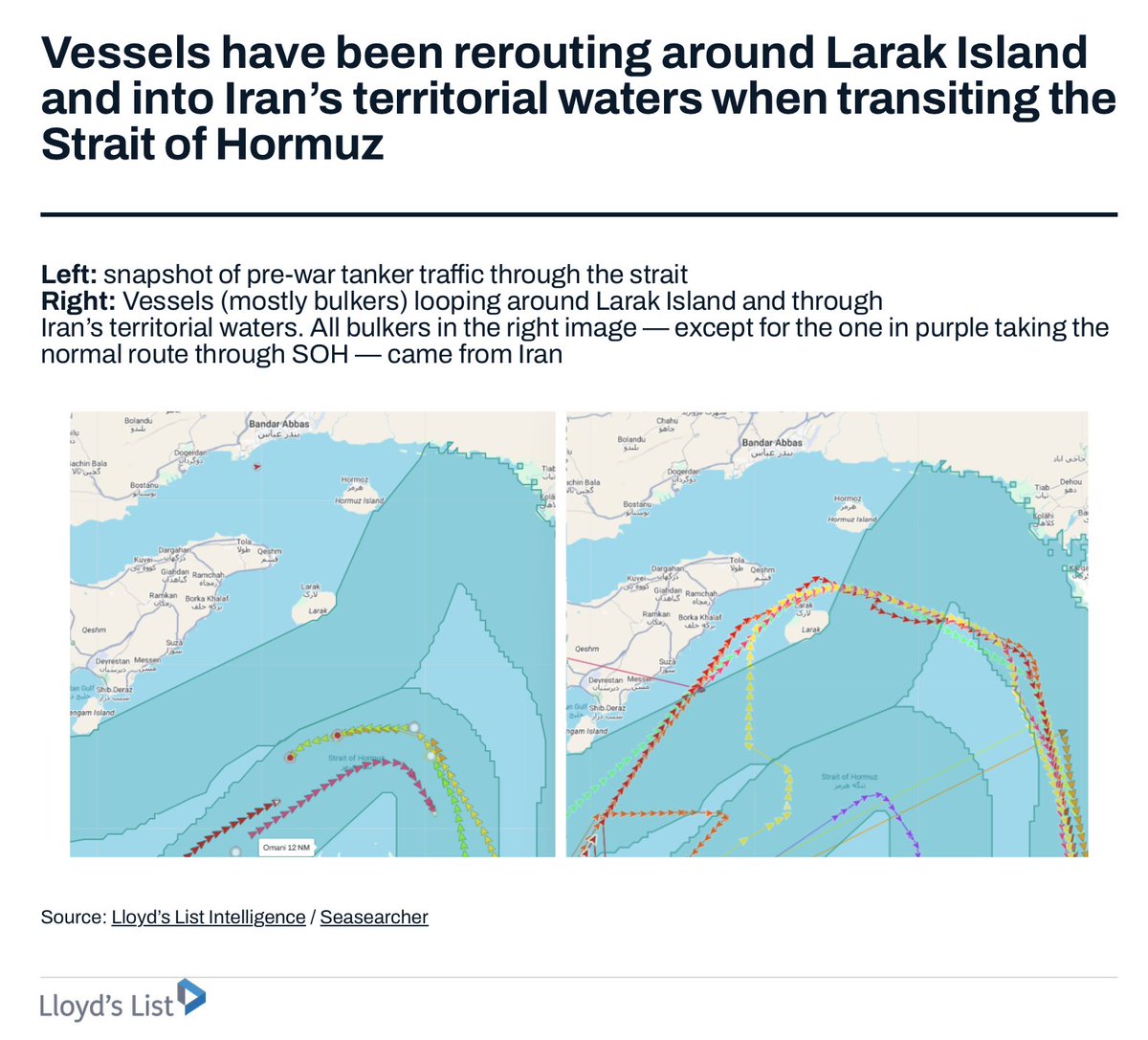
Iran is setting up a 'safe' corridor for the transit of vessels through the Strait of Hormuz. At least 9 ships have already used the corridor, routed close to Iran’s Larak Island for visual checks by IRGC Navy and port authorities
Lloyd's List tweet media
English
9
245
599
257.8K
Tomer Raanan
Tomer Raanan@tldraanan·
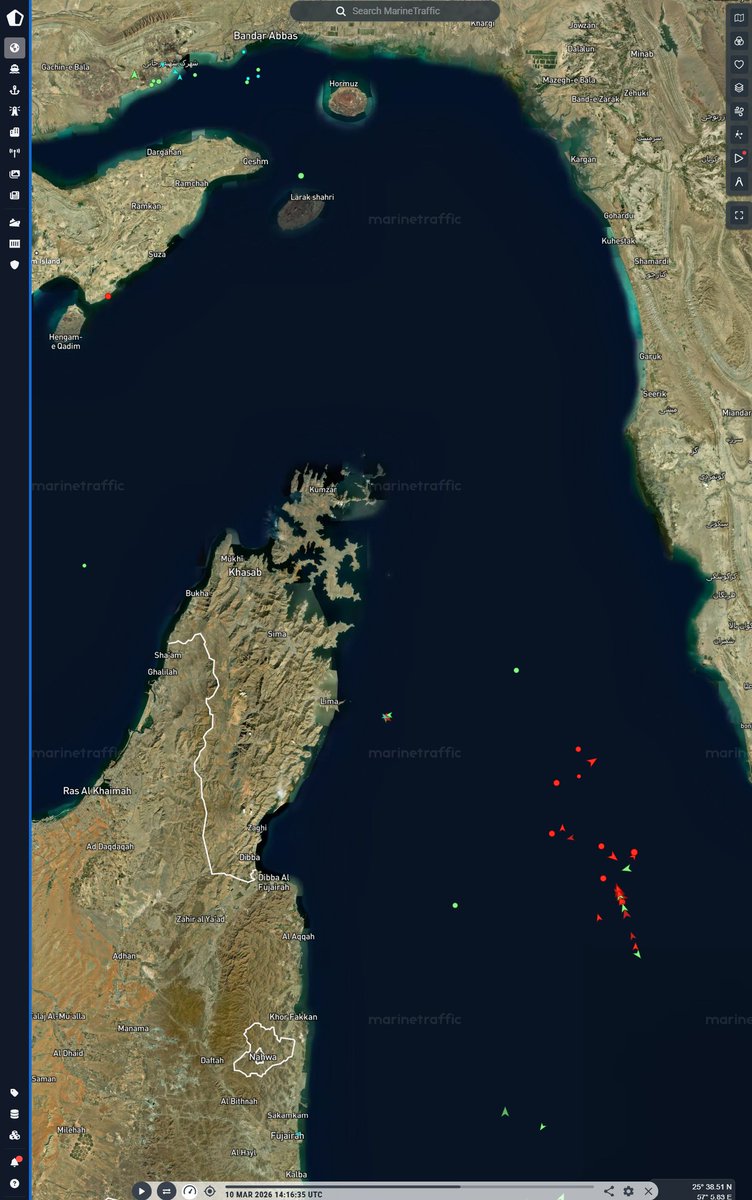
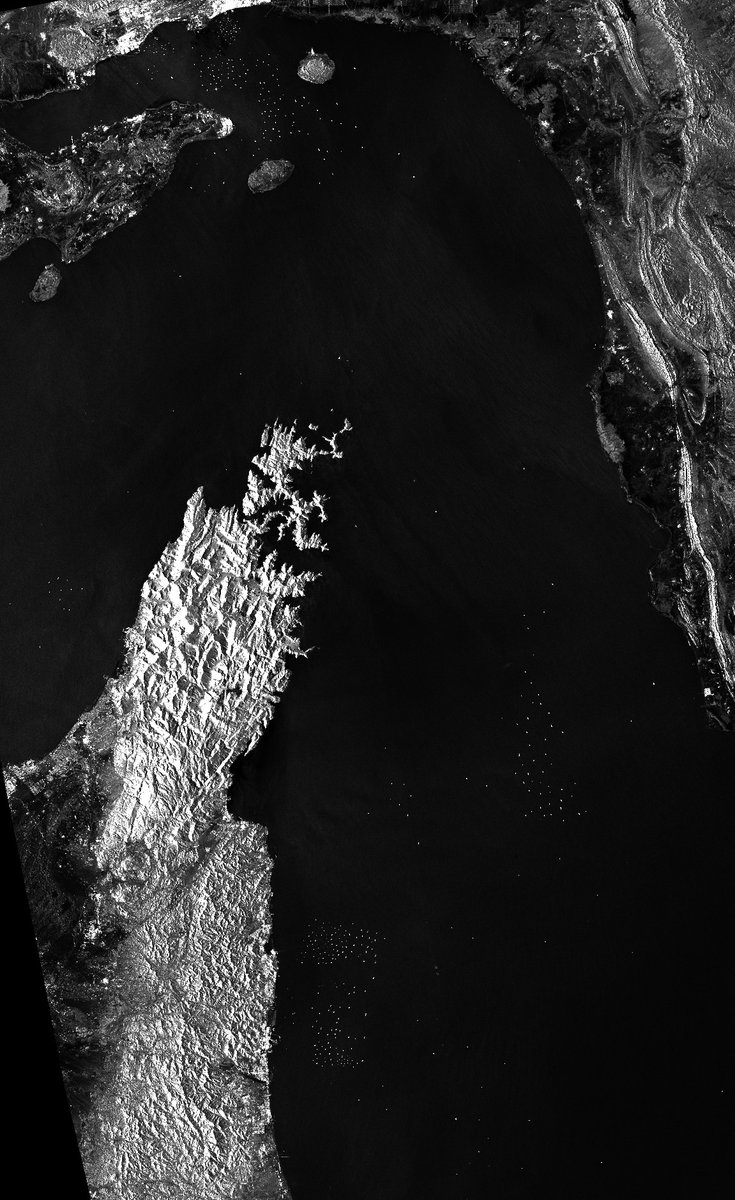
בימים כתיקונם מעבר בהורמוז לא דורש מעבר דרך המים הטריטוראלים של איראן. בתמונה עם המספר מסלולים רואים תנועת מיכליות לפני המלחמה, והן עוברות בהורמוז במים הטריטרואליים של עומאן. מה שאנחנו רואים בימים האחרונים אבל זה מספר ספינות שעושות סיבות מסביב לאי לאראק באיראן (מסלול צהוב בודד).
Tomer Raanan tweet mediaTomer Raanan tweet media
עברית
0
0
2
99
Tamer Amer
Tamer Amer@TamerAm48431889·
שאלה ספינות שעןברות דרך הורמוז במים הטריטיואלים של איראן חייבות לשלם להם?
עברית
5
0
14
9.1K
Tomer Raanan retweetledi
Alexander Stahel 🌻
Alexander Stahel 🌻@BurggrabenH·
I often read or hear that ships wanting to transit the Strait of Hormuz can no longer obtain insurance coverage, implying that insurance companies are the main reason for this collapse in traffic. That characterization is likely misleading and, in my view, reflects a misunderstanding of how marine insurance works. Marine insurance is structured in multiple layers. Ships typically carry Hull & Machinery insurance (covering physical damage to the vessel), P&I (Protection & Indemnity) insurance (covering third-party liabilities such as pollution, crew injury, and collision liabilities), and a separate class of cover for war risks such as missiles, mines, terrorism, or hostile acts. Importantly, P&I clubs do not insure war risks. Those risks are always covered separately through specialist war-risk underwriters, primarily in the London marine insurance market. To my knowledge, insurance across these categories has not been withdrawn from the market. Ships can still obtain cover for Hormuz transits, typically priced voyage-by-voyage, often through short-term policies covering a specific transit window. What has changed materially is the price of war-risk cover. Premiums that were previously around 0.15–0.25% of a vessel’s hull value have in many cases risen to around 1%, and in some situations up to 3%, particularly for vessels with certain geopolitical connections (for example U.S. or Israeli nexus in ownership or cargo). Part of the confusion likely stems from insurers issuing cancellation notices on existing policies once the conflict escalated. This is a standard contractual mechanism: insurers terminate policies priced for a lower-risk environment so they can reissue coverage at higher premiums reflecting the new risk conditions. If some ships are hesitating to sail, the constraint is not insurance availability. The more immediate issue is likely crew safety. Here a good listen. In the last chapter insurance coverage is addressed. Happy to take new insights on board but that is my understanding. podcasts.apple.com/ch/podcast/llo…
English
1
18
126
13K
Tomer Raanan
Tomer Raanan@tldraanan·
@ReemSherman גם מה שכן יוצא לסין ולהודו (דרך הורמוז) זה לא בכמויות של לפני המלחמה. מה שכן יוצא בכמות יחסית גבוהה זה נפט וגפ״מ מאיראן.
עברית
0
0
0
96
Reem Sherman
Reem Sherman@ReemSherman·
ראיתי הרבה טענות שכעשרים אחוזים מהנפט/גז העולמיים נגרעו מהמשק בעקבות סגירת המיצרים. אנחנו גם יודעים שמכליות לסין והודו עוברות. העשרים אחוזים כולל את הגז והנפט הסיני, או לא?
עברית
7
0
31
7.4K
Tomer Raanan retweetledi
TankerTrackers.com, Inc.
TankerTrackers.com, Inc.@TankerTrackers·
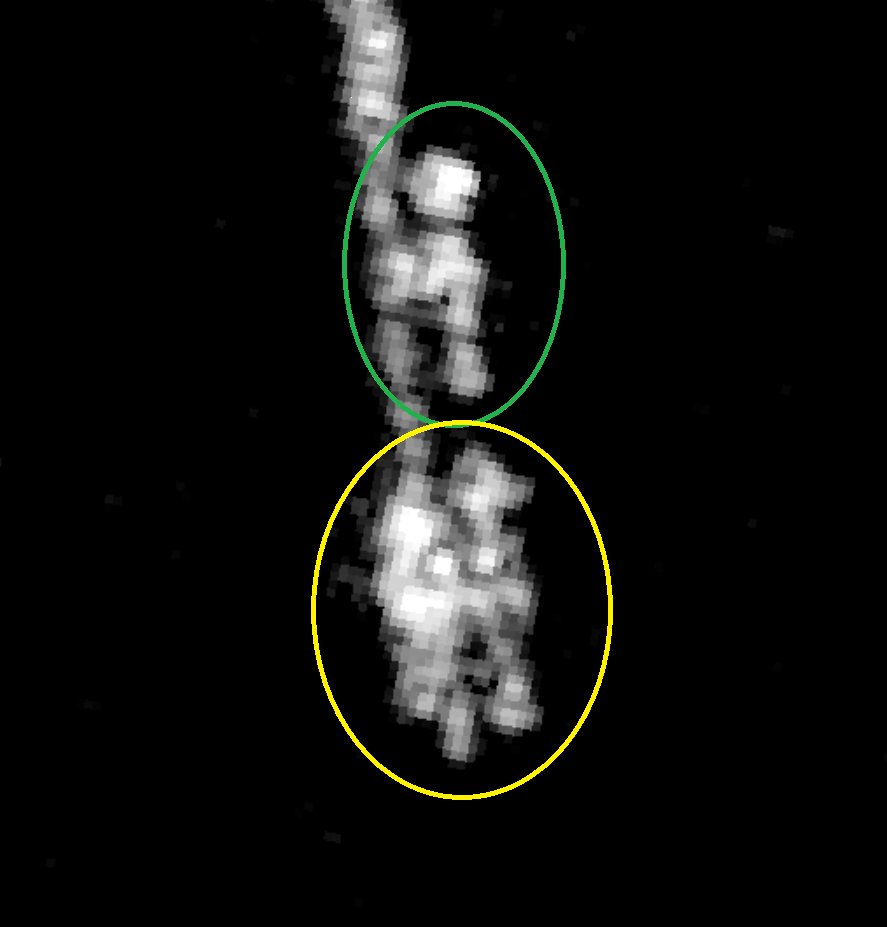
Yesterday morning (2026‑03‑14), after the bombing of Kharg Island, two new tankers (yellow ellipse) began loading crude via the island’s T‑jetty. Today's SAR imagery shows a third tanker (green ellipse) loading as well, plus seven more tankers at anchorage: five already laden with crude and some fuel oil from another terminal, and two waiting to load. While most other tankers in the region are still struggling to enter or exit, it’s business as usual for Iran. #OOTT #Tankers #Iran
TankerTrackers.com, Inc. tweet media
English
20
185
634
102.7K
Tomer Raanan
Tomer Raanan@tldraanan·
@GuledWiliq Hi Guled. The region is rife with GNSS interference, meaning that most of the AIS positions in your screenshots are not those vessels’ actual positions.
English
1
0
0
81
GuledWiliq
GuledWiliq@GuledWiliq·
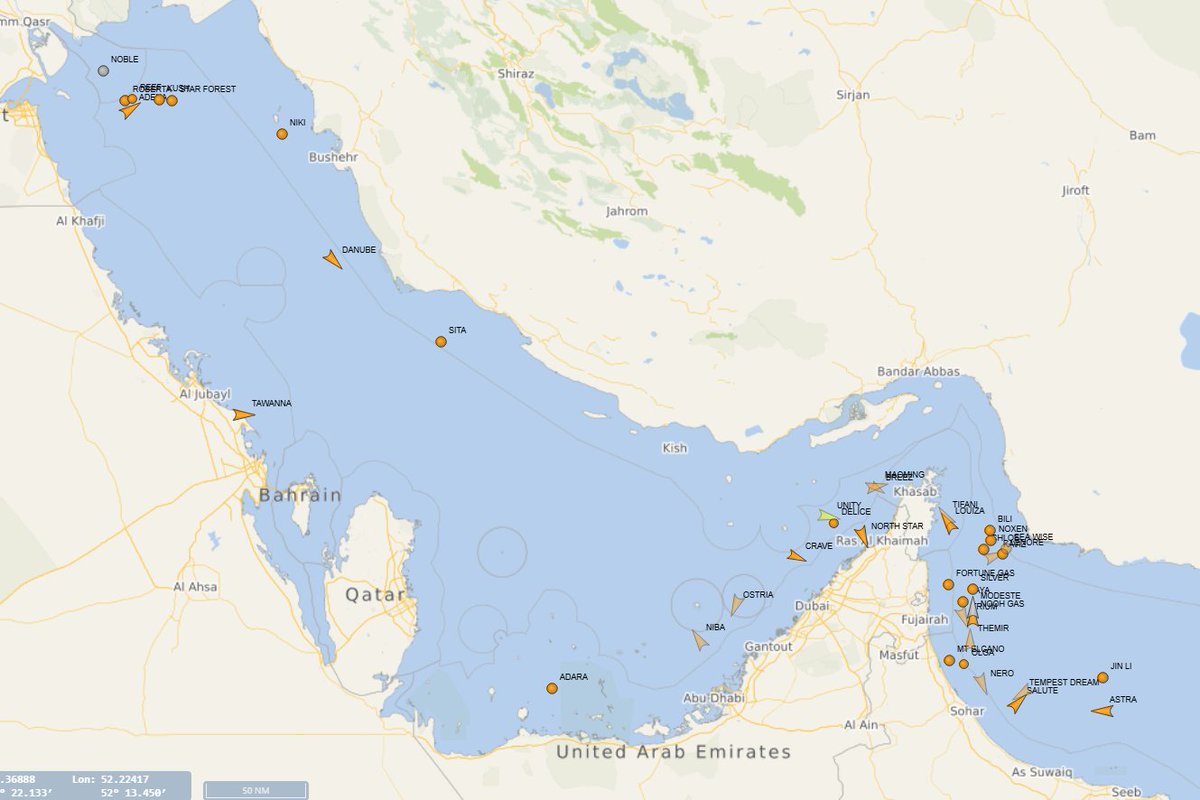
The Lloyd’s List analysis suggesting the “shadow fleet dominates Hormuz crossings” is interesting, but it raises a few methodological questions. Their estimate of ~50% shadow fleet transits (March 1–8) relies partly on inferred “dark transits” from AIS gaps and a broad definition that groups sanctioned vessels with ships merely linked to risky counterparties. The article also cites @TankerTrackers noting a rare VLCC loading at Iran’s Jask terminal, but it’s worth asking whether isolated loading events necessarily imply dominance of overall tanker traffic. Looking at the attached maps, the first shows all tankers >10k DWT in the Hormuz area, while the second isolates sanctioned vessels only. In my AIS review of the same snapshot I counted ~72 vessels total with ~27 appearing sanctioned (~37%), suggesting legitimate tankers still represent the majority. This raises the question whether the perceived “dominance” is partly a visual density effect-shadow fleet ships often loiter near Iranian export zones and STS anchorages, while compliant tankers move quickly through transit lanes.
GuledWiliq tweet mediaGuledWiliq tweet media
Tomer Raanan@tldraanan

Latest w/@Lloydslisted: The trickle of tanker traffic through SOH is dominated by shadow fleet vessels as mainstream tonnage largely (but not entirely) stays away. With insight on a rare Iran loading south of Hormuz from the great @TankerTrackers. Free to read @LloydsList: lloydslist.com/LL1156563/Shad…

English
1
0
0
476
Tomer Raanan
Tomer Raanan@tldraanan·
@ItaiPelles @Idaneretz @levanonisrael זה כולל כאלה שכיבו את הAIS, איפה שהצלחנו לאשרר (הגרף למעלה שלי), למשל משדר נכבה מערבית להורמוז ונדלק מזרחית. כל האיזור כרגע סובל משיבושים למערכות מיקום (GNSS Interference) וזה מה שהרבה מהסרטונים האלה מראים. זה משבש את המיקום שמופיע ב AIS.
עברית
2
0
2
45
Itai Pelles
Itai Pelles@ItaiPelles·
@Idaneretz @levanonisrael בטוח שזה כולל ספינות שמפסיקות לשדר את מיקומן לפני החצייה וממשיכות מיד אחריי? בוידאו של fast forward של תמונת המקם עם כל הספינות שמשדרות מיקום זה נראה שעשרות ספינות חוצות בשיטה הזאת מדי יום. אולי הן לא נספרות עקב כך?
עברית
1
0
2
93
Israel Levanon 🇮🇱🌲
Israel Levanon 🇮🇱🌲@levanonisrael·
מדהים שאנחנו חיים בעידן שהמידע הכי נגיש שהיה אי פעם ועדיין אני לא מצליח להבין האם יש נכון לכרגע תנועה במיצרי הורמוז או לא. זו עובדה בינארית שקורית ממש כרגע בהווה ואין דרך לדעת מה באמת קורה שם
עברית
25
0
129
25.2K
Tomer Raanan
Tomer Raanan@tldraanan·
US-sanctioned gas carrier Danuta I, laden with highly flammable cargo, ran the Hormuz gauntlet early on Friday, becoming just the second VLGC to transit the strait with AIS switched on since March 1 (the other was also carrying Iranian LPG). Free @LloydsList link in comments.
Tomer Raanan tweet media
English
2
10
26
6.4K
TankerTrackers.com, Inc.
TankerTrackers.com, Inc.@TankerTrackers·
A tanker waltzed right through the SoH a couple of days ago with AIS on and is now loading LPG in Iran. So, how was your day?
English
13
24
288
59.5K
Tomer Raanan
Tomer Raanan@tldraanan·
@Idaneretz ספציפית לגבי עניין הייצוא - מיכליות ״צי הצללים״ עדיין מעמיסות נפט וגפ״מ באיראן ומייצאות דרך הורמוז. אבל זה לא קשור באופן ישיר לתקיפות האלה, שנראה (לפחות ממה שפורסם עד כה) שהתמקדו במיכלי איחסון דלק בסביבת טהראן.
עברית
0
0
2
138
Idan Eretz
Idan Eretz@Idaneretz·
מישהו יודע להסביר את ההיגיון בתקיפה של תשתיות אנרגיה באיראן, כמו בתי זיקוק? זה לא משהו שנמנעו ממנו עד כה כדי להתמקד במטרות צבאיות ומשטריות? הם בכלל מסוגלים לייצא משהו כרגע?
עברית
153
1
341
55.2K