

topdresearch
2K posts

topdresearch
@topdresearch
Toronto Parkinson's Research Interest
Toronto, Ontario Katılım Şubat 2019
379 Takip Edilen480 Takipçiler

@AlbertoEspay @movedisorder Great facts. Like facts.
Is it the load, or level of misfolded proteins associated with neurological disease
Or is it the level of remaining protein?
English
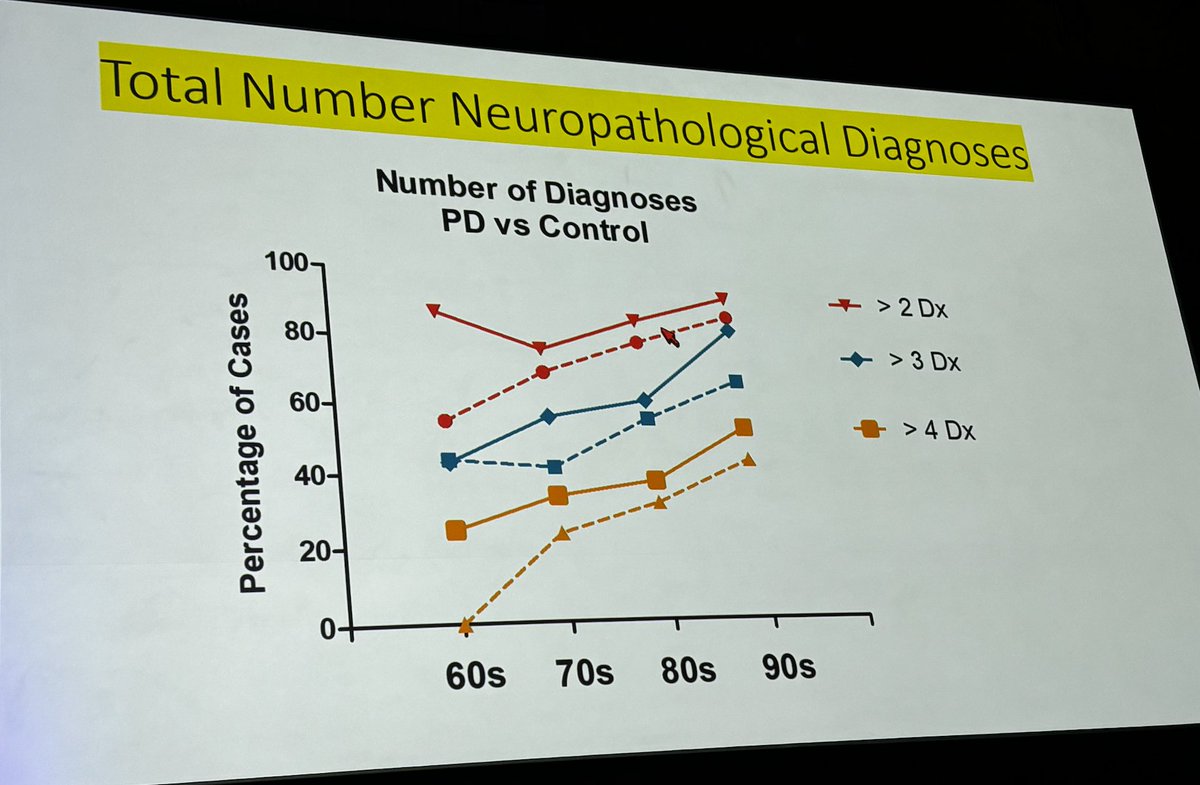
Couldn't pathology in #Parkinsons be the brain's response to age-related exposures? PD and age-matched controls have the same pathologies! Here are some highlights of yesterday's data at the 2024 #MDSCongress in Philadelphia. (1/5) @movedisorder
English
@ScienceofPD @PDandHDLab AUC in the low 80s seems to need some work to be predictive when 50 is flip a coin. Pretty interesting cohort at baseline with a nasty mean updrs score and old enough to have 20-25 percent die due to old age.
English

New paper from @PDandHDLab & colleagues presents a 5-year prognostic model for #Parkinsons that has good accuracy when employed up to 4 years from diagnosis & may help stratification for disease-modifying trials
…mentdisorders.onlinelibrary.wiley.com/doi/10.1002/md…

English
@ParkinsonsEU The word, smart therapy has a perceptual problem as well in that by default. Other therapies are not smart. there are plenty of good choices without starting a new problem when trying to fix another
English

We'd love to hear what you think about this latest research: if we rebrand advanced #Parkinsons therapy to "smart therapy" do you think it would make it more appealing?
Michael Okun@MichaelOkun
When we say 'advanced therapy' for Parkinson's disease, does this affect perception? Does it affect the willingness to 'take it up?' You bet it does. Should we rebrand to 'smart therapy?' Georgiades, @profsimonlewis @basbloem and van der Plas tackle the issue @journal_PD and suggest leaning into change. Key Points: - The authors point out that words matter especially to perception. - Could using the term advanced therapy trigger an impulse to 'chase a reassurance that their disease has not yet progressed and resist a potentially life-changing therapy?' - The authors advocate to change the message to “Smart Therapy”. - Smart in their view leaves out the focus on the 'negative connotations' of disease progression. My take: The commentary makes perfect sense to me, however I am very interested to know how persons w/ Parkinson's feel about this proposal. Is it time to rebrand? Would 'get smart' deliver more impact to more people? Is it disingenuous to deemphasize progression of a progressive disease? Is there room for nuance as the saying goes: cave quid dicis, quandō, et cui – beware what you say, when, and to whom. @PDavengers content.iospress.com/articles/journ… #Parkinson @ParkinsonDotOrg
English
topdresearch retweetledi

Barely a day goes by without me seeing someone with an abnormal movement disorder in the street or on the Tube.Only a minority would ever be seen in a neurology clinic.
More will be seen by mental health services, drug rehabilitation clinics and day centres for the elderly.
English
English
Visual cueing in cows.
The power of white lines
Open up your eyes and see the magic all around
#PurdonMartin #Highlandshospital @basbloem
Nature is Amazing ☘️@AMAZlNGNATURE
I can't stop watching these cows that think they have to jump over the white line! 🐮😂
English
There is lots we don’t know and much yet to learn in PD. Classification systems can help zero in closer on groups of patients to figure out if synuclein is friend, foe or innocent bystander @AlbertoEspay @ajlees @MichaelOkun @basbloem @RayDorseyNeuro @BrundinPatrik @KBI_UHN
Integrated Movement Disorders Program (IMDP)@IntegratedMove
Check out the commentary by Hugh Johnston (former patient advisory board chair) about the new biologically based model for classifying PD, called "SynNeurGe", by Dr. Tony Lang & team! Article: ow.ly/qNtx50R6P4k Full issue of Connect: ow.ly/qNtx50R6P4k
English
topdresearch retweetledi
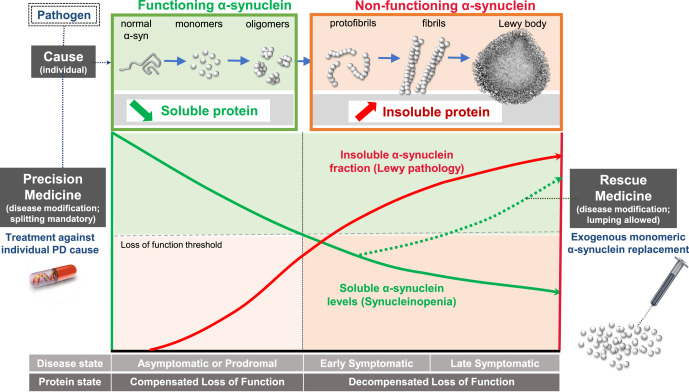
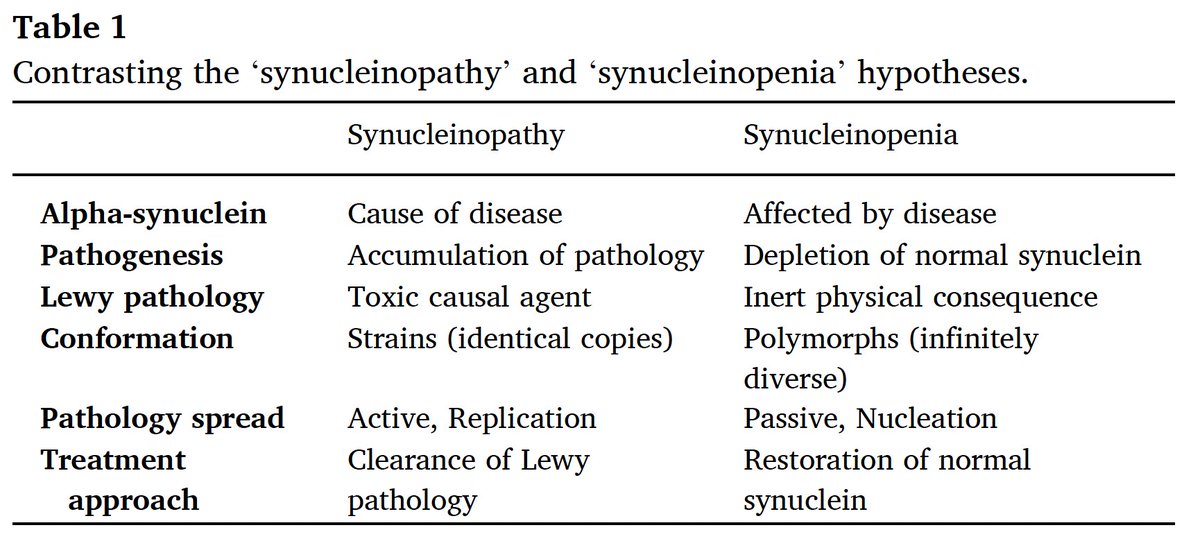
The Synucleinopenia Hypothesis: Lewy pathology is made of what once were normal α-synuclein monomers. Entrapped, they can no longer function. Losing enough α-synuclein brings out #Parkinsons. Lewy pathology alone doesn't. @ajlees @ParkinsonismD
prd-journal.com/article/S1353-…
English
topdresearch retweetledi

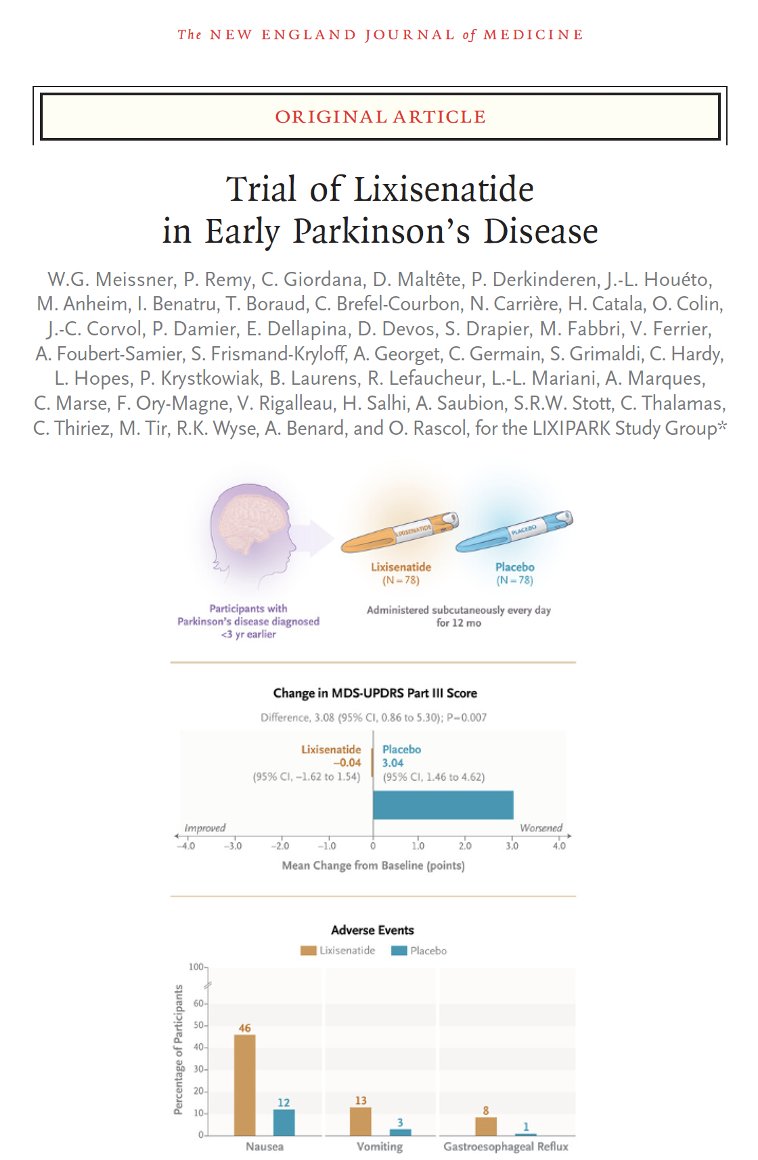
Big news with positive result announced for a randomized study of a GLP-1 agonist for Parkinson's just released @NEJM. A new era for Parkinson's or alternatively, more questions than answers raised by Meissner and colleagues.
Key Points:
- This multi-center French trial studied Lixisenatide which is a glucagon-like peptide-1 receptor agonist used for in diabetes.
- The trial was a phase 2 double-blind randomized and placebo-controlled.
- The authors wanted to know whether this drug would affect the progression of motor disability.
- Who did they study? Parkinson's treated and with symptoms less than 3 years.
- If you enrolled, you received daily subcutaneous lixisenatide or a placebo.
- The primary outcome was a change in the motor PD scale called the MDS UPDRS when on dopamine medication after one year.
- There were 78 people in each group.
- The motor scores slightly improved in lixisenatide and worsened by 3 points in the placebo group.
- There was a very short 2 month washout period where those getting the active drug stopped it and the benefit persisted.
- Nausea was the most common side effect and occurred in about 1/2.
My take: We have continued our multiple year love affair with various diabetes drugs and their potential links to Parkinson's disease, however the current study results are the most promising. Interpret with caution: there is a number called the 'clinically meaningful threshold' and those reading this study should appreciate that the results 'fell short' of this important metric. There will certainly be many arguments among experts as to whether this study met a minimum threshold for neuroprotection, and my personal opinion is that it did not. Here is an important message: In my view do not rush to prescribe this drug or try to creatively acquire it. We have been down this road many times including leukemia drugs, cough syrups and lithium. The data is not yet there to proceed to prescribing. More importantly, the weight loss associated with GLP-1’s is not desirable in the majority of cases of Parkinson’s disease and the nausea and vomiting will not be a welcome symptom. We must ask the important questions as to why the non-motor outcomes did not change, and why the other GLP-1 studies have been negative? Is there a blind spot here we are missing? Please appreciate this was trialed in only very early Parkinson's disease and thus there may be 'generalizablility' concerns. I do not want to diminish a great paper with a randomized design and encouraging data, however let's not rush to the drug store counter. Perhaps we should consider ad augusta per angusta – to glory through narrow spaces by continuing to follow the data with diabetes drugs and see where it leads and what it teaches us.
nejm.org/doi/full/10.10… #Parkinsons #OZEMPIC #diabetes #GLP1
English
A classification system for PD that recognizes 1) we need to understand if synuclein is friend foe or innocent bystander, 2j there are many types of PD some which don’t involve synuclein and 3) a positive SAA without clinical PD is not a disease #5" target="_blank" rel="nofollow noopener">canva.com/design/DAF5WHt…
English
topdresearch retweetledi

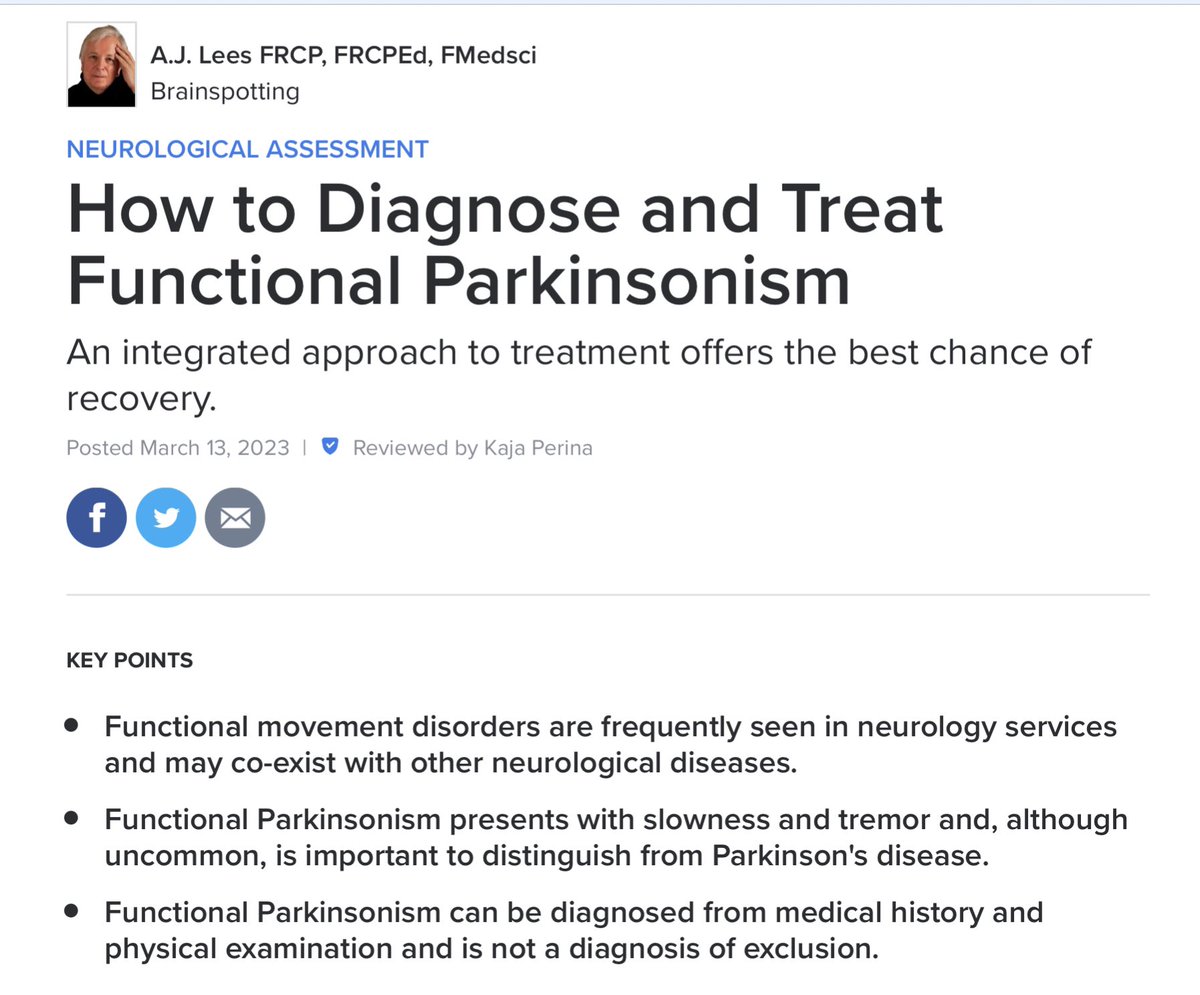
I’m very proud of @GGilmourMD's fantastic new review on diagnosing #FMD. There are many excellent reviews on this already, and here’s what we add that’s different (tweet summary).
Moving Beyond Movement: Diagnosing Functional Movement Disorder pubmed.ncbi.nlm.nih.gov/36893796/
English
@ajlees @jonstoneneuro @AlanCarson15 Thank you all for this!! Functional movement disorders are frequently seen. An integrated approach is indeed needed @IntegratedMove @KBI_UHN
English
This is critically important @jonstoneneuro @AlanCarson15
Gavin Mogan@purposeful_pd
(1/2) What is Parkinson’s disease? What is a Functional Neurological Disorder (FND)? How many neurological labels have a basis in the same neural responses? I’ve performed this to even a greater degree in two movement disorder, offices and there was no curiosity/belief….🧵
English
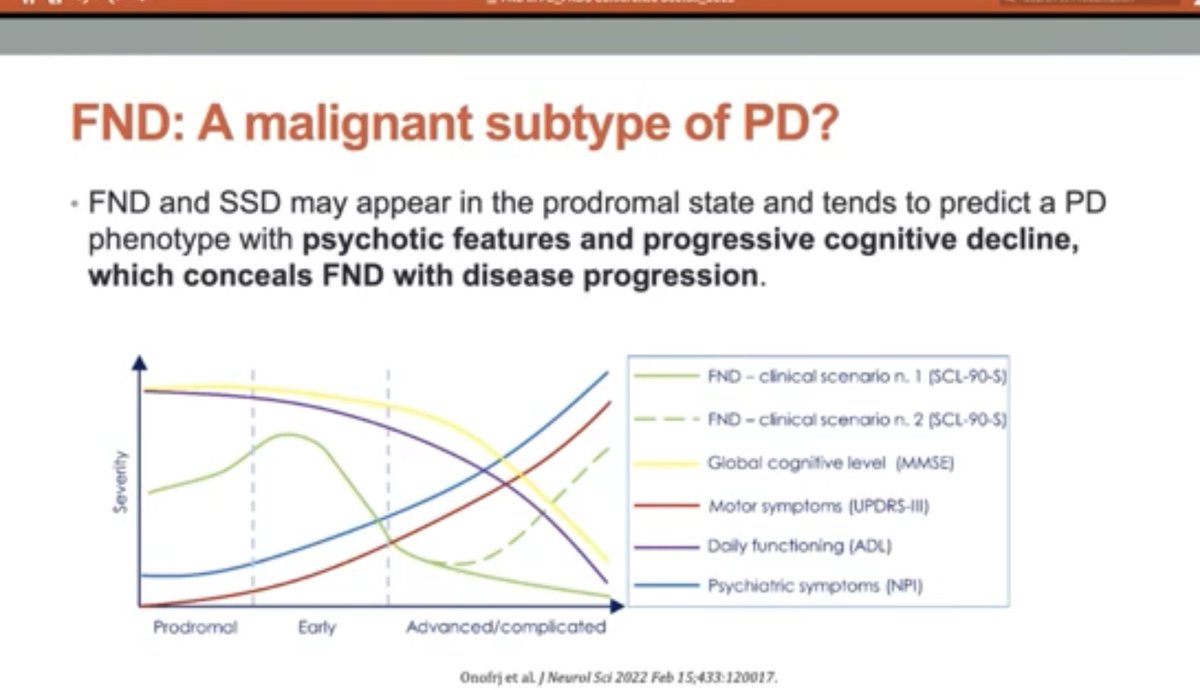
@DrTFromKC @ajlees @jonstoneneuro @AlanCarson15 @AlbertoEspay Let’s agree to have our own views on this from our own points of view. (Attachment from to presentation posted)
English
@DrTFromKC @ajlees @jonstoneneuro @AlanCarson15 @AlbertoEspay And very unhelpful in its prediction on malignant phenotypes which do not apply to the majority of people with both PD and FND
English
@DrTFromKC @ajlees @jonstoneneuro @AlanCarson15 @AlbertoEspay Good question. Apologies for the curt tweet. Am suggesting there is a significant overlap and that prevalence is fairly common that patients with PD will have a basket of FND that ensues. Also am suggesting that incidence of malignant phenotype amongst them is low.
English
@purposeful_pd @ElizabethPeate7 @ohkathleenkiddo @christinejeya @Dr_SF_Hussain @mahad_minhas @SalsbergMathews @GroveAyers It is dangerous to comment on social media. There have been suicides after DBS in the past, this is a serious decision
Israel 🇮🇱 English

Hello friends, how true can it be that I cannot be a candidate for DBS because I have depression due to sleep disorder @purposeful_pd @ohkathleenkiddo @christinejeya @Dr_SF_Hussain @mahad_minhas @SalsbergMathews @GroveAyers
English
@DrTFromKC @ajlees @jonstoneneuro @AlanCarson15 @AlbertoEspay This talk is not helpful. Not the same group of patients. Great empathy for the ones in @AlbertoEspay presentation who eventually have such a malignant type.
English
@CoeberghJan @ajlees @jonstoneneuro @AlanCarson15 @Tim_R_Nicholson @kailashbhatia @AlbertoEspay FND symptoms come along for the ride in Parkinsonism and are common features
English

@ajlees @jonstoneneuro @AlanCarson15 @Tim_R_Nicholson @kailashbhatia @AlbertoEspay In FND clinic we have started to see PD being missed, not just as prodrome. Mostly in young; either because variation in tremor with co-activation/mirror movements is deemed FND distractible or because of perceived acute onset 1/2
English
topdresearch retweetledi
My post on functional slowness and tremor (parkinsonism).
A fascinating if uncommon condition @jonstoneneuro @AlanCarson15 @Tim_R_Nicholson @kailashbhatia @AlbertoEspay
psychologytoday.com/us/blog/brains…
English
@ajlees @jonstoneneuro @AlanCarson15 @Tim_R_Nicholson @kailashbhatia @AlbertoEspay Looking forward to part 2
English