Torben Schulz

564 posts

Torben Schulz banner
Torben Schulz

Torben Schulz

@torbschulz

Founder @RowsHQ, husband, father of 3. Interested in spreadsheets, startups, foreign affairs, and learning guitar for dummies.

Katılım Eylül 2013
633 Takip Edilen713 Takipçiler
Torben Schulz retweetledi
Alex Veremeyenko
Alex Veremeyenko@alex_verem·
i'm obsessed with what's happening in AI reforestation right now this Franco-Brazilian startup called MORFO took a patch of land in Brazil that was rock-hard and compacted from years of cattle farming. they replanted it using a single drone. months later the ground was covered in grass, bushes, and small trees. the land came back to life. here's how the whole thing works. 1. drones scan the terrain with high-resolution cameras and sensors 2. AI analyzes the imagery alongside soil samples, moisture levels, slope, and surrounding vegetation 3. the system picks from a catalog of 300+ native species, deciding exactly which plants will thrive in which specific spot 4. the drone fires biodegradable seed pods packed with seeds, nutrients, and moisture at 180 capsules per minute 5. satellite and drone imagery monitors regrowth over time, with AI tracking vegetation cover and biodiversity 6. two people and one drone cover 50 hectares a day. a person planting by hand manages about one hectare. and MORFO isn't alone. AirSeed in Australia drops 250,000 seed pods per day into bushfire-scarred koala habitat, replanting swamp mahogany that koalas depend on to survive. Flash Forest in Canada fires 50,000 pods daily into wildfire-destroyed boreal forest, planning the replanting alongside Cree Indigenous communities. re-green won Prince William's Earthshot Prize after planting 6 million seedlings across 30,000 hectares of Amazon and Atlantic Forest. five companies across four continents built this same approach independently. nobody coordinated. the physics of the problem demanded it. knowing which seeds belong in which soil used to require years of ecological fieldwork, manual planting crews, and budgets that made large-scale restoration nearly impossible. now two people with a drone and an AI model trained on local soil data can replant 50 hectares before lunch. this is the AI work that'll still matter in 50 years.
English
170
1.6K
7K
665K
Austen Allred
Austen Allred@Austen·
I’m not going to participate in the “share your craziest VC stories” trend but just know I have stories far crazier than anything anyone has posted yet
English
34
0
207
31.1K
Humberto
Humberto@patife·
Ahahhah We have a couple of stories, not like those but close enough 1) Very famous partner of world renowned VC called us, met us, then later wanted to preempt a series B. Told us terms and all, no TS yet. Then he disappeared, and we heard through the grapevine that he got blocked by peers. (Don’t blame them). 2) Closed a round, then the partner who did our deal quit next week. We moved ahead with another partner who was new at the firm. 3) The day before going to Notary to close a round, the partner of a fund says “I don’t allow my POA to be used unless Humberto comes here tomorrow morning.” Wouldn’t tell me what he wanted over the phone or email. I flew there, he asked 2 or 3 simple questions already covered, made a speech to company with me and everyone else standing, let the round proceed. On the way back I expensed back the costlier steak lunch I could think of. 4) Had a partner meeting with a tier 1 Silicon Valley VC, meeting went well. I forgot a charger or something at the VC office, and as I was walking up the stairs of their office 10min later I heard them say “wow, really really cool, these guys are amazing”. Told my cofounder “we bagged it”. Then they introduced us to the founder of the fund who proceeded to say “don’t believe in spreadsheets” or something like that. Deal died.
Matthew Prince 🌥@eastdakota

Two of our worst VC stories: 1. A Sequoia partner passed on Cloudflare because he didn’t think a woman could lead a security infrastructure company. Seriously. 🙄 2. I got introduced to @pmarca. Meeting got scheduled for a Monday, which should have been a clue. I thought it was just a casual meeting. He thought it was a pitch and brought the whole @a16z partnership team. Hilarity ensued. 🤪 At one point one of them said: “You don’t seem very prepared.” Which was true because I wasn’t. I framed the rejection letter they sent.

English
1
0
4
1K
Rows
Rows@RowsHQ·
Big news: Rows will be joining @Superhuman Over the past 9 years, we’ve worked to make business data easier to connect, analyze, and act on. Now, we’re excited to bring that experience to Superhuman and contribute to building their AI productivity platform at a broader scale. We’re grateful to everyone who built Rows with us, our community, and our team. rows.com/blog/post/rows…
Rows tweet media
English
5
6
53
13.8K
Torben Schulz retweetledi
immad
immad@immad·
You can work 5 days a week and succeed as a startup. Mercury has done that from day 0 and we are valued @ $5.2bn 7 years after launch. I have been an entrepreneur for 20 years and raised 3 kids while doing it. The point of success is to have a great life not just a startup 😊
Harry Stebbings@HarryStebbings

"If you are not working 7 days per week, you are going to lose". Corgi Insurance is the most intense workplace culture in startups. - The company works 7 days per week. - Founder (@nico_laqua) lives and sleeps in the office. - He built a cafe in the office because there was no local cafe that was open 24/7. - 2/3 of the first 30 team members have the Corgi logo as a tattoo. Today I went behind the scenes with Nico, who has used this culture to scale the company to a $2.6BN valuation in just two years. My condensed notes below: 1. If You Are Not Working 7 Days Per Week, You Are Going to Lose: Whatever you can get done in 5 days, you'll get more done in 6 and 7. If you are trying to solve the world’s hardest problems, a standard 5-day workweek will not cut it. 2. Work Trials Repel the Mediocre: Corgi forces candidates into mock work trials over the weekend. If seeing a full office on a Saturday scares them, they don't belong. True intensity acts as a natural filter to attract killers and repel clock-watchers. 3. Lead from the Front Lines You can’t demand 7-day weeks while sitting on a yacht. Nico sleeps 3–4 hours a night on a mattress inside the office. If you want your troops to bleed, you have to be in the trenches with them. 4. Culture Only Means One Thing: Winning Forget superficial jargon like "hackers" or "ex-founders." Strip away the corporate fluff. A great startup culture is aggressively optimized around one single word: Winning. 5. Lifespan vs. Victories Building something world-historic requires radical sacrifice. When asked if he'd rather build a trillion-dollar company and die at 50, or fail and live to 80, the answer was easy. "I would rather measure my lifespan in victories." 6. Reject the Comfort of "Quiet Quitting." If you are operating in a hyper-growth environment and your days off happen to be Saturday and Sunday every single week, you are quiet quitting. To win, you must deliberately bypass the off-ramps of personal comfort and low volatility. Corgi isn't for everyone—and that’s exactly the point.

English
201
245
5.6K
490.9K
mitte.ai
mitte.ai@mitte_ai·
Presets for Seedance 2. Every film that you didn't make. Make it tonight. You're the director now.
English
77
38
373
42.8K
Henrique Cruz
Henrique Cruz@HenrM_Cruz·
And the award for best AI SEO strategy goes to...the Ponte de Lima tourism board. A small city of 40k people north of Porto that appears in the answer to 'what are the must-dos in Porto' in Claude.
Henrique Cruz tweet media
English
2
0
6
449
Torben Schulz retweetledi
Oliver Groß
Oliver Groß@minenergybiz·
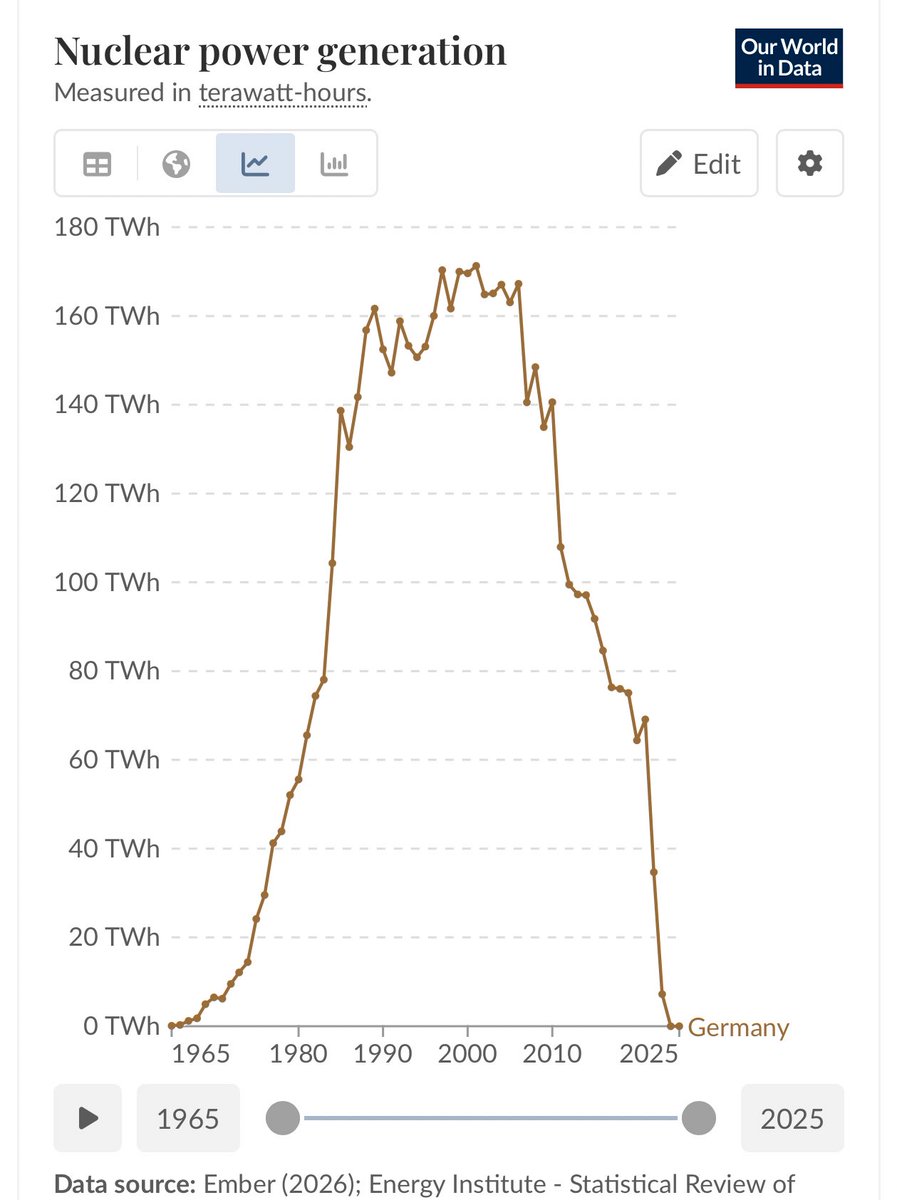
Unreal numbers 👀⚡️ "JPMorgan estimates that, had Germany not phased out nuclear power, the country would have generated 50% less electricity from fossil fuels and 84% less electricity from natural gas in 2024. Electricity prices in Germany would have been around 25% lower, and the country would have imported half as much electricity.."
Oliver Groß tweet media
English
862
6K
31.5K
3.7M
Humberto
Humberto@patife·
✅ compota ❌ geleia
Português
4
0
7
636
Torben Schulz retweetledi
Humberto
Humberto@patife·
Rows will be joining Superhuman! This is a big moment for us. We started Rows in 2017. Along the way, more than 2.2 million people used Rows to execute over 17 billion spreadsheet functions, import data from their business tools more than 8.3 billion times, and run over 800 thousand AI Analyst prompts. Now, we get to take everything we’ve learned and apply it at a much bigger scale. I deeply admire Superhuman’s vision of AI that works everywhere you work, and our team is excited to become part of a team building the future of productivity. Huge thanks to Shishir and Mark for the trust and partnership along the way. This is a big milestone for us, and I’m genuinely excited about what comes next. To our customers, thank you for trusting us with your work over the years. We’ve shared more details about this transition, including what it means for you, in the full announcement below. Thank you to our team especially @torbschulz, our customers, our partners, and our investors for being part of this journey. Let’s go!!
English
32
9
155
10.2K
Torben Schulz
Torben Schulz@torbschulz·
Big day:@RowsHQ will be joining Superhuman🚀 Our mission was to make spreadsheets easy, automated & beautiful. Now we’ll bring what we’ve learned to @Superhuman's AI productivity suite. Excited for what’s next. Deep gratitude to our team, my co-founder @patife, and our customers
Torben Schulz tweet media
English
3
2
42
3K
Torben Schulz retweetledi
Pieter Garicano
Pieter Garicano@pietergaricano·
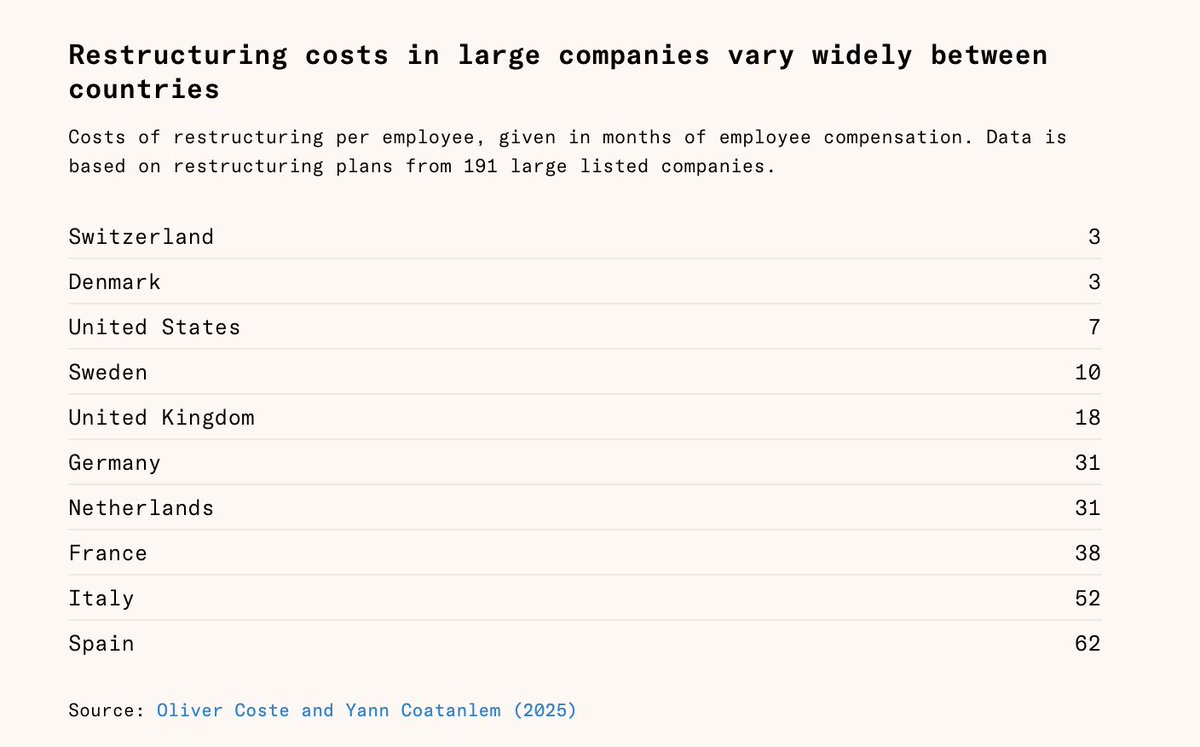
Why don't European companies innovate? It is common to blame expensive energy, high taxes, anti-growth politicians, interest groups, and green regulations. But California has the same problems, and has created the world's most innovative companies. Europe's problem is labor law. Compared with America, it's far harder to let workers go when a business doesn't work out. worksinprogress.co/issue/why-euro… - It costs a large company roughly four times more to fire a worker in Germany or France than the US. - German law requires employers to consider age, years of service, family obligations, and disability status when deciding who to lay off. Employees who would be least impacted by losing their job are prioritized for dismissal. - German employees who take on a caregiving role are fully protected from dismissal for two years from the date they begin caregiving. - Factory closures in Germany regularly lead to payments of over €200,000 per employee. - French companies must be prepared to show a court that their financial results are struggling enough to make layoffs necessary. - To avoid the difficulties of formal dismissals, many European companies entice workers to depart voluntarily, with payouts of up to four years' salary. Taken together, a German worker is ten times less likely to be fired in a given year than an American worker. This high cost of firing makes failures more expensive. It pushes big European companies away from taking risks and leads them to concentrate on safe, unchanging areas. Europe has the ingredients needed to succeed. Its citizens are educated and inventive; it has excellent infrastructure and the rule of law; and its culture is not that different from the one it had fifty years ago, when its companies were world-beating. If Europe wants to a Tesla or a Google, it only needs to make it cheaper for companies to fail. My new piece for @WorksInProgMag.
Pieter Garicano tweet media
English
139
285
1.3K
672.4K
Torben Schulz retweetledi
mitte.ai
mitte.ai@mitte_ai·
or, ask the agent to screenshot your site. prompt: "create video rows dot com and include their screenshot" result 👇🏼
English
1
2
6
502
Torben Schulz retweetledi
Azer Koçulu
Azer Koçulu@azerkoculu·
@mitte_ai is looking for Creator in Residence. If you know anyone who’s obsessed with generative AI and social media, we’d love intros!
Azer Koçulu tweet media
English
2
2
6
425
Torben Schulz retweetledi
Reza Pahlavi
Reza Pahlavi@PahlaviReza·
Millions of Iranians demanded their freedom tonight. In response, the regime in Iran has cut all lines of communication. It has shut down the Internet. It has cut landlines. It may even attempt to jam satellite signals. I want to thank the leader of the free world, President Trump, for reiterating his promise to hold the regime to account. It is time for others, including European leaders, to follow his lead, break their silence, and act more decisively in support of the people of Iran. I call on them to use all technical, financial, and diplomatic resources available to restore communication to the Iranian people so that their voice and their will can be heard and seen. Do not let the voices of my courageous compatriots be silenced.
English
4.5K
22.8K
79.6K
2.9M