Trevor Levin

3.2K posts

Trevor Levin banner
Trevor Levin

Trevor Levin

@trevposts

Trying to help the world navigate the potential craziness of the 21st century, currently via AI Governance and Policy at @coeff_giving

DC usually, SF sometimes Katılım Haziran 2013
1.9K Takip Edilen3.6K Takipçiler
Trevor Levin retweetledi

Senator Scott Wiener
Senator Scott Wiener@Scott_Wiener·
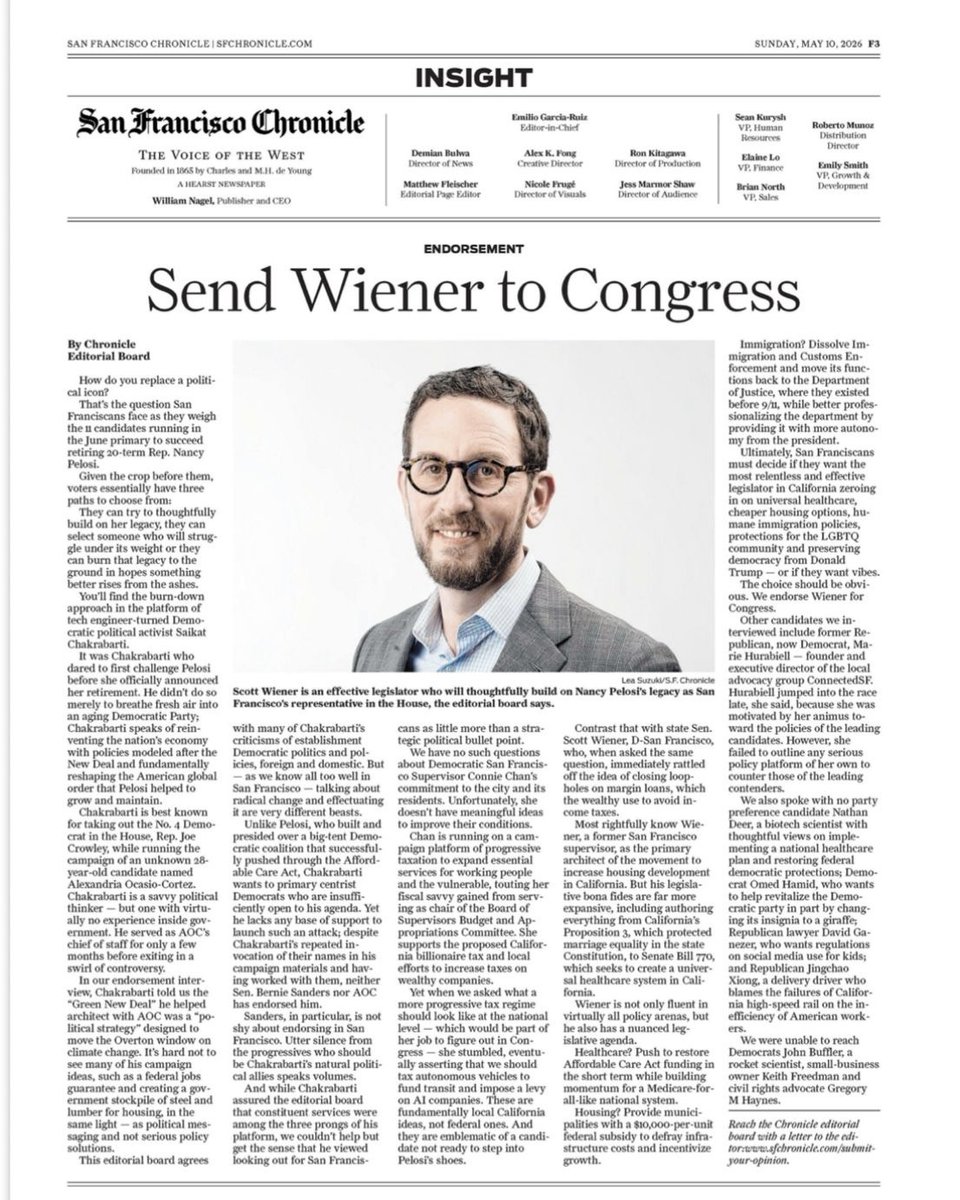
I am incredibly grateful for the endorsement from The San Francisco Chronicle. Every day, I wake up and ask myself, "What can I do for San Francisco today?" I look forward to representing you in Congress, so I can continue delivering on housing, healthcare, transit, and protecting our democracy.
Senator Scott Wiener tweet mediaSenator Scott Wiener tweet media
English
163
19
163
7.9K
Trevor Levin retweetledi
Max Nadeau
Max Nadeau@MaxNadeau_·
My biorisk colleagues put together this extremely specific and unusual set of projects. My main takeaway from this list was that there are whole classes of pandemics that our society basically never thinks about or prepares for, but it's fixable! defensesindepth.bio/10-big-project…
English
6
28
203
33K
Trevor Levin
Trevor Levin@trevposts·
@panickssery @PoliticalKiwi Stuff like developing chips that can verifiably only run inference to make zero-trust agreements possible, broadly familiarizing policymakers with the alignment problem and other strategic concerns like bio misuse, light-touch regulations that you iterate on
English
0
0
3
28
Jesse🔸⏹️
Jesse🔸⏹️@PoliticalKiwi·
Every time I post about this kind of thing, there's always a bunch of sickos in the replies who can't wait for the line to go up. My brother in Christ, when the entire world is built around machines that are smarter than you, do you really think it's going to end well for you?
Jesse🔸⏹️@PoliticalKiwi

At its current exponential growth, Anthropic's annualized revenue will hit 100% of global GDP in early 2028. Do I think this will happen? No. Is it insane that this is the current trajectory, and we should all be preparing for AI to rapidly change the world we live in? Yes.


English
17
2
79
7.1K
Trevor Levin
Trevor Levin@trevposts·
@PoliticalKiwi @panickssery In particular I think the very short timelines implied by even-faster-than-observed progress correspond to many of the key mitigations not having any time to work, so even if you were optimistic when timelines looked like 10-30 years...
English
1
0
5
111
Jesse🔸⏹️
Jesse🔸⏹️@PoliticalKiwi·
@panickssery Yes I definitely think it's more likely than not to go badly, we are just so grossly underprepared for what it'll mean to have superintelligent AI systems acting in the world.
English
1
0
16
295
Trevor Levin retweetledi
Seán Ó hÉigeartaigh
Seán Ó hÉigeartaigh@S_OhEigeartaigh·
More people should follow: Helen Toner @hlntnr . Again, not a small account, but hands down one of the most impressive people in the space. Consistently insightful, sharp judgement, grounded. AI progress, governance, security. Highly rated but still under-rated.
English
6
13
186
145.1K
Charles Foster
Charles Foster@CFGeek·
@GaryMarcus Also note: if you look at the raw data for any of the time horizon numbers, you’ll see they’re closer to measuring “At what point does the agent succeed on all attempts for 50% of tasks?” than “At what point does the agent succeed on 50% of attempts for every task?”
METR@METR_Evals

Of the 228 tasks in our suite, only 5 are estimated as 16+ hours long, making measurements at this range unstable and less meaningful than at ranges with better task coverage. Thus, we are not highlighting exact estimates for models above 16 hours measured with our current suite.

English
1
0
8
418
Gary Marcus
Gary Marcus@GaryMarcus·
Hot take on METR’s new graph that so many people are flipping about today. • Claude Code is a real advance; Mythos probably builds on some of what is learned there. But… • If you read the graph carefully, it is about achieving *50%* success. Not 100 or 99 or even 90. The key problem with GenAI has been reliability; this graph does not address reliable performance. At all. • If you read carefully, it is only about software tasks. Not general intelligence. • It certainly doesn’t tell you that *most* (let alone) all things that humans can do in 16 hours can be done in Mythos, let alone reliably • Aside from this, the graph doesn’t show you *how* the improvements have been made. As noted in my newsletter a lot of the advance in recent months is likely from the incorporation of symbolic tools (like code interpreters, verification, and harnesses) rather than from model scaling per se. As such this a vindication of neurosymbolic AI – but not a proof that LLMs themselves can be perpetually scaled. As such it’s not a proof that another trillion dollars will continue the graph. •  Per @ramez, Mythos is not actually off trend on the ECI benchmark, which is a broader measure.
METR@METR_Evals

We evaluated an early version of Claude Mythos Preview for risk assessment during a limited window in March 2026. We estimated a 50%-time-horizon of at least 16hrs (95% CI 8.5hrs to 55hrs) on our task suite, at the upper end of what we can measure without new tasks.

English
40
20
182
91.4K
Trevor Levin retweetledi
James Sanders
James Sanders@james_s48·
The AI buildout is bottlenecked by chip manufacturing capacity This means AI chips become even more valuable, exports are zero-sum, and America has greater leverage We lay out how we got here, tightest supply chain constraints, & policy implications in a paper w/ @janet_e_egan🧵
English
1
11
22
4K
Trevor Levin
Trevor Levin@trevposts·
@ramez It's not a high number relative to the number of people and dollars working on speeding up capabilities, which in a very real sense is now a large share of the US economy.
English
0
0
9
113
Ramez Naam
Ramez Naam@ramez·
For all the AI-doom about alignment: 1. Actual alignment of released models seems to be going fine. 2. There are a high number of motivated and brilliant people with novel ideas working on the problem.
Rob Wiblin@robertwiblin

Yoshua Bengio thinks he knows how to make provably safe superintelligent agents. Bengio built the foundations of modern AI and is the most cited living scientist. He believes his alternative training setup would: 1. Guarantee honesty 2. Prevent unintended goals 3. Produce capable agents 4. Port over most data and techniques from current LLMs 5. Not be inherently more expensive, and perhaps be more intelligent Bengio claims the honesty and lack of unintended goals can be proven mathematically, at least given particular assumptions. And his new organization, LawZero, is aiming to build a scrappy prototype as soon as possible. The architecture is called 'Scientist AI' and it's based on training a model to explain empirical observations, including what people say, rather than training AIs that mimic human behaviour or seek our approval. (Bengio's frank assessment is that "reinforcement learning is evil" and that allowing AIs to independently train their successors is "the most crazy, dangerous bet that unfortunately we are on track to do.") But skeptics question whether Scientist AI really does solve the fundamental problem of 'eliciting latent knowledge' from AI models. And with the commercial race for superintelligence so intense, it's not clear whether the proposal will be able to compete or have time to bear fruit, even if it's sound in theory. On The 80,000 Hours Podcast, links below – enjoy! • Making AI honest and safe (00:00:00) • Scientist AI in plain English (00:02:27) • How Scientist AI differs from LLMs (00:06:32) • How the training data works (00:14:02) • Can this become an agent? (00:21:02) • Why Yoshua is now more optimistic (00:32:11) • Why companies can’t stop racing (00:36:35) • A working prototype won't take long (00:49:15) • Scientist models might be more capable (00:53:34) • “Reinforcement learning is evil” (01:01:27) • Scientist AI from guardrail to agent (01:08:37) • Can safe AI still be competent? (01:12:38) • How much will this cost? (01:19:29) • Can it generalise beyond maths and science? (01:23:26) • A multi-national push for superintelligence (01:39:19) • Want to work with or fund Yoshua? (01:51:16) • Why smart people ignore AI risk (01:54:45) • Don’t let AI build the next AI (02:01:33) • Why politicians miss the real risks (02:12:28) • Why Yoshua changed his mind about AI risk (02:21:27)

English
8
1
24
6.5K
Trevor Levin retweetledi
Max Nadeau
Max Nadeau@MaxNadeau_·
This is a great tweet, really worth reading.
Philip Trammell@pawtrammell

Thanks for writing this! And in particular for engaging carefully with my own thoughts on the question. For my part, to avoid any confusion--I don’t think you’ve had this confusion, but some people have--my view on the horse analogy isn’t that we can *deduce* that the labor share will go to zero from what’s happened to the horse share, just that any good argument for the labor share staying non-negligible has to be one that wouldn’t have applied to horses as well. I took issue with Alex Imas’s piece for not passing that test: the pieces of evidence used to support the persistent high labor share view (e.g. that relational goods are luxuries in the cross-sectional sense) would also have applied to horses, but of course technological change in the form of new goods (better means of plowing and transportation) was enough to outweigh the analogous effects that would otherwise have supported the horse share. But again, as you emphasize, that’s not to say they won’t be enough in the human case. As for which effects will predominate in the human case, I agree that the Comin et al. evidence on our shift from manufacturing to services over the last generation or two--due mainly to a kind of income effect--tells us something. But I don’t find it as informative as you do, for two reasons. -- First, there’s the Hubmer point that even over this timeframe (at least in the US), the rising capital content of both manufacturing and services has outweighed the shift to services, “Simpson’s paradox”-style; so the labor share has fallen a little. This is essentially the sort of dynamic I’m expecting to play out in the long run. -- Second and much more importantly, we haven’t yet crossed the threshold of having machines that can do everything much better than we can except share our human identity, so any such extrapolations might be like trying to learn about the 20th-century horse share from 16th-century technological advances.* This is why it seems more informative to me to look at other cases of the share of good X following the introduction of an expanding range of goods Y which are superior on every dimension except some people’s brand loyalty / nostalgia / attachment / relationship to X. Maybe a way to put it is: we’re trying to learn about what happens when “Y beats humans in every way except nostalgia/etc”. Presumably we agree that the reference classes of (1) “Y beat X in every way except nostalgia/etc. but X was not humanity” and (2) “Y only partially beat X on the non-nostalgia fronts but X was humanity” should both be informative. I’d just say it seems to me that people are usually biased toward thinking of humans as categorically different from other sorts of useful systems, i.e. toward giving (2) too much weight relative to (1). [*Why assume we will have such machines one day at all? It’s feasible in principle to build robots that are physically and cognitively indistinguishable from humans (say, unless we cut them up or scrutinize their skin under a microscope). If the GDP share of *non*- human-intrinsic labor stays bounded above zero and growth continues, the payoff to building such a machine will grow indefinitely.] Finally, I just want to flag that what first got me into this line of business--arguing that the labor share will ultimately decline indefinitely--was a thought about the future of economic inequality, and maybe the distribution of power downstream of it, not absolute labor incomes. In fact among my friends, I’m usually the crazy one for arguing that (contra the horse analogy) our wages could stay high or rise, with the labor share declining more slowly than the pie is growing. On the inequality front, there’s less of a discontinuity around whether the labor share asymptotes to 0% rather than your 4.5% example... it seems to me that the forces that could drive it down to 4.5% could probably keep the trend going indefinitely, but that's not a hill I'll die on.

English
0
1
23
3.6K
Trevor Levin retweetledi
Garrison Lovely is in SF
Garrison Lovely is in SF@GarrisonLovely·
There have been several high profile incidents of OpenAI and a16z's super PAC Leading the Future (and its affiliate Build American AI) engaging in pretty egregious astroturfing. But it's also notable that part of why we know about the astroturfing is that it was conducted in an incredibly sloppy and slapdash manner for an organization with effectively unlimited cash. Some examples: • LTF by their own admission says a "third party vendor" they paid used a fake AI journalism platform "Acutus Wire" with stories written by bots, complete with a "Michael Chen" emailing apparently dozens of folks asking for comment and engagement on their AI written stories. This was found out by the Midas Project partially because the poorly coded Acutus website explicitly included a javascript file on the webpage which talked about "suggested questions for the *AI interviewer* to ask." • The journalist @TaylorLorenz found out about a program where Build American AI paid up to $5,000 per Tik Tok video to promote its content w/o disclosing the source of the payment. Lorenz writes: "WIRED first learned about the campaign after this article’s author was invited by SM4 to participate." So to be clear — Build American AI's vendor reached out to a well known journalist asking her to participate in its astroturfing campaign. • Campaign Legal Center recently filed a complaint to the FEC about Leading the Future potentially not complying with (pretty generous and relaxed!) election disclosure rules. In the complaint, it discusses the fact that Leading the Future's Democratic and Republican sub entities (Think Big and American Mission) paid the vast majority of their disbursements to LLCs created on the same day as one another, and do not appear to have any other clients. From the complaint: "Both LLCs were formed on the exact same day—October 30, 2025—and both identify their addresses as mail centers in Nevada. Neither LLC has a website or other digital footprint, nor do they appear to have other clients, despite being reported by Think Big and American Mission, respectively, as the payees for a full suite of consulting and advertising services... The overall record therefore indicates that these LLCs are not bona fide commercial vendors that provided the services attributed to them by Think Big and American Mission, but rather serve as payment clearinghouses for the super PACs to illegally conceal the true recipients of over $10.5 million in super PAC payments." • To close with a small issue, but my personal favorite: Build American AI ran ads on this platform that said we should "Put People over Profit" (a rather completely absurd thing for a massive anti regulation Super PAC to say). But in the (AI generated?) image they included for the ad about people over profit, it shows the money *outweighing* the people! The combination of functionally infinite money and crippling incompetence is a bit surprising, but not something that will necessarily last. As I wrote in my forthcoming book Obsolete (see bio): "The industry has a bottomless pit of money, which it uses to reward capitulation and punish resistance. But money is essentially its *only* advantage. AI’s reformers have the ideas, the principles, and the public sympathy. To overcome the money, we need to harden that sympathy into organization—to upend the political calculus, to make capitulation hurt worse than resistance."
Garrison Lovely is in SF tweet media
English
5
22
86
20.8K
Trevor Levin retweetledi
Max Nadeau
Max Nadeau@MaxNadeau_·
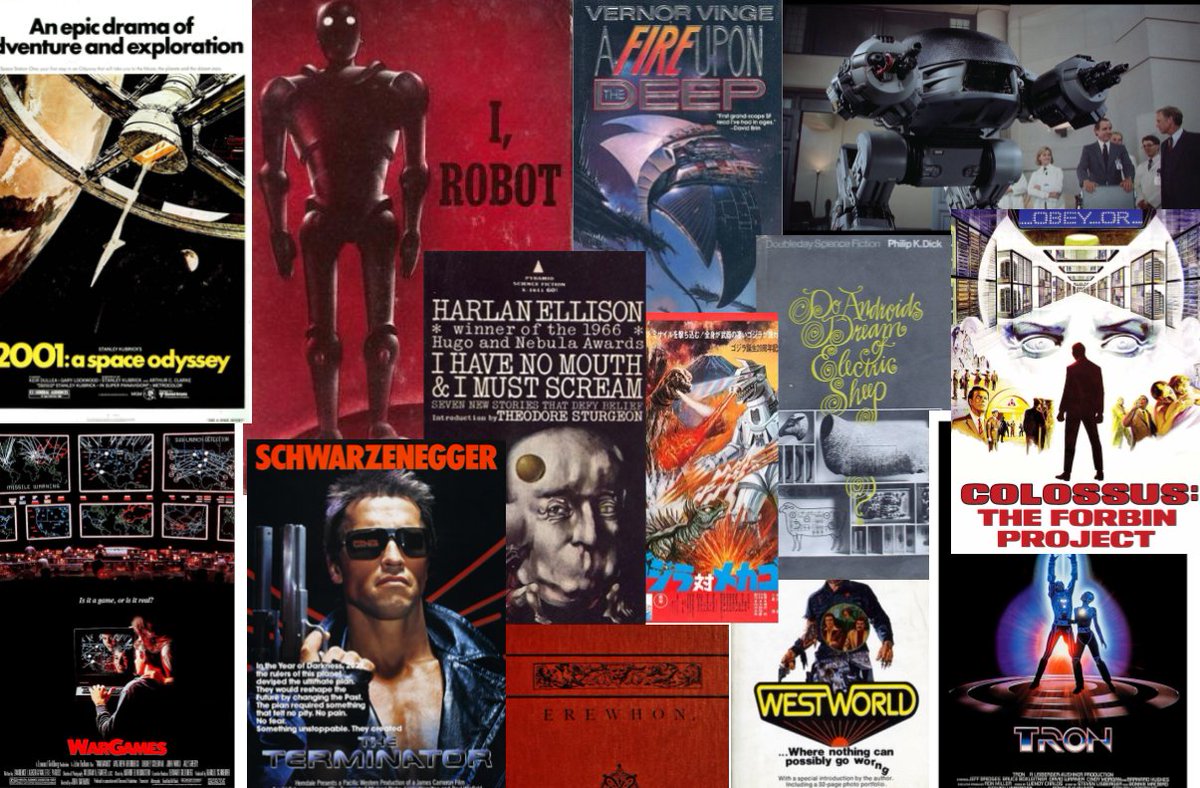
It's not yet visible from the outside (though it will be soon), but CG has shifted gears recently and is making some very big plays. E.g. the new "short timelines" team. If you have creative ideas for using millions of dollars to prevent AI catastrophes, you should apply.
Coefficient Giving@coeff_giving

We're hiring grantmakers and senior generalists across our Global Catastrophic Risks teams. Right now, our biggest constraint is people, not funding, which means every strong hire directly translates into more critical work getting done. 🧵

English
3
19
181
14.3K
Trevor Levin retweetledi
Daniel Eth (yes, Eth is my actual last name)
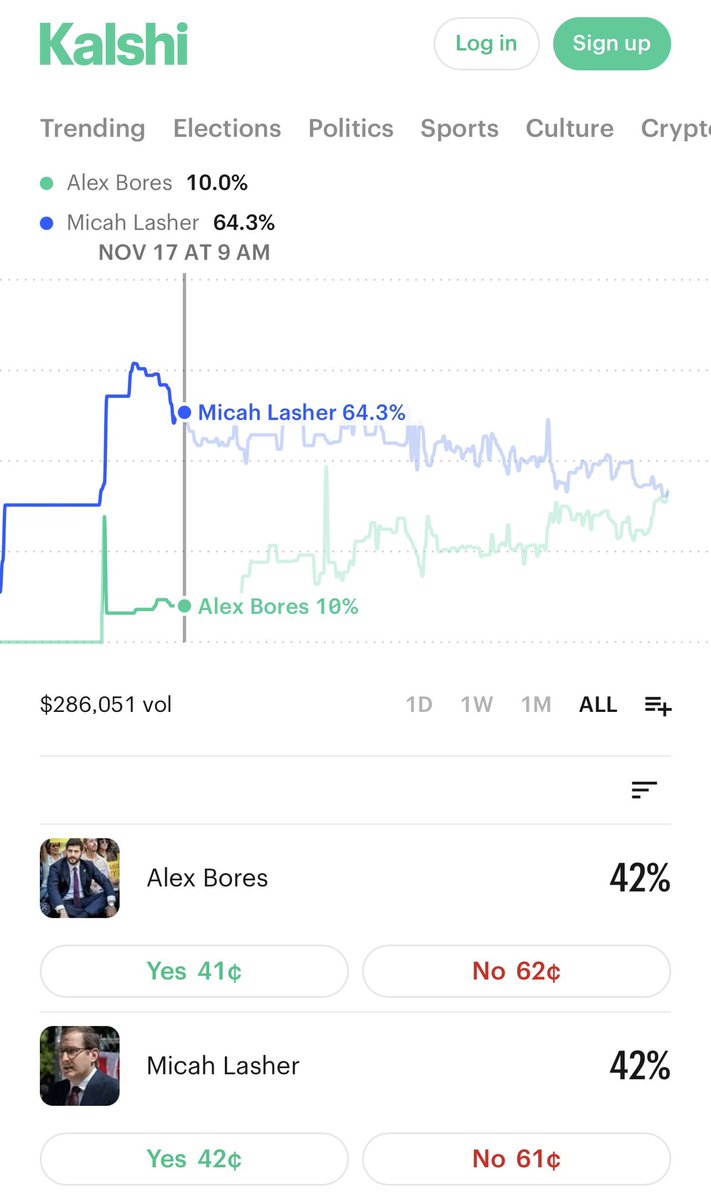
When the OpenAI-a16z super PAC (LTF) announced Alex Bores as their number one target, he had only a 10% chance of winning per Kalshi. Today, the race is a toss up, in no small part due to the backlash to LTF’s attacks on Bores
Daniel Eth (yes, Eth is my actual last name) tweet media
Eli Miller@ghostrunnerblog

Alex Bores officially takes the lead on Kalshi! It's a relatively shallow market, so one or two big bets can cause some serious fluctuation. And I would guess Bores polls especially well with Kalshi users (most of whom are probably not in-district). But still...

English
0
2
29
2.5K
Trevor Levin retweetledi