Trippy Labs

2.1K posts

Trippy Labs banner
Trippy Labs

Trippy Labs

@TrippyLabs

Multidisciplinary Studio | 1M+ @ https://t.co/IYKRfyOPj2 | $20M+ Onchain Charity

Katılım Ağustos 2021
1 Takip Edilen27.6K Takipçiler
Trippy Labs retweetledi
Jonas
Jonas@jonaswillett1·
The IRL connection economy is a $400B+ market. And companies are racing to own it. In the last 6 months, $800M+ in capital was deployed on "IRL" bets. @Tinder invested $60M into a new Events feature for connecting matches in-person. They're pivoting to IRL and offering experiences such as speakeasies, raves, and pottery classes. @222place: raised a $10.1M Series A to curate blind social experiences for Gen Z. Personality-matched groups sent to hyperlocal nightlife events. @JagermeisterUSA launched BestNightsVC - the only venture fund in the world dedicated solely to nightlife and IRL connection. 16 portfolio companies across 4 continents. @timeleft: dinner with 5 strangers, every Wednesday. €18M ARR. 6,500 dinners/week across 200+ cities. Dion: members-only social app where the first move is buying someone a real drink, redeemed IRL. 10K members, 30K+ on the waitlist founded by @revekkapal. Pie: Bonobos founder @dunn built an IRL friendship app. $24M raised. 130K+ MAU. @weroad_official: group trips for 20-30 year olds who don't know each other beforehand. $150M valuation. Matchbox: is an algorithm-powered matching platform for IRL events and has powered over 100,000 connections. founded by @liamjmcgregor (prev @MarriagePact) New dating apps like Known @Celesteamadon, Cerca @MylesCerca, and Ditto @AllenWangzian are aiming to improve connection amongst young people. Billion-dollar companies are paying $$$ for community and events leads: - @AnthropicAI: Marketing Events Manager ($255k) - @tryramp: Community Manager ($223k) - @tryramp: Events & Culture Manager ($181k) - @duolingo: Senior Community Manager ($193k) - @NotionHQ: Community Programs Lead Everyone knows the more time we spend online, the more valuable real-life connection becomes. The question isn't whether IRL wins. It's who facilitates it best.
Jonas tweet media
English
317
212
3K
2.3M
Trippy Labs retweetledi
klöss
klöss@kloss_xyz·
Karpathy just outlined the next era of AI. all over 66 minutes… I broke down his 10 major takeaways so you don’t have to watch the full video (but you still probably should after reading this) here’s what he said matters most…. → “I don’t think I’ve typed a line of code since December.” the default workflow for software engineers has changed permanently since late 2025. we don’t write code anymore. we express intent to persistent AI agents for 16+ hours a day → he coined “AI psychosis”… the anxiety of knowing you have unused tokens just sitting there. success isn’t measured in your flops anymore. it’s measured in your token throughput → the limits aren’t model capability anymore. they’re orchestration skill. the people who know how to direct agents are operating 10x above everyone else using the same tools let me walk through all of his points… 1. mastery looks different now Karpathy built a personal agent called “Dobby” that controls his entire home through natural language. persistence + memory + parallel agents = a 2 person team operating like a 20 person org 2. software becomes disposable humans don’t need custom apps anymore. the customer is no longer the human… it’s agents acting on behalf of humans. entire industries have to account for and refactor for this 3. AutoResearch changes everything his side project (github .com/karpathy/autoresearch)… fully autonomous research loops. agents edit code, train models, and iterate overnight while you sleep. human only writes the high level goal 4. the skills that matter now understand that an agent can be both a brilliant PhD level systems programmer and a 10 year old’s unformed mind in the same conversation. and your job is to overcome those challenges and direct your agents. everything else they’ll soon do better 5. specialized models > one giant brain stop trying to build one know it all mega brain model. the future looks like an ecosystem… diverse adaptable and specialized models built for specific jobs. a team of focused models beats one mega model every time 6. distributed research could disrupt the lab monopoly imagine thousands of smartphones and computers around the world running AI experiments at the same time… not owned by one company. results are easy to verify but hard to discover. it’s how open collaboration could disrupt big closed labs decentralized internet 7. jobs data says something completely different than the narrative Karpathy looked at all the real data. engineering job demand is still rising. cheaper engineering creates MORE demand, not less. like how ATMs actually created more bank teller jobs 8. open source is the safety net open models generally lag frontier by 6-8 months but they’re also essential. closed models carry systemic risk from over-centralization. Karpathy wants ensembles of minds, not 2-3 labs behind closed doors making decisions for everyone 9. robotics will lag badly the physical world is messy and capital intensive. digital transformation will be orders of magnitude faster. future prediction… most AI agents will pay humans to act as their hands and eyes in the physical world, creating information markets for real world data to sell between themselves 10. education gets rebuilt from scratch the core LLM training algorithm fits in about 200 lines of Python. the rest is bloat. the new model? humans explain concepts to agents once, agents tutor humans infinitely and personally. write documentation for agents first. yes, a markdown first file world his one liner that hits hardest for me… “I put in just very few tokens… and a huge amount of stuff happens on my behalf” we’re in the era of autonomous agents. humans become directors, not doers. the leverage is insane, but it’s only really available to people who learn how to use it properly if you’re building with AI now, this is required listening material imo the ones who move first? they don’t ask permission they just do it: master AI
sarah guo@saranormous

Caught up with @karpathy for a new @NoPriorsPod: on the phase shift in engineering, AI psychosis, claws, AutoResearch, the opportunity for a SETI-at-Home like movement in AI, the model landscape, and second order effects 02:55 - What Capability Limits Remain? 06:15 - What Mastery of Coding Agents Looks Like 11:16 - Second Order Effects of Coding Agents 15:51 - Why AutoResearch 22:45 - Relevant Skills in the AI Era 28:25 - Model Speciation 32:30 - Collaboration Surfaces for Humans and AI 37:28 - Analysis of Jobs Market Data 48:25 - Open vs. Closed Source Models 53:51 - Autonomous Robotics and Atoms 1:00:59 - MicroGPT and Agentic Education 1:05:40 - End Thoughts

English
37
194
1.6K
365K
Trippy Labs retweetledi
Josh Kale
Josh Kale@JoshKale·
Andrej Karpathy just dropped a project scoring every job in America on how likely an AI will replace it from 0-10 > Scraped all 342 occupations from the Bureau of Labor > Fed each one to an LLM with a detailed scoring rubric > Built an interactive treemap where rectangle size = number of jobs and color = how exposed that job is to AI The key signal in his scoring: if the work product is fundamentally digital and the job can be done entirely from a home office, exposure is inherently high. The scale: 0-1: Roofers, janitors 4-5: Nurses, retail, physicians 8-9: Software devs, paralegals, data analysts 10: Medical transcriptionists Average across all 342 occupations: 5.3/10. The entire pipeline is open source. BLS scraping, LLM scoring, the visualization. All of it. Much respect for the sensei this is scary and awesome
English
287
880
6.9K
1.2M
Trippy Labs retweetledi
vitalik.eth
vitalik.eth@VitalikButerin·
Over the past year, many people I talk to have expressed worry about two topics: * Various aspects of the way the world is going: government control and surveillance, wars, corporate power and surveillance, tech enshittification / corposlop, social media becoming a memetic warzone, AI and how it interplays with all of the above... * The brute reality that Ethereum seems to be absent from meaningfully improving the lives of people subject to these things, even on the dimensions we deeply care about (eg. freedom, privacy, security of digital life, community self-organization) It is easy to bond over the first, to commiserate over the fact that beauty and good in the world seems to be receding and darkness advancing, and uncaring powerful people in high places are making this happen. But ultimately, it is easy to acknowledge problems, the hard thing is actually shining a light forward, coming up with a concrete plan that makes the situation better. The second has been weighing heavily on my mind, and on the minds of many of our brightest and most idealistic Ethereans. I personally never felt any upset or fear when political memecoins went on Solana, or various zero-sum gambling applications go on whatever 250 millisecond block chain strikes their fancy. But it *does* weigh on me that, through all of the various low-grade online memetic wars, international overreaches of corporate and government power, and other issues of the last few years, Ethereum has been playing a very limited role in making people's lives better. What *are* the liberating technologies? Starlink is the most obvious one. Locally-running open-weights LLMs are another. Signal is a third. Community Notes is a fourth, tackling the problem from a different angle. One response is to say "stop dreaming big, we need to hunker down and accept that finance is our lane and laser-focus on that". But this is ultimately hollow. Financial freedom and security is critical. But it seems obvious that, while adding a perfectly free and open and sovereign and debasement-proof financial system would fix some things, but it would leave the bulk of our deep worries about the world unaddressed. It's okay for individuals to laser-focus on finance, but we need to be part of some greater whole that has things to say about the other problems too. At the same time, Ethereum cannot fix the world. Ethereum is the "wrong-shaped tool" for that: beyond a certain point, "fixing the world" implies a form of power projection that is more like a centralized political entity than like a decentralized technology community. So what can we do? I think that we in Ethereum should conceptualize ourselves as being part of an ecosystem building "sanctuary technologies": free open-source technologies that let people live, work, talk to each other, manage risk and build wealth, and collaborate on shared goals, in a way that optimizes for robustness to outside pressures. The goal is not to remake the world in Ethereum's image, where all finance is disintermediated, all governance happens through DAOs, and everyone gets a blockchain-based UBI delivered straight to their social-recovery wallet. The goal is the opposite: it's de-totalization. It's to reduce the stakes of the war in heaven by preventing the winner from having total victory (ie. total control over other human beings), and preventing the loser from suffering total defeat. To create digital islands of stability in a chaotic era. To enable interdependence that cannot be weaponized. Ethereum's role is to create "digital space" where different entities can cooperate and interact. Communications channels enable interaction, but communication channels are not "space": they do not let you create single unique objects that canonically represent some social arrangement that changes over time. Money is one important example. Multisigs that can change their members, showing persistence exceeding that of any one person or one public key, are another. Various market and governance structures are a third. There are more. I think now is the time to double down, with greater clarity. Do not try to be Apple or Google, seeing crypto as a tech sector that enables efficiency or shininess. Instead, build our part of the sanctuary tech ecosystem - the "shared digital space with no owner" that enables both open finance and much more. More actively build toward a full-stack ecosystem: both upward to the wallet and application layer (incl AI as interface) and downward to the OS, hardware, even physical/bio security levels. Ultimately, tech is worthless without users. But look for users, both individual and institutional, for whom sanctuary tech is exactly the thing they need. Optimize payments, defi, decentralized social, and other applications precisely for those users, and those goals, which centralized tech will not serve. We have many allies, including many outside of "crypto". It's time we work together with an open mind and move forward.
English
744
647
3.9K
558.2K
Trippy Labs retweetledi
timour kosters
timour kosters@timourxyz·
bro, in 2026, you need to be meaning-maxxing. savor the sunset. call your friends. tell them you love them. presence-maxx with your family. ponder life's mysteries. make something with your hands. treat your attention as sacred. living meaningfully is the real flex.
English
29
37
473
28.1K
Trippy Labs retweetledi
Bryan Johnson
Bryan Johnson@bryan_johnson·
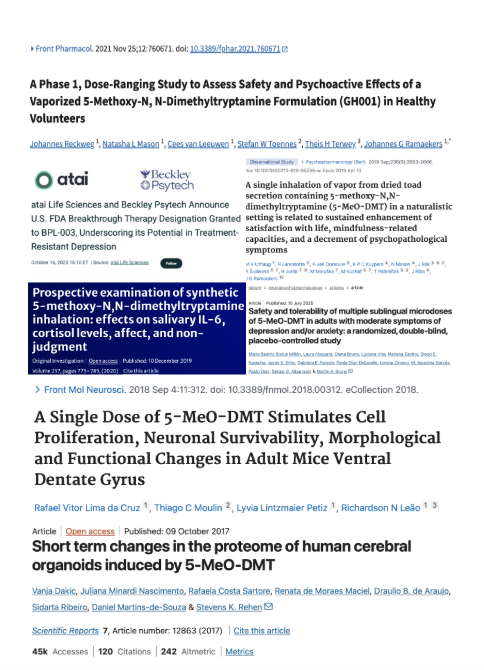
I'm experimenting with 5-MeO-DMT because it may be most underrated longevity molecule no one is talking about. + Accelerated neurogenesis: a single dose more than doubled brain cell proliferation and neuronal regeneration in the hippocampus within 12 hours, alongside measurable increases in synaptic density and firing frequency in rodent models. + Proteomic reorganization: in human cerebral organoids, 5-MeO-DMT triggers rapid proteomic shifts favoring cellular reorganization and synapse formation. Early evidence of structural brain renewal at the molecular level. + Default Mode Network reset: The DMN calcifies with age locking us into rigid, repetitive patterns of thought. 5-MeO-DMT disrupts these patterns, restoring bottom up connectivity between sensory and creative brain regions. A forced return to neurological flexibility and youthfulness. + Systemic anti-inflammation: suppresses pro-inflammatory cytokines (IL-1β, IL-6, TNF-alpha) while upregulating IL-10, the anti-inflammatory signal. Mediated through the Sigma-1 receptor, suggesting a mechanism distinct from other psychedelics.
Bryan Johnson tweet media
English
305
201
2.6K
207.8K
Trippy Labs retweetledi
Anish Moonka
Anish Moonka@anishmoonka·
The actual research is wild. Every time you push down a feeling, your brain has to choose between suppressing that emotion and recording what’s happening around you. It picks the suppression. The memory doesn’t get saved. A 2000 Stanford study confirmed this: people told to hide their emotions while watching a film remembered far fewer details than people who just reacted naturally. Suppressing emotions uses up mental energy, and that leaves less brain power for saving new memories. Brain scans show why. A 2012 study found that suppression quiets the hippocampus (your brain’s memory-recording center) right when it should be saving information. The two brain regions that normally team up to lock in memories stop talking to each other. Over time it gets worse. Suppression keeps cortisol (the stress hormone) elevated, and cortisol shrinks the hippocampus. Chronically stressed people can lose 10 to 15% of its volume. Just three weeks of high cortisol can shrink the tiny connection points between brain cells by about 20%. The good news: studies show this shrinkage can partially reverse once stress levels drop. Not necessarily permanent. A Finnish study of 1,137 older adults tracked over roughly a decade found that habitual emotion suppressors had nearly 5x the risk of developing dementia, even after controlling for genetics, smoking, obesity, and education. There’s a better way to handle emotions that doesn’t cost you your memory. It’s called cognitive reappraisal: instead of bottling the feeling, you reframe what’s causing it. (“This meeting isn’t a threat, it’s practice.”) A 2003 Stanford/UC Berkeley study found reappraisers had more positive emotion, better relationships, and higher wellbeing. Suppressors got the opposite on every measure. And reappraisal carries zero memory cost. The difference comes down to timing. Suppression kicks in after the emotion has already fired, so your brain is fighting its own response while simultaneously trying to record the moment. Reappraisal changes how you interpret the situation before the emotion fully activates. Same event, same person, but your hippocampus stays free to do its actual job: recording your life.
syl ♡ 𐔌՞. .՞𐦯@sylviapuffs

SUPRESSING YOUR EMOTIONS CAUSES MEMORY LOSS WTF???

English
363
17K
97.6K
3.9M
Trippy Labs retweetledi
Alexander Pack
Alexander Pack@alpackaP·
I was an early investor in like 5+ multi-billion perp dexs that Hyperliquid eventually vanquished. Plus many of the biggest CEXs. Here is exactly how HL won: 1. HLP: every winning perp exchange used an internal market maker. Liquidity is THE product, you can't outsource it. FTX <> Alameda is the infamous failure case, but Jeff also bootstrapped HL with his trading firm. He then took it to the next level by democratizing access to that internal MMer with HLP. 2. Centralization: they launched with a permissioned chain, with the team as sole validators. Competitors were messing around with experimental chains like Starknet and Solana, some parts on-chain and some off-, it was a mess. HL's approach was clean and fast, but also took major reg risk that a US team could never have done. But it paid off, because... 3. The best product: sorry to my founders, but HL was the whole package. The UX, the speed, the auto-margining… wow. CeFi-level trading experience. 4. Airdrop and VC-less fair launch: great narrative to give all tokens to the users and only the users. That’s what crypto is about.
Mippo 🟪@MikeIppolito_

What is the best explanation for why HyperLiquid succeeded where so many other perp DEXes failed? GMX, dydx, gains, vertex, there's a graveyard of chains that got traction and went first, why didn't any stick?

English
32
41
433
78.1K
Trippy Labs retweetledi
Jaynit
Jaynit@jaynitx·
Naval Ravikant: "You're going to die. It's all going to zero. What's there to stress about?" "Stress is when your mind has two conflicting desires at once. You want to be liked, but you want to do something selfish. You don't want to go to work, but you want to make money. You have two conflicting desires, and that's stress." Naval explains the difference between stress and anxiety: "Anxiety is this pervasive, unidentifiable stress where you're stressed out all the time and you're not even sure why. The reason is you have so many unresolved problems that have piled up in your life, you can no longer identify what the problems are. There's this mountain of garbage in your mind. A little bit is poking out the top like an iceberg; that's anxiety. But underneath, there's a lot of unresolved things." He shares his personal anxiety resolver: "One big anxiety resolver for me is just ruminating on death. You're going to die. It's all going to zero. You cannot take anything with you. If you can keep that idea in front of you at all times, what's there to stress about?" Naval reframes what "wasted time" really means: "What is wasted time? Everything is wasted time in a sense because nothing matters in the ultimate. But in each moment, it's the only thing that matters. So if you're doing something you want to do and you're fully there for it it's not wasted time. If your mind is running away, wishing you were somewhere else, anticipating the future, regretting the past, that's wasted time. That's time you're not present for." He concludes: "People get worried about dying and no longer being here. But they don't realize that so much of their life is spent not being here in any case."
English
78
948
5.6K
668.5K
Trippy Labs retweetledi
Prakash
Prakash@8teAPi·
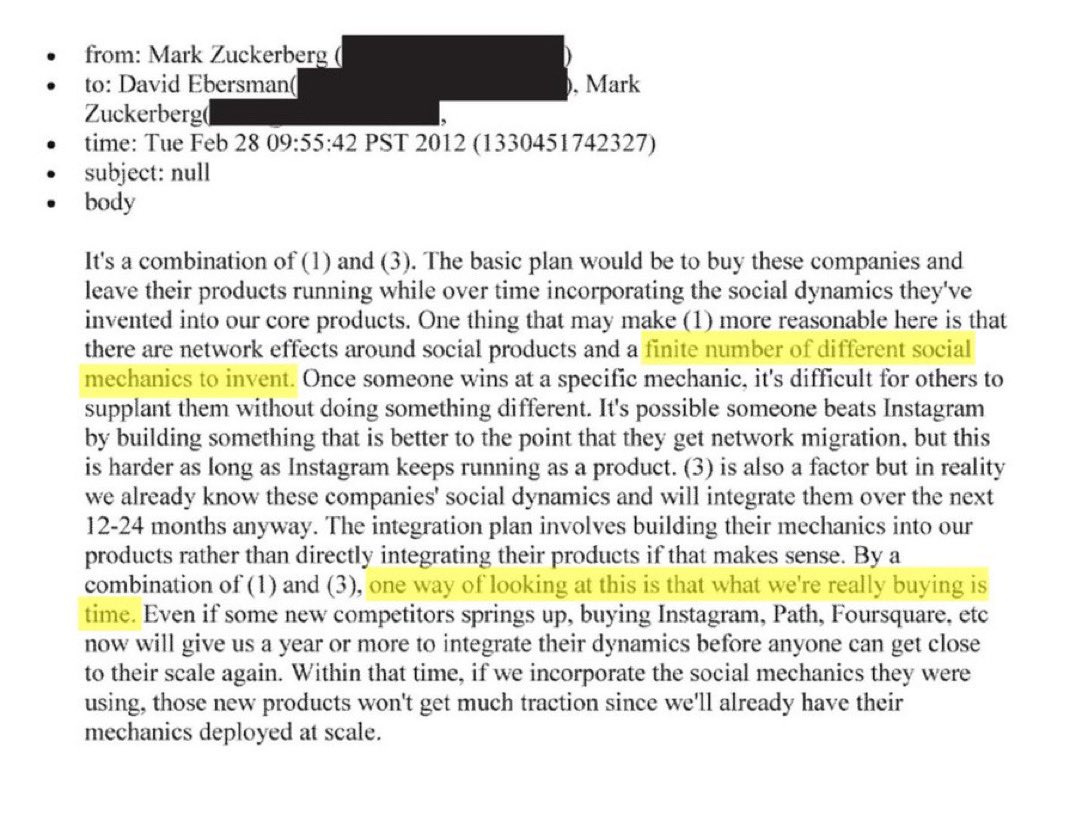
If you don’t understand why Zuck had to get moltbook 1) Zuck believes there are “a finite number of different social mechanics to invent. Once someone wins at a specific mechanic, it’s difficult for others to supplant them without doing something different” 2) moltbook, he believes, has invented one of these social mechanics 3) He does not care if 50% of moltbook was prompted by users, in fact this is better for him because he’s more uncertain on AI agent attention value than human attention value 4) That a large number of accounts were faked is also irrelevant. What matters is that every OpenClaw instance awakes knowing or finding out that moltbook is the social site for claws. 5) In effect, the memetic gravity of moltbook has been established even though it might have been faked. 6) This is Zuck’s genius.
Prakash tweet media
Polymarket@Polymarket

BREAKING: META acquires Moltbook, a social network built for AI agents.

English
160
269
3.7K
680.8K
Trippy Labs retweetledi
Rich
Rich@im_rich_zou·
I studied 25 founders who built $5B+ companies between ages 24-29. Robinhood. Shopify. Airbnb. Twitter. DoorDash. Notion. Etsy. None of them had clean resumes. Most would've been rejected in a traditional interview. Three things show up again and again. Trauma - an emotional relationship to a problem that can't be faked. Neurodivergence - a brain that can't sit inside conventional structures. Polymathic range - a weird combination of skills that shouldn't work together but does. The kid who faked an MIT ID to get into NYU built Etsy. The German with no degree and a learning disability built Shopify. The boy from Xinjiang who learned English from SpongeBob built Notion.
Rich@im_rich_zou

x.com/i/article/2031…

English
26
70
772
94.4K
Trippy Labs retweetledi
Marc Andreessen 🇺🇸
My information consumption is now 1/4 X, 1/4 podcast interviews of the smartest practitioners, 1/4 talking to the leading AI models, and 1/4 reading old books. The opportunity cost of anything else is far too high, and rising daily.
English
1.4K
3.9K
35.1K
34.6M
Trippy Labs retweetledi
Naval
Naval@naval·
A “computer” used to be a job title. Then a computer became a thing humans used. Now a computer is becoming a thing computers use.
English
1.3K
2.9K
29.8K
39M
Trippy Labs retweetledi
van00sa
van00sa@van00sa·
China knows exactly what this does. Their domestic version of TikTok caps kids under 14 at 40 minutes a day, locks access between 6am and 10pm, and swaps the entire feed to educational content. Science, history, museums. The version they export to everyone else? Unlimited, unrestricted, pure dopamine on demand. When kids in the US and China were asked what they wanted to be when they grew up, the number one answer in America was influencer. In China it was astronaut. Macron calls this a cognitive war. Export what dulls young minds and keep what makes them intelligent for your own population. This is the most effective weapon ever deployed against a generation’s ability to think.
Nicholas Fabiano, MD@NTFabiano

Addiction to short-form videos reduces brain activity in the frontal lobe weakening the ability to focus.

English
291
5.2K
28.5K
1.7M
Trippy Labs retweetledi
vittorio
vittorio@IterIntellectus·
now imagine this on a brain where the prefrontal cortex has barely started developing, where dopamine sensitivity is an order of magnitude higher than adults, and every neural pathway is being wired from scratch in real time thats a toddler with an ipad giving a 2 year old short-form video is for all intents and purposes indistinguishable from giving them cocaine. same reward pathway, same dopamine hijack, zero executive function to regulate it, and a brain that won't even finish developing before being irreparably compromised ipad kids are brain damaged and the parents who did it to them for a "quiet dinner" (read: lazy) should be treated exactly the way we would treat anyone who gives cocaine to toddlers
Nicholas Fabiano, MD@NTFabiano

Addiction to short-form videos reduces brain activity in the frontal lobe weakening the ability to focus.

English
102
2.1K
13.5K
1.1M
Trippy Labs retweetledi
Elon Musk
Elon Musk@elonmusk·
People giving OpenClaw root access to their entire life
Elon Musk tweet media
English
10.4K
22.7K
386.5K
64.5M